

La storia di Meroth Synagogue
Meroth lies in the eastern Upper Galilee, about four kilometres west of Tel Hazor, at the ruin called Khirbet Marus in Arabic and Horvat Marish or Horbat Merot in Hebrew. Zvi Ilan identified it with the Meroth that Josephus names as a fortified village on the northern edge of Galilee, after finding a 'village of Marus' in a medieval list of holy graves from the Cairo Genizah. A survey in 1981 recorded the synagogue, and Ilan and Emmanuel Damati excavated it during the 1980s.
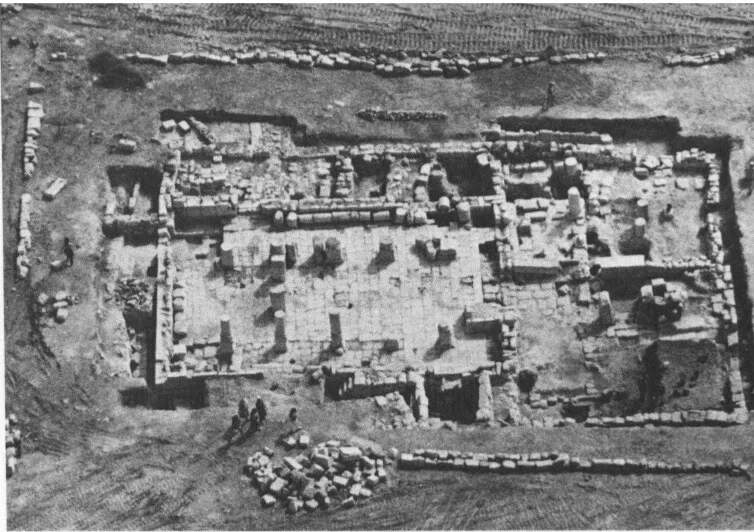
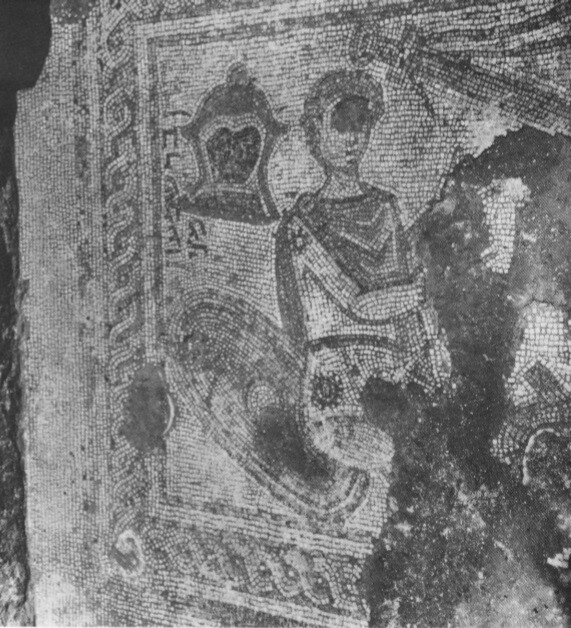
They uncovered a basilical hall of about 18 by 12 metres with a courtyard and cistern to the south, built in the late fourth or early fifth century CE. The hall was refloored more than once: plaster gave way to a mosaic, of which a panel showing a youth surrounded by weapons survives, and the mosaic was covered with flagstones that coins date to about 475. Later the entrance was moved to the north wall and a study house was built in the old courtyard. A treasury below a storeroom held 485 coins, 245 of them gold. The summary of the final excavation report says the main building was apparently destroyed in the earthquake of 749 CE and rebuilt, and that Jewish settlement ended in the ninth or tenth century. The ruin was lived in during the Mamluk period and later became the Arab village of Marus, abandoned in 1948. It now lies inside an army training area.
Where it stood for roughly 400 to 600 years
Horvat Marish / Khirbet Marus (ancient Meroth), in the hills about 4 km west of Tel Hazor, between Hazor and Moshav Alma, Upper Galilee, Israel; inside army firing zone 100. No street address. Pin is on the excavated synagogue (approximate).
Apri la mappa grande →La comunità ebraica
Nothing is known of the congregation from written records; what is known comes from the excavation. According to the excavator's account as summarised in the University of Warsaw's database of late antique religious buildings, the settlement was first occupied in the second century BCE, most likely under the Hasmoneans, and at its largest covered some ten to twelve acres with perhaps 1,000 to 1,200 inhabitants. They lived mainly from olive oil and wine, with cereals, vegetables and cattle. The 1981 survey also recorded stretches of a village wall, a large moat cut in the rock and networks of underground refuge tunnels, which may go back to the Second Temple period and suit Josephus's description of Meroth as a fortified place. Two members of the community are known by name: Yudan son of Shimon, named in the mosaic, and Yose son of Zenobia, who had an amulet buried under the synagogue threshold. A sage said to be buried in the village is mentioned in the Genizah list that Ilan used. Hebrew accounts based on Ilan take the addition of a study house and a classroom as a sign that the community was still prosperous in the seventh century.
Architettura e design
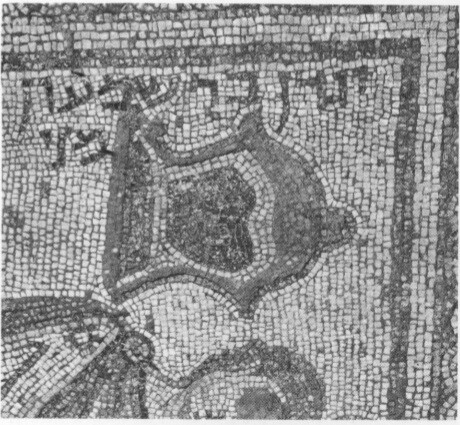
The synagogue was a basilica: a rectangular hall of about 18 by 12 metres with two rows of columns on pedestals, aisles and stone benches. In its first form the decorated main front faced south, towards Jerusalem, with a portico and a large courtyard with a central cistern before it. Hebrew accounts based on Zvi Ilan's publications say the walls were plastered and painted red. Three floors were laid one over another: plaster, then a mosaic, then flagstones. One mosaic panel, 215 by 170 centimetres, survived at the northern end of the eastern aisle. It shows a seated young man with an oval shield, a helmet and a long sword, and an Aramaic line naming Yudan son of Shimon. It was first read as David with the arms of Goliath; the summary of the final report calls it King David playing a lyre, and other scholars see weapons laid down in a time of peace. Excavation photographs also record a raised platform (bema), the base of a Torah shrine and a staircase to a gallery at the southern end. In the last phase the southern doorway was sealed and the main entrance moved to the north wall.
La vita nella sinagoga
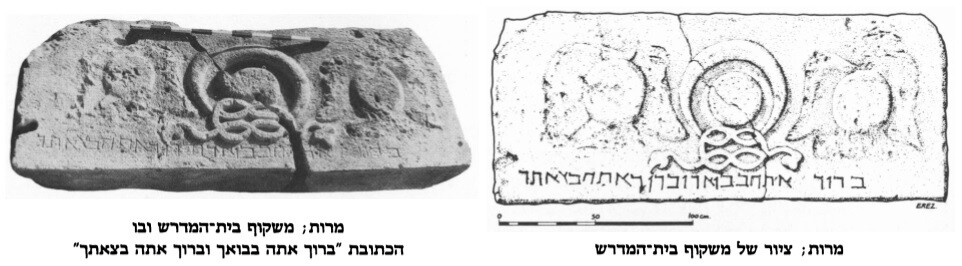
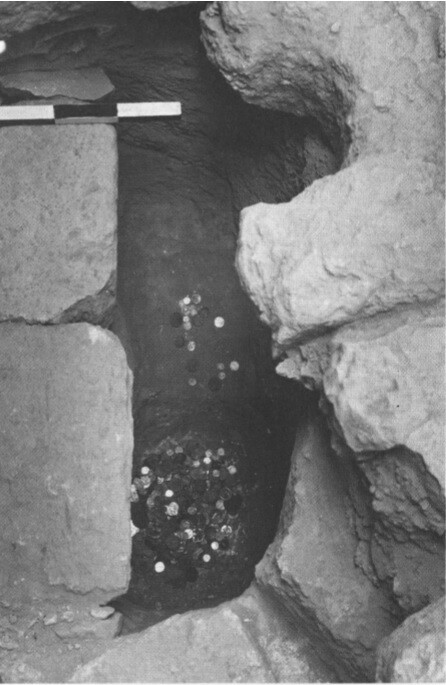
Hundreds of coins lay under and between the flagstones of the third floor; the excavators thought they had been placed there deliberately, to bring blessing on the building and its congregation. A hoard known as the synagogue's fund was found in a cavity beneath a storeroom: 485 coins, 245 of them gold and the rest bronze, most of them Byzantine. In the last phase, which Zvi Ilan dated to the early seventh century and the final report seems to place after 749, two rooms were added on the south side. One, about 7.5 by 6.5 metres, was a study hall with stone benches; its lintel carried two eagles flanking a wreath and the Hebrew verse 'Blessed shall you be when you come in, and blessed shall you be when you go out' (Deuteronomy 28:6), and its mosaic floor showed a lamb and a wolf beside a large jar with words from Isaiah 65:25. A room in the north-eastern corner is described as a classroom. Under the eastern threshold of the new north front lay a bronze amulet in which Yose son of Zenobia asks God for authority over the people of the village.
Distruzione
The published accounts do not agree on how the synagogue ended, and none names a human destroyer. The summary of Emmanuel Damati's final report, published by the Israel Antiquities Authority in 2022, says that the main synagogue of the second phase was apparently destroyed in the earthquake of 749 CE and then rebuilt, the rebuilt complex including a gallery, courtyards and the study house; that Jewish settlement at Meroth ended in the ninth or tenth century; and that the building was used as a dwelling in the Mamluk period. An excavation photograph of a room with a bread oven (tabun) built over the synagogue floor appears to belong to that later domestic use. Hebrew summaries of Zvi Ilan's earlier work add that the eagles on the study-house lintel were chiselled off by iconoclasts, which they date to the eighth century under the caliph Yazid II, and that the latest coin in the treasury dates from 1173 or 1193, which would mean the hiding place was still known in Crusader times. When the ruin was surveyed in 1981, only the tops of a few columns showed above ground.
Il destino della comunità
What became of the Jews of Meroth is unknown. The summary of the final excavation report states only that Jewish settlement ended in the ninth or tenth century CE, some two to three centuries after the Muslim conquest, and gives no reason. Earlier Hebrew accounts based on Zvi Ilan proposed a longer life, about 1,200 years from the time of Alexander Jannaeus to the Crusader period, on the strength of the latest treasury coins. A list of holy graves from the Cairo Genizah, dated to the fourteenth century, still names a 'village of Marus', which suggests that Jews then remembered the place as the burial site of a sage; whether any Jews lived there is not recorded in the sources read. The synagogue ruin served as a dwelling in the Mamluk period. In the Ottoman period Muslims of Algerian origin settled on the site. Their small village, Marus, was taken by Israeli forces in 1948 and its inhabitants left; the land then became a military training area.
Il luogo oggi
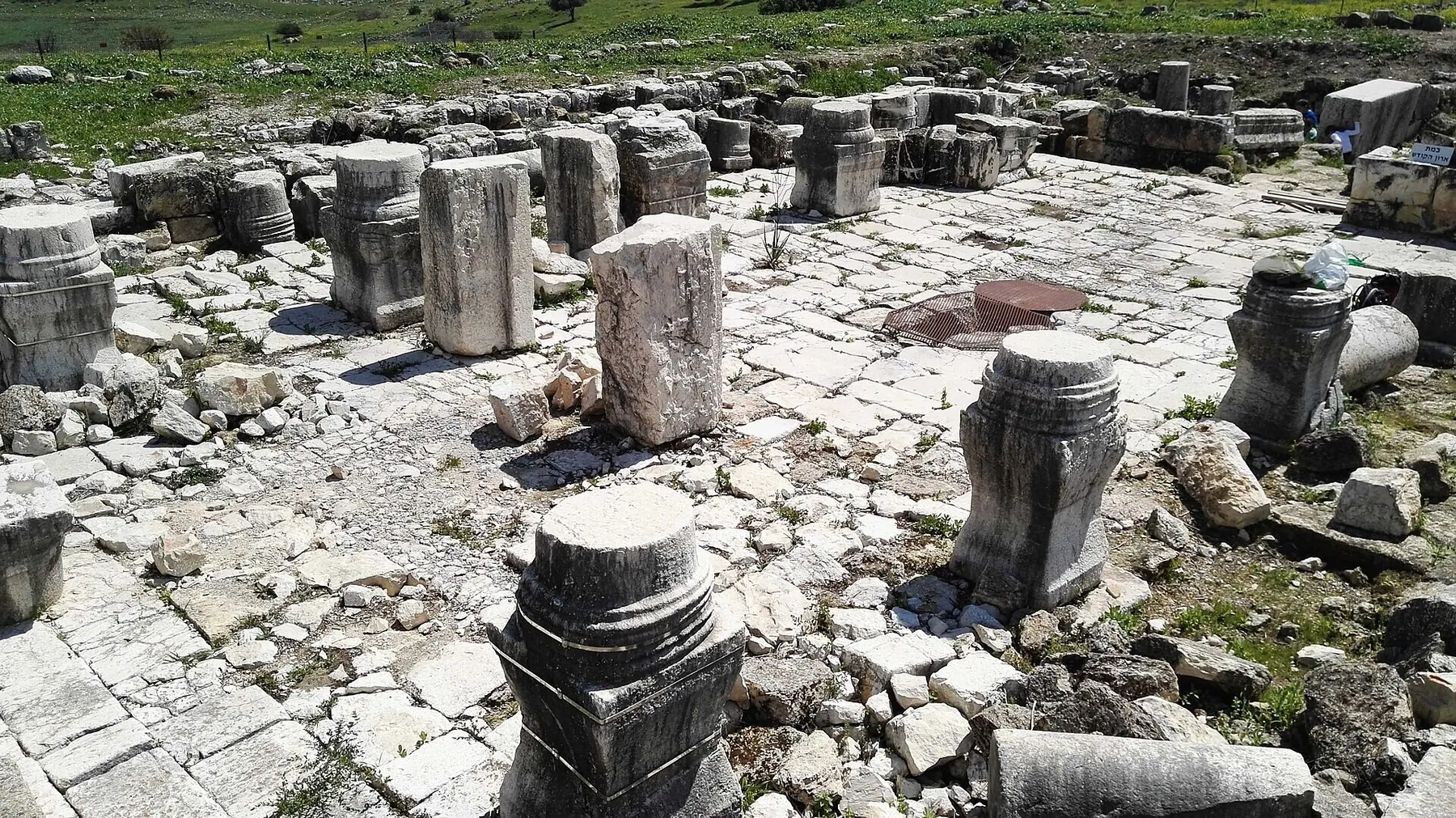
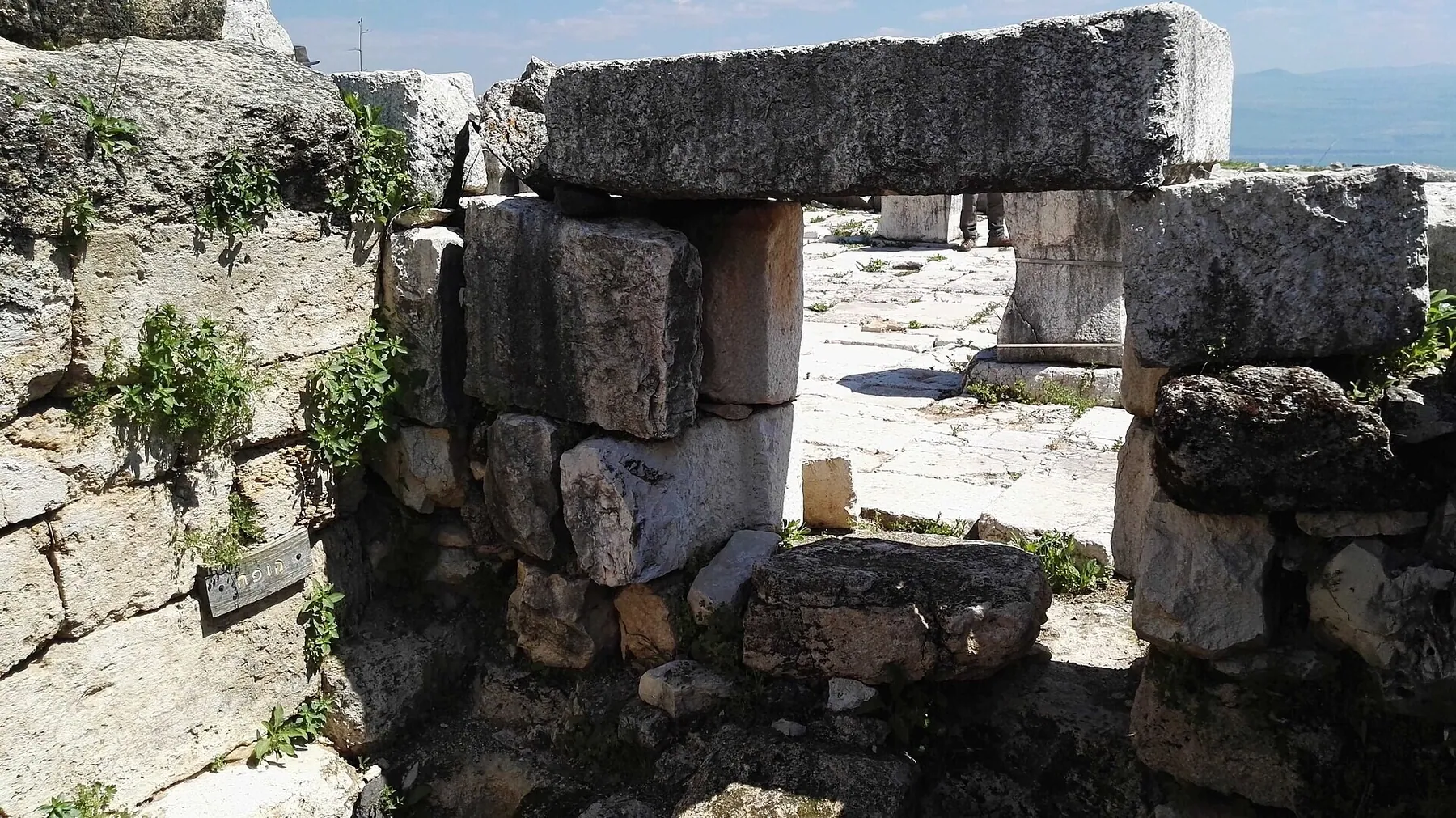
The ruins lie on open hill land inside an Israeli army firing zone about four kilometres west of Tel Hazor and are reached by dirt road, in practice at weekends and on holidays. Photographs taken in 2017 show the excavated hall open to the sky: a flagstone floor, column pedestals and drums set up in two rows, walls standing a few courses high and one doorway still carrying its lintel. A Hebrew travel guide notes that neither the parks authority nor the antiquities authority has taken on the upkeep of the site. The warrior mosaic was lifted and, according to the same guide, a copy lies in its place. The inscribed study-house lintel and the coin hoard are shown in the Israel Museum in Jerusalem.
Nomi importanti
Yudan son of Shimon (Yudan bar Shimon)
5th century CEDonor or maker of the synagogue's mosaic panelYudan is the only person named inside the prayer hall. An Aramaic line set into the frame of the mosaic panel at the northern end of the eastern aisle reads 'Yudan son of Shimon Mani', dated to 400-500 CE. Scholars take him to be either the donor who paid for the panel or the craftsman who laid it; the last word is either part of his name or the word 'mina', the sum given. Nothing else is known of him.
Biografia o fonte →Yose son of Zenobia
UnknownVillager named on the bronze amulet buried under the synagogue thresholdYose is known only from a bronze amulet, inscribed in Hebrew and Aramaic, that the excavators found beneath the eastern threshold of the synagogue's later northern front. In it he petitions God for authority over the inhabitants of the village, which has led to the suggestion that he was a leader of the community. The amulet is now in the Israel Museum.
Biografia o fonte →Hai qualcosa da condividere?
Fotografie, documenti, storie di famiglia o ricordi di questa sinagoga e della sua comunità aiutano a mantenerne viva la storia.
- Meroth (synagogue record with excavation photographs and bibliography)
- The synagogue at Horbat Merot: summary of E. Damati's final report, 'Atiqot 109 (2022)
- Synagogue, Meroth / Khirbet Marus / Horvat Marish (building 145)
- Beth Midrash, Meroth (building 146)
- Inscription 233: mosaic inscription of Yudan son of Shimon, Meroth
- Meroth / Khirbet Marus / Horvat Marish (site 108)
- Meroth Synagogue, 4th-5th century CE (excerpt from Z. Ilan and E. Damati, Biblical Archaeology Review, 1989)
- The Synagogue at Meroth: Does It Fix Israel's Northern Border in Second Temple Times?
- בית הכנסת במרות (The synagogue at Meroth)
- חרבת מרות (Horvat Merot)
- Meroth
- File:Meroth-12719.jpg and other photographs of Meroth by Bukvoed, 25 March 2017
Share a memory or thought
No comments yet. Be the first to add one.