
The story of Mezőberény Synagogue
Jews were living in Mezőberény, a Békés county market town of Hungarians, Germans and Slovaks, before a community was formally organised in 1851. It first rented a prayer room and, according to the local historian Mihály Bonyhai, bought a house in 1862 and converted it into a prayer house. In 1884, under the presidency of Károly Hoffer, the general meeting resolved to build a proper temple. A charity concert on 22 April 1884 raised money partly for the Israelite temple that was about to be built, and the work was finished within months. On the afternoon of 17 September 1884 Dr Alexander (Sándor) Kohut, chief rabbi of Nagyvárad, gave the dedication sermon before delegations from every Jewish community in the county, the local Catholic, Reformed and Lutheran clergy and a packed house of townspeople. The county weekly called the new building very costly and tastefully ornate, especially on the outside; a later historian describes it as imposing and Romantic in style. A rabbi's house and the community school stood beside it. The congregation worshipped there for sixty years. After the deportation of June 1944 the synagogue lost its furnishings and its worshippers, the community was recorded as extinct by 1960, and the building was pulled down in 1985.
Where it stood for 101 years
Historic: Mezőberény, Békés county (street and house number not identified in the sources found). Today: site not identified; the pin marks the town centre of Mezőberény, 5650, Hungary.
Open larger map →The Jewish community
The founders of 1851 are named as Salamon Lusztig, Izrael Haasz, Adolf Füchsel, Sámuel Marmorstein, Mór Marmorstein and Ignác Hoffer; a burial society (Chevra Kadisha) was set up in the same year. A county newspaper counted about 250 Jews in the town in 1877. An elementary school followed in the 1870s (sources give 1875, 1878 and 1879), with Ármin Haasz as its first teacher; by 1881 it had 43 pupils and taught in Hungarian, and in 1914 it was handed over to the state. A women's association was formed in 1880 and a charitable society received statutes in 1883. The community's own statutes, dated 25 October 1885, name it the Mezőberény Israelite Status Quo community; the Jews of neighbouring Köröstarcsa belonged to it. In 1911 Ferenc Schwartz gave 60 hold of land as a foundation for the upkeep of the cemetery. In 1929 the community had 218 members in 59 families, chiefly merchants and doctors, and Mór Cziegler's weaving mill employed 128 workers.
Architecture and design
Very little is recorded about the building itself and no photograph or plan of it was found. The report of the dedication in the weekly Békés (21 September 1884) calls it a very costly new temple, tastefully ornate especially on the outside, large enough to hold the congregation, delegations from the county's other Jewish communities and the town's leading citizens. The county archivist Edit K. Cseh describes it as an imposing temple in the Romantic style, with the rabbi's house and the school standing next to it. Inside, a canopy of costly fabric embroidered in gold was given in October 1884 by Farkas Schwarcz. Two furnishings survive: a carved pine prayer seat with a high back, shell-crested top and side door, known as the rabbi's chair and dated to the later nineteenth century, and a gilded cast-iron chandelier of the early twentieth century with twelve arms and Art Nouveau flower ornament. A local master builder, Ádám Maász, drew an alteration plan for the community's building in the 1920s. The architect and builder of 1884 are unknown.
Life inside the synagogue
The congregation followed the Status Quo Ante rite, neither Neolog nor Orthodox; in 1929 it belonged to the Szeged district, and by April 1944 it described itself as Congress (Neolog). It seems rarely to have had a rabbi of its own. An assistant rabbi, Mór Richtmann, had died by 1908; for the High Holidays of 1886 the community asked the Rabbinical Seminary in Budapest for a student, Dr Miksa Schwarcz, to preach in Hungarian; and in 1944 the registers were kept by Rabbi Rezső Rosenzweig of Békés. Services were led by a cantor who also served as ritual slaughterer: a man named Hirsch in 1884, József Czitrom as slaughterer in 1915 and Jakab Grünhut as cantor in 1930. The first wedding in the new temple, on 29 October 1884, was conducted by Rabbi Kohut for Sarolta Schwarcz and Izidor Schreiber, and on 1 September 1901 the founder Sámuel Marmorstein and his wife Rozália Weisz celebrated their golden wedding in it; county newspapers reported further weddings there up to 1909. The burial society and the women's association remained active until 1944.
Destruction
No battle damage is recorded. A woman who lived in Mezőberény during the war recalled in 1997 that the Jewish temple was emptied and its valuables carried off to the west. A chandelier and the carved prayer seat called the rabbi's chair stayed in the synagogue until 1945 and later passed into the keeping of the town's First District Lutheran congregation. The few survivors could not sustain worship. In 1951 a Jewish family expelled from Budapest by the Communist regime spent its first months in Mezőberény in one of the synagogue's rooms. In 1960 the national Jewish organisation listed Mezőberény among the communities that had ceased to exist. The building was demolished by the Communists: according to the county archivist Edit K. Cseh, who cites a 1989 survey of Hungarian synagogues, the imposing Romantic-style temple was pulled down in 1985. The sources found do not say who owned it by then, what it had been used for, or which local body ordered the work.
The community’s fate
In April 1944 the community numbered 139 people with 54 taxpayers, under its president Lipót Cziegler. After the Nazi German occupation of Hungary the yellow star was imposed on 5 April, and on 12 May the Jews of Mezőberény and Köröstarcsa were forced into a ghetto set up at a weaving mill and brickworks, one of the less harshly run ghettos of the county. The parish priest, Jenő Rózsa, took valuables into safekeeping and spoke against the persecution from the altar. In mid-June the ghetto was emptied into the collection camp at the Békéscsaba tobacco depot. On 26 June 1944 Hungarian authorities and gendarmerie, acting under Nazi German occupation, put them on a train to Auschwitz, which arrived on 29 June; 153 Jews and people of Jewish descent from Mezőberény were deported. Most were murdered on arrival; the memorial lists 151 victims, and a local newspaper reported in 1993 that only two had come back to the town. One survivor, György Szegő, later a psychiatrist in Melbourne, described these months in a memoir. By 1960 the community no longer existed.
The site today
The plot on which the synagogue stood has not been identified in the sources found, which give no street name, so what occupies it today is not known; the map pin marks only the centre of Mezőberény. Nothing of the building is known to survive in place. Two of its furnishings, a chandelier and the rabbi's chair, were catalogued in 2000 for an exhibition of the Erkel Ferenc Museum in Gyula, as items held by the Mezőberény First District Lutheran congregation. The Jewish cemetery, with its mortuary building, lies on Gyomai út beside the Lutheran cemetery. A memorial to the victims, put up in the cemetery in 1946, was moved in the early 1990s to the garden of the town's Orlai Petrics Soma museum.
Notable names
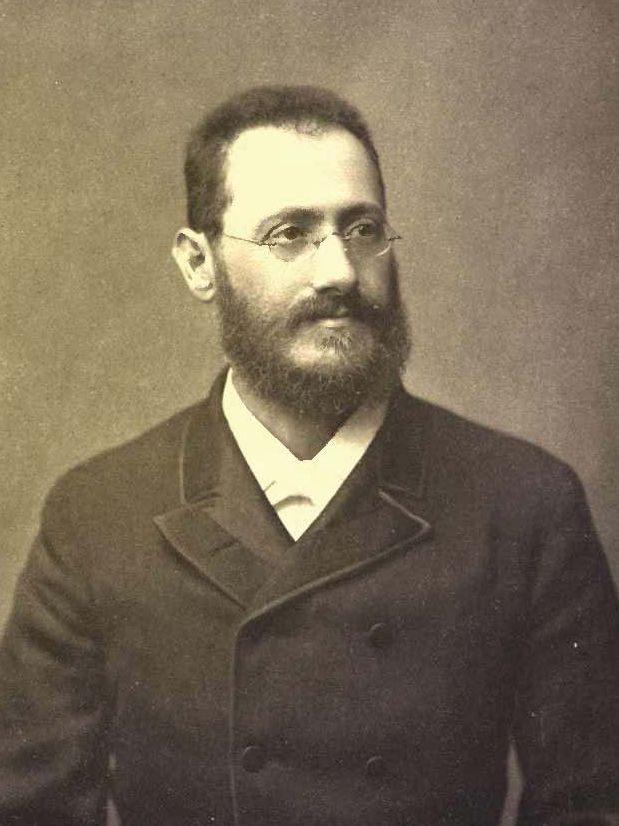
Alexander (Sándor) Kohut
1842–1894Chief rabbi of Nagyvárad; dedicated the synagogue in 1884Kohut, the scholar-rabbi of Nagyvárad (Oradea) known for his Hungarian preaching, gave the dedication sermon when the Mezőberény synagogue was opened on the afternoon of 17 September 1884. He returned on 29 October 1884 to conduct the first reported wedding in the new temple, and earlier that September had officiated at the funeral of the 70-year-old Ignác Hoffer, who bears the name of one of the founders of 1851. The following year he left Hungary for a pulpit in New York.
Biography or source →Károly Hoffer
UnknownPresident of the community when the synagogue was builtAccording to the Magyar Zsidó Lexikon it was during Hoffer's presidency, in 1884, that the general meeting of the Mezőberény community resolved to build the temple, which was completed and dedicated the same year. A grain merchant in the town, partner in the firm Kurländer and Hoffer, he was elected president again at the end of 1885.
Biography or source →Ármin Haasz
UnknownFirst teacher of the community school; community notaryHaasz was the first teacher of the Jewish elementary school that stood beside the synagogue. In August 1880 he gave the patriotic address at the service held in the community's earlier temple for the king's fiftieth birthday, and in 1883 he signed the statutes of the Mezőberény Israelite Charitable Society as its notary, a year before the new synagogue was built.
Biography or source →Mór Richtmann
Unknown (died by 1908)Assistant rabbi of MezőberényRichtmann is the only clergyman of rabbinical rank so far found attached to the Mezőberény congregation. He is known from the register of the National Israelite Office, which in January 1908 and again in 1910 recorded state-aid payments to his widow, described as the widow of the Mezőberény assistant rabbi. His years of service in the synagogue are not known.
Biography or source →Lipót Cziegler
UnknownLast recorded president of the community (1944)Cziegler, a retired weaving-mill director (the 1929 lexicon names Mór Cziegler's weaving mill as the town's notable Jewish-owned business), appears as president in the census of Hungarian Jewish communities taken in April 1944, when the congregation had 139 members and no rabbi. He led the community in the weeks before its members were forced into the ghetto and deported; his own fate was not established.
Biography or source →Do you have something to contribute?
Photographs, documents, family stories or memories of this synagogue and its community help keep its history alive.
- Magyar Zsidó Lexikon (1929), entry Mezőberény (pp. 592–593), first part
- Magyar Zsidó Lexikon (1929), entry Mezőberény, continuation
- A Békés megyei zsidóság történetének levéltári forrásai (Gyula, 2002), introductory study, p. 24
- A Békés megyei zsidóság történetének levéltári forrásai (2002), p. 23
- A Békés megyei zsidóság történetének levéltári forrásai (2002), pp. 21 and 26
- A Mezőberényi Izraelita Status Quo Hitközség alapszabálya, 25 October 1885 (document 40), with editor's note
- Adatok a Békés megyei zsidó hitközségek történetéhez, in: Világnak világa. Egyházak a Körösök vidékén (Gyulai katalógusok 8, 2000), p. 90
- Világnak világa (Gyulai katalógusok 8, 2000), catalogue nos. 237 and 239, p. 146
- Békés (weekly, Gyula), 20 April 1884: charity concert in Mezőberény
- Békés, 14 September 1884: announcement of the dedication
- Békés, 21 September 1884: report of the dedication
- Békésmegyei Közlöny, 9 November 1884: wedding in the newly built temple
- Békésmegyei Közlöny, 7 October 1886: letter from Mezőberény
- Békésmegyei Közlöny, 24 August 1880 and 7 January 1877
- Magyarországi Zsidó Hitközségek 1944. április: Mezőberény anyahitközség (p. 401)
- Gyermekkor a holokauszt idején, in: A holokauszt Békés megyei történeteiből (Gyula, 2014), pp. 66–67
- Emlékmű az elhurcoltaknak, Békés Megyei Hírlap, 17 March 1993
- Emlékeztek a túlélők, Békés Megyei Hírlap, 15 June 1994
- Reader's statement of Vetési Istvánné, Békés Megyei Hírlap, 7 April 1997
- Zsidók deportálása Budapestről 1951-ben, Egység no. 101 (December 2017)
- A Magyar Izraeliták Országos Képviseletének helyzetjelentése, 1960, in: Zsidó közösségek öröksége (Magyar Zsidó Levéltári Füzetek 7, 2010), p. 116
- Két mezőberényi építőmester, Maász Ádám és Maász [Mérai] József, A Békés Megyei Múzeumok Közleményei 28 (2006), plan lists
- Az Országos Izraelita Iroda iktatónaplója: entries of 31 January 1908, 20 October 1915 and 24 November 1930
- Emléktáblát állítottak a Köröstarcsáról elhurcolt zsidóság tiszteletére
- Békésmegyei Közlöny, 18 August 1901: Aranylakodalom
- Békésmegyei Közlöny, 31 December 1885: Választások
- Mezőberény (Nevezetességei)
- Magyarországi zsinagógák listája (Békés vármegye)
- Mezőberény (Békés), JewishGen Cemetery Discovery Project
- OpenStreetMap Nominatim result for Mezőberény
- File:Alexander Kohut.jpg
Share a memory or thought
No comments yet. Be the first to add one.