

הסיפור של Great Synagogue of Michalovce
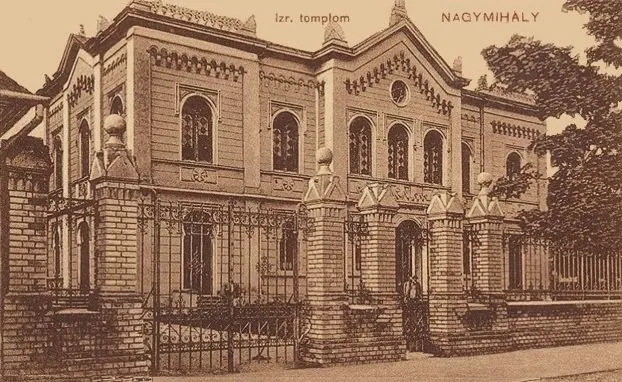
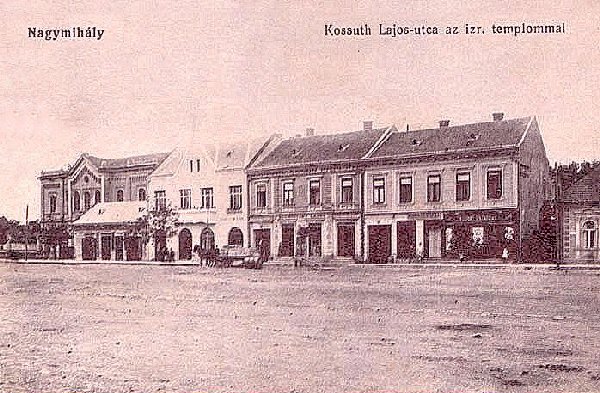
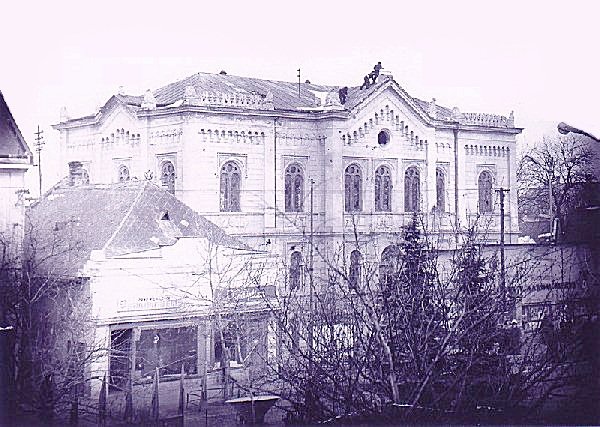
Michalovce, Nagymihály in Hungarian, lies in the Zemplín region of eastern Slovakia. Its Jewish community grew quickly in the nineteenth century, and by 1910 Jews made up about 32 per cent of the town's people, a share that the Zemplín Museum historian Martin Molnár says had no parallel anywhere in Slovakia. The Encyclopaedia Judaica states that the community was formally founded in 1867 and built a large synagogue in 1888; the KehilaLinks site for the town describes the 1888 building as Oriental in style. Former residents recalled in the 1969 memorial book that the congregation first prayed in a small prayer house on the New Street and then decided to build a wider and much more beautiful synagogue in the centre of town, opposite the town hall. A grandson of Rabbi Shimon Ehrenfeld wrote that the town's permission to build it on so central a site showed how much the Jews counted in local life. The Great Synagogue was the chief house of prayer of a united Orthodox congregation that also kept a Beit Midrash, a Hasidic Klaus and smaller prayer rooms. It survived the war with a wrecked interior, was repaired by the survivors and was still used in the 1960s. It was pulled down in the 1970s and a polyclinic was built on the site.
Where it stood for 87 years
Historic: main street (Kossuth Lajos utca), opposite the town hall, Nagymihály/Michalovce. Today: site of the polyclinic, Námestie osloboditeľov 916/25, 071 01 Michalovce (approximate: building on the plot, not the synagogue footprint).
פתיחת מפה גדולה ←הקהילה היהודית
A census of 1724 already records Jews in Michalovce, and according to Molnár the community built its own prayer house in 1786. The Encyclopaedia Judaica counts 170 Jews in 1840, 445 in 1857, 1,079 in 1880 (27.6 per cent of the population), 2,200 in 1910, 3,386 in 1930 and 4,197 on the eve of the deportations. The town became known in Jewish history for the convention of Orthodox rabbis held there in 1865, which ruled against reforms such as moving the reading platform from the centre of the synagogue or singing with a choir. The congregation stayed Orthodox and, as the memorial book stresses, did not split into Neolog and Orthodox communities, although a Hasidic group praying in the Sephardic rite had its own Klaus. Rabbi Aharon Greenberger served from about 1850 until his death in 1892 and was followed by Rabbi Shimon Ehrenfeld. The Košice region guide describes a community of merchants, financiers and lawyers that ran yeshivas, associations and youth sports clubs.
אדריכלות ועיצוב
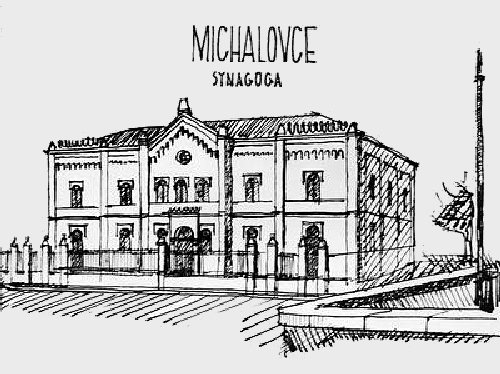
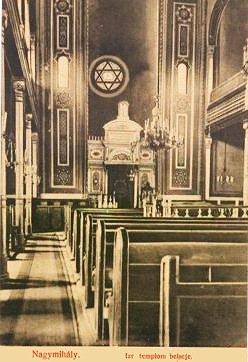
The architect and builder of the synagogue are unknown. Postcards captioned 'Izr. templom' show a large two-storey building set back behind a brick fence with tall piers and iron railings, its broad front facing the street. The facade is symmetrical: a central section of three bays rises to a gable with a round window and a crowning ornament, flanked by lower side bays and corner sections finished with toothed cornices and small pinnacles. The windows are round-headed, arranged in two tiers, and the entrances sit under arched portals. The colour postcard shows walls in alternating light and dark bands, which suggests polychrome brick or render. The memorial book describes the interior as vast, with numerous columns carrying the arches of the women's gallery, painted walls, stained glass, majestic chandeliers and a 'gigantic dome', although the exterior views show a hipped roof. An interior postcard shows rows of wooden pews, richly painted pilasters, side galleries and a raised Torah ark beneath a round window filled with a Star of David.
החיים בבית הכנסת
Prayers in the Great Synagogue followed the Ashkenazi rite, while the Klaus used the Sephardic one, and the memorial book says Orthodox customs were strictly kept. Rabbi Aharon Rosner was chief cantor and led the High Holiday services for fifty years. Zalman Leib Wieder, formerly cantor in Debrecen, came to Michalovce in 1920 and directed a choir; David Lisauer is named as cantor of the big synagogue. The beadles were Abraham Lang, his son Chaim Lang, a Rabbi Schreier and Gedalia Rubin. The Mishnayot society studied daily in the synagogue and occupied its vestibule, known as the 'Pulish', where some children's religious classes were also held. In 1925 a new Beit Midrash was built in the synagogue yard because the old one could no longer hold everyone, and a large school building for the cheder classes was later put up on the neighbouring plot. Every Jew, a contributor wrote, went to prayers morning and evening, and no shop opened on the Sabbath.
הרס
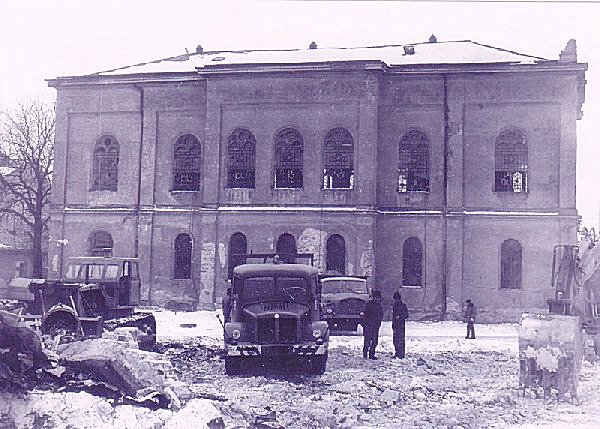
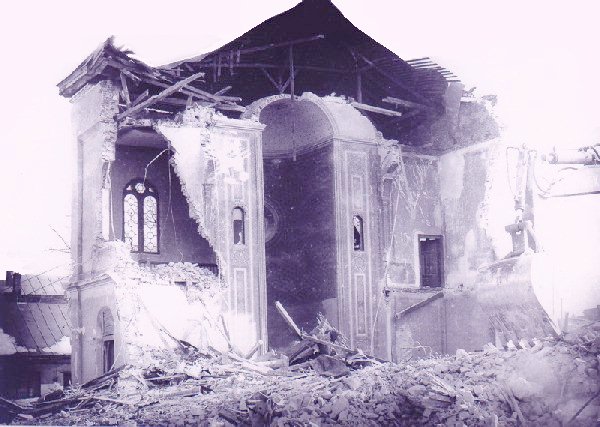
The synagogue stood empty after the deportations of 1942. Emil Knieza, writing in the 1969 memorial book about the return of survivors after the Soviet army took the town on 26 November 1944, says the destruction inside the synagogues was tremendous and they were unfit for prayer, but that they were repaired well enough for daily services to resume; the Encyclopaedia Judaica also says the survivors repaired the synagogue in 1945. Knieza's text is inconsistent: one sentence says the big synagogue was completely destroyed and that potatoes grew on its site when he last visited in 1967, yet he also names Rubin as beadle of the big synagogue, and another contributor to the same book wrote that the building still stood empty opposite the town hall. The demolition date differs between sources. The Encyclopaedia Judaica says it was torn down in 1970; KehilaLinks gives 1975 and shows three photographs of the demolition with trucks and machinery in the snow; the English Wikipedia list of synagogues in Slovakia gives 1976. The demolition took place under Communist rule, and a state polyclinic was later built on the site, but no source read names the body that ordered the demolition.
גורל הקהילה
After the Slovak State was set up in 1939, anti-Jewish laws stripped Michalovce's Jews of their businesses through 'aryanization'. Molnár records that the first deportation from Slovakia, on 25 March 1942 from Poprad, carried a thousand young women from the Šariš-Zemplín county, Michalovce among it. In early May 1942 the Jews were assembled in the grounds of the synagogue on the main street, where many scratched their names, dates and last messages into the bricks of its fence. That month 2,916 Jews of the Michalovce district were deported, 3,565 in all of about 5,800; some 1,140 escaped to Hungary. The Slovak authorities paid Nazi Germany 500 Reichsmarks for each person deported. The Encyclopaedia Judaica says the transports went to ghettos in the Lublin region and from there to Sobibor and Treblinka. Soviet troops reached the town in November 1944. About 800 Jews lived there in 1945-1947, many from nearby villages; most left for Israel in 1948-1949, some 200 to 250 remained in 1967, and by 1989 religious life had ended.
האתר כיום
The synagogue stood on the main street of Michalovce, called Kossuth Lajos utca on Hungarian-era postcards, opposite the town hall. According to Molnár's 2017 history published by the town, the town polyclinic was built where the synagogue stood. OpenStreetMap places the polyclinic at Námestie osloboditeľov 25, close to the town hall at number 30, which agrees with the memorial book's description. A stone memorial plaque on the polyclinic recalls the deportations. A 2017 architecture thesis at the Slovak University of Technology in Bratislava proposed a new building on the site of the lost synagogue. The Jewish cemetery at Hrádok, with thousands of gravestones, survives and is maintained.
שמות בולטים
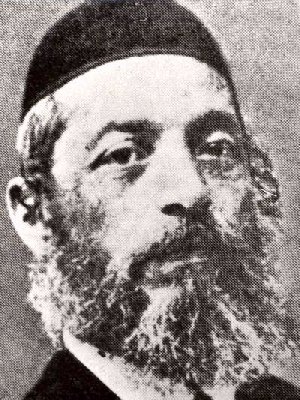
Shimon Ehrenfeld
died 1931Chief rabbi of Michalovce, 1893/94 to 1931A grandson of Rabbi Moshe Sofer of Pressburg, Ehrenfeld became chief rabbi soon after the Great Synagogue was built and held office for 37 years, running a yeshiva of about 80 students. His grandson wrote in the 1969 memorial book that his learning and worldly understanding kept the Ashkenazi majority and the Hasidim united, with the Great Synagogue as the centre of religious life. He wrote Sharei Tzion and is buried in Michalovce.
ביוגרפיה או מקור ←Aharon Greenberger
1811-1892Rabbi of Michalovce, c. 1850-1892A close disciple of Rabbi Moshe Sofer, Greenberger was appointed rabbi of Michalovce around 1850 and served for some forty years, so the Great Synagogue was built in 1888 during his last years in office. He wrote Daas Sofer. He died on 9 October 1892 and is buried in Michalovce; his son Simcha Chaim Greenberger became senior dayan under his successor.
ביוגרפיה או מקור ←Aharon Rosner
UnknownChief cantorRosner came from Ungvár, where he had been cantor of the tailors' synagogue, and first served Michalovce as a ritual slaughterer before being appointed cantor. The memorial book calls him the chief and first cantor of the town and says he led the High Holiday prayers for fifty years, in a pleasant, somewhat weeping voice. He died in Michalovce and is buried there.
ביוגרפיה או מקור ←Zalman Leib Wieder
died in the HolocaustCantor and ritual slaughterer, from 1920Formerly cantor in Debrecen and ritual slaughterer in another congregation, Wieder came to Michalovce in 1920. The memorial book remembers him in the Great Synagogue as a first-class, modern cantor who understood music and directed a very good choir, and also as a scholar with his own yeshiva. He was murdered in the Holocaust.
ביוגרפיה או מקור ←David Lisauer
died in the HolocaustCantor of the big synagogueThe 1969 memorial book of Michalovce names Lisauer as the cantor of the big synagogue, the building on the main street opposite the town hall, and describes him as a learned scholar and a licensed teacher. It records that he died during the Holocaust but does not say where or when he died.
ביוגרפיה או מקור ←יש לכם משהו לתרום?
תמונות, מסמכים, סיפורי משפחה וזיכרונות מבית הכנסת ומהקהילה שלו עוזרים לשמור על ההיסטוריה שלו בחיים.
- Sefer Michalovce ve-ha-seviva (The Book of Michalovce), English section pp. 2-37: community history and 'The Religious Life in Michalovce' by Yisrael Yakov Davidowich
- The Return of the Expelled (Sefer Michalovce, pp. 92-103)
- Michalovce, Slovakia (KehilaLinks home page)
- Michalovce Religious
- Michalovce Town Views
- Michalovce (Encyclopaedia Judaica entry)
- Non possumus obliviscere - Nesmieme zabudnúť! História židovskej komunity v Michalovciach
- Jewish Monuments of Eastern Slovakia (Jewish Cemetery at Hrádok in Michalovce)
- Michalovce. Novostavba na mieste zaniknutej synagógy
- List of synagogues in Slovakia
- Poliklinika, Námestie osloboditeľov 916/25, Michalovce (OpenStreetMap node 3082869706)
Share a memory or thought
No comments yet. Be the first to add one.