

История Mindszent Synagogue
Mindszent lies on the left bank of the Tisza in the Hódmezővásárhely district of Csongrád-Csanád county in southern Hungary. According to the film director István Gábor Benedek, writing in 2019 in the preface to Katalin Benák's book on the town's Jewish cemetery, the first Jewish families there founded a burial society and a cemetery, then a school for small children and a house of prayer, and only when the community was economically secure did they pay for a respectable synagogue. The building stood on Kossuth Street and formed one complex with the Jewish school, a flat for the cantor and the rabbi's house. Its date of construction, its builder and its size are not recorded in the sources read.
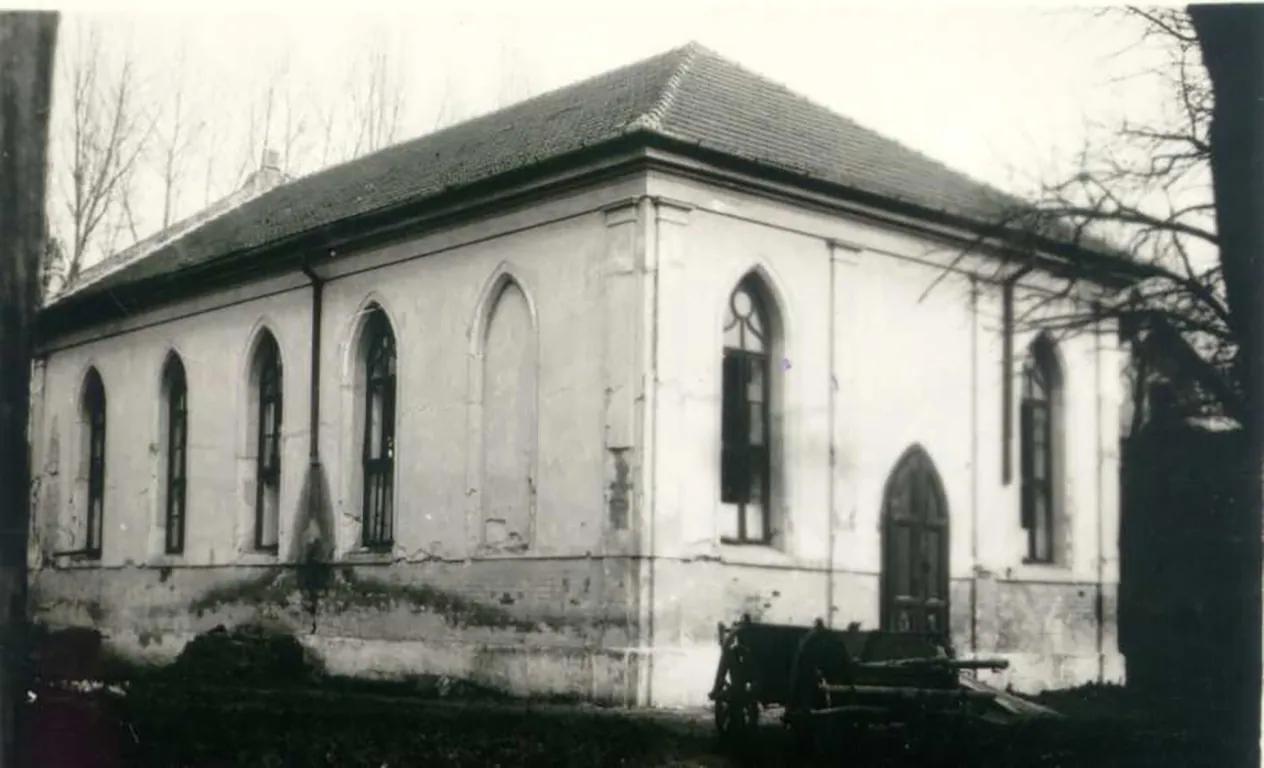
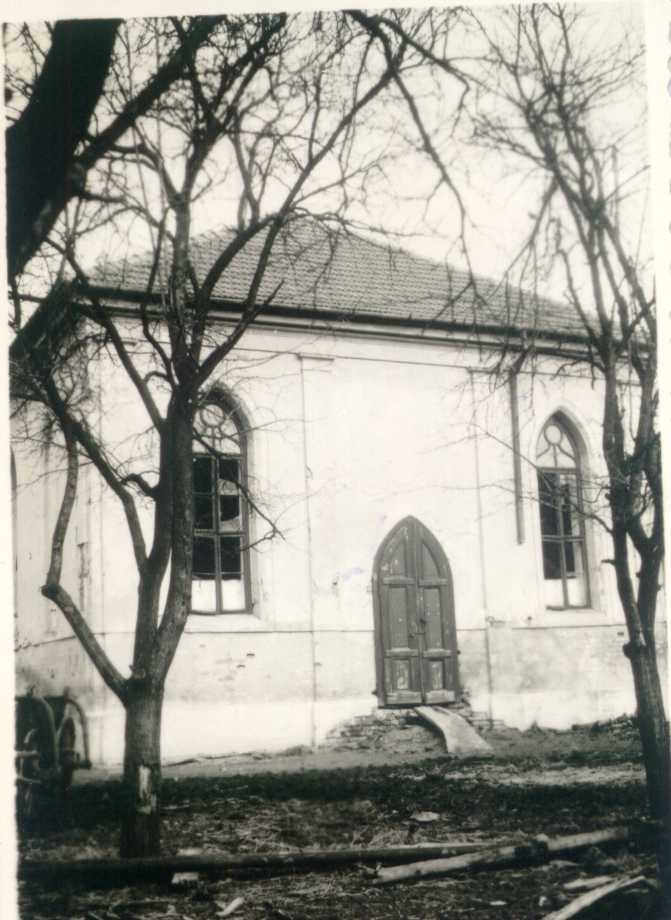
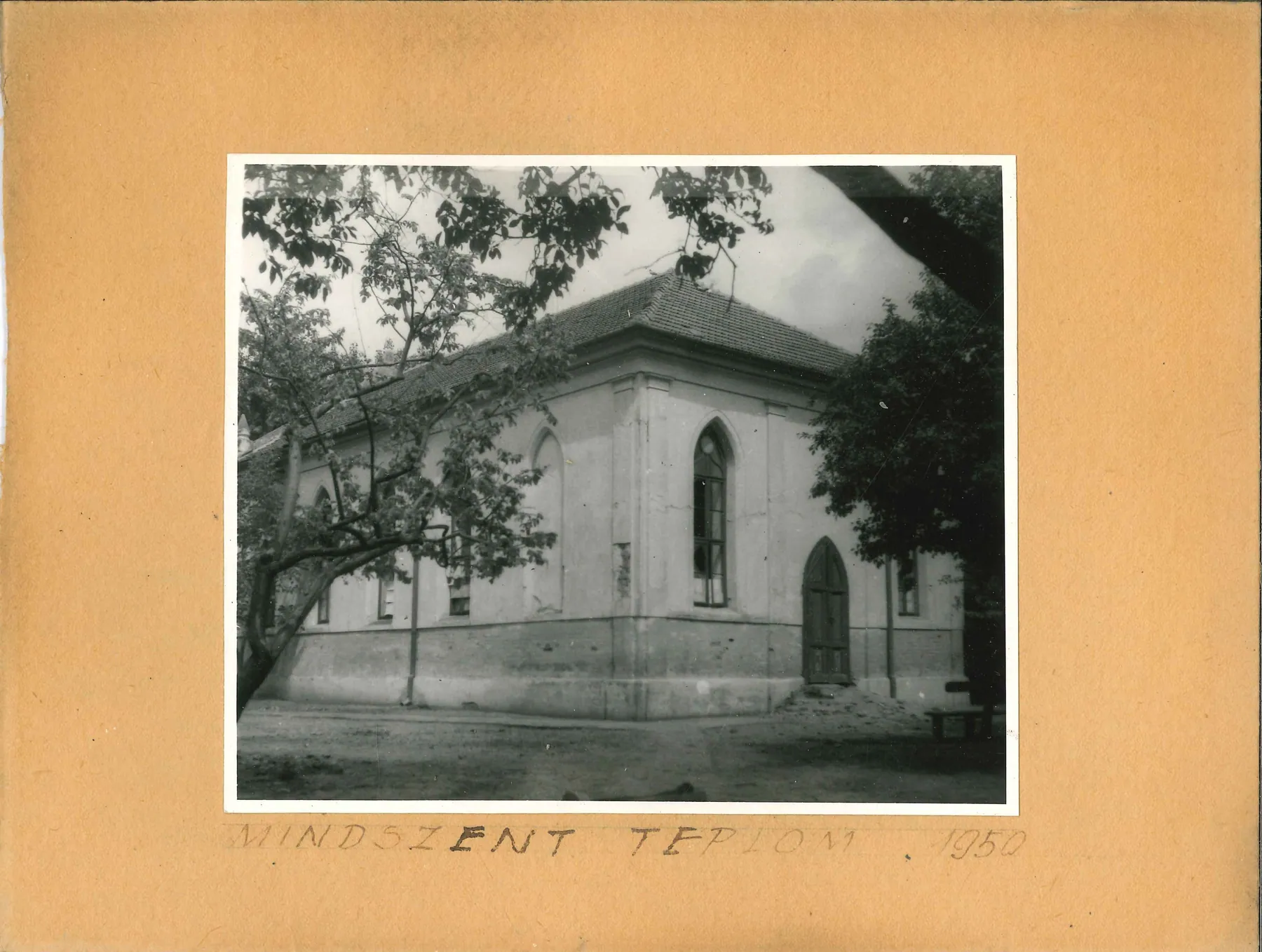
The Hungarian Jewish Museum and Archives holds four photographs of the building. One, mounted on an album page lettered 'Mindszent templom 1950', and three dated 1955 show a plain rendered hall with tall pointed-arch windows and a tiled hipped roof, its plaster flaking and its grounds untended. The synagogue had then been without a congregation for a decade. Gazda's survey of 1980-87 records it as a demolished synagogue, without a building date, and also lists a prayer house in the town whose fate she could not establish. When and by whom it was pulled down is not documented in anything read for this entry.
Where it stood
Historic: Kossuth utca, Mindszent, Csongrád county (house number unknown). Today: Kossuth Lajos utca, 6630 Mindszent, Csongrád-Csanád county; pin at the street's geocoded midpoint (approximate).
Открыть большую карту →Еврейская община
Little is known of the Jews of Mindszent. Gazda's survey of 1980-87 records 19 Jews in the town in 1851 and 166 in 1910, and gives no figure for 1941. Benedek describes a community that grew up in stages: the founding families first established the Chevra Kadisha burial society and the cemetery, then a school for young children, then a prayer house, and finally the synagogue. By the time the synagogue was built the community kept a rabbi, a cantor and a school, though when that was is unknown. Its best-known family were the Grüners, who founded the Tiszavidéki roller mill in the town; the founder was Jakab Grüner, with his wife and brother. The museum's portrait of Mátyás Rubinstein describes him as chief rabbi of Mindszent, Orosháza and Szekszárd, which shows that the town at some point had a rabbi who went on to larger congregations. In 1944 the rabbi was Gyula Büchler. The cemetery with its Hebrew-inscribed gravestones survives and has been documented by Katalin Benák.
Архитектура и дизайн
The four museum photographs are the only record of the building found. The facade view of 1955 shows the gabled entrance front: a broad end wall with a low triangular gable carrying a small paired opening near its apex and a finial at the top, a round window in the middle of the wall flanked by tall pointed-arch windows, and corner pilasters. The side views show a long, rendered hall under a tiled hipped roof with deep eaves, lit by a row of tall, narrow pointed-arch windows with small panes, some of them blind or bricked, and a pointed-arch door in one wall. A plain plinth runs round the base. The pointed arches give the building a Romantic, Gothic-revival character, but that description is based on the photographs alone. Benedek mentions a women's gallery, benches and a pulpit inside. The architect, builder, construction date and seating capacity are unknown, and no interior view was found.
Жизнь в синагоге
Benedek's account, drawn from the records gathered in Benák's book, describes the Kossuth Street complex as a temple and house of study with a women's gallery, rows of benches and a pulpit, next to the Jewish school, the cantor's flat and the rabbi's home. Services, teaching and the community's administration were thus concentrated on one plot. The furnishings included a Torah ark and candlesticks. Whether the congregation followed the Neolog, Orthodox or Status Quo rite has not been established from the sources read, and the names of cantors, teachers and lay officers are unknown. Gyula Büchler was the rabbi at the end, and Mátyás Rubinstein had served as chief rabbi at an earlier, undetermined date. The Grüner family of the roller mill were among its prominent members. No description of festivals, choir or other religious life in the building was found.
Разрушение
No source read records damage to the synagogue during the war. After the deportation of the congregation in July 1944 the building stood empty. An inventory from the 1940s of the Kossuth Street temple and school, quoted by Benedek, lists the pews, candlesticks, Torah ark and pulpit as being in poor condition, which he reads as a sign of final decay. The museum photographs show the building still standing in 1950 and again in 1955, with its plaster falling away and timber and rubble lying around it, but with its roof and window frames intact. It was gone by the time of Anikó Gazda's site survey of 1980 to 1987, so it was demolished in that interval, under Communist rule. Who sold, ordered or carried out the demolition, and in which year, is not recorded in any source read for this entry.
Судьба общины
In the summer of 1944, after the Nazi German occupation of Hungary, the Jews of Mindszent were confined in a ghetto by the Hungarian authorities. Benedek writes that grandparents and other relatives were herded into it and that in July they were deported to Auschwitz, where they were murdered in the gas chambers along with several hundred thousand other Hungarian Jews. He writes that Rabbi Gyula Büchler shared the fate of his congregation. The number of people deported from Mindszent, the route of the transport and the number of survivors are unknown. Olga, a daughter of the Grüner family who was married to a French journalist, was not taken to the ghetto and survived; after the war she and her son René, later the film director René Gainville, left for France. The family's mill was set on fire and then nationalised, and their house became a party office. Benedek writes that no Jews live in Mindszent today.
Место сегодня
The synagogue stood on Kossuth Street, now Kossuth Lajos utca, but its house number and exact plot have not been identified, so what occupies the site today is unknown. No fragment of the building is recorded as surviving. The map pin marks the middle of Kossuth Lajos utca as found by OpenStreetMap and should be read only as the street, not the plot. The Jewish cemetery of Mindszent survives; its Hebrew-inscribed gravestones have been recorded in Katalin Benák's book. Fixing the site will need the town's cadastral maps, the 1955 survey file behind the museum photographs, or local memory.
Значимые имена
Mátyás Rubinstein
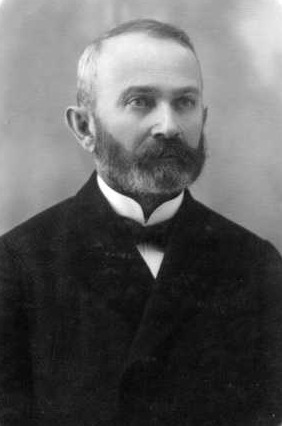
UnknownChief rabbi of Mindszent, later of Orosháza and SzekszárdThe Hungarian Jewish Museum's catalogue describes Dr Mátyás Rubinstein as chief rabbi of Mindszent, Orosháza and Szekszárd, so he served the Mindszent congregation at some point in his career, probably early, before moving to larger communities. His years in Mindszent and his dates of birth and death were not found in the sources read today. The museum holds a studio portrait of him taken by the photographer Borgula.
Биография или источник →Gyula Büchler
died 1944Rabbi of Mindszent in 1944Büchler was the rabbi of the Mindszent congregation at the end of its existence. Benedek's 2019 account of the town's Jews names him as the rabbi who, with his congregation, went to his death in 1944, after the community was confined in the ghetto in the summer and deported to Auschwitz in July. His birth date, the year he came to Mindszent and his training are unknown.
Биография или источник →Вам есть чем поделиться?
Фотографии, документы, семейные истории и воспоминания об этой синагоге и её общине помогают сохранить её историю.
- Zsinagógák és zsidó községek Magyarországon
- Benedek István Gábor: Zsidók Mindszenten (Remény 2019/2)
- Mindszent, zsinagóga (F16.053)
- Mindszenti zsinagóga homlokzata (F70.278.1)
- Mindszenti zsinagóga keleti és oldalfala (F70.278.2)
- Mindszenti zsinagóga keleti fala (F70.278.3)
- Dr. Rubinstein Mátyás fényképe (F66.505)
- Mindszent
- Kossuth Lajos utca, Mindszent (OpenStreetMap way 187817778)
Share a memory or thought
No comments yet. Be the first to add one.