
Die Geschichte von Palóczy Street Synagogue
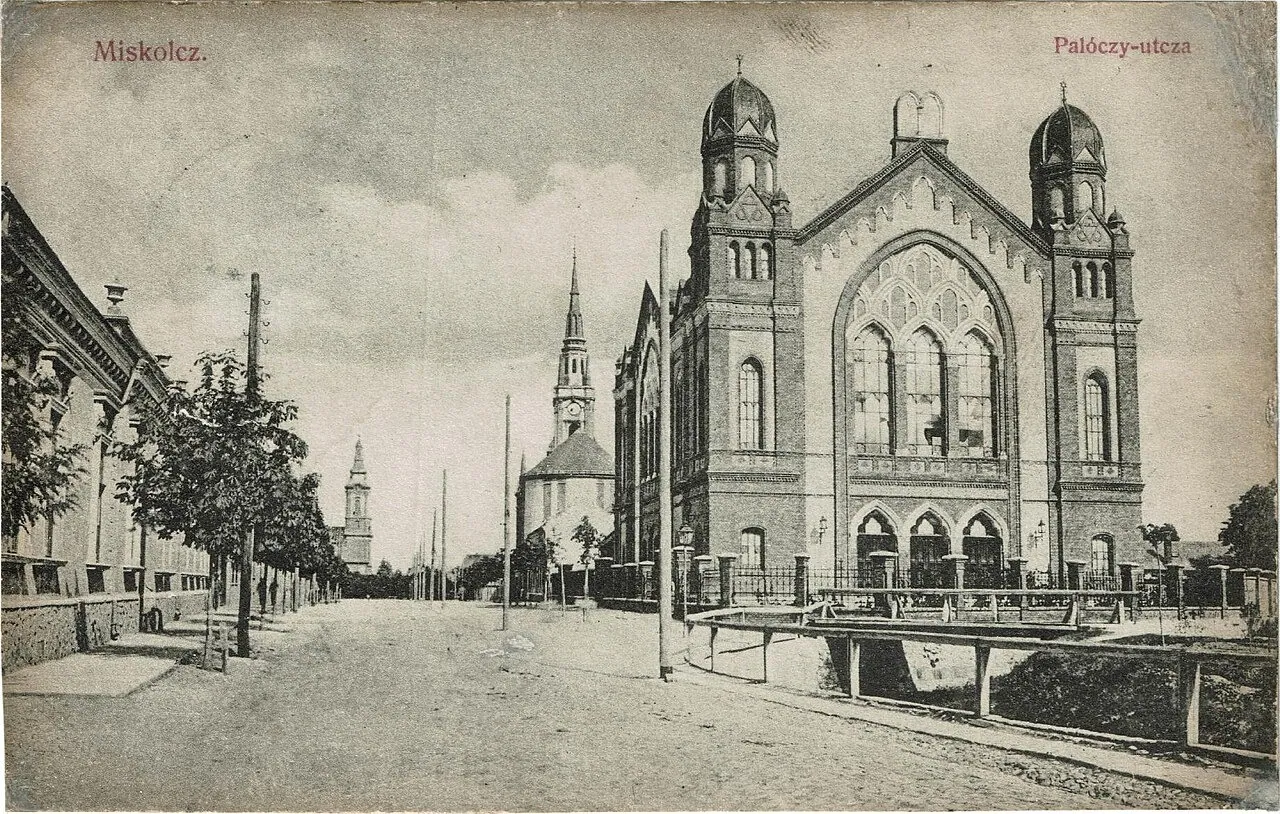
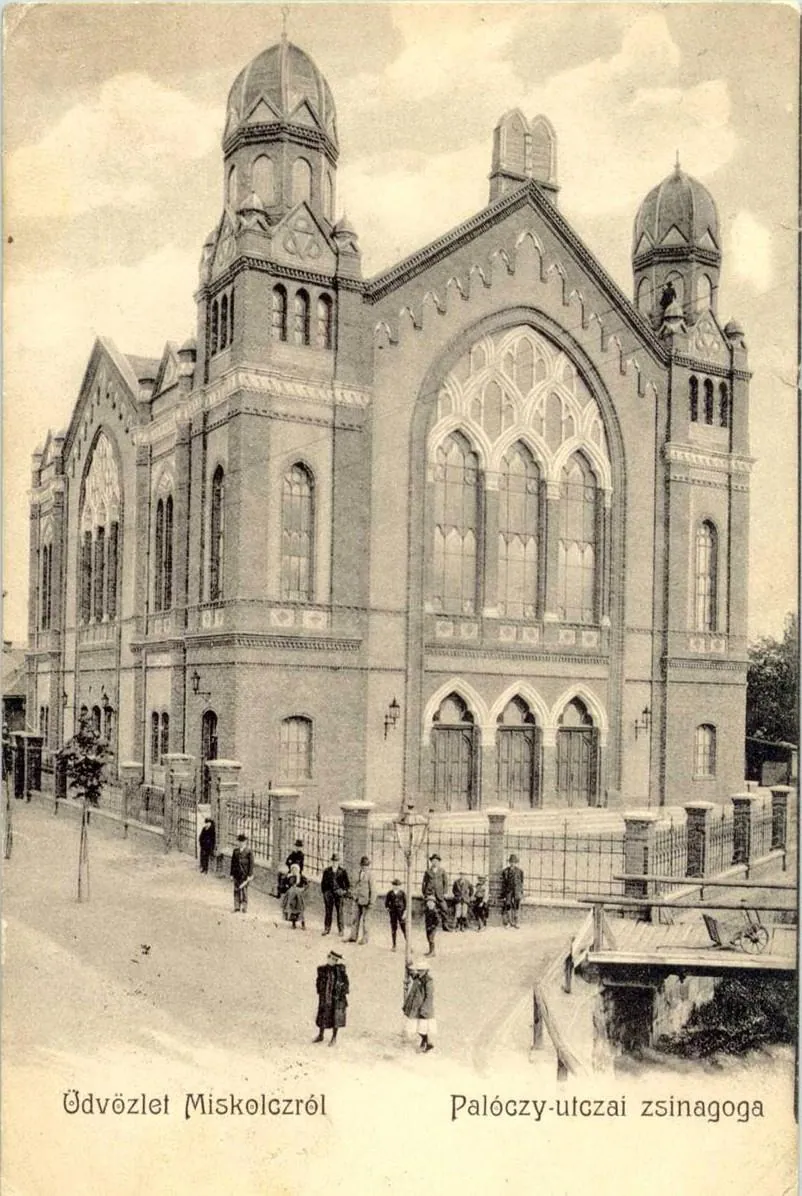
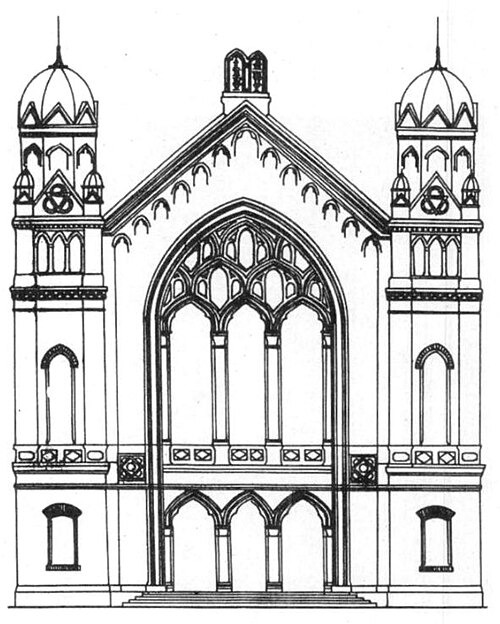
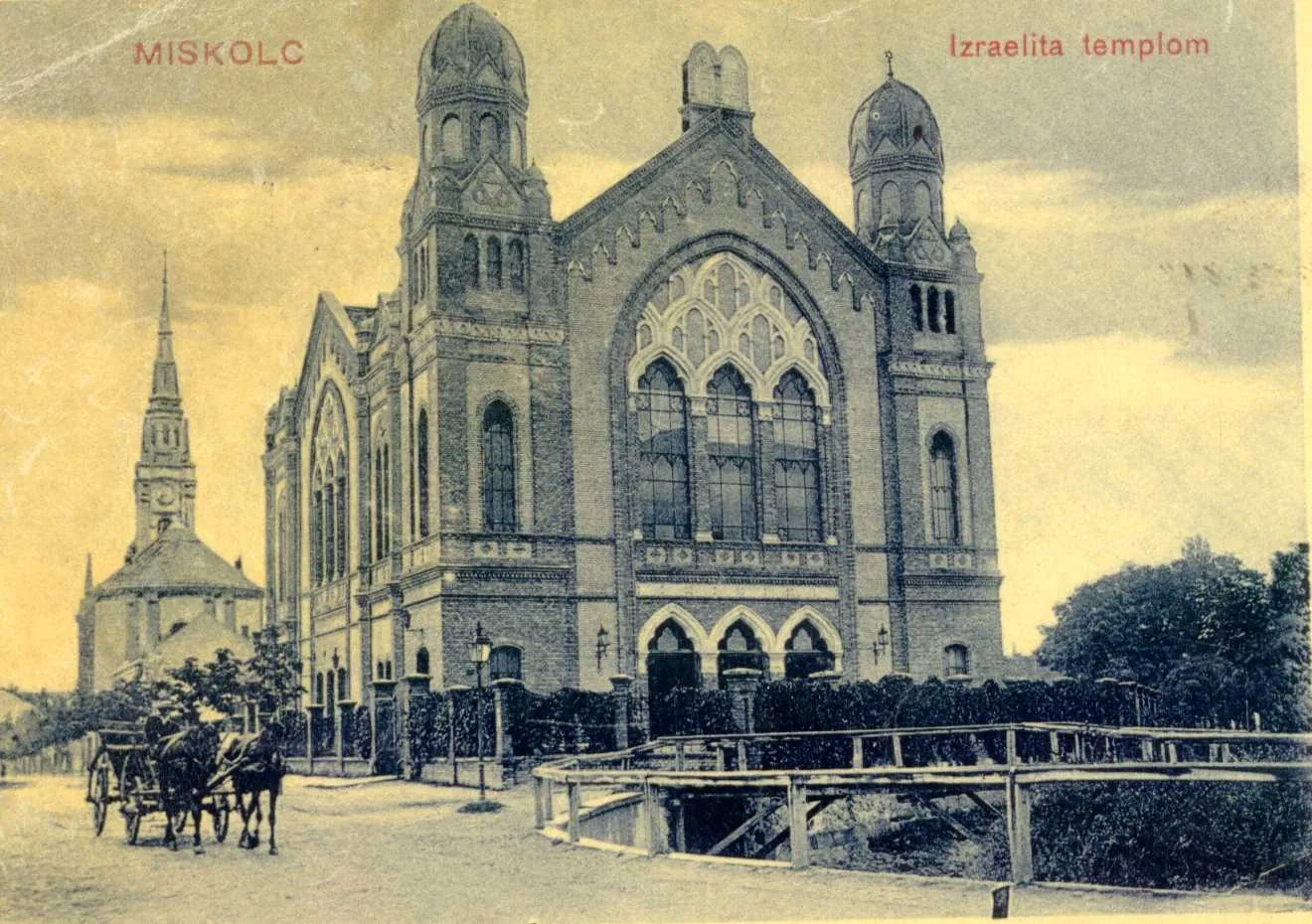
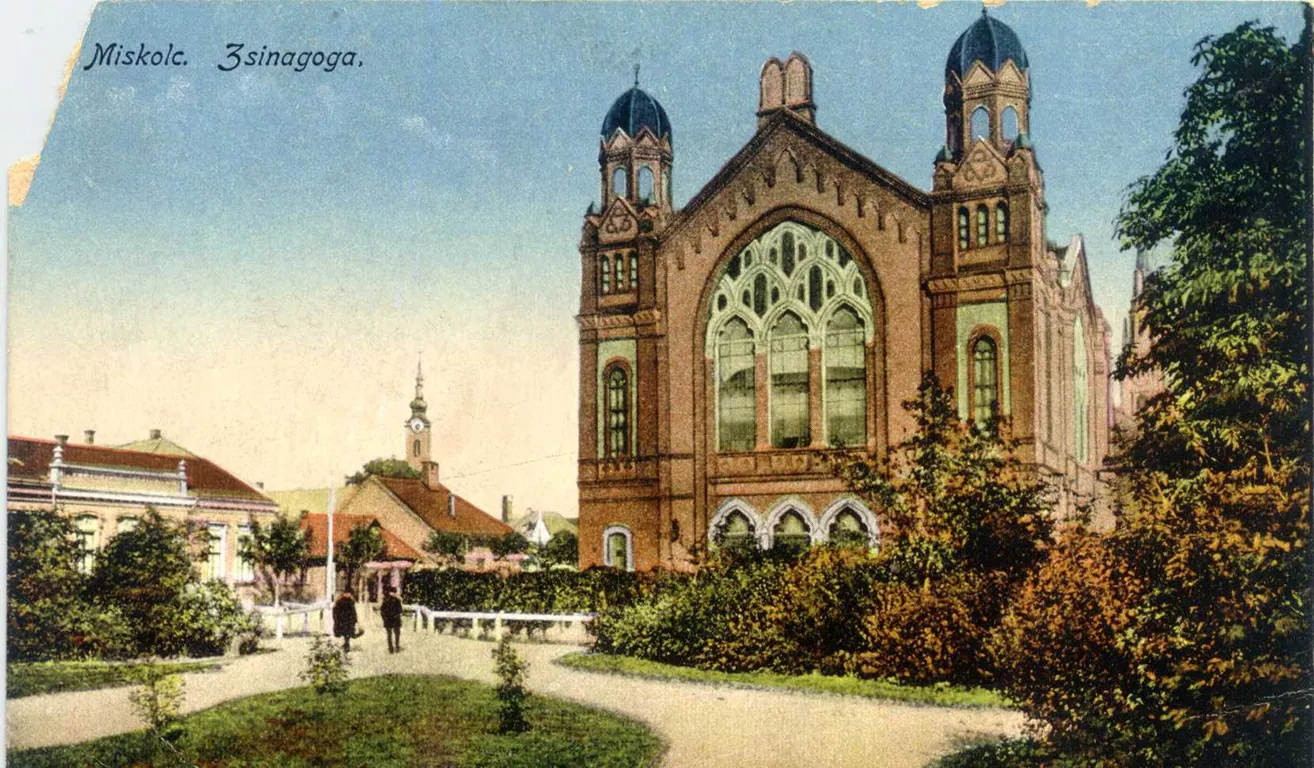
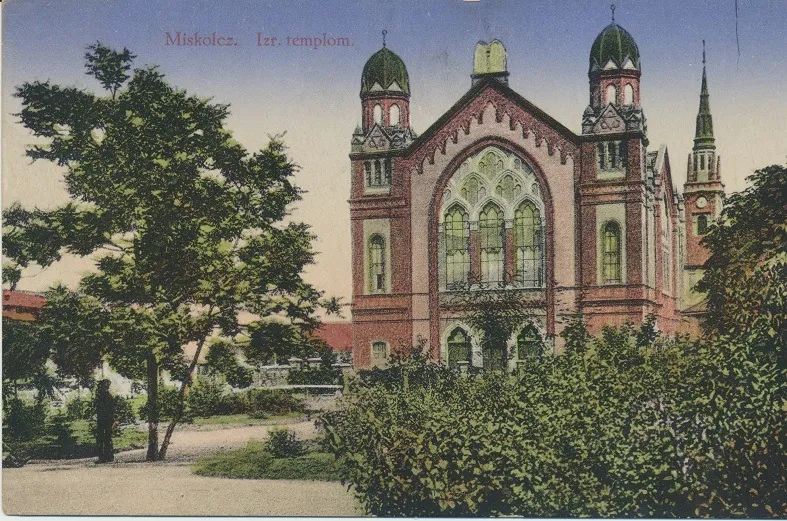
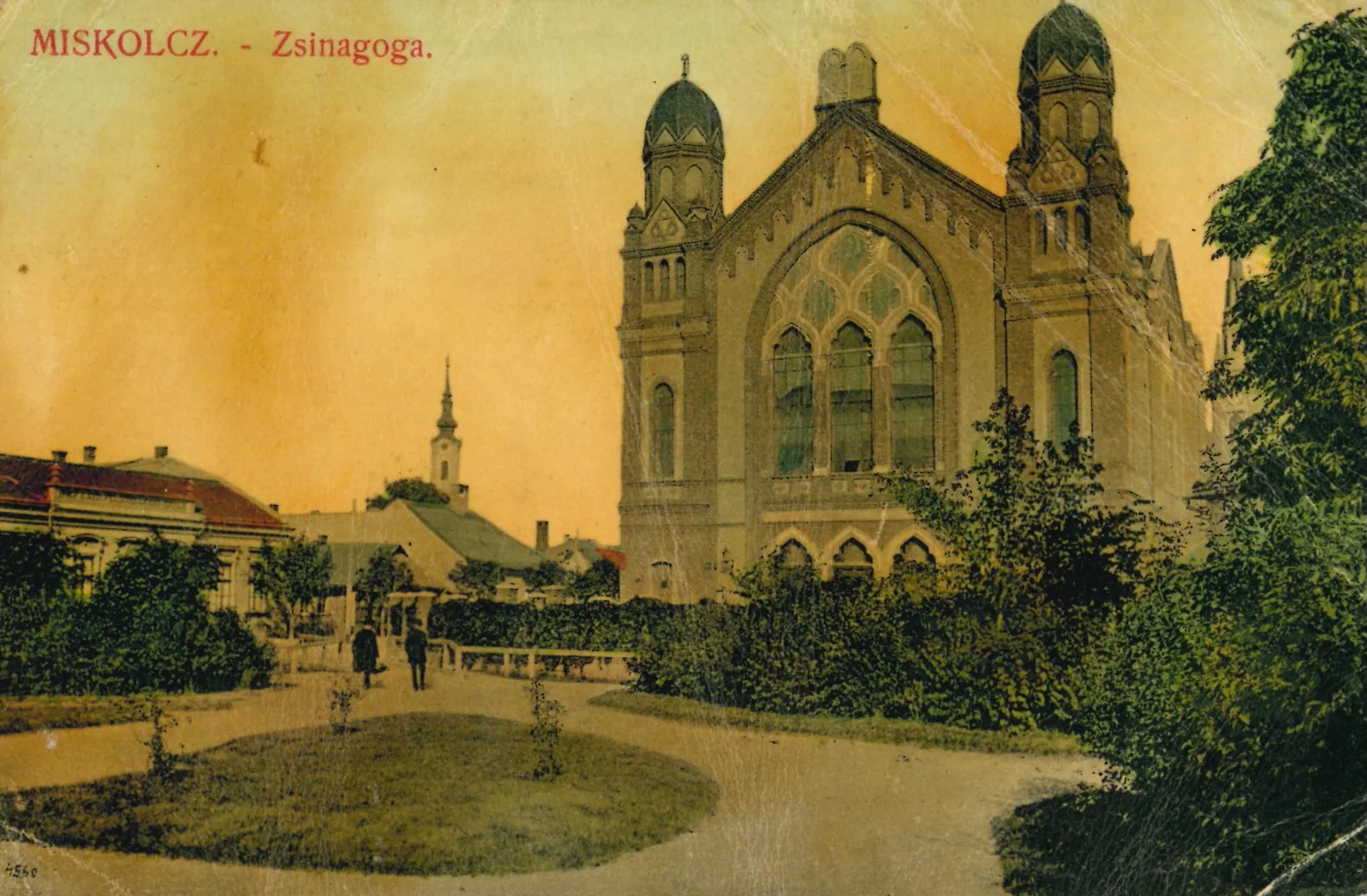
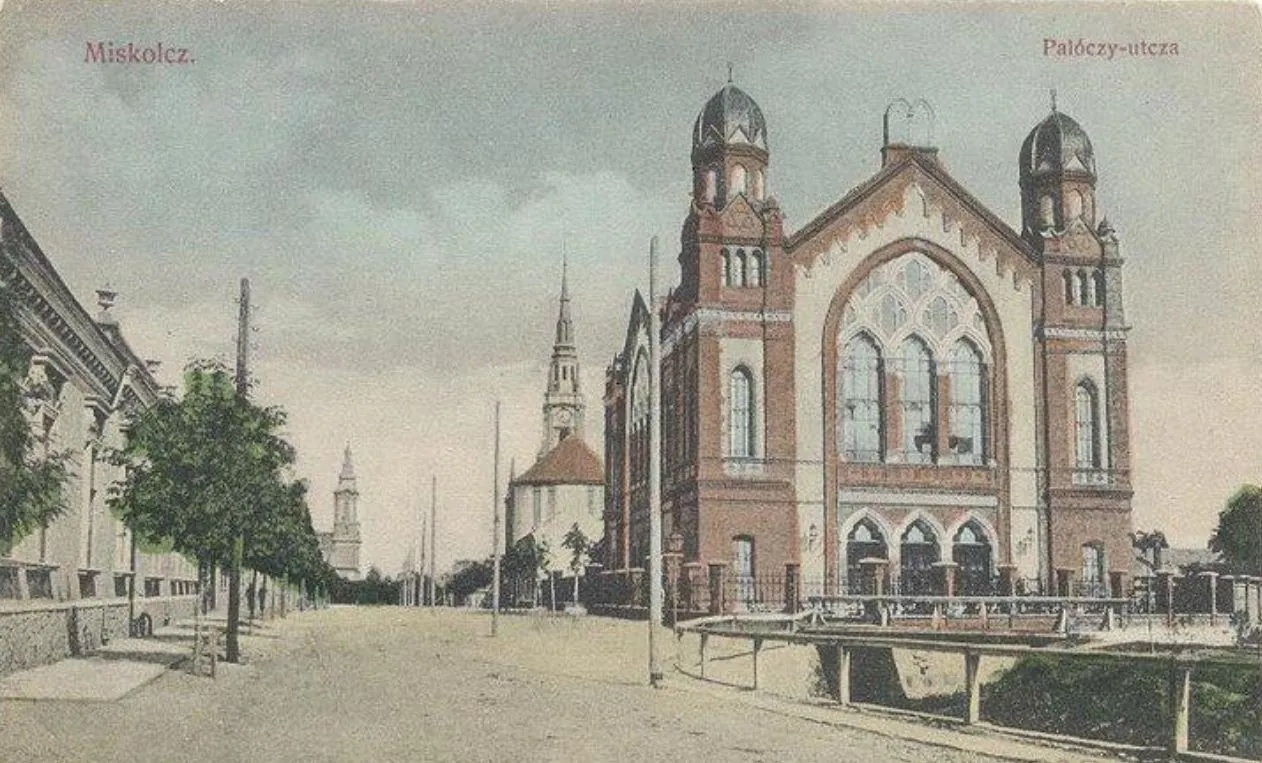
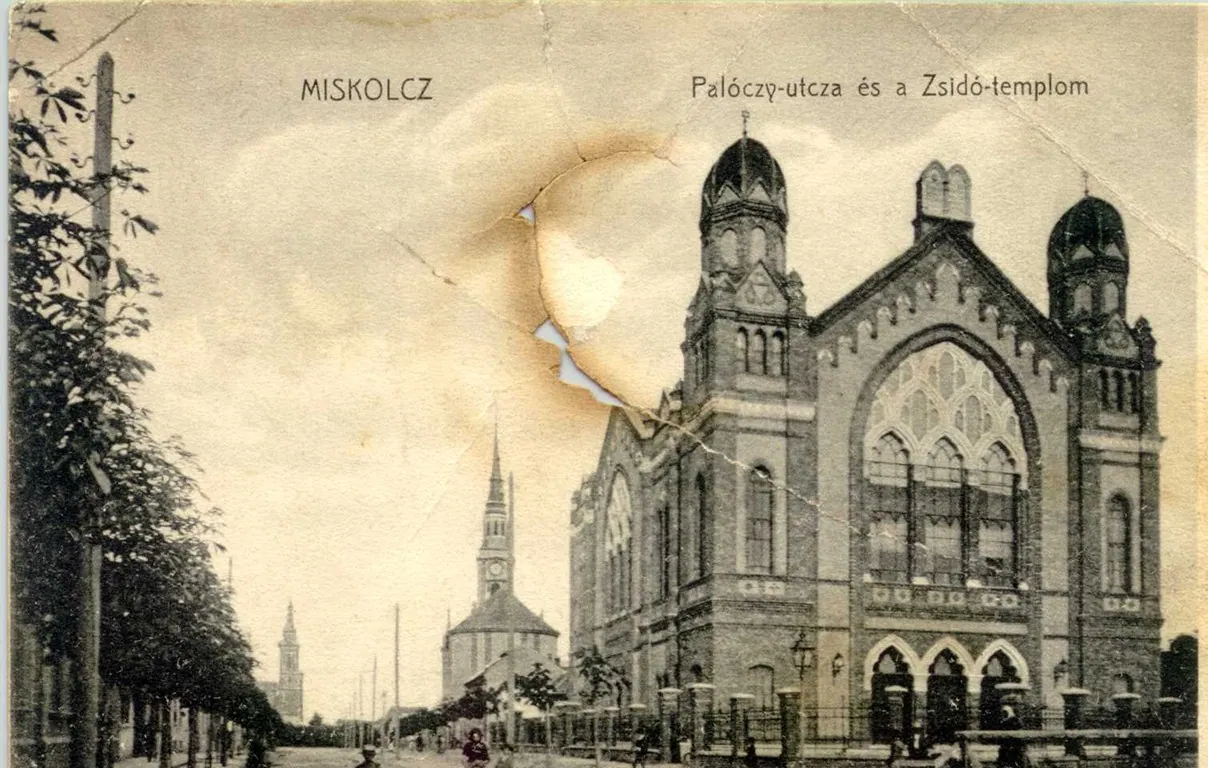
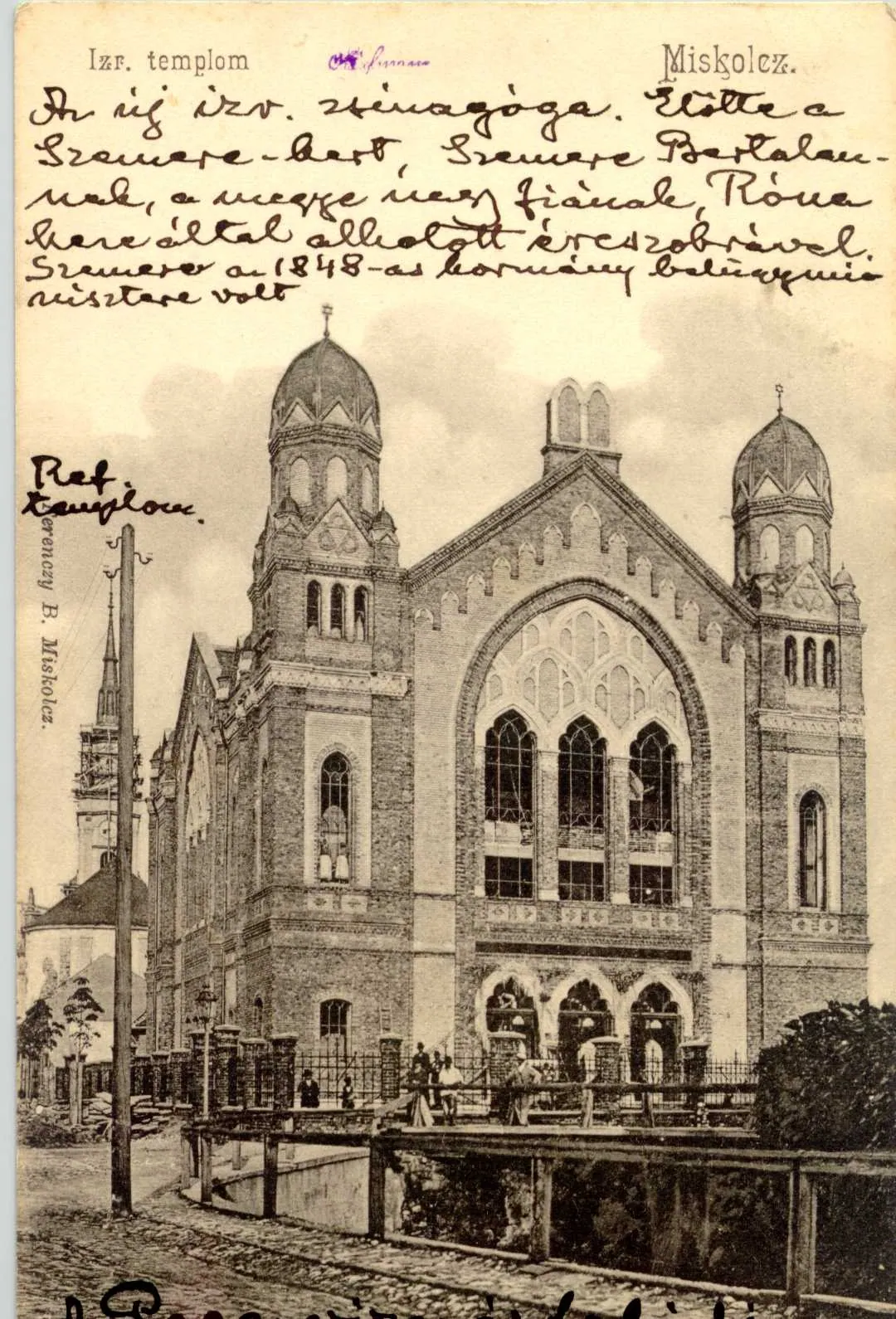
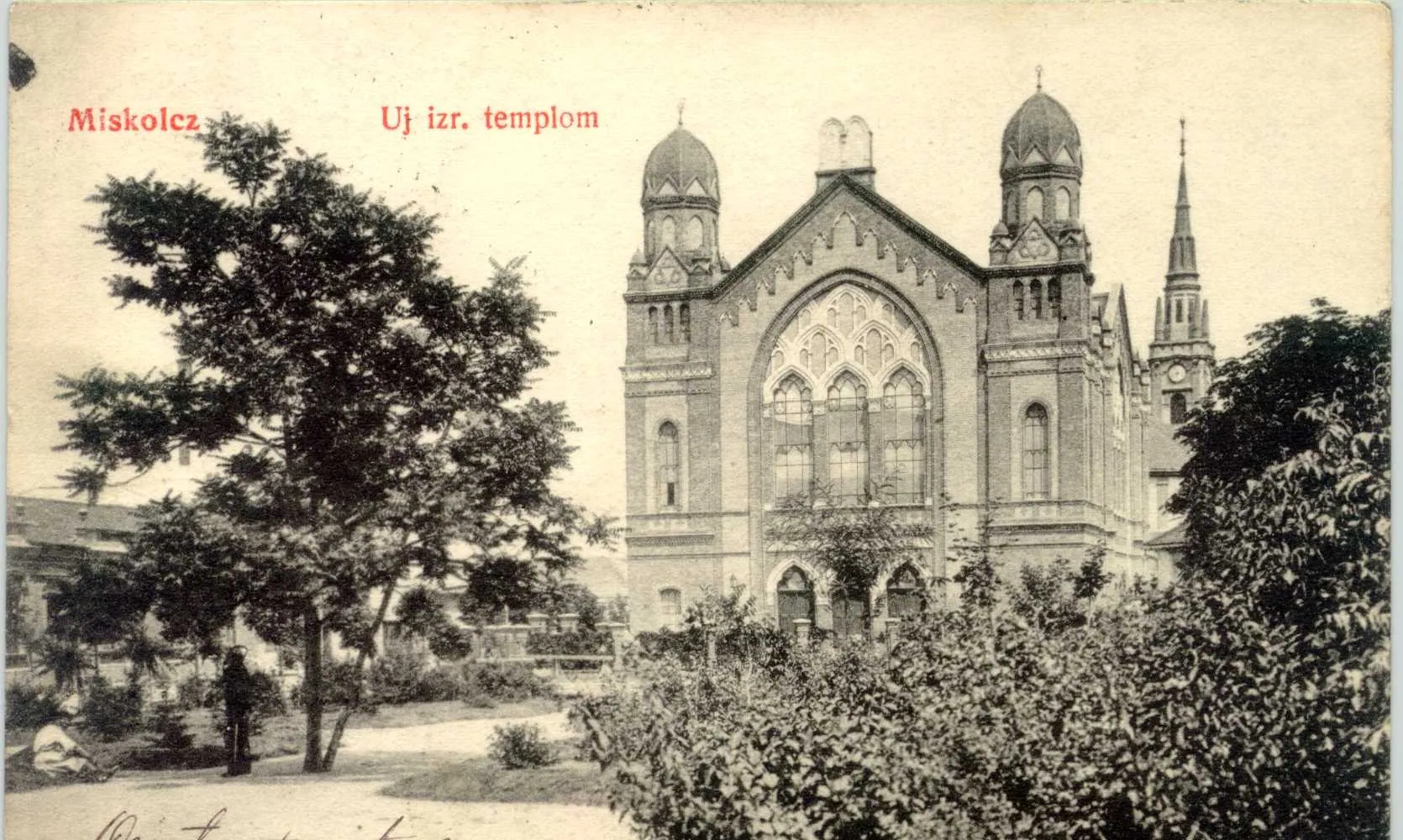
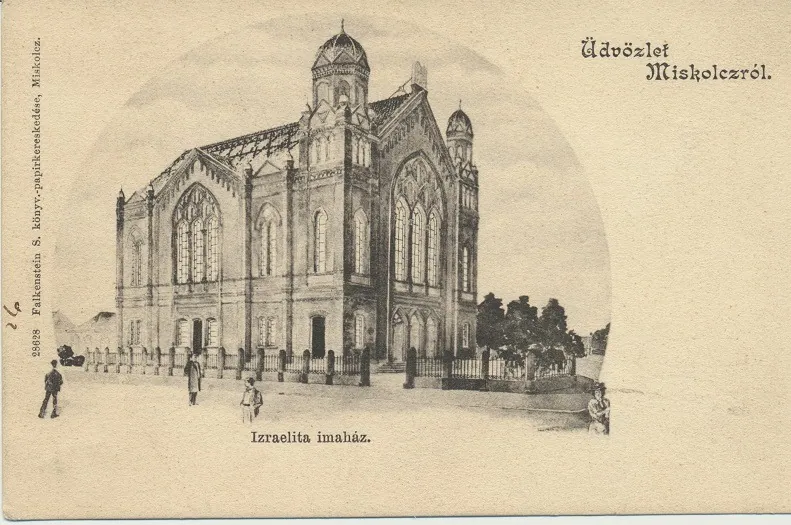
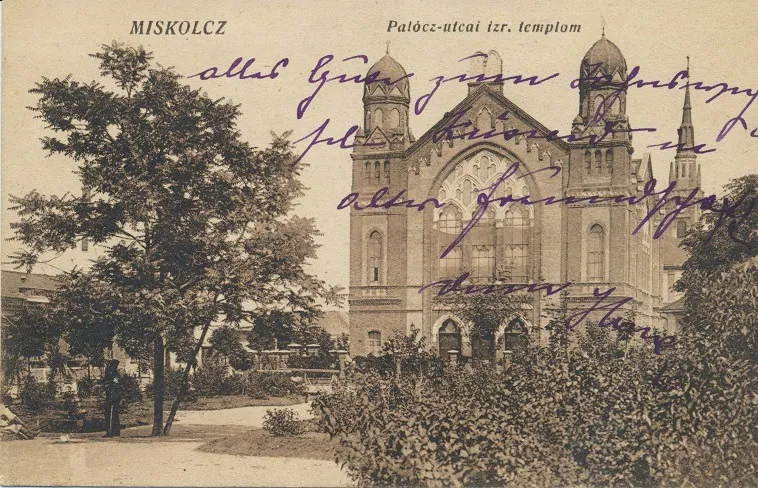
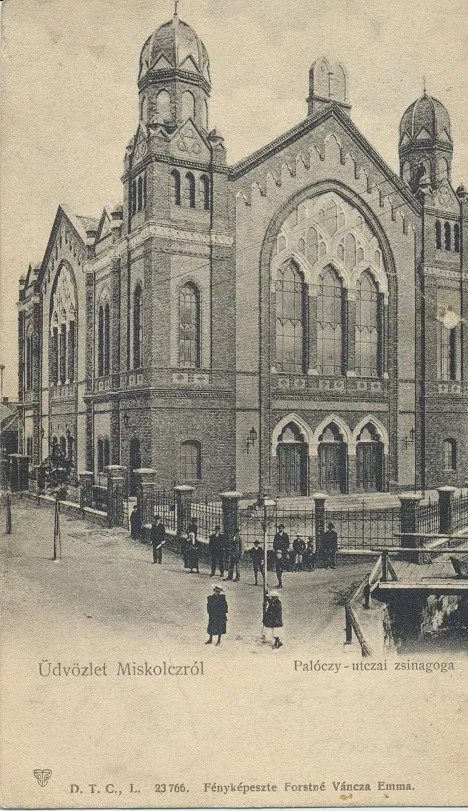
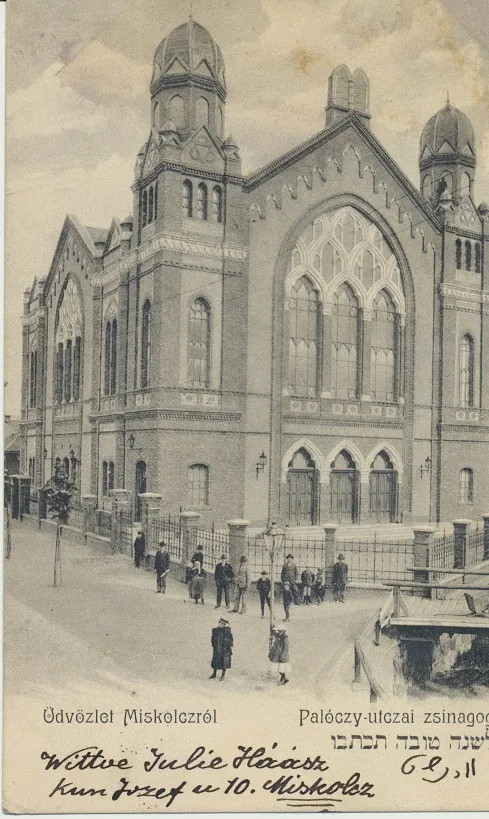
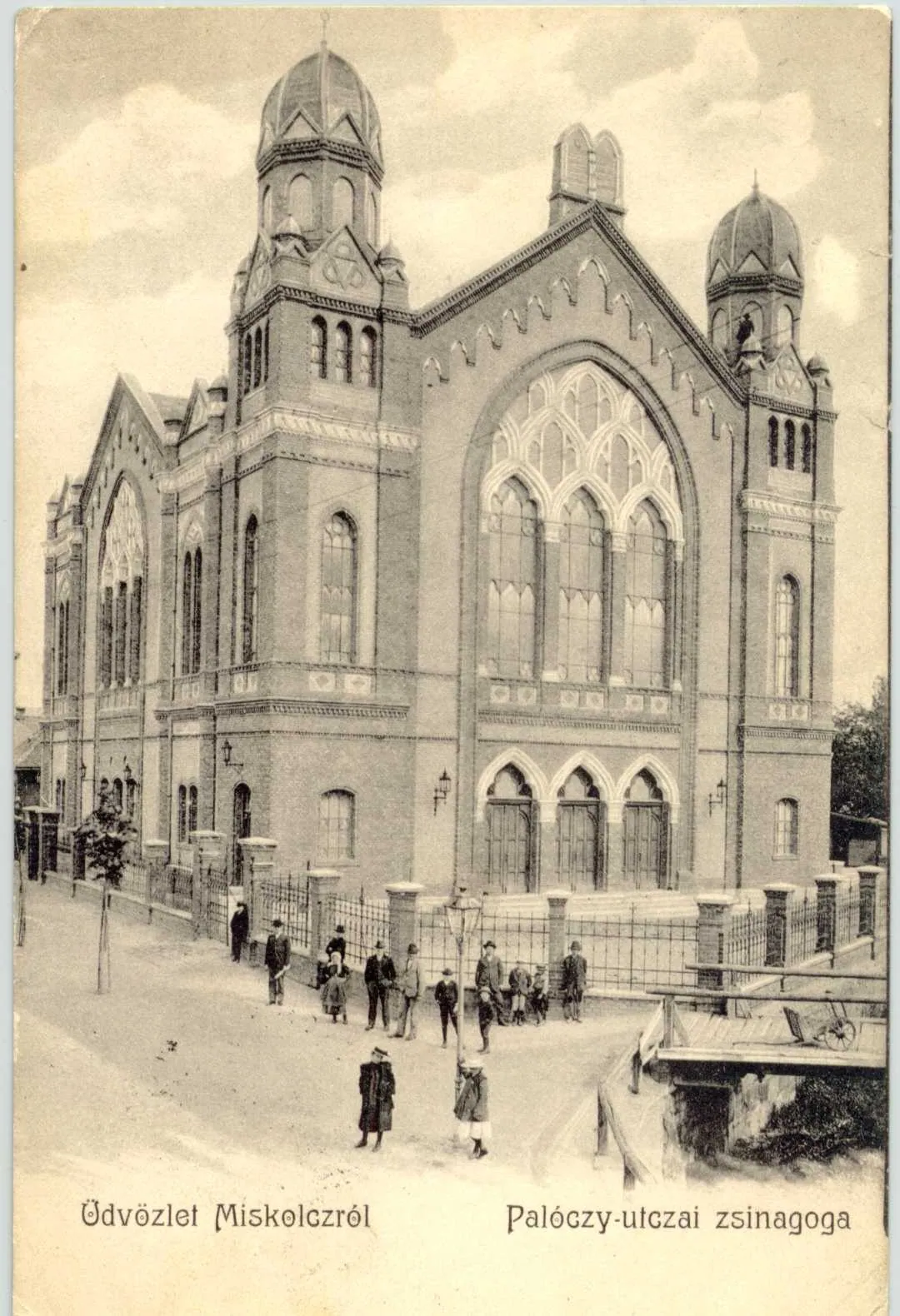
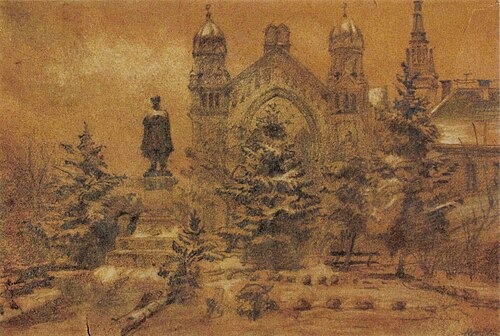
The synagogue stood on the south side of Palóczy László utca (formerly Kádas utca) in central Miskolc, facing the Szemere Garden across the Pece stream, a few hundred metres from the larger Kazinczy Street Synagogue. Jews had prayed on this plot since the eighteenth century: the town minutes of 1795 mention a newly built synagogue here, and its ground plan appears on Miskolc's first plot map of 1817. That single-storey prayer house burned in the great fire of 1843, was rebuilt, was wrecked again by the flood of 1878 and was rebuilt once more, serving as a late Baroque prayer house until shortly before 1900, when the community pulled it down. In its place the Orthodox community of Miskolc raised a far larger building to designs by the Budapest architect Marcell Székely. The façade drawing is dated 1900 and the synagogue was consecrated in 1901, at the same time as the community's new Erzsébet elementary school. With its two domed towers and great traceried window it became a favourite subject of Miskolc postcards. The building was hit during a bombing raid in the Second World War and was never repaired; it served for years as a crate warehouse until it was blown up in 1963. A car park now covers the site.
Where it stood for 62 years
Historic: Palóczy utca (earlier Kádas utca), Miskolc, facing the Szemere-kert. Today: car park on the south side of Palóczy László utca at the corner of Patak utca, 3525 Miskolc.
Größere Karte öffnen →Die jüdische Gemeinde
Jews settled in Miskolc from the early eighteenth century, at first on the estates of local nobles. They had a cemetery by 1759 and in 1765 opened a prayer house, elected a rabbi and formed a county community; the burial society dates from 1767. The community grew quickly as Jewish merchants and craftsmen took a leading part in the town's trade and industry: 1,096 Jews in 1840, 4,117 in 1880, 10,029 in 1910 and 11,300 in 1920, about a fifth of the population. The opening of the Kazinczy Street Synagogue in 1863, with its choir, split conservatives and reformers; the community adopted the Congress statutes in 1870, the Orthodox seceded, and in February 1875 the two reunited as a single community under Orthodox statutes. A separate Sephardi (Hasidic-rite) congregation later maintained its own rabbinate. By the 1920s the community ran the Erzsébet elementary school, secondary schools for boys and girls, three yeshivot, a teacher-training college for women, and was completing a large Jewish hospital.
Architektur und Gestaltung
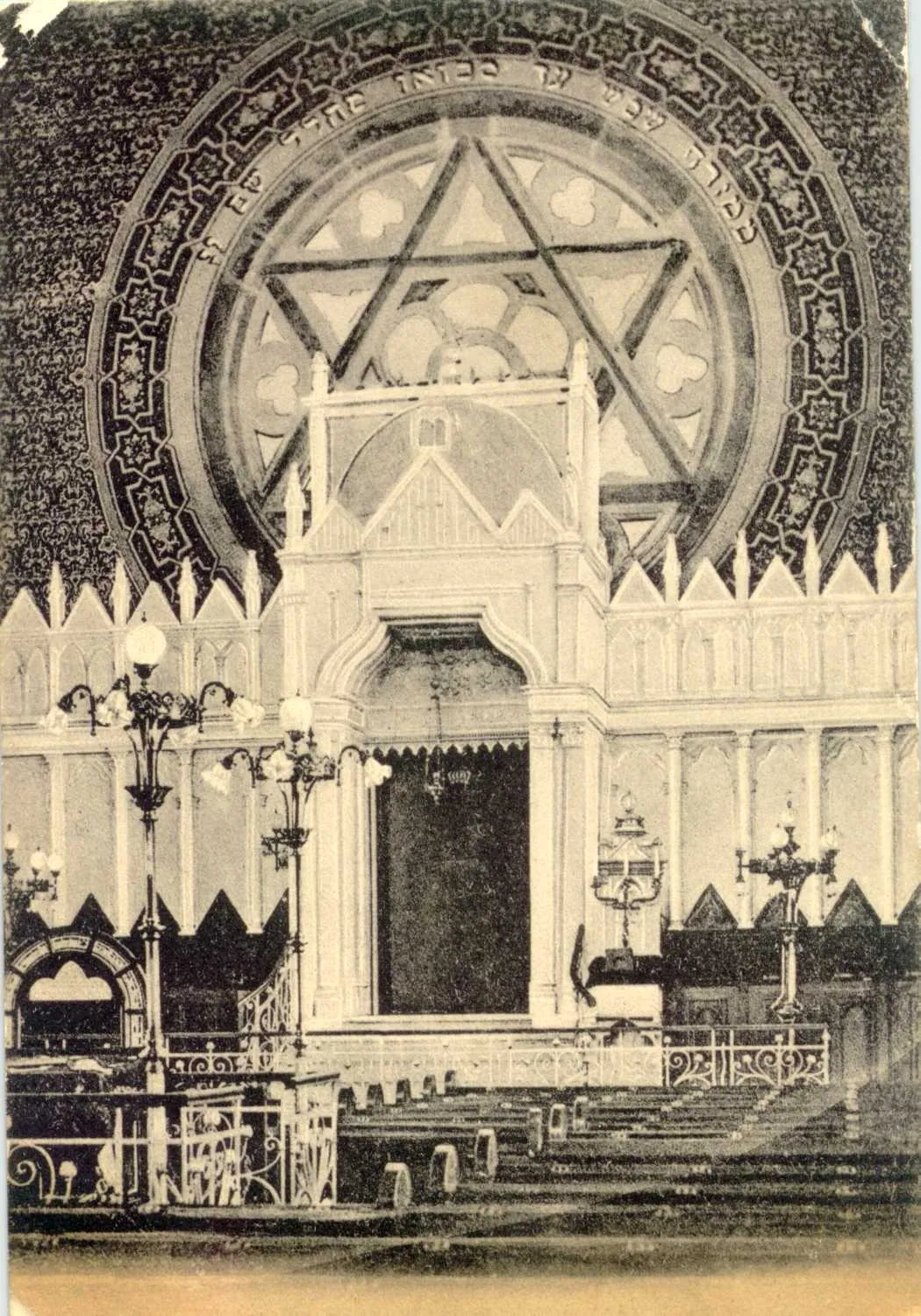
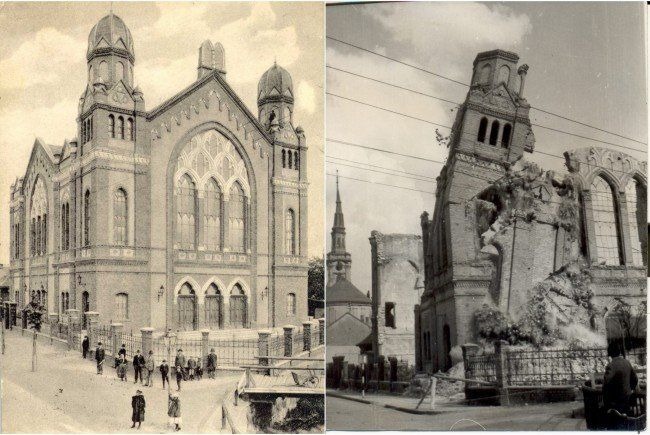
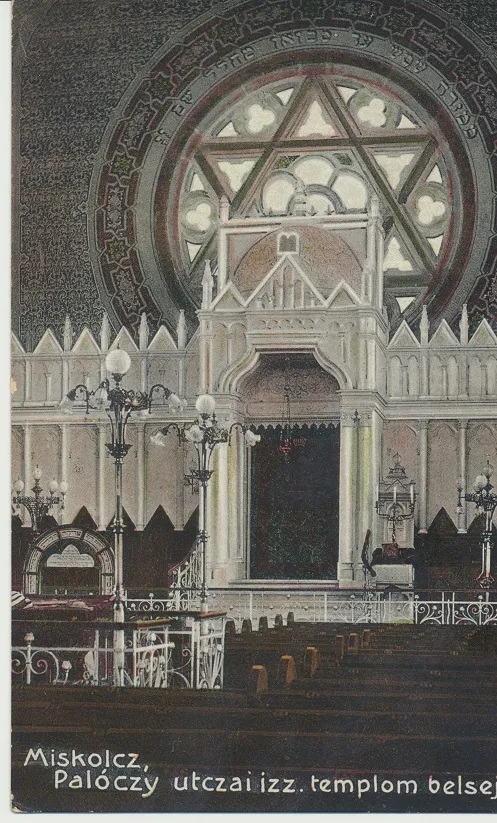
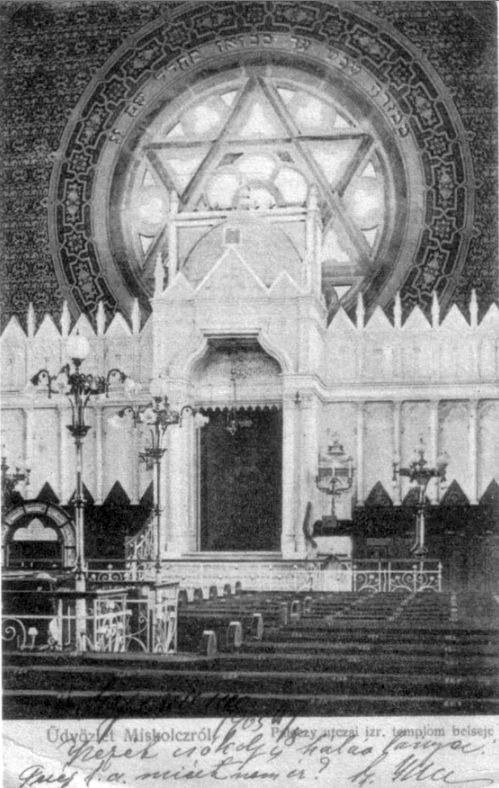
Marcell Székely's façade drawing of 1900 and the many postcards show a tall brick building in the eclectic manner of the turn of the century; the Hungarian Jewish Lexicon of 1929 called it a temple in the modern style. The west front was a broad gabled bay filled by a huge pointed arch with stone tracery over three tall lights, above a triple-arched entrance reached by steps. It was flanked by two slender towers with arcaded upper stages, each crowned by a ribbed dome and lantern; a small aedicule rose from the apex of the gable. The long side walls had tall arched windows between buttress-like piers, and an iron railing enclosed the forecourt beside a small bridge over the Pece stream. Inside, postcards show rows of pews facing a white, richly carved Torah ark set in a screen with a crenellated crest, beneath a great circular window whose tracery formed a Star of David. The building's dimensions and seating capacity are not recorded in the sources consulted.
Leben in der Synagoge
The synagogue belonged to the united Orthodox community of Miskolc, which used it alongside the Kazinczy Street Synagogue, and postcards called it the new Israelite temple. When it was consecrated in 1901 the community was led by Chief Rabbi Mayer Rosenfeld, in office from 1879, and by Salamon Spira, who had been elected rabbi and preacher in 1898 and was the first to preach in Hungarian in the community's synagogues. Sámuel Spitzer followed Rosenfeld briefly before leaving for Hamburg in 1908, and from 1914 the chief rabbi was the Vienna-born Sámuel Austerlitz, a celebrated preacher whose yeshiva was known across Hungary. In 1929 the community's clergy also included the rabbinical assessors Simon Neufeld and Adolf Ehrenfeld and the chief cantor Salamon Wolfgang. The sources consulted do not record which services or rabbis were assigned to Palóczy Street rather than Kazinczy Street, and no account of the consecration ceremony was found.
Zerstörung
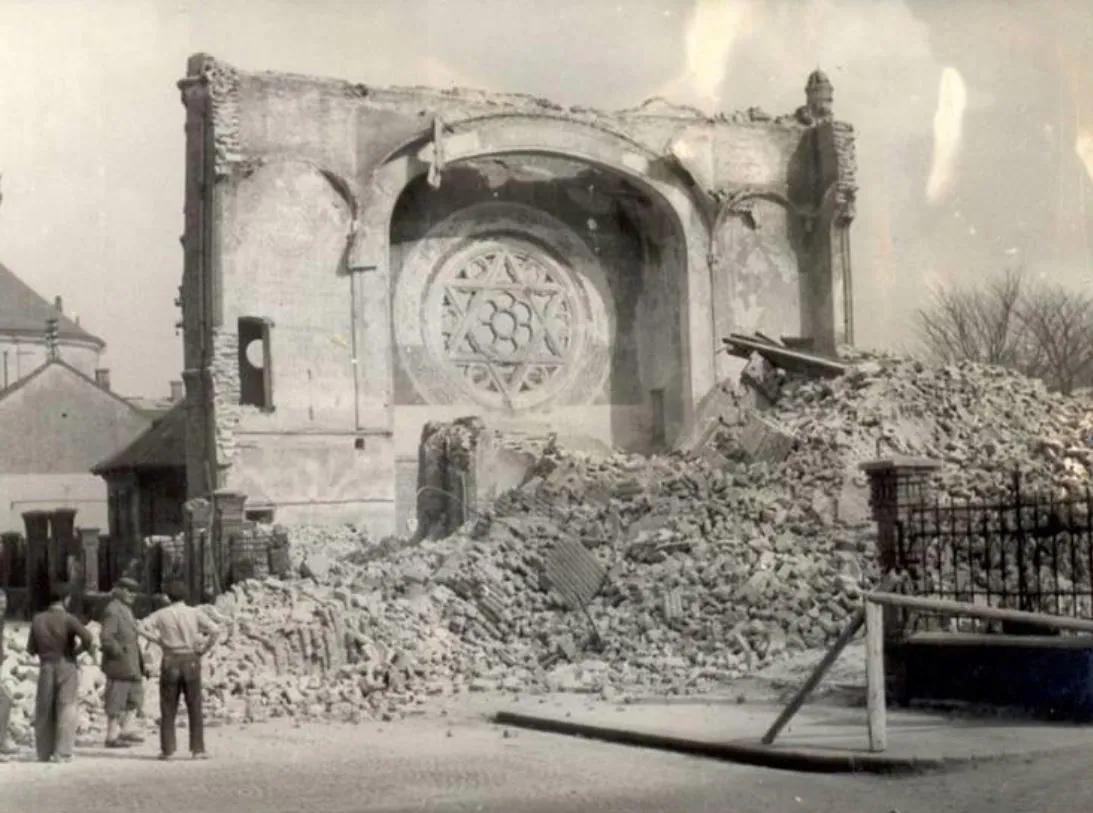
The Communists demolished the Palóczy Street Synagogue in 1963, blowing up the building with explosives. It had been hit during a bombing raid in the Second World War, and after 1945 the few survivors of the Miskolc community could not restore it, although that had been the original intention; local accounts say the community could no longer maintain two synagogues and kept the one on Kazinczy Street. The damaged building was used for years as a crate warehouse, and under the Rákosi and Kádár regimes almost nothing was spent on the upkeep of religious buildings, while synagogues across Hungary were pulled down by the dozen. According to a local history site, it was the Communist leadership of Miskolc that decided in 1963 to clear the building by blasting and reuse the land. Photographs taken during the demolition show one tower still standing above the collapsed façade, and the east wall with its Star of David window rising over a heap of rubble.
Das Schicksal der Gemeinde
In 1941 Miskolc had 10,428 Jews. That year about 500 of them were deported to German-occupied territory and murdered at Kamenets-Podolsk. After the German occupation of March 1944, Hungarian officials and gendarmes, working with the Nazi German occupiers, forced the Jews of Miskolc into a ghetto around Arany János Street and then into a brickyard, and in mid-June 1944 deported them to Auschwitz together with Jews from the surrounding county; a local history gives 15,464 deportees from the town and county. Rabbi Salamon Spira, dying in the ghetto hospital, was put on one of the transports. Of about 10,000 Miskolc Jews deported, only around 400 returned from the camps. In 1946 the community numbered 2,353. In the anti-Jewish riots of 30 July and 1 August 1946 a Jewish man accused of black-marketeering and a Jewish police officer were lynched. Most survivors emigrated, many to Israel; about 300 Jews remained in the 1970s, and the community had roughly 150 members in 2019.
Der Ort heute
The site is a surface car park on the south side of Palóczy László utca at the corner of Patak utca, the street that follows the course of the old Pece stream, with the Szemere Garden to the west and the Reformed Kakas Church a short distance to the east. The Kandó Kálmán technical school stands across the street. Nothing of the synagogue survives above ground. The Kazinczy Street Synagogue, a few hundred metres away, was restored after the war and is still used by the small Jewish community of Miskolc; it is the only working synagogue in the county.
Bedeutende Namen
Salamon Spira
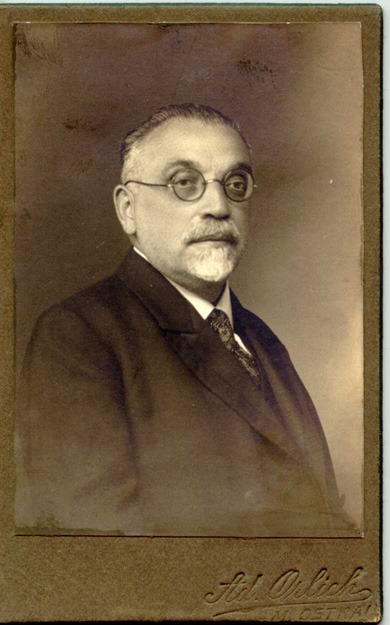
1865–1944Rabbi and preacher of the Miskolc community from 1898Born in Homonna and trained at the Orthodox seminary in Berlin, Dr Salamon Spira was elected rabbi and preacher of the Miskolc community in 1898, three years before the Palóczy Street Synagogue was consecrated, and was the first to preach in Hungarian in its synagogues. He wrote the community's history. In 1944, dying in the ghetto hospital, he was put on a transport to Auschwitz.
Biografie oder Quelle →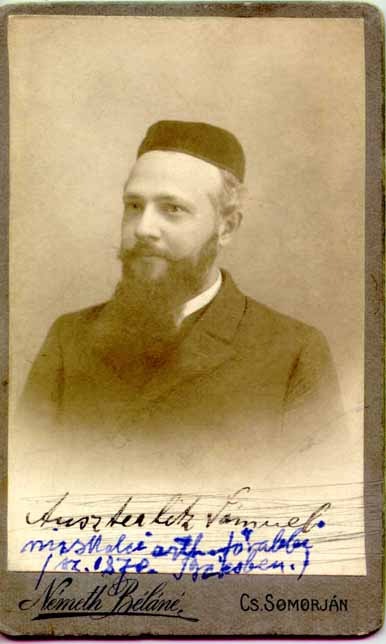
Sámuel Austerlitz
1870–1939Chief Rabbi of Miskolc, 1914–1939Born in Vienna and previously rabbi in Pápa and Somorja, Sámuel Austerlitz was elected chief rabbi of the Orthodox community of Miskolc in 1914 and led it, and its two synagogues on Kazinczy and Palóczy Streets, until his death in 1939. He was famed as a preacher, supported the Mizrachi movement, and his Miskolc yeshiva was known throughout Hungary.
Biografie oder Quelle →Marcell Székely
1872–1949ArchitectThe Budapest architect Marcell Székely, born Marcell Stern in Temesvár, designed the Palóczy Street Synagogue for the Orthodox community of Miskolc. His façade drawing is dated 1900 and the building was consecrated in 1901. It was an early work in a career otherwise devoted mainly to apartment houses and industrial buildings in Budapest.
Biografie oder Quelle →Mayer Rosenfeld
d. 1904 (or 1908)Chief Rabbi of Miskolc from 1879Mayer Rosenfeld, formerly rabbi of Nádudvar, was elected chief rabbi of Miskolc in 1879 and led the united Orthodox community when it pulled down its old prayer house on Palóczy Street and built and consecrated the new synagogue there in 1900–01. He remained in office until his death, remembered by his pupils with deep respect.
Biografie oder Quelle →Haben Sie etwas beizutragen?
Fotos, Dokumente, Familiengeschichten oder Erinnerungen an diese Synagoge und ihre Gemeinde halten ihre Geschichte lebendig.
- Az egykor volt Palóczy utcai zsinagóga, in: Miskolc írásban és képekben 1 (1994), pp. 169–170
- Miskolc, in: Magyar Zsidó Lexikon (1929), ed. Újvári Péter
- Zsinagógák és zsidó közösségek Magyarországon: térképek, rajzok, adatok (1991)
- Akkor és most: A Palóczy utcai zsinagóga
- 1963 – Amikor lerombolták Miskolc egyik zsinagógáját
- Kultikus épületek, amiket ma már hiába keresel a városban
- Palóczy utcai zsinagóga
- The History of Miskolc's Jewish Community, in: The Martyrs of Miskolc and Vicinity (1970), English translation
- Miskolc
- A legnagyobb vidéki zsidó közösség – a miskolci zsidóság története
- Miskolci Paloczy utcai zsinagóga (postcard, inv. F71.89) and related postcards
- Car park, Palóczy László utca / Patak utca, Miskolc (way 1336487563)
- Székely Marcell
- Miskolc pogrom
Share a memory or thought
No comments yet. Be the first to add one.