
История Mohács Synagogue
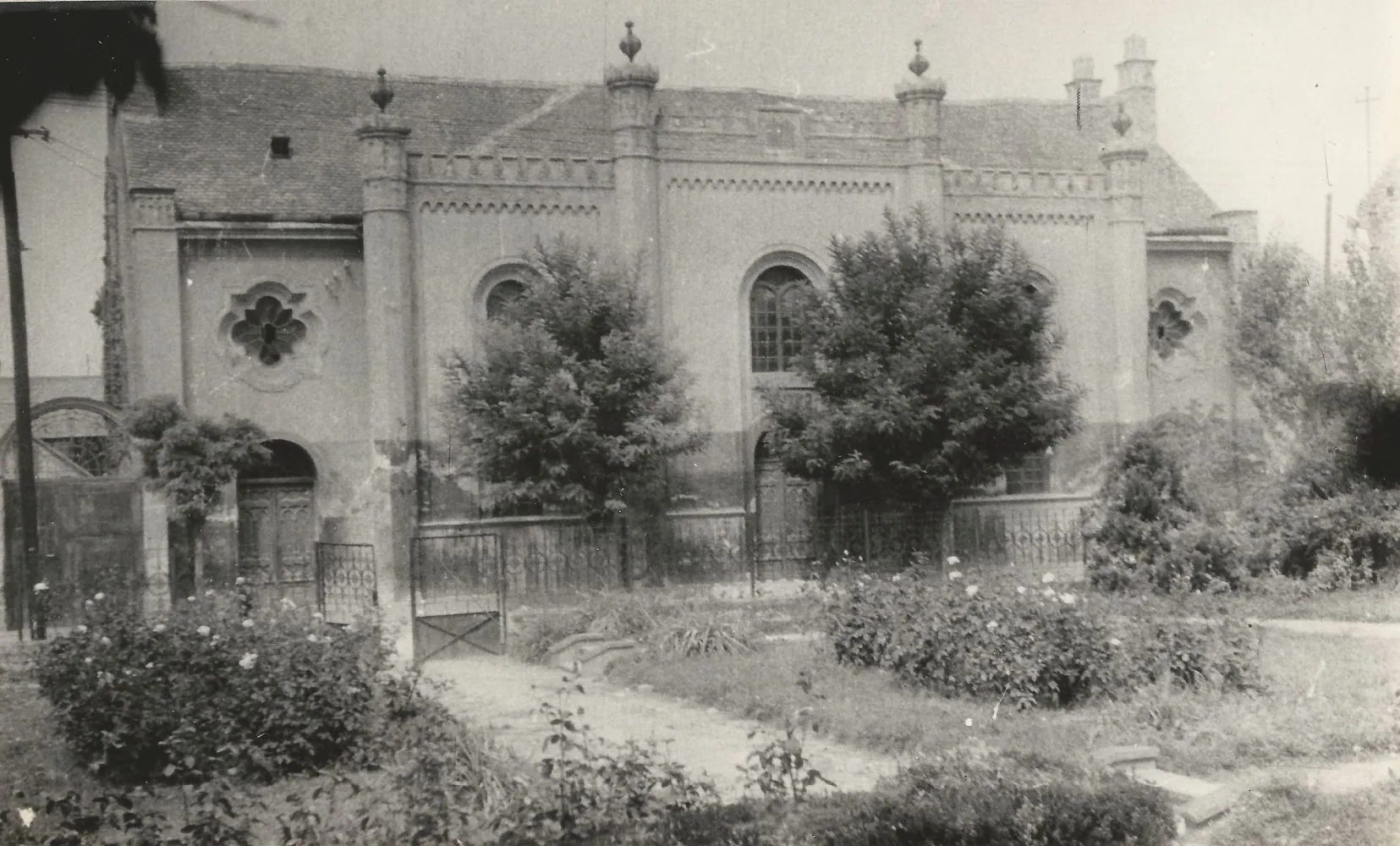
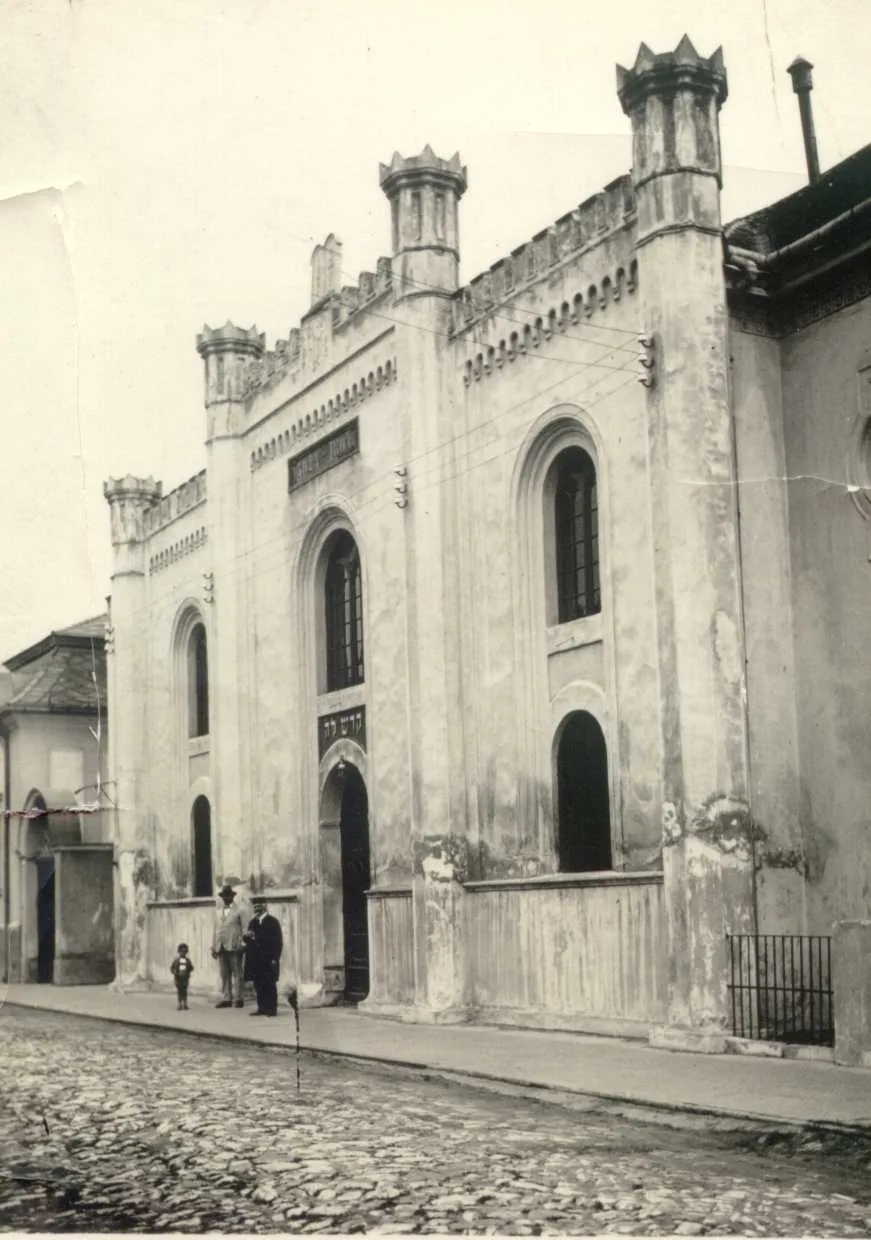
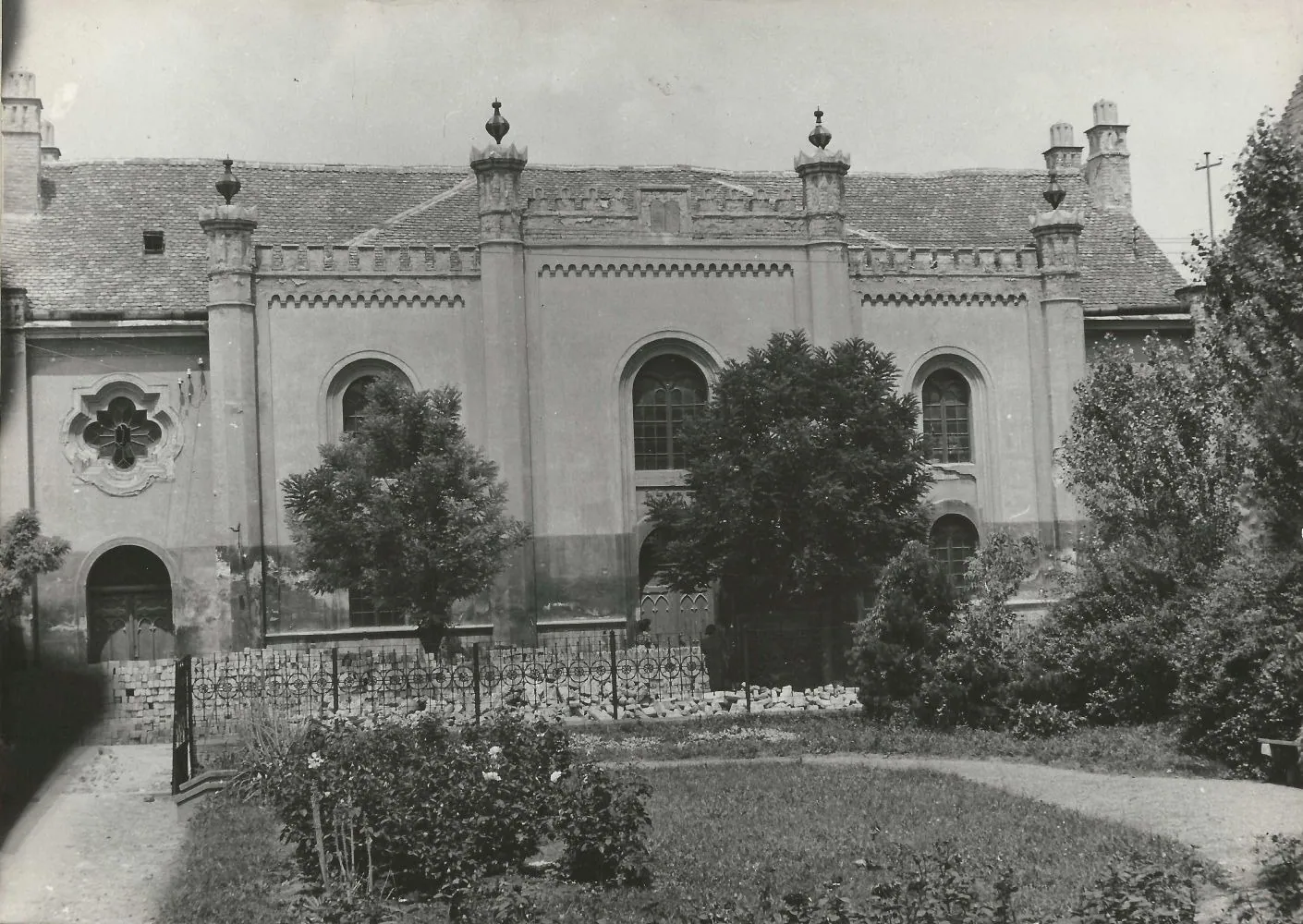
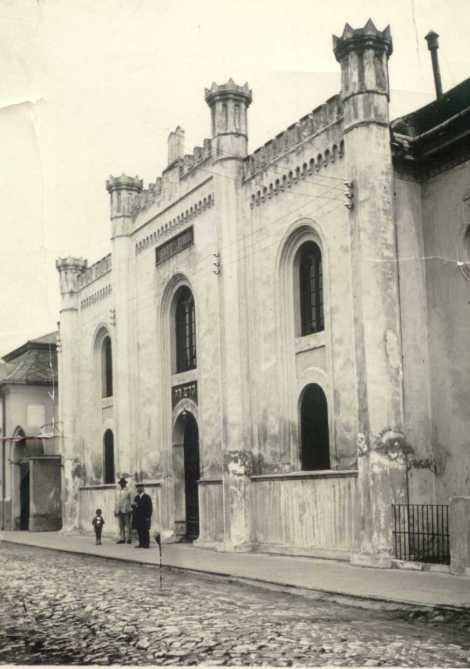
The synagogue stood on Eötvös utca, the street between Szentháromság utca and Vörösmarty utca that was the centre of Jewish life in Mohács, alongside the community's school, cantor's house and home for the aged. Jews had been allowed to settle in the privileged town only from 1839. The community was founded in 1848, bought a plot for a temple with royal permission in 1854 and completed the building ten years later, paying for it largely through the sale of seats in perpetuity. District rabbi Jakob Grünwald delivered the dedication address on 22 September 1864. The long street front, in the Romantic round-arched style of the 1860s, was divided by four turret-like piers with crenellated caps. Grünwald served until his death in 1888 and was followed by Ármin Flesch, chief rabbi for more than half a century. In May 1944 the Jews of Mohács were confined in a ghetto, and in early July they were deported to Auschwitz by way of Pécs; barely one in five returned. By the 1960s a community of thirty or forty could no longer keep up the synagogue and sold it to the town. The Communist town council demolished it, in 1968 according to the plaque on the site, and built the municipal library that opened there in 1971.
Where it stood for 104 years
Historic: Eötvös utca, Mohács (between Szentháromság utca and Vörösmarty utca). Today: Mohácsi Jenő Városi Könyvtár, Eötvös utca 2, 7700 Mohács, Hungary.
Открыть большую карту →Еврейская община
Mohács, a privileged town under the bishop of Pécs, barred Jews until 1839, when Adolf Füchsel became the first to be allowed to settle. Other families followed, mainly from Bonyhád, and in 1848 they founded a community and a burial society, at first subordinate to the county congregation in Pécs. Independent by 1860, the community adopted modern statutes, opened an elementary school in 1858 and from 1862 had its own rabbi and cantor. Within fifty years of the first settlement some 900 Jews lived in the town, about six per cent of its inhabitants. Most were merchants; by the early twentieth century lawyers, doctors, landowners and the owners of a tannery, a brickworks and a soap factory belonged to the local elite. The Magyar Zsidó Lexikon of 1929 recorded 784 members in 318 families, a four-classroom school built in 1893, a Talmud Torah, a burial society and a women's association. The community is described as Neolog, and its long-serving chief rabbi was a graduate of the Budapest Rabbinical Seminary.
Архитектура и дизайн
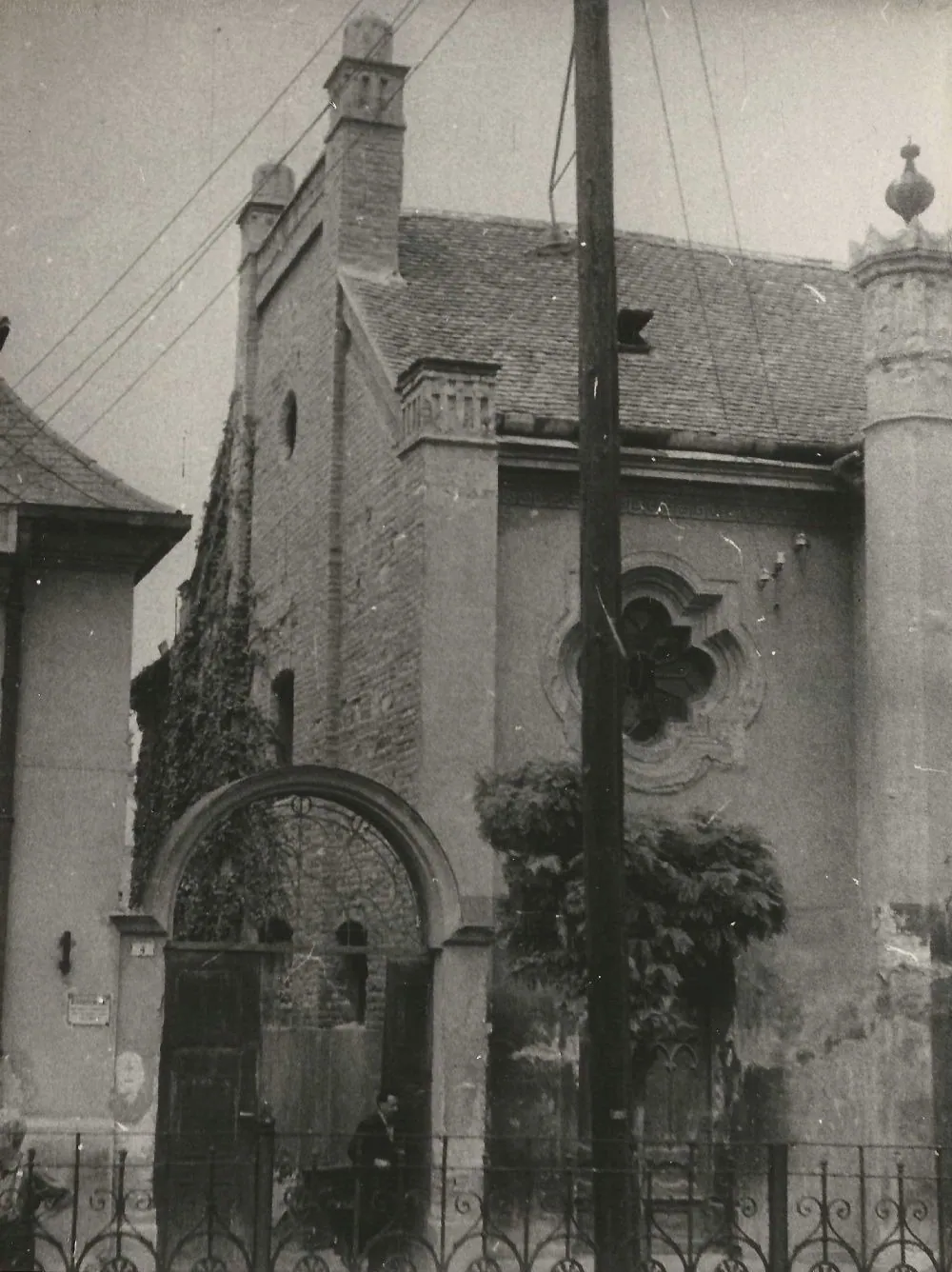
No architect is recorded for the synagogue, and no plans or interior photographs have been found; its appearance is known from a street photograph taken before 1945 and three views of the 1960s. The building stood with its long side to Eötvös utca, behind a low wall and an iron railing. The plastered main front, in the Romantic round-arched style of the 1860s, was divided into three bays by four turret-like piers that rose above the eaves and ended in crenellated caps, topped in the later photographs by urn finials. A frieze of small round arches and a battlemented parapet ran between them, with what appear to be the Tablets of the Law at the centre. The middle bay held the main doorway, a Hebrew inscription and a tall round-arched window; the outer bays had arched windows on two levels, which suggests galleries inside. Lower wings at either end were lit by quatrefoil rose windows, and a separate door is visible in the left-hand wing. A tiled pitched roof covered the hall, and the bare brick end gable carried stepped turrets of its own.
Жизнь в синагоге
The synagogue was dedicated on 22 September 1864. Jakob Grünwald, the district rabbi, gave the German address, which was printed in Pest that year and inscribed to the community's leaders Carl Friedmann and Leopold Roth. Ede Ehrlich, chief rabbi of Pécs and Baranya county, preached in Hungarian at the same ceremony, a sign of the congregation's turn towards the Magyar language. Grünwald led the community until his death in 1888. His successor Ármin Flesch, born in Bácsalmás in 1865 and trained at the Budapest Rabbinical Seminary, came to Mohács in 1889 and served for some fifty-five years. He published sermons, festival addresses, a Passover Haggadah and a history of the local burial society, and spoke regularly at the town's national celebrations. Under the long presidency of Zsigmond Wolff, and later that of Dezső Vida, the synagogue stood at the centre of a compact quarter that also held the Jewish elementary school, whose fiftieth anniversary in 1908 drew nearly 600 people, the cantor's house and the home for the aged.
Разрушение
The synagogue survived the war but lost its congregation. By the early 1960s only thirty to forty Jews remained in Mohács, too few to maintain the building, and the community sold it to the town on condition that only a cultural institution could occupy the site. The Communists who ran the Mohács Town Council demolished the synagogue to make way for a new municipal library. Keresztély Pálkuti, council chairman from 1961 to 1973, recalled in 1984 that the council had first meant to renovate the building, but that this would have cost more than building anew, 'so we built a new one'. The plaque on the site and local histories date the demolition to 1968. Contemporary press reports complicate this: in November 1969 the county daily still wrote of the 'conversion' of the purchased former synagogue, and only in the summer of 1970 of a three-storey library 'being built on the site of the former synagogue'. What became of the furnishings is not recorded.
Судьба общины
When Nazi German forces occupied Hungary in March 1944, the community's president Dezső Vida took his own life together with his wife and his sister-in-law. Between 8 and 10 May the Hungarian authorities, acting under the Nazi occupation, drove the 564 Jews of Mohács into a ghetto; from 15 May Jews from the surrounding district were brought in, until about 1,100 people were confined there. The ghetto was emptied on 28 June and its inmates were taken to the Lakits barracks in Pécs, where some 4,000 Jews were held in stables. On 4 July 1944 they were deported to Auschwitz. Chief Rabbi Ármin Flesch, aged seventy-nine, was among those murdered. Of roughly 600 Jews living in Mohács before the deportation, 114 returned. A Jewish home for the aged was still working in the town in 1949, but by the early 1960s the community had dwindled to thirty or forty people.
Место сегодня
The site, at Eötvös utca 2, is occupied by the Mohácsi Jenő Városi Könyvtár, the three-storey municipal library that the Town Council opened on 28 August 1971 and that bears the name of Jenő Mohácsi, the Mohács-born Jewish writer who perished in 1944. Nothing of the synagogue is visible. A small plaque in the library's entrance reads 'Ezen épület helyén állt 1968-ig a zsinagóga' (the synagogue stood on the site of this building until 1968). Across the street, where the community's school and rabbi's house once stood, a memorial garden to the Jewish martyrs of Mohács and its district was laid out in 1949. The Jewish cemetery west of the town centre, opened in 1850, survives.
Значимые имена
Ármin Flesch
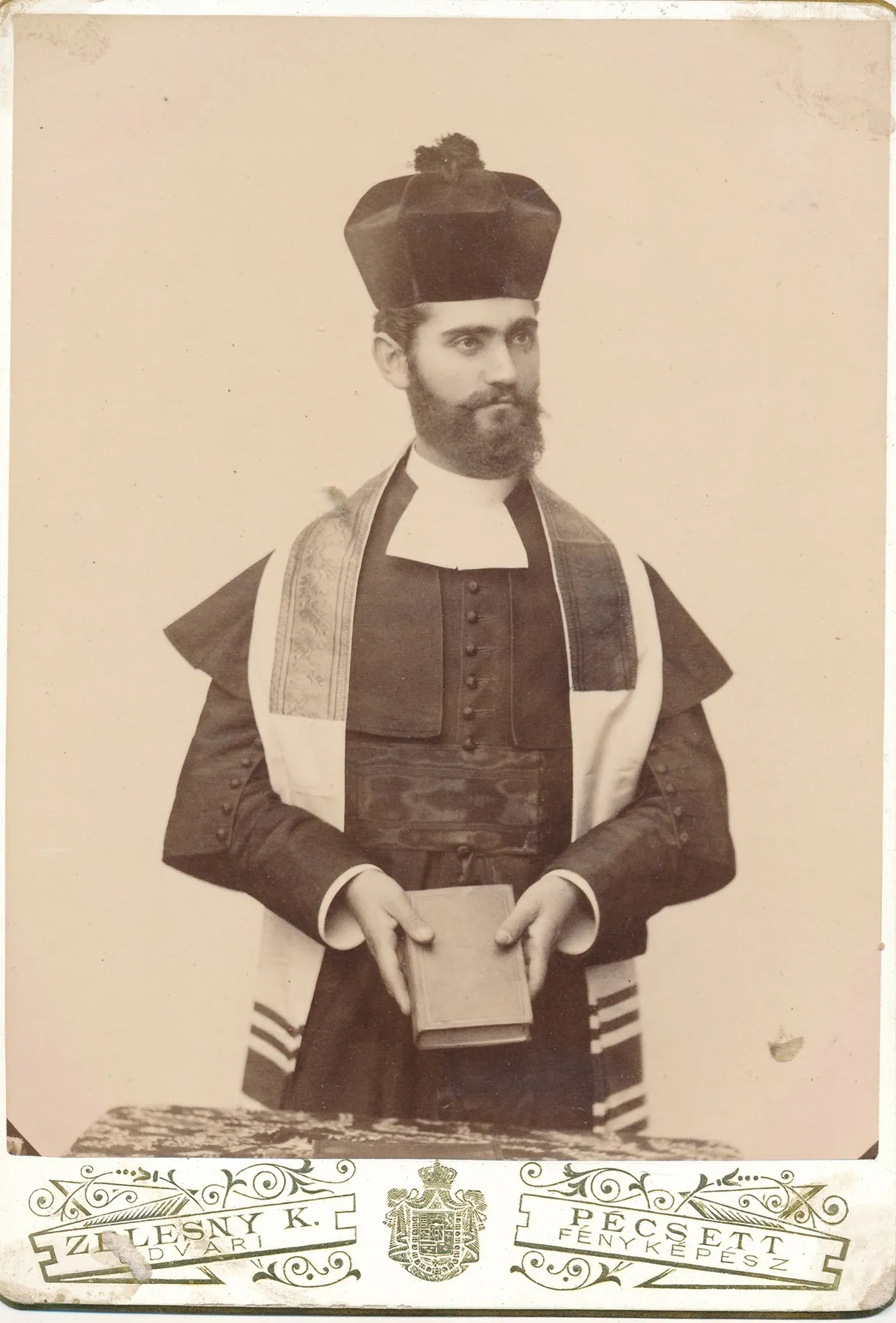
1865–1944Chief Rabbi of Mohács, 1889–1944Born in Bácsalmás and trained at the Budapest Rabbinical Seminary, Ármin Flesch became rabbi of Mohács in 1889 and preached in the synagogue for some fifty-five years. He published sermons, a Passover Haggadah and a history of the local burial society, and was a prominent speaker in the town's public life. He was deported in July 1944 and murdered at Auschwitz.
Биография или источник →Jakob Grünwald
died 1888First rabbi of Mohács; district rabbiJakob (Jakab) Grünwald was elected the first rabbi of the Mohács community and, as district rabbi, delivered the address at the dedication of the new synagogue on 22 September 1864, which was printed in Pest the same year. He led the young congregation from its pulpit until his death in 1888.
Биография или источник →Zsigmond Wolff
UnknownPresident of the Mohács Jewish communityZsigmond Wolff presided over the community for three decades, a period the Magyar Zsidó Lexikon called its golden age. The four-classroom school of 1893 was built during his presidency, and under him the congregation that worshipped in the synagogue came to rank, with its model administration and institutions, among the notable communities of the country.
Биография или источник →Dezső Vida
died 1944President of the Mohács Jewish communityDezső Vida, a member of the town and county assemblies and chairman of the Délbaranyai Bank, succeeded Zsigmond Wolff as president and steered the congregation through the war years, the Serbian occupation and the depression. When German forces occupied Hungary in March 1944 he took his own life together with his wife and sister-in-law.
Биография или источник →Keresztély Pálkuti
UnknownChairman of the Mohács Town Council, 1961–1973Keresztély Pálkuti chaired the Communist-era Mohács Town Council when it bought the synagogue from the remaining community. He recalled in 1984 that the council had meant to renovate the building but, finding that this would cost more than building anew, put up a new library in its place; he welcomed the guests at the library's opening on 28 August 1971.
Биография или источник →Вам есть чем поделиться?
Фотографии, документы, семейные истории и воспоминания об этой синагоге и её общине помогают сохранить её историю.
- A mohácsi zsidóság története. Polgárosodás és oktatás
- Mohács (Magyar Zsidó Lexikon, 1929)
- Flesch Ármin (Magyar Zsidó Lexikon, 1929)
- Rede zur Einweihung der neuerbauten Synagoge in Mohács, gehalten von Jacob Grünwald, Bezirks-Rabbiner daselbst, am 22. September 5624 (Pest, 1864)
- Mohácsi zsinagóga (photograph, inv. F01.326)
- Mohácsi Zsinagóga (three photographs, 1960s, inv. 1/1986)
- Baranya megye földrajzi nevei II (Pécs, 1982), Mohács, no. 345: Városi Könyvtár / Zsinagóga
- Százezer kötetes könyvtára lesz Mohácsnak (news item)
- A Mohácson épülő, új háromszintes könyvtár (news item)
- Könyvtár a zsinagógából (news item)
- Könyvtáravatás Mohácson
- Mohácsi fordulópontok
- Article on the chief rabbis of Pécs (Ede Ehrlich)
- German Occupation and the Hungarian Quisling Government (document 1.a)
- Ördögien megrendezett menet a halálba – így tűnt el Pécs zsidó közössége
- MOHACS: BRNY (International Jewish Cemetery Project)
- File:Eötvös Straße 2, Tafeln, 2024 Mohács.jpg
- Holocaust emlékhely, Eötvös utca, Mohács (node 3464291495)
- File:Eötvös Straße, Holocaust-Denkmal, 2024 Mohács.jpg
- A Sign of the Past: The Untold Story of Hungary's Synagogues and the Memory of Disappeared Communities, 1945–2024
- Dr. Flesch Ármin (photograph, inv. IV/39.7)
- Forrás 2015, footnote on the churches of Mohács
- List of synagogues in Hungary
- Mohácsi szeretetház, tabló (1949, inv. F16.055)
- Tóraköpeny (Torah mantle, inv. 2002.50)
Share a memory or thought
No comments yet. Be the first to add one.