
הסיפור של Mór Synagogue
Jews were living in Mór (German: Moor) before the congregation was formally organised in 1750; the Rosenthal family, who founded it, had settled in the town around 1740. Stone was carted from the quarry at nearby Csókakő for a synagogue in 1763, and Anikó Gazda's gazetteer dates a first synagogue to 1764. In 1802 the community put up a new temple with money given by Salamon Rosenthal and his wife; it was altered in 1861 and enlarged in 1906. A town plan published as that of 1847 marks the synagogue on plot 118, across the road from the Kistemplom, the small church at the edge of the market square, with the Jewish school beside it. The congregation joined the Congress (Neolog) movement and belonged to the Székesfehérvár communal district. In 1929 it numbered 320 people in 98 families, and from 1924 to 1944 its rabbi was Dr Lajos Weisz. The building was still the community's house of prayer in October 1941, when the district asked the army to exempt it from the billeting of troops. The congregation was destroyed in 1944; the memorial book of the Jews of Székesfehérvár and its region lists 127 victims from Mór. When Gazda surveyed Hungary's synagogues between 1980 and 1987 she recorded the Mór synagogue as demolished. The date and circumstances of the demolition have not been found, and no picture of the building has been traced.
Where it stood for nearly 170 years
Historic: plot 118 on the 1847 town plan, opposite the Kistemplom (small church), Mór. Today: area of Vasút utca / Városház köz, 8060 Mór, Hungary (exact plot not identified).
פתיחת מפה גדולה ←הקהילה היהודית
According to the Magyar Zsidó Lexikon the congregation was founded in 1750 by the Rosenthal family, who had arrived about ten years earlier; the town's own account says that forty Jewish families came with the German settlers in the reign of Maria Theresa and that the cemetery dates from then. Its first head, Naftali Rosenthal, was a personal friend of Moses Mendelssohn and used his standing at the Habsburg court on behalf of Hungarian Jewry. By the end of the eighteenth century the community was large enough to elect a rabbi, Izsák Münk, who died in Mór in 1803. Supported by the Saphir, Gomperz and Rosenthal families, it maintained a yeshiva founded by Fülöp Gomperz, a burial society, a women's society and a girls' society. Gazda's tables give the town's Jewish population as 194 in 1828, 163 in 1851, 390 in 1910 and 150 in 1941. Numbers fell after the First World War, when many families moved away. In 1929 the congregation had 320 members, most of them merchants and farmers, and its registry district covered fifteen surrounding villages.
אדריכלות ועיצוב
No photograph, drawing or description of the building was found for this entry, so its appearance cannot be described from evidence. What is documented is its building history and its position. Stone from the Csókakő quarry was brought for a synagogue in Mór in 1763, and Gazda's gazetteer dates a first synagogue to 1764, which points to a masonry building already in the eighteenth century. The temple of 1802, paid for by Salamon Rosenthal and his wife, is recorded by Gazda as altered in 1861 and enlarged in 1906; what those works involved is not stated. The town plan reproduced by the local historian Alajos Schwartz marks the synagogue with a star on plot 118, south-west of the Kistemplom, the small church that apparently stood where the Holy Cross church is today, and west of the Láncos mansion, in the area of the present Vasút utca and Városház köz; the congregation's two-classroom school stood next to it. The architect, builder, style, seating capacity and interior arrangement are all unknown.
החיים בבית הכנסת
The congregation followed the Congress (Neolog) organisation and was attached to the Székesfehérvár communal district. Its long-serving rabbi Pinkász Büchler, who came around 1875 and served until 1917, is remembered for strengthening religious observance among the members; he was followed by Jakab Steiner, elected in 1923, and by Dr Lajos Weisz, whom the Hungarian Jewish Museum's records describe as chief rabbi of Mór from 1924 to 1944. Beside the synagogue stood the Jewish school, first recorded in 1842, where two teachers taught in German and, after 1850, in Hungarian; its standard was high enough for Christian merchants and officials to enrol their children. Nándor Beregi taught there from 1898. The school closed in 1919 and its building passed to the municipal school. During the First World War the community ran a soup kitchen for soldiers and refugees, and sixteen of its members fell at the front. A burial society, a women's association and a girls' association worked alongside the synagogue.
הרס
The synagogue survived as a working house of prayer into the Second World War: on 19 October 1941 the Székesfehérvár district of the national Jewish organisation asked the army corps command to exempt the Mór community's prayer house from the billeting of soldiers, and the congregation still had its rabbi in 1943. What happened to the building in 1944, when the congregation was deported by the Hungarian authorities and gendarmerie under Nazi German occupation, is not recorded in the sources consulted, and no source read for this entry reports wartime damage. The building was afterwards demolished. Anikó Gazda, who surveyed the synagogues of Hungary on site between 1980 and 1987, entered the Mór synagogue in her Fejér county table as demolished, so it disappeared at some point between 1944 and the 1980s. Neither the year nor the party responsible is named in any source found: it is not known whether the building was sold by the surviving community or the national Jewish office, taken over by the local council, or pulled down by a private buyer. A 1998 inventory of the county's monuments names only the cemetery as a reminder of the Mór community.
גורל הקהילה
In 1929 the congregation numbered 320 people, and Gazda's tables record 150 Jews in the town in 1941. In 1944, after the Nazi German occupation of Hungary, the Jews of Fejér county were rounded up and deported by the Hungarian authorities and gendarmerie. The memorial book of the Jews of Székesfehérvár and its surroundings lists 127 victims from Mór, among them Dr Lajos Weisz and his wife; the Hungarian Jewish Museum's record of the rabbi's photograph gives 1944 as the year of his death. The schoolteacher Nándor Beregi also died in 1944. The route and exact dates of the deportation from Mór itself were not verified for this entry, and the number of survivors who returned is unknown. No organised congregation is recorded in the town afterwards in the sources read; the county monuments survey of 1998 speaks of the Mór community as a former one, and the town's own description of its sights calls the cemetery the last trace of Jewish culture in Mór.
האתר כיום
The site lies in the centre of Mór, south-west of the Holy Cross parish church on Köztársaság tér and west of the Láncos mansion, now the town hall, in the area of Vasút utca and Városház köz. The exact footprint has not been matched to a present-day plot, and what stands on it today was not verified. The Jewish school beside it was taken over by the municipal school in 1919. The Jewish cemetery survives on the eastern side of Route 81 (Mikes Kelemen utca), with gravestones from the eighteenth and nineteenth centuries; Rabbi Pinkász Büchler is also buried there. Plaques there commemorate families killed in the Second World War.
שמות בולטים
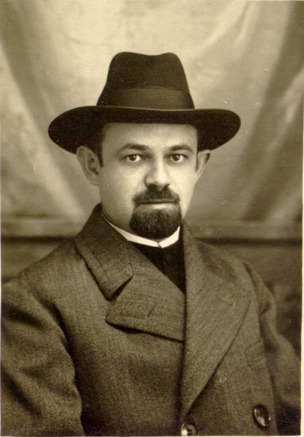
Dr Lajos Weisz
1898-1944Last rabbi of Mór, 1924-1944The Hungarian Jewish Museum and Archives holds his photograph, catalogued as chief rabbi of Mór from 1924 to 1944. He is named as rabbi of the congregation in the Magyar Zsidó Lexikon of 1929 and in the register of the national Jewish office in 1943, so he led worship in the synagogue through its last two decades. Dr Lajos Weisz and his wife appear in the list of 127 victims from Mór in the memorial book of the Jews of Székesfehérvár and its region.
ביוגרפיה או מקור ←Naftali Rosenthal
UnknownFounder and first head of the congregationMember of the Rosenthal family that settled in Mór around 1740 and founded the congregation in 1750. The Magyar Zsidó Lexikon names him as its first leader, a personal friend of Moses Mendelssohn who organised communal life in that spirit and used his standing at court on behalf of the Jews of Hungary. He also helped his son-in-law Fülöp Gomperz to run the yeshiva. The Jewish Encyclopedia likewise calls him a friend of Mendelssohn in his youth and the father of the scholar Solomon Rosenthal.
ביוגרפיה או מקור ←Salamon Rosenthal
Probably 1764-1845Donor of the 1802 synagogueThe Magyar Zsidó Lexikon records that the temple of the Mór congregation was built in 1802 from the donation of Salamon Rosenthal and his wife. He belonged to the family that had founded the community half a century earlier. He is very probably the Hebrew scholar Solomon Rosenthal of the Jewish Encyclopedia, born at Moór on 13 June 1764 to Naphtali Rosenthal, who was in commerce before moving to Pest in 1819 and died there on 8 April 1845.
ביוגרפיה או מקור ←Izsák Münk
d. 1803First rabbi of MórWhen the congregation had grown large enough to need a rabbi towards the end of the eighteenth century, it elected Izsák Münk. He served the community in the years immediately before and around the building of the 1802 synagogue and died in Mór in 1803, according to the Magyar Zsidó Lexikon.
ביוגרפיה או מקור ←Fülöp Gomperz
d. 1804Founder of the yeshivaSon-in-law of Naftali Rosenthal and a member of one of the three families that sustained the congregation. He founded a yeshiva in Mór and directed it with his father-in-law's help; it continued until the middle of the nineteenth century. He died in 1804, two years after the new synagogue was built.
ביוגרפיה או מקור ←Pinkász Büchler
UnknownRabbi of Mór, c. 1875-1917Rabbi of the congregation for about four decades, from around 1875 until 1917. The Magyar Zsidó Lexikon credits him with working to root religious observance among the members; registers of the national Jewish office record him as rabbi of Mór during the First World War. The Jewish Encyclopedia calls him 'the Talmudist rabbi Phineas Büchler of Moór', father of the historian Rabbi Sándor (Alexander) Büchler. His gravestone stands in the Mór Jewish cemetery.
ביוגרפיה או מקור ←Jakab Steiner
UnknownRabbi of Mór, elected 1923Elected rabbi of the Mór congregation in 1923, after the long tenure of Pinkász Büchler. The register of the national Jewish office for July and August 1923 records the ministry's enquiry about confirming him as keeper of the community's civil registers and about his salary. His tenure was evidently short: the Hungarian Jewish Museum's records date Lajos Weisz's rabbinate in Mór from 1924, and Weisz is named as rabbi in 1929.
ביוגרפיה או מקור ←Nándor Beregi
1873-1944Teacher of the congregation's schoolCame to Mór in the autumn of 1898 as teacher of the Jewish school that stood beside the synagogue, a two-teacher school also attended by the sons of German townspeople, tradesmen and merchants. His biographer credits him with raising its standing further. He took part in local public life in 1918-1919 and died in 1944.
ביוגרפיה או מקור ←יש לכם משהו לתרום?
תמונות, מסמכים, סיפורי משפחה וזיכרונות מבית הכנסת ומהקהילה שלו עוזרים לשמור על ההיסטוריה שלו בחיים.
- Mór (Magyar Zsidó Lexikon, 1929), first part of entry
- Mór (Magyar Zsidó Lexikon, 1929), second part of entry
- "Iskolanegyed" a régi Móron (extract from Schwartz Alajos, A móri németség története és élete, with 1847 map detail)
- Mór a 19. században - Új iskolák a Rákóczi és a Széchenyi utcákban
- Mór a 20. század elején: megépült a Szent Imre Iskola, a "községi" iskola és a leányiskola
- Záborszky Miklós: Csókakő, Fejér Megyei Történeti Évkönyv 15 (1981), p. 190
- Entz Géza Antal - Sisa József (eds.), Fejér megye művészeti emlékei (1998), p. 22
- Entz Géza Antal - Sisa József (eds.), Fejér megye művészeti emlékei (1998), p. 110 (Mór: Jewish cemetery)
- Az Országos Izraelita Iroda iktatónaplója 76356-79000 (1941-1942), entry 77646 of 19 October 1941
- Az Országos Izraelita Iroda iktatónaplója 46881-49370 (1922-1925), entry 47812 of 9 July 1923
- Az Országos Izraelita Iroda iktatónaplója 37276-40575 (1916-1918), entry 38226
- Az Országos Izraelita Iroda iktatónaplója 81501-84000 (1943-1944), entry 82091 of 17 May 1943
- Farkas Gábor: Beregi Nándor (1873-1944), Fejér Megyei Történeti Évkönyv 11 (1977), p. 315
- The Jews of Székesfehérvár and Its Environs: list of martyrs, Mór (p. 225)
- Mór, az Ezerjó hazája: Látnivalók (Zsidótemető)
- The last original synagogue of Fejér County is saved
- Category: Jewish cemetery in Mór
- Büchler Sándor
- Zsinagógák és zsidó községek Magyarországon: térképek, rajzok, adatok (1991), Fejér county table, p. 23
- Dr. Weisz Lajos fényképe (inv. F66.515)
- Rosenthal, Solomon (Jewish Encyclopedia, 1906)
- Büchler, Alexander (Jewish Encyclopedia, 1906)
- Mosdótál / Basin (inv. 64.16)
- Mor Jewish Cemetery (survey record)
- OpenStreetMap / Nominatim: Szent Kereszt-templom, Láncos-kastély, Lamberg-kastély and Városház köz, Mór
Share a memory or thought
No comments yet. Be the first to add one.