

История Mosonmagyaróvár Synagogue (Moson)
The synagogue stood in Moson (German Wieselburg), the market town on the Vienna–Budapest road that was merged with neighbouring Magyaróvár in 1939 to form Mosonmagyaróvár. Jews had lived in Moson since the eighteenth century, at first in Ostermayer Street, long known as Jew Street, and they worshipped in a rented manorial building on the Királydomb. In 1862 the community bought a plot and began to build a two-storey synagogue with a women's gallery to the plans of Károly Bendl, paid for largely by members who purchased their seats. Rabbi Azriel Hildesheimer of Eisenstadt, later rector of the Berlin Rabbinical Seminary, dedicated it. For eighty years it served a German- and Hungarian-speaking Status Quo congregation of merchants, craftsmen, farmers and professionals that numbered about 700 in 1929. In May 1944 the streets around the synagogue became the ghetto for the Jews of the district, and on 6 June its inmates were taken to Győr and from there to Auschwitz. A few dozen survivors returned, renewed the congregation and repaired the building, but most left after 1956. The synagogue was pulled down at an unrecorded date before the mid-1980s, and only fragments of its furnishings survive.
Where it stood for 86 years
Historic: Moson, by Ostermayer utca and Mosonvár utca (the 1944 ghetto streets around the synagogue); exact plot not documented. Today: Moson quarter, 9200 Mosonmagyaróvár, Hungary.
Открыть большую карту →Еврейская община
Jewish butchers were taxed in the Moson area as early as 1678, but settlement in the town itself dates from the eighteenth century: four Jews were counted in 1735 and fourteen in 1802. The first families lived in today's Ostermayer Street. The community's registers begin in 1851; at its own request they were kept in German by the Catholic parish priest, Ferenc Haidenvolf, until his death in 1857. The first recorded general meeting, on 6 March 1861, chose a school board under the president Zsigmond Hercl. After the schism in Hungarian Jewry the congregation declared itself Status Quo. It maintained a Chevra Kadisha, a women's association and a Talmud Torah, and ran its own school from about 1860 until the children moved to the state school. Numbers rose from 352 in 1869 to 519 in 1880 and 580 in 1910. In 1929 the community counted 700 people in 190 families, among them 84 merchants, 30 craftsmen, 14 farmers, eight physicians and four lawyers; Ignác Fröhlich's ribbon factory employed 300 workers. Ninety-six members served in the First World War and eighteen fell. The violinist Carl Flesch was born into the community.
Архитектура и дизайн
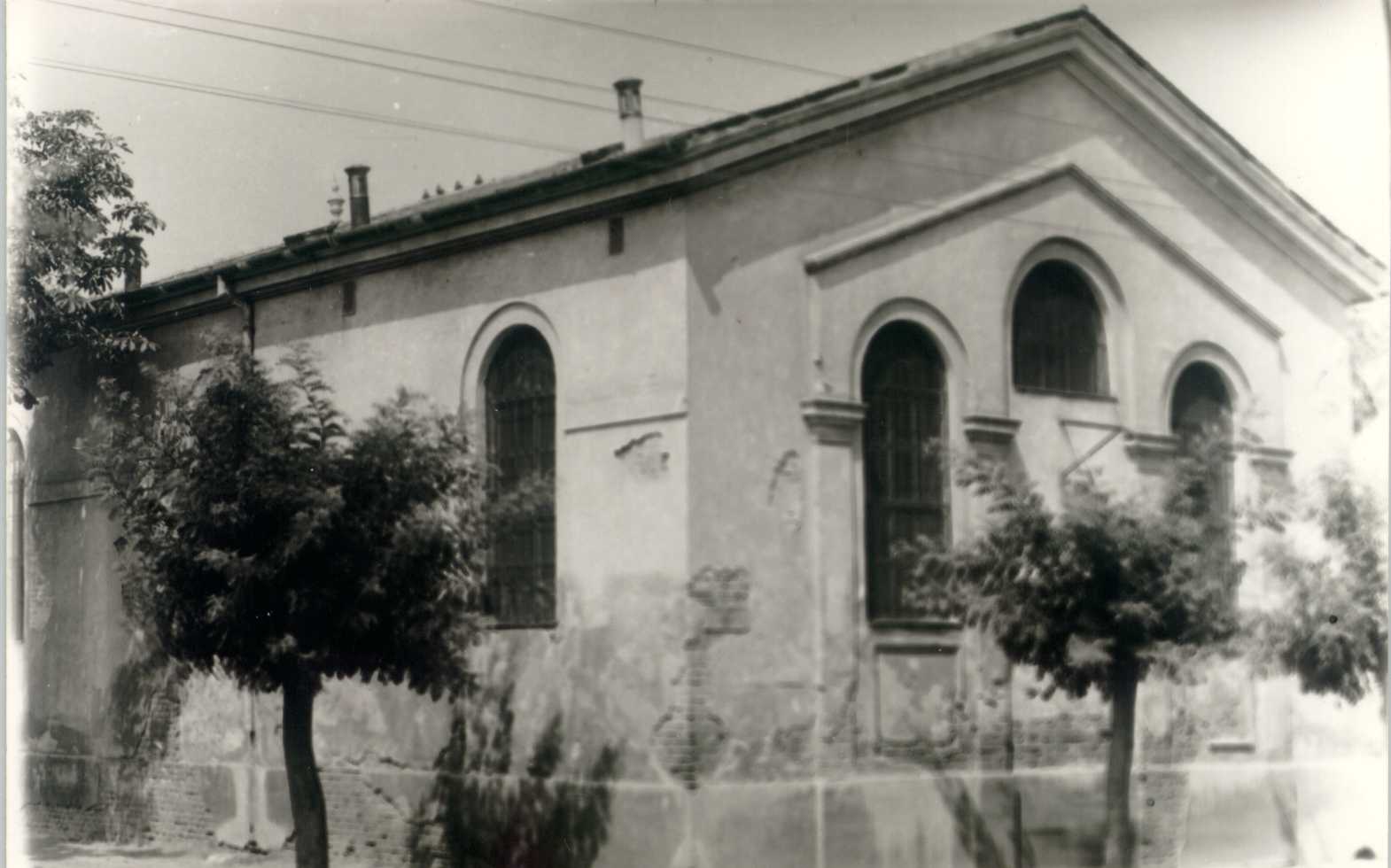
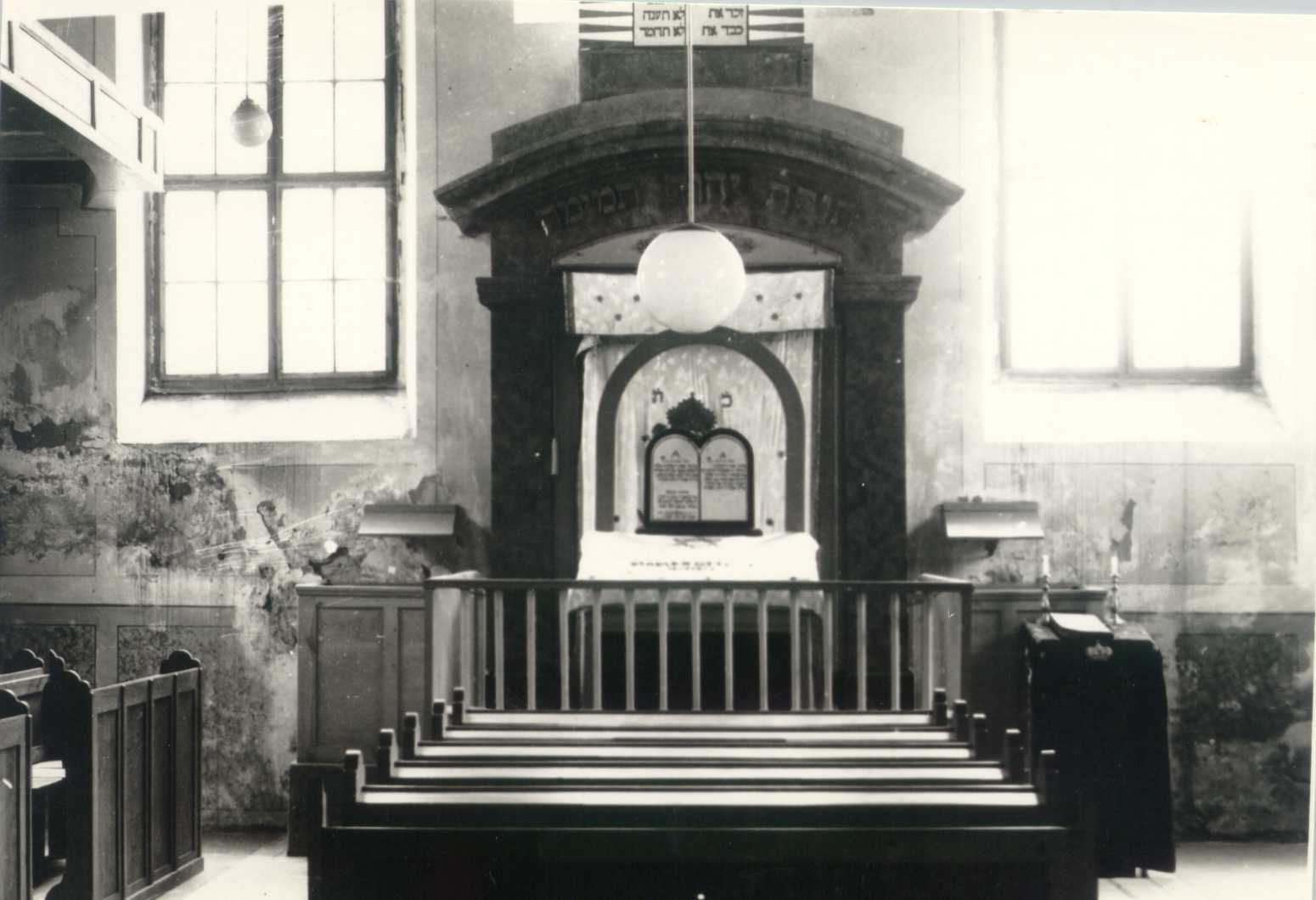
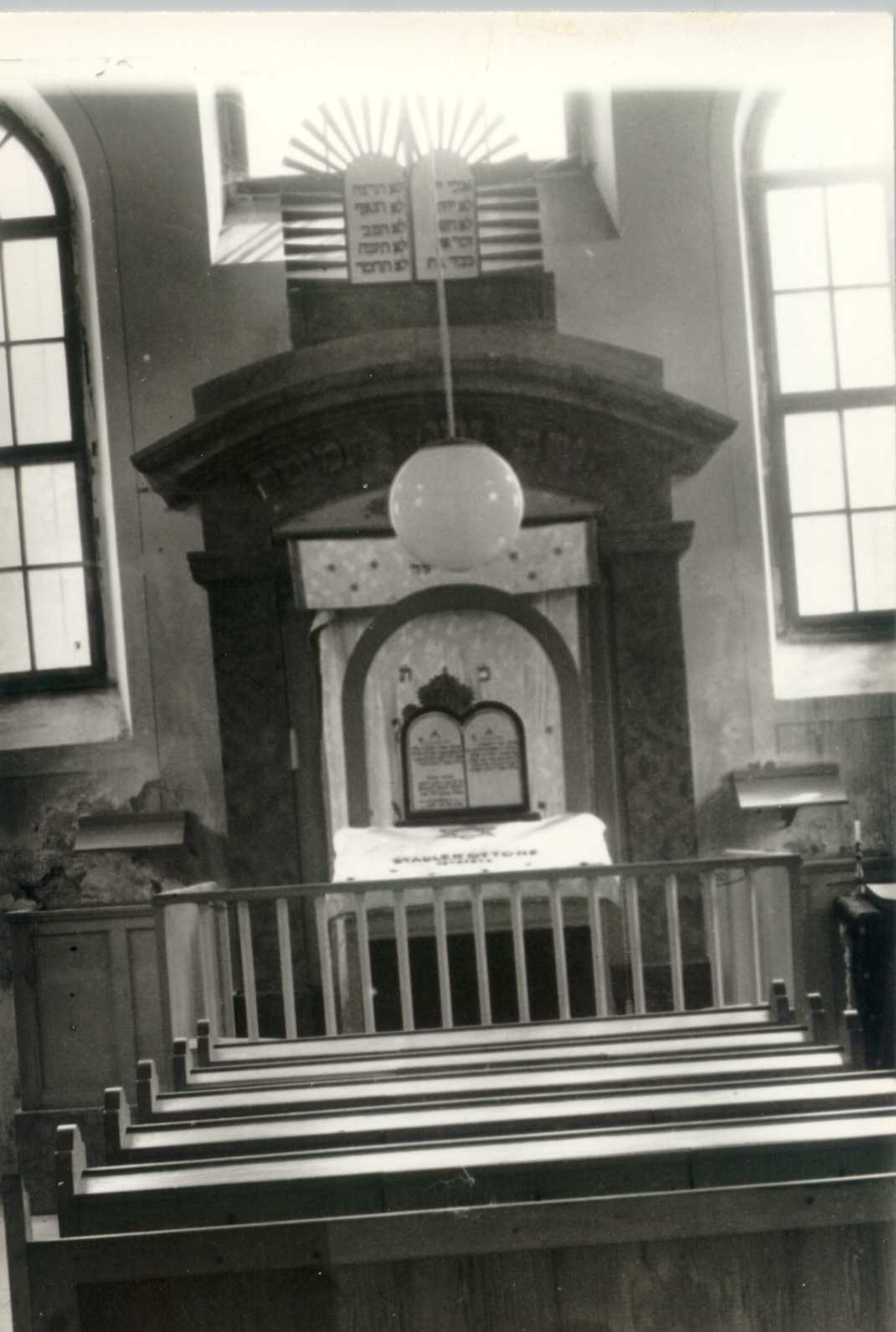
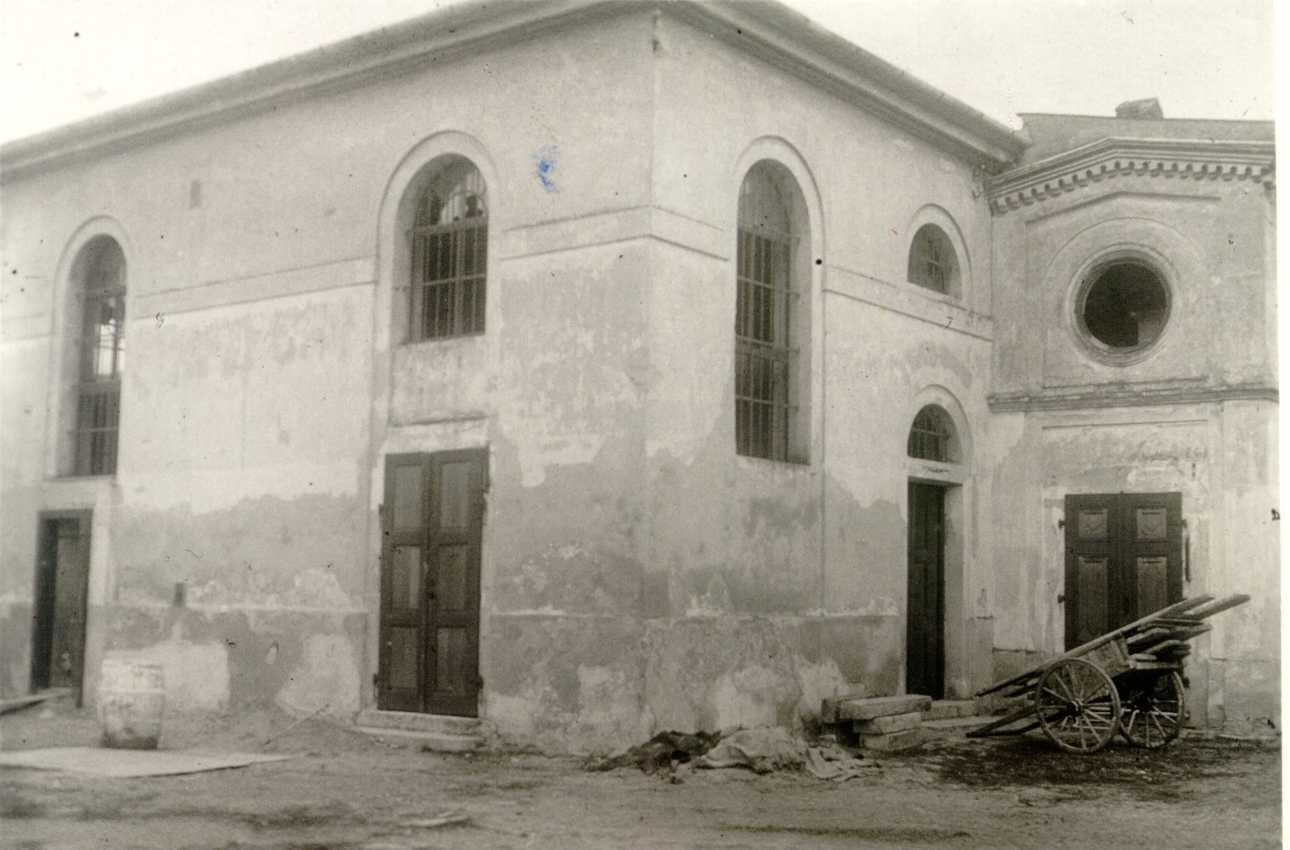
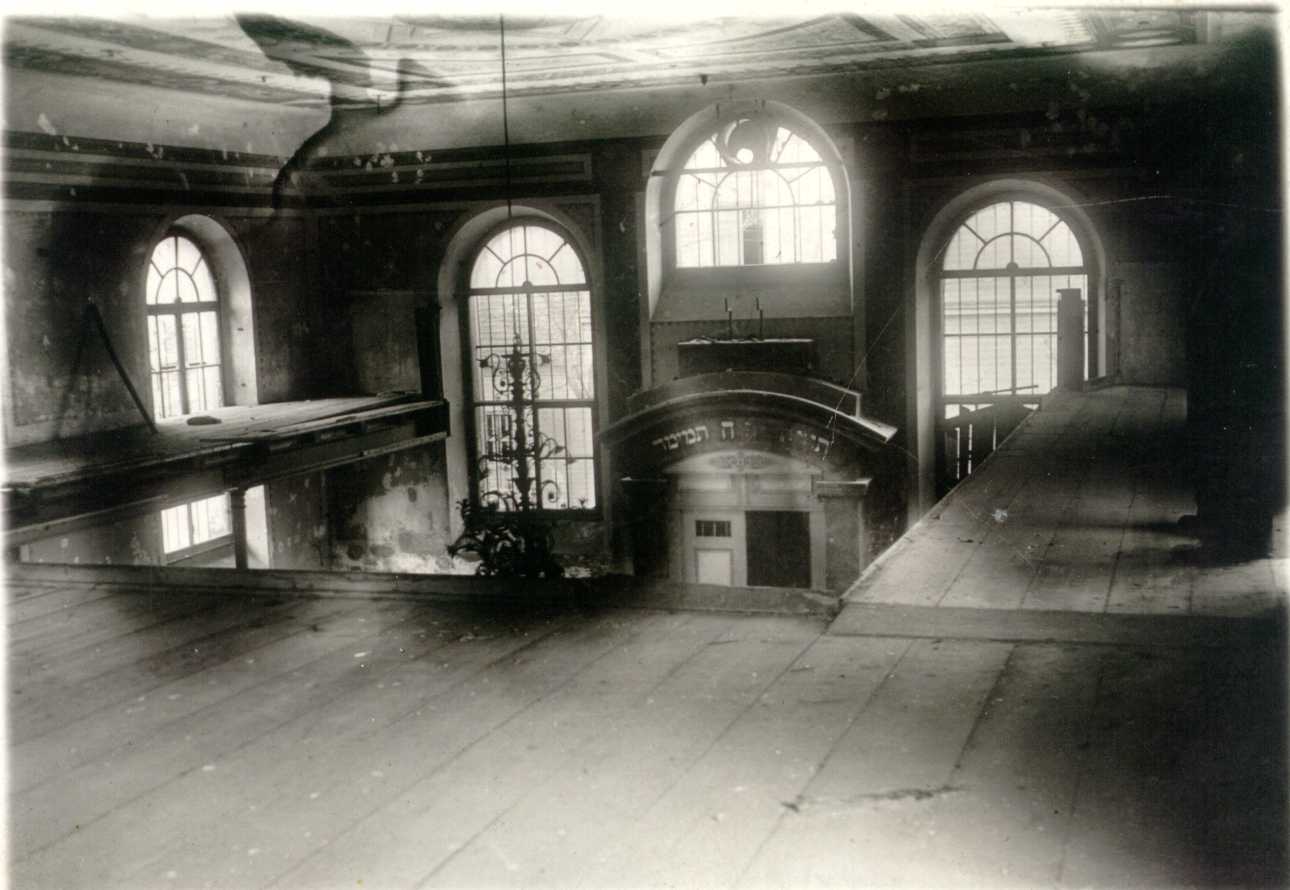
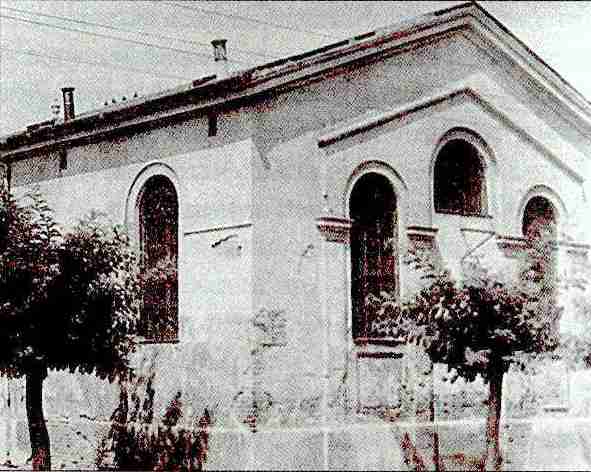
According to the Magyar Zsidó Lexikon, the community bought a plot in 1862 and began building to the plans of Károly Bendl; the result was a two-storey temple with galleries, financed by 4,310 forints that members paid for their seats and by the Chevra Kadisha and charity funds. Photographs in the Hungarian Jewish Museum and Archives show a plastered brick hall under a pitched roof. The gabled end wall has a shallow projecting centre with its own pediment and three round-arched windows, the middle one set higher, above the ark; tall round-arched windows with iron grilles light the long side. Another view shows several doorways and a lower annexe with a round window. Inside, wooden women's galleries ran along the walls beneath a panelled ceiling. The Torah ark stood between the two tall windows of the end wall: a classicising aedicule with a curved pediment bearing a Hebrew inscription and crowned by the Tablets of the Law set against a sunburst, behind a wooden balustrade and rows of pews. The seating capacity is not recorded.
Жизнь в синагоге
The synagogue was dedicated by Azriel Hildesheimer, rabbi of Eisenstadt (Kismarton) and later rector of the Berlin Rabbinical Seminary. Its first rabbi was Dávid Pollák, who afterwards became head of the Jewish school. He was followed briefly by H. L. Reich, whose occasional sermons were printed in Moson, and then by Gyula Löwinger, who led the congregation for some forty years. Hermann Strausz served from 1920 to 1926; after that the posts of rabbi and chief cantor stayed vacant, and in 1929 the building was in the care of the synagogue wardens Ignác Fischer and József Braun under the president Pál Scheiber, while the school head Henrik Hirn taught religion. During the First World War the community supported a temporary hospital. András Koerner's reconstruction of nineteenth-century Jewish life in Moson records local customs such as the shammes throwing walnuts to the children from the synagogue at Passover. After 1945 the returning survivors prayed here again, and a list of the martyrs' names was placed inside the building.
Разрушение
The building was not destroyed during the Second World War. It stood in the middle of the ghetto set up in Moson in May 1944 and was left empty when its congregation was deported that June. Photographs dated November 1947 and November 1948 in the Hungarian Jewish Museum and Archives show flaking plaster outside and a bare interior with the gallery seating gone. The survivors who came back renewed the congregation and renovated the synagogue; undated photographs in the same archive, apparently taken afterwards, show it furnished with pews, ark curtain and lamps, though with damp-stained walls. After the 1956 revolution only a few Jewish families remained in the town and regular worship lapsed. The synagogue was subsequently demolished: Anikó Gazda's survey of Hungarian synagogues, carried out in 1980–87, already lists it as pulled down. The year of the demolition, who ordered it and who carried it out are not recorded in any source consulted for this entry, so the loss can only be placed between 1948 and the mid-1980s.
Судьба общины
After Nazi German forces occupied Hungary in March 1944 the head of the community was arrested and Oszkár Frischmann was put in charge of Jewish affairs. On 13 May the county's deputy lord-lieutenant, Miklós Telbisz, ordered ghettoisation; between 15 and 17 May the Jews of the town and district were moved into Ostermayer and Mosonvár streets, around the synagogue, and on 23 May 966 more were brought in from three districts. Mayor János Sattler's request for food, fuel and clothing for the ghetto went unanswered, and many men were taken for forced labour. On 6 June 1944 the inmates were sent by train to the Győr ghetto and later that month deported to Auschwitz, where most were murdered. About thirty deportees returned, joined by labour servicemen and Jews from nearby villages; 110 Jews lived in the town in 1946. On 26 September 1948 four marble tablets naming 470 victims were unveiled in the restored cemetery. After 1956 only three or four families remained. A community was re-founded in the 1990s under László Ligeti and today uses a small prayer house.
Место сегодня
Nothing of the synagogue stands today, and its exact plot has not been established for this entry; wartime sources place it in the Moson quarter beside Ostermayer and Mosonvár streets. Mazsihisz reported in 2026 that a single object survives from the building, a wooden piece of the women's gallery. Marble plaques removed from the synagogue before it was torn down are kept at the Jewish cemetery on Mosonyi Mihály út, which was restored in 1990 with the help of former residents and holds the community's memorial tablets and a Torah scroll. The re-founded Moson Jewish Community worships in a prayer house acquired about thirty years ago and renovated in 2025.
Значимые имена
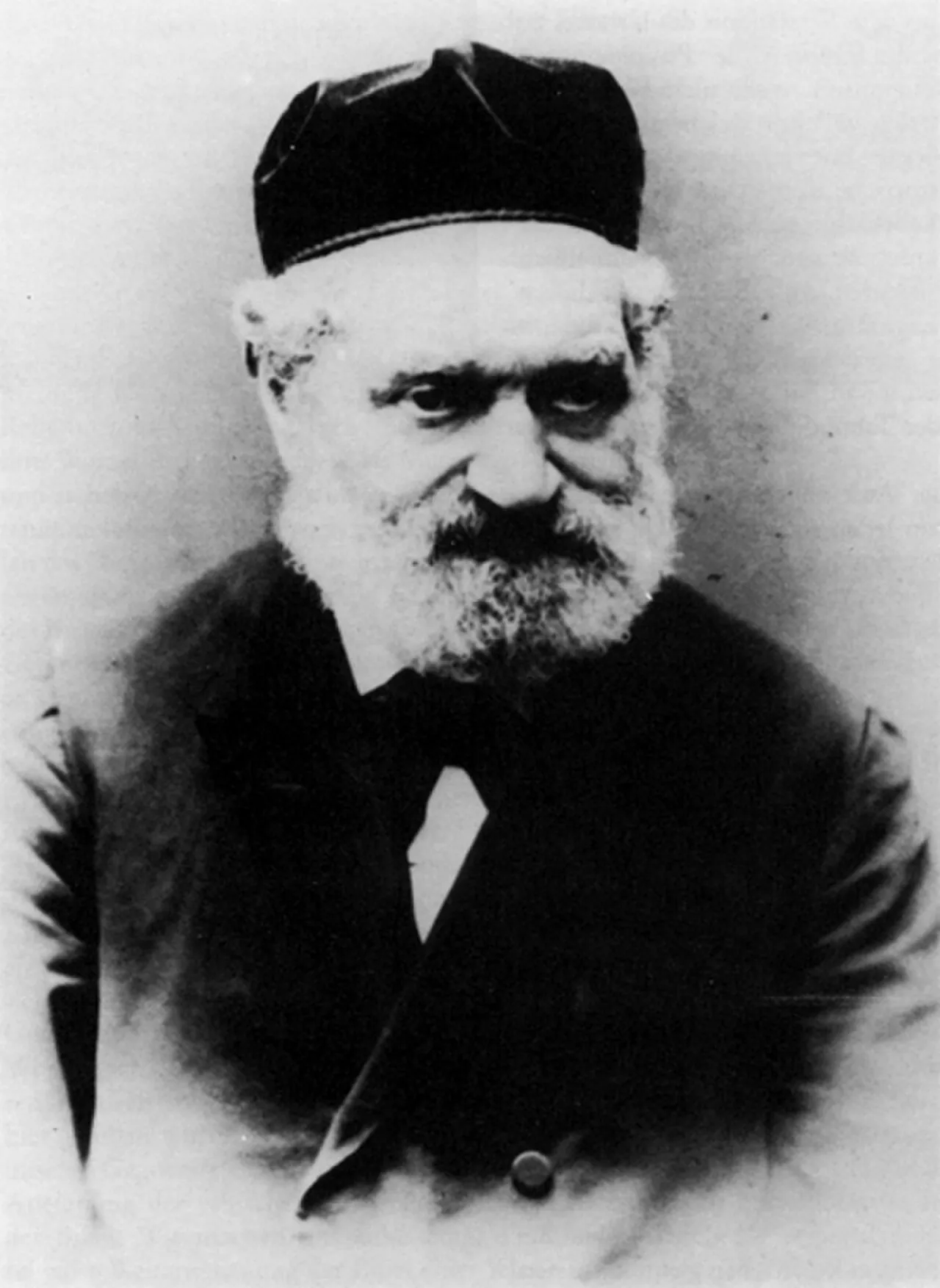
Azriel Hildesheimer
1820–1899Rabbi of Eisenstadt; dedicated the synagogueAzriel (Esriel) Hildesheimer, rabbi of Eisenstadt (Kismarton) from 1851 to 1869 and later founder and rector of the Berlin Rabbinical Seminary, inaugurated the new Moson synagogue, according to both the Magyar Zsidó Lexikon and Pinkas Hakehillot. The date of the ceremony is not recorded, but it must fall between 1862 and his departure for Berlin in 1869.
Биография или источник →Károly Bendl
UnknownDesigner of the synagogueThe Magyar Zsidó Lexikon of 1929 records that the Moson community bought a plot in 1862 and began building its synagogue to the plans of Károly Bendl. Anikó Gazda's list of Hungarian synagogue architects repeats the attribution. Nothing further about his life, training or other buildings was found for this entry.
Биография или источник →Dávid Pollák
UnknownFirst rabbi of the Moson communityDávid Pollák is named by the Magyar Zsidó Lexikon as the first rabbi of the Moson congregation after the synagogue was built. He later became head of the community's Jewish school, which had opened around 1860 and moved into a new building in 1864.
Биография или источник →Gyula Löwinger
UnknownRabbi of Moson for about forty yearsGyula Löwinger succeeded the short-serving H. L. Reich as rabbi of Moson and, in the words of the Magyar Zsidó Lexikon, led the spiritual life of the community for forty years. His tenure therefore covered most of the synagogue's life between the late nineteenth century and the First World War; exact dates were not found.
Биография или источник →Hermann Strausz
UnknownRabbi of Moson, 1920–1926Hermann Strausz was the last rabbi to hold office in the Moson synagogue according to the Magyar Zsidó Lexikon, serving from 1920 to 1926. After he left, the posts of rabbi and chief cantor remained vacant, and the Pinkas Hakehillot likewise notes that the community had no rabbi from 1926.
Биография или источник →Zsigmond Hercl
UnknownCommunity president at the time of buildingZsigmond Hercl (also written Hercel) presided over the Moson community when its first recorded general meeting was held on 6 March 1861, a year before the plot for the synagogue was bought. The Magyar Zsidó Lexikon lists him first among the presidents who earned merit in developing the congregation.
Биография или источник →Pál Scheiber
UnknownCommunity president in 1929Pál Scheiber was president of the Moson Status Quo community when the Magyar Zsidó Lexikon was compiled in 1929, heading a board that included vice-president Adolf Spitzer and the synagogue wardens Ignác Fischer and József Braun. By the end of 1943 the president was Bernát Szigeti.
Биография или источник →Вам есть чем поделиться?
Фотографии, документы, семейные истории и воспоминания об этой синагоге и её общине помогают сохранить её историю.
- “Mosonmagyarovar” – Encyclopedia of Jewish Communities in Hungary (Pinkas Hakehillot Hungary, pp. 358–359)
- Magyar Zsidó Lexikon (1929): Moson
- Mosonmagyaróvár, Hungary (KehilaLinks home page)
- An Article From Magyar Zsido Lexicon, Published 1929 (English translation)
- Mosonmagyaróvár – Holocaust Encyclopedia summary (after Randolph L. Braham)
- A “végső megoldás” Győr-Moson-Pozsony vármegyében
- Magyarországi zsinagógák és zsidó közösségek (survey 1980–87): county tables and list of architects
- Mosonmagyaróvári zsinagóga homlokzata (inv. 73.160)
- Mosonmagyaróvári zsinagóga homlokzata (inv. F70.261)
- Mosonmagyaróvári zsinagóga (inv. F70.282, dated 1947-11-12)
- Mosonmagyaróvári zsinagóga karzata (inv. F01.327, dated 1948-11-12)
- Mosonmagyaróvári zsinagóga frigyszekrénye és padok (inv. F70.262.1)
- Mosonmagyaróvári zsinagóga frigyszekrénye (inv. F70.262.2)
- Mosonmagyaróvár: Mártírnévsor a zsinagógában (inv. F70.266.1–2)
- Galériák – Zsinagógák a történelmi Magyarországon: Mosonmagyaróvár
- Memories and Recollections of Moson Jewry, pp. 203–321 (translation of Emlékek és emlékezések a mosoni zsidóságról)
- Felavatták a mosonmagyaróvári mártírok emléktábláját (Külföldi-Belföldi Hírek, 26 September 1948)
- Mosonmagyaróvár a Csányi5-ben, avagy a budapesti és vidéki zsidóság közös pontjai
- Megújult imaházat avattak hanukakor Mosonmagyaróváron
- A jövő ne a felejtésről szóljon – Nagy István agrárminiszter a mosoni zsidó mártírokra emlékezett
- Széder Mosonmagyaróváron
- Mosonmagyaróvár (JewishGen cemetery project page)
- The Jewish Cemetery (KehilaLinks)
- Drawings by András Koerner (KehilaLinks)
- Azriel Hildesheimer
- Mosonmagyaróvár
- OpenStreetMap: Ostermayer utca (way 28932658)
- OpenStreetMap: Mosonvár utca (way 175731215)
Share a memory or thought
No comments yet. Be the first to add one.