
Historia Synagogue of Most
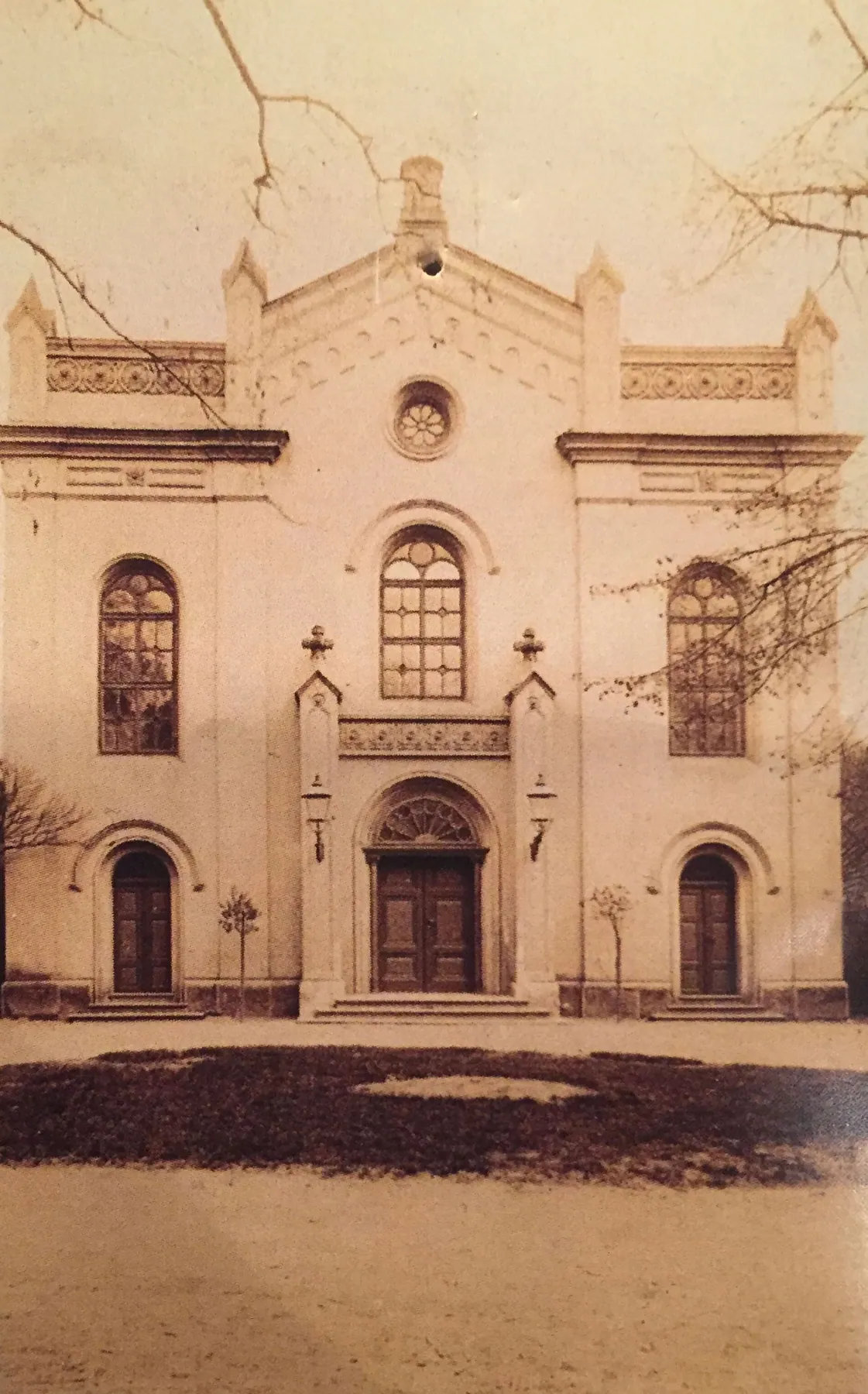
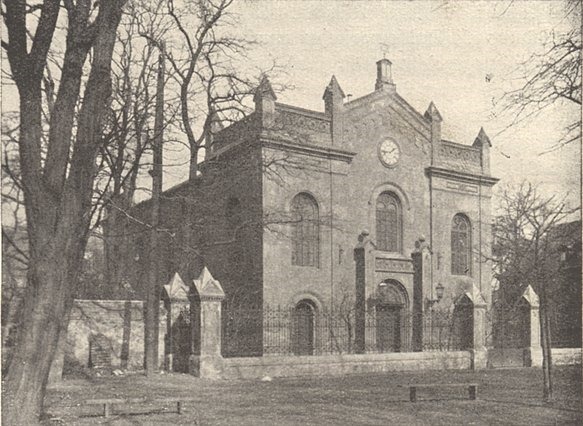
Most, known in German as Brüx, lies at the foot of the Ore Mountains in north-western Bohemia. Jews lived there from the fourteenth century, in a quarter outside the town walls, until they were expelled in 1453 and banned from the town by the Bohemian king in 1464. They were able to return only after 1848. The new community, at first part of the Teplice congregation, became independent in 1868 and built its synagogue in 1872–73. It was a Neo-Romanesque building in the German round-arch style, with three entrances from the street and a Star of David in its gable. The first rabbi, Dr Alexander Kisch, later a famous preacher in Prague, began his career here in 1874. With the growth of the lignite industry the community grew to nearly 1,000 people by 1910–1920, about one-twelfth of the town. After the Munich Agreement German troops occupied Brüx in October 1938 and most Jews fled. At about 6 p.m. on 10 November 1938 the synagogue was deliberately set on fire and burned down completely, while a crowd smashed Jewish shop windows. Its ruins were cleared around 1940.
Where it stood for 65 years
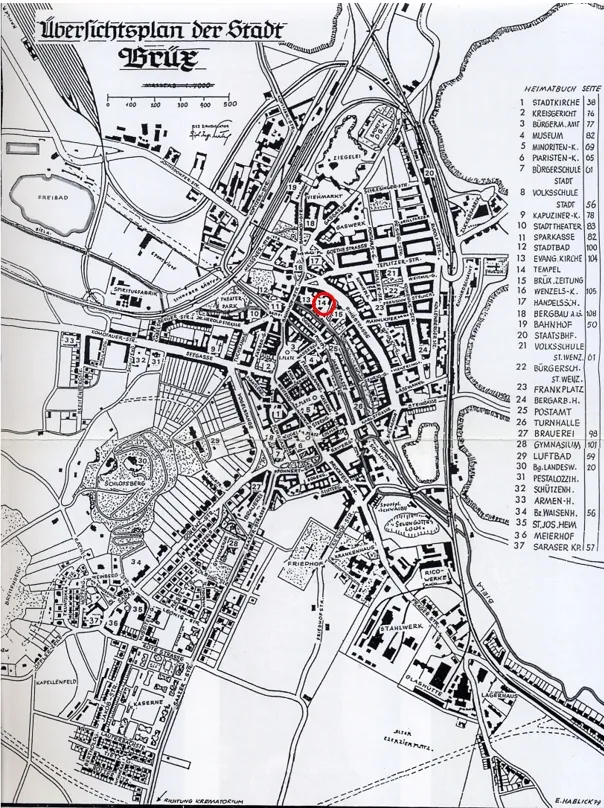
Historic: Brüx old town (site marked on pre-1914 town map). Present day: area of the demolished historic town, Most, Czech Republic. Approximate.
Otwórz większą mapę →Społeczność żydowska
Jews are documented in Brüx from the fourteenth century, living in a ghetto-like quarter outside the town walls, later called Sterngasse, with a prayer house and a cemetery mentioned in 1456. They lived under the special protection of the king, mostly as moneylenders to nobles and townspeople from Bohemia and Saxony. In 1453 they were expelled, and in 1464 the king banned any Jewish settlement in or around the town. Almost four hundred years passed before Jewish families could settle again after 1848. They first belonged to the Teplice community and founded their own congregation in 1868, opened a cemetery in the Souš district in 1878, and prospered with the industrial growth of the coal town. Around 1910–1920 almost 1,000 German-speaking Jews lived in Brüx, supporting many societies and charitable foundations; in 1930 over 650 declared the Jewish faith.
Architektura i projekt
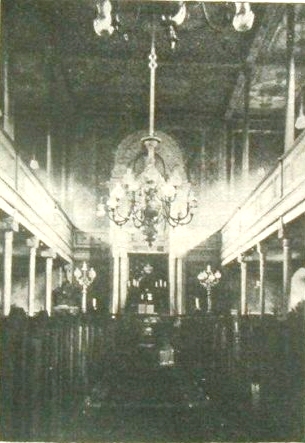
The synagogue was built in 1872–73 in the Neo-Romanesque style, in the German form known as Rundbogenstil (round-arch style). According to Czech Wikipedia, it had three entrances facing the street and a Star of David set in its gable; the Czech Holocaust portal describes it as Neoclassical. Surviving photographs, from about 1920, show the street front and the interior with its Torah ark. A pre-First World War map of Brüx marks the synagogue's position in the town. Beyond this, little is recorded about its size, capacity or furnishings, and its architect is not named in the sources consulted.
Życie w synagodze
The synagogue was the centre of a young but prosperous community that had only recently been allowed to return to Brüx. Its first rabbi, Dr Alexander Kisch, took up his first rabbinical post here in 1874 after studying in Breslau, Tübingen and Paris, and in the same year became the first reserve field rabbi of the Austro-Hungarian army. He left for Zurich in 1877 and later became rabbi of the Maisel Synagogue in Prague. By the early twentieth century the congregation supported numerous Jewish societies and foundations. A history of the community by Michael Halberstam appeared in Hugo Gold's 1934 volume on the Jews of Bohemia.
Zniszczenie
After the Munich Agreement, German troops occupied Brüx in October 1938; most Jewish families had already left or fled just before the occupation. During the Kristallnacht pogrom, organised by members of the Nazi party, the synagogue was deliberately set on fire at about 6 o'clock in the evening of 10 November 1938 and burned down completely. The same day an agitated crowd smashed the windows of Jewish shops, houses and flats. A contemporary report noted that 'many Jews fled, many were caught and forced to do physical labour'. The remains of the synagogue were cleared, probably in 1940. The placeholder claim that the building was blown up is not supported by the sources consulted.
Los społeczności
Most Jews of Brüx left the town in the weeks before the German occupation of October 1938 and fled into the Czech interior. At the end of 1941 the few who remained were forced out of their homes into municipal barracks, and a few months later they were deported to Terezín or directly to the extermination camps in occupied Poland. Those who had fled into Bohemia and Moravia were also deported after the German occupation of 1939, and almost all the Jews of Most died in the Shoah. After the war a small congregation was formed by Jews from Subcarpathian Ruthenia. Today the Jewish cemetery in the Souš district is the only reminder of the community.
Miejsce dzisiaj
Nothing of the synagogue survives, and nothing remains of the streets around it. The historic town of Most was almost entirely demolished in the 1970s and 1980s to allow lignite mining, with only the church of the Assumption moved to a new site in 1975. The synagogue's position is known from old maps; the coordinates given here are approximate and fall within the area of the vanished old town. The Jewish cemetery in Souš, opened in 1878, is the only surviving site of the community.
Ważne postacie
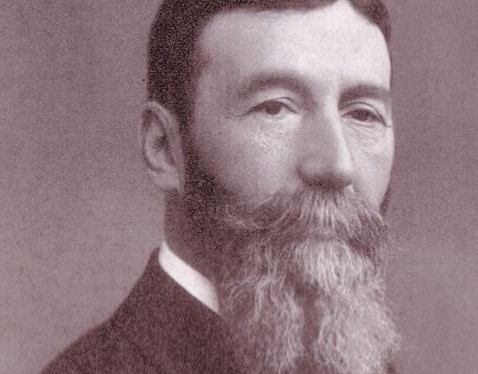
Alexander Kisch
1848–1917First rabbi of Brüx (1874–1877)Alexander Kisch took up his first rabbinical post in Brüx in 1874, soon after the synagogue opened, and in the same year became the first reserve field rabbi of the Austro-Hungarian army. He moved to Zurich in 1877 and in 1886 became rabbi of the Maisel Synagogue in Prague, where he became famous as a preacher.
Biografia lub źródło →Czy masz coś do przekazania?
Zdjęcia, dokumenty, historie rodzinne lub wspomnienia o tej synagodze i jej społeczności pomagają zachować jej historię.
Share a memory or thought
No comments yet. Be the first to add one.