
La storia di Nagyatád Synagogue
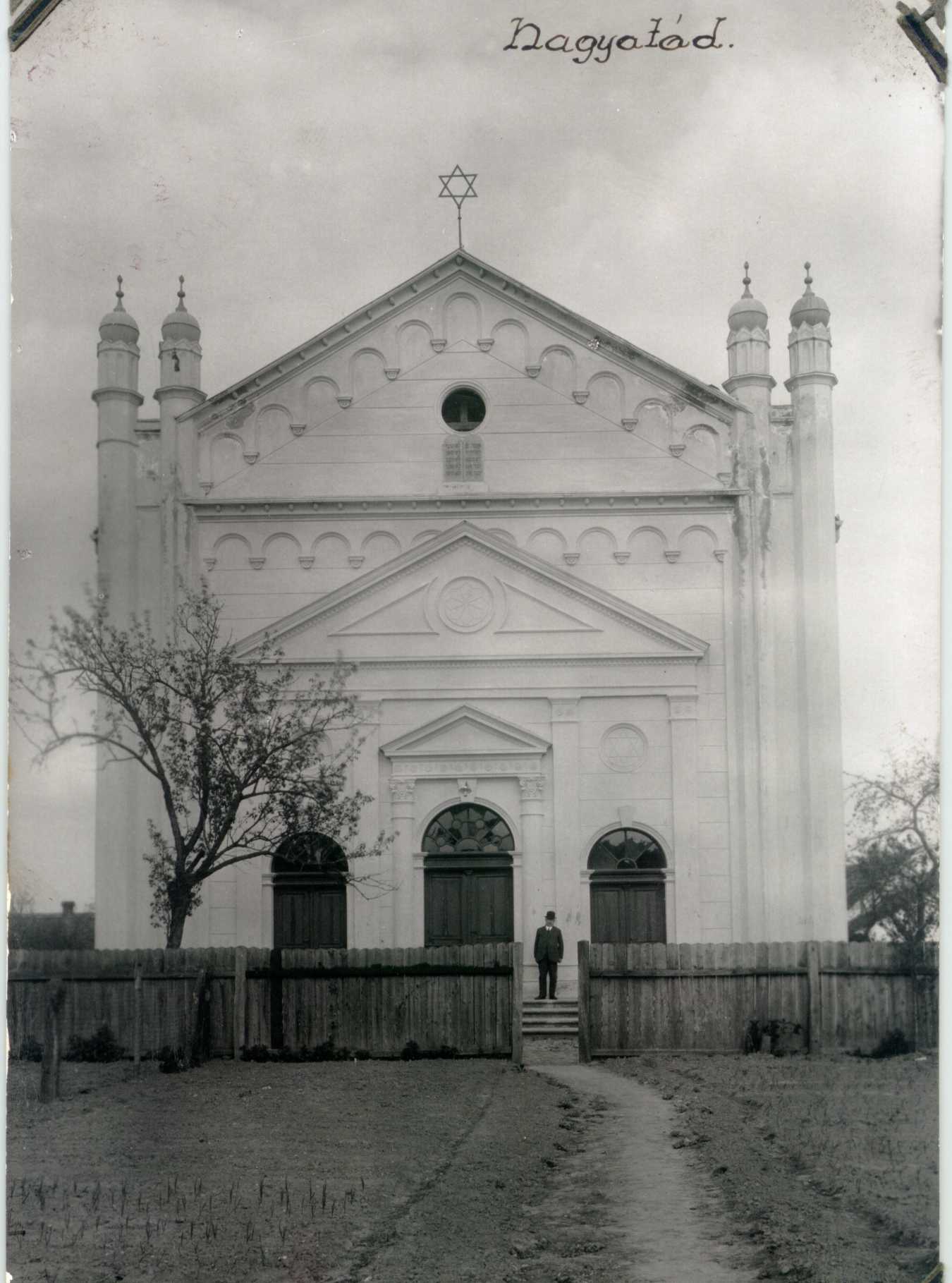
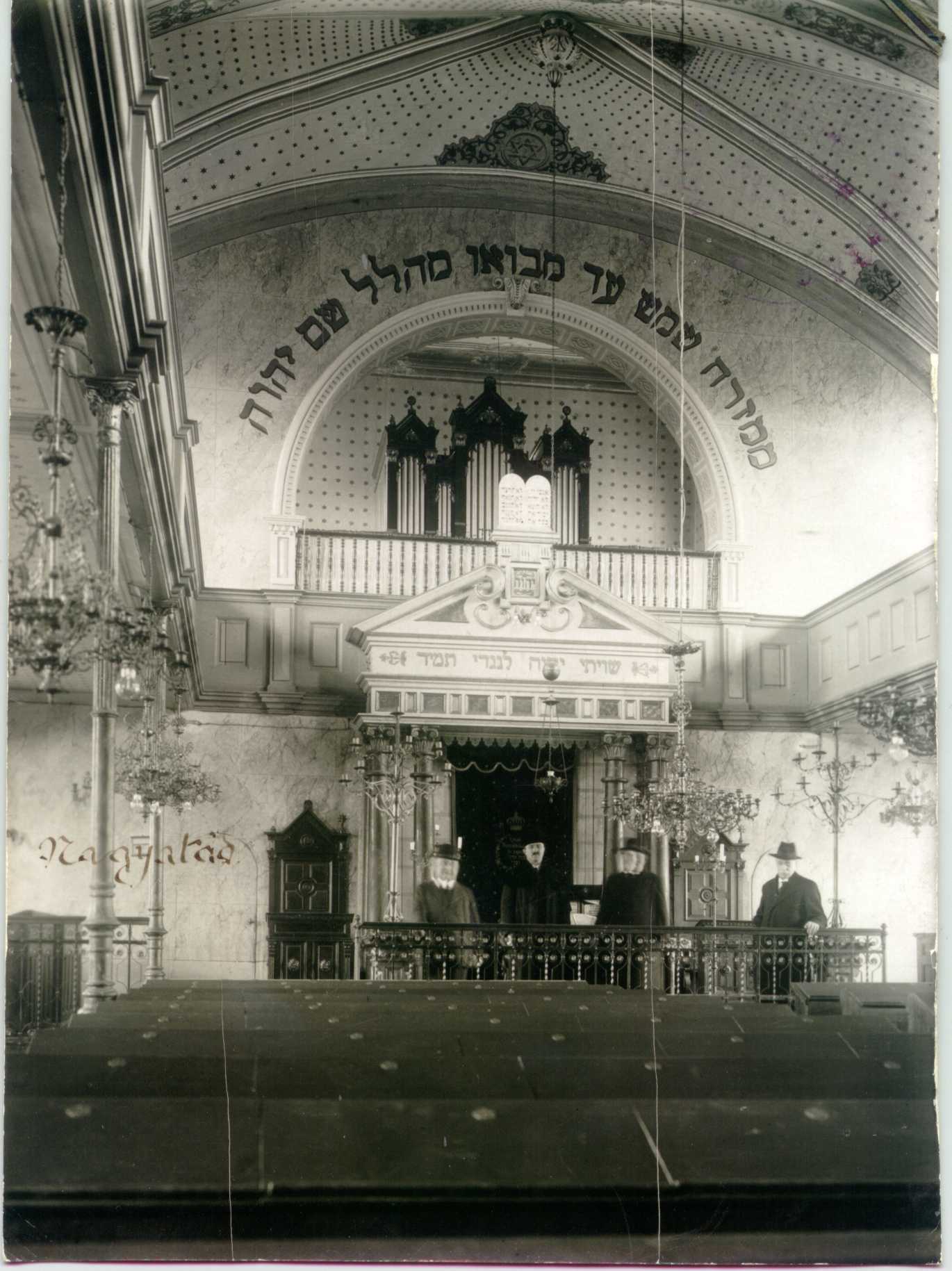
Nagyatád, a market town in southern Somogy, had one of the older Jewish communities of the county. The Magyar Zsidó Lexikon of 1929 could not date its foundation but stated that it already had a temple, a school and a ritual bath around 1780, and a rabbi, Menáchem Friedlander, is recorded there from 1807. A later summary of the community's history, on Hebrew Wikipedia, gives 1840 for the first synagogue and 1900 for the consecration of a new one; no building record, architect or builder has been found, so that date should be treated as unconfirmed. Two photographs in the Hungarian Jewish Museum and Archives show the building as it stood between the wars: a rendered, gabled front with small onion-domed turrets at the corners, and a painted interior with an organ loft above the Ark. The congregation followed the Congress (Neolog) rite from 1886 and was the registry centre for about twenty surrounding villages. In spring 1944 the Jews of Nagyatád were gathered in the synagogue before being taken away and deported to Auschwitz. The building did not survive: the museum holds an undated photograph of its cleared site with fairground rides on it, and Hungarian lists of synagogues record it simply as demolished. The date and the people responsible are not known.
Where it stood for nearly 45 years
Historic: Nagyatád, Somogy county (street and plot not identified in the sources found). Today: site not identified; the pin marks Széchenyi tér, the centre of Nagyatád.
Apri la mappa grande →La comunità ebraica
According to the Magyar Zsidó Lexikon, the independent community was founded by the Ritscher, Müncz and Berger families and at first came under the rabbinate of a neighbouring congregation before electing its own rabbi in the 1850s. A burial society (Chevra Kadisha) was set up in 1828 and a school about eighty years before 1929; teaching in Hungarian was introduced there in the 1850s. A women's association followed in 1875 and a penny charity society in 1897. In 1886 Nagyatád became the seat of a registry district organised on the Congress (Neolog) basis, with about twenty villages attached, among them Segesd, Babócsa, Lábod and Somogyszob. A later summary counts 371 Jews in the town in 1880 and 256 in 1930, while the Lexikon gives 152 families and 480 people for the community in 1929, apparently including the district. Its members were chiefly merchants and tradesmen, with lawyers, doctors and farmers; Soma Wollák founded the local silk factory. The same summary says a new synagogue was consecrated in 1900, replacing one of 1840, but how the building was financed and designed is not recorded in the sources found.
Architettura e design
The only known views are two museum photographs. The entrance front was a tall rendered gable wall with horizontal banding. A frieze of small round arches on corbels ran beneath the main cornice and stepped up the slopes of the gable, which held a round window, the Tablets of the Law and a Star of David finial. Each front corner carried a pair of slender engaged turrets rising above the eaves and finished with ribbed onion domes, giving a faintly Moorish outline. A lower vestibule projected in front under its own classical pediment with a rosette, and had three round-arched doorways with fanlights, the central one framed by columns. Inside, the hall had a shallow vaulted ceiling painted with stars, marbled walls and women's galleries on thin iron columns. The Ark stood in a columned surround crowned by scrolls and the Tablets of the Law, behind a platform with an ornate iron railing and carved seats. Above it an arched recess held the organ and a choir gallery, and Hebrew verses from the Psalms were painted on the Ark and around the arch. Chandeliers and candelabra lit the hall. Materials and dimensions are not recorded.
La vita nella sinagoga
The congregation was Neolog. Jakab Steinherz, a graduate of the Budapest Rabbinical Seminary ordained in 1886, began his career here in the years when the community adopted the Congress rite, and the organ above the Ark shows that services followed the reformed pattern with instrumental music. He was followed by Adolf Kelemen (1889 to 1893), and in the twentieth century by József Borsodi (1908 to 1922) and Artúr Reschofszky (1922 to 1925). In 1929 the community was led by its president, the merchant Ignác Kleiner, with a board of merchants, lawyers and tradesmen; its yearly budget was 12,000 pengő, of which 1,000 went to charity. Fifty-nine members served in the First World War. The community school had been suspended by 1929 for lack of pupils, but in 1937 Zoltán Neuländer is recorded as cantor and teacher of the Jewish elementary school, and he also sang a leading part in the town's amateur operetta company. A branch of the Hungarian Zionist organisation opened in 1935. A museum photograph shows a rabbi and three elders standing on the platform before the Ark.
Distruzione
After Nazi German forces occupied Hungary in March 1944, sixteen leading members of the community are reported to have been arrested on the night of 25 April and sent to Auschwitz. The remaining Jews were gathered in the synagogue by the Hungarian authorities and gendarmerie and then taken away for deportation. What happened to the building afterwards is poorly documented. From early December 1944 until the beginning of April 1945 Nagyatád lay in the firing line between Nazi German and Soviet and Bulgarian forces, and the town museum's history describes it as shot to ruins; whether the synagogue was among the buildings damaged is not stated. An undated photograph in the Hungarian Jewish Museum and Archives, catalogued as the site of the destroyed synagogue of Nagyatád, shows cleared, rubble-strewn ground with a chair carousel and swing boats and a fragment of brick wall at the edge. Hungarian lists of synagogues record the building only as demolished. No source found gives the year, or says who ordered and carried out the demolition, so both are recorded here as Unknown.
Il destino della comunità
The Jews of Nagyatád were removed in the spring of 1944. One account says they were taken from the synagogue to the ghetto at Barcs; Randolph Braham lists Nagyatád among the places whose Jews were concentrated at Kaposvár, the county seat, where about 5,200 people were held before being deported to Auschwitz in two transports in early July 1944. The operation was carried out by Hungarian authorities and gendarmerie under Nazi German occupation. The town museum puts the number deported from Nagyatád at more than two hundred, of whom hardly any survived. A local recollection recorded by the museum adds that Jews who had converted to Christianity were executed by Nazi SS men in a house on Baross Gábor utca. A few dozen survivors returned after the war, and 39 Jews were counted in September 1945. They revived communal life for a time, but they gradually left and no Jewish community remains. Artúr Reschofszky, rabbi of Nagyatád in the 1920s and later chief rabbi of Losonc, was also murdered at Auschwitz in 1944.
Il luogo oggi
The exact plot of the synagogue has not been identified in the sources found, so it is not possible to say what stands there today. The only image of the site after the building had gone is the undated museum photograph, which shows open ground used for fairground rides, bordered by single-storey houses. Nagyatád was largely rebuilt after 1945 and its centre redeveloped from the 1960s, becoming a town in 1971. The Jewish cemetery survives; a description held by the town museum places its approach off Baross Gábor utca. It was badly vandalised in 2000, when more than a hundred gravestones were damaged, and it is looked after by the mayor's office.
Nomi importanti
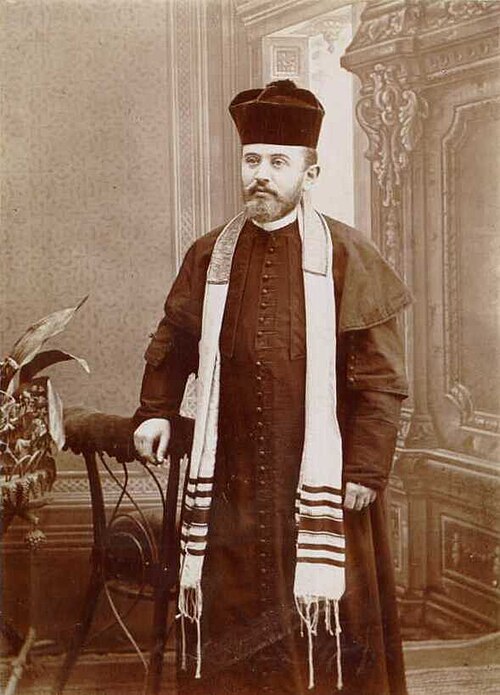
Jakab Steinherz
1856–1921Rabbi of Nagyatád, about 1886–1889A member of the first intake of the Budapest Rabbinical Seminary, Steinherz was ordained in February 1886 and took his first pulpit at Nagyatád, where the community adopted the Congress (Neolog) rite in the same year. In 1889 he was elected chief rabbi of Székesfehérvár, where he served until his death and wrote the history of that town's Jews.
Biografia o fonte →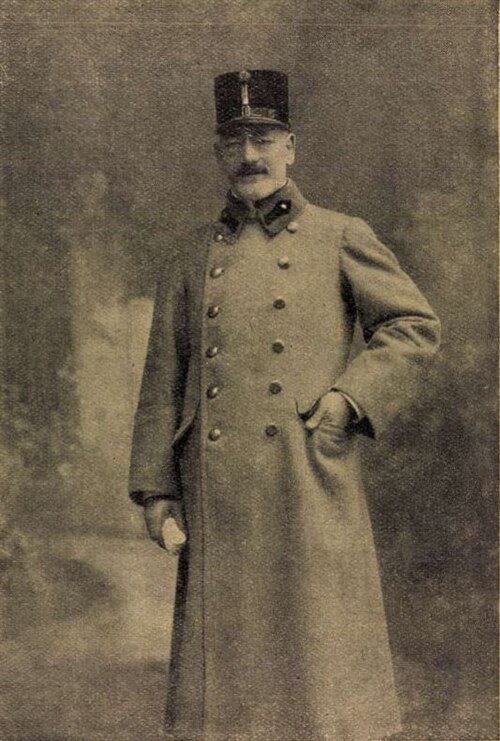
Adolf Kelemen
1861–1917Rabbi of Nagyatád, 1889–1893Born Adolf Weisz in Veszprém and trained in Budapest and Berlin, Kelemen was elected rabbi of Nagyatád in August 1889 to succeed Jakab Steinherz. He left in 1893 for Pancsova and later served at Nyíregyháza and Fogaras. In the First World War he was a military chaplain and died in a field hospital on the Italian front in 1917.
Biografia o fonte →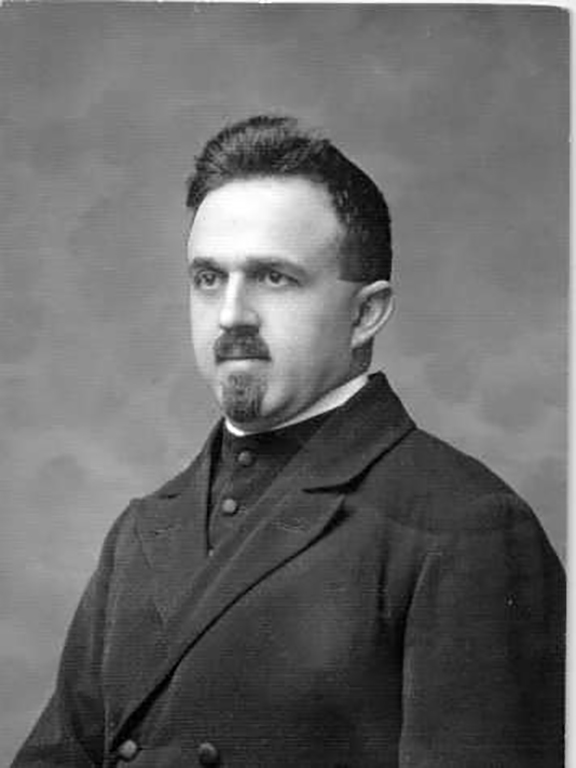
Artúr Reschofszky
1889–1944Rabbi of Nagyatád, 1922–1925Reschofszky, born at Boldogkőváralja, was ordained in Budapest in 1918 and taught religion for the Pest community before Nagyatád elected him rabbi in 1922. After three years he moved to Abony and in 1929 became chief rabbi of Losonc. He was deported during the Holocaust and murdered at Auschwitz in 1944.
Biografia o fonte →Menáchem Friedlander
died mid-1860sRabbi of Nagyatád from 1807Friedlander is the earliest rabbi recorded at Nagyatád, serving there from 1807 before moving on to Kővágóörs, Felpéc and Morvaszentgyörgy. He wrote the religious work Divré Nichumim and helped prepare the rabbinical assembly held at Paks in 1844. His tenure shows that an organised congregation existed in Nagyatád long before the later synagogue was built.
Biografia o fonte →József Kóbel (probably Josef Nobel)
UnknownFirst rabbi elected by the independent community, 1850s onwardsThe Magyar Zsidó Lexikon says that Nagyatád, previously under a neighbouring rabbinate, chose its own rabbi in the 1850s in the person of the author of the prayer book Israelitisches Andachtsbuch, who later died in Halberstadt. The online text prints his name as Kóbel; he is probably Josef Nobel, whose son, the Frankfurt rabbi Nehemia Anton Nobel, was born in Nagyatád in 1871.
Biografia o fonte →József Borsodi
1878–1943Chief rabbi of Nagyatád, 1908–1922Born József Klein at Sajószentpéter, Borsodi studied at the Budapest Rabbinical Seminary, took a doctorate in 1904 and was ordained in 1906. After two years at Szarvas he became chief rabbi of Nagyatád in 1908 and led the congregation through the First World War, in which 59 of its members served. In 1922 he moved to Kecskemét.
Biografia o fonte →Ignác Kleiner
UnknownPresident of the Nagyatád Jewish community (recorded 1929)A merchant, Kleiner headed the community when the Magyar Zsidó Lexikon was compiled in 1929, with the lawyer Béla Steiner as his deputy and a board drawn from the town's merchants, lawyers and tradesmen. Under his presidency the congregation of 152 families kept a yearly budget of 12,000 pengő and maintained its burial, women's and charity societies.
Biografia o fonte →Zoltán Neuländer
UnknownCantor and teacher of the Jewish elementary school (recorded 1937)Neuländer served the congregation as cantor and as teacher of its elementary school in the 1930s. The town museum holds photographs of him in 1937, when he sang the part of Sou-Chong in Nagyatád's amateur production of Lehár's The Land of Smiles, a sign of how closely the community's officials shared in the town's cultural life.
Biografia o fonte →Hai qualcosa da condividere?
Fotografie, documenti, storie di famiglia o ricordi di questa sinagoga e della sua comunità aiutano a mantenerne viva la storia.
- Nagyatád (entry in Magyar Zsidó Lexikon, 1929)
- Nagyatádi zsinagóga (photograph, F01.328)
- Nagyatádi zsinagóga belső a rabbival és az elöljárókkal (photograph, F01.329)
- Nagyatádi lerombolt zsinagóga helye (körhinta) (photograph, F66.980)
- נאג'אטאד (Nagyatád), section on the Jewish community
- Magyarországi zsinagógák listája (Somogy county table)
- Nagyatád története
- A népirtás politikája: a holokauszt Magyarországon, p. 729 (Somogy county)
- Steinherz Jakab
- Kelemen Adolf
- Borsodi József (rabbi)
- Reschofszky Artur
- Dr. Reschofszky Artúr fényképe (F66.470)
- Friedlander Menáchem
- Nehemia Anton Nobel
- Fénykép: Neuländer Zoltán, 1937 (NVM_T_1621)
- Széchenyi tér és Baross Gábor utca régi házai (NVM_F_99.4335)
- Nagyatád (Jewish cemetery report)
- Pinkas Hakehillot Hungary, table of contents (Nagyatád, p. 365, not translated)
- List of synagogues in Hungary (Somogy county table)
- File:Steinherz Jakab.jpg
- File:Kelemen Adolf.jpg
- Nominatim search: Széchenyi tér, Nagyatád
Share a memory or thought
No comments yet. Be the first to add one.