
La storia di Great Synagogue of Nagykálló
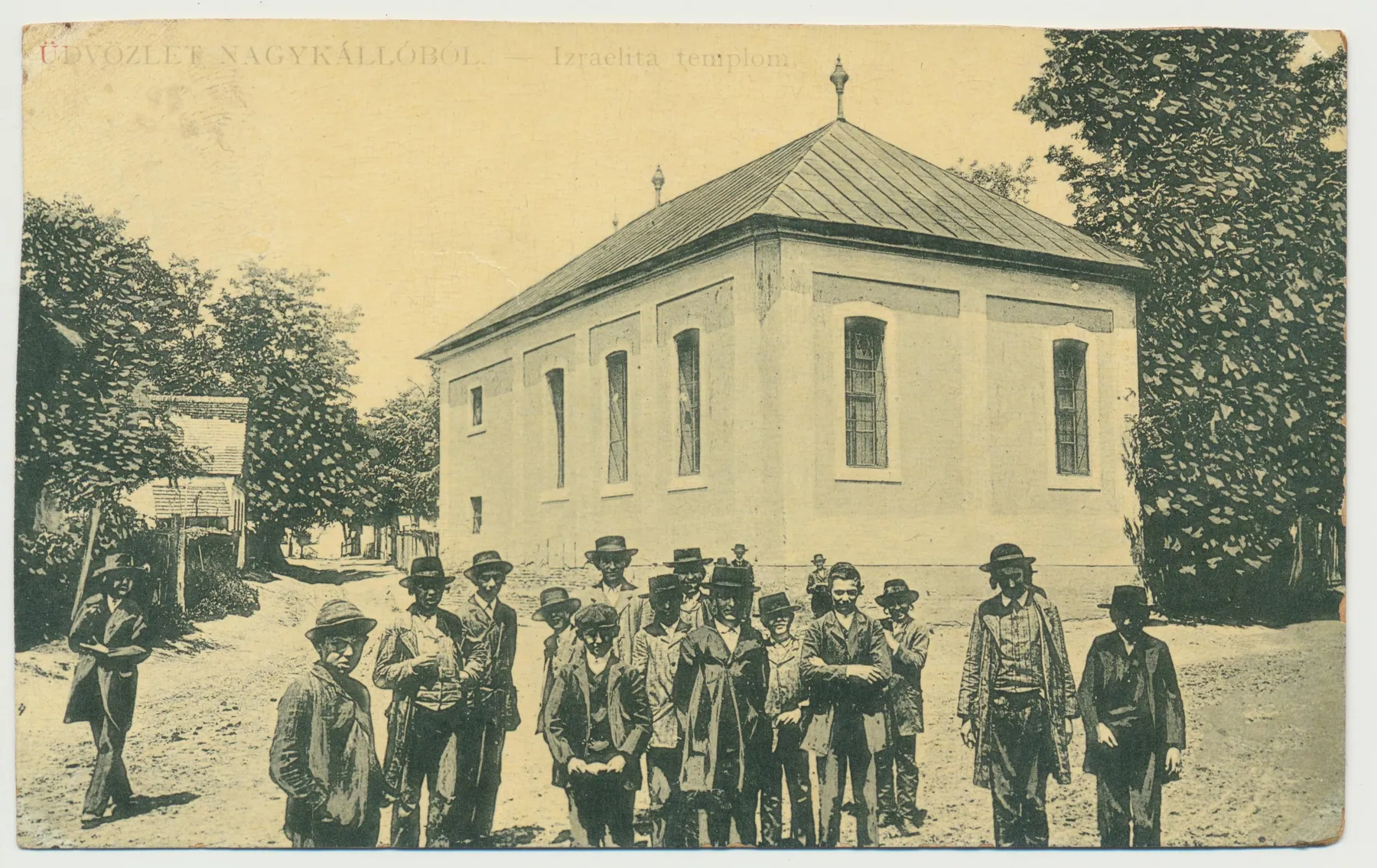
Nagykálló, a market town in Szabolcs county in north-eastern Hungary, became one of the cradles of Hungarian Hasidism. Jewish families arriving from Galicia at the end of the eighteenth century built up a full set of community institutions: a heder and yeshiva from 1782, a burial society and a society for visiting the sick recorded by 1814. The first great synagogue was consecrated around 1800, in the years when Yitzhak Isaac Taub (1751–1821), rabbi of the community and of the county from 1781, drew followers from across the region; he is remembered as the first Hasidic rebbe in Hungary and as the author of the Hungarian folk song 'Szól a kakas már' (The rooster is crowing). A surviving photograph shows the synagogue as a plain, massive hall with tall arched windows and a steep hipped roof, standing on an unpaved square. In 1924 the building was remodelled and enlarged to plans by the local engineer Dezső Lisser. The community, about a thousand people in 1920, was deported to Auschwitz in 1944. After the war the town bought the empty synagogue in the early 1950s, and in the 1960s, under the Communists, it was demolished. Today pilgrims still come from Israel, North America and Western Europe to the graves of the Kálló rabbis, but nothing remains of the synagogue itself.
Where it stood
Historic: Nagykálló (Kálló), Szabolcs county. Present day: Nagykálló town centre, Szabolcs-Szatmár-Bereg county, Hungary. Approximate.
Apri la mappa grande →La comunità ebraica
Jews are recorded in Nagykálló from the eighteenth century, but the organised community took shape at its end, as part of a broader settlement of Yiddish-speaking Jews from Galicia in the region. Many were innkeepers, wine sellers and leather traders; historians connect the spread of Hasidism with the leather and wine trade routes running north into Poland. The community counted 66 Jews in 1785, 693 in 1836, 610 in 1848, 782 in 1900 (out of 6,973 inhabitants) and 1,060 in 1920 (out of 8,117). Its rabbis included Joel ben Zvi Brodi (1655–1755), chief rabbi of Szabolcs county; Yitzhak Isaac Taub (1751–1821); Isaiah Benet (1792–1864), son of the Nikolsburg scholar Mordechai Benet, rabbi from 1840; and his son Bernát Benedikt. From 1882 Menahem Broda (Emánuel Bródy, 1862–1938) headed the yeshiva, which between the wars sometimes had more than 200 students.
Architettura e design
The synagogue was a free-standing, rectangular hall building of the kind built by larger rural Hungarian communities around 1800. The surviving photograph (MILEV, F2023.9) shows plain rendered walls divided by a simple cornice, two rows of windows on the long side, a tall round-arched window in the gable end, and a very steep hipped roof that gave the building its landmark height. In 1924 the building was remodelled and enlarged to plans by the local engineer Dezső Lisser; the details of his changes are not documented in the sources consulted. The catalogue card gives the original date as 1791 and calls the style Baroque.
La vita nella sinagoga
As the synagogue of Rabbi Isaac Taub's community, the building stood at the centre of early Hungarian Hasidism. Taub's teaching, songs and legends drew followers from the whole region, and the Kálló tradition continues today in the Hasidic courts of Kalov in New York and Kaliv in Jerusalem, whose followers gather in Nagykálló each year on 7 Adar, the anniversary of his death. The yeshiva, led from 1882 by Menahem Broda, made the town a centre of study until his death in 1938, after which no new rabbi was chosen and the yeshiva closed. The painter Imre Ámos (born Ungár, 1907–1944), a native of Nagykálló, drew on memories of the town's Hasidic life in his work; the rooster that recurs in his paintings is linked by art historians to the Kálló song.
Distruzione
The synagogue survived the Second World War but lost its congregation in 1944. In the early 1950s the town bought the empty building, and in the 1960s, under the Communists, it was demolished. The exact year of demolition is not given in the sources consulted.
Il destino della comunità
After the German occupation of Hungary in March 1944, the Jews of Nagykálló were ghettoised and deported to Auschwitz in the spring of 1944, where most were murdered. Aser Szegal Lőwy, a descendant of the Nyírtass rebbe who served the community before the Holocaust, died in 1944. Few survivors returned, and the community did not re-form.
Il luogo oggi
The synagogue has disappeared. Nagykálló remains a place of Hasidic pilgrimage: the old Jewish cemetery holds the grave of Joel Brodi and the ohel of Isaac Taub, and the new cemetery the graves of Mordechai Benet's son and of Menahem Broda. A new Kalov guest house for pilgrims stands in the town. The exact plot of the demolished synagogue was not identified.
Nomi importanti
Yitzhak Isaac Taub
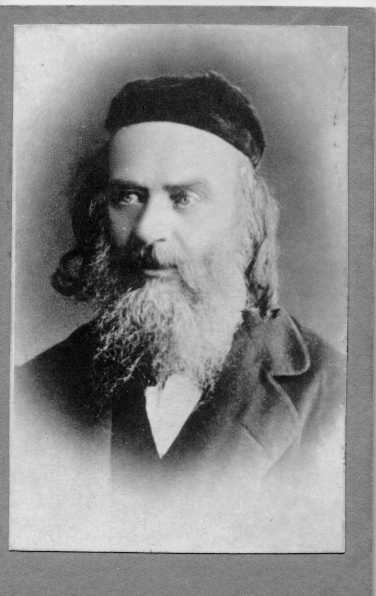
1751–1821Rabbi of Nagykálló and Szabolcs county from 1781; first Hasidic rebbe in HungaryThe great synagogue was consecrated around 1800 during his tenure; the Kálló Hasidic tradition begins with him.
Biografia o fonte →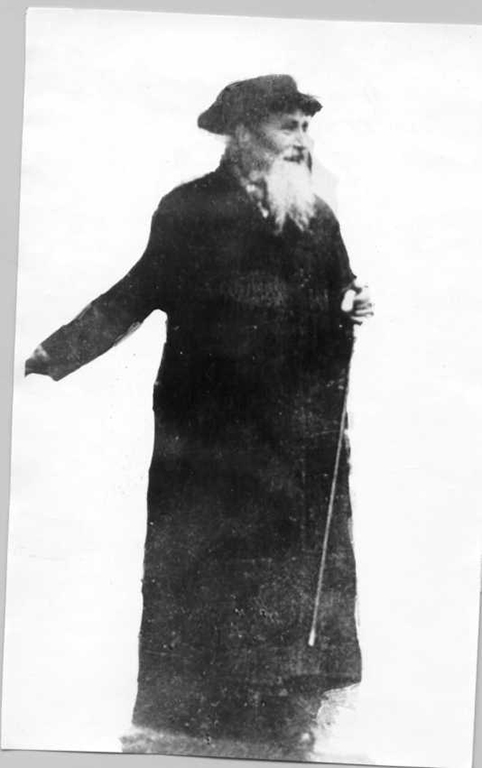
Menahem Broda (Emánuel Bródy)
1862–1938Head of the Nagykálló yeshiva from 1882Led the yeshiva attached to the community for more than fifty years.
Biografia o fonte →Dezső Lisser
UnknownLocal engineerDesigned the 1924 remodelling and enlargement of the synagogue.
Biografia o fonte →Hai qualcosa da condividere?
Fotografie, documenti, storie di famiglia o ricordi di questa sinagoga e della sua comunità aiutano a mantenerne viva la storia.
Share a memory or thought
No comments yet. Be the first to add one.