

The story of Naro Synagogue (Hammam-Lif)
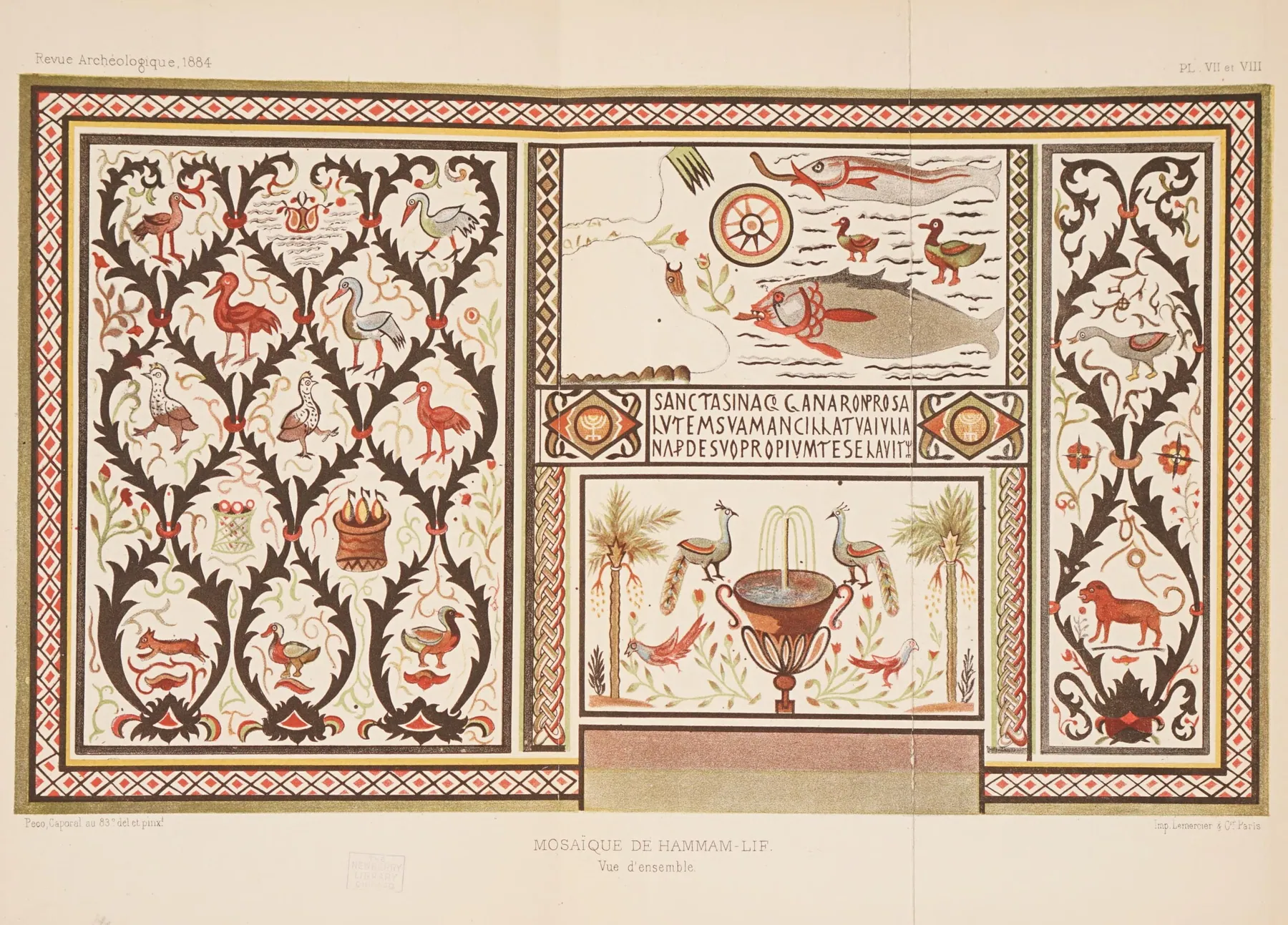
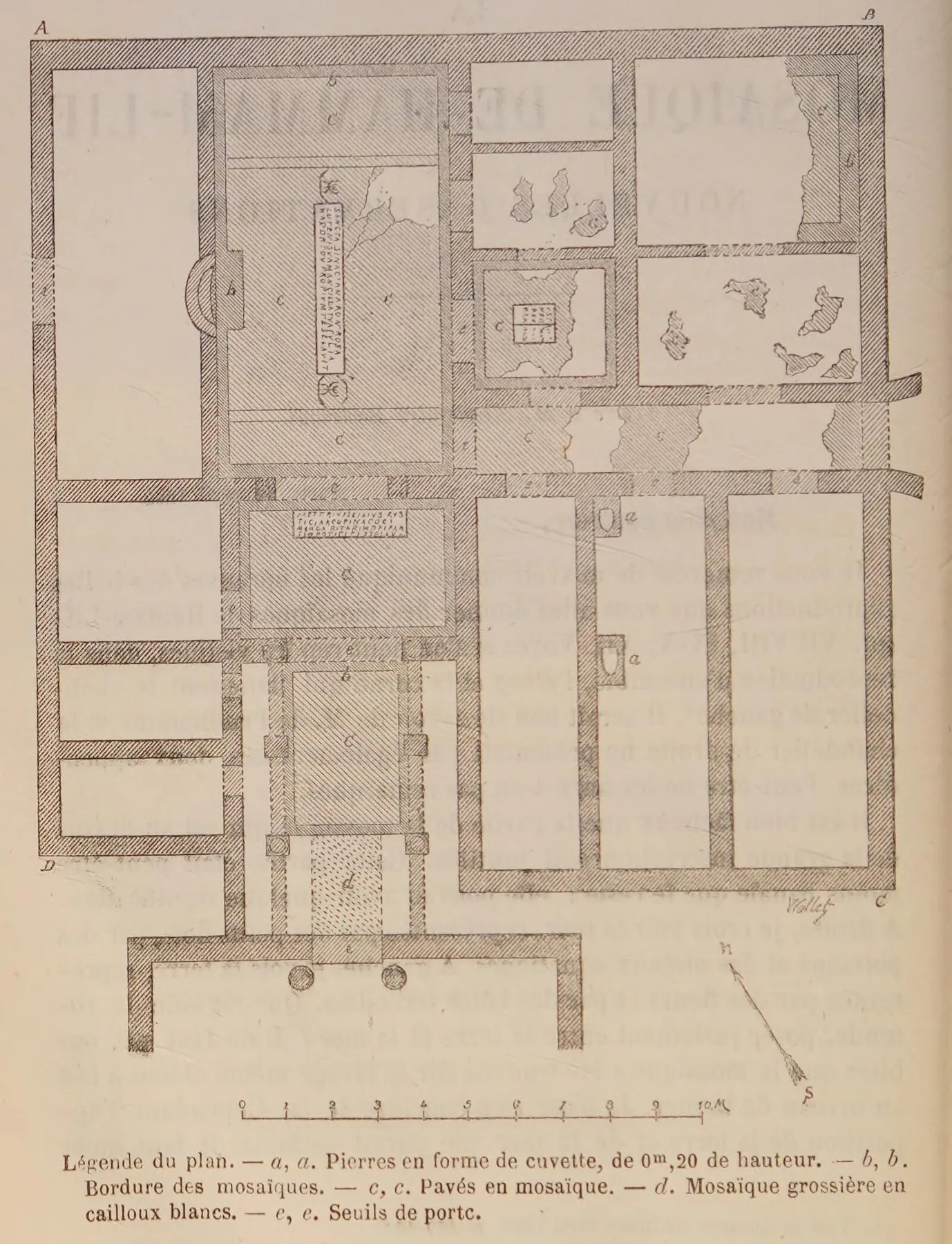
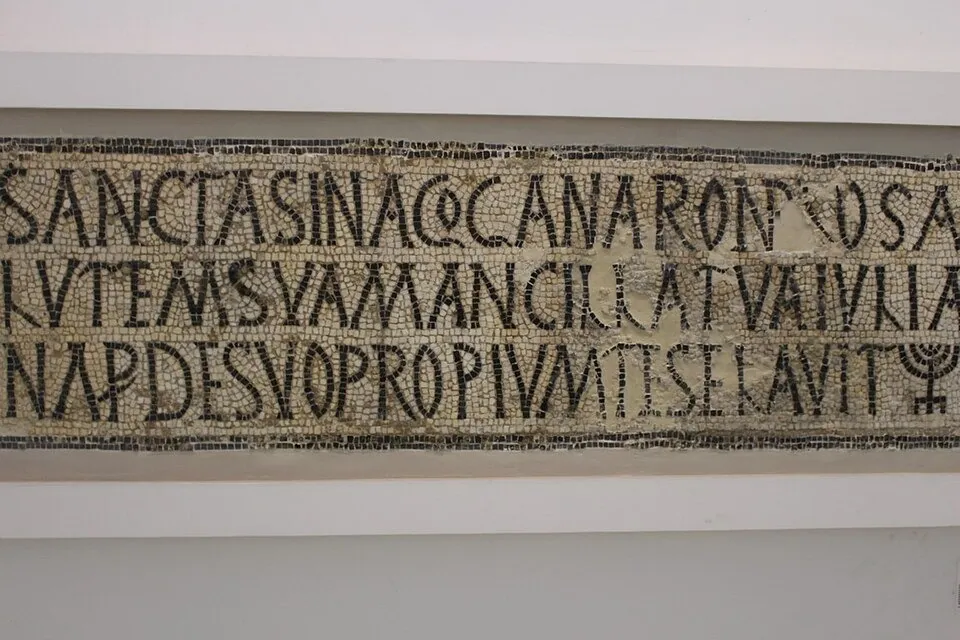
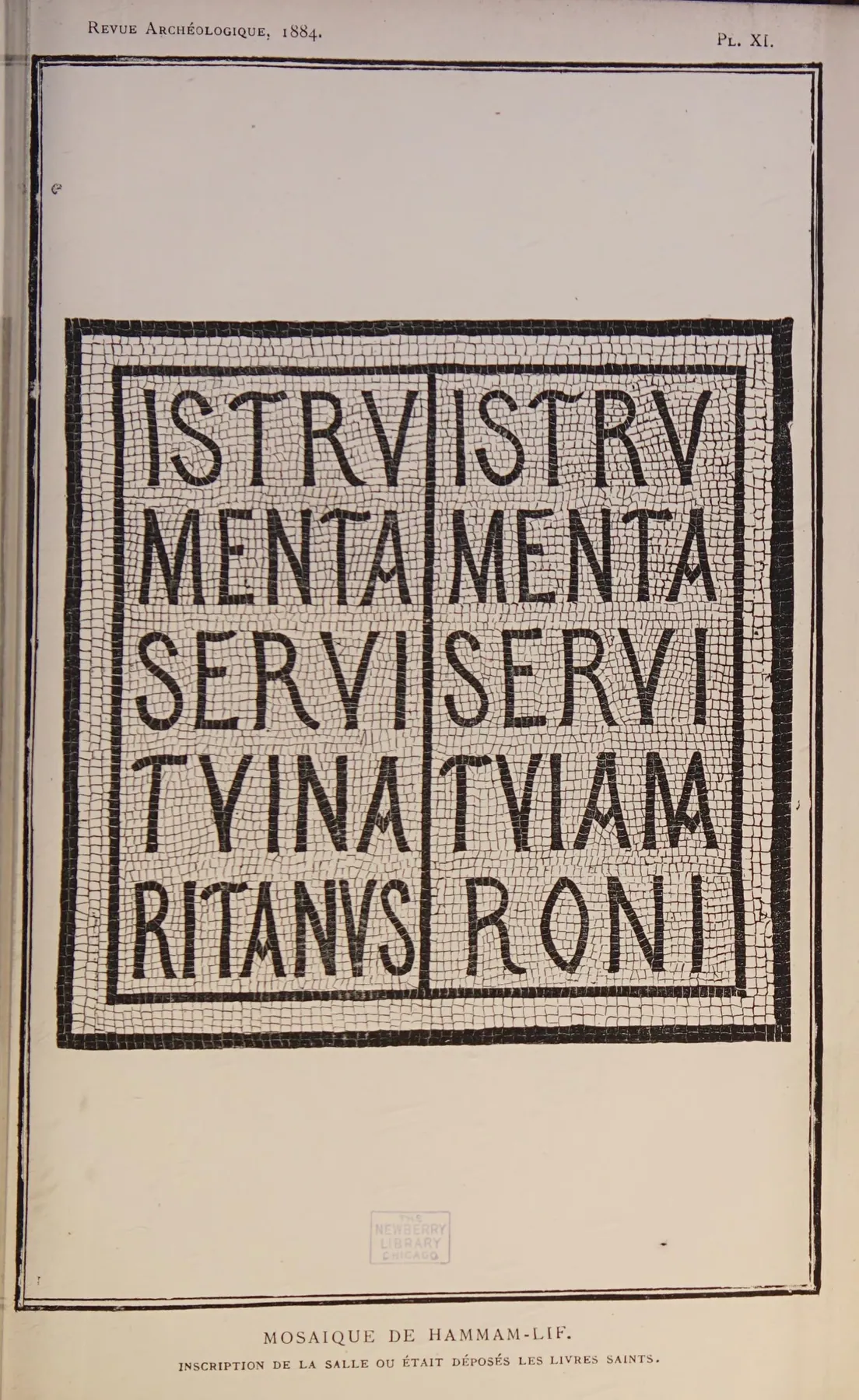
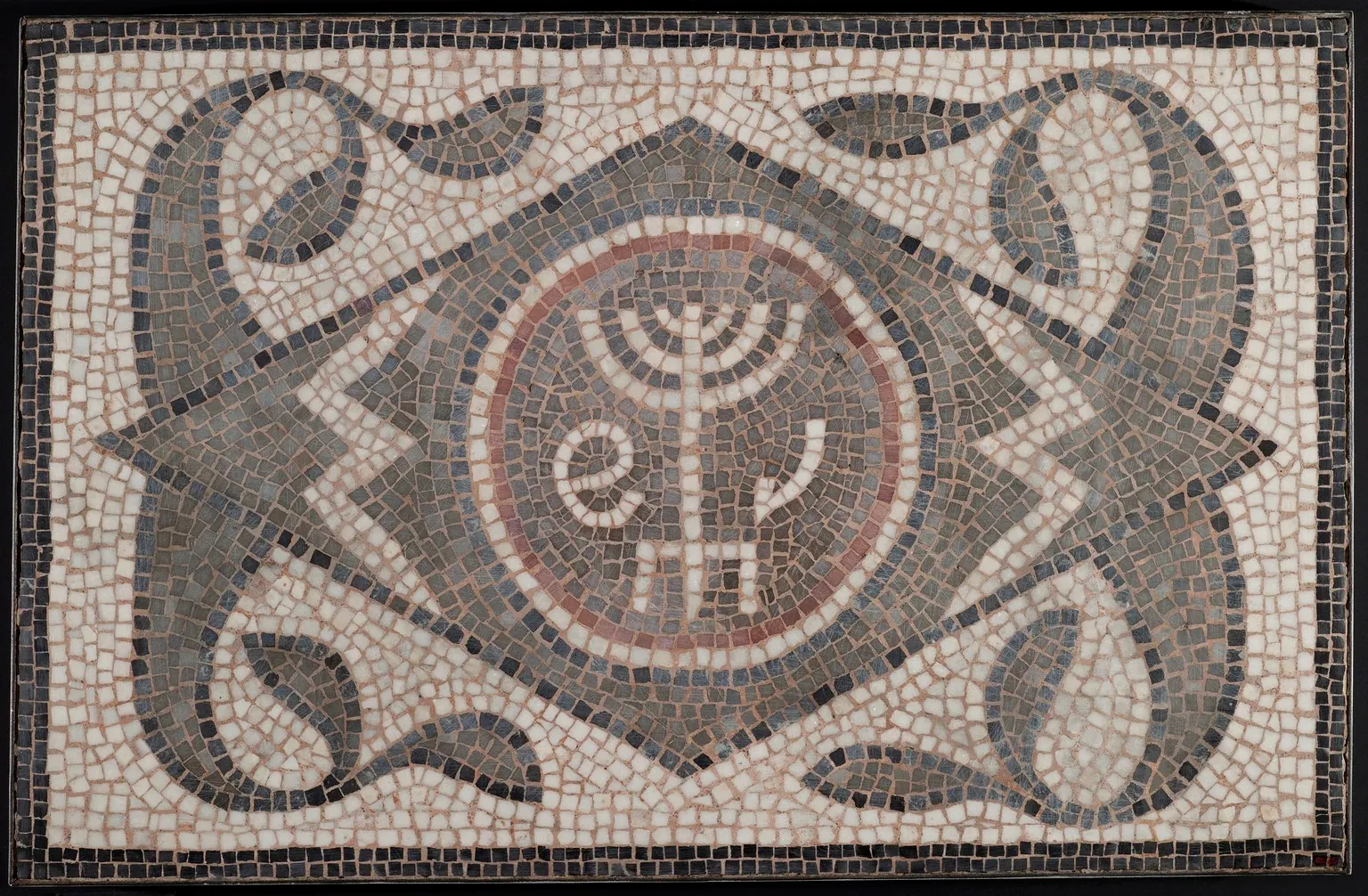
On 17 February 1883 a man digging a garden for the French battalion stationed at Hammam-Lif, on the shore of the Gulf of Tunis about fifteen kilometres from the capital, struck small coloured stones. The post commander, Captain Ernest de Prudhomme, had the ground cleared and within eight days uncovered a hall nine metres long and 5.25 metres wide, paved throughout with mosaic. A Latin inscription set between two seven-branched lampstands recorded that a woman had paved the 'sancta sinagoga Naron' at her own expense. The Brooklyn Museum calls it the first ancient synagogue to be discovered in the Mediterranean basin, and scholars at first argued over whether the building was Jewish or Christian. Prudhomme traced the walls of the whole building, drew a plan, and had a corporal named Peco paint the floor in watercolour; Ernest Renan published both in the Revue archéologique in 1883 and 1884. Two more inscriptions named Asterius, son of Rusticus the archisynagogus, and the 'instrumenta' kept in a side room.
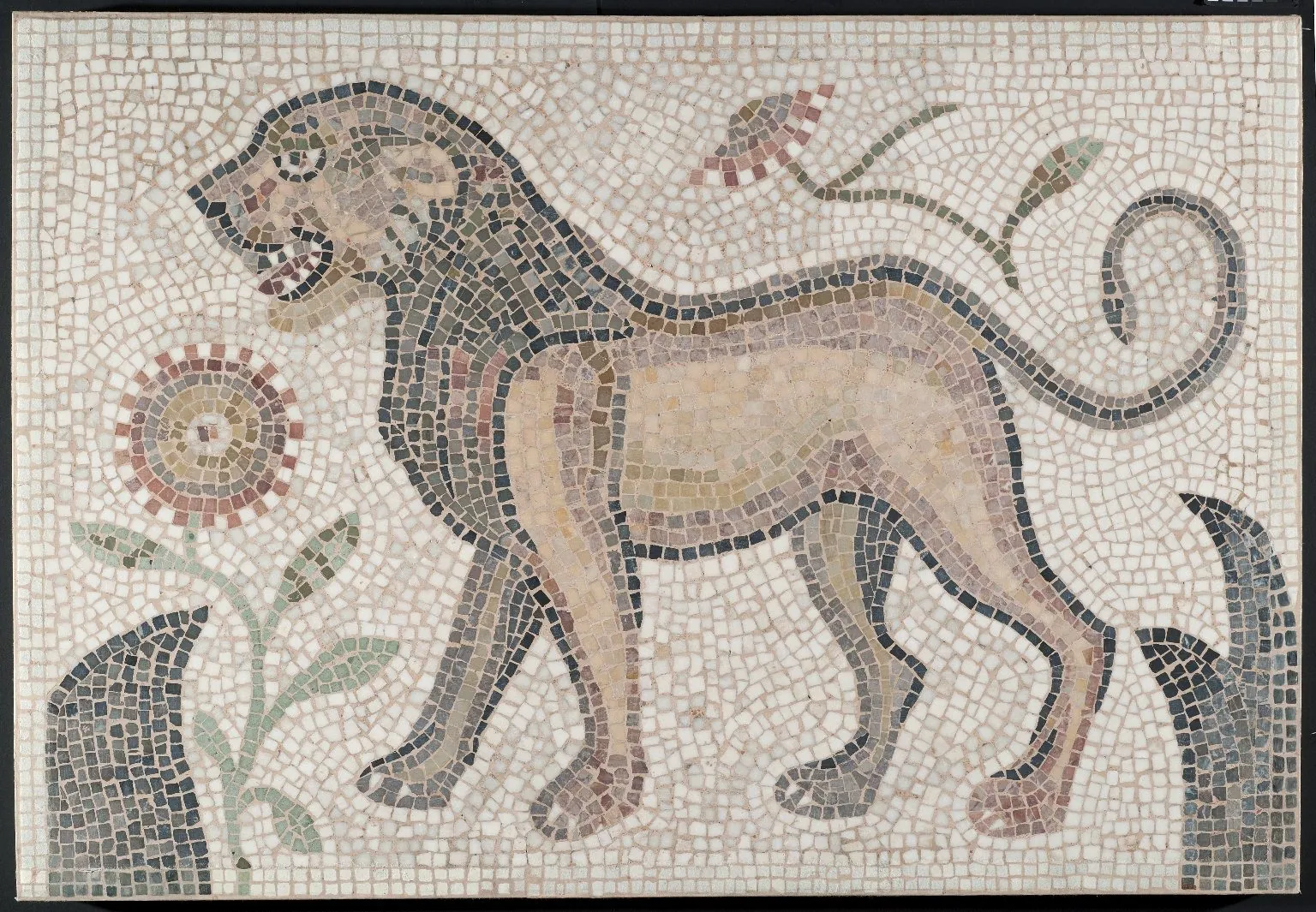
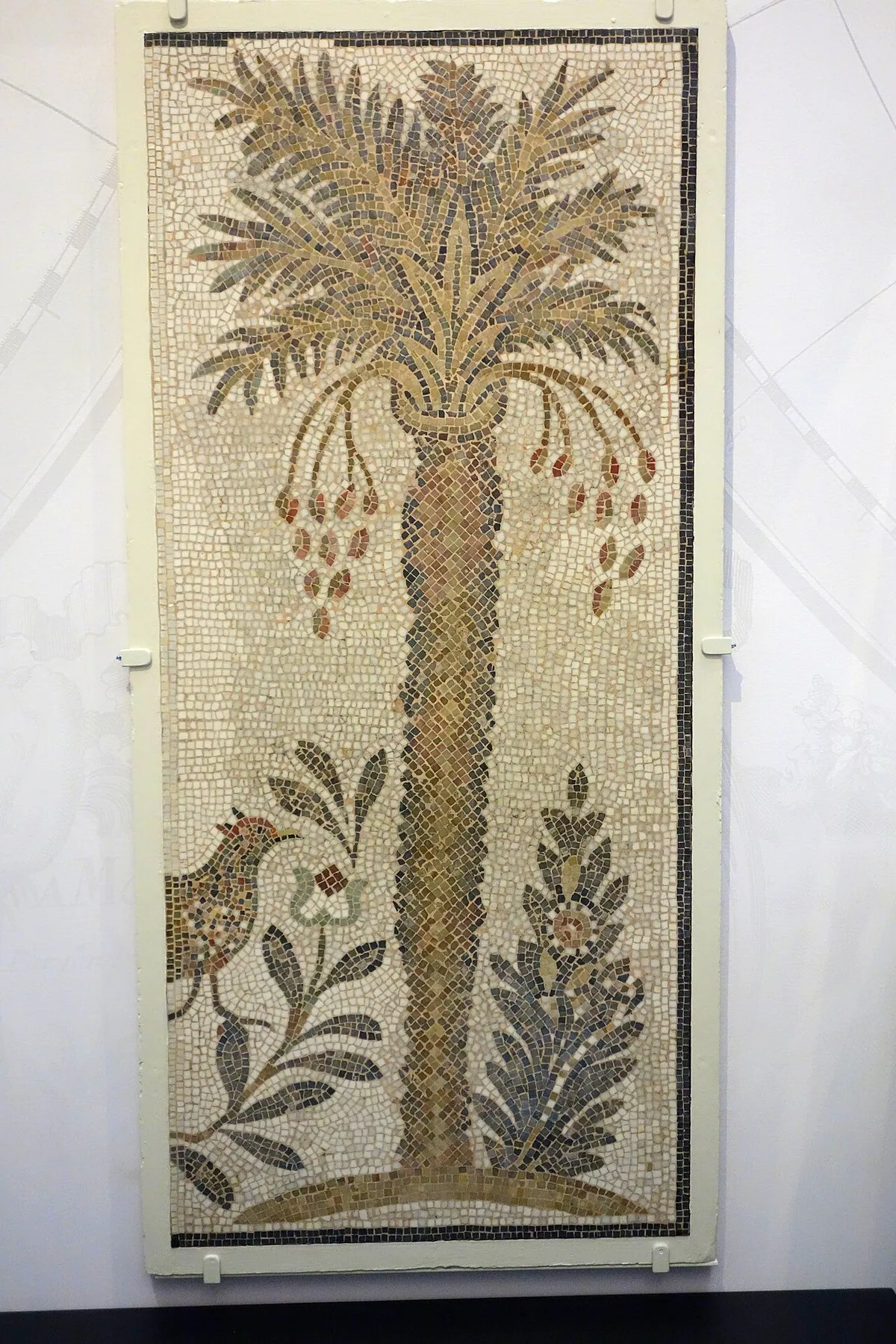
The excavated remains did not last. By 1886 the mosaic had been clumsily lifted from the ground and packed in crates. The Brooklyn Museum bought twenty-one panels in 1905 and dates the main floor to about 500 CE; the inscription panels are in the Bardo National Museum in Tunis. When and why the synagogue went out of use in antiquity is unknown.
Where it stood
Historic: ancient Naro (Ad Aquas), on the shore of the Gulf of Tunis; found in 1883 about 50 m outside the French army post at Hammam-Lif and at most 200 m from the sea. Today: exact find-spot unknown; placeholder pin at the centre of Hammam-Lif, Ben Arous governorate, Tunisia (approximate).
Open larger map →The Jewish community
Nothing is known of the Jews of Naro except what the building itself records. The place was a thermal resort on the coast near Carthage; Prudhomme knew its ancient name as Ad Aquas, and the main inscription supplies the name Naro. The three inscriptions are in Latin, with spellings such as 'sinagoga', 'arcosinagogi' and 'istrumenta'. They name a woman donor, Juliana (the Brooklyn Museum reads Julia of Naro); Asterius; his father Rusticus, who bore the title archisynagogus; and the owners of the 'instrumenta' kept in a side room. One line of the vestibule inscription may call Asterius or his father a margaritarius, a dealer in pearls or jewels: Renan proposed this and called the line an enigma, while the Tunisian writer Zaher Kammoun finds a woman named Margarita there instead. Renan suggested that Juliana was a proselyte; Salomon Reinach preferred to read a title, pateressa. The size of the community, its origins and its dealings with its neighbours are unknown. A newspaper account of the Brooklyn Museum's 2005 exhibition took the Roman character and workmanship of the floor as a sign of mutual acceptance between the congregation and the people around it.
Architecture and design
Prudhomme's plan, printed in 1884, shows a nearly square building of about sixteen rooms, roughly twenty metres on each side, laid out like a Roman house. The entrance, on the south, was marked by two columns and led across a forecourt paved with coarse white pebbles and through a vestibule, which the inscription calls a portico and which had a lozenge-pattern mosaic, into the main hall. The hall measured 9 by 5.25 metres and had a semicircular niche in the middle of its west long wall. Its floor was divided into three fields: a wide carpet of acanthus scrolls enclosing birds, baskets and animals; a narrow one with a duck and a lion; and a central field with fish, ducks and a wheel above the dedication and, below it, a fountain flanked by peacocks and date palms. A small room off the hall held the 'instrumenta' inscription. The building stood about fifty centimetres above sea level, without cellars or deep foundations, on a thick layer of hydraulic cement. Two broken columns, a marble capital and two terracotta lamps were found. Proposed dates run from the fourth to the sixth century; the builder is unknown.
Life inside the synagogue
The inscriptions are the only evidence for how the building was used. The dedication in the main hall, flanked by two lampstands, one with a citron and a horn beside it, reads in Renan's transcription 'Sancta sinagoga Naron pro salutem suam ancilla tua Juliana p. de suo propium teselavit': your servant Juliana paved the holy synagogue of Naro with mosaic, at her own expense, for her salvation. In the vestibule, 'Asterius filius Rustici arcosinagogi margaritari ddei partem portici tesselavit' records that Asterius, son of Rusticus the archisynagogus, paved part of the portico. The third text, in two columns, reads 'istrumenta servi tui Naritanus' and 'istrumenta servi tui a Maroni'. Renan took 'instrumenta' to mean the scrolls of scripture, so that this little room was where the holy books were kept; Reinach doubted the reading of the last word. Renan placed the seat or platform of the archisynagogus in the niche, facing the dedication and the door of the scroll room. Marble fragments from the dig were taken by Father Delattre for pieces of a seven-branched lampstand, and one of the lamps bore a menorah. Nothing is recorded about services, teaching or other officers.
Destruction
How the building ended in antiquity is unknown. No source consulted reports traces of fire or gives a date of abandonment, and Prudhomme found only foundations, floors and a few architectural fragments under the soil. What destroyed the excavated remains was their treatment after 1883. In March of that year the mosaic was fully cleared, protected and guarded by sentries. Salomon Reinach wrote in 1886 that it then became the object of a dispute between two persons, neither of whom had the least right to claim it; that it was clumsily detached from the floor of the building; and that the fragments, more or less damaged, went into crates, part of them, he believed, to the Saint-Louis museum at Carthage and the larger part to Lyon. He named nobody. Later accounts say that Captain Ernest de Prudhomme of the French army had the floor cut into panels, sent them to Toulouse for restoration, kept them at his home in Lyon and sold them. Mosaics in the other rooms were never recorded and are lost. The Brooklyn Museum acquired twenty-one panels from his collection in 1905. An expedition in 1909 failed to find the building again.
The community’s fate
The fate of the Jews who used the synagogue is unknown. No text read for this entry mentions the community of Naro, and nothing from the excavation dates its end. The Brooklyn Museum dates the main floor to about 500 CE, a period Zaher Kammoun describes as late Vandal or Byzantine, and its exhibition text places the synagogue's life broadly between about 200 and 700 CE without saying when or why it closed. The same museum's curator, Edward Bleiberg, points out that imperial law then restricted synagogues: a decree of 415 CE barred the building of new ones and the repair of old ones, although enforcement was uneven, and the laying of a costly new floor suggests that the congregation still felt secure. Whether the community later declined, moved away, converted or was driven out is not recorded. Jewish communities are known in Tunisia from Roman times onward, but no link between the ancient congregation of Naro and any later community is documented in the sources read.
The site today
The find-spot was never fixed on a published map. Prudhomme described it as fifty metres outside the buildings his battalion occupied at Hammam-Lif, at most two hundred metres from the sea, in the strip between the beach and Mount Bou Kornine; a notice of 1883 put it a few metres from the shore. An expedition in 1909 did not find the building, and it is now regarded as lost. What survives underground, if anything, is unknown, and the area is part of the modern seaside town. The pieces of the floor are divided: the Brooklyn Museum in New York holds twenty-one mosaic panels, and the Bardo National Museum in Tunis holds the inscription panels. The map pin marks the centre of Hammam-Lif, not the synagogue.
Notable names
Juliana (also read Julia of Naro)
Unknown; the floor she paid for is dated to about 500 CEDonor of the mosaic floor of the main hallThe dedication set in the middle of the main hall's floor names her as the woman who, calling herself God's servant, paved the holy synagogue of Naro with mosaic from her own means for her salvation. Renan read her name as Juliana and thought an abbreviation after it might mean proselyte; Salomon Reinach suggested the title pateressa; the Brooklyn Museum reads Julia Nap., Julia of Naro. Nothing else is known of her. The inscription panel is now in the Bardo National Museum.
Biography or source →Asterius, son of Rusticus
UnknownDonor of part of the vestibule ('portico') mosaicA four-line Latin inscription in the mosaic of the vestibule, found by Prudhomme shortly after the main hall, records that Asterius, son of Rusticus the archisynagogus, paved part of the portico with mosaic. A further word in the text may describe him or his father as a margaritarius, a dealer in pearls or jewels; Renan proposed this reading and admitted that the line was an enigma. The inscription is now in the Bardo National Museum.
Biography or source →Rusticus
UnknownArchisynagogus (head of the synagogue) of NaroRusticus is known only from his son's inscription in the vestibule floor, 'Asterius filius Rustici arcosinagogi', in which the title archisynagogus stands in the genitive beside his name. He is the only office-holder of the congregation whose name survives. Renan placed the seat or platform of the archisynagogus in the semicircular niche of the main hall, facing the dedication and the room of the 'instrumenta'. When he held office is unknown.
Biography or source →Do you have something to contribute?
Photographs, documents, family stories or memories of this synagogue and its community help keep its history alive.
- Les mosaïques de Hammam-Lif (letters of G. Schlumberger and Captain E. de Prudhomme, with Renan's remarks), Revue archéologique, 3e série, t. 1 (1883), pp. 157-163
- La mosaïque de Hammam-Lif. Nouvelles observations, Revue archéologique, 3e série, t. 3 (1884), pp. 273-275 and plates VII-XI
- Études d'archéologie juive. I. La synagogue de Hammam-Lif, Revue des études juives 13 (1886), pp. 45-61
- Notes sur la synagogue d'Hammam el Enf, Revue des études juives 13 (1886), pp. 217-223
- Tree of Paradise: Jewish Mosaics from the Roman Empire (exhibition record with wall texts and press release)
- Tree of Paradise: Jewish Mosaics from the Roman Empire (exhibition page)
- Mosaic of Menorah with Lulav and Ethrog, accession 05.26
- Mosaic of Date Palm Tree, accession 05.14
- Mosaic with Lion (Brooklyn Museum 05.18, loan record)
- Tree of Paradise: Jewish Mosaics from the Roman Empire
- Synagoge von Naro
- La synagogue de Naro Hammam Lif
- Jewish life, portrayed in stone
- Topic of the month: Hammam Lif (text by Edward Bleiberg)
- Synagogue at Hammam Lif, Tunisia
- File: Mosaïque de la sainte synagogue de Naro de la synagogue d'Hammam Lif - BardoNationalMuseum 36.jpg
- File: Mosaïque d'Asterius de la synagogue d'Hammam Lif - Bardo National Museum 0101 03.jpg
- Hammam-Lif (OpenStreetMap node 4394953973)
Share a memory or thought
No comments yet. Be the first to add one.