


La historia de Wooden Synagogue of Narowla
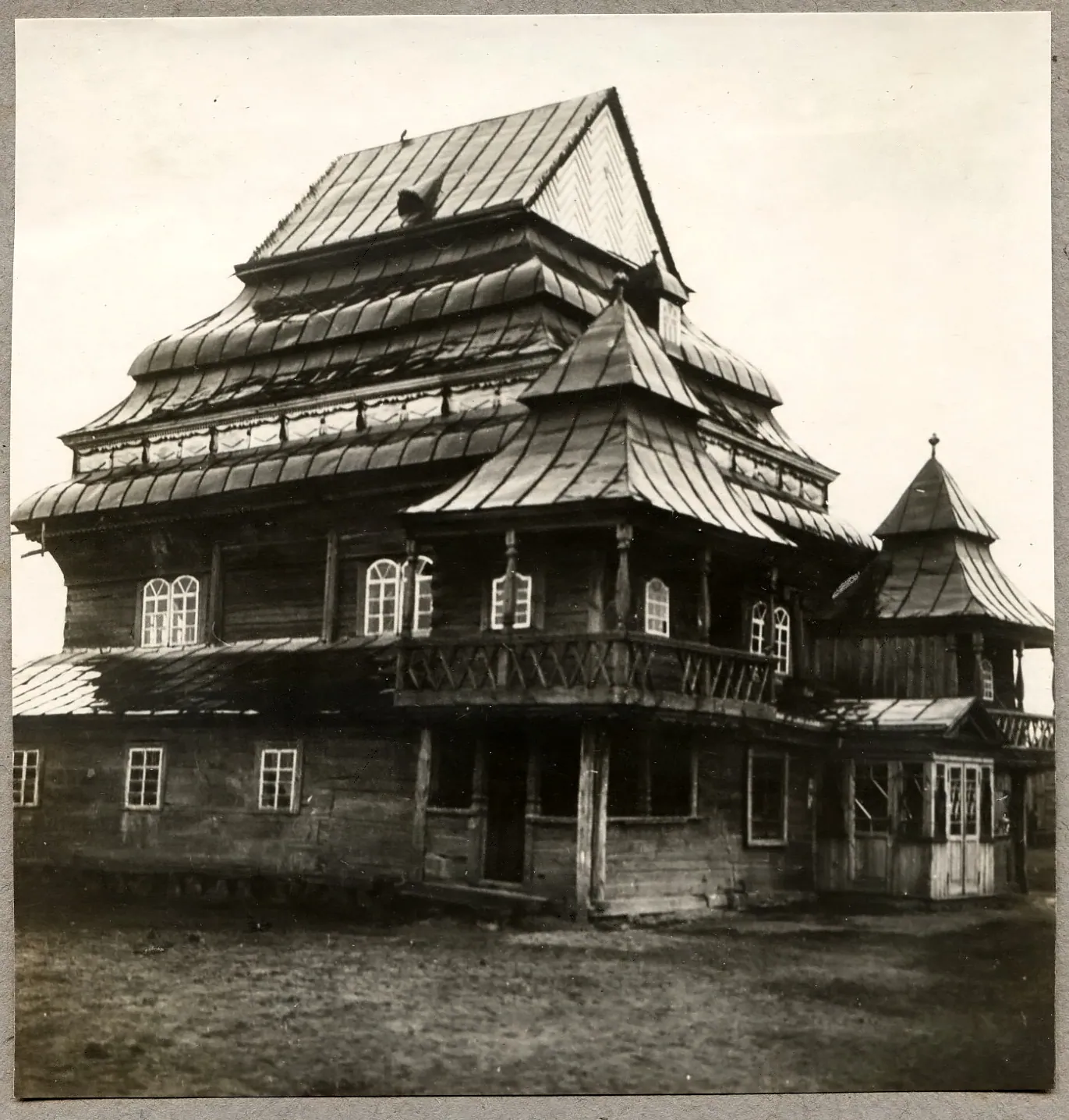
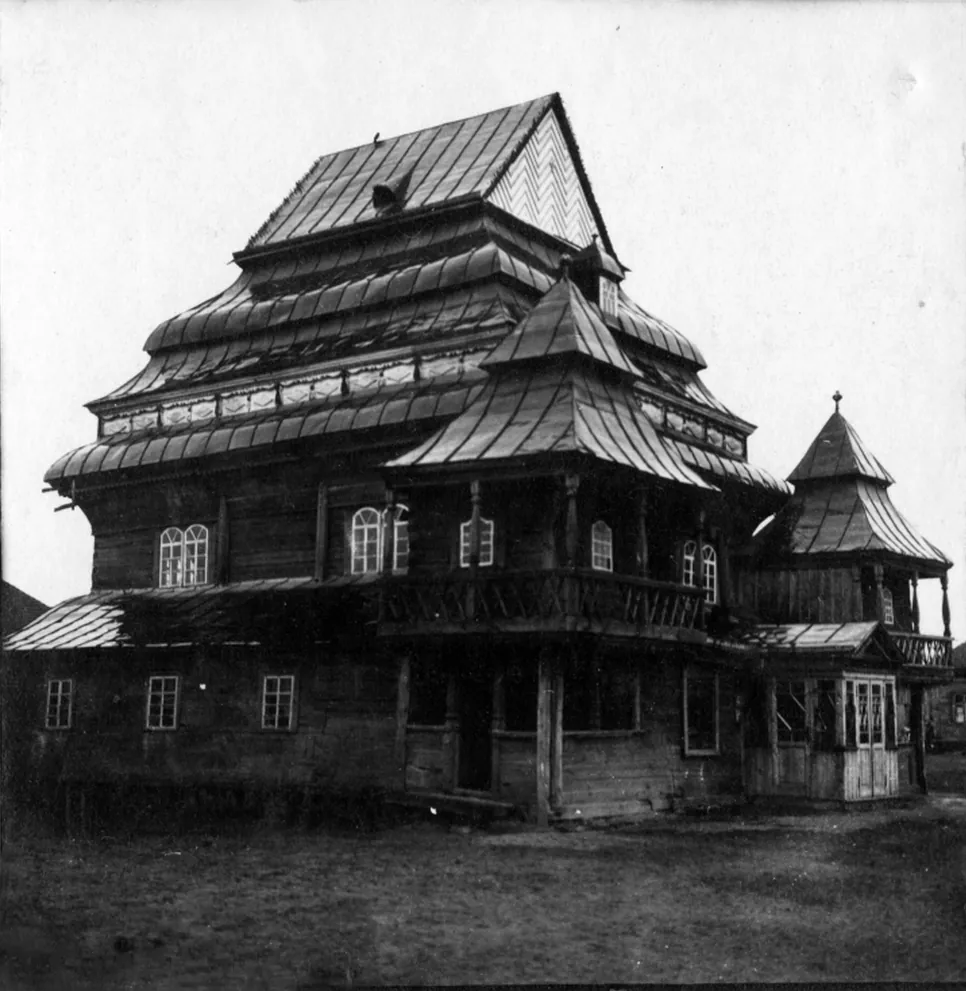
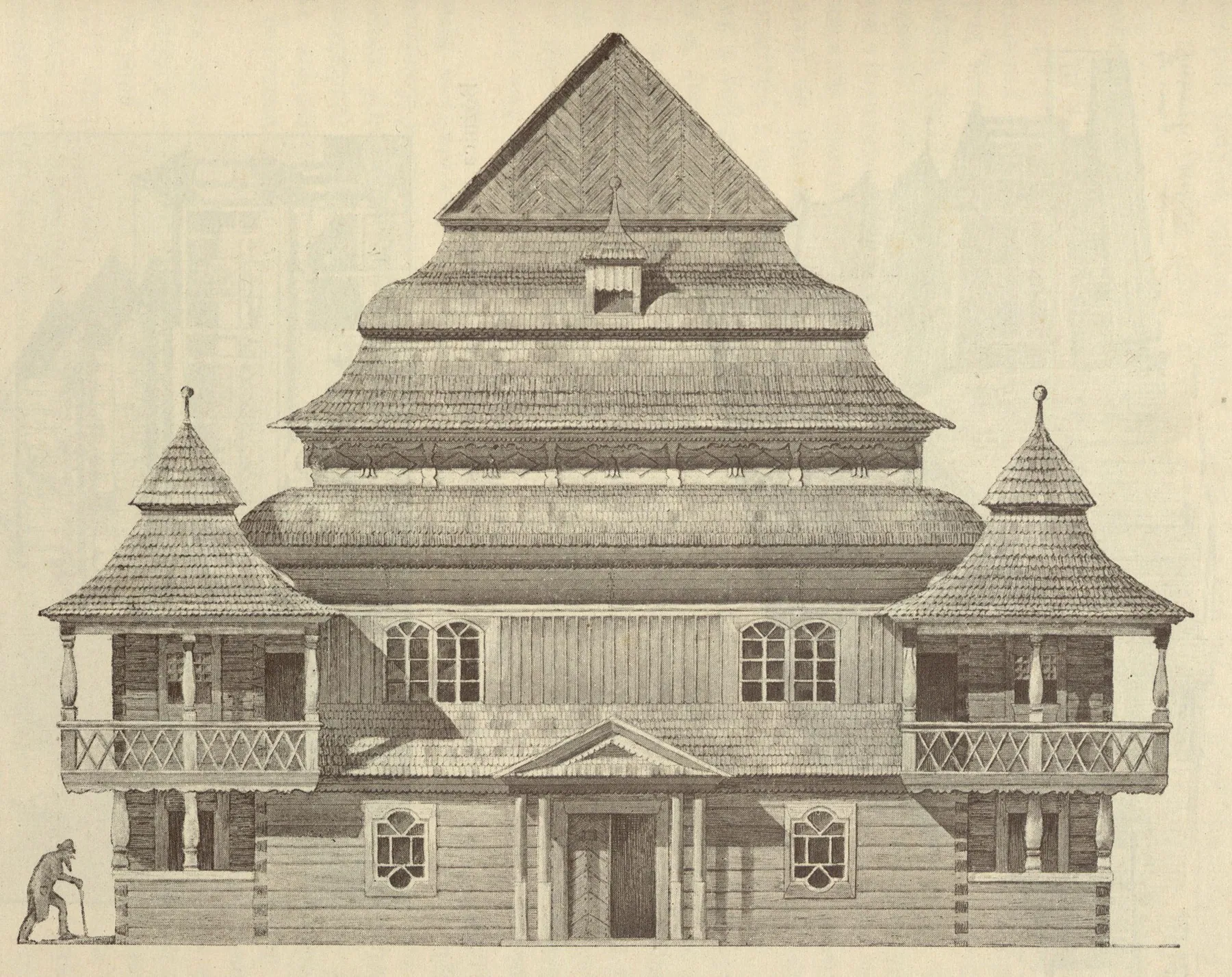
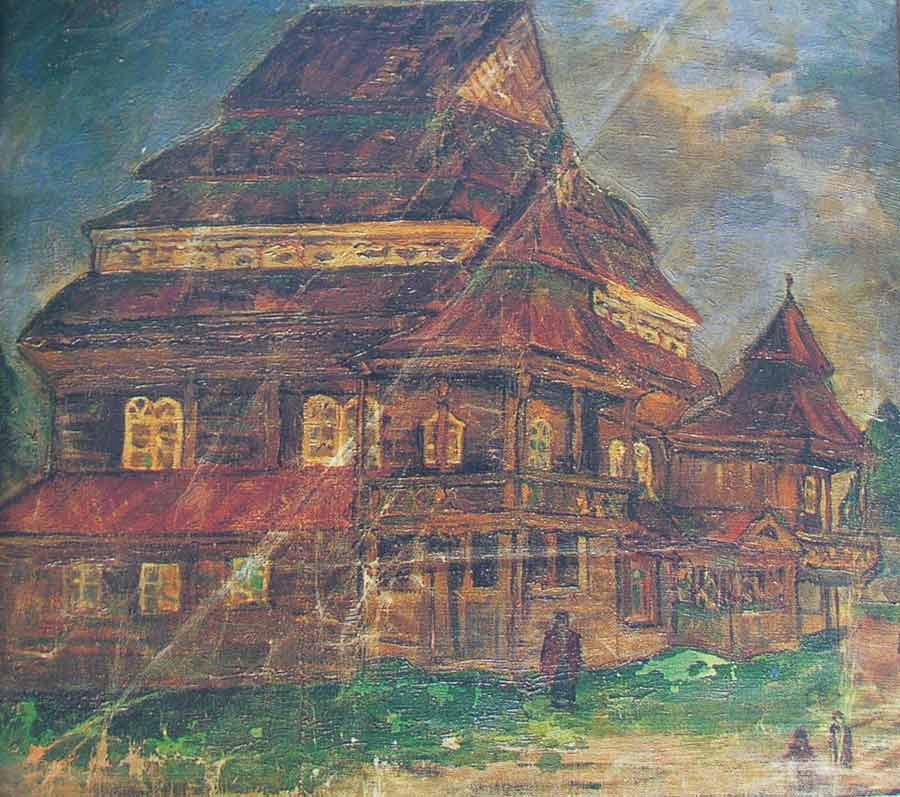
Narowla is a small town on the Pripyat river in the Polesie region of southern Belarus, now in Gomel Region. For much of its history it was a Jewish town: in 1897 Jews made up more than nine in ten of its residents. The community's wooden synagogue was built in the eighteenth century in the centre of the town. It became one of the best-known examples of the tall, tiered wooden synagogues of the old Polish–Lithuanian Commonwealth. A steep three-tiered roof with curved profiles rose over the main prayer hall. At the front, an entrance porch on four posts stood between two towers with two-tiered roofs, and carved galleries ran along the sides. The building was photographed and drawn before the First World War and was painted by the Jewish artist Aron Kascialianski around 1927. In the 1930s the Soviet authorities closed it. Nazi Germany occupied Narowla from 27 August 1941 to 30 November 1943. The synagogue burned during the war, and the Belarusian heritage database Radzima records it as lost in 1941–1944. The Jews who had stayed in the town were murdered in 1941 and 1942. The sources consulted do not give an exact date or cause for the fire.
Where it stood
Historic: Narowla, town centre, Mozyr district, Minsk Governorate. Present day: Naroŭla, Gomel Region, Belarus. Approximate: town centre.
Abrir mapa ampliado →La comunidad judía
Jews lived in Narowla from at least the eighteenth century. The census of Jews in 1765 counted 316 poll-tax payers in the kahal of Narowla and the surrounding settlements. The town belonged to the Horvatt family estate and lay on the Pripyat, and its Jews kept shops, small workshops and businesses, and worked as traders and carters. In 1897 the town had 1,145 residents, of whom 1,060 (92.5 per cent) were Jews, with a synagogue and seven Jewish prayer schools. Jewish entrepreneurs also ran timber companies on the river. After the revolution many Jews moved away to the cities, and Soviet rule closed religious institutions. By 1939 Narowla had 1,167 Jews, about 30 per cent of the population.
Arquitectura y diseño
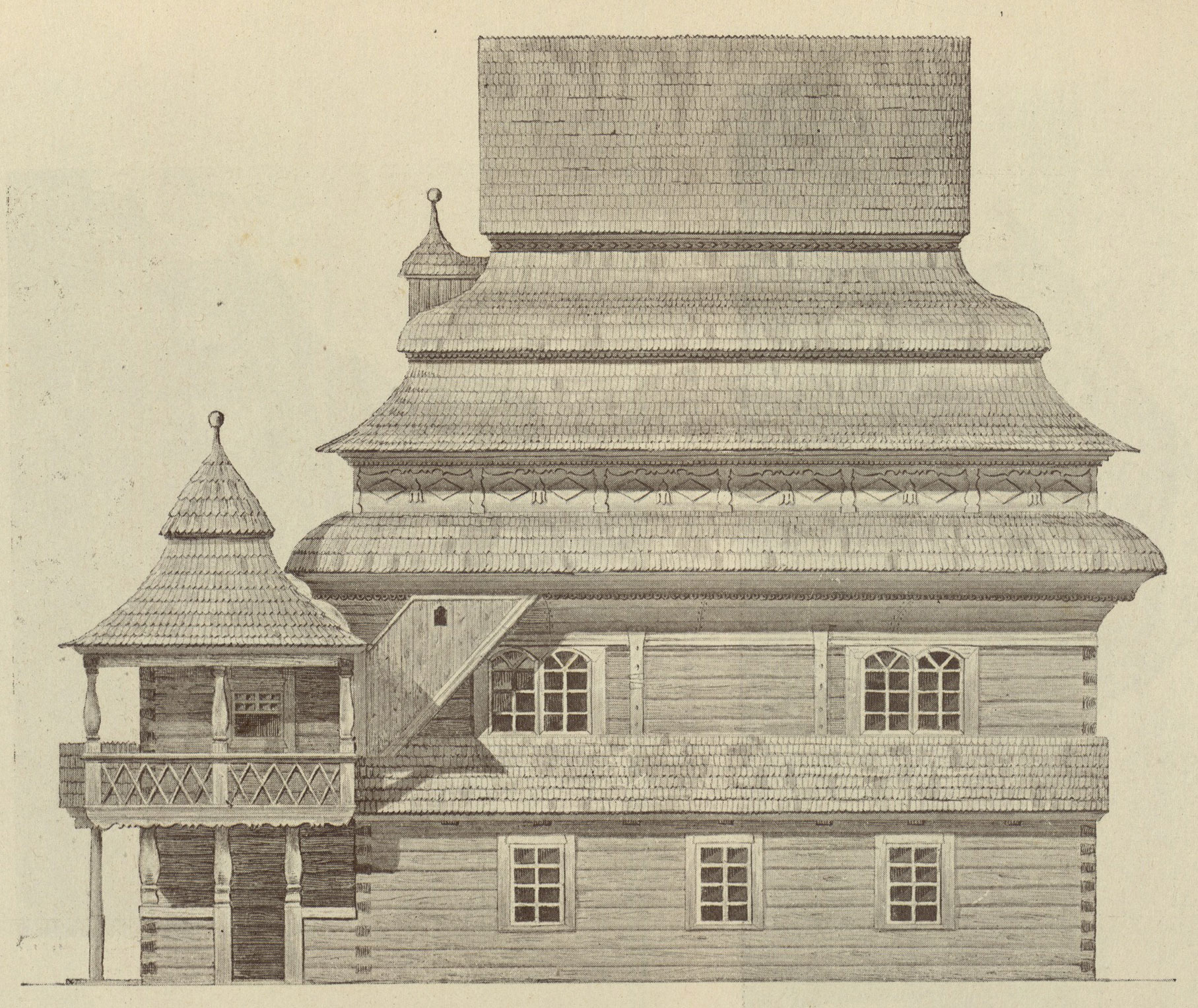
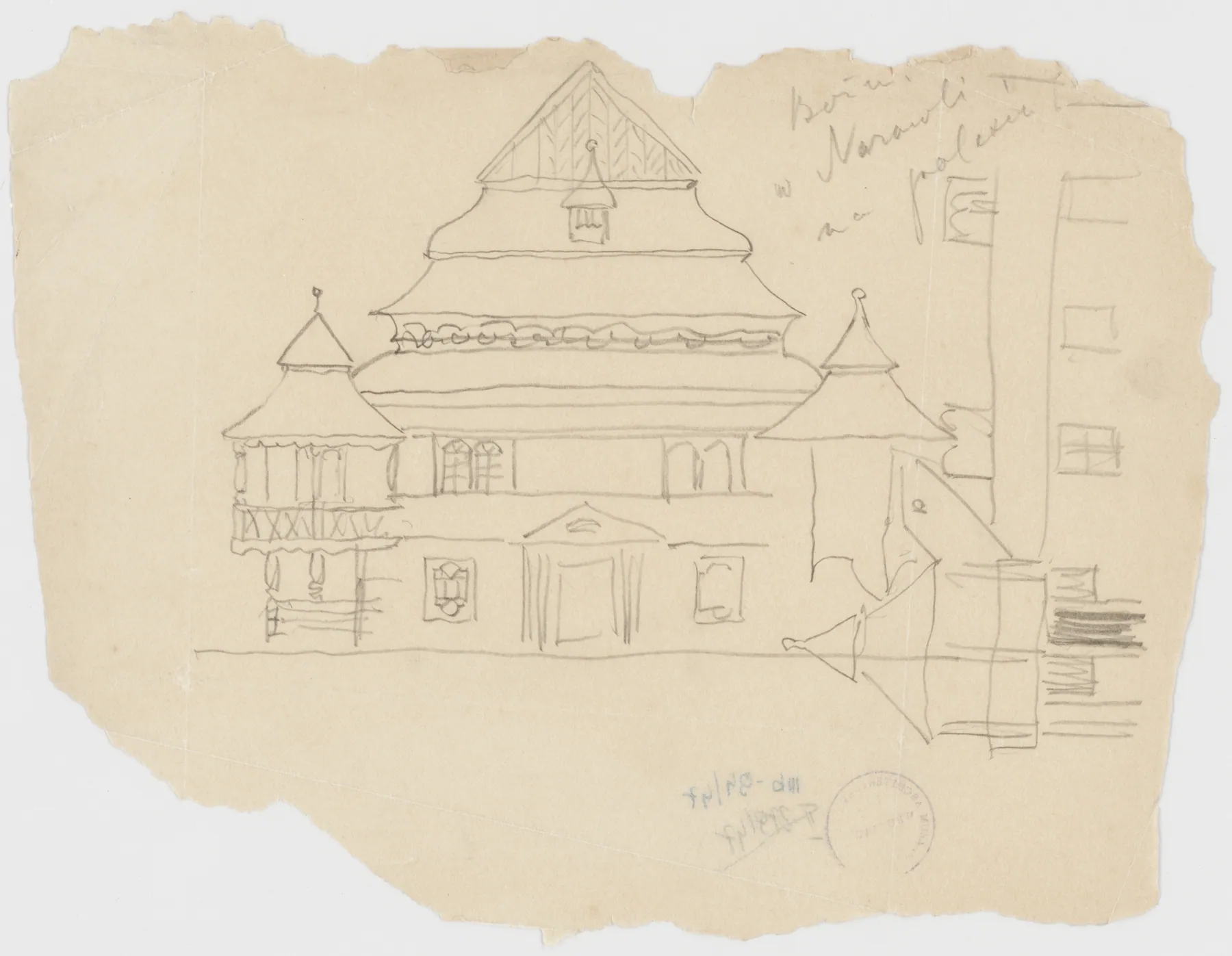
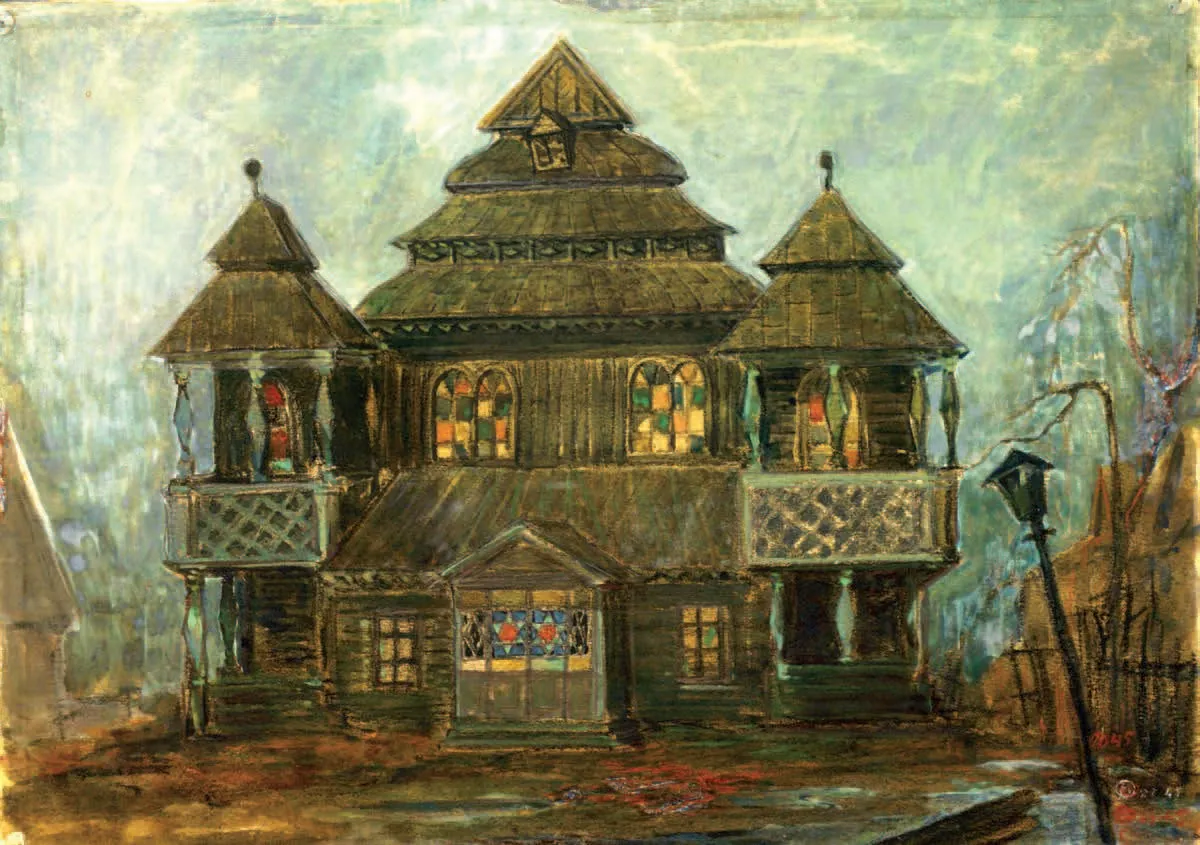
The synagogue was a log building in the traditional Belarusian wooden style with Baroque features. A tall main hall stood in the middle, surrounded by lower annexes under lean-to roofs. On the main front these annexes formed a composition of their own: an entrance porch with a small portico on four posts, flanked by two two-storey towers under tall two-tiered roofs. From the upper storey of the towers, enclosed stairs led to the women's gallery inside the main hall. The women's gallery projected partly outside the walls under a curved roof, which ran into a wide carved frieze. Above it rose the steep three-tiered main roof, with concave and convex profiles and gabled ends clad in herringbone boarding. The walls had paired arched windows. The posts, railings and balustrades of the tower galleries were richly carved.
La vida dentro de la sinagoga
The synagogue served a town that was almost entirely Jewish at the end of the nineteenth century. In 1897 Narowla had one synagogue and seven prayer schools, so the great wooden building was the community's main house of prayer, with the smaller houses of study around it. Its women's gallery was reached by the enclosed stairs in the two front towers. Beyond this, the sources consulted for this entry record almost nothing about its rabbis, its interior, its furnishings or the daily life of its congregation. No interior photographs have been found. The building's fame rests on its exterior, which was drawn by B. Šyška for Zygmunt Gloger's 1907 study of Polish wooden architecture and painted by Aron Kascialianski around 1927.
Destrucción
The Soviet authorities closed the synagogue in the 1930s. Nazi Germany captured Narowla on 27 August 1941 and held it until 30 November 1943. During the occupation the Germans burned and blew up many houses in the town. The Belarusian-language Wikipedia article on the synagogue says only that it burned during the Second World War. The Radzima heritage database records it as lost in 1941–1944. The Skirball Museum in Cincinnati, describing Greta Schreyer's painting 'Burning Synagogue 2—Narowla', states that the synagogue was destroyed by the Nazis. No eyewitness account, exact date or document naming the cause of the fire has been found. A modern painting said to be based on a watercolour of the late 1940s shows the building intact, which is unexplained.
El destino de la comunidad
When the Germans arrived in August 1941, most of Narowla's Jews had been evacuated or called up into the Red Army, but some remained. They were forced to wear yellow badges, robbed of their food and confined to a ghetto fenced with barbed wire from early September 1941. On the evening of 23 November 1941 about 100 Jews, including children, were marched to the Jewish cemetery and shot. The remaining Jews were murdered in early 1942. In all, about 130 Jews were killed in the town. After the war, returning survivors raised a monument at the cemetery by the Pripyat, whose inscription did not mention that the victims were Jews. Most of the remaining Jewish families left in the late 1980s and 1990s.
El lugar hoy
Nothing of the synagogue survives. It stood in the centre of Narowla, now a district town in Gomel Region, Belarus, but its exact plot has not been identified in the sources consulted for this entry. The town centre was rebuilt in brick in the 1950s and 1960s. The Jewish cemetery by the Pripyat, with the post-war monument to the victims of November 1941, survives. The synagogue is known from photographs of 1916, from drawings published in 1907 and from paintings by Aron Kascialianski.
¿Tiene algo que aportar?
Fotografías, documentos, historias familiares o recuerdos de esta sinagoga y su comunidad ayudan a mantener viva su historia.
- Нараўлянская сынагога
- Наровля | Синагога
- Burning Synagogue 2—Narowla, Poland (Greta Schreyer)
- Холокост в Наровлянском районе
- Нароўля
- Нароўля
- Gomel Region ghettos (Belarus SIG newsletter)
- Wooden synagogues of the former Polish–Lithuanian Commonwealth
- Category:Synagogue in Naroŭla
- Nominatim: Naroŭla (OSM relation 5598639)
Share a memory or thought
No comments yet. Be the first to add one.