
Historia Narva Synagogue (Helsingi Street 12)
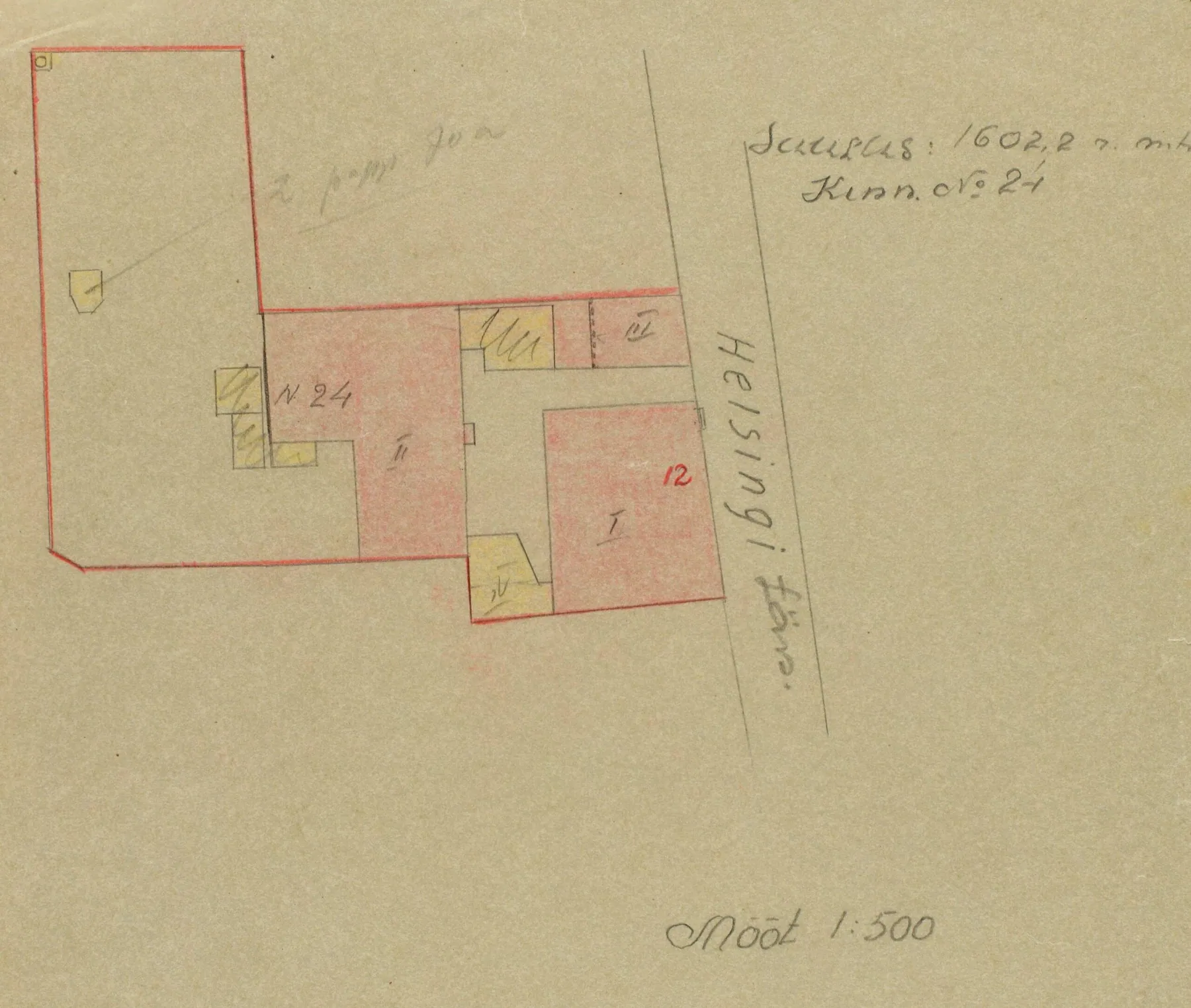
Narva's first synagogue stood across the river in the Ivangorod suburb, now in Russia. That old building on Petersburg Street was too small and was being undermined by the river before the First World War, and the Russian Jewish Encyclopedia says it was destroyed in the shelling of 1918. After the Estonian War of Independence the congregation moved into the Old Town on the west bank. From April 1920 it used plot no. 24 at Helsingi Street 12, a short way west of the Town Hall, and on 21 July 1922 Aleksander Borukhov signed the purchase of the plot and its two buildings from Jaan Arbet for the Narva Heebrealaste Seltskond.
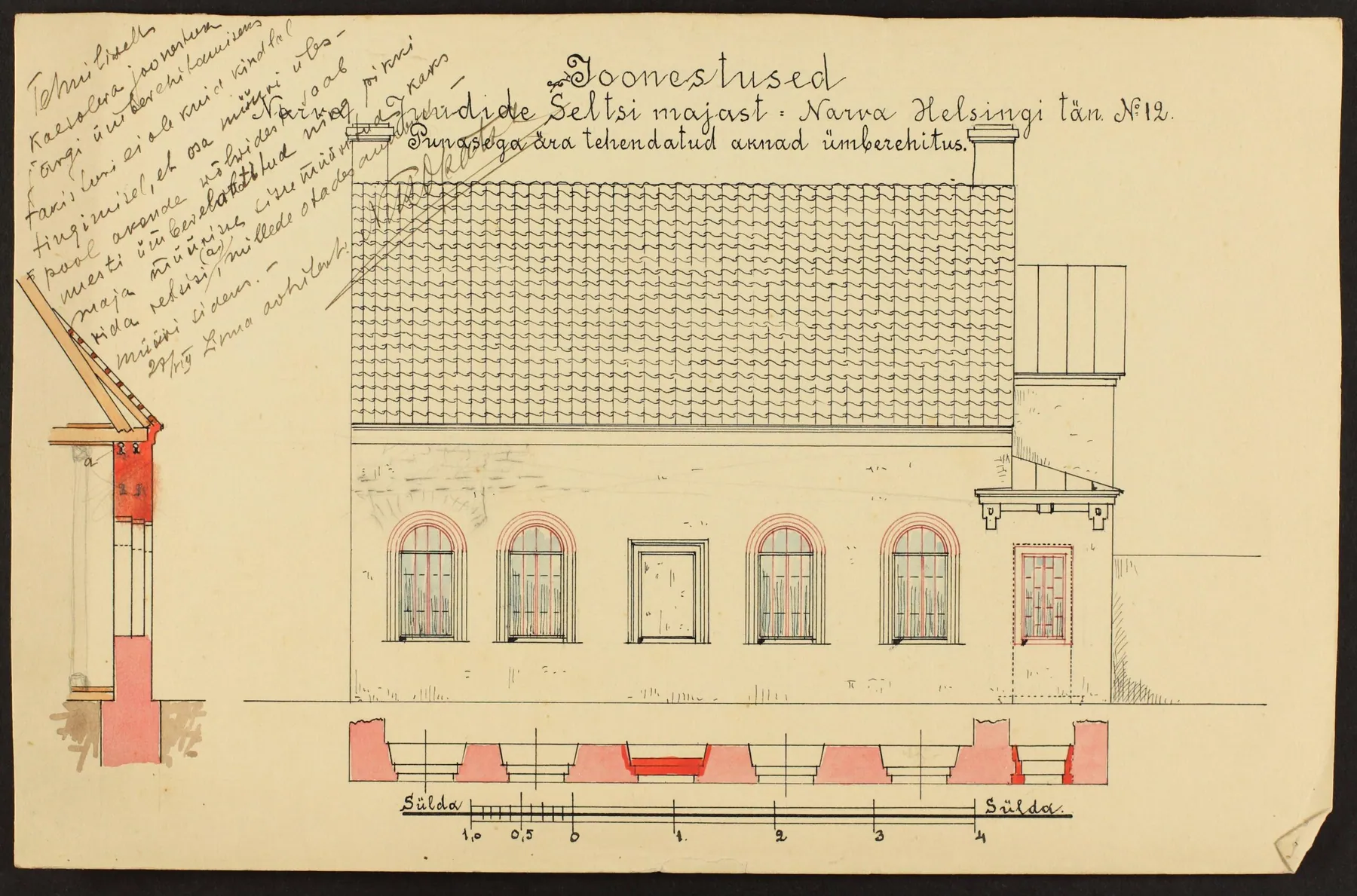
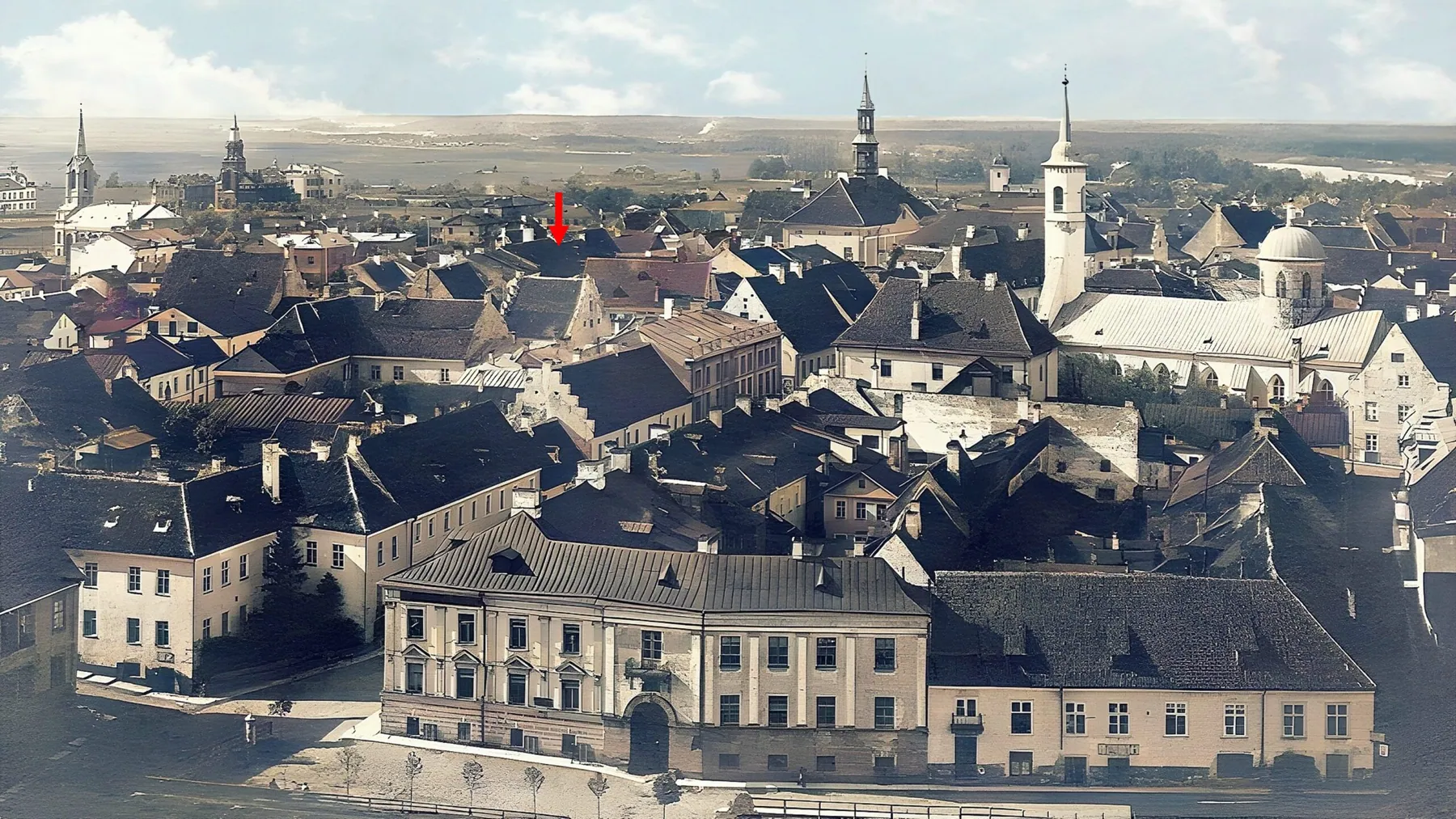
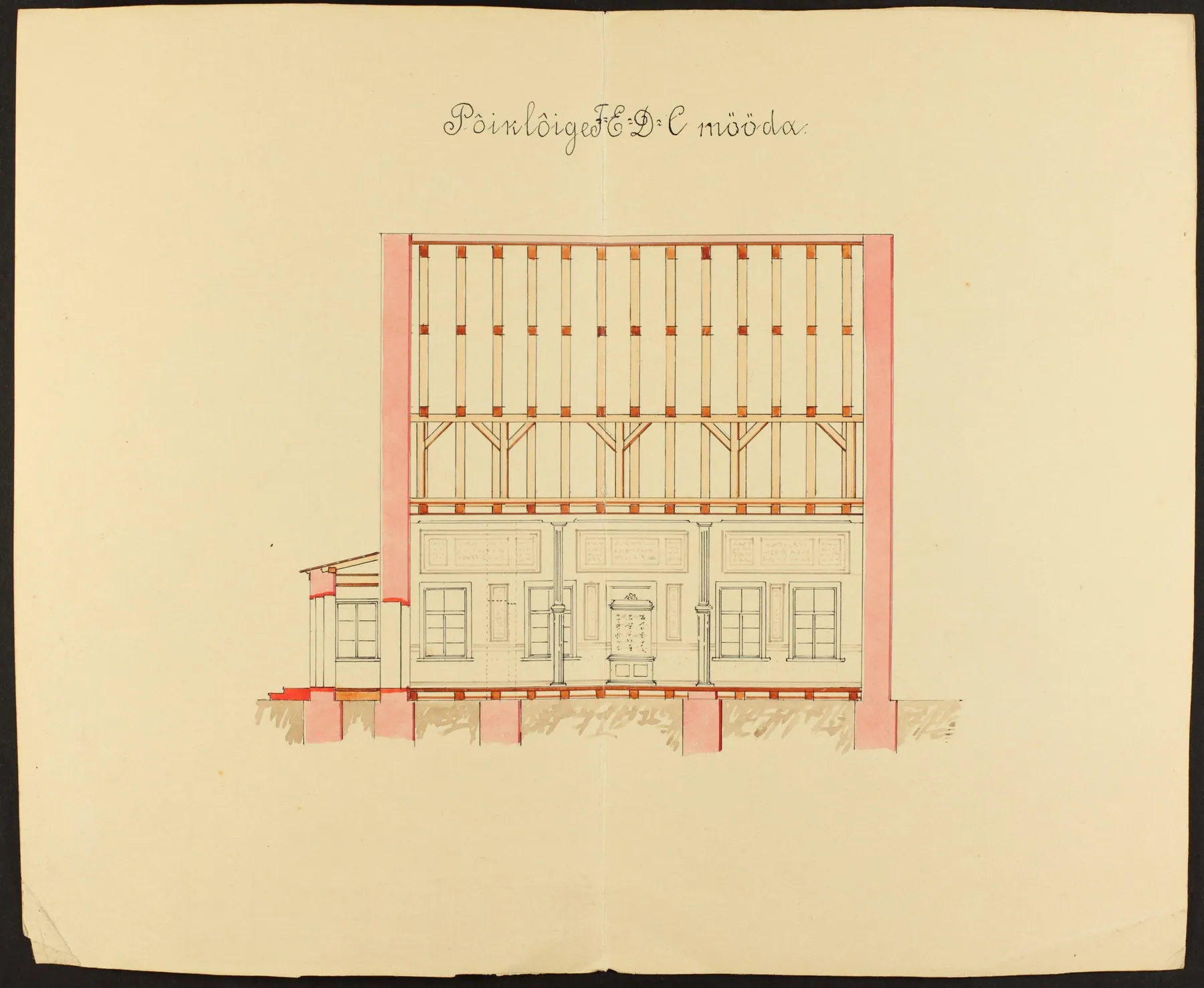
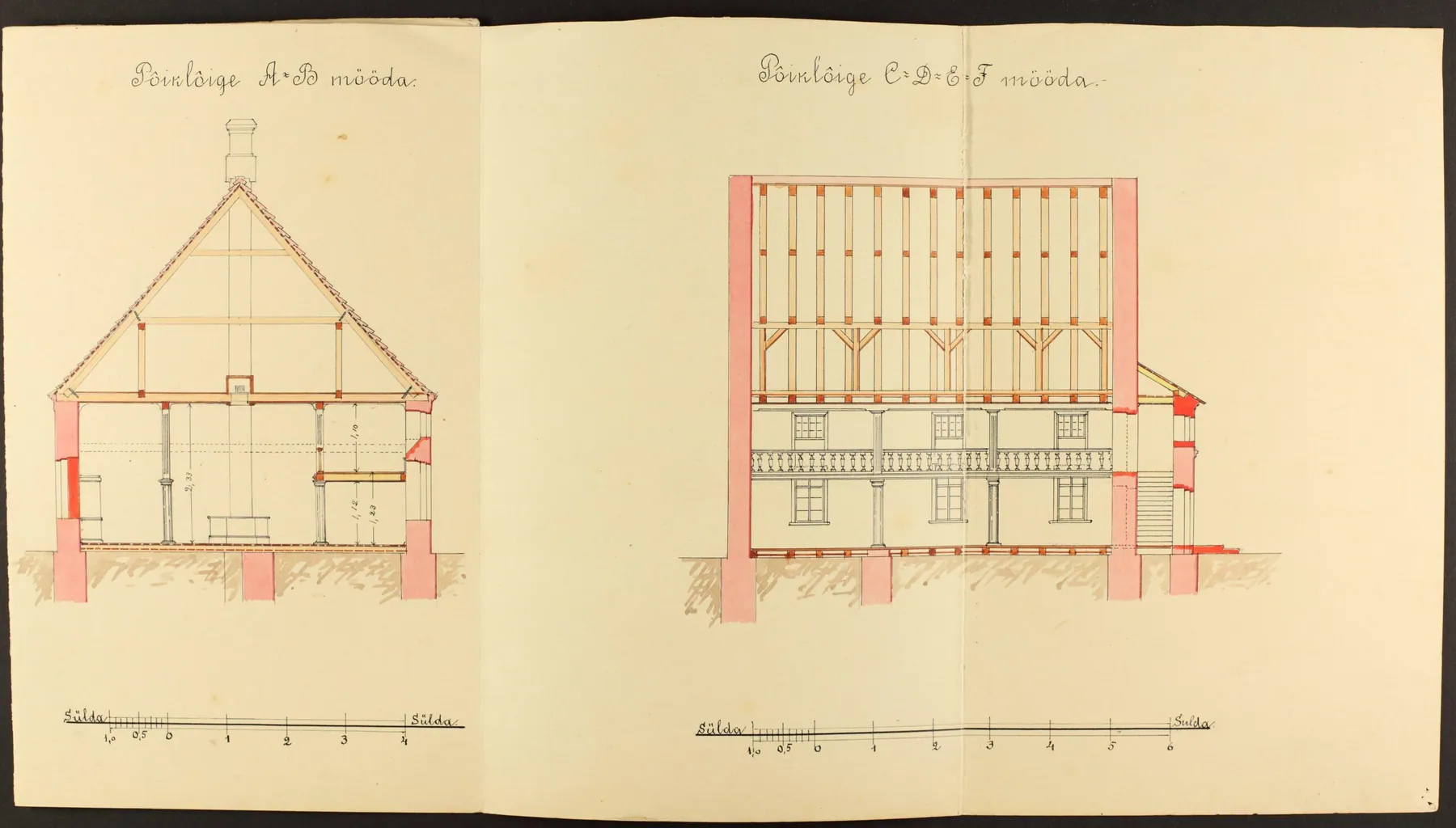
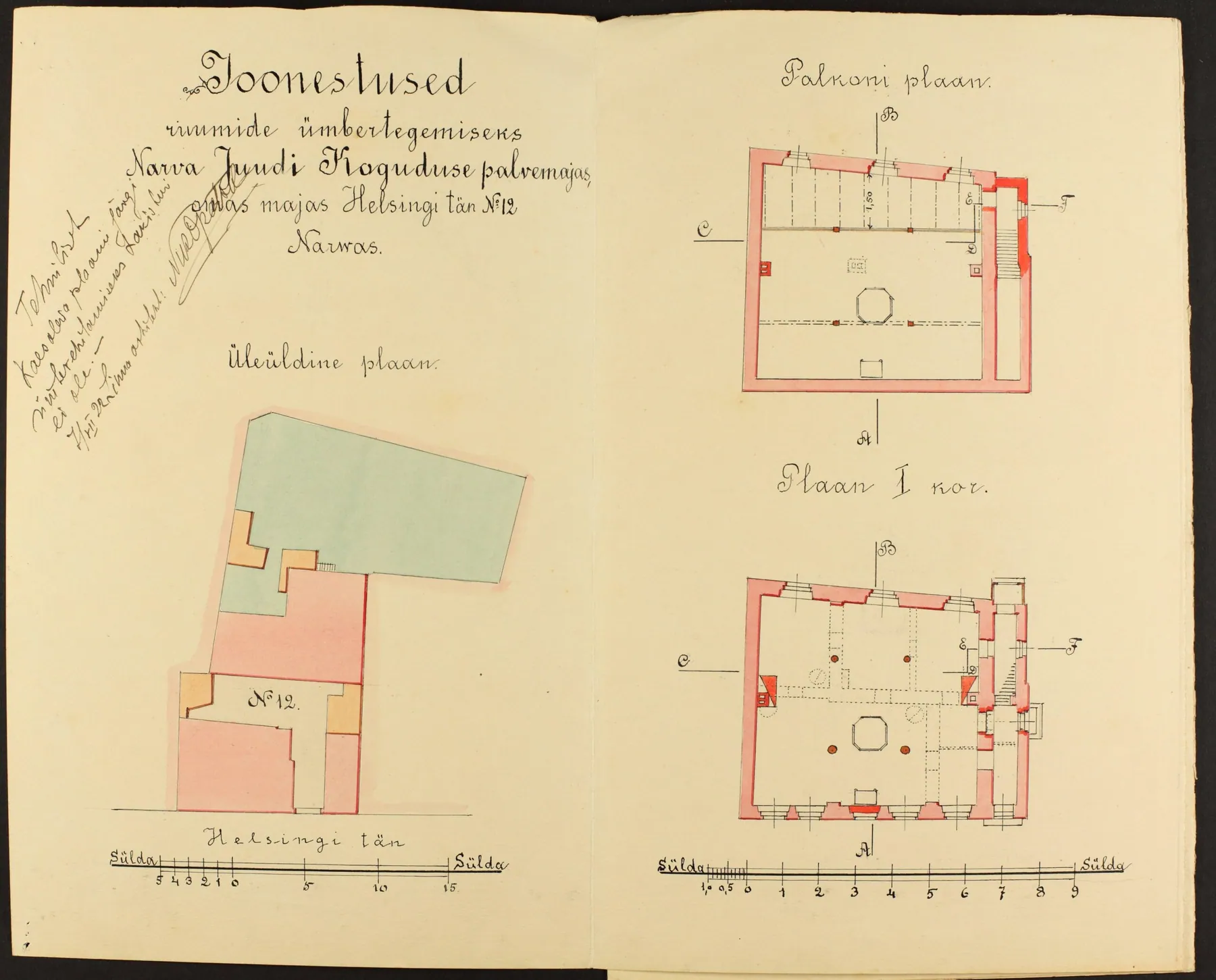
The building on the street was rebuilt as a synagogue and community house, and the house in the courtyard became a dwelling, home to Rabbi Abram-Itsik Gorfinkel. The rebuilding dragged on for more than ten years and was finished only at the end of January 1935, a month before Gorfinkel died after 55 years as Narva's rabbi. Mordechai Eliyahu Schwei, the last rabbi of Narva, served it from 1935. The Soviet authorities nationalised the property in 1940-1941, and the building was destroyed in the fighting of 1944. No photograph of it is known apart from the outline of its roof in two views of the Old Town; the Estonian Jewish Museum has published the rebuilding drawings kept in the National Archives of Estonia.
Where it stood for 9 years
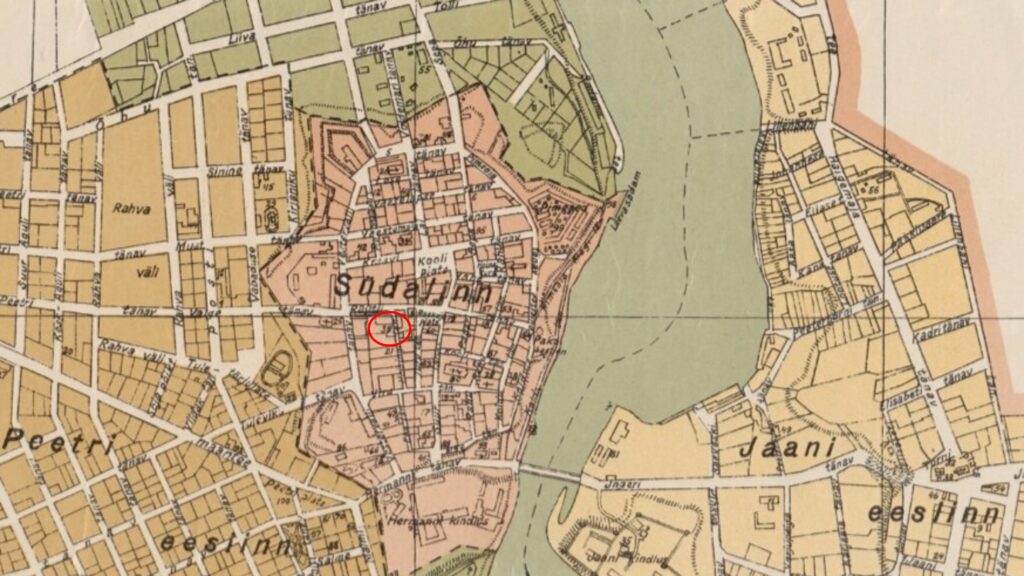
Historic: Helsingi tänav 12 (plot no. 24), Old Town, Narva. Today: west side of the Town Hall, within Stockholm Square (Stockholmi plats), Vanalinn, Narva, Ida-Viru County (approximate).
Otwórz większą mapę →Społeczność żydowska
Jews settled permanently in Narva in the first half of the nineteenth century, many of them former cantonists, Jewish boys conscripted into the tsarist army; the oldest gravestone in the Jewish cemetery is dated 1850 and a prayer room is recorded from 1860. In 1887 the town had 57 Jewish families, twelve of them of serving soldiers, eight of reservists and 37 of craftsmen, and in 1891 there were 138 Jewish soldiers in the garrison. The congregation's early rabbi was Eliyahu Oizerman; from 1880 the office was held by Abram-Itsik Gorfinkel, who supported himself making ink and boot polish and was tried, and acquitted, in 1889 for acting as rabbi without the governor's approval. Under the Estonian Republic the congregation was registered on 27 September 1920 as the Narva Heebrealaste Seltskond, and in 1926-1927 a separate Narva Jewish Prayer House Society was set up by Aron Rutstein, Meishe Usharov and Khaim Shampal to satisfy the law on religious bodies. Most Narva Jews were Litvaks from the Lithuanian lands, and the last rabbi, appointed in 1935, was a Chabad emissary.
Architektura i projekt
The building was not designed as a synagogue. When the Soviet authorities nationalised it in 1940, their inventory described the street building as made of limestone and faced with stone, 150 to 200 years old, partly one storey and partly two, in good condition, with a volume of 1,228 cubic metres. The plot also held a two-storey rendered limestone house with a cellar, a caretaker's house with a laundry and a wooden shed. The rebuilding drawings, filed with the nationalisation papers, show a long street front under a tiled roof with five tall windows, the outer ones round-headed, and a gabled entrance porch at the right-hand end beside the gate to the courtyard. The prayer and meeting hall filled the single-storey part. The Torah ark stood against the street wall, where the middle window was blocked for it, and an octagonal bimah stood in the centre of the hall. The women's balcony faced the ark from the two-storey part. Vera Panova, who was held in the building in 1941, described a very tall, bare hall with high windows bearing Stars of David, a gallery and rows of fine wall lamps. Architect and capacity are unknown.
Życie w synagodze
The hall served both as synagogue and as the meeting room of a small community whose secular and religious bodies overlapped; the Estonian Jewish Museum notes that it remained the only Jewish organisation in Narva with religious functions. Rabbi Gorfinkel lived on the plot after its purchase, and his widow Olga still lived in the house behind the synagogue in 1935. In 1935 the congregation brought Mordechai Eliyahu Schwei from Turku in Finland. He was born in Dvinsk in 1903, had studied at the Tomchei Temimim yeshiva in Lubavichi and was an emissary of the Lubavitcher Rebbe. He was chosen partly because he was also a qualified shochet and could supply the community with kosher meat, and his home was open to travellers and visiting emissaries. The same year the Ministry of the Interior warned that the prayer house society's statutes broke the law on churches; the warning was ignored and the society was dissolved, but services continued under the congregation that owned the building. How the synagogue functioned in the first year of Soviet rule is unknown.
Zniszczenie
In summer 1940 Estonia was occupied by the Soviet Union. On 28 August 1940 leaders of the small leftist Jewish organisation Licht asked the occupation authorities to dissolve the Jewish cultural-autonomy bodies, and the Narva congregation was on their list; the Soviet authorities nationalised Helsingi 12 in 1940-1941. Nazi German forces took Narva on 17 August 1941. During the occupation the empty synagogue was used as a camp for displaced persons and Soviet prisoners of war put to work in the town; the writer Vera Panova, held there in 1941, set her play 'Prisoners of War' ('Metelitsa') in the hall. From 6 to 8 March 1944 the Soviet Red Army bombed Narva with about 100 aircraft and then shelled it, destroying much of the historic Old Town. Further bombing and explosives laid by the retreating Nazi German forces added to the damage before the Red Army entered the empty town on 26 July 1944. The Estonian Jewish Museum says only that the synagogue was destroyed in the fighting of 1944; which of these blows wrecked it is not recorded. Its ruins were demolished after the war, when the Soviet authorities cleared the Old Town in 1953.
Los społeczności
Before the German invasion some Narva Jews were deported to Siberia by the Soviet authorities and others were mobilised into the Red Army. After the war began in June 1941 many of the rest managed to evacuate into the Soviet interior, among them Rabbi Schwei and his family; he died in the winter of 1942 after falling into a river while in evacuation. His youngest son, Aharon Yaakov Schwei, later became a Chabad rabbi in Crown Heights, New York. Nazi German forces occupied Narva on 17 August 1941, and all the Jews who remained in the town were shot by the occupiers and their accomplices. The Russian Jewish Encyclopedia gives the number of Jews shot as 26, and Eugenia Gurin-Loov's memorial book 'Suur häving' names 16 Narva Jews killed. Among them was Olga Gorfinkel, the rabbi's widow, whose date of death is recorded as 18 November 1941 in the database of Estonian Jews. A small Jewish community exists again in Narva today.
Miejsce dzisiaj
Helsingi Street disappeared with the Old Town; it was renamed Riia Street in January 1953 and built over with Soviet housing. When Stockholm Square, west of the restored Town Hall, was laid out and opened in 2024, the line of the old street was marked again, and archaeological excavations found the remains of the foundations of the buildings on plot no. 24, Helsingi 12. A memorial stone marking the site was unveiled on 31 October 2024. No part of the synagogue stands above ground. The map pin marks Stockholm Square as a whole, not the excavated foundations, whose exact position was not found in the sources read.
Ważne postacie
Abram-Itsik (Avrom-Itsko) Gorfinkel
1855-1935Rabbi of Narva, 1880-1935Born in Vilnius in 1855, Gorfinkel came to Narva from Rakvere and served as its rabbi for 55 years, a record for Estonia. In 1889 he was tried for acting as rabbi without the governor's approval and acquitted. After the congregation bought Helsingi 12 in 1922 he moved into the house on the plot, and he led the community while the street building was rebuilt as its synagogue, dying on 22 February 1935, weeks after the work was finished.
Biografia lub źródło →Mordechai Eliyahu Schwei
1903-1942Rabbi and shochet of Narva, 1935-1941; the last rabbi of NarvaSchwei, known as Reb Motele, was born in Dvinsk, studied at the Tomchei Temimim yeshiva and served in Turku before Narva invited him in 1935 to succeed Rabbi Gorfinkel, partly because he could also slaughter kosher meat. A Chabad emissary of the Lubavitcher Rebbe, he led services at Helsingi 12 until the war. He escaped with his family into the Soviet interior in 1941 and died there in the winter of 1942.
Biografia lub źródło →Aron Rutstein
UnknownGabbai (warden) of the synagogue in 1909; founder of the Narva Jewish Prayer House Society, 1926Rutstein was gabbai of Narva's synagogue in 1909, when it still stood in the Ivangorod suburb. In 1926 he was one of the three men, with Meishe Usharov and Khaim Shampal, who registered the Narva Jewish Prayer House Society, the legal body for worship at Helsingi 12, and in 1935 the Ministry of the Interior's warning about the society's statutes was addressed to him. Nothing more about his life or fate was found.
Biografia lub źródło →Aleksander Borukhov
UnknownRepresentative of the Narva congregation who bought Helsingi 12 in 1922Borukhov signed the deed of 21 July 1922 by which the Narva Heebrealaste Seltskond bought plot no. 24 at Helsingi Street 12 and its two buildings from Jaan Arbet. The deed records that the congregation had already been using the buildings since April 1920. The street building was then rebuilt as the synagogue and community house. Nothing more about him was found.
Biografia lub źródło →Czy masz coś do przekazania?
Zdjęcia, dokumenty, historie rodzinne lub wspomnienia o tej synagodze i jej społeczności pomagają zachować jej historię.
- Нарвская синагога (Narva synagogue)
- Narva sünagoogi joonised / Чертежи Нарвской синагоги / Drawings of the Narva Synagogue
- ERA.R-1018.1.171: Helsingi t. 12 - Heebrealaste Usuühing
- Последний раввин Нарвы Мордехай Элияху Швей и история его семьи
- Narva sünagoog
- Bombing of Narva in March 1944
- Narva bombing 1944: Only the blind cannot see the parallels with Russia today
- Stockholmi plats, Narva (OpenStreetMap relation 15876891)
Share a memory or thought
No comments yet. Be the first to add one.