

The story of Nyírbátor Synagogue
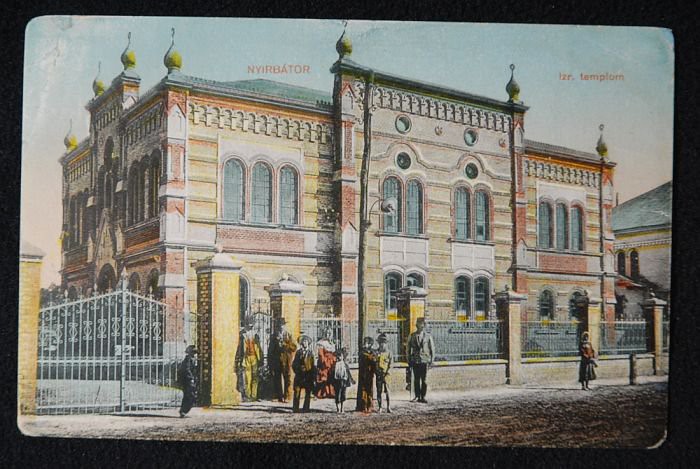
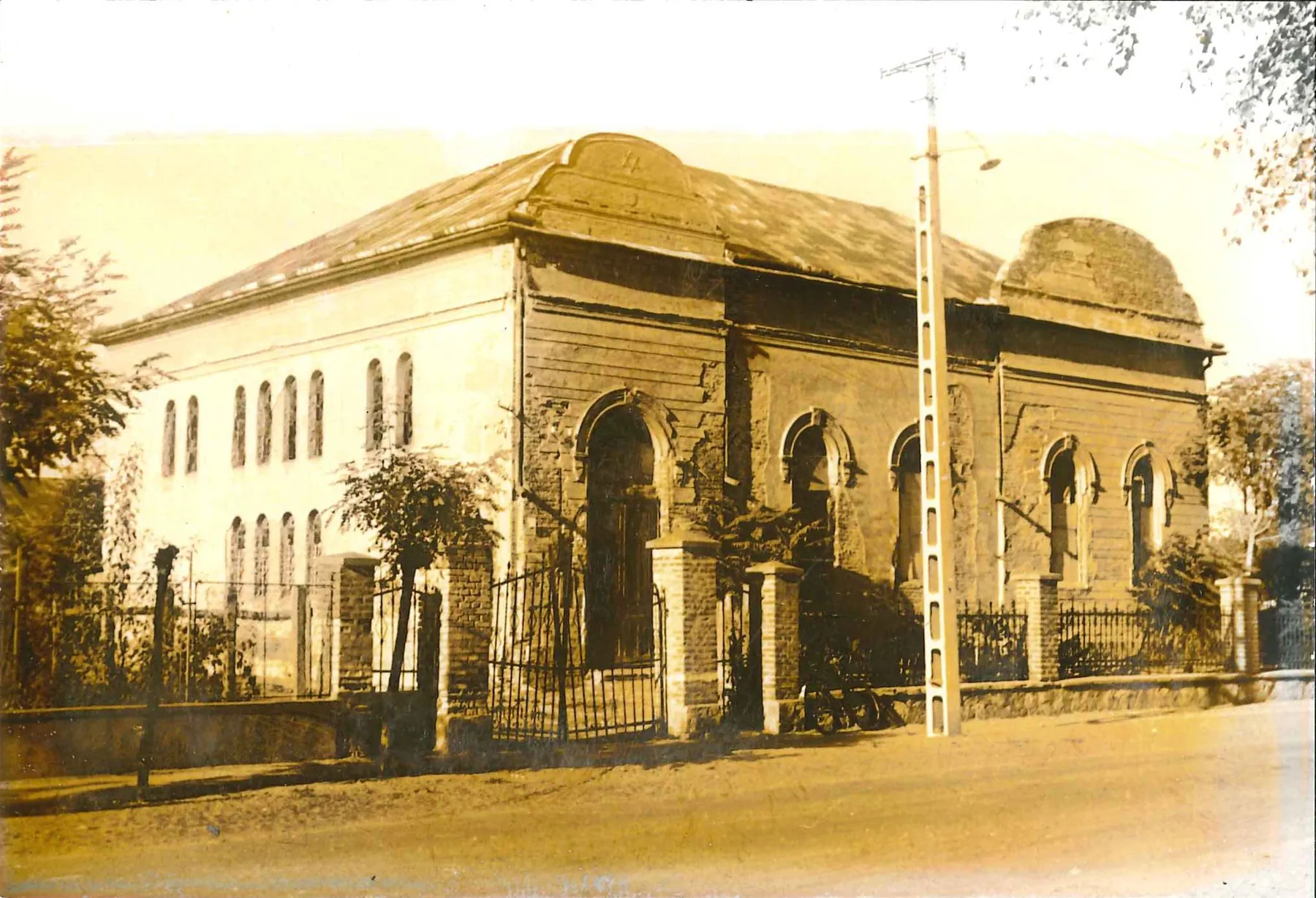
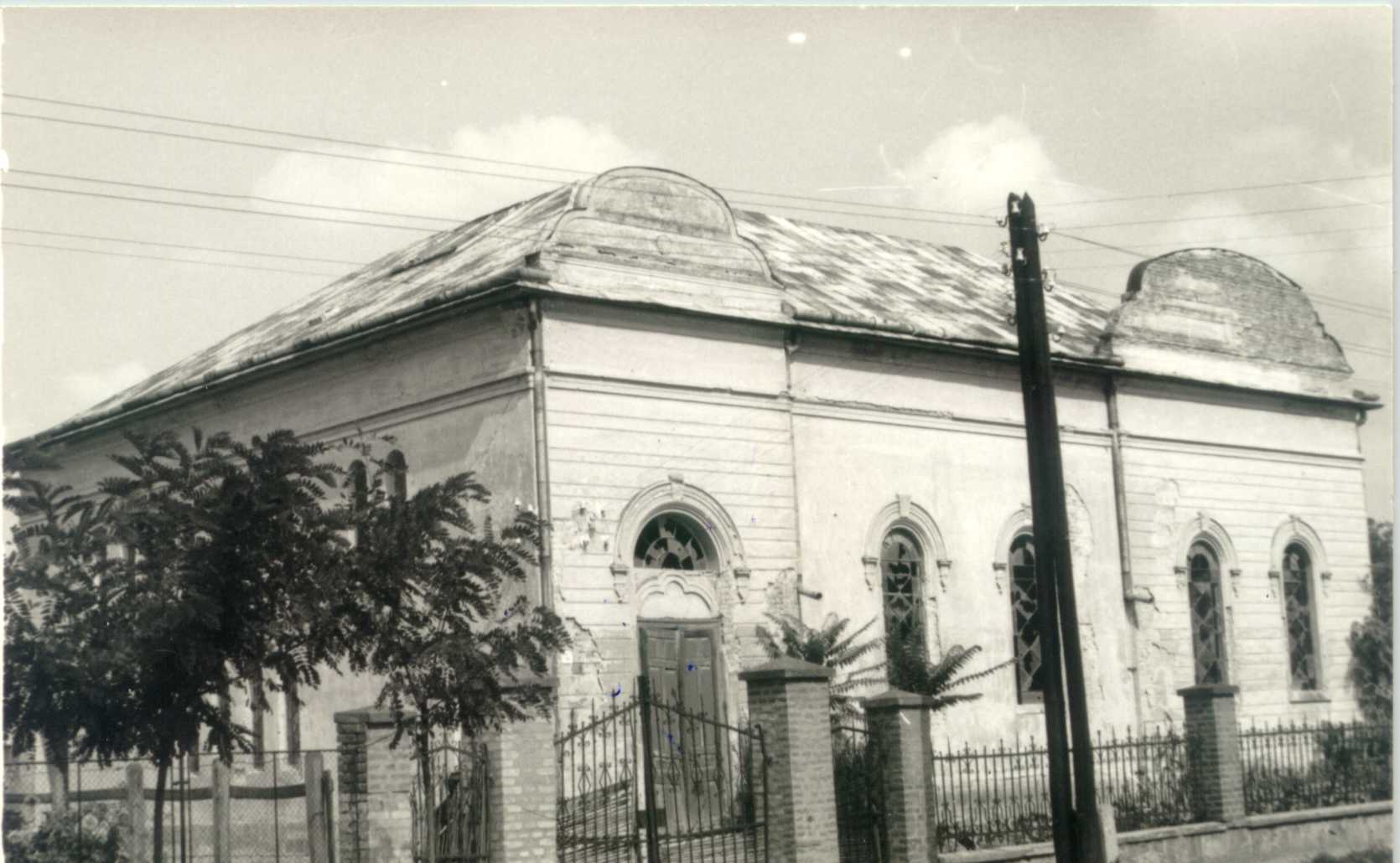
Jews settled in Nyírbátor, a market town of the Nyírség in north-eastern Hungary, from the second half of the eighteenth century. By 1910 they numbered 1,459, and between the wars about a fifth of the townspeople were Jewish. The congregation's principal house of worship is known from an early twentieth-century postcard captioned 'Izr. templom': a two-storey hall of banded brick with round-arched windows, corner turrets and bulbous finials, set behind a railed forecourt, with a plainer prayer hall beside it. Anikó Gazda's national survey notes that a competition for a synagogue was held in 1904; the architect and the year of consecration have not been traced. In 1929 the Magyar Zsidó Lexikon described a Status Quo congregation with three small prayer houses, a school founded in 1857 and a Talmud Torah that drew pupils from far away; a separate Orthodox community also existed. In spring 1944 the Jews of the town were taken to the Nyíregyháza ghetto and deported to Auschwitz. Survivors revived communal life for some years, but it faded in the 1950s. Photographs taken in 1960 and 1965 show a decaying synagogue building with a boarded doorway and broken windows. Gazda's field survey of 1980–1987 lists the Nyírbátor synagogue as demolished, and the town is absent from the Center for Jewish Art's list of surviving synagogue buildings in Hungary.
Where it stood for 61 years
Historic: Nyírbátor, Szabolcs county (street not established). Today: Nyírbátor, Szabolcs-Szatmár-Bereg county, Hungary (exact plot not identified).
Open larger map →The Jewish community
According to the Pinkas Hakehillot, as summarised in the Hebrew Wikipedia, the first Jewish settlers came mostly from Galicia, spoke Yiddish and lived by trade. The Magyar Zsidó Lexikon dates the organised community to about 1816, when R. Simon Mandel and his five sons founded it; another account gives 1853 for its formal foundation. Figures compiled by Gazda show 72 Jews in 1828, 132 in 1851, 1,459 in 1910 and 1,899 in 1941. After the Hungarian Jewish Congress of 1868–69, at which Eduárd Mandel sat as delegate for the Bátor district, the mother community took the Status Quo position and the Orthodox withdrew to form their own congregation. From 1885 the rabbinate of Nyírbátor also had charge of Jews in a ring of surrounding villages. The Mandel family, founders of the Bóni factory, were among the town's leading employers and benefactors. It was this much enlarged community that put a new synagogue out to competition in 1904; a plainer hall, presumably the earlier synagogue, remained standing beside the new building.
Architecture and design
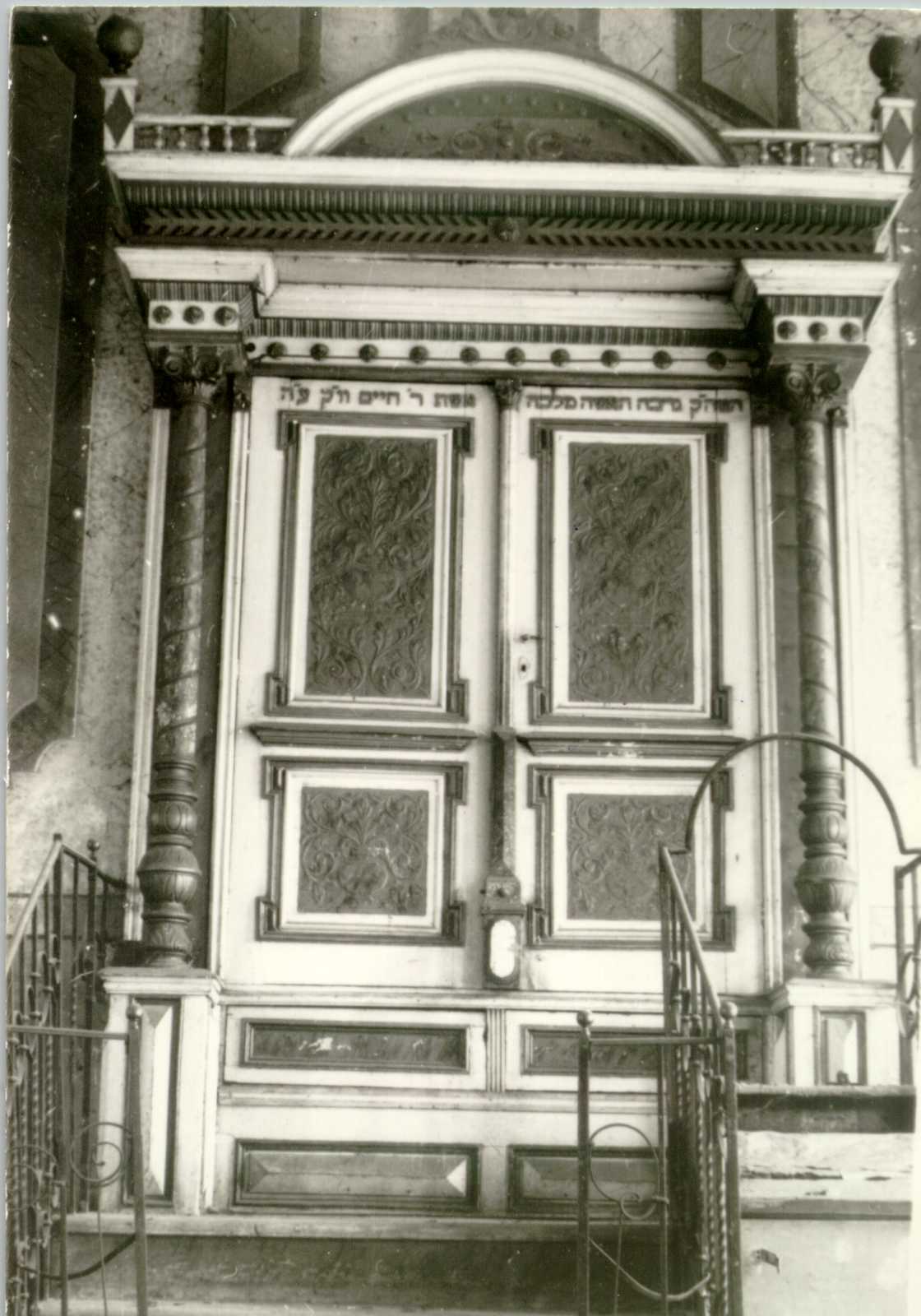
The postcard shows a free-standing rectangular building of two storeys, its low roof hidden behind a corbelled parapet. The walls are of brick laid in alternating light and dark bands. The long side facing the street is divided by buttress-like piers into three bays: the middle bay rises slightly higher and has paired round-arched windows, small circular windows and a curved moulding, while the outer bays have groups of three round-arched windows at gallery level. A frieze of small blind arches runs beneath the cornice. The entrance front, on the short side, has a tall projecting centre flanked by slender turrets. Every turret and pier ends in an onion-shaped finial, several topped by a Star of David. The plot was enclosed by a wrought-iron railing between rendered piers with ball caps. Nothing is recorded of the plan, the seating or the decoration inside; the two tiers of windows suggest a women's gallery. A Torah ark with carved double doors, twisted columns and a Hebrew donor inscription was photographed in 1960 in the Nyírbátor synagogue that was then still standing.
Life inside the synagogue
Nyírbátor had two congregations. The mother community followed the Status Quo line, and the Orthodox kept a separate congregation; which of them worshipped in the brick synagogue is not stated in the sources consulted. In 1929 the Magyar Zsidó Lexikon listed three small prayer houses, an elementary school opened in 1857, a Talmud Torah attended by pupils from distant places, a Chevra Kadisha under Alajos Elek and a women's association led by Mrs József Lőrinczy. Chief Rabbi Ábrahám Lemberger stood at the head of the community, with József Lőrinczy as president, Mór Weiszberger as vice-president and the teacher Ármin Szilvási as secretary. The annual budget was 10,000 pengő, much of it spent on welfare and charity. The Pinkas records hostility as well: Jews were attacked and their homes looted during the Tiszaeszlár blood-libel agitation of 1882, and in 1922 explosives were thrown into the Orthodox synagogue. About 130 men of the community served in the First World War, of whom fourteen or fifteen fell. In the community census of spring 1944 the Orthodox rabbi was Aharon Teitelbaum.
Destruction
No account of how the synagogue was lost has been found, and the sequence has to be pieced together. Hungarian authorities and gendarmerie, acting under Nazi German occupation, removed the town's Jews in April 1944; what happened to the buildings and their furnishings in the following months is not recorded in the sources consulted. A reduced Orthodox congregation worshipped in the town again after 1945. The Hungarian Jewish Museum holds photographs of a Nyírbátor synagogue dated 1960 and 1965: a plain rendered building with curved gables, its plaster falling, windows broken and the doorway boarded. The brick synagogue of the postcard does not appear in them, and it is unclear whether it had already been pulled down. Anikó Gazda, whose field survey ran from 1980 to 1987, marks the Nyírbátor synagogue as demolished. The last building therefore came down between 1965 and 1987, demolished under the Communists; the decision of the local council and the exact year have not been traced. No synagogue in the town appears in the Center for Jewish Art's list of surviving buildings.
The community’s fate
Under the anti-Jewish laws from 1938 the town's Jews lost their livelihoods, and many men were conscripted into forced labour service; most were sent to the Ukrainian front, where many died. After the Nazi German occupation of Hungary on 19 March 1944, a Hungarian gendarmerie group under Lieutenant Bálint operated in Nagykálló and Nyírbátor. On 22 April the Jews of Nyírbátor were transferred to the Nyíregyháza ghetto and then held on outlying farmsteads in harsh conditions. Transports from the Nyíregyháza area left for Auschwitz between 15 May and 6 June 1944. A commemoration held in 2014 put the number deported from the town at about two thousand. After the war 491 people (520 in another account) returned, most of them forced labourers and some from nearby villages. They re-established the Orthodox congregation; the Status Quo community was not revived. Emigration followed. According to the Pinkas no Jews remained by 1958, although in 2014 one elderly Jewish resident was still living in the town.
The site today
The street and plot of the synagogue could not be established from the sources available for this entry, so what stands on the site today is unknown. No synagogue building survives in Nyírbátor: Gazda's survey of the 1980s found it demolished, and the town is absent from the Center for Jewish Art's list of extant synagogue buildings in Hungary. The Jewish cemetery is still maintained. A former rabbi's house was reported standing in 2017, when two rabbinical-seminary students proposed turning it into a pilgrims' house. A plaque to the victims of the Holocaust was unveiled in the town on 28 September 2014.
Notable names
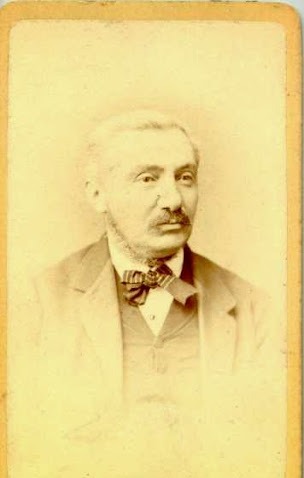
Eduárd Mandel
1814–1899Community leader; delegate to the 1868–69 Hungarian Jewish CongressLandowner and industrialist, son of Simon Mandel, who founded the Nyírbátor congregation. He was elected unanimously as delegate of the Bátor district to the Hungarian Jewish Congress of 1868–69 and chaired the committee set up to carry out its resolutions, despite anonymous threats. Founder of the Bóni factory and the town's savings bank, he became Nyírbátor's first honorary citizen in 1894 and is buried in its Jewish cemetery. He died before the new synagogue was planned.
Biography or source →Simon Mandel
UnknownFounder of the Jewish communityNamed by the Magyar Zsidó Lexikon as the founder, with his five sons, of the Nyírbátor Jewish community around 1816; the Lexikon gives him the title R. He is thought to have come from Galicia. His descendants, the Mandel family, set up the Bóni factory and remained the leading family of the congregation for the next century.
Biography or source →Ábrahám Lemberger
UnknownChief rabbi (in office 1929)Chief rabbi (főrabbi) of Nyírbátor, named in the Magyar Zsidó Lexikon of 1929 at the head of the community's leadership, alongside the president József Lőrinczy and the vice-president Mór Weiszberger. The rabbinate of Nyírbátor also had charge of the Jews living in a number of surrounding villages. No further biographical details were found.
Biography or source →Aharon Teitelbaum
UnknownRabbi of the Orthodox congregation (in office 1944)Rabbi of the Orthodox congregation of Nyírbátor at the time of the community census ordered in spring 1944, in which the small community of nearby Pócspetri also named him as its rabbi. A Hebrew source styles him av beit din of Volové and Nyírbátor. His fate in 1944 was not established for this entry.
Biography or source →Do you have something to contribute?
Photographs, documents, family stories or memories of this synagogue and its community help keep its history alive.
- Zsinagógák és zsidó községek Magyarországon. Térképek, rajzok, adatok (1991), legend pp. 13–14 and Szabolcs-Szatmár county table p. 35
- Magyar Zsidó Lexikon (1929), p. 657, entry 'Nyírbátor'
- Nyírbátori zsinagóga az előtte álló emberekkel (postcard), inv. F01.341
- Nyírbátor, zsinagóga (photograph, 1965), inv. F16.058
- Nyírbátori zsinagóga külső képe (photograph, 1960), inv. F70.302
- Nyírbátori zsinagóga frigyszekrényének ajtaja (photograph, 1960), inv. F70.303
- Synagogues in Hungary: report on the expeditions and list of extant synagogue buildings
- A népirtás politikája. A holokauszt Magyarországon, vol. 1, pp. 574–575
- נירבאטור (Nyírbátor), section on the Jewish community, summarising Pinkas Hakehillot Hungary pp. 383–384
- Kétezer zsidóból mára egy maradt
- Megemlékezés Nyírbátorban
- Mandel Eduárd
- The former synagogue in Nyirbator (postcard reproduction with historical note)
- פוצ'פטרי (Pócspetri), citing S. Spitzer, Kehillot Hungaria (1944 community census)
- OpenStreetMap / Nominatim: Szabadság tér, Nyírbátor
Share a memory or thought
No comments yet. Be the first to add one.