
Historia Status Quo Synagogue of Nyíregyháza
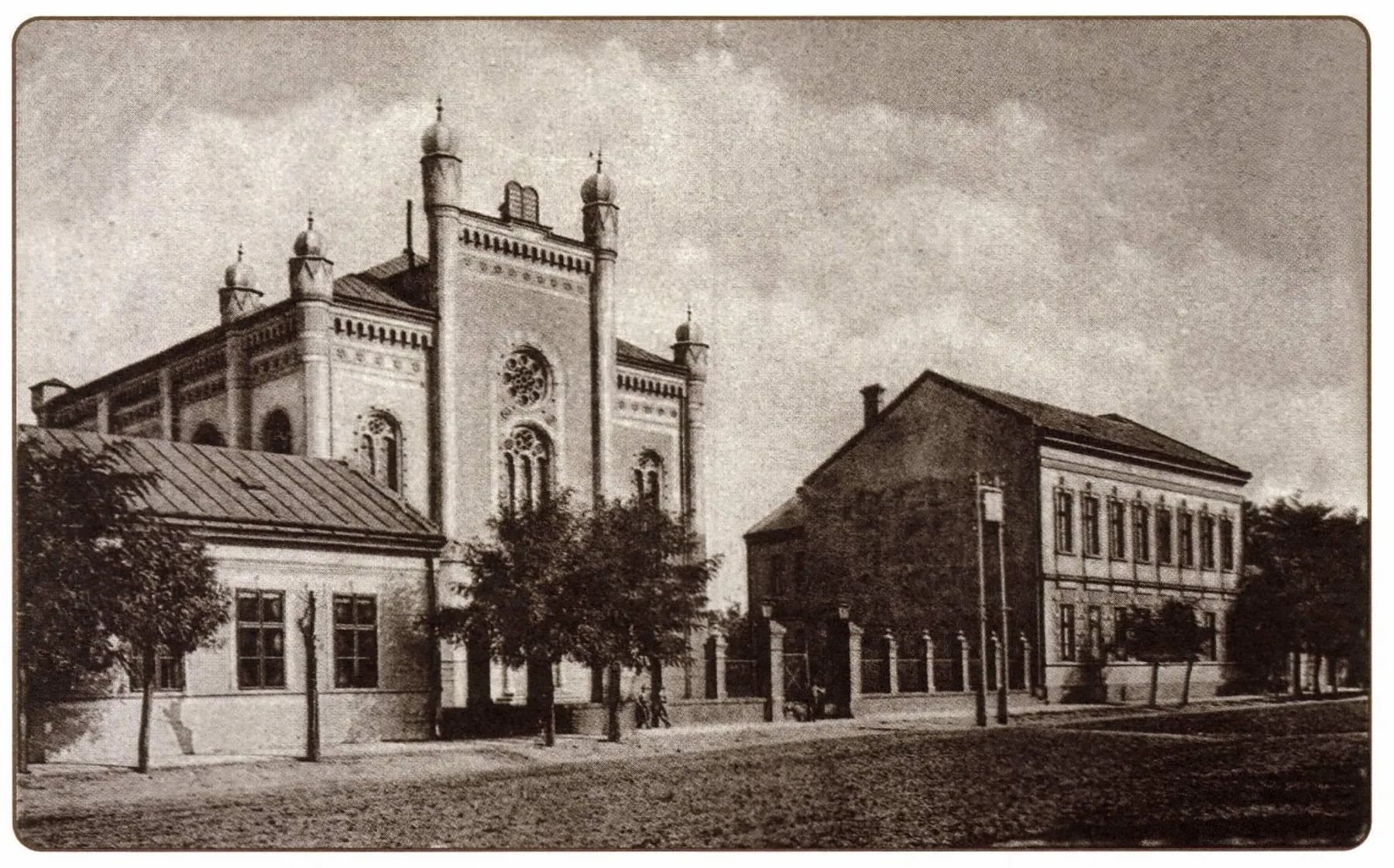
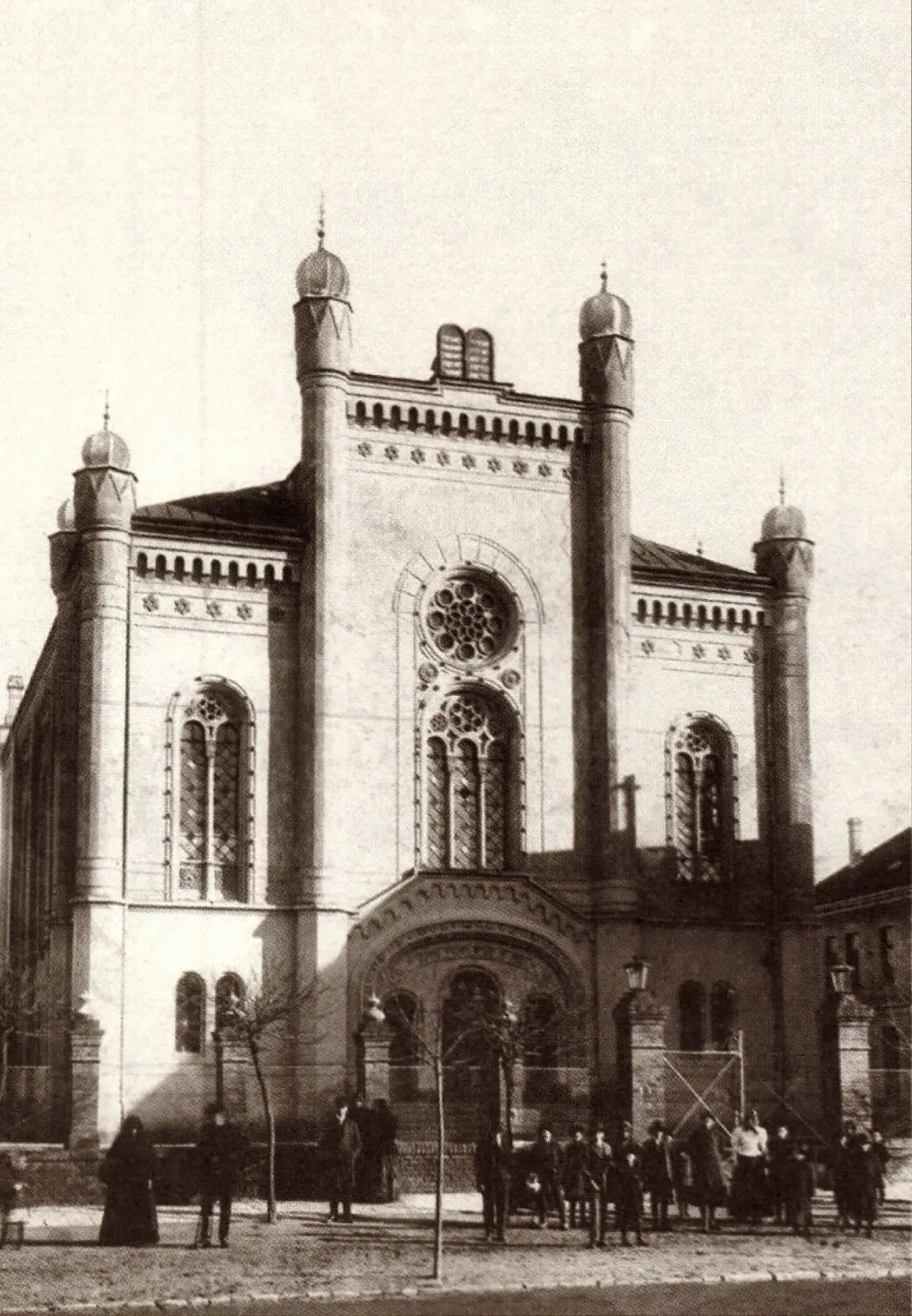
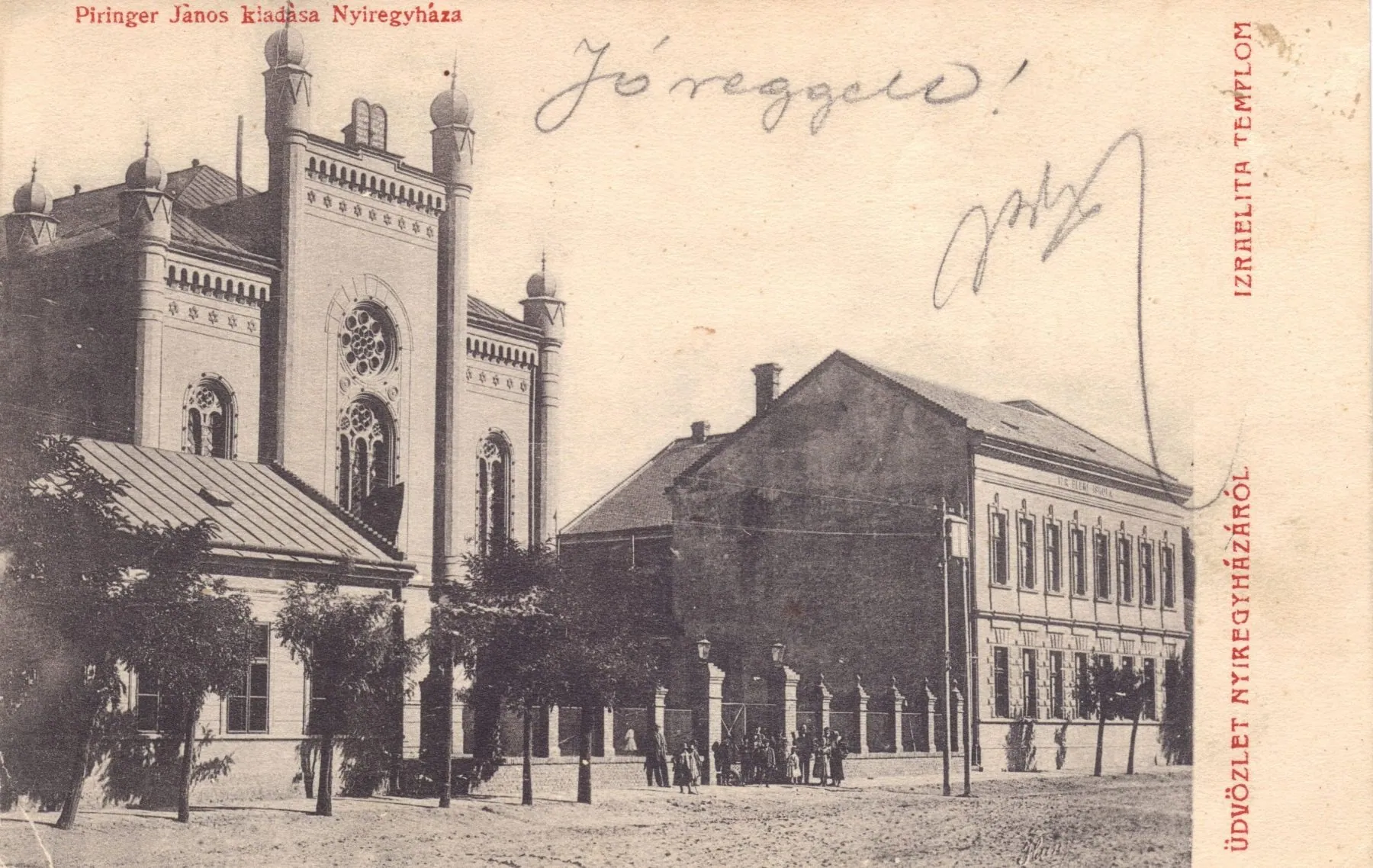
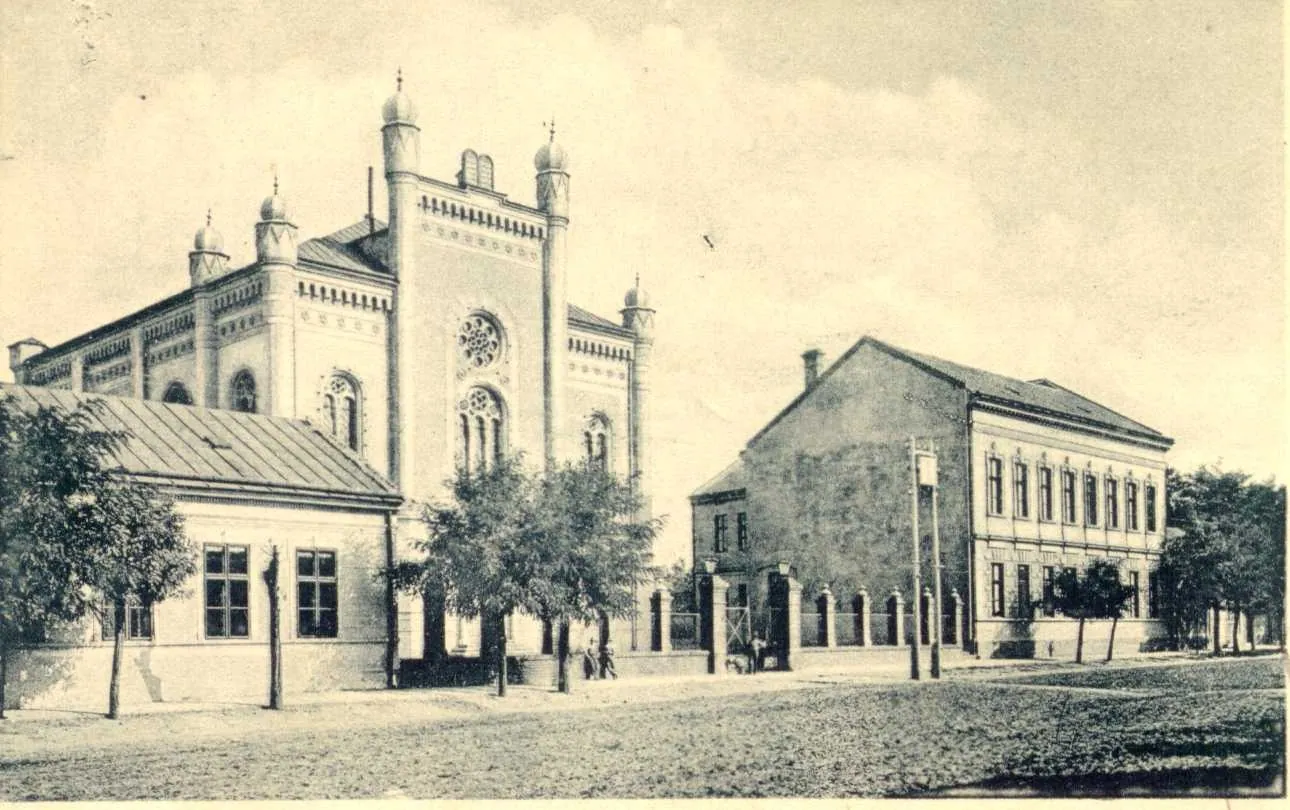
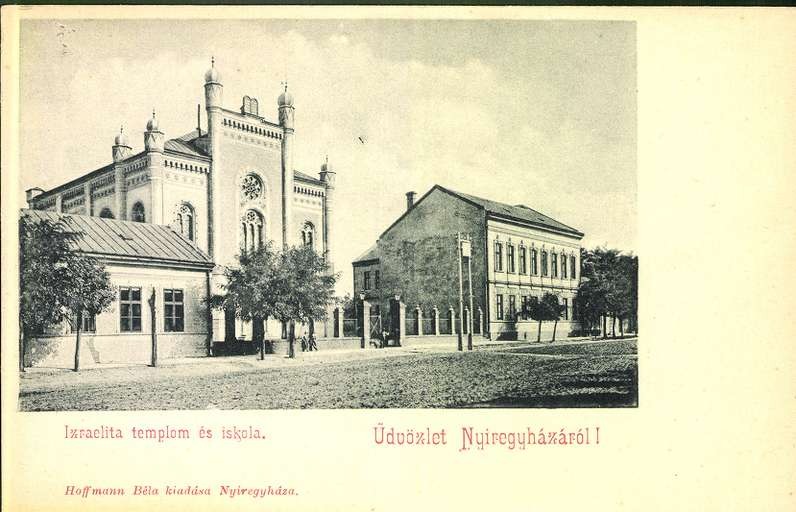
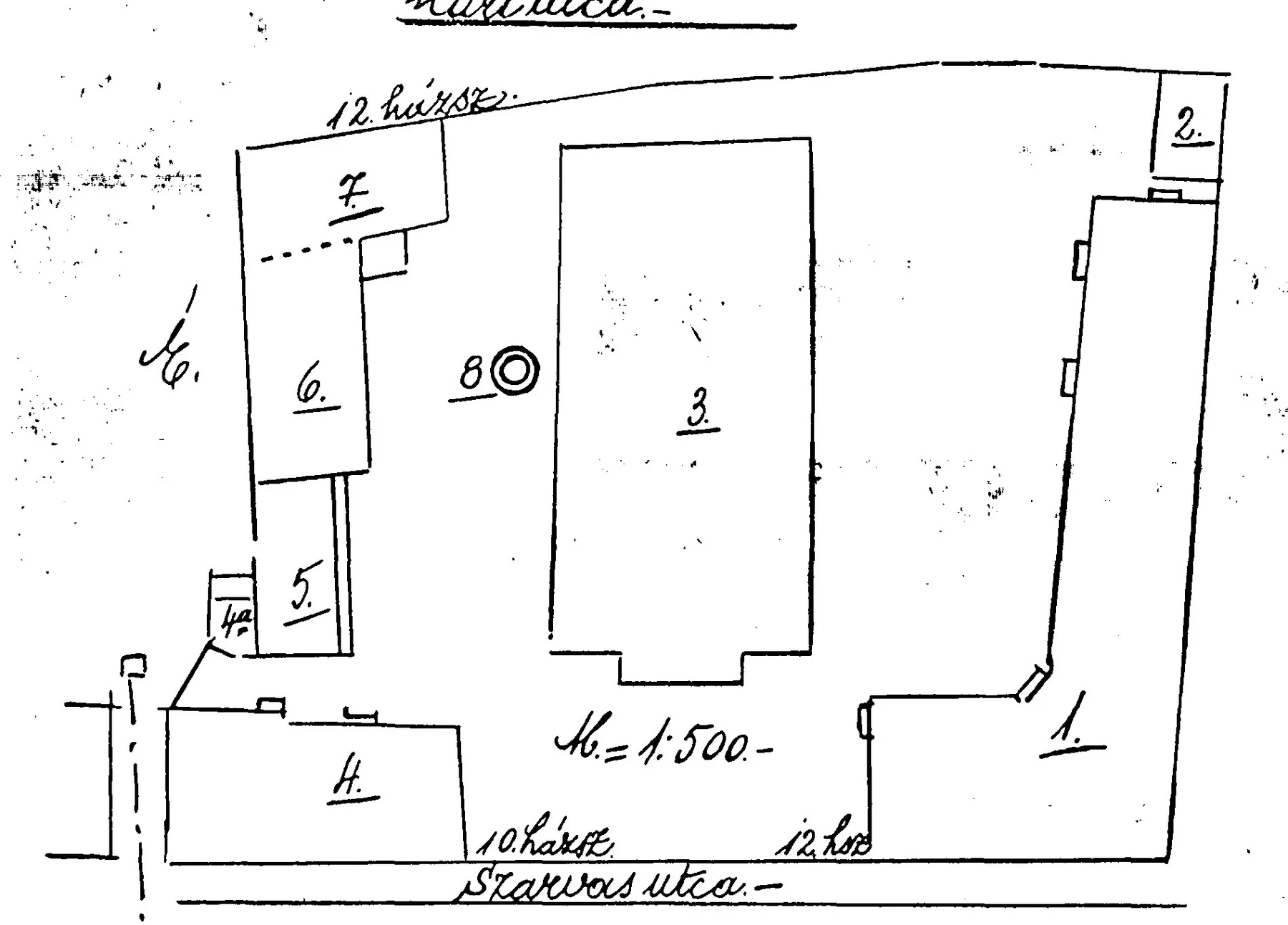
The synagogue stood at Szarvas utca 10–12, a few hundred metres south of Nyíregyháza's town hall, set back from the street between the two school buildings of the Jewish community. The community's board resolved to build it on 25 April 1879, to mark the silver wedding of Franz Joseph and Elisabeth, and it went up in a matter of weeks in the summer of 1880; it was consecrated on 5 September 1880, the eve of Rosh Hashanah. Modelled on the synagogue of Nagykároly (today Carei, Romania), it was a three-aisled hall in an oriental, Moorish-influenced Romantic style, its tall central façade framed by slender turrets. After the community divided in 1904 it remained the synagogue of the status quo ante congregation, led from 1909 by Chief Rabbi Béla Bernstein, while the Orthodox built their own synagogue on today's Mártírok tere, which still stands. The Jews of Nyíregyháza were ghettoised and deported to Auschwitz in the spring of 1944. That October the synagogue was destroyed: most local histories say retreating Nazi German troops blew it up, though one study records only that it burned out in the fighting. The roofless shell was pulled down after the war, and a wing of a special-needs school now occupies the site.
Where it stood for 64 years
Historic and present: Szarvas utca 10–12, Nyíregyháza (the street was Kalinin utca from 1950 to 1963). Today: the middle wing of the special-needs school between Szarvas utca and Kürt utca.
Otwórz większą mapę →Społeczność żydowska
Jews could settle in Nyíregyháza only after the law of 1840 opened the towns to them. In 1843 five Jewish residents asked the town for land for a cemetery, and by 1848 there were about 70 Jews. The congregation belonged to the rabbinate of Nagykálló until 1865, when it became independent and chose Károly Friedmann, a pupil of the Pressburg yeshiva, as its first rabbi. A Jewish school opened in its own building in 1868. Growth was rapid: 1,128 Jews in 1869, 2,097 in 1880, 3,009 in 1900 and 5,066 in 1920, over a tenth of the town; in 1941 there were 4,993. Most were merchants and artisans. After the schism in Hungarian Jewry the community stayed neutral, and in 1877 it declared itself status quo ante. An Orthodox group formed beside it, kept its own rabbi from 1878 and separated for good in 1904, though the two congregations shared the school until 1944. The Tiszaeszlár blood-libel trial was held in Nyíregyháza in 1883, and the town's Jews organised their own defence against the agitation that came with it.
Architektura i projekt
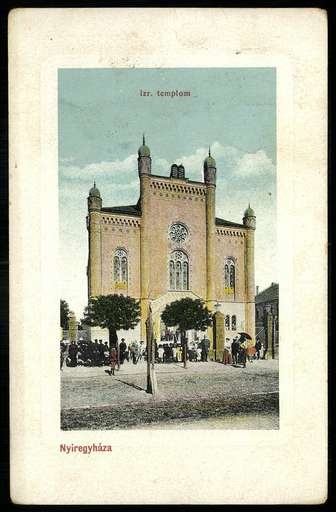
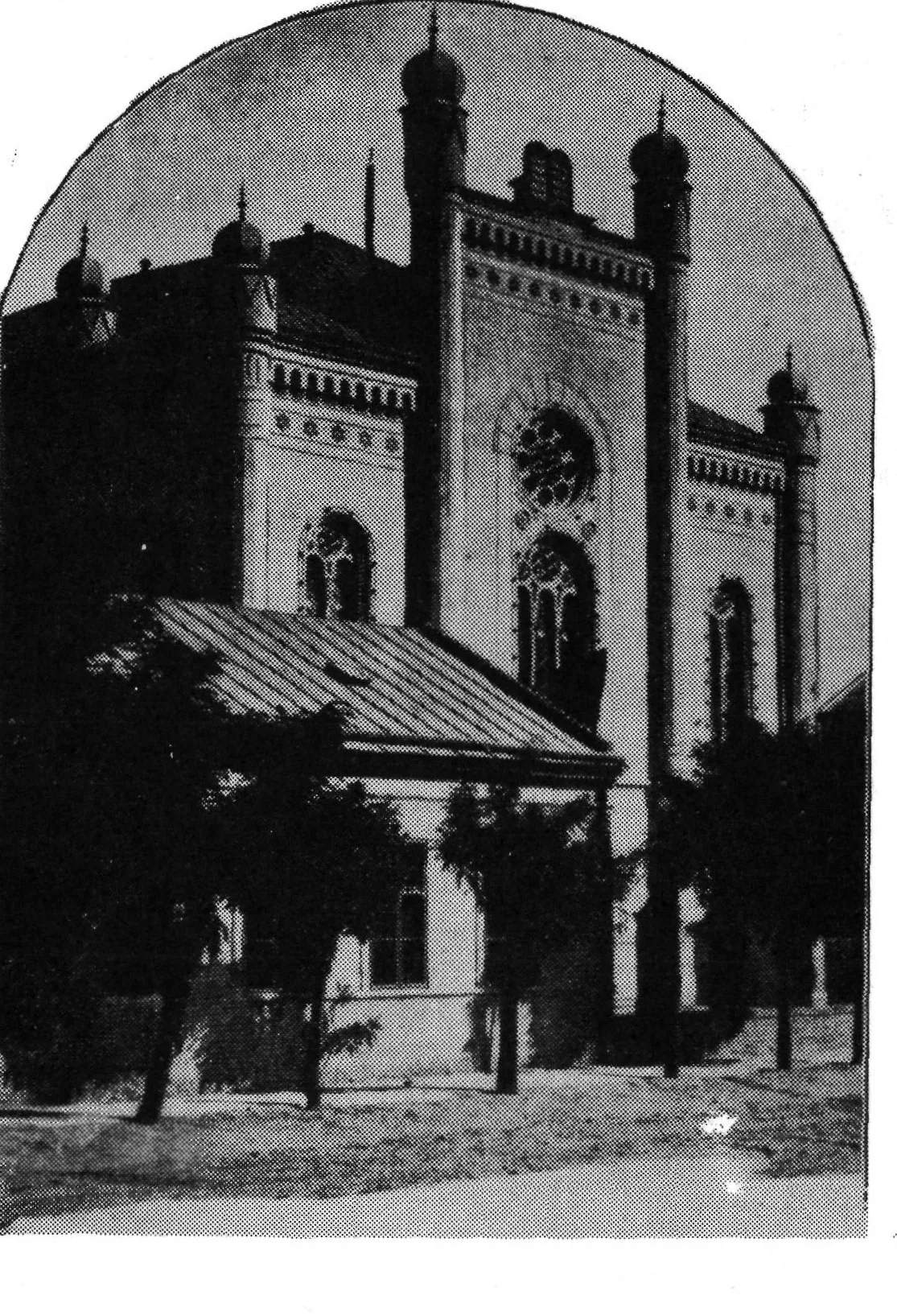
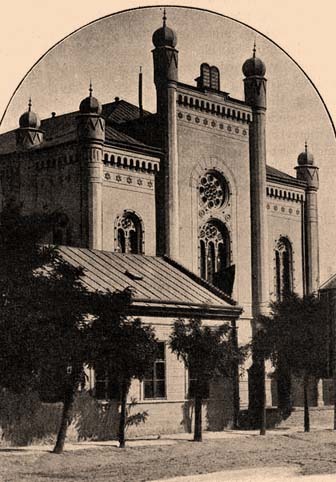
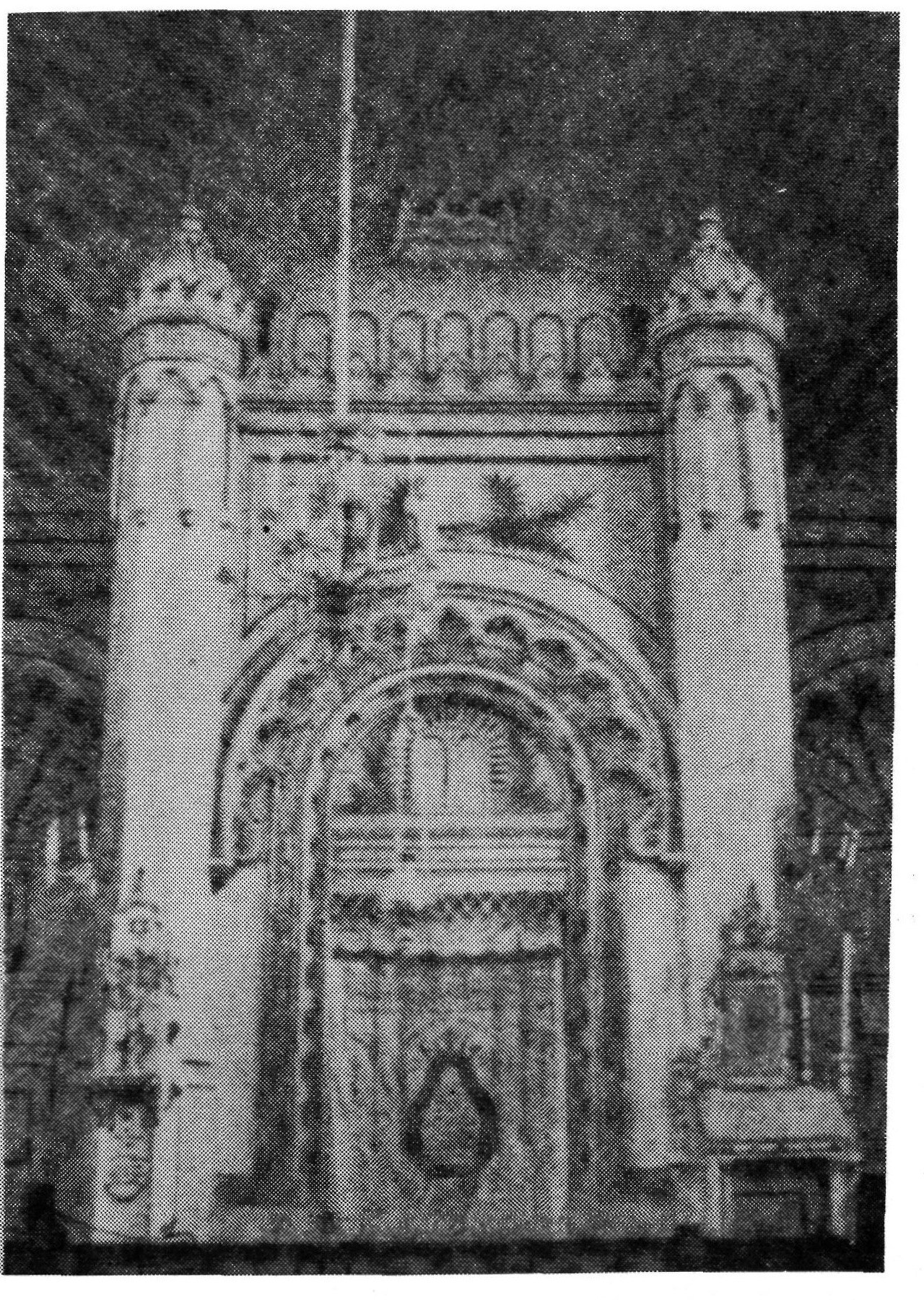
Members subscribed 20,000 forints at once in 1879; the town gave 25,000 bricks and the Counts Dessewffy of Királytelek another 10,000 when work stalled in June 1880. The total cost is given as 56,000 forints. The town engineer Gyula Horváth travelled to Nagykároly to study the synagogue there, and the Nyíregyháza building was almost its twin. The architectural historian Péter Garai credits the design and construction to the local master builder Sándor Király the elder; an older survey lists the designer as unknown. Photographs show a rendered three-aisled hall with a raised centre bay, a rose window above paired arched windows, an arcaded cornice, the Tablets of the Law on the gable and four slim turrets with bulbous caps. Inside, the bimah stood in the centre behind a railing, a high grille screened the women's gallery, and the Ark was framed by two small towers. Electric light, with 162 lamps, came in 1898. An enlargement in 1902 raised the seating by a quarter to 440 men and 414 women, added four emergency exits and gave the ceiling a many-coloured 'oriental' decoration. A post-war survey measured the foundations at 16.8 by 30 metres.
Życie w synagodze
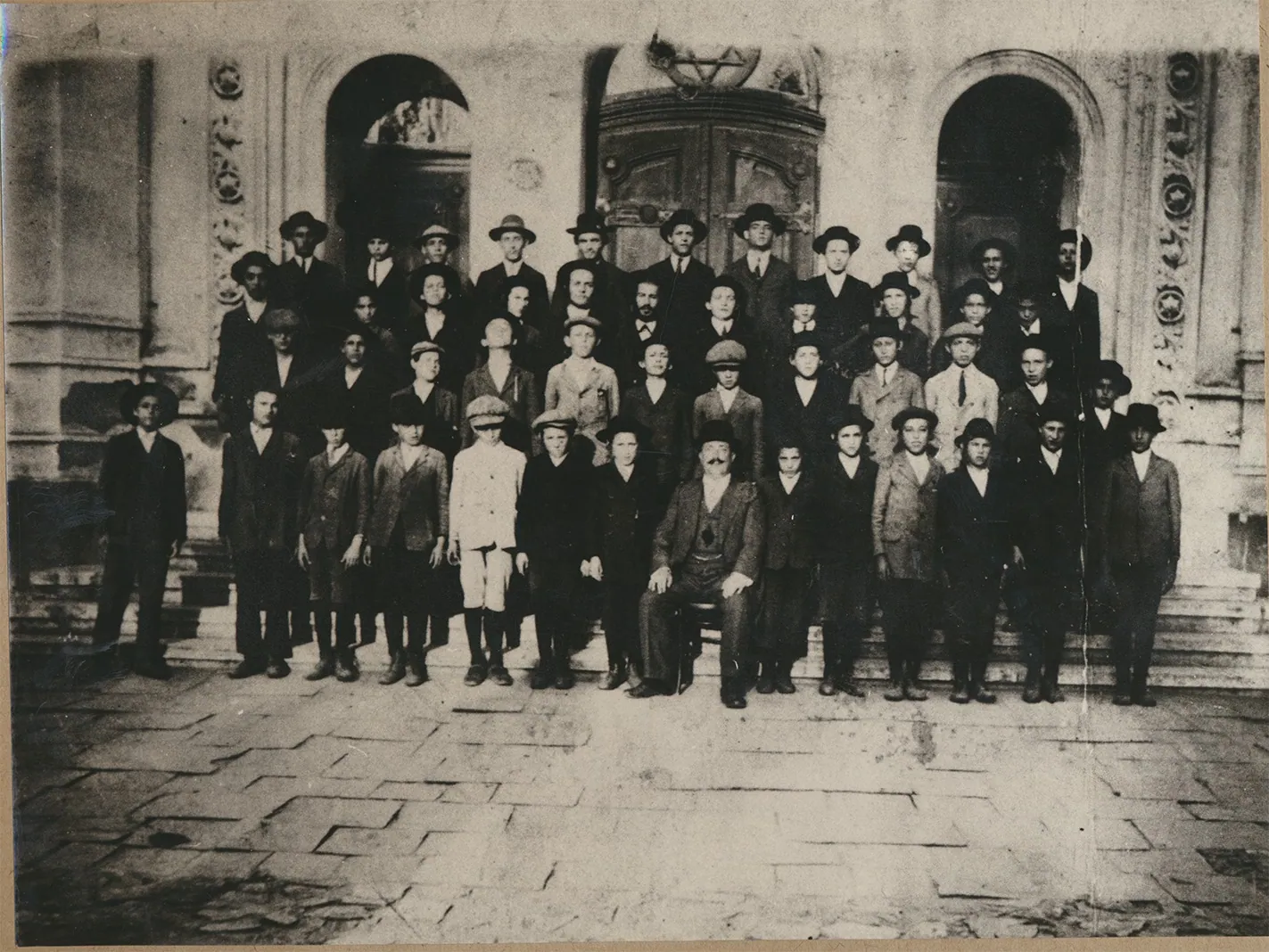
Rabbi Károly Friedmann, who consecrated the synagogue, preached in German, and the language of the pulpit became a long quarrel: in 1881 the board told him to use only Hebrew, not German, on festivals; the first Hungarian sermon was heard at a wedding in September 1888, given by the rabbi of Szolnok; and from 1899 the school director Adolf Kelemen preached in Hungarian. Saul Libe, elected cantor on 22 May 1881, served until 1911 and trained a boys' choir that appeared in matching caps, coats and prayer shawls. The synagogue was also a stage for patriotic ritual: a mourning service for Crown Prince Rudolf in 1889, illuminations and the singing of the Szózat for the coronation jubilee of 1892, a thanksgiving service on 15 March 1898. On 20 April 1909 Béla Bernstein was driven to the synagogue in the town's carriage, received its keys and was installed as chief rabbi by Illés Adler of Budapest. Members rented their seats by the year, and on the High Holidays two overflow prayer rooms were still needed. In autumn 1924 a new Torah scroll was carried in under a canopy and dedicated by Bernstein.
Zniszczenie
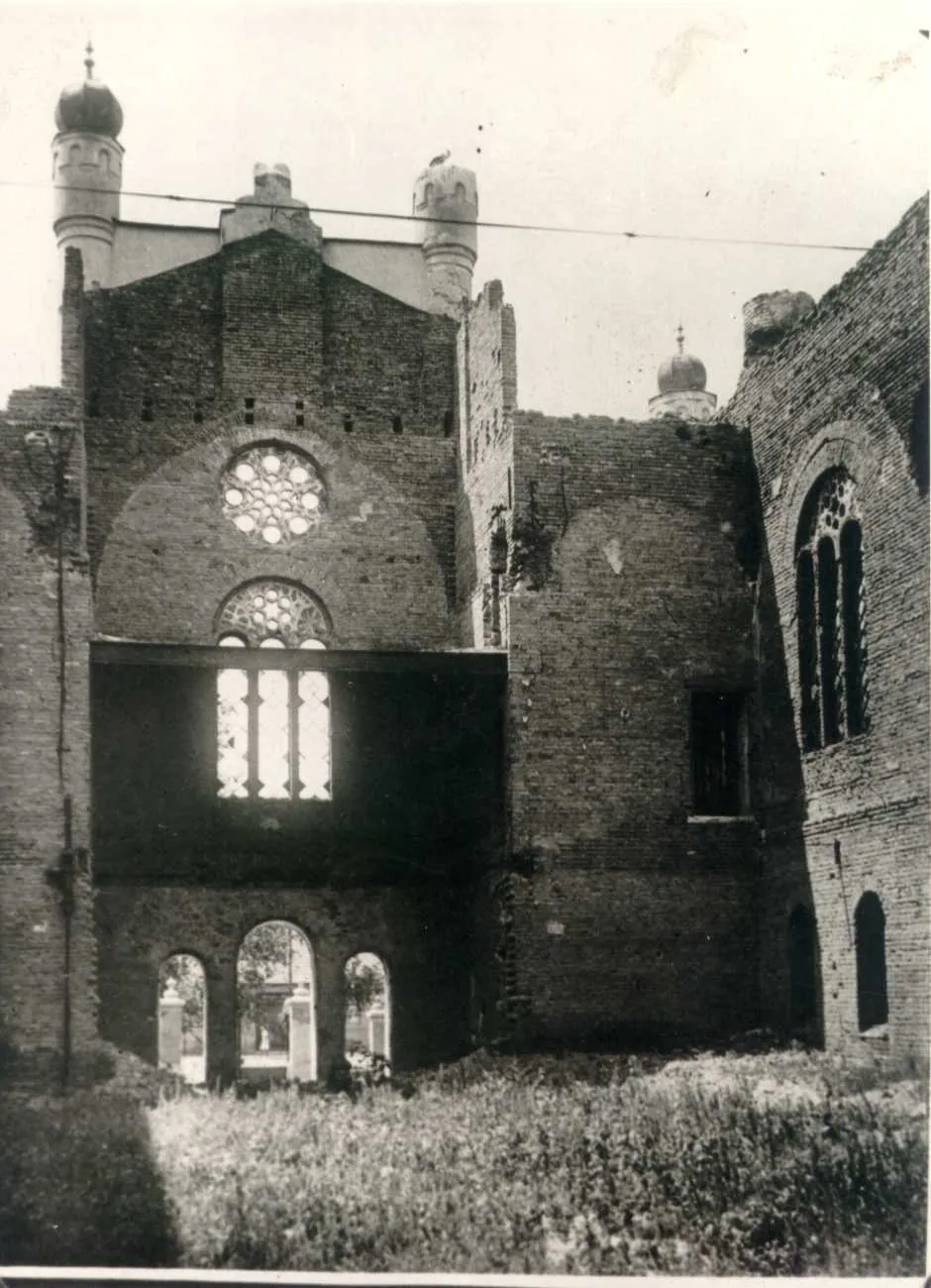
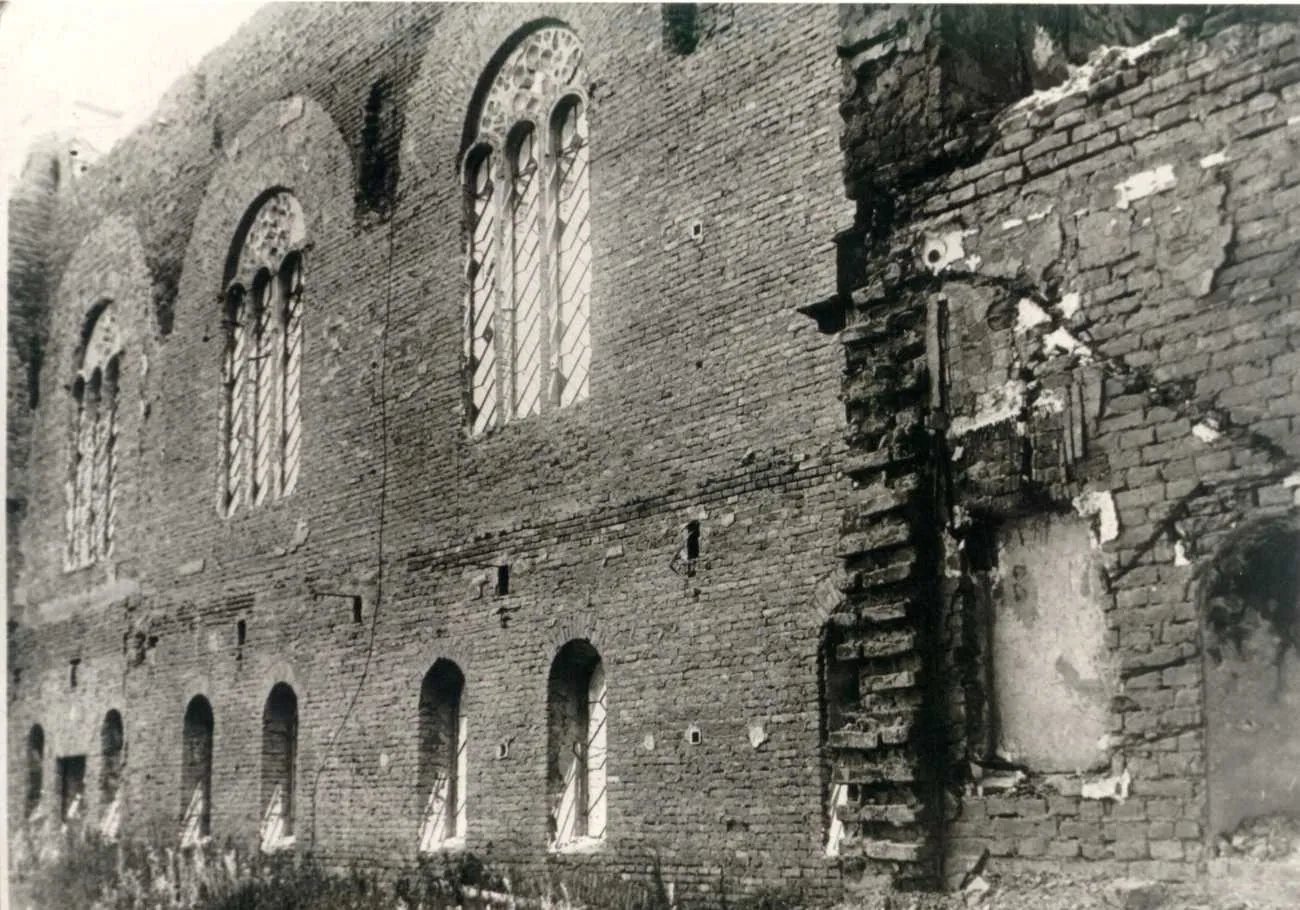
Nazi Germany occupied Hungary on 19 March 1944, and within three months the congregation had been driven into the ghetto and deported; the empty synagogue is said to have been used as a clothing store. The front reached Nyíregyháza in October: the town fell on 21 October, was retaken by German and Hungarian forces on 26 October and was abandoned by them on 31 October, when they wrecked the railway and blew up bridges. Most local histories, and Yad Vashem's Pinkas Hakehillot, state that retreating Nazi German troops blew up the synagogue in those October days. Zoltán Riczu's 1992 study of the town's Jewish buildings says only that it burned out completely during the fighting, and a 2025 account calls the cause of the fire unknown: some blamed the Germans, others local arsonists, and an accident could not be ruled out. Post-war photographs show a roofless, gutted brick shell with its outer walls, window tracery and façade turrets still standing. The walls were then pulled down; the foundations and part of the entrance lasted until 1953, when the nationalised plot was cleared for a new school wing.
Los społeczności
Hungary's anti-Jewish laws from 1938 stripped Nyíregyháza's Jews of their livelihoods. In January 1942 Rabbi Bernstein and the two other Jewish members were removed from the town council, and from 1942 men were taken for forced labour, from which most did not return. After the German occupation a ghetto was set up in April 1944 in the streets around the Orthodox synagogue, and about 11,000 Jews from the town and the surrounding villages were crowded into it. In early May they were moved to outlying farms at Nyírjes, Harangod and Sima, where Hungarian gendarmes tortured many for their valuables. Between mid-May and early June 1944 they were deported to Auschwitz; Béla Bernstein, aged 76, and the Orthodox rabbi Solem Wieder were among those murdered. In 1946 about 1,200 Jews lived in the town, many of them survivors from nearby villages, and both congregations were re-formed. Many left after 1956. About 180 remained in 1970, and a small community still worships in the former Orthodox synagogue.
Miejsce dzisiaj
The synagogue stood where the two-storey middle wing of the school at Szarvas utca 10–12 now stands. On 26 June 1949 survivors raised a memorial to the deported on the synagogue's foundations, using its remains; in December 1953, after the plot was nationalised, it was moved to the Jewish cemetery on Kótaji út, where it still stands. The two former Jewish school buildings that flanked the synagogue survive and were joined by the new wing to form a state special-needs school, long named after Gusztáv Bárczi. Nothing on the site recalls the synagogue. A small prayer house built for the congregation at Síp utca 18 in 1953–54 was sold in 1960. The Orthodox synagogue on Mártírok tere, completed in 1932, is the town's only working synagogue.
Ważne postacie
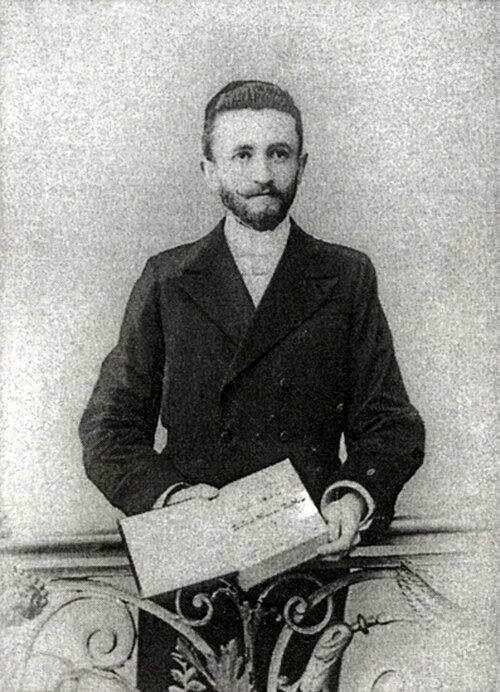
Béla Bernstein
1868–1944Chief Rabbi of the status quo congregation, 1909–1944Béla Bernstein, a historian of Hungarian Jewry and translator of the Torah, was installed as chief rabbi in the Szarvas utca synagogue on 20 April 1909 and preached there for thirty-five years. He sat on the town council until the anti-Jewish laws removed him in 1942 and from 1929 presided over the national federation of status quo congregations. Aged 76, he went into the ghetto with his congregation and was murdered at Auschwitz in 1944.
Biografia lub źródło →Károly Friedmann
d. 1905First rabbi of Nyíregyháza, 1865–1905Károly Friedmann, a pupil of the Pressburg yeshiva, was chosen as the first rabbi of the newly independent Nyíregyháza community in 1865 and led it for forty years. He consecrated the new synagogue in September 1880. He preached in German, which set him against members who wanted Hungarian sermons, and he died in December 1905.
Biografia lub źródło →Mór Haas
UnknownWholesale merchant; community president and chief organiser of the buildingMór (Móric) Haas, a wholesale merchant and a founder of the town's Produce Hall society (Terménycsarnok) in 1862, was the driving force behind the synagogue. He initiated the project in 1879 and directed the building work in 1880. After the consecration a delegation presented him with a commemorative album, and a marble plaque in the vestibule recorded his part in the construction.
Biografia lub źródło →Sándor Király the elder
UnknownMaster builder credited with the design and constructionThe Nyíregyháza master builder Sándor Király the elder is credited by the architectural historian Péter Garai with designing the synagogue and building it through his own firm in 1880, on the model of the synagogue at Nagykároly. In 1897 he also designed and built the Jewish school that stood beside it. An older survey of Hungarian synagogues gives the designer as unknown.
Biografia lub źródło →Gyula Horváth
UnknownTown engineer of NyíregyházaGyula Horváth, the town engineer, took part in planning and preparing the synagogue. On the community's behalf he travelled to Nagykároly in 1880 to inspect the synagogue there, so that plans and an exact estimate of costs could be drawn up; the Nyíregyháza synagogue closely followed that building.
Biografia lub źródło →Saul Libe
c. 1845–1929Cantor, 1881–1911Saul Libe was elected cantor of the synagogue on 22 May 1881, the year after it opened, and served until his retirement in 1911. He founded a boys' choir that sang at services in matching caps, coats and prayer shawls. Widely respected in the community, he died on 26 February 1929 at the age of 84.
Biografia lub źródło →Czy masz coś do przekazania?
Zdjęcia, dokumenty, historie rodzinne lub wspomnienia o tej synagodze i jej społeczności pomagają zachować jej historię.
- Zsidó épületek és emlékek Nyíregyházán (A Nyíregyházi Jósa András Múzeum kiadványai 34), 1992: chapters on the status quo synagogue (pp. 54–57), the community (pp. 32–46), the Síp utca prayer house and memorial (pp. 114–119) and the location of the buildings (p. 120)
- Nyiregyhaza, in Pinkas Hakehillot Hungary: Encyclopedia of Jewish Communities, Hungary (ed. Theodore Lavi, Jerusalem 1975), pp. 379–381, English translation
- Emlékek a múltból. A korabeli Nyíregyháza képekben (A Szabolcs-Szatmár-Bereg Megyei Levéltár Kiadványai II. Közlemények 14), 1998, p. 69: Az izraelita templom és iskola a Szarvas utcán
- Romantikus építészeti kalandozások I. – Nyíregyháza és környéke, 2. rész
- A nyíregyházi status quo ante zsinagóga emlékére
- Amiről az utcák mesélnek… 298. A Status quo ante zsidó hitközség zsinagógája
- Amiről az utcák mesélnek… 6. Szarvas utca
- Amiről az utcák mesélnek… 306. Egy nevezetes nap: 1944. október 31.
- Amiről az utcák mesélnek… 235. Zsidó elhurcoltak emlékműve
- A zsidó hitközségek Szabolcs vármegyében, in Borovszky Samu (ed.), Szabolcs vármegye (Magyarország vármegyéi és városai), 1900, pp. 365–368
- Nyiregyhaza (Encyclopaedia Judaica, 2nd ed., 2007)
- Nyíregyházi régi zsinagóga
- Amiről az utcák mesélnek… 276–277. Nyíregyháza „országos hírű főrabbija” 1–2
- Bernstein Béla
- Nyíregyháza – Neológok az ortodox zsinagógában
- Honnan és merre, Nyíregyháza zsidósága?
- Nyíregyháza; Izraelita templom (postcard, 1912, photograph by Malachovsky), inv. 0221749
- Üdvözlet Nyíregyházáról. Izraelita templom és iskola (postcard, published by Béla Hoffmann, Nyíregyháza)
- OpenStreetMap way 309245769 (Gyógypedagógiai Intézet, Nyíregyháza), located through Nominatim
- Nyíregyházi zsinagóga romos épülete (two photographs of the ruined synagogue, F01.343 dated after 1945, and F01.344); Nyíregyházi zsinagóga (postcard, F01.342)
- Nyíregyházi zsidó diákok a régi zsinagóga bejáratánál (photograph, 1926–27, F00.54)
Share a memory or thought
No comments yet. Be the first to add one.