
La storia di Wooden Synagogue of Olkieniki
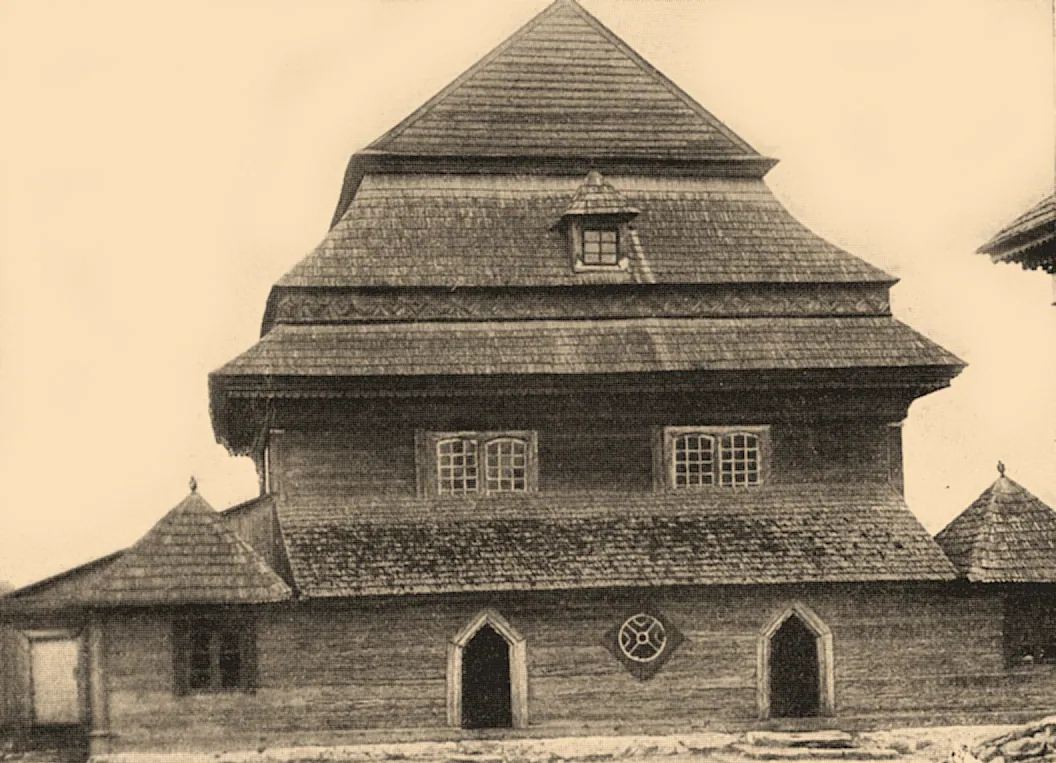
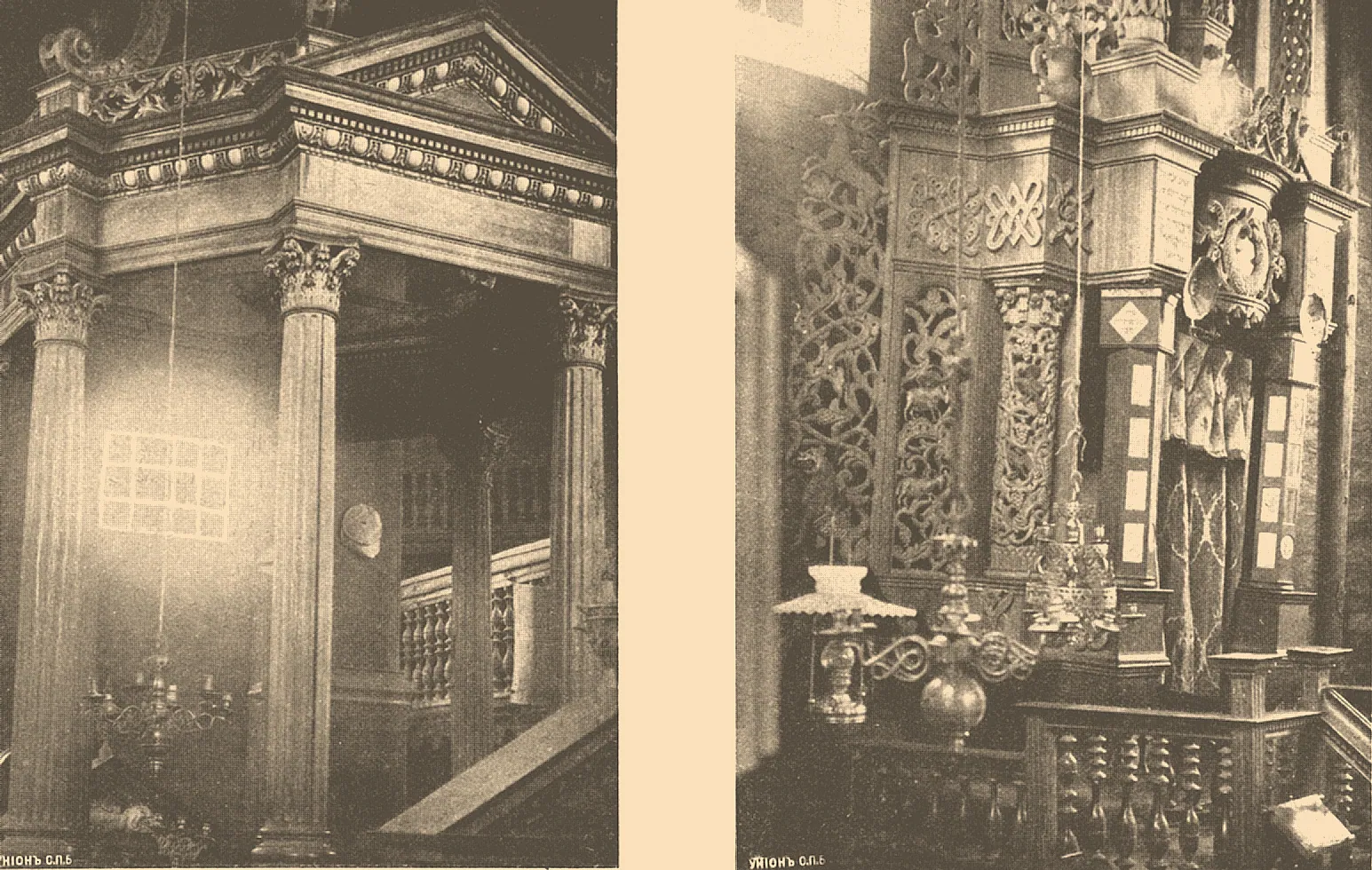
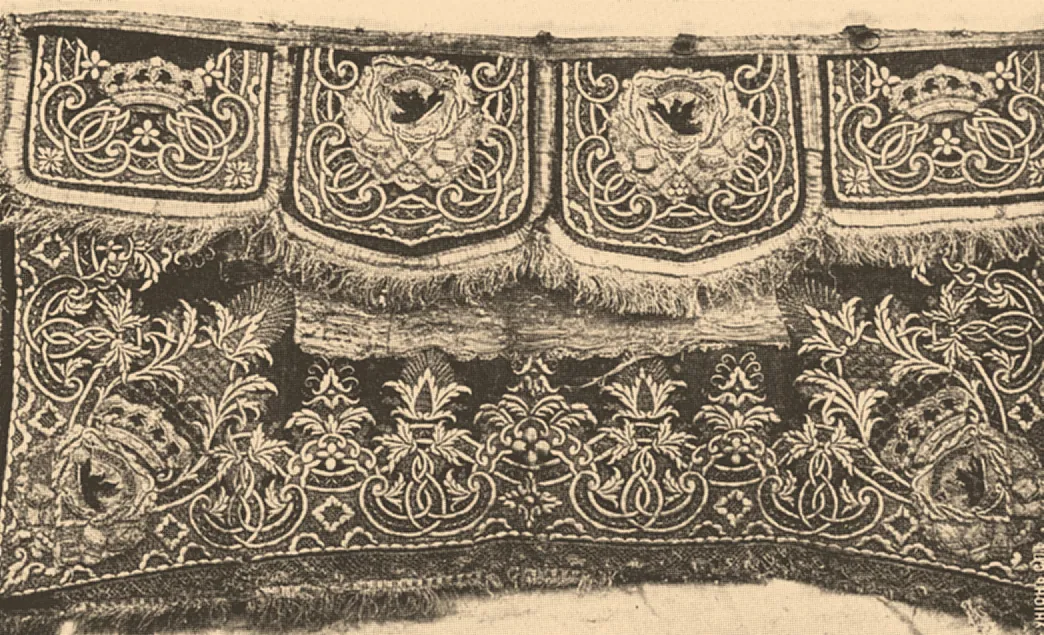
Olkieniki, today Valkininkai in southern Lithuania, is a small town on the Merkys river about 55 kilometres south of Vilnius. Its Jewish community grew with the town's trade in the eighteenth century. After an earlier synagogue burned, the congregation resolved in 1790 to build a new one, and the great wooden synagogue was completed between 1798 and 1801. Survivors compared it to a Chinese pagoda, with tiers of overhanging roofs over a hall built of massive pine beams, each about 60 centimetres thick and over 10 metres long. The interior was panelled in pale wood. The Torah ark had four panels with moving mechanisms showing the seasons, the zodiac and the festivals. The three-storey bimah stood on eight pillars and was crowned by an eagle with outstretched wings. The synagogue's most famous treasure was a Torah curtain embroidered in gold and silver with the words "Gloria et Patria". Tradition held that it was made from the saddlecloth of Napoleon, who passed through the town in 1812. The Russian Jewish encyclopedia of 1906–1913 illustrated the building, the curtain and the bimah. On 25 June 1941, three days after the German invasion, a Nazi German bomb set fire to the market, and the synagogue burned.
Where it stood for nearly 140 years
Historic: Olkieniki, near the market, Wilno province (interwar Poland). Present day: Valkininkai, Varėna District, Alytus County, Lithuania. Approximate: town centre.
Apri la mappa grande →La comunità ebraica
Jews settled in Olkieniki as the town developed into a local trading centre in the eighteenth century. In 1790 there were 273 Jews among about 949 inhabitants, and by 1897 the community had grown to about 1,126 of 2,619 people. That same year of 1790 the congregation met and demanded a new synagogue to replace one that had burned, and the great wooden synagogue went up by 1801. A smaller synagogue followed in 1880. The community's rabbis are remembered in its memorial book. Reb Shmuel, remembered as the last chief rabbi of Vilna, served as district rabbi, and Reb Aba Josef Treywash left for Vilna after a dispute over a question of kashrut. Reb Yakov Levin sat on the rabbinical seat for more than fifty years. Between the world wars Olkieniki belonged to Poland, in Wilno province, and on the eve of the war about 1,000 Jews lived there.
Architettura e design
The synagogue was a large log building of massive pine beams, each about 60 centimetres thick and more than 10 metres long. Its roofs rose in overhanging tiers, which reminded survivors of a Chinese pagoda and which the memorial book calls the typical synagogue style of the period. The engraving in the Brockhaus and Efron Jewish encyclopedia shows this tall stepped roof mass above plank walls and lower annexes. Inside, the walls were panelled in pale wood that, the memorial book says, never darkened. The Torah ark carried four decorative panels with moving mechanisms that showed the seasons, the signs of the zodiac and the festivals, calculated through the Jewish year 6006. At the centre stood a three-storey bimah on eight pillars, topped by a carved eagle with outstretched wings and a crown. The encyclopedia illustrated the bimah and ark as well as the building.
La vita nella sinagoga
The great synagogue was the pride of Olkieniki. Its best-known possession was the Torah curtain embroidered in gold and silver with the words "Gloria et Patria" and weighing more than three kilograms. Local tradition said that when Napoleon passed through the town on his way to Russia in 1812, he ordered a piece cut from the cloth under his saddle and gave it to the community. The townspeople refused to sell it, even when Baron Ginzburg offered a large sum. The curtain was illustrated in the Russian Jewish encyclopedia of 1906–1913 as a notable treasure. The memorial book also records the rabbis who led worship in the synagogue. Among them was Reb Yakov Levin, who arrived around 1874 and served for more than fifty years before settling in Jerusalem, where he died in 1927.
Distruzione
Nazi Germany invaded the Soviet-held Lithuanian territories on 22 June 1941. On 25 June 1941, Rosh Chodesh Tammuz, a Nazi German bomb struck a Soviet fuel tanker standing in the town's market. The fire that followed destroyed about a quarter of Olkieniki, including the great wooden synagogue and the house of study. The memorial book records that the synagogue was erased in this fire. Wikipedia's account of the town also states that the synagogues were burned in the first days of the German occupation of Lithuania. The Napoleon curtain and the carved ark and bimah were presumably lost with the building. Nothing of the synagogue survives.
Il destino della comunità
Olkieniki's Jews were murdered within three months of the German invasion. In September 1941 they were taken to Eišiškės (Eishishok), where the Jews of the surrounding towns had been concentrated. There, around 400 Jews from Olkieniki were shot by Rollkommando Hamann, the mobile killing squad of Joachim Hamann, with Lithuanian auxiliaries, together with the Jews of Eišiškės and other nearby towns. The memorial book says that up to 1,000 people from the shtetl perished at Eišiškės. Only five Jews from Olkieniki survived the war, four of them hidden by friendly Lithuanians. The community was never re-established, and its memory was preserved in the memorial book published by survivors and emigrants.
Il luogo oggi
Nothing of the synagogue survives in Valkininkai, now a small town in Varėna District, Alytus County, Lithuania. It stood in the town centre, which burned in a fire that began in the market in June 1941, but its exact plot has not been identified in the sources consulted for this entry. The building is known from the illustrations in the Brockhaus and Efron Jewish encyclopedia and from the descriptions in the Olkieniki memorial book. A modern CAD section drawing based on older paper sources also exists.
Nomi importanti
Yakov bar Shmaryahu Levin
c. 1845–1927Rabbi of OlkienikiReb Yakov bar Shmaryahu Levin came to Olkieniki around 1874 and, according to the town's memorial book, sat on its rabbinical seat for more than fifty years, leading worship in the great wooden synagogue. He was the community's longest-serving rabbi. In old age he settled in Jerusalem, where he died in 1927 at the age of 82, before the destruction of the synagogue and his community.
Biografia o fonte →Hai qualcosa da condividere?
Fotografie, documenti, storie di famiglia o ricordi di questa sinagoga e della sua comunità aiutano a mantenerne viva la storia.
Share a memory or thought
No comments yet. Be the first to add one.