
The story of Synagogue of Pezinok
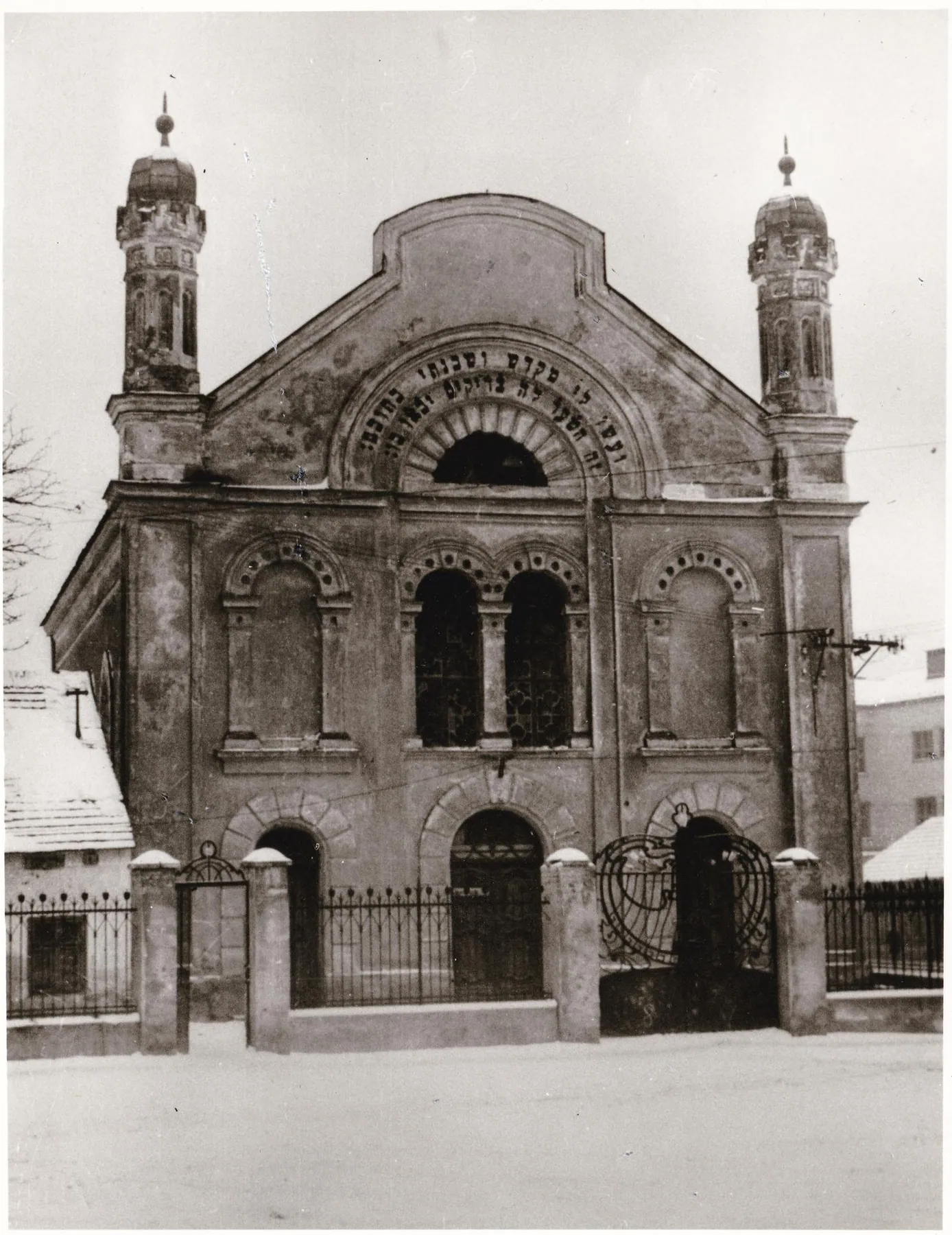
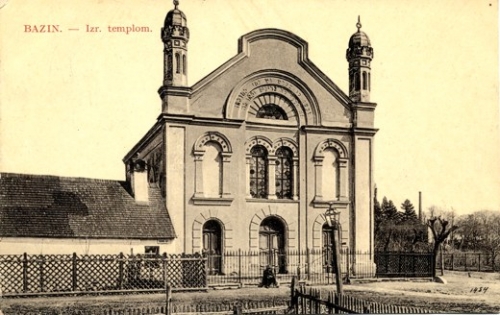
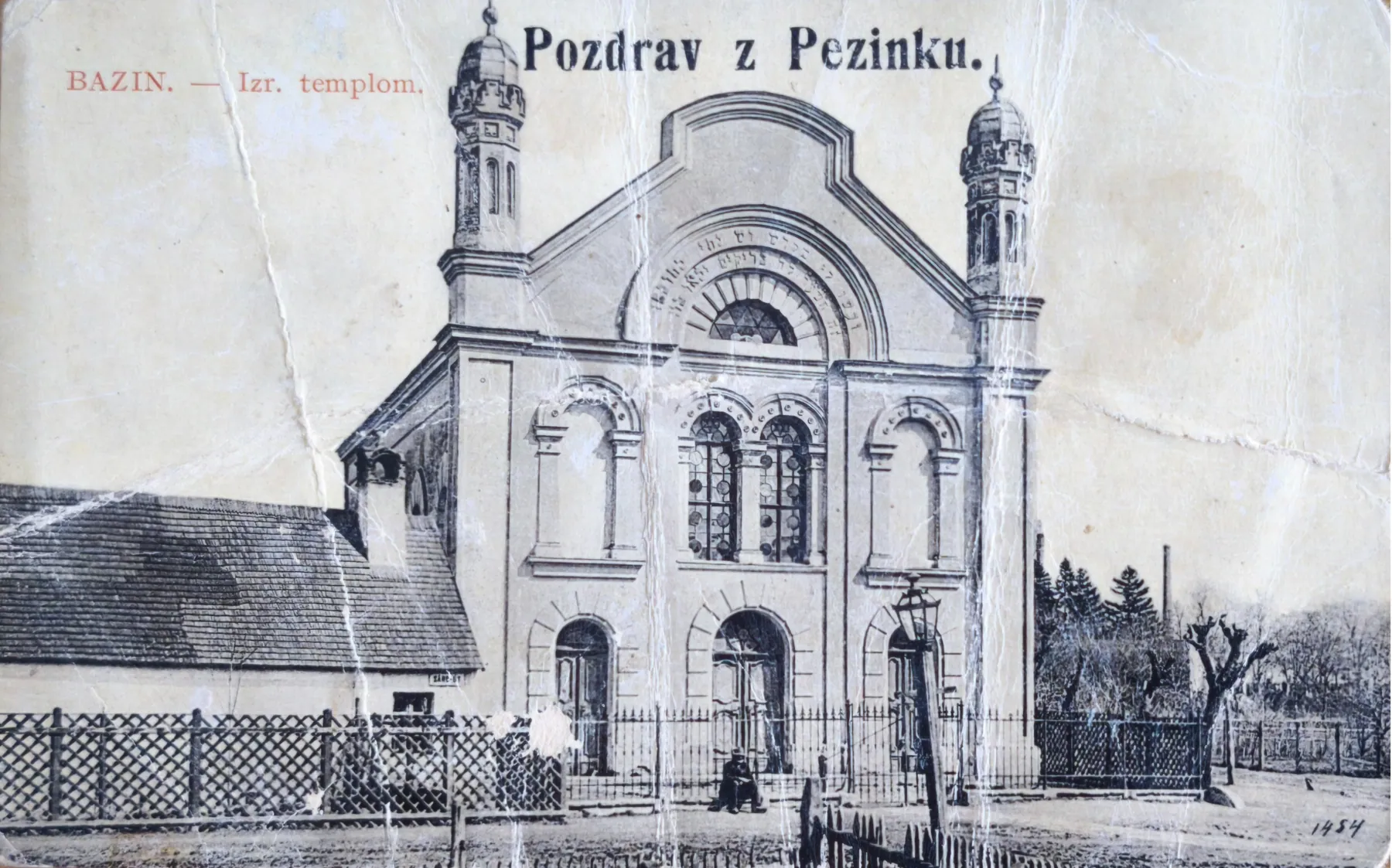
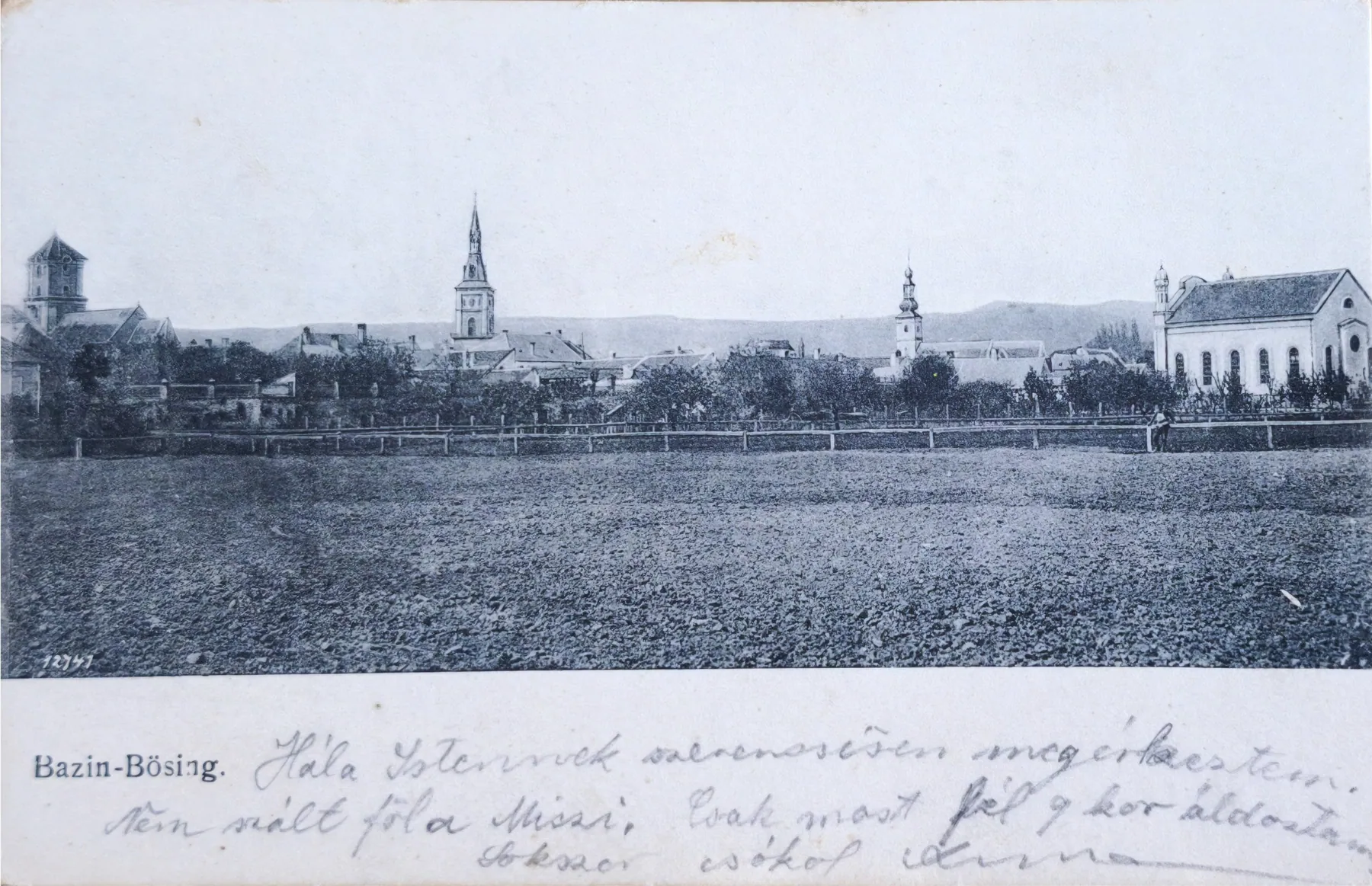
Pezinok, a wine town north-east of Bratislava, had a long and painful Jewish history: after a blood libel in 1529 some thirty Jews were burned and Jews were banned from the town proper until 1840, living instead on the Pálffy family's estate in Cajla. In 1867 the growing community asked for the medieval town gates to be pulled down so that their bricks could be used for a new synagogue. Built from 1869 and completed about 1872, just outside the former walls on today's Šancová ulica, it was a Moorish-Byzantine building of 25 by 14 metres with two decorative towers and rich stucco ornament, with Hebrew verses from the Psalms on its central arch. After the proclamation of the Slovak State in March 1939, the Hlinka Guard forced Jewish men into the synagogue to wreck it and destroy the holy books. The building was closed in 1943, the congregation having been deported in 1942. After the war it served as a warehouse, and under the Communists it was demolished in 1957–1958. A branch of the Slovak savings bank now stands on the site.
Where it stood for nearly 90 years
Historic: outside the former town walls, today Šancová ulica 2, Pezinok (Bazin / Bösing). Present day: Slovenská sporiteľňa building, Šancová 2, Pezinok, Slovakia. Approximate.
Open larger map →The Jewish community
Jews were permitted to live in Pezinok in 1450. In 1529 the counts of Pezinok, heavily indebted to Jews, launched a blood-libel accusation, and on 21 May 1529 some thirty Jewish men, women and children were burned at the stake; the reformer Andreas Osiander later denounced the libel. Jews were then barred from living in the town. From 1609 the Pálffy counts allowed Jews to settle on their estate and in Cajla, where they built a synagogue. The ban on living in Pezinok itself lasted until 1840. The community grew from 88 in 1781 to 540 in 1857; it opened a school in 1843, taken over by the community in 1856. After the Hungarian Jewish Congress of 1868 the community chose the Orthodox path. In 1867 it petitioned the town to demolish the town gates and use their bricks to build a new synagogue.
Architecture and design
The synagogue stood outside the former town walls, at today's Šancová ulica 2, and was built partly with material from the demolished medieval town gates. It measured about 25 by 14 metres. According to the town's own heritage guide, it imitated Oriental styles, meant to emphasise the Eastern origins of the Jewish religion and people, and was built in a Moorish-Byzantine manner, decorated with two small towers with rich stucco ornament. Postcards and photographs show a symmetrical front with a large gable framed by two slender octagonal turrets with small domes, paired round-arched windows and three arched entrances behind iron railings. The catalogue notes that Hebrew verses from the Psalms were inscribed on the central arch. No plans or interior photographs were found.
Life inside the synagogue
The synagogue was the religious centre of an Orthodox community of about 320–420 people between 1880 and 1930. Between the wars Jewish communal life in Pezinok flourished: the congregation maintained a range of social, philanthropic and religious institutions, and the Zionist movement and the Jewish Party were active in the town, although at times the congregation struggled to pay its employees. In 1918, at the end of the First World War, antisemitic riots and looting hit the town and the Jews were protected by Czechoslovak legionnaires. The astronomer Maurice Loewy, later president of the French Academy of Sciences, was born in Pezinok.
Destruction
After Slovakia declared independence on 14 March 1939, German SS units entered Pezinok. On 18 May 1939 the Hlinka Guard, the paramilitary force of the ruling Slovak People's Party, assembled Jewish men in the synagogue and forced them to wreck it and destroy the holy books. The Jews were deported in 1942 and the synagogue was closed in 1943. After the war the building was used as a warehouse. Under the Communists it was demolished in 1957–1958, and a building for the state savings bank, Slovenská sporiteľňa, was later put up on the site.
The community’s fate
Under the Slovak State, the Jews of Pezinok were attacked in the streets and in their homes and subjected to discriminatory laws; their property was taken by non-Jews. In 1941, 175 Jews remained. In the summer of 1942 they were deported to Auschwitz, where most were murdered. German troops blew up the old Jewish cemetery, whose broken gravestones were used as gravel for road building; only a lapidarium remains. Few Pezinok Jews returned: 45 lived in the town in 1947. Sixteen local Jews took part in the anti-Nazi resistance. After 1948–1949 most of the survivors emigrated, largely to Israel.
The site today
Nothing of the synagogue survives. A branch of Slovenská sporiteľňa (Slovak savings bank) stands on the site at Šancová ulica 2, just outside the line of the former town walls. A memorial plaque on the site records the synagogue.
Do you have something to contribute?
Photographs, documents, family stories or memories of this synagogue and its community help keep its history alive.
Share a memory or thought
No comments yet. Be the first to add one.