
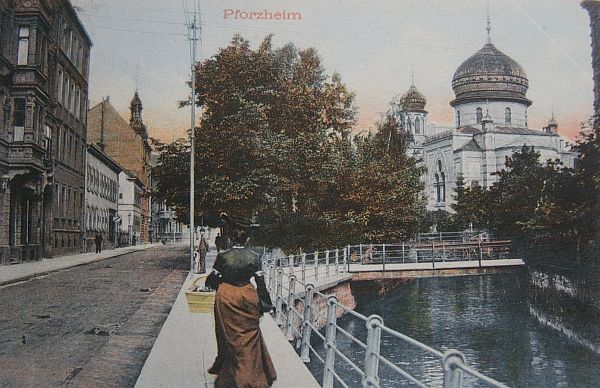
Historia Synagogue of Pforzheim
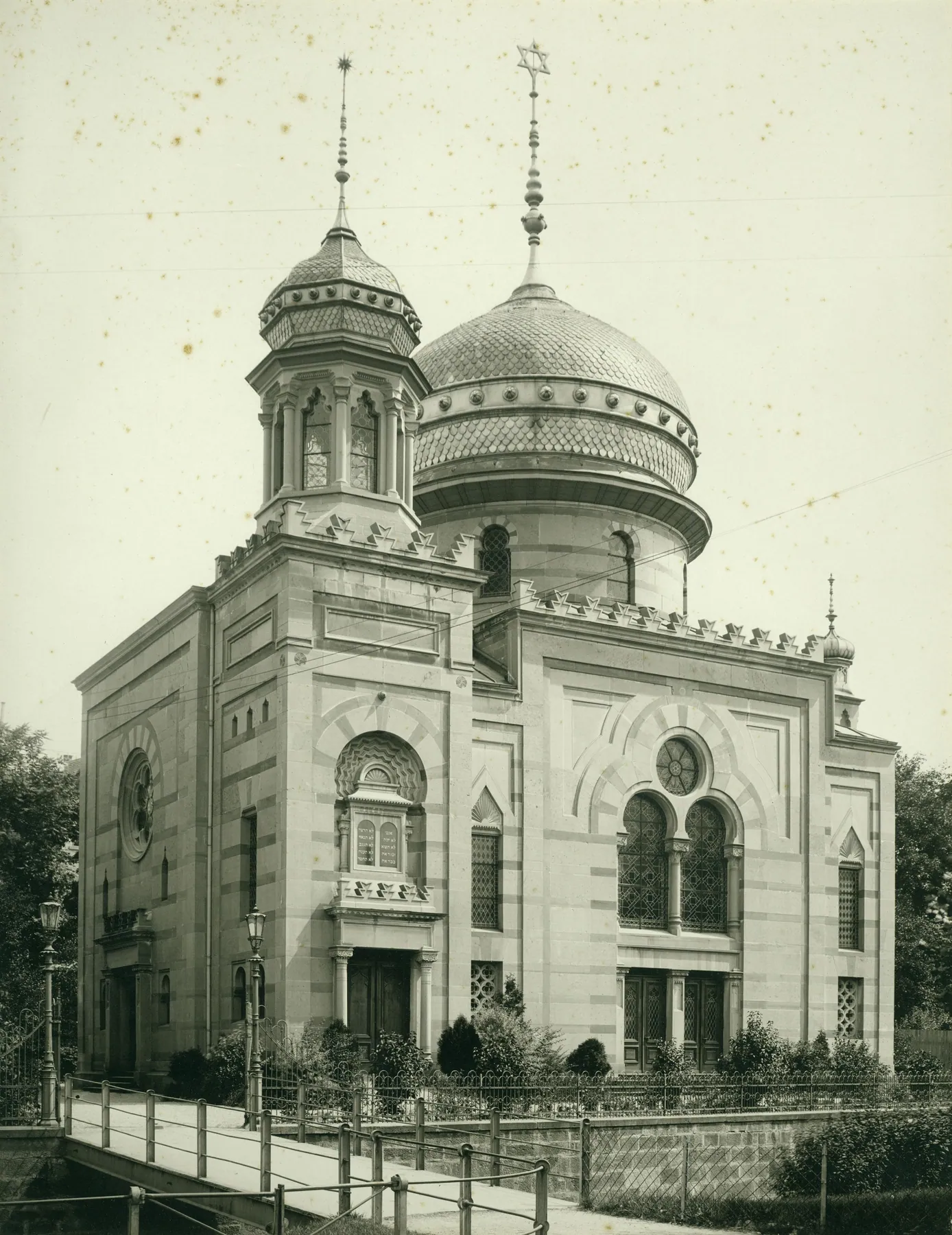
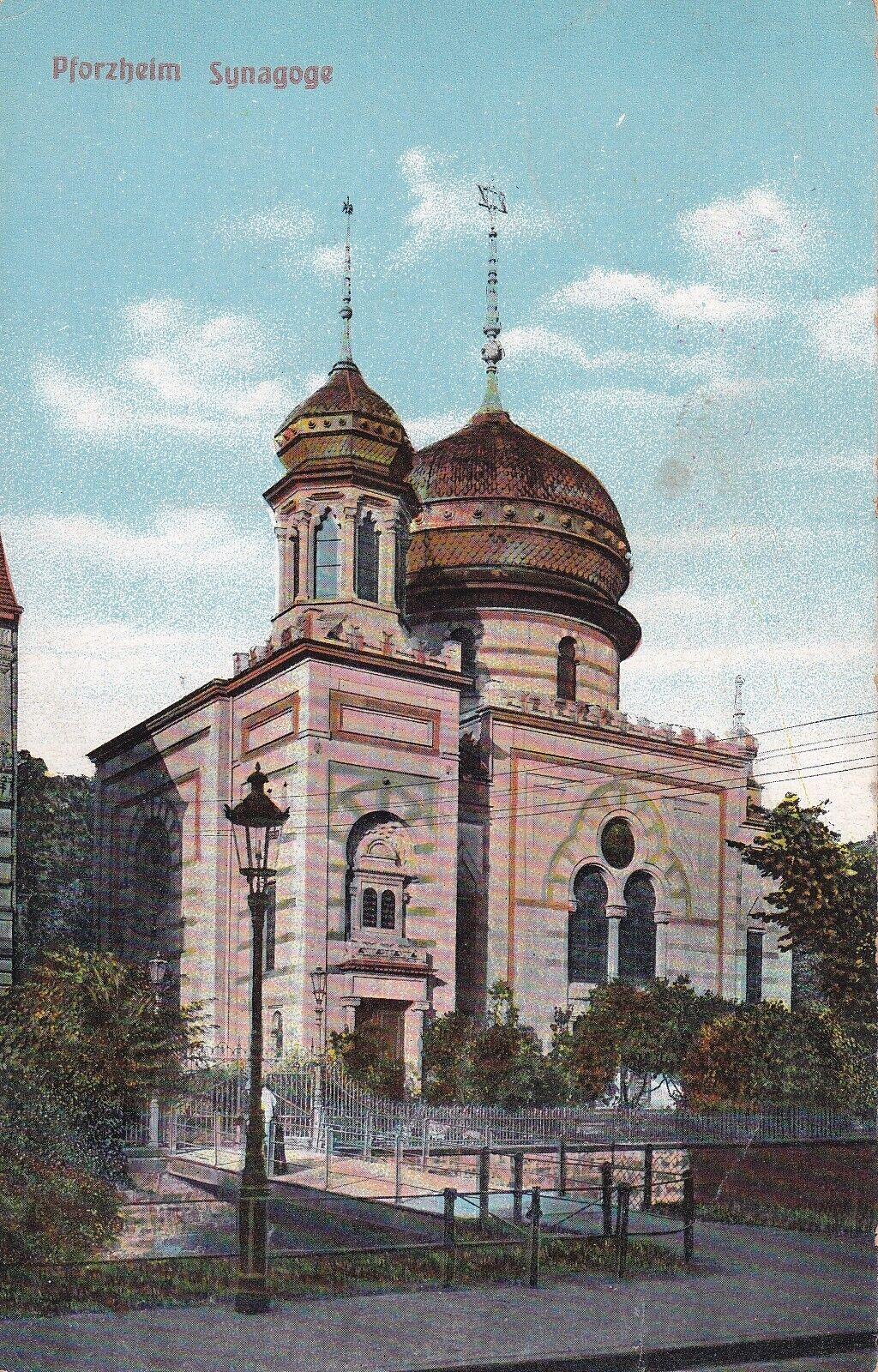
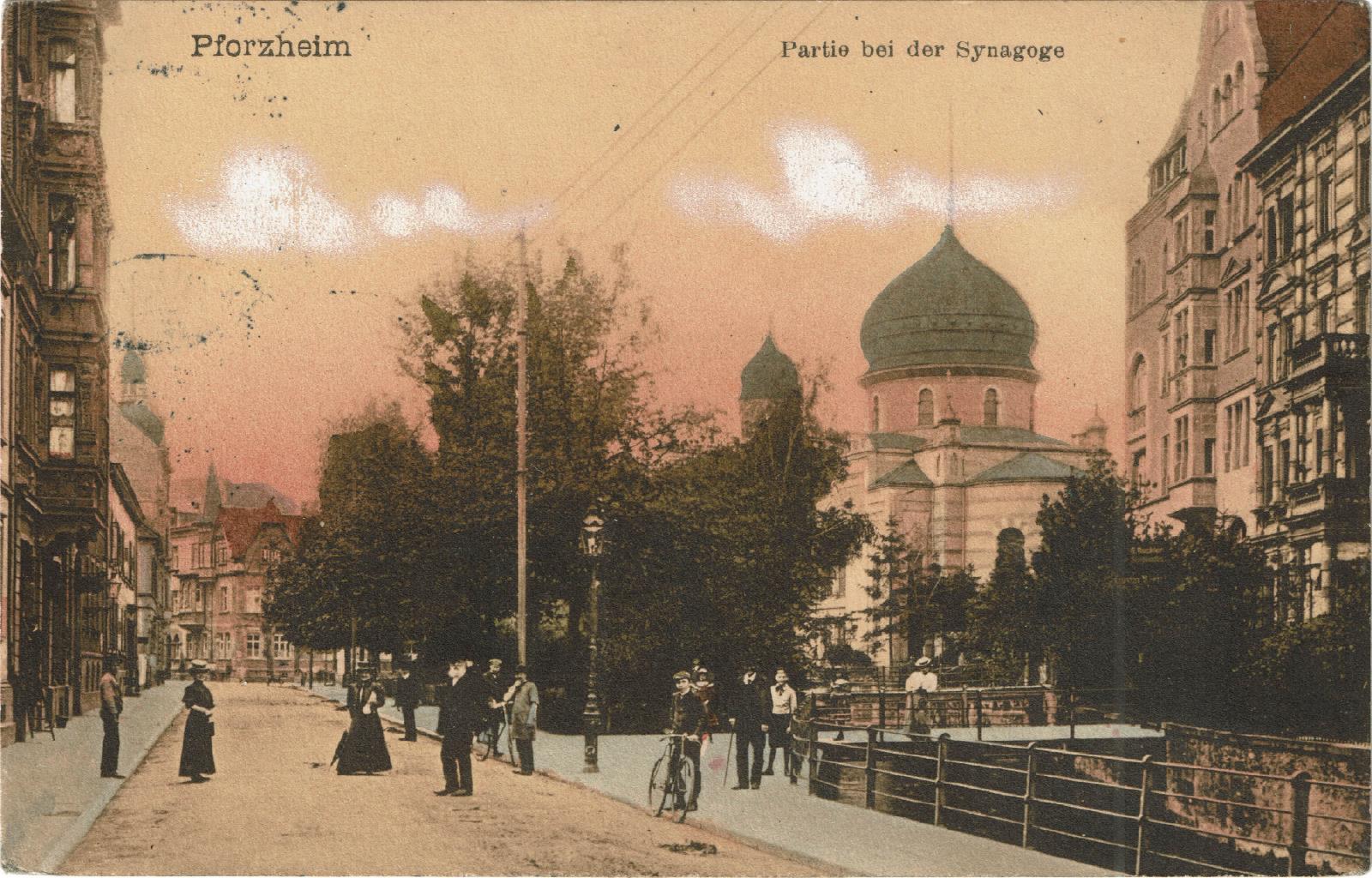
Jews resettled in Pforzheim in the early eighteenth century, after the medieval expulsions. A prayer room is recorded in 1794, and from 1813 the community worshipped in a converted tithe barn on Metzgerstraße. As Pforzheim industrialised the community grew, and under cantor Elias Bloch the growing congregation planned a representative new synagogue. In 1889 it bought a plot on Zerrennerstraße; Ludwig Levy of Karlsruhe drew the plans. The foundation stone was laid on 3 June 1891 and the building was consecrated on 27 December 1892, when the community had just under 500 members. The domed, Moorish-style synagogue stood beside the Enz canal and appeared on many picture postcards of the town. Windows were smashed in an antisemitic attack in December 1922, and in 1930 the richly painted interior was renovated. On the morning of 10 November 1938 Nazis desecrated the synagogue and badly damaged it with an explosive device. The community was then made to pull the building down at its own cost, and the plot was sold to a manufacturer.
Where it stood for 46 years
Historic: Zerrennerstraße 26/28, Pforzheim. Present day: Platz der Synagoge, corner of Goethestraße and Zerrennerstraße, Pforzheim, Germany.
Otwórz większą mapę →Społeczność żydowska
After the medieval expulsion of the Jews, a Jewish community formed again in Pforzheim in the early eighteenth century. In 1794 a prayer room is mentioned in the Hasenmayer house on Barfüßergasse. From 1813 the community's roughly 95 members met in a first synagogue at Metzgerstraße 27, created by rebuilding an old tithe barn; by 1832 there was a paid cantor and a Jewish school in the building. The dead were first buried at Untergrombach, and from 1846 in the community's own cemetery. Pforzheim's growth as an industrial town brought steady growth to the community: 287 Jews in 1875, 536 in 1900 and 886 in 1925. Around 1927 it reached its peak of nearly 1,000 members, about one per cent of the town's population.
Architektura i projekt
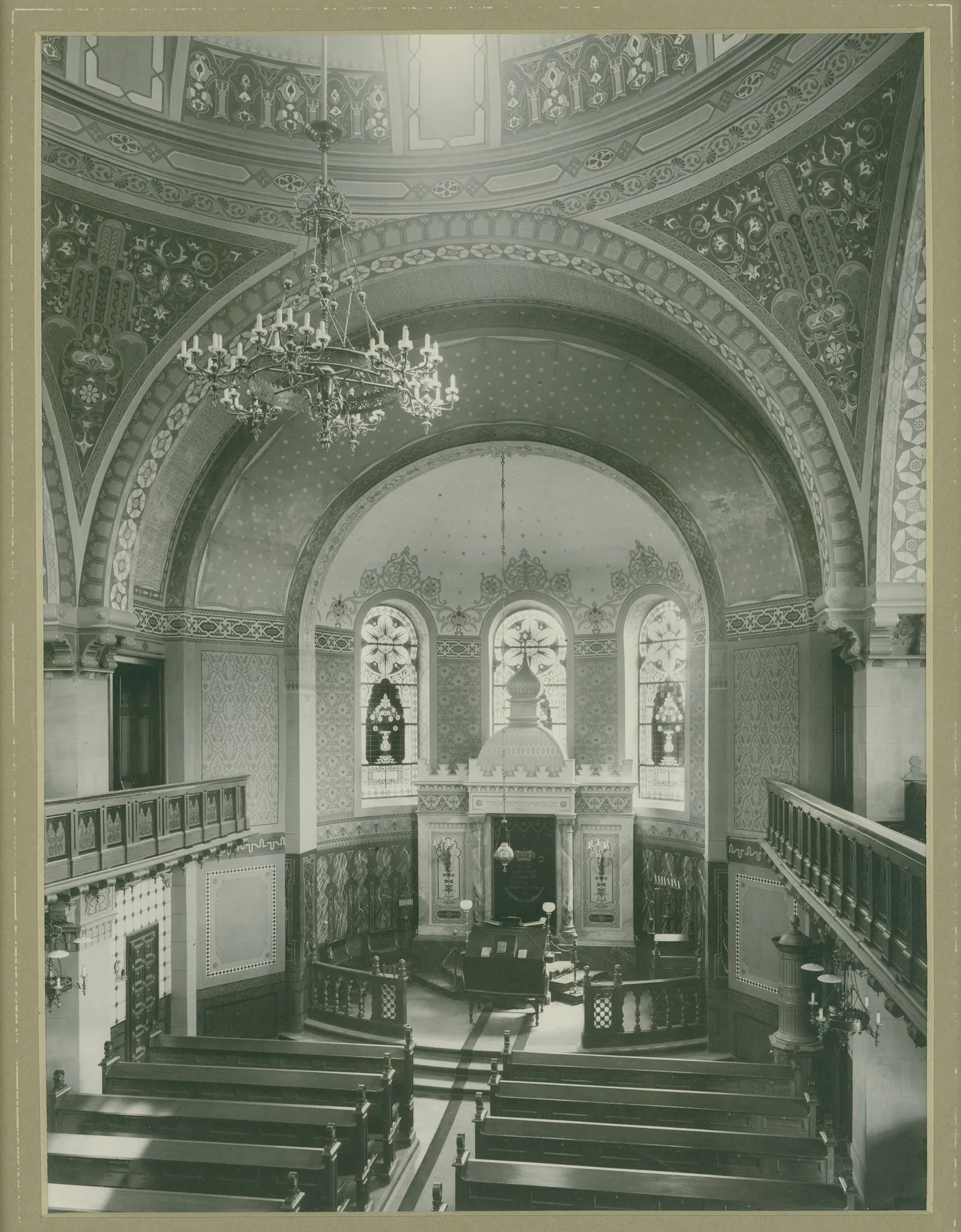
Ludwig Levy (1854–1907), a professor at the Baugewerkschule in Karlsruhe and one of the busiest synagogue architects of his day, designed the building in the Moorish style. It was oriented west–east, with a semicircular apse at the east end housing the Torah ark. A large, squat drum dome crowned the building. The west front, with the entrance wing, carried turret-like tops on its side sections, a Moorish cornice and horseshoe arches, but it faced only a small side lane. Levy therefore made the south side the show front, with a large trefoil window framed by two-coloured horseshoe voussoirs and projecting sections that gave the building a deliberate asymmetry. Inside, an organ gallery stood at the west end, and the walls and ceiling were covered in ornament resembling oriental carpets. A community house with offices, meeting rooms, classrooms and the caretaker's flat was built alongside. The whole project cost about 200,000 marks.
Życie w synagodze
The consecration on 27 December 1892 was a civic occasion. The festival sermon was given by the Karlsruhe city rabbi Dr Adolf Schwarz, and representatives of the grand ducal ministry of religion, the Jewish Oberrat of Baden, the town and the Christian churches attended. The new building had an organ gallery at its west end, a feature of liberal worship in Baden at the time. The adjoining community house held the congregation's offices, meeting and teaching rooms. Even before 1933 the building was a target: in December 1922 several windows were smashed, and the synagogue council offered a reward of 10,000 marks for the capture of those responsible. In 1930 the synagogue was renovated, and the lavish original wall paintings were painted over with more restrained ornament.
Zniszczenie
During the November pogrom, on the morning of 10 November 1938, Nazis broke into the synagogue on Zerrennerstraße, desecrated it and badly damaged it with an explosive charge. The building was not set on fire, perhaps because of the houses and factories around it, but the blast left it a ruin. The sources consulted do not name the individual perpetrators or say whether SA or SS men carried out the attack. The Jewish community was then forced to demolish the synagogue at its own expense, and the plot was afterwards sold to a manufacturer. The earlier synagogue on Metzgerstraße had already been sold to fund the 1892 building, so nothing of Pforzheim's purpose-built synagogues remained. The Jewish cemetery, already vandalised in 1926, survived.
Los społeczności
Anti-Jewish measures began in Pforzheim immediately after the Nazi takeover in 1933, when almost 20 Polish-Jewish families were forced to leave the town. The community numbered 770 in 1933 and only about 200 in 1939; those who remained were forced into so-called Jews' houses. On 22 October 1940 about 200 Pforzheim Jews were deported, with almost all the Jews of Baden, to the Gurs internment camp in southern France; only about one in four survived. Around 40 Jews in mixed marriages stayed behind as forced labourers, and a last transport left for Theresienstadt as late as February 1945. At least 200 Jews from Pforzheim were murdered in the Holocaust, most of them in the camps of the East.
Miejsce dzisiaj
Nothing of the synagogue survives. The site on Zerrennerstraße, beside the Enz canal, was sold after the demolition and later built over. In 1967 a memorial stone to the synagogue was set up on Zerrennerstraße, and in 1989 the corner of Goethestraße and Zerrennerstraße was renamed Platz der Synagoge (Synagogue Square). A new Jewish community was re-founded in Pforzheim after the war and today worships in its own synagogue elsewhere in the town. The memorial stone and square name are today the only public reminders of the building that stood here for 46 years.
Ważne postacie
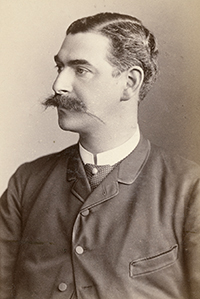
Ludwig Levy
1854–1907ArchitectLudwig Levy, a professor at the Baugewerkschule in Karlsruhe, designed the Pforzheim synagogue in the Moorish style, with a squat drum dome and an asymmetrical south front built around a large trefoil window. It was one of a series of synagogues he designed across south-west Germany, all of which were destroyed after 1938.
Biografia lub źródło →Elias Bloch
19th centuryCantorElias Bloch was cantor of the Pforzheim community in the late nineteenth century, when the congregation outgrew its converted barn on Metzgerstraße. Under his leadership the community planned a new, representative synagogue, bought the plot on Zerrennerstraße in 1889 and commissioned Ludwig Levy, whose building was consecrated in December 1892.
Biografia lub źródło →Czy masz coś do przekazania?
Zdjęcia, dokumenty, historie rodzinne lub wspomnienia o tej synagodze i jej społeczności pomagają zachować jej historię.
Share a memory or thought
No comments yet. Be the first to add one.