
La storia di Philippopolis Synagogue, Plovdiv
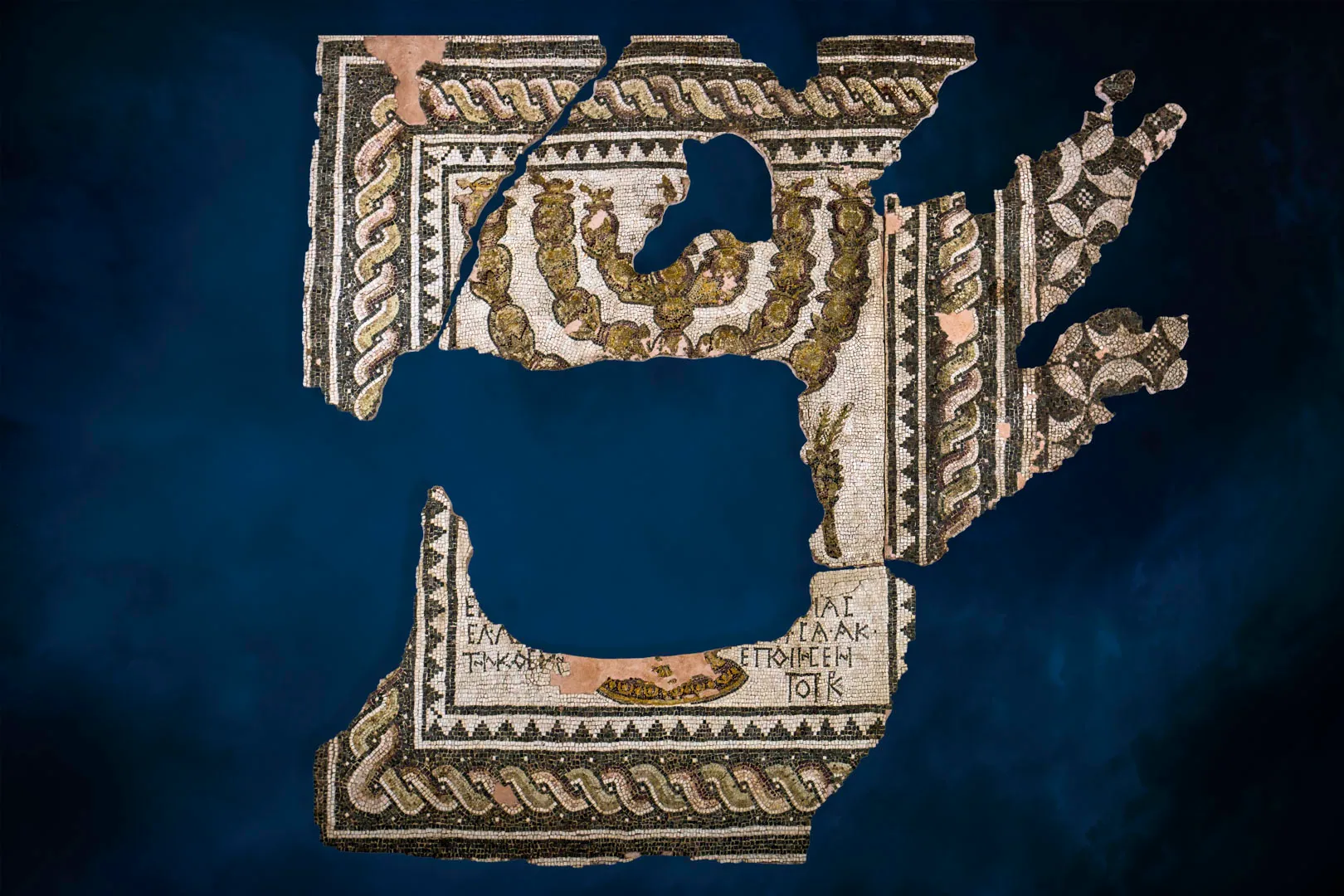
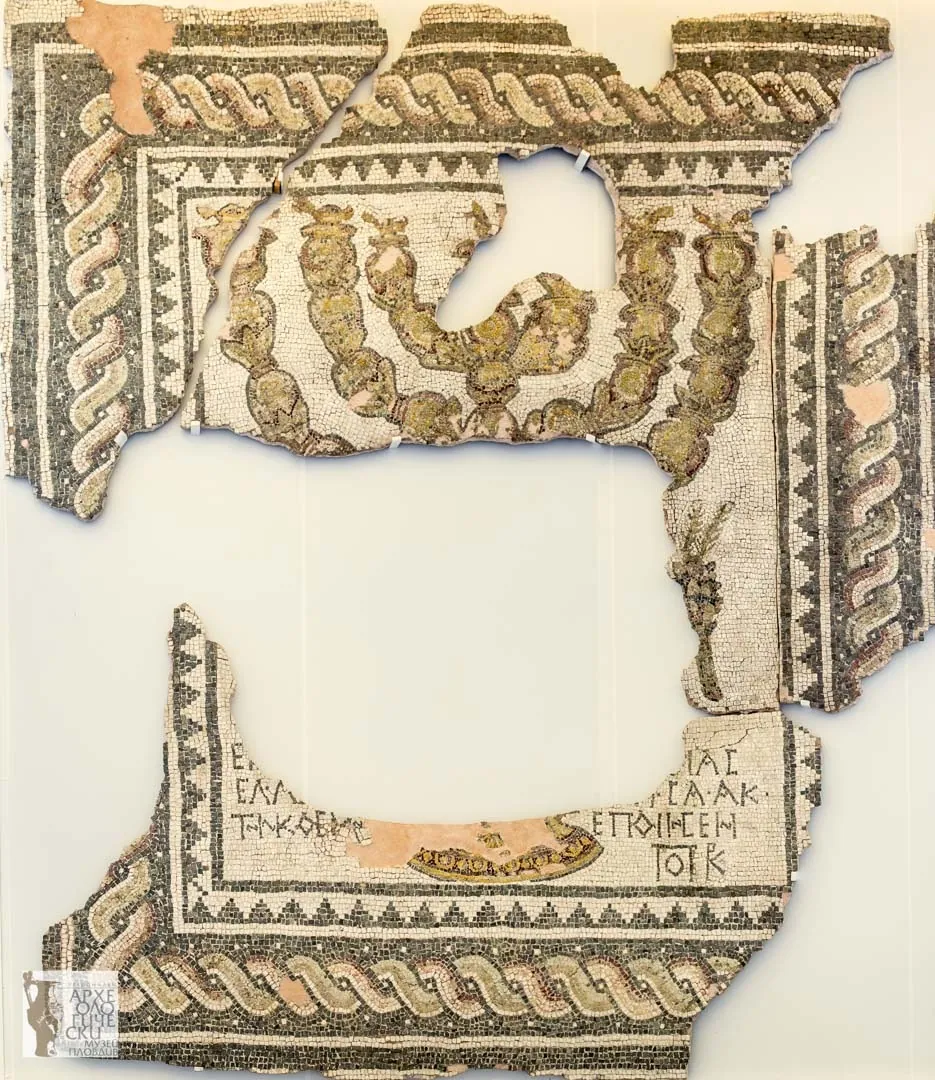
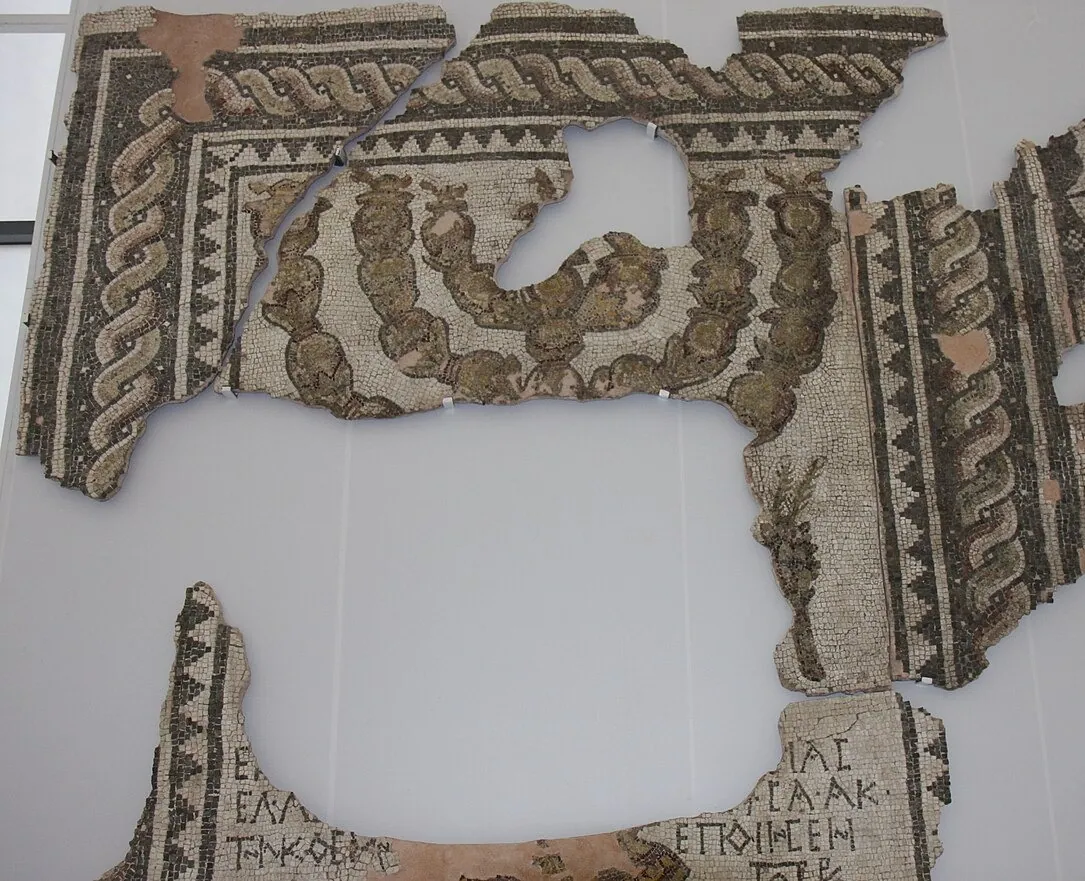
Philippopolis, the Roman and late antique city beneath modern Plovdiv, lay on the main road between Constantinople and central Europe. Its synagogue is the only ancient one so far identified in Bulgaria. It came to light in 1981 and 1982, when the archaeologist Elena Kesyakova led rescue excavations ahead of the construction of apartment buildings on what was then Lilyana Dimitrova Boulevard, now Maria Luiza Boulevard. Only the foundations and parts of the floors survived, but two mosaic pavements laid one over the other showed what the building had been: the lower one carried a seven-branched menorah, a palm branch and Greek inscriptions naming the donors.
The accounts based on the excavation date the first building to the early third century CE, under the Severan emperors. They say it was badly damaged when the Goths took the city about 250, rebuilt to the same plan, destroyed again at the beginning of the fifth century during the persecution of Jews under the emperor Arcadius, then restored and enlarged with a plainer floor that has no Jewish symbols. It was finally abandoned and destroyed at the end of the sixth century; no source read says by whom. A study of the mosaics published in 2016 dates the menorah floor somewhat later, to the second half of the third or the beginning of the fourth century. The mosaic was lifted and restored, and since 2016 it has been on permanent display in the Regional Archaeological Museum in Plovdiv.
Where it stood
Ancient: an insula inside the walls of Philippopolis. Today: under an apartment building on Maria Luiza Boulevard (formerly Lilyana Dimitrova Boulevard), central Plovdiv, in the area of the Small Basilica; house number not established (approximate).
Apri la mappa grande →La comunità ebraica
Nothing is known of this community from written records; what can be said comes from the building and its floor. Philippopolis was a large, cosmopolitan city on the road linking Constantinople with central Europe, and the excavated synagogue shows that by the third century CE it had a Jewish congregation able to pay for a basilican hall with fine mosaics. Reports on the find speak of a large Jewish community in the ancient city, though no source read gives a figure. The donor inscriptions are in Greek. One donor is recorded with two names, Cosmianus and the Hebrew name Joseph, and reports of the find name another as Isaac. The synagogue stood in an insula, a residential block inside the walled city, near ancient baths and a basilica; Jewish Heritage Europe describes the block as lower-status housing. No names of officials, teachers or other members are known, and the sources read mention no Jewish burials or other Jewish inscriptions from Philippopolis.
Architettura e design
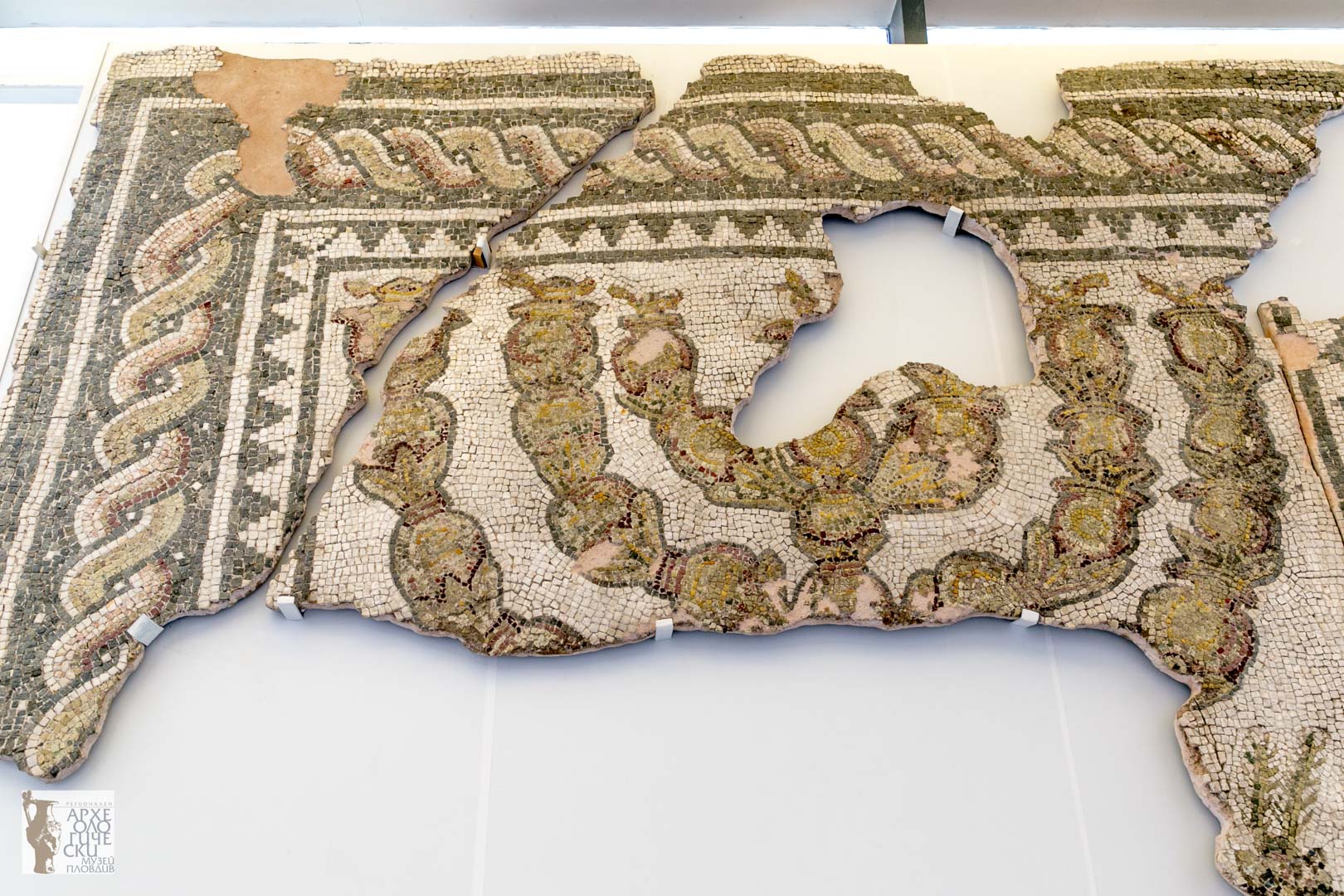
The synagogue was a basilica-like hall with a central nave and two aisles. Its front faced south, towards Jerusalem, and a large forecourt lay on the north side. The hall was about 13.5 metres long and 14.2 metres wide in all: the nave measured 9 metres across and each aisle 2.6 metres. With its court the complex took up the whole width of the insula and about 20 metres of its length. Only the substructure and small parts of the upper walls survived, so nothing is known of the elevation, the roof, the entrances or any Torah shrine. The nave floor was laid with three mosaic panels, each about 3 to 3.8 metres square. The middle panel showed a large seven-branched menorah, its branches built up of rounded segments in yellow and brown, with a palm branch (lulav) at its right and a Greek donor inscription below, inside borders of twisted guilloche and stepped triangles; the lower part of the menorah is lost. The side panels held geometric patterns. A second, coarser mosaic of the fifth or sixth century, with geometric and floral patterns and no Jewish symbols, was laid over this floor when the building was restored and enlarged.
La vita nella sinagoga
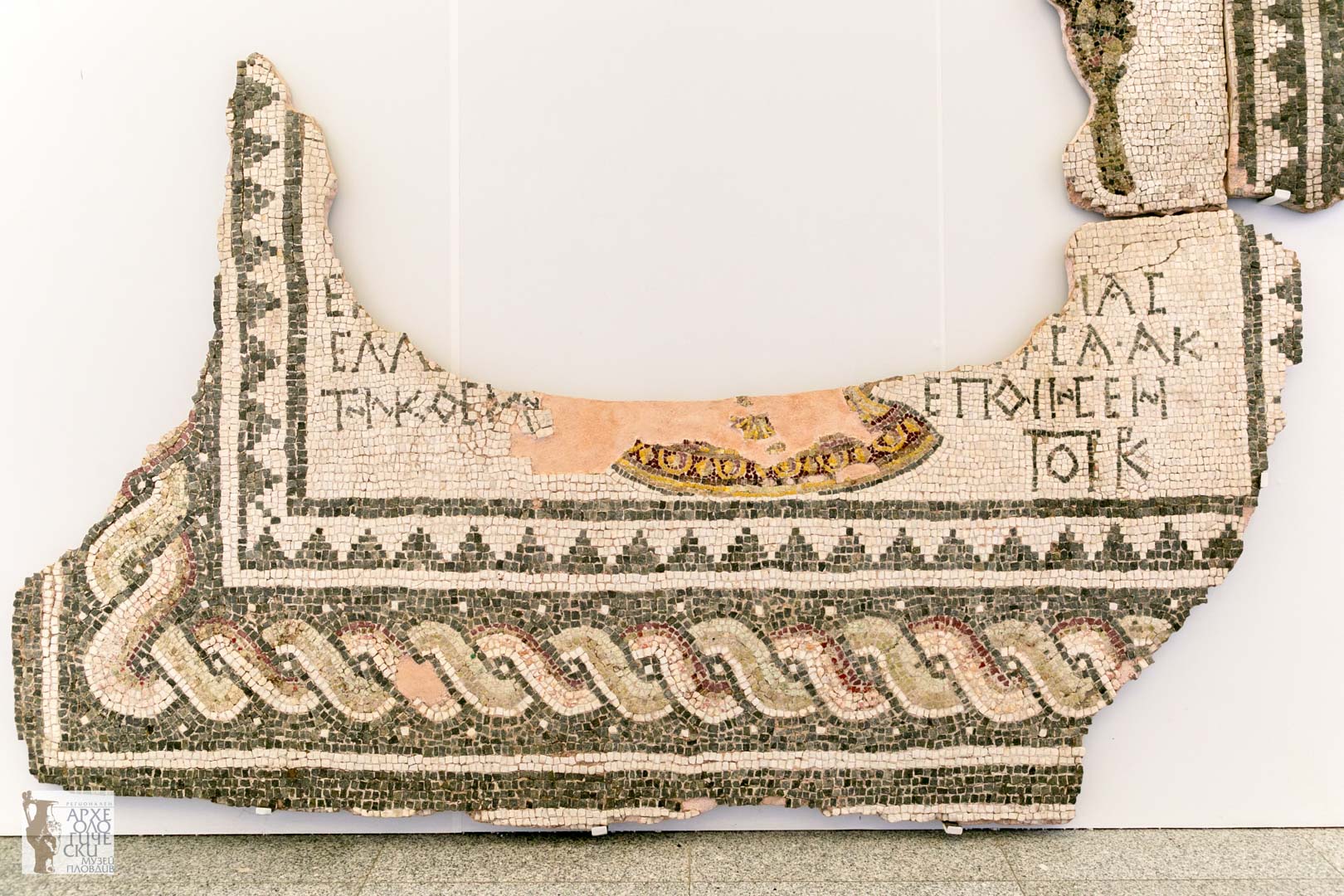
No text describes worship in this building, and no names of its officers survive. The floor gives the few hints there are. The hall was turned south, the direction of Jerusalem, and in the middle of its nave lay a menorah with a lulav, the palm branch carried at the festival of Sukkot, beside it. On either side of the menorah's base a Greek inscription of four lines recorded the gift of the floor. Jewish Heritage Europe renders it roughly as: from the resources and through the foresight of Cosmianus, also called Joseph, who decorated the building; a blessing on all. Other reports name the donors as Isaac and Joseph; on the surviving right-hand half the word ΕΠΟΙΗΣΕΝ, 'made', can still be read. Greek, not Hebrew, was thus the language in which the congregation recorded its benefactors. The forecourt on the north side belonged to the synagogue, but its fittings and use are not described in the sources read. When the building was restored in the fifth century the new floor carried only geometric and floral ornament.
Distruzione
The building was wrecked three times, according to the accounts that go back to the excavator, Elena Kesyakova. It was almost destroyed when the Goths captured Philippopolis about 250 CE, and was rebuilt to its original plan. It was destroyed a second time at the beginning of the fifth century, which these accounts put down to the persecution of Jews in the Christian Roman Empire under the emperor Arcadius (395-408). No inscription or ancient text is cited for this event, and one account offers an alternative: that the damage was done when the Huns took and ravaged the city in 441-442. The synagogue was then restored and enlarged, with a new floor that has no Jewish symbols. It was finally abandoned and destroyed at the end of the sixth century. None of the sources read says who or what brought about that final end, and no evidence of a fire, an earthquake or an attack is cited for it. The remains lay buried until 1981. When the rescue excavation ended, construction of the apartment building that had led to the discovery went on over the site.
Il destino della comunità
What became of the Jews of Philippopolis after their synagogue went out of use is unknown. The second floor, laid in the fifth century, carries no menorah or other Jewish symbol; the sources read do not explain why. The building was nevertheless restored and enlarged at that time, so a congregation with some means was evidently still there. One account recalls that the emperor Theodosius I had ordered the governor of Moesia not to persecute Jews or demolish their synagogues, and that the first destruction of the Philippopolis synagogue came under his sons Arcadius and Honorius. After the end of the sixth century, when the building was abandoned and destroyed, the sources read are silent. They give no numbers, no names beyond the donors in the mosaic, and no account of flight, conversion or expulsion. A survey of Jewish history in Bulgaria says there is little information on Jews under the First Bulgarian Empire and lists Plovdiv among the cities that had a Jewish quarter under the Second Bulgarian Empire, centuries later; no source read links those Jews with the congregation of the ancient synagogue.
Il luogo oggi
The site lies under an apartment building on Maria Luiza Boulevard (formerly Lilyana Dimitrova Boulevard) in central Plovdiv, in the area of the Small Basilica. The remains were found in 1981 during building work; when the rescue excavation ended, construction went on, and nothing of the synagogue can be seen at the spot today. The central panel of the first mosaic floor, with the menorah and the donor inscription, was lifted, but it was fully restored and put on show only in 2016, thirty-five years after its discovery. It now hangs on a wall in the Regional Archaeological Museum at 1 Saedinenie Square, Plovdiv. No source read mentions a marker at the original site.
Nomi importanti
Cosmianus, also called Joseph
3rd-4th century CEDonor of the mosaic floorCosmianus, who also bore the Hebrew name Joseph, is named in the Greek inscription set into the central mosaic panel of the synagogue, beside the base of the menorah. The inscription, as translated by Jewish Heritage Europe, credits his resources and foresight with the decoration of the building and ends with a blessing on all. He is known only from this inscription; nothing else about his life, family or standing in Philippopolis is recorded in the sources read.
Biografia o fonte →Hai qualcosa da condividere?
Fotografie, documenti, storie di famiglia o ricordi di questa sinagoga e della sua comunità aiutano a mantenerne viva la storia.
- Synagogue of Philippopolis
- Mosaics in Plovdiv Regional Archaeological Museum
- Bulgaria: Heritage & Heritage Sites (Plovdiv, ancient synagogue)
- Ancient Menorah Mosaic
- Antiquity Synagogue of Philipopolis, Plovdiv, Bulgaria
- Newly restored floor mosaics from Antiquity synagogue in Bulgaria's Plovdiv unveiled for the first time
- Jewish Archaeological Monuments & History of Jews in Bulgaria (till 20th Century)
- File:Synagogue2.jpg
- Map point 42.14528, 24.75528 (Maria Luiza Boulevard area, Plovdiv)
Share a memory or thought
No comments yet. Be the first to add one.