
История Rabbi's Synagogue, Ploiești
Ploiești, the main town of Prahova county in Wallachia, had Jewish residents from the second half of the seventeenth century, and its first synagogue, built early in the eighteenth century, was later destroyed. The Encyclopaedia of Jewish Communities (Pinkas Hakehillot) lists the Synagogue of the Rabbi as the next building: it was put up in 1780 and renovated in 1891, and beside it stood a jail for Jews who broke the community's rules. In 1820 the Great Synagogue was built next to it, first in wood and then rebuilt in stone in 1840. Later came the Itzeles Synagogue (1843), the Heichal Yisrael (1882), a Sephardic synagogue of 1807 known as the Synagogue of the Tradesmen, and the Heichal Hasephardim, completed in 1895 and dedicated in 1899.
In November 1940 the Iron Guard used an earthquake of a few days before as a pretext to declare several Jewish buildings unsafe. On 17 November its men destroyed the main sanctuary, the Rabbi's Synagogue, the Heichal Sephardi and the Luca Moise School, forcing Jewish labour units to do the work. The Encyclopaedia Judaica speaks of three synagogues destroyed, which indicates that the main sanctuary and the Rabbi's Synagogue were two separate buildings. No photograph or plan of the Rabbi's Synagogue has been found.
Where it stood for 160 years
Historic: Ploiești, Prahova county, beside the Great Synagogue and the community jail; street unknown. Today: unknown; placeholder pin at the centre of Ploiești (approximate).
Открыть большую карту →Еврейская община
According to Pinkas Hakehillot, Jews settled in Ploiești in the second half of the seventeenth century and were organised as a Jewish guild until 1840, when a formal community was founded. Sephardic Jews from the Balkans arrived in 1806; in 1830 they asked for their own community and burial society but were allowed only their own ritual washing of the dead, so Ashkenazim and Sephardim shared one community and one cemetery, and the community's presidency rotated between them. The community grew from 280 people in 1831 to 2,290 in 1894 and 3,843 in 1930, and numbered 3,596, or 3.3 percent of the town, in 1941. Its rabbis included members of the Brezis family, who served for generations; Yehuda Aryeh Brezis until his death in 1908, Tzvi Yosef Chaim Brezis from 1911 to 1922, and Dr. Menachem Safran from 1939. Zionism had strong support: the merchant Baruch Kahana made the first and largest donation to the Jewish National Fund in 1913. The community ran the Luca Moise boys' school and a girls' school.
Архитектура и дизайн
Almost nothing is known about the building. Pinkas Hakehillot gives only its date, 1780, and a renovation in 1891, and says that a community jail for Jews who violated communal rules stood next to it and that the Great Synagogue was built beside it in 1820. The two synagogues therefore stood side by side, but no street is named. Its name suggests that it served as the seat of the town's rabbi, but the source does not say so directly. The materials, the plan, the size, the seating capacity, the style and the name of any builder are unknown. Pinkas Hakehillot reproduces photographs of the Sephardic synagogue, the Luca Moise School and the girls' school, but none of the Rabbi's Synagogue, and no other image of it was found.
Жизнь в синагоге
No account of services in the Rabbi's Synagogue itself has been found. The community jail next door held Jews who had broken the community's own rules. The town's rabbis in the building's lifetime included David Moidel, who later became chief rabbi in Bucharest, and the Brezis family. Yehuda Aryeh Brezis served Ploiești until his death in 1908, and his successor Tzvi Yosef Chaim Brezis, rabbi from 1911 to 1922, also led the Zionist Organization's office in Romania and the Jewish National Fund there. Dr. Menachem Safran became rabbi in 1939, a year before the destruction. In the interwar years Rabbi David Friedman of the Ruzhin Hasidic dynasty kept a separate prayer house in his own home. Which of these rabbis prayed or preached in this particular building is not stated in the sources read.
Разрушение
On 10 November 1940 a strong earthquake struck the region. A week later, on 17 November 1940, the men of the Iron Guard (the Legionnaires) destroyed the main sanctuary, the Rabbi's Synagogue, the Heichal Sephardi and the Luca Moise School in Ploiești. Pinkas Hakehillot records that the charge was that these buildings had become dangerous after the earthquake. Jewish men drafted into forced labour units were made to do the demolition. The furniture was handed to churches, monasteries and Romanian schools, and several Torah scrolls were burned. On 21 November the Legionnaire prefect ordered all Jews to clear the ruins of the destroyed and damaged Jewish buildings. The police chief, Cojocaru, was himself a member of the Iron Guard. On the night of 27 to 28 November eleven Jewish prisoners, among them Rabbi David Friedman, were taken out and murdered, and Rabbi Safran was arrested and tortured.
Судьба общины
After the destruction the community's property was looted and almost all Jewish businesses were handed to Legionnaires in December 1940 and January 1941. In July 1941, after a bombing raid on 14 July, 49 community leaders were held as hostages in the synagogue on Basarab Street; Rabbi Safran was offered release but stayed with them. Jewish men aged 18 to 60 were sent to the Teiș camp, and boys of 13 to 18 were put to forced labour in the town. In January 1942 men over 50 were allowed home, while the others were sent to forced labour in Bessarabia and Moldavia, and some were held at Târgu Jiu. The community's population fell from 3,596 in 1941 to 2,075 in 1942. Most of the deportees returned after August 1944, and in 1947 about 3,000 Jews lived in Ploiești. Emigration then reduced the number to 2,000 in 1950 and about 120 families in 1969, when one synagogue remained.
Место сегодня
The site of the Rabbi's Synagogue has not been identified in any source consulted, and the sources do not say whether it was rebuilt or what stands there now. The Great Synagogue was built next to it, but the later fate of that building is also unclear. One synagogue still serves Ploiești, the Beth Israel or Great Synagogue at 12 Basarab (Basarabilor) Street, which a 2010 report dates to 1784-85 and a Romanian Jewish tour site to 1901. The map pin for this entry is a placeholder at the centre of Ploiești and does not mark the synagogue's location.
Значимые имена
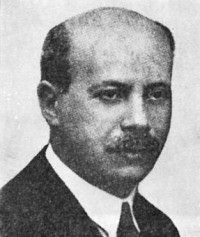
Tzvi Yosef Chaim Brezis
died 1930Rabbi of Ploiești, 1911-1922Brezis, of the rabbinic family that had served Ploiești for generations, was the town's rabbi from 1911 to 1922, during the years when the Rabbi's Synagogue was the seat of the community's religious authority. A Zionist leader as well as a rabbi, he directed the office of the Zionist Organization of Romania in 1924-1925 and the Jewish National Fund in Romania in 1928-1930. He died in 1930. The sources do not say in which synagogue he usually officiated.
Биография или источник →Yehuda Aryeh Brezis
died 1908Rabbi of Ploiești, until 1908Pinkas Hakehillot names Yehuda Aryeh Brezis as rabbi of Ploiești, serving until his death in 1908, and says his family had already held the rabbinate there before him. His tenure covered the 1891 renovation of the Rabbi's Synagogue and the building of the Heichal Yisrael and the Heichal Hasephardim. Tzvi Yosef Chaim Brezis became rabbi in 1911. No further biographical detail was found, and the source does not say in which synagogue he officiated.
Биография или источник →Menachem Safran
UnknownChief rabbi of Ploiești, 1939-1956Dr. Menachem Safran became chief rabbi of Ploiești in 1939 and was the community's rabbi when the Iron Guard destroyed the Rabbi's Synagogue in November 1940. In the following days he was arrested and tortured and, according to Pinkas Hakehillot, saved at the last minute. In July 1941 he was one of 49 community leaders held hostage in the Basarab Street synagogue and refused release to stay with his community. He served until 1956 and then emigrated to Israel.
Биография или источник →Вам есть чем поделиться?
Фотографии, документы, семейные истории и воспоминания об этой синагоге и её общине помогают сохранить её историю.
- Ploiesti (Encyclopedia of Jewish Communities in Romania, vol. 1), first page
- Ploiesti (Encyclopedia of Jewish Communities in Romania, vol. 1), p. 221
- Ploiesti (Encyclopedia of Jewish Communities in Romania, vol. 1), p. 222
- Ploesti
- Historic Jewish Sites in Romania (2010), Table I
- Romanian Jewish tour: synagogues
- Ploiești (OpenStreetMap relation 10694407)
- Sinagoga Mare (Bucharest)
Share a memory or thought
No comments yet. Be the first to add one.