
Die Geschichte von Wooden Synagogue of Pohrebyszcze
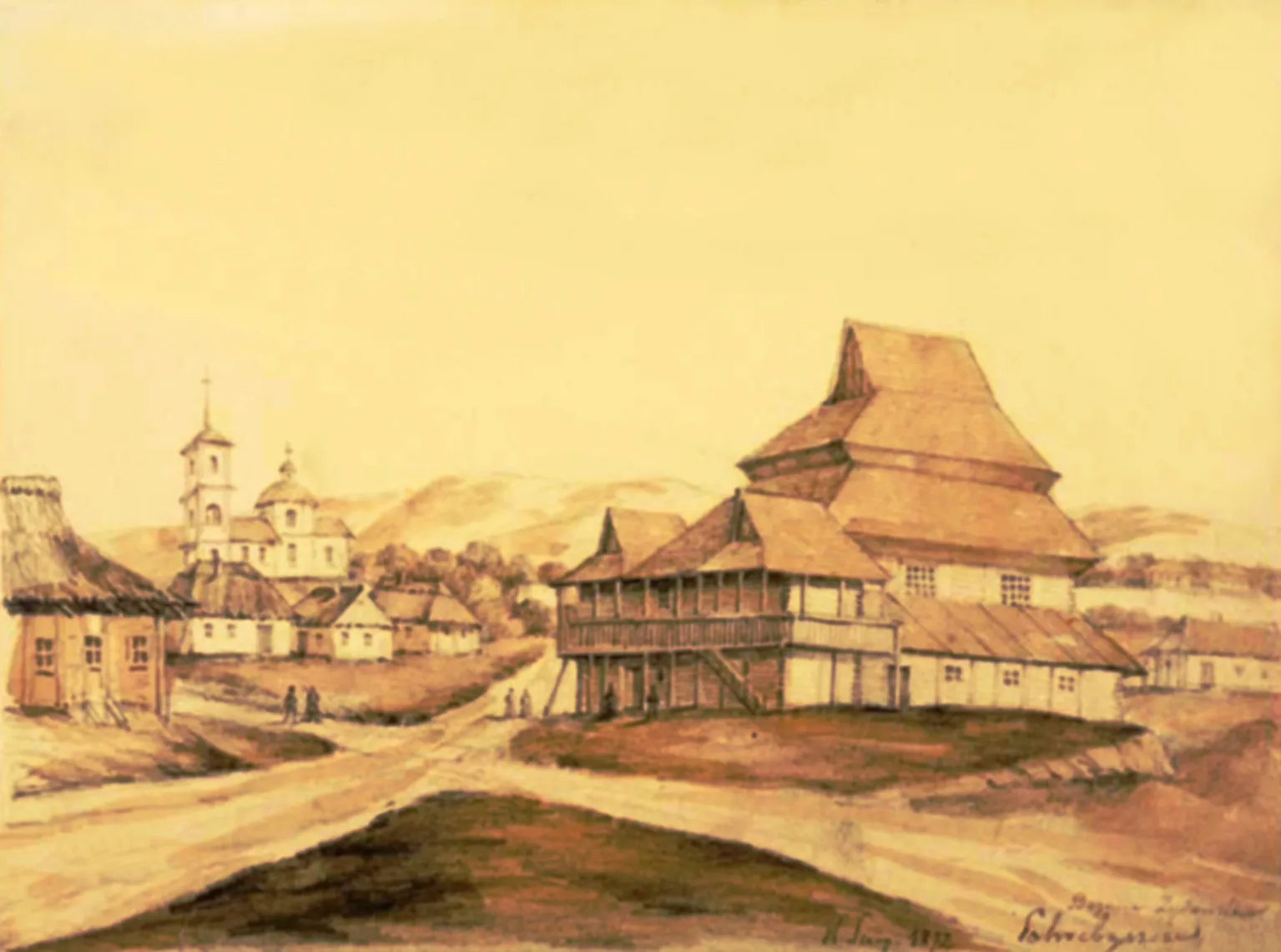
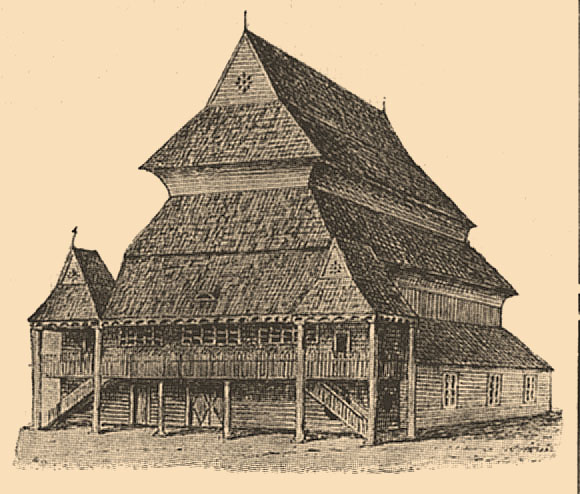
Pohrebyszcze (Pogrebishche), a small town south-west of Kyiv in today's Vinnytsia Oblast, had a Jewish community from the early seventeenth century. The community was devastated in the Khmelnytsky uprising of 1648–1649, and in 1690 its members built a new wooden synagogue on the ruins of the old one. The building measured about 16.7 by 20.4 metres. Its main hall was nearly square, about 12 by 12.4 metres, divided into a central nave about 8 metres wide and two side aisles. The roof was in two tiers, a hipped lower tier and a half-gabled upper tier, and lower wings with open wooden galleries ran along the sides. The synagogue was restored in 1790. In 1892 its exterior was rebuilt while the interior was preserved. Inside, the east wall kept traces of painted birds, plants and animals, and the Torah ark, about 4.5 metres high, was carved with winding plants and symmetrical animals. Napoleon Orda painted it beside the town's church in 1872, and the Russian Jewish encyclopedias of 1906–1913 illustrated it. It ceased to be a synagogue after the Soviets took the town in 1919 and became a workers' club in 1928. It was destroyed when German forces occupied Pohrebyszcze on 21 July 1941.
Where it stood for 251 years
Historic: Pohrebyszcze, Kiev Voivodeship (later Kiev governorate). Present day: Pohrebyshche, Vinnytsia Oblast, Ukraine. Approximate: town centre.
Größere Karte öffnen →Die jüdische Gemeinde
Jews settled in Pohrebyszcze in the early seventeenth century, when the town lay in the Kiev Voivodeship of the Polish–Lithuanian Commonwealth. The community was nearly destroyed in the Khmelnytsky uprising of 1648–1649. A local legend tells of a wedding broken up by the attackers at the very moment the groom placed the ring on his bride's finger. The survivors rebuilt, and in 1690 they raised the wooden synagogue on the site of the old one. After the partitions the town passed to the Russian Empire. The community grew from 664 Jews in 1765 to a peak of 2,881 in 1926, supporting four synagogues in the nineteenth century. During the Russian Civil War Pohrebyszcze's Jews organised an armed self-defence. After it was forced to disarm, armed peasants attacked the community for three days in August 1919 and murdered about 400 Jews. By 1939 the Jewish population had fallen to 1,445.
Architektur und Gestaltung
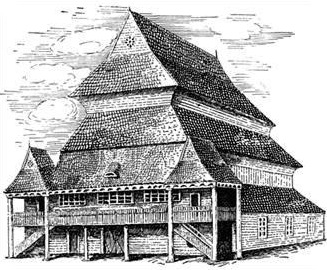
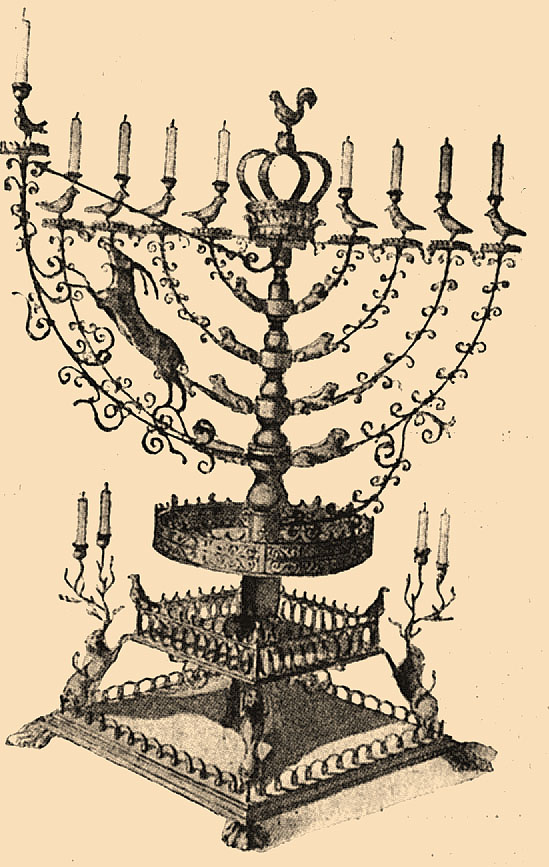
The synagogue was a timber building of about 16.7 by 20.4 metres. At its core was a nearly square prayer hall of about 12 by 12.4 metres, divided by supports into a central part about 8 metres wide and two narrower side parts. It was covered by a two-tier roof, a hipped lower tier and a steep half-gabled upper tier with a decorated gable, and it rose high above the one-storey houses of the town. Lower annexes with open wooden galleries on posts, reached by outside stairs, ran along the sides and front, as shown in Napoleon Orda's watercolour of 1872 and in the encyclopedia engravings. The building was restored in 1790, and in 1892 its exterior was rebuilt while the interior was kept. On the east wall traces survived of coloured wall paintings of birds, plants and domestic animals. The Torah ark, about 1.7 metres wide and 4.5 metres high, was ornamented with winding plants and symmetrically placed birds and animals. The synagogue also owned two old standing Hanukkah lamps.
Leben in der Synagoge
For over two centuries the wooden synagogue was the main house of prayer of Pohrebyszcze's Jews, and it stood among the four synagogues the community maintained in the nineteenth century. Its painted walls and carved ark surrounded worshippers with images of birds, animals and vines. Among its treasures were two old standing Hanukkah lamps, one of which was illustrated in the Russian Jewish encyclopedia published by Brockhaus and Efron in 1906–1913. After the Soviet takeover in 1919 the synagogue ceased to function as a house of worship. In 1928 it was converted into a workers' club, a decision that drew protests even from Jewish communists, according to the town's KehilaLinks history. The building thus spent its last years in secular use, as did many synagogues under Soviet rule.
Zerstörung
The synagogue survived the pogroms of the Civil War but was closed as a place of worship after the Soviet takeover in 1919 and turned into a workers' club in 1928. Nazi German forces invaded the Soviet Union in June 1941 and occupied Pohrebyszcze on 21 July 1941. According to the account based on Maria and Kazimierz Piechotka's study of wooden synagogues, the building was destroyed by the German forces on that day. The exact circumstances, whether it was burned in the fighting or deliberately set on fire, and the unit responsible are not recorded in the sources consulted. Nothing of the building survived. The Nazi occupation that destroyed the synagogue went on to murder almost the entire Jewish community of the town within a year.
Das Schicksal der Gemeinde
The German army occupied Pohrebyszcze on 21 July 1941. On 18 November 1941 Einsatzkommando 5 took about 1,360 Jews from Pohrebyszcze and shot them. Einsatzkommando 5 was one of the Nazi mobile killing units of Einsatzgruppe C. Other accounts give a figure of over 1,750 Jews murdered in a nearby forest in the autumn of 1941. About 200 surviving Jews were confined in a ghetto, which was liquidated in June 1942, when its inmates were murdered. Together with the victims of the 1919 pogrom, these killings ended Jewish life in the town. No Jewish community was re-established after the war. The Jewish cemetery is recorded by the International Jewish Cemetery Project.
Der Ort heute
Nothing of the synagogue survives in Pohrebyshche, a town in Vinnytsia Raion, Vinnytsia Oblast, Ukraine. Its exact plot has not been identified in the sources consulted for this entry. Napoleon Orda's watercolour of 1872 shows it near the town's Catholic parish church, which suggests a central site. The building is known from Orda's painting, from engravings in the Jewish Encyclopedia and the Russian Jewish encyclopedia of Brockhaus and Efron, and from the description by Maria and Kazimierz Piechotka.
Haben Sie etwas beizutragen?
Fotos, Dokumente, Familiengeschichten oder Erinnerungen an diese Synagoge und ihre Gemeinde halten ihre Geschichte lebendig.
Share a memory or thought
No comments yet. Be the first to add one.