
The story of Old School (Altschul) of Prague
The Old School stood in a small Jewish enclave of its own, cut off from the main Jewish Town of Prague by a row of Christian houses and the parish church of the Holy Spirit; a guide to the quarter's antiquities by Benedikt Foges and David Podiebrad likened the district to an island in the lower Old Town. The Jewish Museum in Prague calls it the oldest house of worship in the ghetto. It is first heard of at the end of the fourteenth century, when a mob burned it during the massacre of 1389. Fires, an imperial closure and plunder followed, and wall inscriptions once recorded building work completed in 1536, 1604, 1622 and 1750.
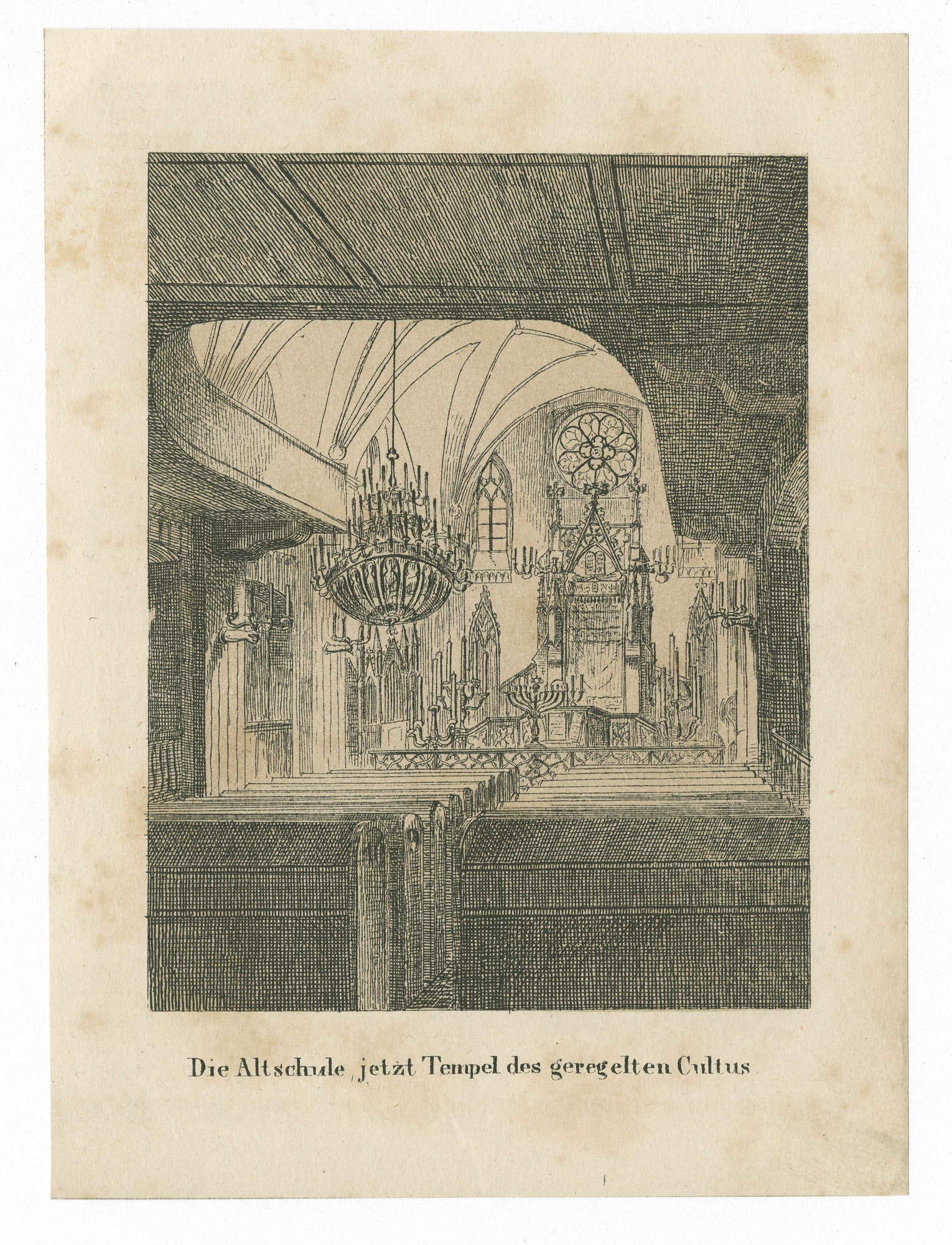
Tradition held that its first congregation followed an eastern or Portuguese rite, traces of which lasted until 1837. In that year work began to reconstruct the building for Prague's society for reformed worship, with a preacher, a choir and an organ played by the composer František Škroup. A print issued in 1862 shows the result: a rib-vaulted hall with a rose window, a Gothic-style ark and rows of fixed pews. When the hall grew too small, the Reform congregation pulled it down in 1867 and replaced it within a year by the Moorish-style temple now called the Spanish Synagogue.
Where it stood for 478 years
Historic: Altschul district, Geistgasse (Dušní ulice), beside the church of the Holy Spirit, Prague. Today: the plot of the Spanish Synagogue, Vězeňská 1 at the corner of Dušní, Josefov, 110 05 Praha 1 (exact plot; the old building's own footprint within it is not documented).
Open larger map →The Jewish community
Foges and Podiebrad, writing from the records and traditions of Prague's Jewish quarter, held that the Old School began as the synagogue of a separate colony of eastern Jews who settled apart from the main community. Their evidence was the building's isolated position and the remnants of a Portuguese, or Jerusalem, rite that survived in its services until 1837; several local Prague customs were never observed there. The Jewish Encyclopedia of 1906 likewise says it seems to have belonged to an Oriental congregation. In time this group merged with the main community and came under the same rabbinate, and the western rite displaced the older one. The story that refugees from Spain were given the building after 1492 is rejected by the same authors, since the synagogue and the people of its district are already named in an elegy on the massacre of 1389. From 1837 the Old School belonged to the modernising wing of Prague Jewry, the society for reformed worship, known as the Temple congregation, which kept its own preacher.
Architecture and design
No plan or exterior view of the Old School was found, and no architect is named for any of its building phases. Foges and Podiebrad record from wall inscriptions, copied before work began in 1837, that the synagogue was re-vaulted after the fire of 1516, the work ending in 1536, rebuilt in 1604, lengthened in 1622 and reconstructed in 1750. Windows opened in the west wall, facing the church of the Holy Spirit, during repairs after the fire of 1689 were walled up around the time it reopened in 1703. The reconstruction begun in 1837 turned the old hall into a Reform temple. A print captioned 'Die Altschule, jetzt Tempel des geregelten Cultus', issued in 1862, shows that interior from under a gallery: a ribbed vault, a pointed window and a traceried rose window in the end wall, and beneath them a tall Gothic-style ark with a gabled canopy carrying the Tablets of the Law. A branched candelabrum stands before it behind a low railing, a large chandelier hangs in the middle, a curved gallery runs along one side and fixed pews face the ark.
Life inside the synagogue
Until about the start of the nineteenth century the Old School was the only Prague synagogue where the Friday-evening service welcoming the Sabbath was performed with an orchestra, a custom Foges and Podiebrad linked to its supposed southern founders. Before the fire of 1689 it held treasured gifts, among them a costly curtain presented by Rabbi Mordecai Speyer of Worms, which the Jewish Encyclopedia dates to 1227 and which King Vladislaus admired on a visit at Pentecost 1498. After the reconstruction begun in 1837 the services followed a moderately reformed order with a sermon, a choir and an organ. František Škroup, composer of the melody that became the Czech national anthem, was organist and choir director from 1836 to 1845. Michael Sachs, appointed in Prague in 1836, was the congregation's preacher, and Saul Isaac Kaempf succeeded him in 1846. Kaempf's hymnal 'Simrath Jah' was introduced in the temple in 1849, and in 1854 he published festival prayers based on the congregation's own ritual.
Destruction
The Old School survived centuries of attack before its own congregation took it down. A mob burned it in the massacre of April 1389, when, according to an elegy printed by Foges and Podiebrad, the people of its district died inside by sword and fire. It burned again in 1516 and with the whole ghetto on 21 June 1689. In 1693, after the clergy of the neighbouring church objected to new windows in its west wall, the imperial magistrate closed it, and it reopened only by a court decree of 29 November 1703. Croat troops and a city mob plundered and wrecked it on 18 September and 27 and 28 November 1744; it was rebuilt in 1750 and burned once more on 16 May 1754. By the 1860s the hall was too small for the Reform society that used it, and the society decided to demolish it in 1867 and build anew on the plot. Foges and Podiebrad wrote that the last remains of the ancient fabric disappeared in that rebuilding, which they dated 1868. Who cleared the old walls is not recorded.
The community’s fate
The congregation did not disperse when the Old School came down. It moved into the new temple on the same plot in 1868 and worshipped there as the Temple congregation of Prague, with Saul Isaac Kaempf as preacher until 1890. The building was long known as the temple in Geistgasse, today Dušní Street; the name Spanish Synagogue is later and refers to its Moorish style, since no Sephardic congregation ever used it. During the Second World War, under Nazi German occupation, the building was used as a store for objects confiscated from the Jewish communities of Bohemia and Moravia. At least two-thirds of Prague's Jews perished in the Holocaust, and in 1946 the city counted 10,338 Jews, among them returnees from the camps and 2,233 newcomers from Carpathian Ruthenia. No source read describes the congregation itself after 1945. The State Jewish Museum took the building over in 1955 and restored the interior in 1958 and 1959; it was closed in 1982, repaired after 1989 and reopened in 1998 as part of the Jewish Museum in Prague.
The site today
The plot of the Old School is occupied by the Spanish Synagogue, built in 1868 at the corner of Dušní and Vězeňská streets in Prague's Josefov quarter, next to the church of the Holy Spirit. According to Foges and Podiebrad the last remains of the old building vanished when the new one went up, and nothing of it is known to stand above ground. The Spanish Synagogue is one of the sites of the Jewish Museum in Prague and holds its exhibition on the history of the Jews in the Bohemian lands in the nineteenth and twentieth centuries; concerts are also given there. A functionalist wing by the architect Karel Pecánek was added in 1935, and a small park adjoins the building.
Notable names
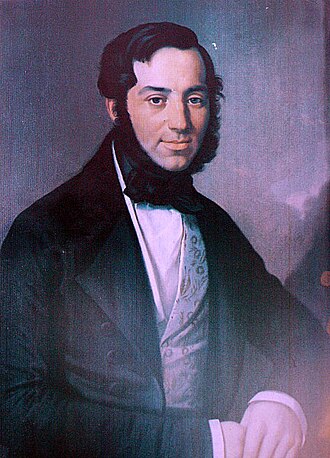
František Škroup
1801-1862Organist and choir director of the Reform temple in the Old School, 1836-1845Škroup, composer of the song that became the Czech national anthem, served the Reform congregation in the Old School as organist and, according to Prague's official tourism site, as director of its choir from 1836 to 1845. The Jewish Museum in Prague notes that he played the organ in the Old School before the Spanish Synagogue replaced it. He died in Rotterdam in 1862, five years before the building was demolished.
Biography or source →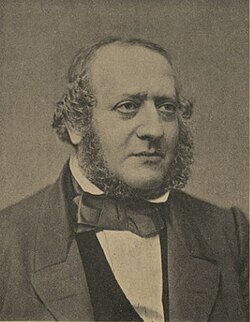
Michael Sachs
1808-1864Preacher of the Reform congregation in the Old School, 1836-1846Sachs, born in Glogau in 1808, was appointed in Prague in 1836 and served as preacher of the Reform society that worshipped in the Old School after the reconstruction begun in 1837. Saul Isaac Kaempf was called to Prague in 1846 as his successor at the Temple congregation. Sachs died in Berlin in 1864. The sources read give no detail of his work in the building itself.
Biography or source →Saul Isaac Kaempf
1818-1892Preacher of the Temple congregation, 1846-1890Kaempf, born in Lissa in 1818, was called to Prague in 1846 as preacher of the Temple congregation in succession to Michael Sachs. His hymnal 'Simrath Jah' was introduced in the temple in 1849, and in 1854 he published festival prayers following the congregation's ritual. He also taught Semitic languages at the University of Prague. He was preacher when the Old School was demolished in 1867 and continued in the new temple until 1890.
Biography or source →Samuel Tausig
UnknownWarden of the Prague Jewish community who obtained the reopening of the Old School in 1703Tausig was a warden of the Prague Jewish community. After the Old School had been closed by imperial order in 1693, his persistent petitions, supported by the Archbishop of Prague, obtained the court decree of 29 November 1703 that returned it to worship. In the proceedings he laid proofs of the synagogue's great age before the court authorities, and their acceptance secured its restitution, as Foges and Podiebrad record.
Biography or source →Israel Frankl Spiro
UnknownPrimator of the Prague Jewish community; rebuilt the Old School in 1750Israel Frankl Spiro was primator, or head, of the Prague Jewish community. After Croat troops and a mob plundered and wrecked the Old School in the autumn of 1744, he had it reconstructed in 1750, as a wall inscription in the building once recorded. The Jewish Encyclopedia likewise says it was rebuilt by the primator Frankel in 1750. Four years later the great ghetto fire of 1754 burned it again.
Biography or source →Do you have something to contribute?
Photographs, documents, family stories or memories of this synagogue and its community help keep its history alive.
- Spanish Synagogue
- Španělská synagoga
- Alterthümer der Prager Josefstadt, israelitischer Friedhof, Alt-Neu-Schule und andere Synagogen, 3rd edition, chapter 'Die Altschule, jetzt Tempel des zeitgemässen Cultus' (pp. 99-103 and notes 112-122)
- Prague (article in the Jewish Encyclopedia, 1906)
- Die Altschule, jetzt Tempel des geregelten Cultus (print, 1862)
- Židovské muzeum v Praze - Španělská synagoga
- Španělská synagoga
- Spanish Synagogue (Prague)
- František Škroup
- Michael Sachs (rabbi)
- Saul Isaac Kaempf
- History of the Jews in Prague
- File:Frantisek skroup 1840.jpg
- Španělská synagoga (OpenStreetMap way 28517451)
- File:Michael Yechiel Sachs 2.jpg
Share a memory or thought
No comments yet. Be the first to add one.