
Historia Reca Synagogue
Reca lies in the fertile farmland of the Žitný ostrov area, a few kilometres east of Senec in the Bratislava region. Its population was mainly Hungarian and Catholic, and the village was known to Jews as Reite. Jewish families from Moravia settled here in the eighteenth century, and Pinkas Hakehillot, the Yad Vashem encyclopedia of Jewish communities, dates the founding of an organised community to the second half of that century, with the oldest gravestones in the cemetery from the 1770s. At the end of the eighteenth century the community built a synagogue in the style of Moravian synagogues. The geographer Elek Fényes, writing around 1851, listed a synagogue among the village's buildings and counted 149 Jews in Réthe. Small as it was, the congregation was served by notable rabbis, among them Yehuda Aszód, later one of the leading Orthodox authorities of Hungary. In 1869 it joined the Orthodox organisation. The synagogue stood in the yard behind the rabbi's house, which faced the street at what is now Reca 43. It was demolished in the early 1950s, and a new cultural house was later built on its site.
Where it stood
Historic: Réte 43, behind the rabbi's house (yard). Today: Kultúrny dom, Reca 43, 925 26 Reca, Senec district, Slovakia; the synagogue stood on this plot (approximate).
Otwórz większą mapę →Społeczność żydowska
Pinkas Hakehillot records Jews in Reca from the early eighteenth century, when refugees from Moravia arrived but did not stay. A document of 1735 names two Jewish households, a peddler and an innkeeper, with twelve people in all; in 1746 six Moravian Jewish families with twenty people lived in the village, and the tax register of 1767 lists only two heads of family, a butcher and a peddler. Other Jews may have avoided the head tax. The community took shape in the second half of the eighteenth century, and Jews of neighbouring villages joined it. The census figures are 97 Jews in 1880, 72 in 1910, 60 in 1919, 39 in 1930 and 30 in 1941. The encyclopedia also gives a figure of 1,200 Jews in Reca and its surroundings just after the First World War, with 28 taxpaying householders, which appears to be an error for about 120. In 1922 Gabriel Frank headed the community, whose annual budget was 5,000 crowns. Jews traded in cattle and farm produce, raised poultry and sold in Bratislava.
Architektura i projekt
Very little is recorded about the building itself. Pinkas Hakehillot says only that it was built at the end of the eighteenth century in the style of Moravian synagogues, a phrase that reflects the Moravian origin of the first Jewish settlers; no plan, description or photograph of the Reca building was found to show what that meant in practice. The Hungarian heritage register of southern Slovakia (Értéktár, hunektar.sk) places it behind the rabbi's house, a street-front building at Réte 43 that housed the rabbi and his family from the nineteenth century until 1944; a photograph of the rabbi's house, a single-storey rendered building with a curved central gable and a round window, is published there, but the synagogue in the yard behind it is not visible. The synagogue was therefore set back from the street, a common arrangement for village synagogues in Upper Hungary. The architect, builder, dimensions, seating capacity and interior fittings are unknown.
Życie w synagodze
The congregation followed the Orthodox rite and joined the Orthodox communal organisation after the Hungarian Jewish schism of 1869. According to Pinkas Hakehillot, Rabbi Yehuda Aszód, author of the responsa Yehuda Ya'aleh, served as rabbi of Reca in the 1830s before moving on, eventually to Dunajská Streda, where he headed a well-known yeshiva. He was followed by Rabbi Menachem Mendel Schön, author of Minchat Pitim, who is said to have served for fifty years until his death in 1882, and then by Rabbi Moshe Klein, the last rabbi of the community. After the First World War Reca had no rabbi of its own and belonged to the rabbinate of Senec. Besides the synagogue the community kept a cemetery, a mikveh, a poultry slaughterhouse and a communal house with flats for the shochet and the religion teacher, and it supported a Chevra Kadisha and other charitable societies. Edward Stern headed the community in 1938.
Zniszczenie
Reca was annexed to Hungary in November 1938. In the middle of May 1944 the synagogue was used to hold the Jews of Reca and the surrounding villages for several days before they were moved to Senec; the source does not name who ordered or guarded this. The building stood empty after that. Reca returned to Czechoslovakia in April 1945, and no Jews came back to the village. The Értéktár record for the rabbi's house states that the synagogue behind it was demolished in the early 1950s, under the Communist regime established in Czechoslovakia in 1948. Who ordered or carried out the demolition is not recorded. The same record says that after the Second World War the site served as a cinema and cultural centre until the end of the 1960s and that its fate was sealed by the construction of the new cultural house; it is not entirely clear from the wording whether these sentences refer to the rabbi's house or to the synagogue. No document of the demolition, no sale and no photograph of the ruin were found.
Los społeczności
After Reca was annexed to Hungary in November 1938, the Jewish population of Reca and its surroundings numbered 25. From 1941 several Jewish men of the village were conscripted into the labour service units of the Hungarian army. In the middle of May 1944 the Jews of Reca and the neighbouring villages were confined in the synagogue. A few days later they were taken to Senec and held apart from the non-Jewish population. On 12 June 1944 they were sent to the ghetto at Nové Zámky, and from there they were deported to Auschwitz on the transport of 15 June 1944. Pinkas Hakehillot states that no Jews returned to Reca after the war. The number of those murdered and of any survivors who settled elsewhere is unknown. The Jewish cemetery, which stands in a field outside the village, was long neglected; it has since been restored with the help of a foreign Jewish heritage foundation.
Miejsce dzisiaj
The synagogue stood in the yard behind the rabbi's house at Reca 43 (Réte 43), on the plot now occupied by the village cultural house (Kultúrny dom), according to the Értéktár heritage register. The rabbi's house on the street front has also gone. No part of the synagogue is known to survive, and no marker on the site was found. The Jewish cemetery of Reca, about 200 metres into the fields, is fenced, keeps its gravestones and is owned by the Jewish community; the Bratislava regional heritage survey of 2022 names it as a candidate for listing as a national cultural monument. The map pin marks the cultural house.
Ważne postacie
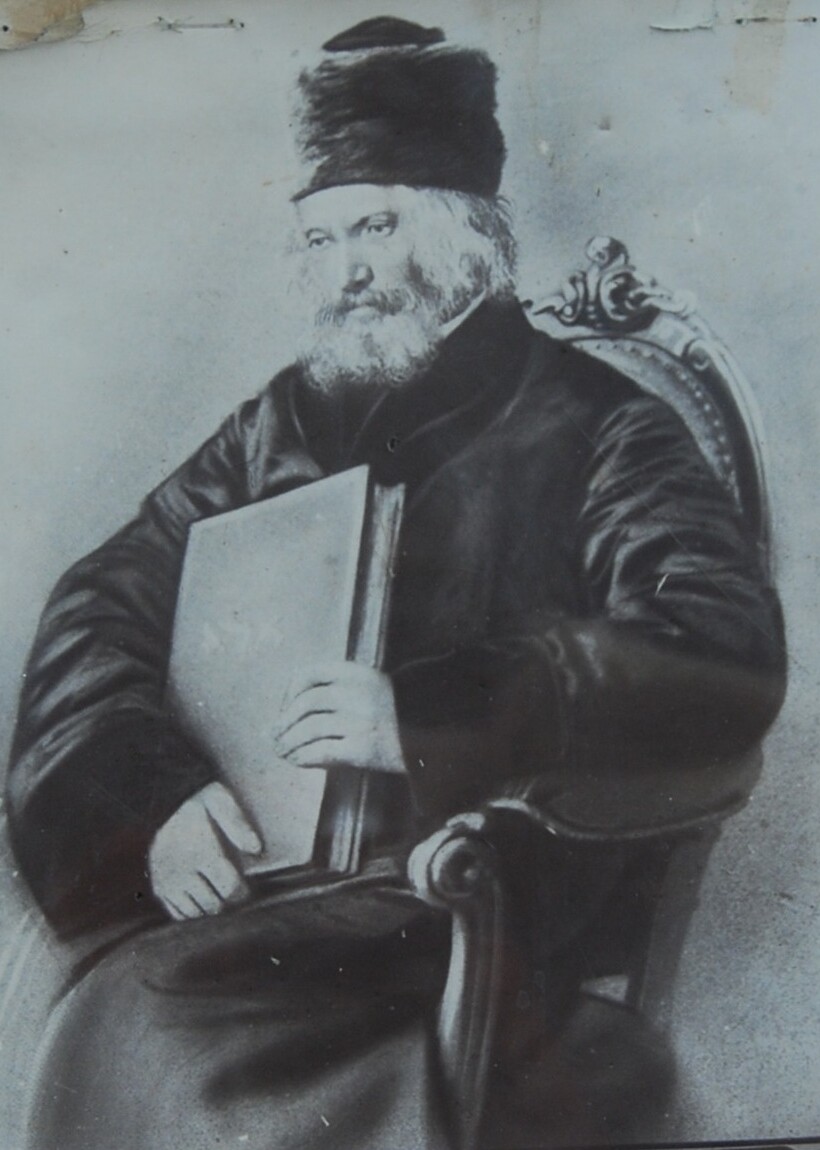
Yehuda Aszód (Judah Assad)
1796-1866Rabbi of Reca in the 1830sPinkas Hakehillot names Aszód, author of the responsa Yehuda Ya'aleh and one of the great halakhic decisors of the Habsburg lands, as rabbi of Reca in the 1830s. The small village congregation was thus an early post in a distinguished career: he later served Dunajská Streda, where he became chief rabbi in 1852 and led a famous yeshiva. He died in 1866 and his grave at Dunajská Streda is a place of pilgrimage.
Biografia lub źródło →Menachem Mendel Schön
died 1882Rabbi of Reca, said to have served fifty years until 1882Pinkas Hakehillot records that Schön, a native of Nitra and author of Minchat Pitim, succeeded Yehuda Aszód as rabbi of Reca and served the community for fifty years until his death in 1882. It was during his tenure, after the Hungarian Jewish schism of 1869, that the Reca congregation joined the Orthodox organisation. The fifty-year figure does not sit easily with Aszód's 1830s tenure, and his exact years are unknown.
Biografia lub źródło →Moshe Klein
UnknownLast rabbi of Reca, after 1882Pinkas Hakehillot names Moshe Klein as the rabbi who followed Menachem Mendel Schön after 1882 and as the last rabbi the Reca community had. After the First World War the congregation had no rabbi of its own and came under the rabbinate of Senec. Nothing further about his life, his years in office or his fate was found in the sources consulted.
Biografia lub źródło →Gabriel Frank
UnknownHead of the Reca Jewish community in 1922Frank is named in Pinkas Hakehillot as head of the Reca Jewish community in 1922, when the congregation had 28 taxpaying householders and an annual budget of 5,000 crowns, and maintained the synagogue, the cemetery, a mikveh, a poultry slaughterhouse and a communal house for its shochet and religion teacher. Nothing more about his life or fate was found.
Biografia lub źródło →Edward Stern
UnknownHead of the Reca Jewish community from 1938Pinkas Hakehillot records that when Reca was annexed to Hungary in November 1938 the community, then only 25 people from Reca and its surroundings, was headed by Edward Stern. He led it during the years of Hungarian anti-Jewish laws and labour-service conscription that ended with the confinement of the village's Jews in the synagogue in May 1944 and their deportation. His own fate is unknown.
Biografia lub źródło →Czy masz coś do przekazania?
Zdjęcia, dokumenty, historie rodzinne lub wspomnienia o tej synagodze i jej społeczności pomagają zachować jej historię.
- Reca (Rete), Pinkas Hakehillot Slovakia, p. 537 (English translation)
- Rabbi lakás / Izraelita imaház, rabbilakás (Réte 43)
- Izraelita imaház, rabbilakás (Réte)
- Réte (Hungarian Wikipedia, quoting Fényes Elek, Magyarország geographiai szótára, 1851)
- Židovské stavebné dedičstvo v Bratislavskom kraji (zborník, 2022)
- Photography of Rabbi Yehudah Aszód (1796-1866), DS 18/IV-02
- Jehuda Aszád (Aszód Júda) rabbi sírja
- Kultúrny dom, Reca 43 (OpenStreetMap way 63405592)
Share a memory or thought
No comments yet. Be the first to add one.