
La historia de Rimavská Sobota Synagogue
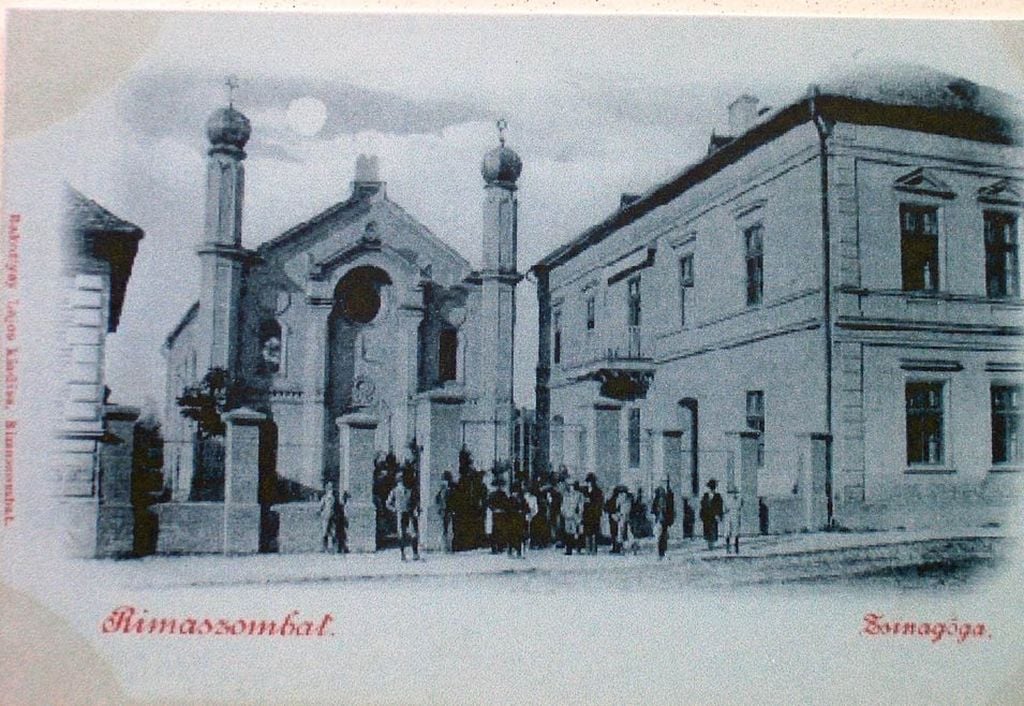
Rimavská Sobota, Rimaszombat in Hungarian, is the main town of the Gemer-Malohont region in southern central Slovakia. Jews could settle there only after the revolution of 1848 lifted the county's ban on their residence; the first written records of the community date from 1851, and by 1880 the town had 345 Jews. The community paid for its synagogue from its own funds and finished it in 1868. It belonged to the Neolog stream, and its architecture fits that: Maroš Borský, in his survey of Slovak synagogue architecture, groups it with the Neolog and Status Quo synagogues that used corner minarets as vertical accents, something the Orthodox rejected. The building stood at the corner of today's Hatvaniho and Cukrovarská streets, next to the Evangelical church, set back in a plot owned by the community beside its communal house and school.
The synagogue survived the Second World War, but the community that returned was small. The last services were held at Hanukkah 1969, after which the building decayed and was vandalised. In 1986 the Local National Committee ordered it pulled down together with the old Jewish school. The marble Tablets of the Law from its façade were saved and are kept in the Gemer-Malohont Museum. A published list of Slovak synagogues calls the building Orthodox, but no source read supports that.
Where it stood for 118 years
Historic: corner of Kossúthova and Lučenecká streets, next to the Evangelical church, Rimavská Sobota (Rimaszombat). Today: corner of Hatvaniho and Cukrovarská streets, 979 01 Rimavská Sobota; site of the Holocaust memorial (approximate).
Abrir mapa ampliado →La comunidad judía
A ban on Jewish settlement in Gemer-Malohont county kept Jews out of Rimavská Sobota until the revolution of 1848. The earliest written mention of a community dates from 1851, when an estimated 300 to 400 Jews lived in the town, and the later emancipation law opened public life to them. Borský's census figures give 345 Jews in Rimavská Sobota in 1880, and he counts it later among the Slovak communities of 500 to 1,000 members. A wartime town archive records about 636 Jews, some nine per cent of the population, before the deportations. The community founded associations and a Jewish elementary school, which stood beside the synagogue and taught until the Second World War. Its first elected rabbi, Abrahám M. Friedmann, was also county rabbi. The congregation followed the Neolog rite, the modernising branch of Hungarian Jewry. Whether a separate Orthodox congregation with its own prayer house existed in the town is not recorded in the sources read.
Arquitectura y diseño
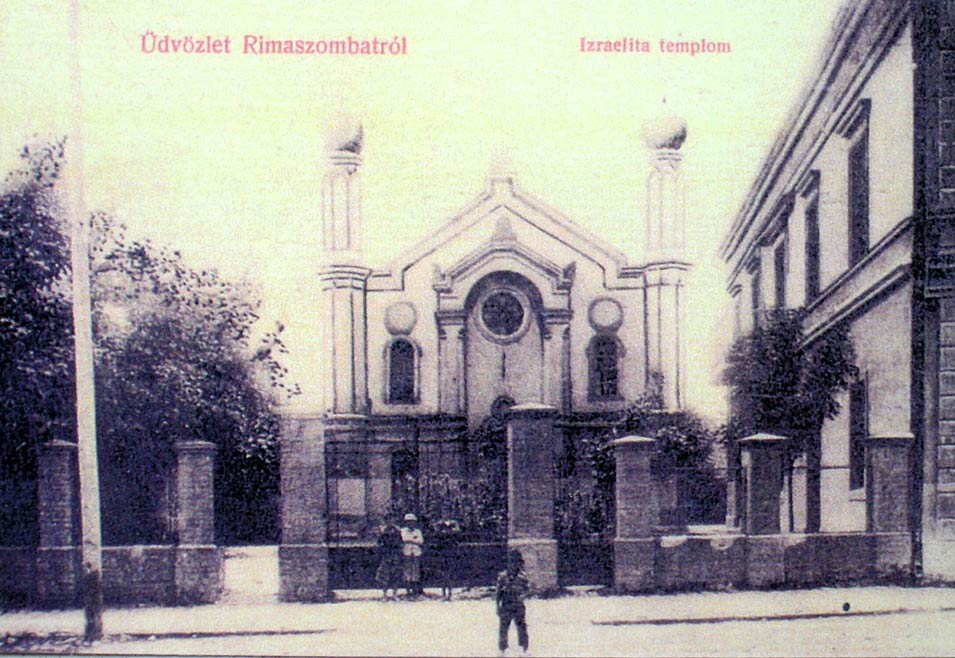
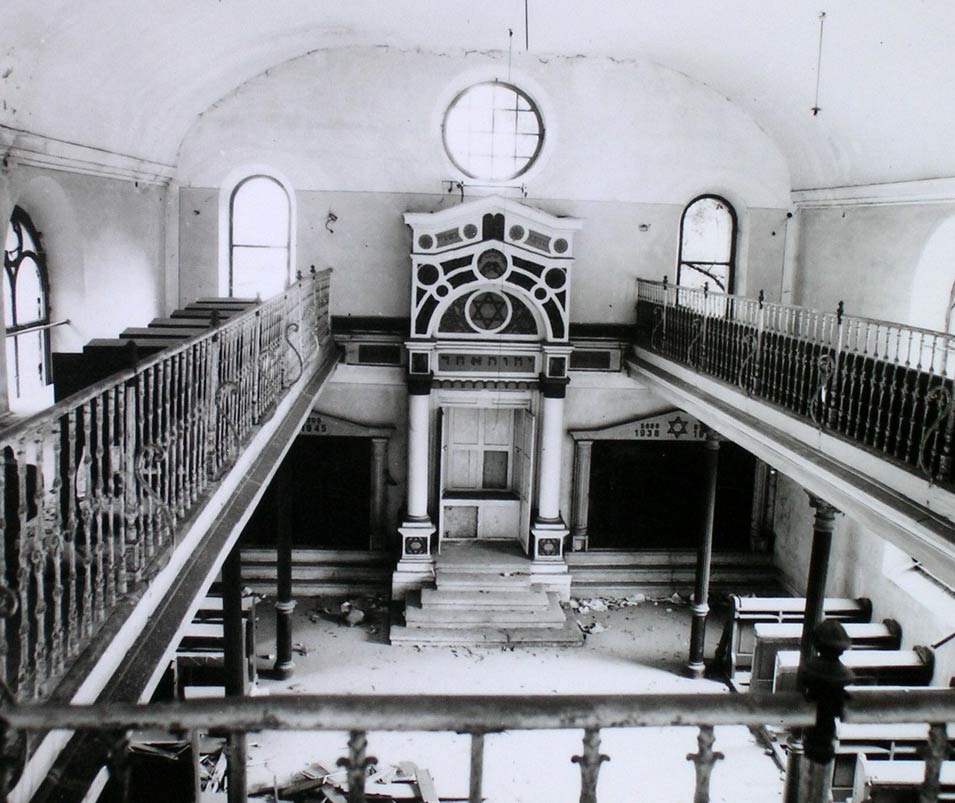
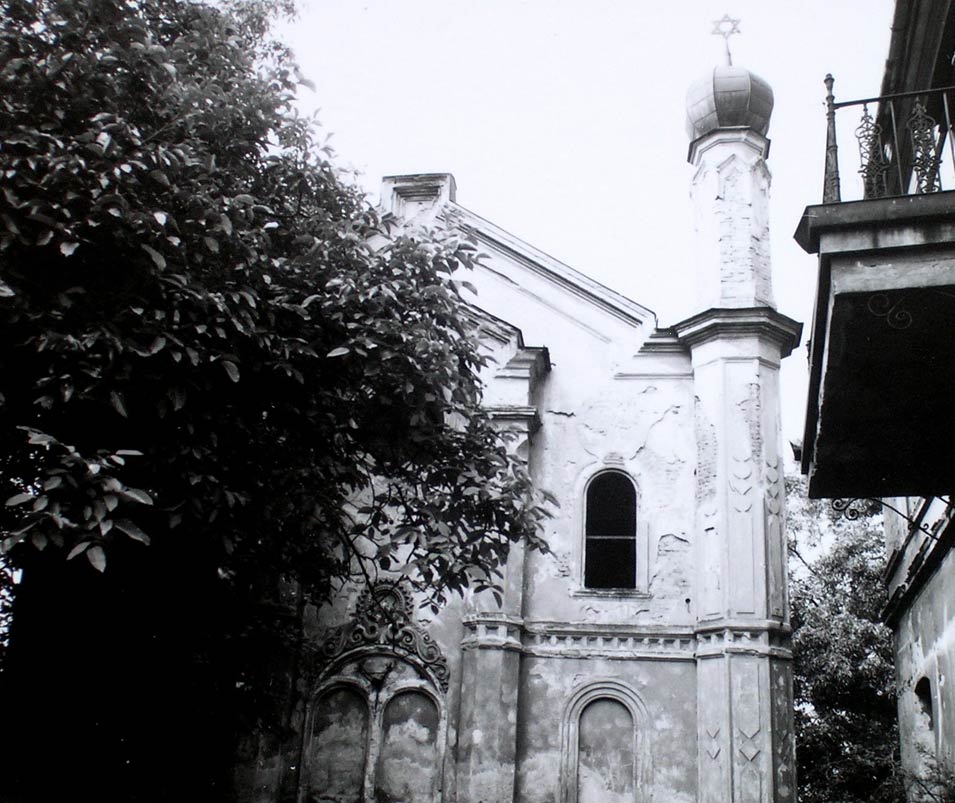
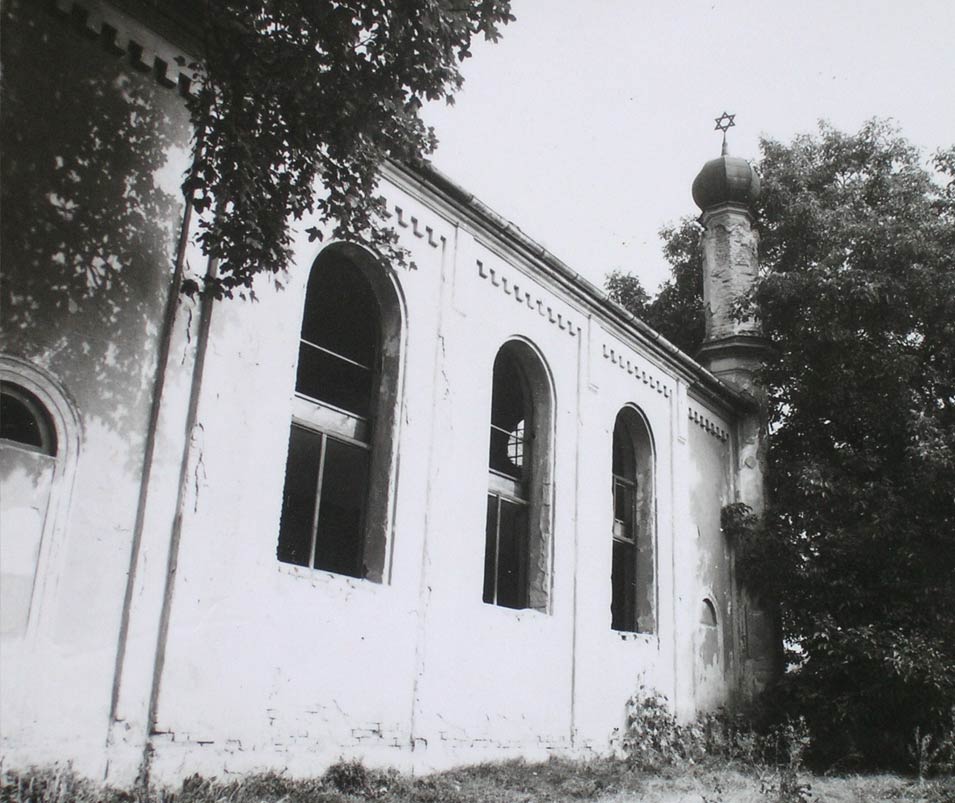
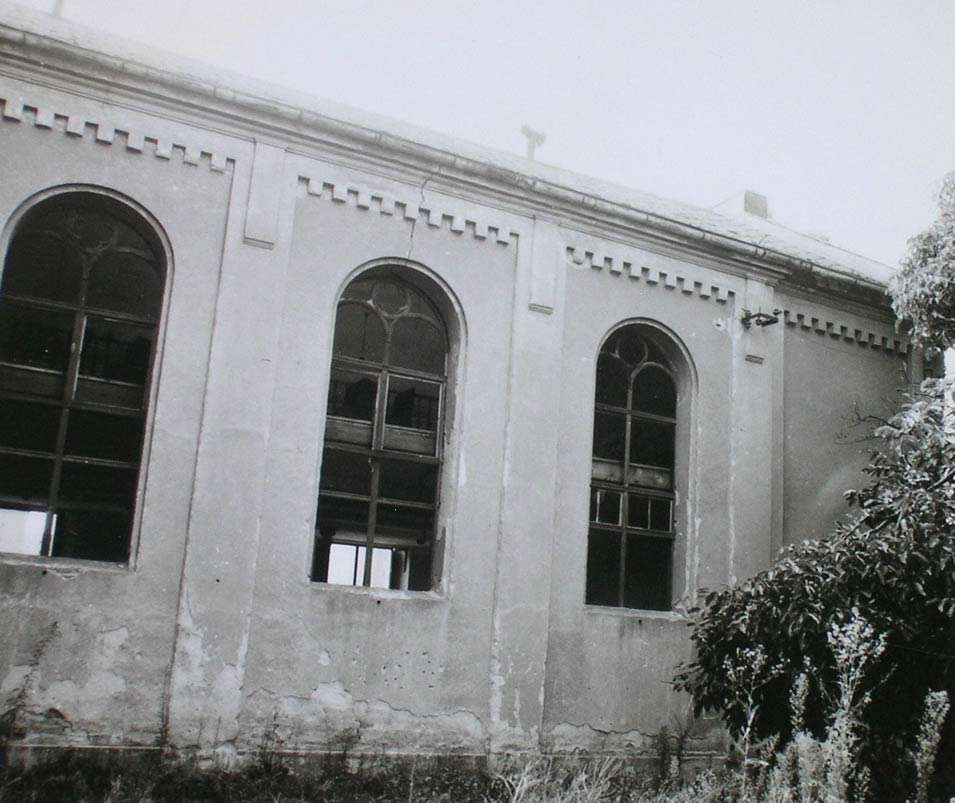
The synagogue was a one-storey, free-standing building with a footprint of about 18 by 14 metres. Its plot had its eastern side to the street, so the street front was the east wall, the one containing the Torah ark. Borský describes the ark as a protrusion marked by a monumental niche with a round window, flanked on each side by small round-arched windows. Two slender polygonal corner minarets with onion-shaped roofs, each topped by a Shield of David, dominated the exterior; the local account calls them towers. The round neo-Romanesque window held a coloured rose, and marble Tablets of the Law were set in the centre of the façade. The style mixed historicist detail with Moorish motifs, as a local article puts it. Inside, the sanctuary was a plain hall with a women's gallery on cast-iron columns along three sides. Photographs show the ark framed by two columns under an arched crest with a Star of David, the gallery's ornamental iron railings and tall arched windows along the side walls. The architect and the seating capacity are unknown.
La vida dentro de la sinagoga
The synagogue was the centre of a Neolog congregation, which in Hungary meant a modernising community that accepted features the Orthodox rejected, such as towers on the synagogue. Little else about worship in the building is recorded in the sources read. The community's first elected rabbi, Abrahám M. Friedmann, also held the office of county rabbi, so his authority reached beyond the town into the surrounding county. Next to it stood the community's elementary school and its communal house, so the plot formed a small Jewish quarter of its own at the edge of the town centre. After the war the surviving members kept up services for more than two decades in a building that was too large for them. The last service, according to the community's postwar chairman Dušan Rybár, was held at Hanukkah in 1969. Interior photographs taken later show the ark and the women's gallery still in place, with benches, among fallen debris.
Destrucción
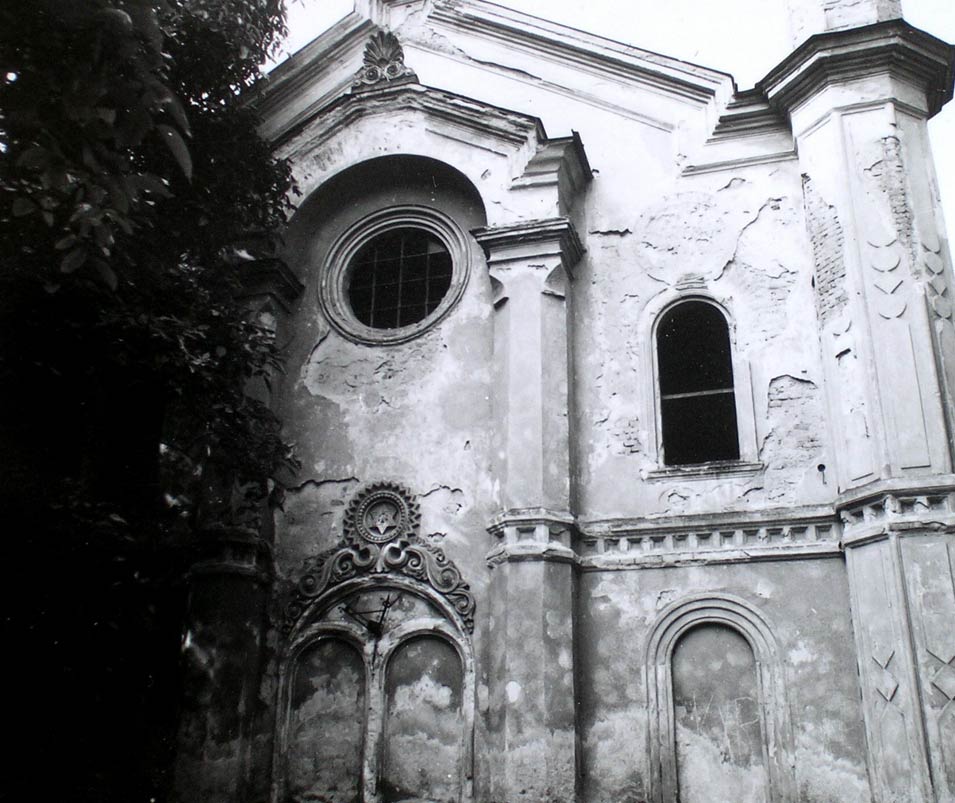
The building came through the Second World War standing. After the last services in 1969 it was left empty and decayed; photographs held by the Gemer-Malohont Museum show cracked and peeling plaster, broken windows and vegetation pressing against the walls. The Local National Committee of Rimavská Sobota, the Communist town authority of the time, then decided to demolish the synagogue together with the original Jewish school building, giving the poor state of the structure as the reason. According to Dušan Rybár, chairman of the Jewish community, the state had refused to pay for repairs. The Communist town authority had the synagogue pulled down in December 1986. Which firm carried out the work is not recorded. Before demolition the marble Tablets of the Law were removed from the façade; they are now in the Gemer-Malohont Museum. Borský also gives 1986. The Hungarian Wikipedia article on the town gives 1988, citing a 2005 newspaper article, but the more detailed local sources agree on December 1986.
El destino de la comunidad
Rimavská Sobota then lay within Hungary, and its Jews shared the fate of Hungarian Jewry after the Nazi German occupation of the country on 19 March 1944. A survivor interviewed by Centropa, Tibor Engel, recalled that the town's Jews were gathered into two ghettos, one in the former high school and one in a farmyard on the edge of town; a local article speaks of three collection points, on Tomašova and Bartókova streets and in the lyceum building. From there they were deported to Auschwitz-Birkenau. The records of the wartime town administration, now in the State Archive in Banská Bystrica, document the ghettoisation and deportation, the guardians appointed for the deportees' houses and the Aryanisation of their real estate and valuables between June and December 1944. A local account gives 726 people taken from the town and nearby villages. Most were murdered. Of a community of about a thousand, roughly 86 people returned after the war. The Soviet Army took the town on 21 December 1944. Two marble tablets in the Jewish cemetery list 1,036 victims.
El lugar hoy
The synagogue stood at the corner of what were Kossúthova and Lučenecká streets, now Hatvaniho and Cukrovarská streets, beside the Evangelical church in the centre of Rimavská Sobota. Both the synagogue and the neighbouring Jewish school were cleared in 1986, and no building of the Jewish community remains on the plot. A Holocaust memorial was unveiled on the site in 2005. Nothing of the synagogue itself remains in place; the marble Tablets of the Law from its façade are kept in the Gemer-Malohont Museum in the town. The Jewish cemetery, which holds memorial tablets with the names of the victims, is closed to the public because of theft.
Nombres destacados
Abrahám M. Friedmann
UnknownFirst elected rabbi of the Rimavská Sobota Jewish community and county rabbiFriedmann is named in the local history of the community as its first elected rabbi, who also held the office of county rabbi for Gemer-Malohont. He therefore led the congregation in its early decades, around the time the synagogue was built in 1868 and made the seat of the district rabbinate. The dates of his service, his life dates and his later career were not found in the sources read.
Biografía o fuente →¿Tiene algo que aportar?
Fotografías, documentos, historias familiares o recuerdos de esta sinagoga y su comunidad ayudan a mantener viva su historia.
- Synagogue Architecture in Slovakia: Towards Creating a Memorial Landscape of Lost Community (catalogue entry S0B1701, p. 194; chapter 4, pp. 116-117; chapter 1, pp. 25-28)
- Rimavská Sobota plná príbehov: Kedysi synagóga, dnes už len pamätník
- Rimavská Sobota - synagóga
- List of synagogues in Slovakia (Banská Bystrica Region table)
- Rimaszombat
- Župné mesto Rimavská Sobota 1938 - 1944
- Interview with Tibor Engel (tagged text 135801)
- Reverse geocoding of 48.383450, 20.017375
Share a memory or thought
No comments yet. Be the first to add one.