
La storia di Boompjes Synagogue, Rotterdam
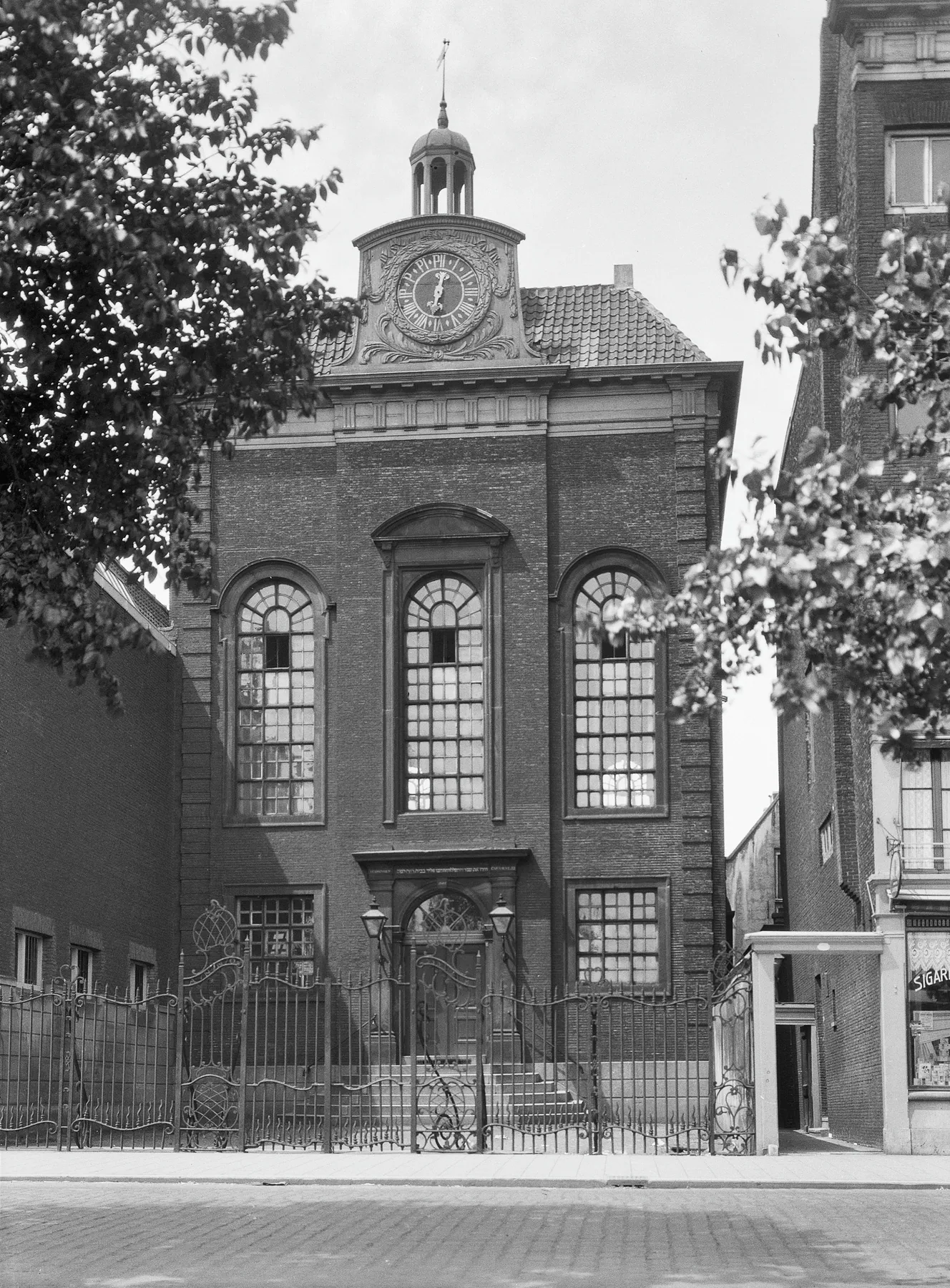
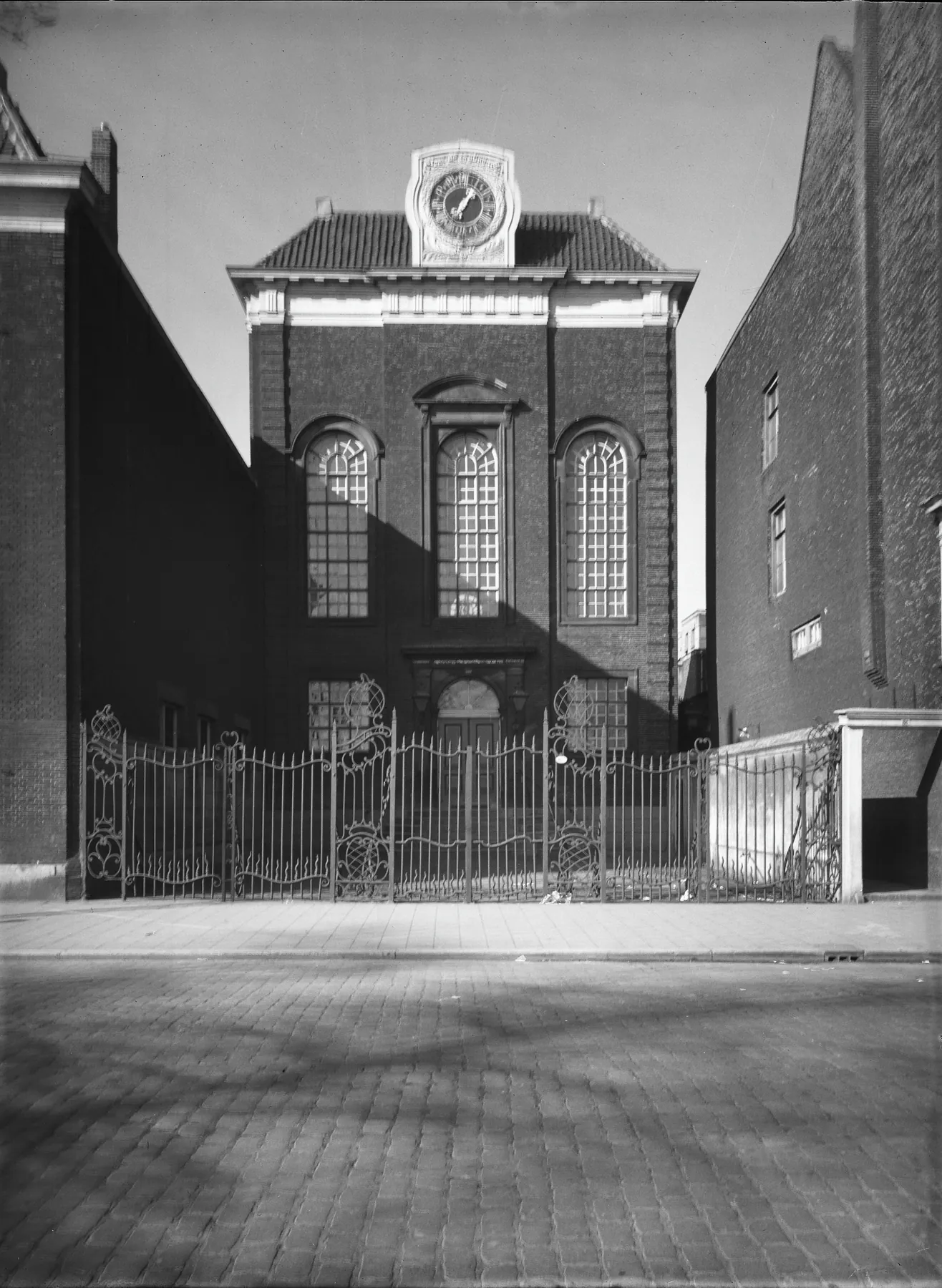
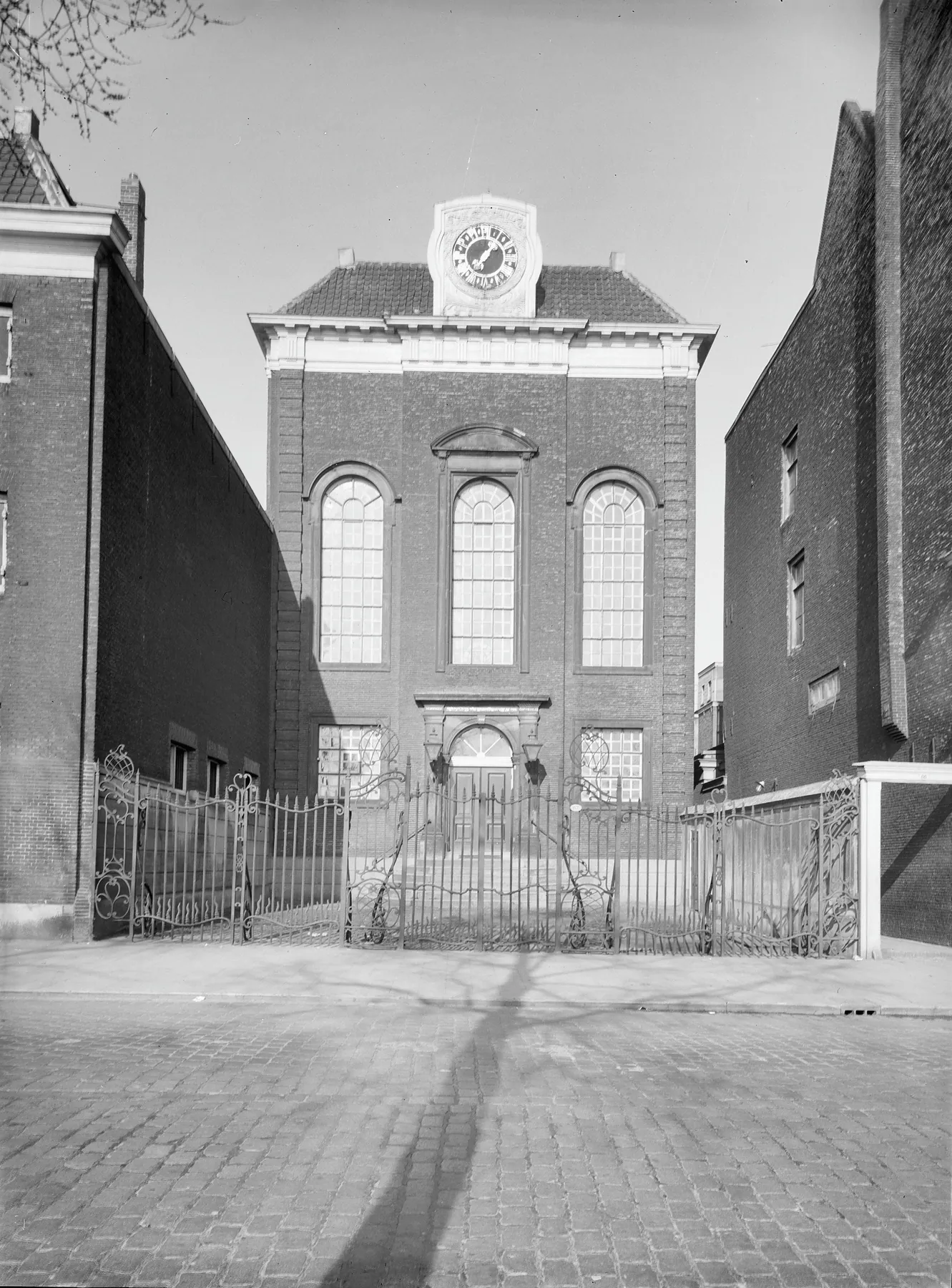
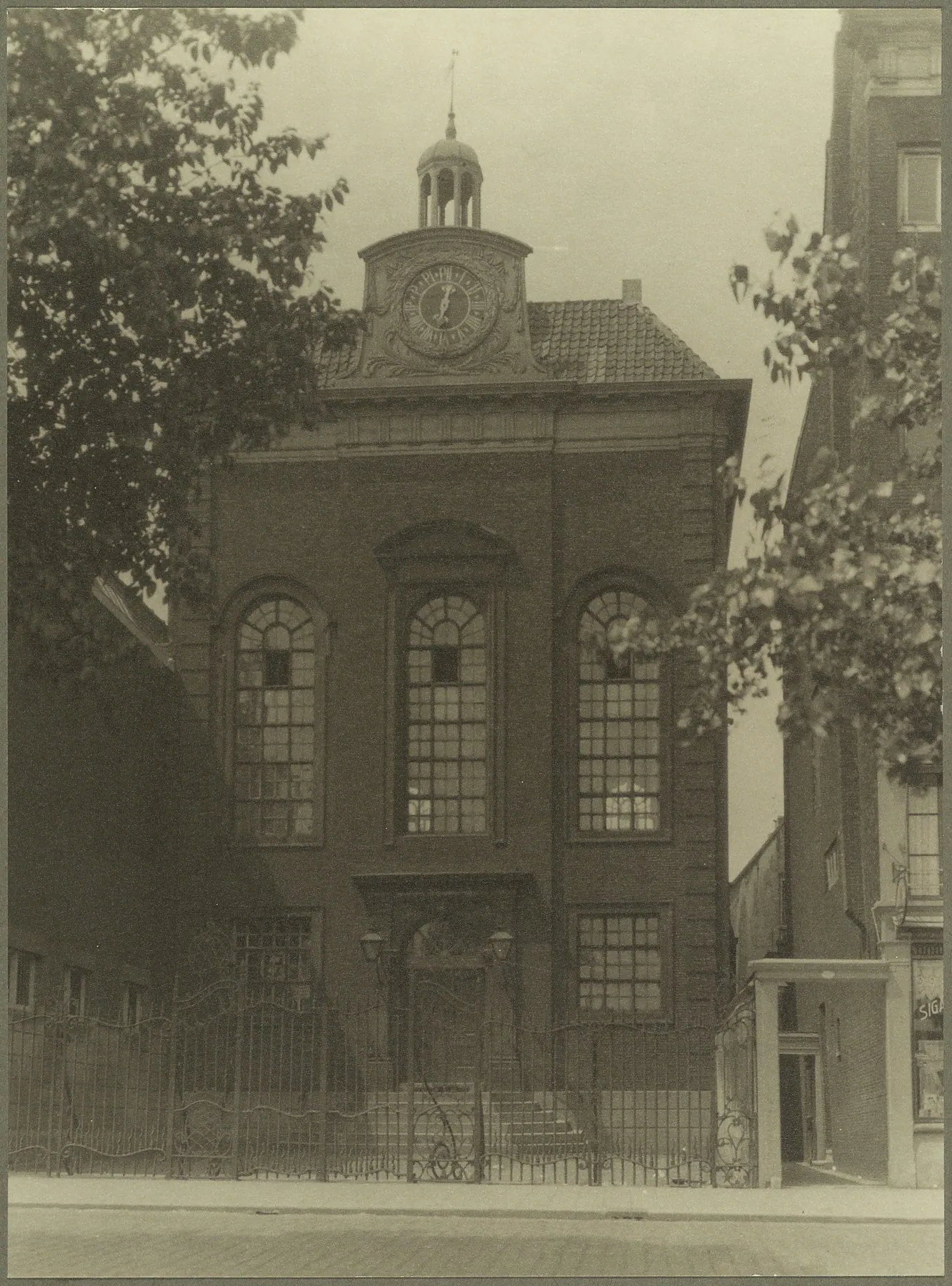
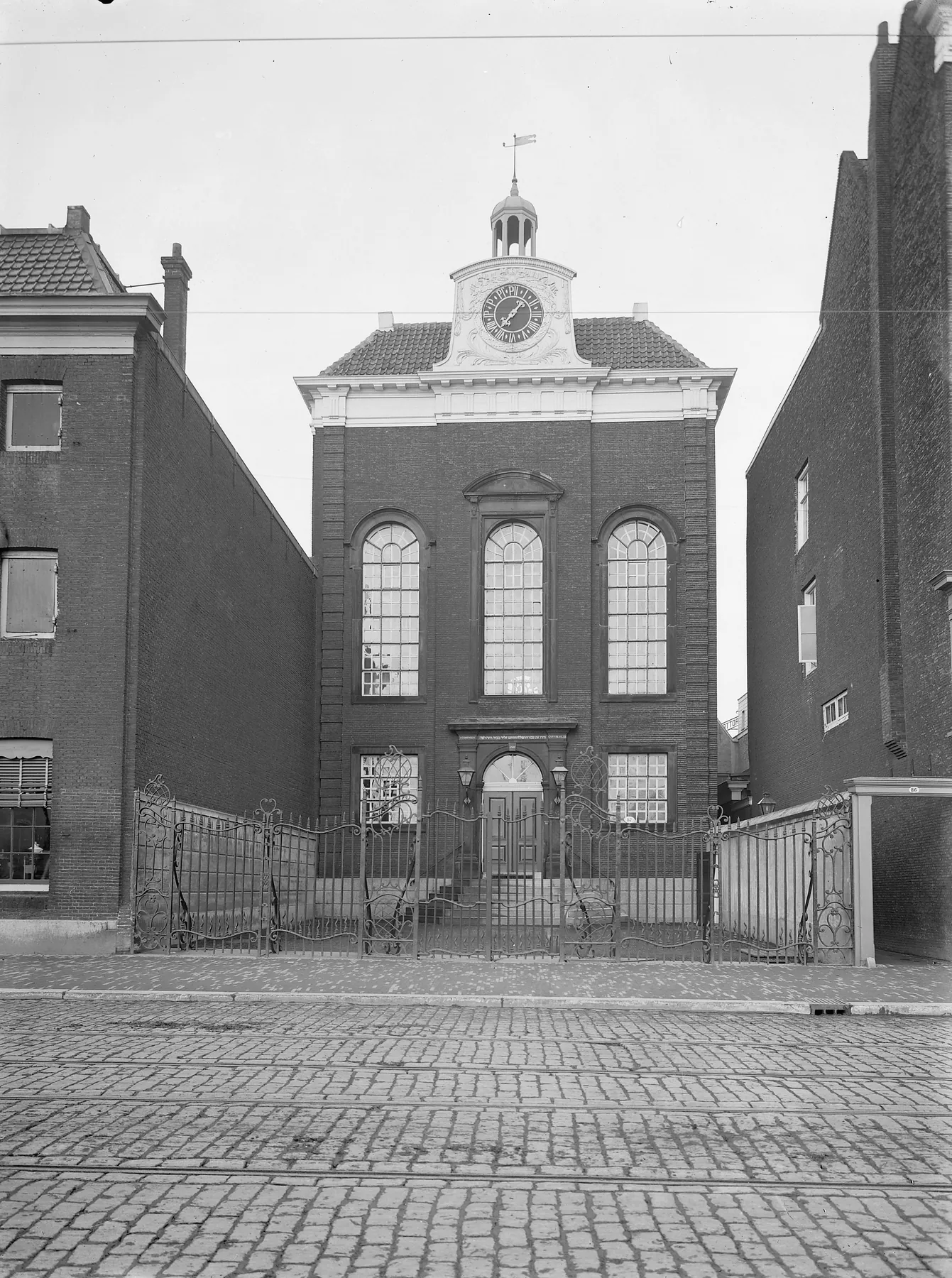
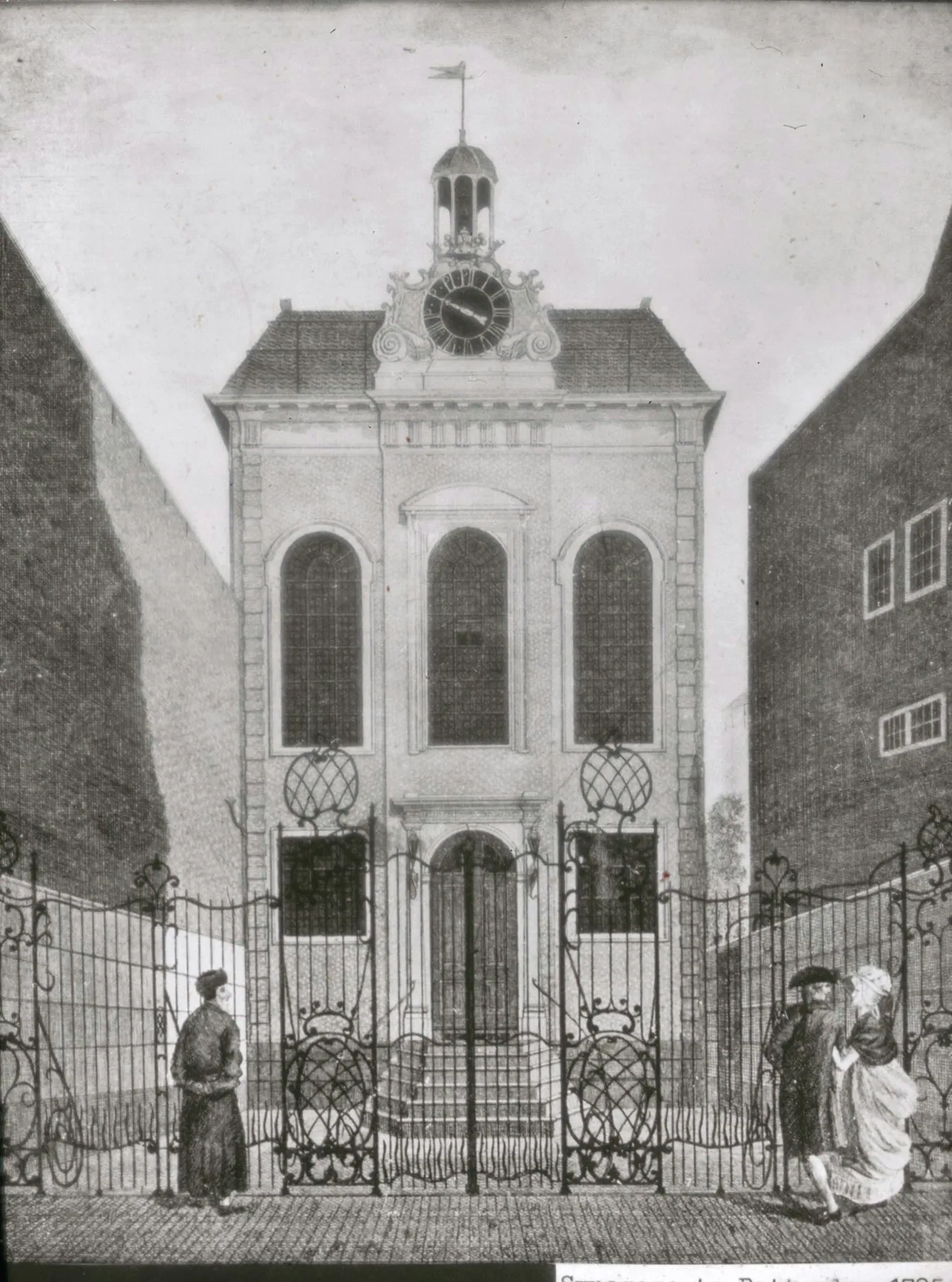
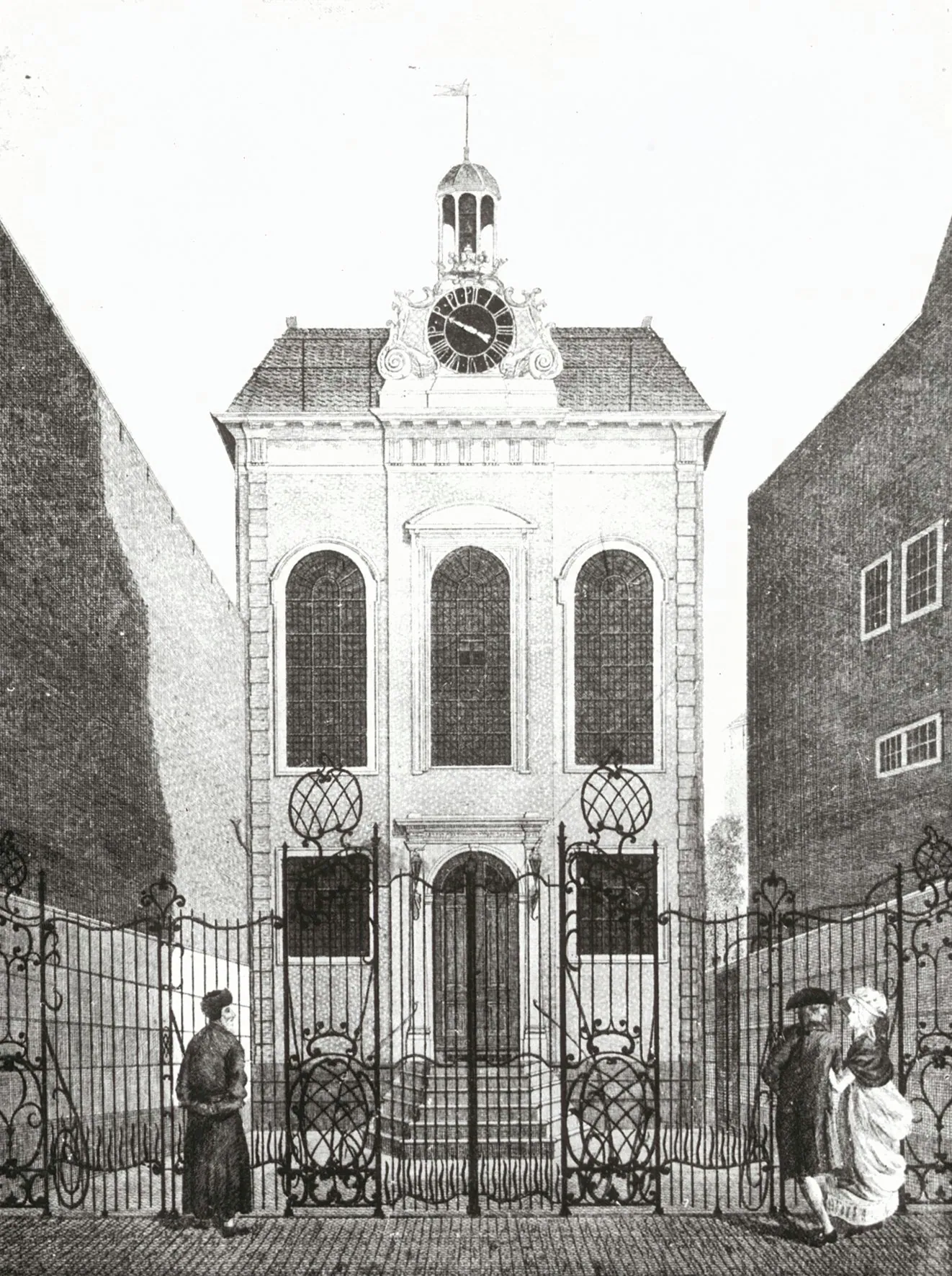
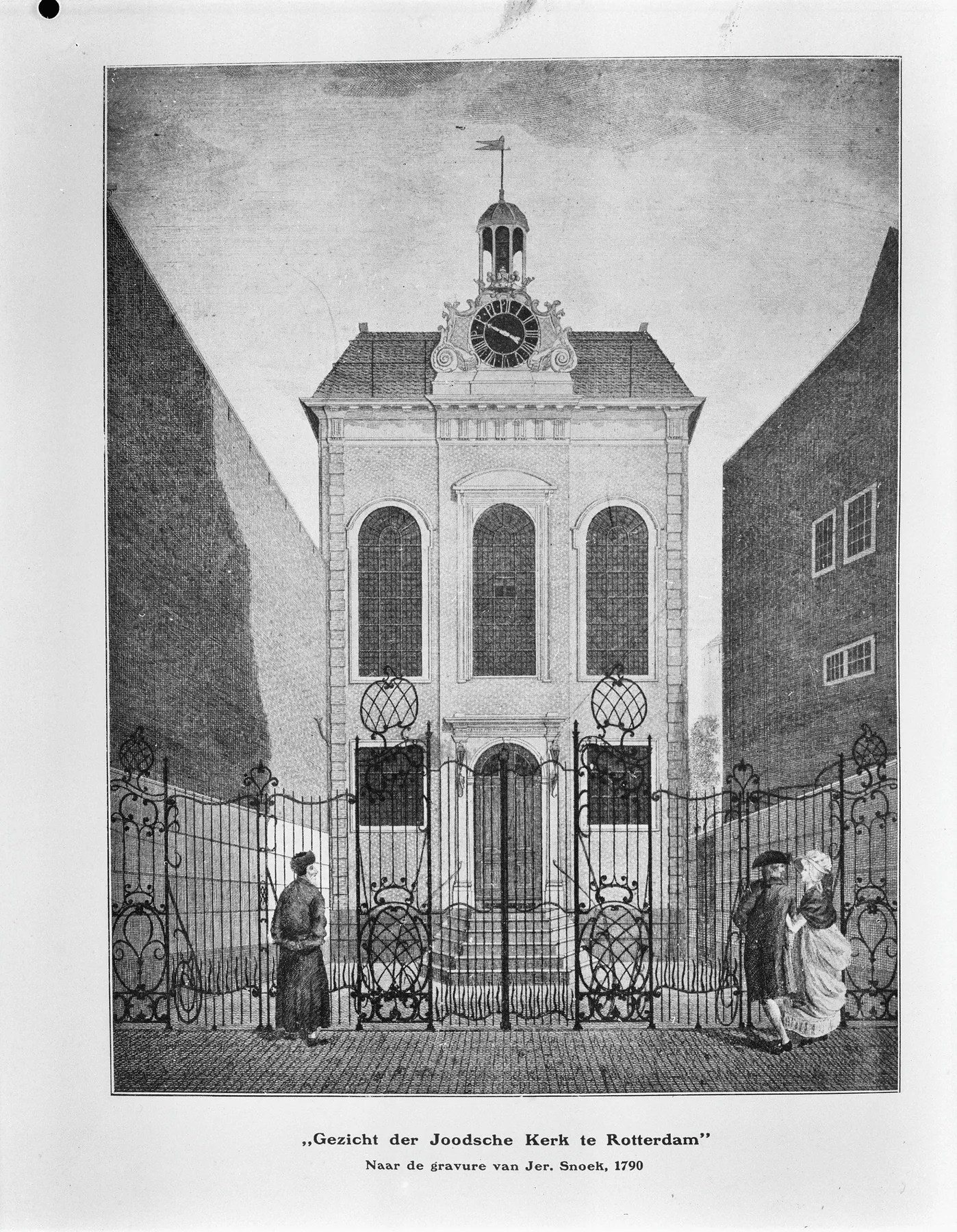
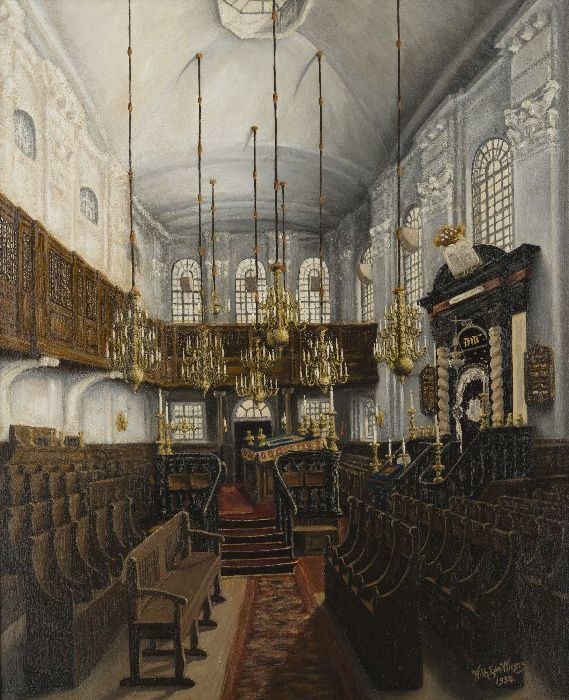
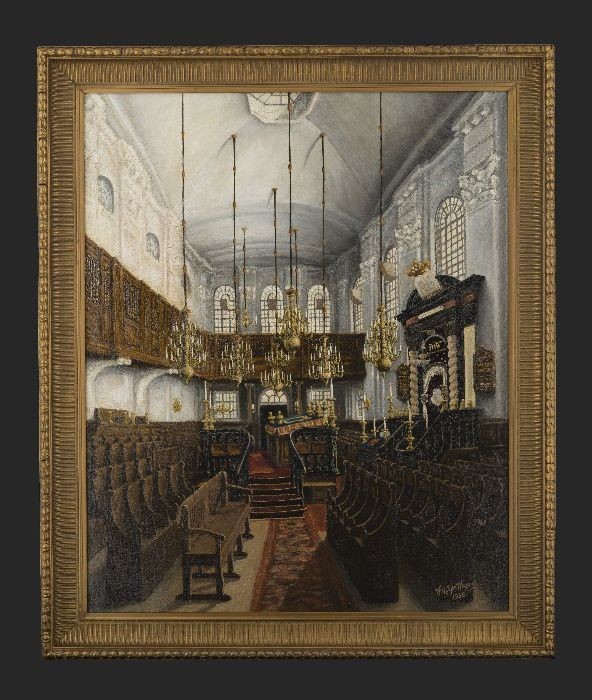
The synagogue stood at Boompjes 87, on the tree-lined quay along the Nieuwe Maas in the heart of old Rotterdam, with its plot running back to the Scheepmakershaven. Jews had held services near the Boompjes since 1675, and after the Portuguese and Ashkenazi congregations merged in 1682 they worshipped in a shul on the Glashaven. The first stone of a purpose-built synagogue was laid on 27 August 1724 and the building was consecrated on Friday 8 July 1725, with 402 seats. Its architect was probably Titus Favre, who later built the city's Lutheran church. Free-standing on three sides, the 12 by 22 metre building had a dark red brick front with Bentheim sandstone details, a projecting central bay with the men's entrance, a carved wooden crest holding a large clock, and a low roof with an octagonal wooden turret; a wrought-iron Louis XV gate was added in 1768. Inside, the ark faced the bimah, three women's galleries stood behind open screens and a lantern lit the vaulted ceiling. For two centuries it was Rotterdam's main synagogue. As the Jewish population moved north, the community considered closing it, and from 1938 the Botersloot synagogue became its centre. In the fighting of 10–14 May 1940 and the Nazi bombing of Rotterdam on 14 May 1940, the Boompjes synagogue was reduced to a ruin.
Where it stood for 215 years
Historic: Boompjes 87, with the plot running to the Scheepmakershaven, Rotterdam. Today: Boompjes, Stadsdriehoek, Rotterdam (rebuilt quay). Approximate.
Apri la mappa grande →La comunità ebraica
Jews settled in Rotterdam in the seventeenth century, Sephardic merchants first and then Ashkenazim from Germany. Services were held near the Boompjes from 1675, and in 1682 the Portuguese and Ashkenazi ('Hoogduits') congregations merged and used a synagogue on the Glashaven. As the community grew with the port, it built a synagogue of its own on the Boompjes, the city's fashionable riverside quay, in 1724–1725. A side synagogue, the Kleine Synagoge, was added in 1790, and the complex came to include a mikveh, homes for the cantor and sexton, a library and reception rooms. By the twentieth century most Jews lived in other parts of the city, and the Botersloot synagogue, opened in 1891, grew in importance. In 1930 Rotterdam had 10,515 Jews.
Architettura e design
The synagogue, probably designed by Titus Favre, measured 12 by 22 metres and stood free on three sides. Its facade to the Boompjes was of dark red brick with details in Bentheim sandstone. A projecting central bay held the men's entrance and rose to a carved wooden crest framing a large black clock face with gilt numerals; a 1917 article noted that it was the only synagogue in the Netherlands with a facade clock, and its Roman numerals used the letter P in place of X. The low saddle roof, covered with blue tiles, carried an octagonal wooden turret with a copper weathervane. A wrought-iron Louis XV gate of 1768 closed the forecourt. Inside, the ark (hechal) faced the bimah, with the men's benches around the bimah; three women's galleries behind open screens had their own entrance, and the vaulted ceiling with a central lantern was hung with brass chandeliers. Electric light was installed in 1921.
La vita nella sinagoga
For two centuries the Boompjes synagogue was the main house of worship of Rotterdam's Jews and the seat of its chief rabbinate. Its 200th anniversary was celebrated on 13 June 1925 with a service led by the cantors Vleeschhouwer and Lipschütz and the vice-cantor Melamed, at which the chief rabbi preached. From 1923 the community debated closing it, since most members now lived far away, and in its last years it was used mainly on the High Holidays and for weddings and bar mitzvahs. In 1938 the community decided to make the Botersloot synagogue its centre and considered selling the Boompjes building, but it was never closed. Aaron Barend Nathan Davids, chief rabbi of Rotterdam from 1929, served the community in these last years before the war.
Distruzione
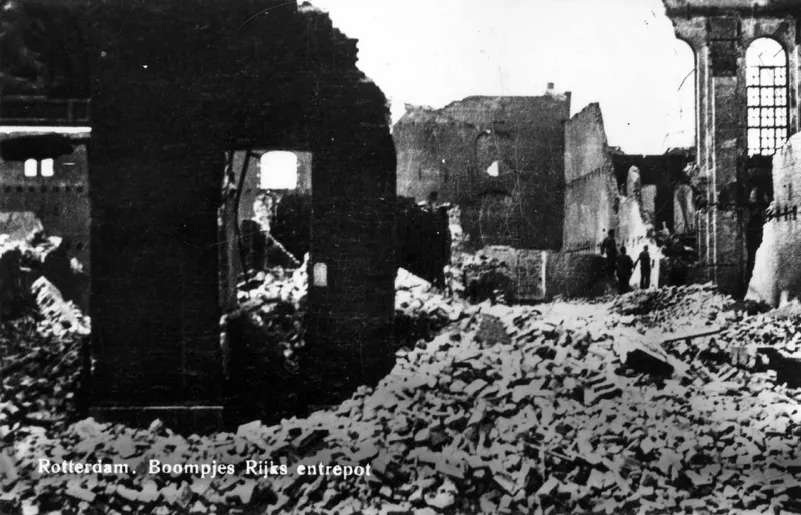
Germany invaded the Netherlands on 10 May 1940. For four days Dutch marines held the bridges over the Maas in Rotterdam against German airborne troops, and the Boompjes waterfront lay in the line of fire. On 14 May 1940 the Luftwaffe of Nazi Germany bombed the centre of Rotterdam, starting fires that destroyed the old city; the Netherlands capitulated the next day. The Boompjes synagogue was left a burnt-out ruin, as a postcard of 1940 shows. According to the Jewish heritage foundation of Rotterdam, it was the fighting after 10 May together with the Nazi bombing of 14 May that destroyed it; other sources attribute its destruction to the bombing alone. The ruins were cleared with the rest of the bombed city centre, and the synagogue was never rebuilt.
Il destino della comunità
Rotterdam had 10,515 Jewish inhabitants in 1930, the second-largest community in the Netherlands. After the German occupation in May 1940, Jews were progressively excluded from public life, forced to wear the yellow star and concentrated, and from late July 1942 to June 1943 the German occupation authorities deported them via Westerbork to Auschwitz, Sobibor and other camps. Chief Rabbi Aaron Barend Nathan Davids, chief rabbi of Rotterdam from 1929, was deported to Westerbork in June 1943 and then to Bergen-Belsen, where he died on 22 February 1945. Only about 13 per cent of the pre-war community survived; in 1951 780 Jews lived in Rotterdam. A monument of 2013 names 686 deported Jewish children of the city.
Il luogo oggi
Nothing of the synagogue survives. The Boompjes quay was rebuilt after the war as a wide road with modern buildings along the Maas, and the site of the synagogue at former Boompjes 87 lies in the rebuilt Stadsdriehoek district. A commemorative plaque recalls the synagogue on the Boompjes. After the war Rotterdam's community built a new synagogue at the A.B.N. Davidsplein, named after the chief rabbi murdered at Bergen-Belsen. No trace of the old building or its gate, once admired as one of the finest in the country, remains on the quay.
Nomi importanti
Titus Favre
UnknownProbable architectTitus Favre (Faber), who later built Rotterdam's Lutheran church, is named by the Jewish heritage foundation of Rotterdam as the probable designer of the Boompjes synagogue, begun in 1724 and consecrated in 1725, a Dutch Baroque building long praised as one of the most beautiful synagogues in Europe.
Biografia o fonte →Aaron Barend Nathan Davids
1895–1945Chief Rabbi of Rotterdam, 1929–1943A. B. N. Davids became chief rabbi of Rotterdam in 1929, when the Boompjes synagogue was still the community's historic main synagogue. Deported to Westerbork in June 1943 and to Bergen-Belsen in January 1944, he died there on 22 February 1945; Rotterdam's post-war synagogue square is named after him.
Biografia o fonte →Hai qualcosa da condividere?
Fotografie, documenti, storie di famiglia o ricordi di questa sinagoga e della sua comunità aiutano a mantenerne viva la storia.
Share a memory or thought
No comments yet. Be the first to add one.