
История Botersloot Synagogue, Rotterdam
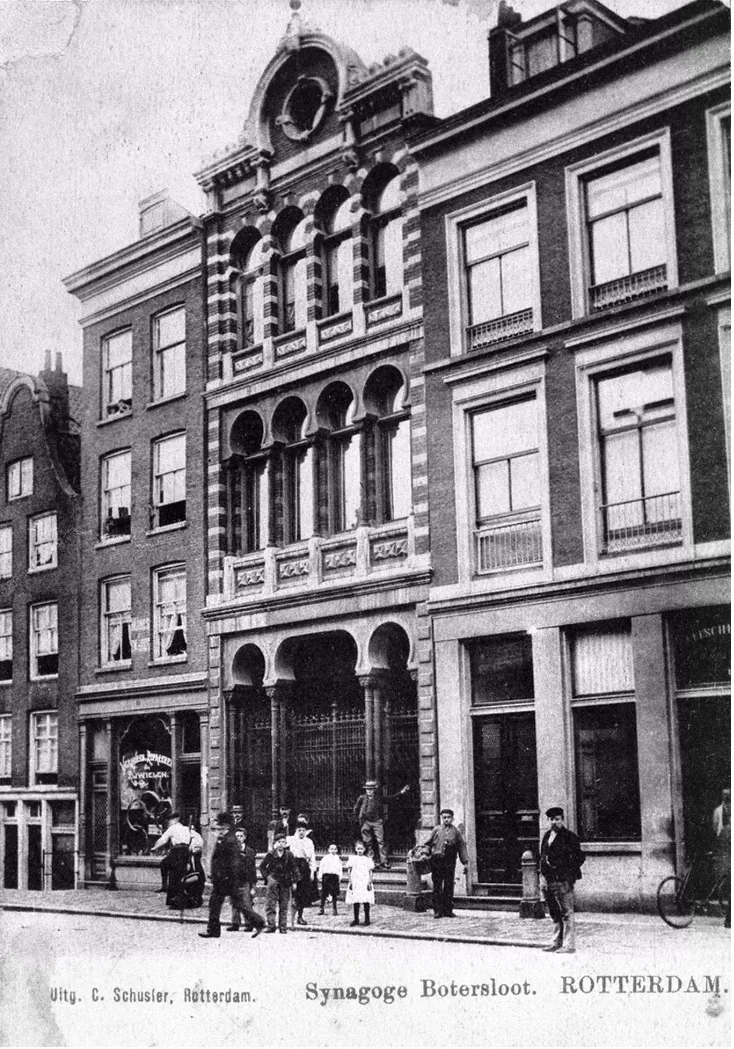
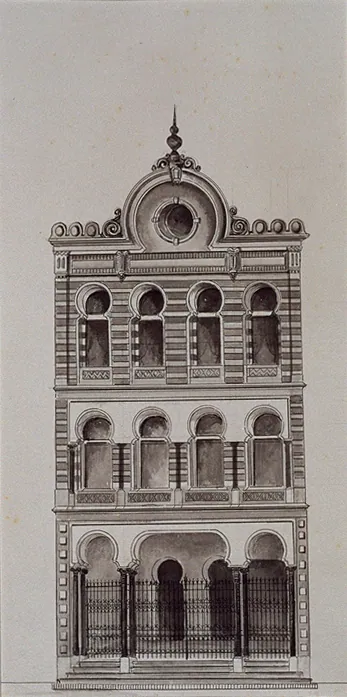
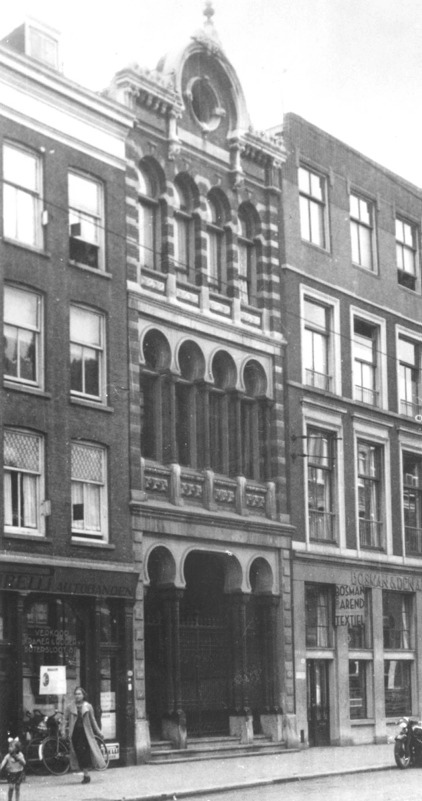
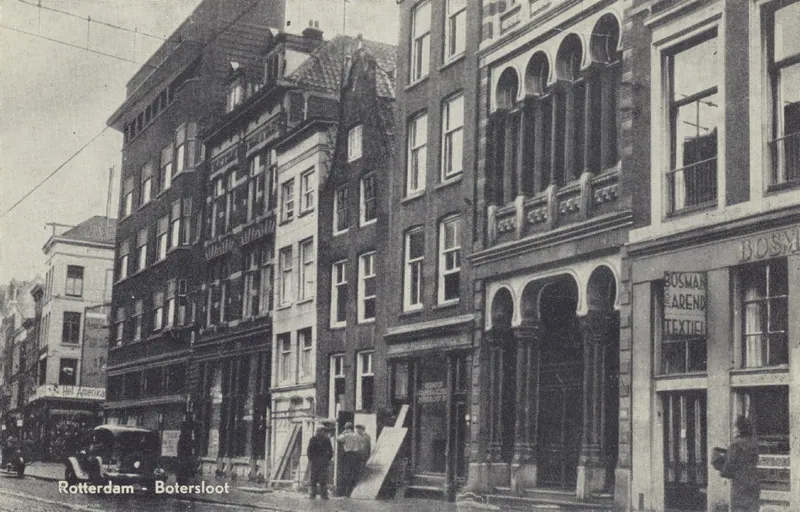
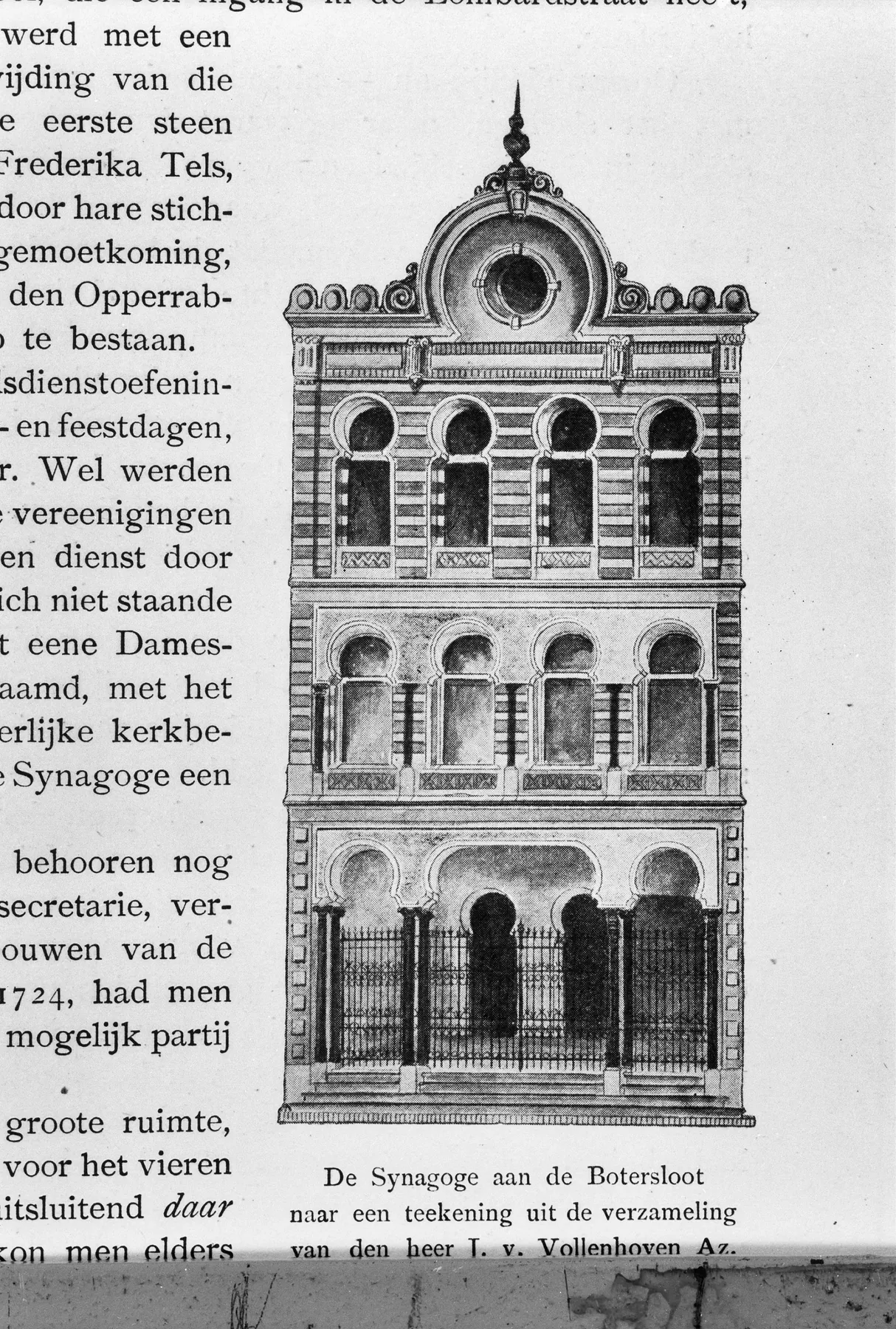
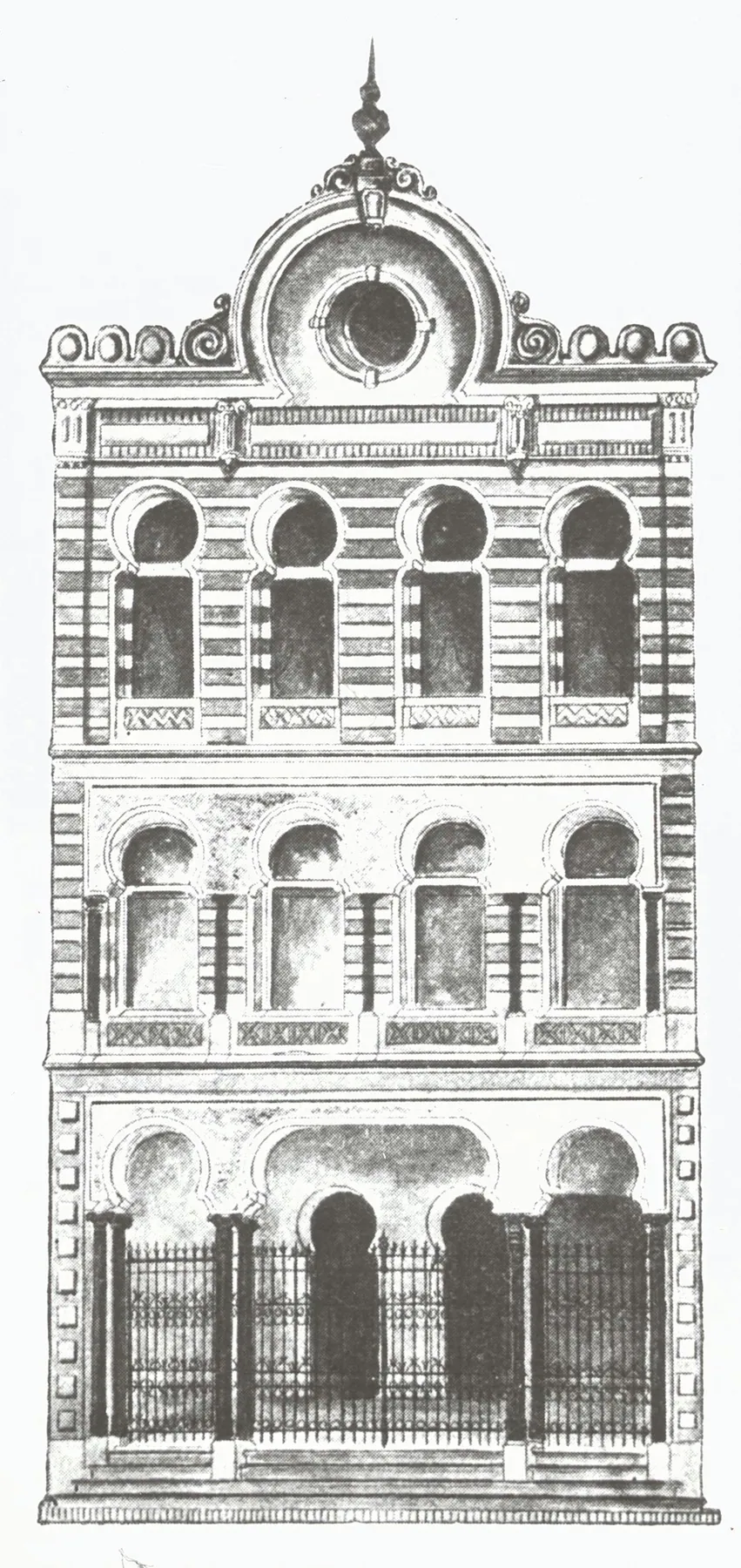
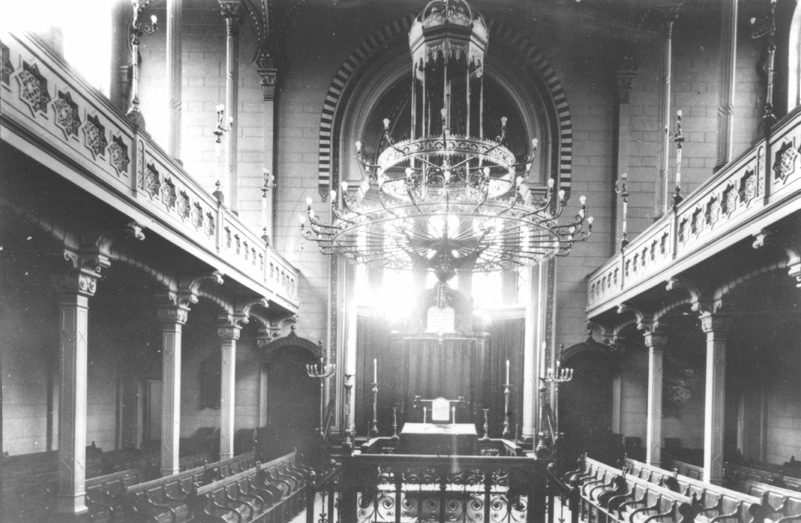
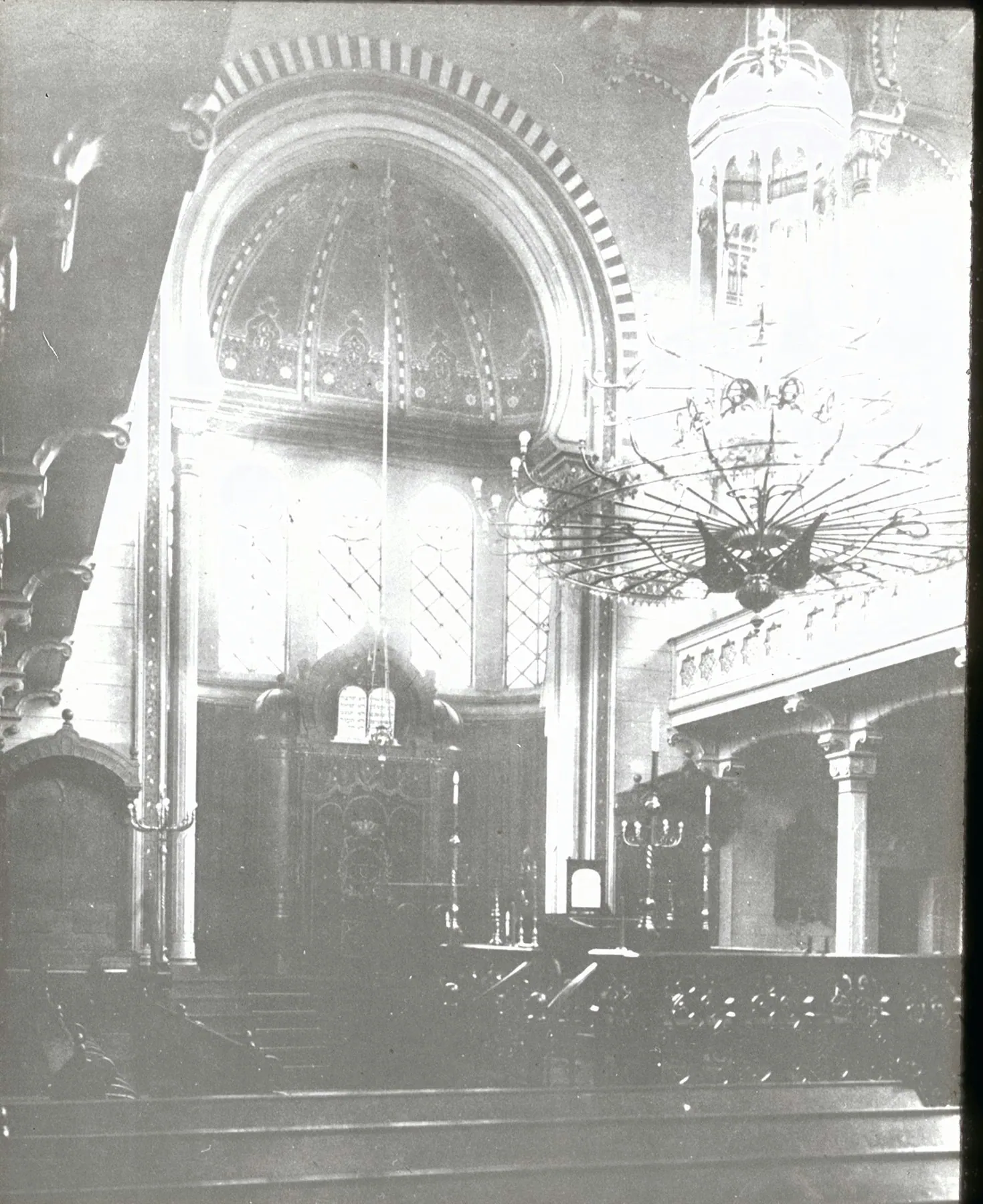
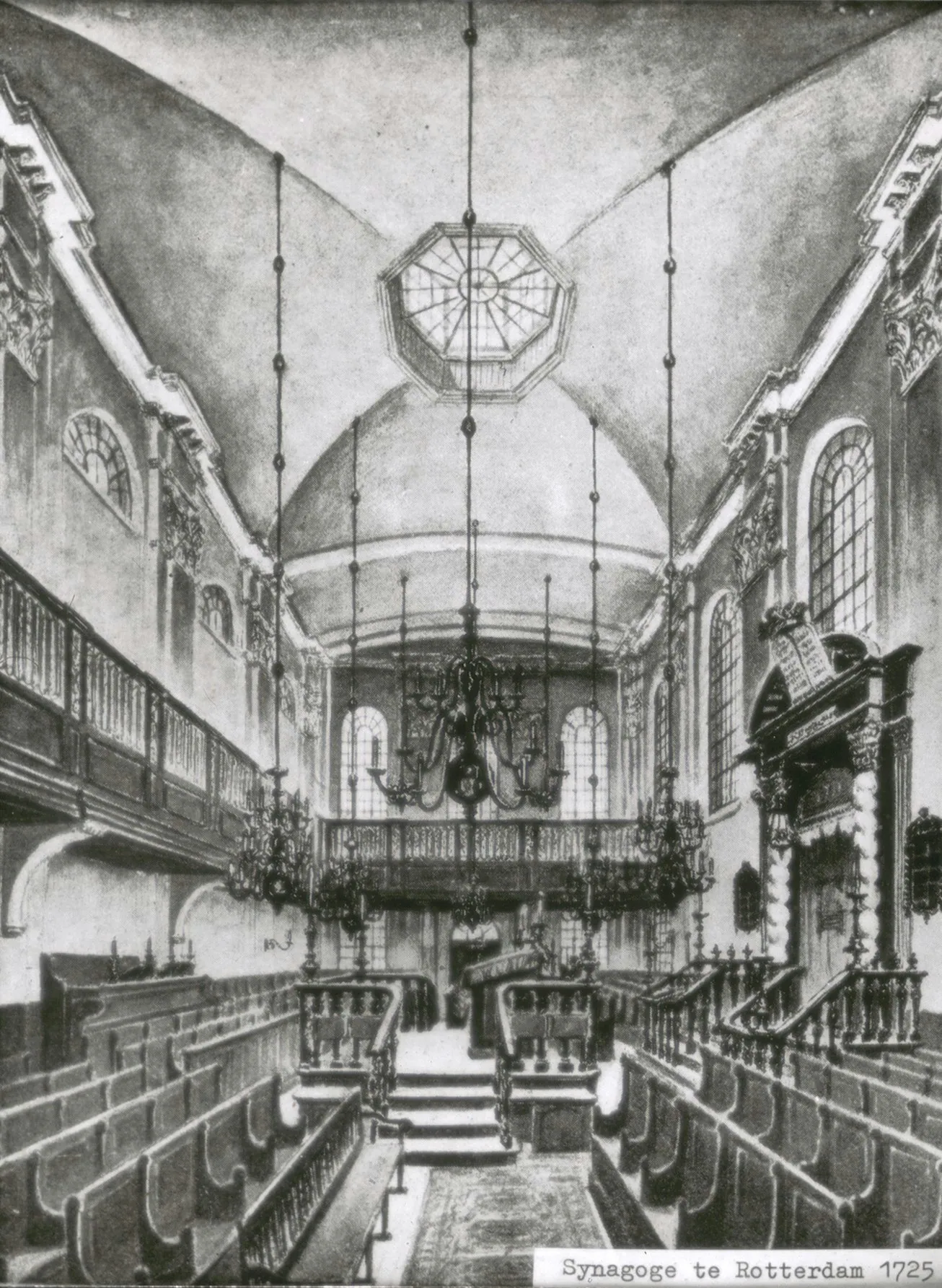
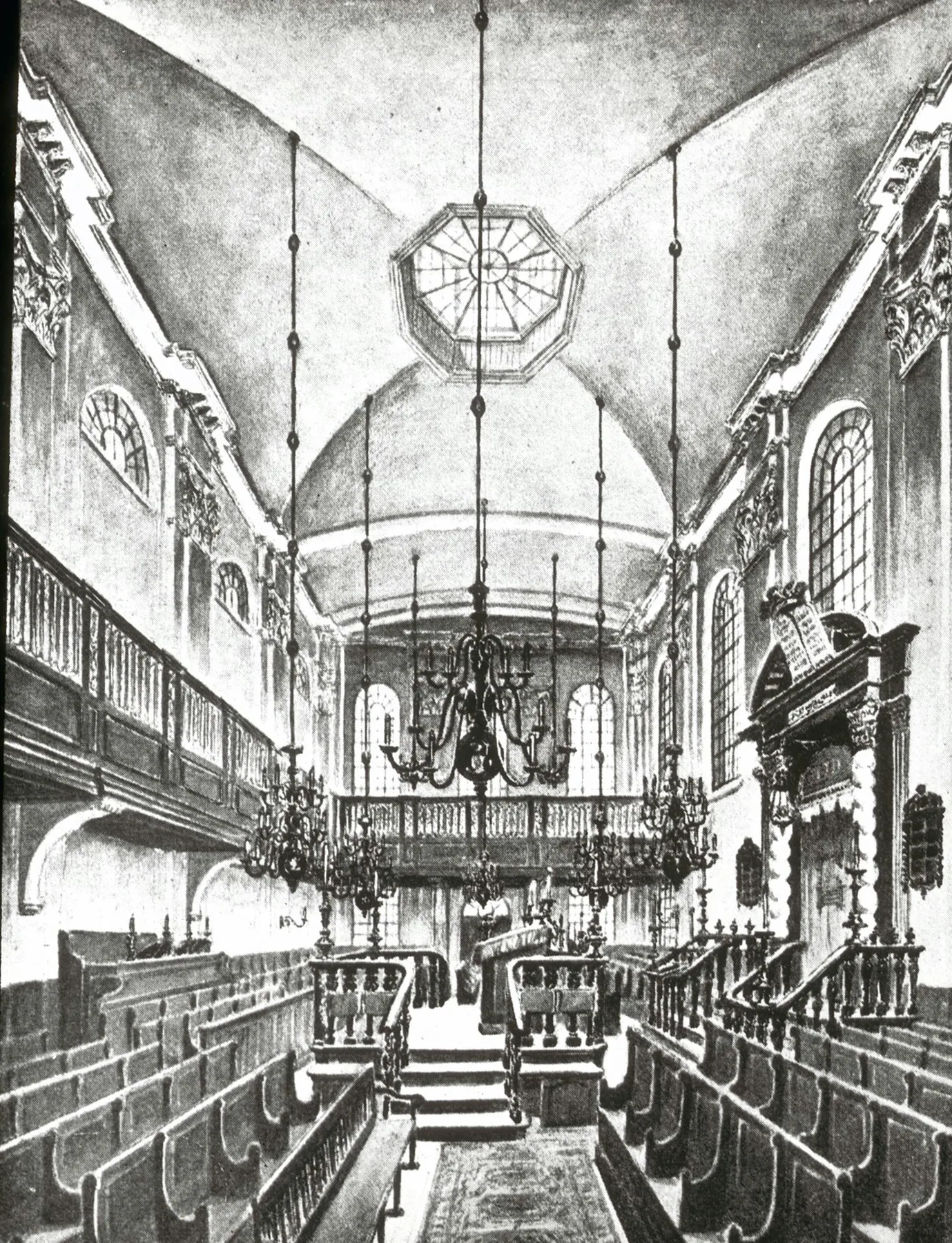
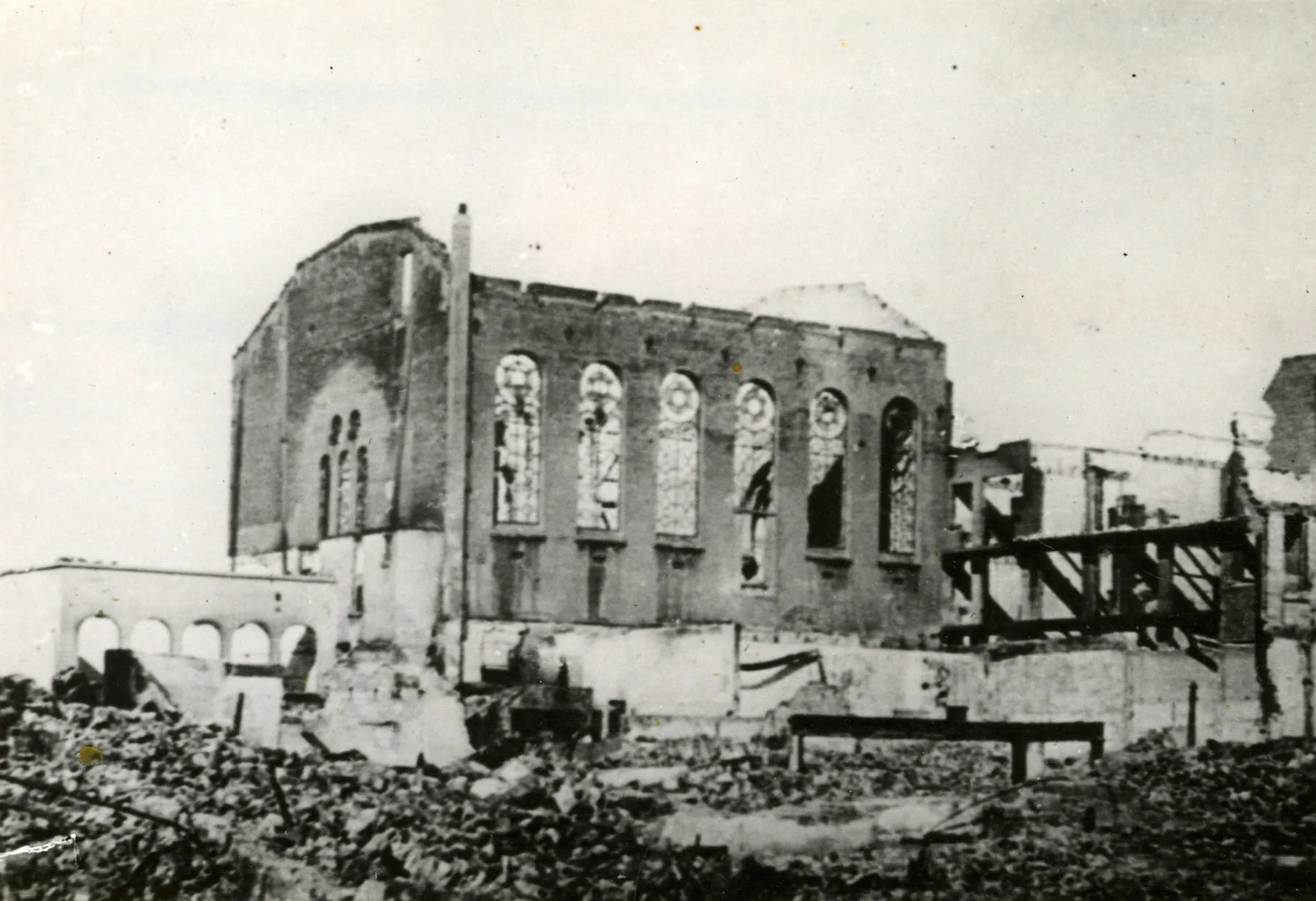
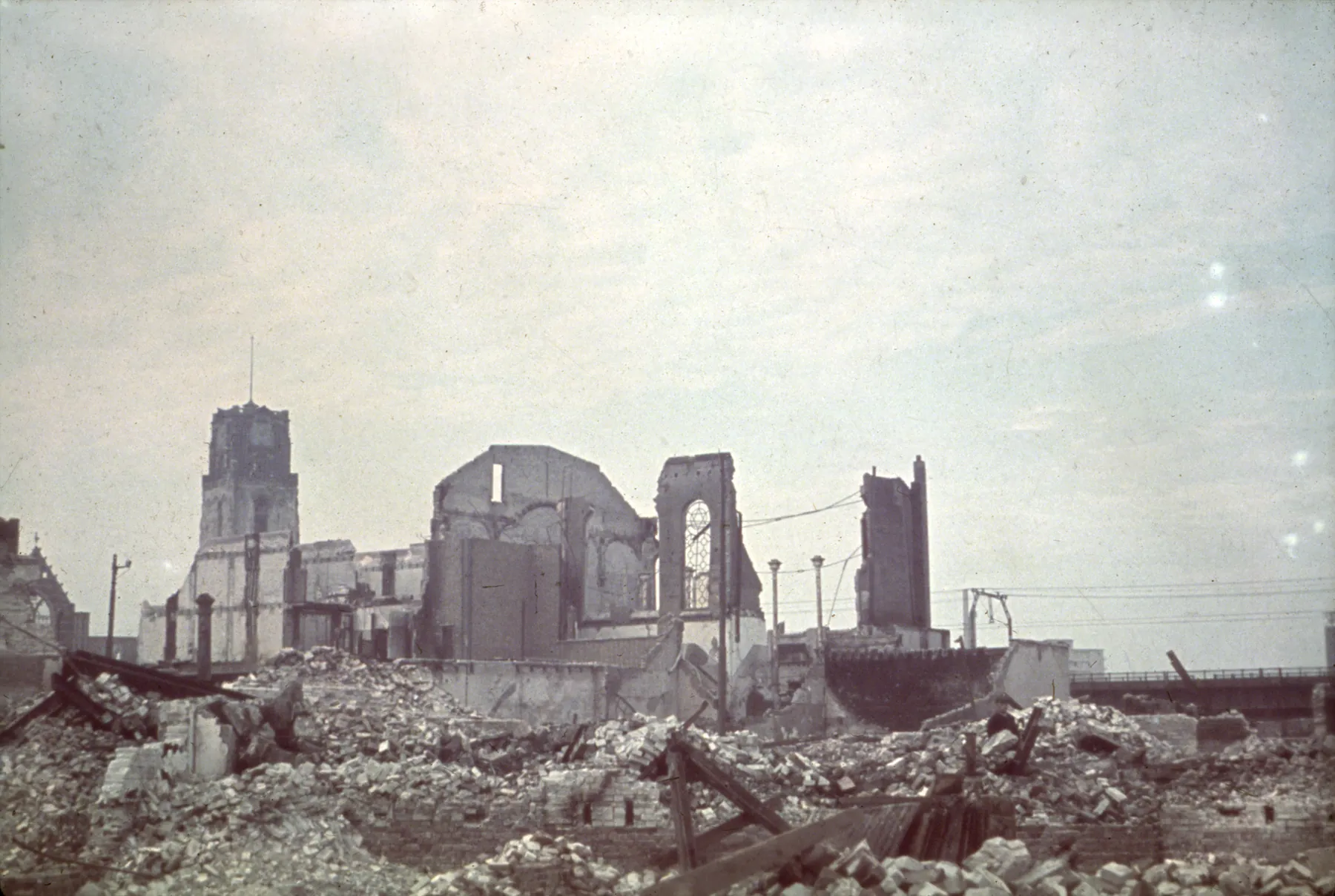
The synagogue stood at Botersloot 67, a canal street in the old centre of Rotterdam, with the community's religious school behind it on the former Lombardstraat. Opened in 1891 with 510 seats, it served the growing Jewish population of the city alongside the old Boompjes synagogue of 1725. Its narrow, tall street front, framed by neighbouring houses, was richly decorated in an eclectic style with Moorish Revival details: banded brickwork, horseshoe and round arches, a rose window and a crested gable. Inside, galleries on slender columns surrounded a hall lit by chandeliers. As Rotterdam's Jews moved away from the Boompjes area, the Botersloot synagogue grew in importance, and in 1938 the community decided to make it its centre. In 1938–39 it was rebuilt with new galleries holding 200 women's seats, oak panelling and central heating, and new administration buildings housed the community's board, rabbinate and archive. Less than a year later, on 14 May 1940, the Nazi bombing of Rotterdam destroyed the city centre, and the synagogue was left a burnt-out shell; the mikveh survived. The ruin was considered repairable but was demolished, and the community that had worshipped there was deported and murdered under the German occupation.
Where it stood for 49 years
Historic: Botersloot 67, with the religious school behind on the former Lombardstraat (now Lombardkade), Rotterdam. Today: Botersloot, Stadsdriehoek, Rotterdam. Approximate.
Открыть большую карту →Еврейская община
Rotterdam's Jewish community, founded in the seventeenth century, grew strongly in the nineteenth century with the expansion of the port. The historic Boompjes synagogue of 1725 could no longer serve everyone, and in 1891 the community opened a second large synagogue on the Botersloot, closer to the neighbourhoods where many Jews then lived. Around it grew a cluster of communal institutions, including the religious school on the Lombardstraat. By 1930 Rotterdam had 10,515 Jews, the second-largest community in the Netherlands. In the 1930s, with most members living far from the Boompjes, the community chose the Botersloot as its central synagogue and invested in its modernisation.
Архитектура и дизайн
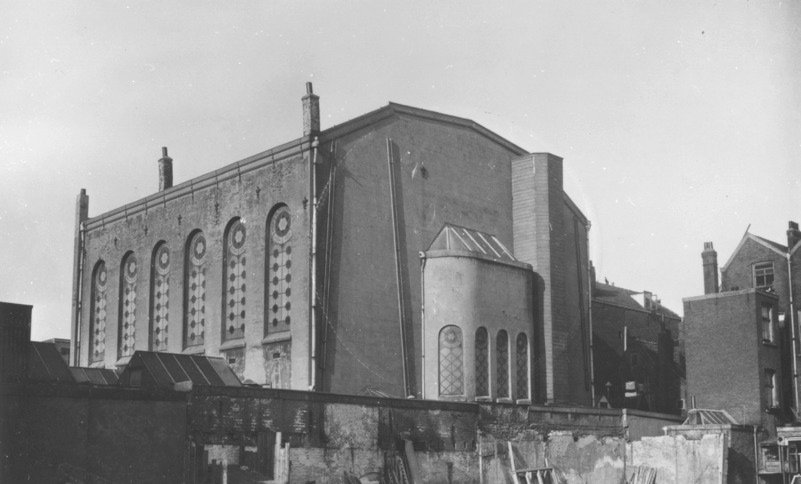
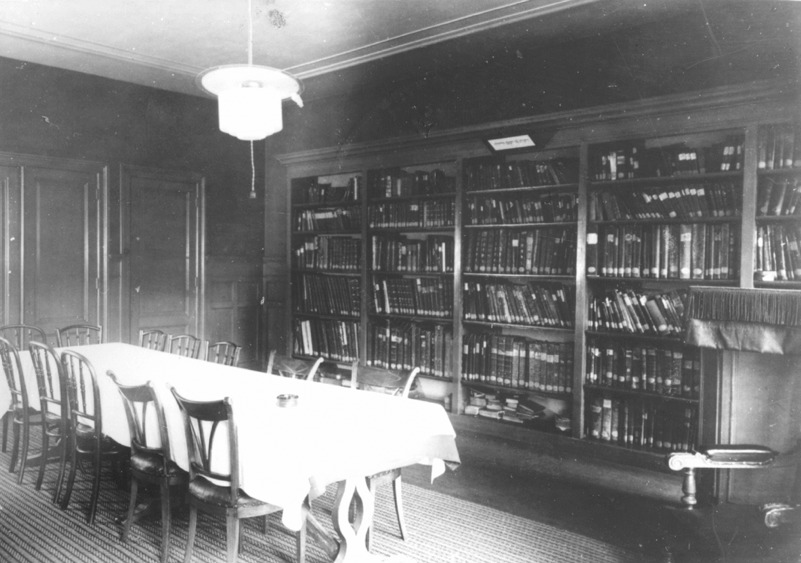
Photographs and drawings show a tall, narrow street front squeezed between canal houses, built of brick with contrasting bands and richly decorated in an eclectic style with Moorish Revival elements. Superimposed tiers of horseshoe and round-arched windows rose to a rose window and a crested gable with small turrets. A rear view of 1931 shows the long brick side wall of the hall with tall round-arched windows. Inside, the prayer hall was surrounded by galleries on slender columns, with a domed or vaulted ceiling, large chandeliers and the ark at the east end; the community also had a reading room and library. In 1938–39 the interior was remodelled with new galleries for 200 women, oak panelling and central heating, and new buildings for the community administration were added. The architect is not recorded.
Жизнь в синагоге
From 1938 the Botersloot synagogue was the main synagogue of the Nederlands-Israëlietische Gemeente of Rotterdam and the seat of its board, rabbinate and archive. Photographs of 1931 show its interior and its reading room lined with bookcases, reflecting the community's educational activity, and the religious school stood directly behind the synagogue. Chief Rabbi A. B. N. Davids, chief rabbi of Rotterdam from 1929, led the community in the years when the Botersloot became its centre. Samuel Dasberg, later rabbi of Dordrecht, who was born in Rotterdam, attended the synagogue until 1940. The synagogue thus served as the community's spiritual and administrative heart for barely a year before its destruction.
Разрушение
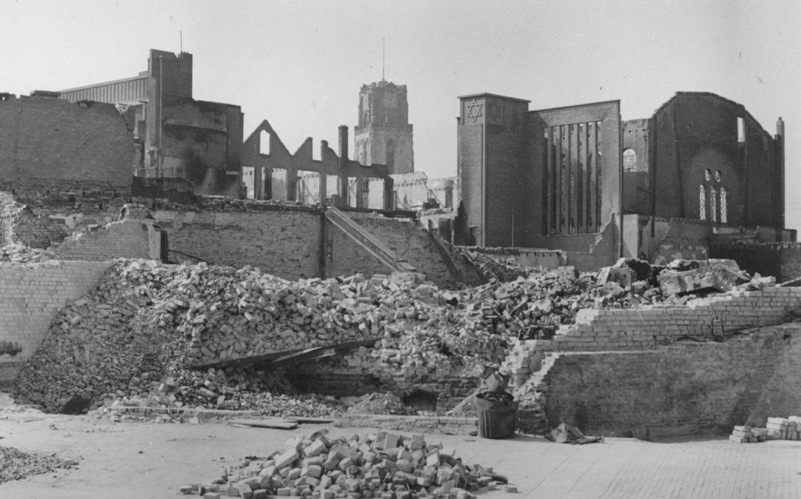
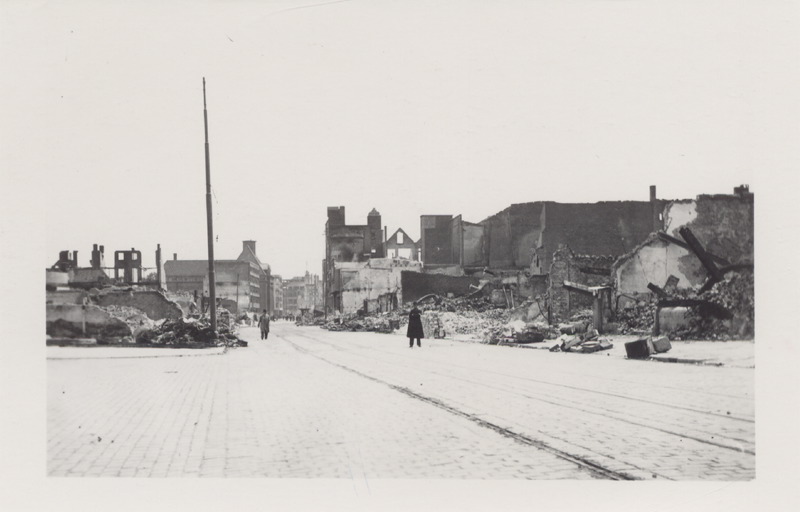
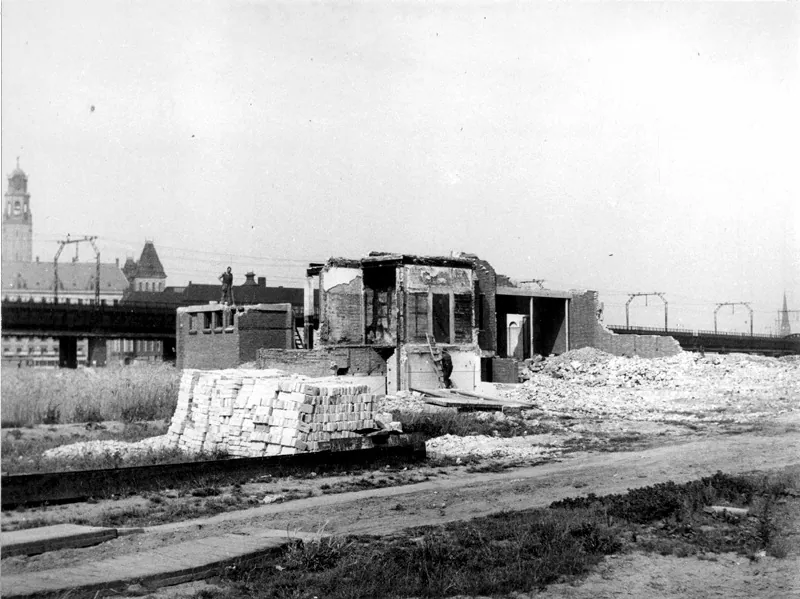
On 14 May 1940, after four days of fighting for the Maas bridges, the Luftwaffe of Nazi Germany bombed the centre of Rotterdam. The raid and the fires that followed destroyed the old city, including the Botersloot and its synagogue, which was left a burnt-out shell; photographs taken that day and in June 1940 show its gutted walls standing amid the ruins. The mikveh survived. The ruin was considered repairable, but it was later demolished: Dutch Wikipedia says this happened after the war, probably because so few members of the community had survived, while a photograph in the city archives shows the remains after demolition in 1944. The synagogue was never rebuilt.
Судьба общины
Rotterdam had 10,515 Jewish inhabitants in 1930, the second-largest community in the Netherlands. After the German occupation in May 1940, Jews were progressively excluded from public life, forced to wear the yellow star and concentrated, and from late July 1942 to June 1943 the German occupation authorities deported them via Westerbork to Auschwitz, Sobibor and other camps. Chief Rabbi Aaron Barend Nathan Davids, chief rabbi of Rotterdam from 1929, was deported to Westerbork in June 1943 and then to Bergen-Belsen, where he died on 22 February 1945. Only about 13 per cent of the pre-war community survived; in 1951 780 Jews lived in Rotterdam. A monument of 2013 names 686 deported Jewish children of the city.
Место сегодня
Nothing of the synagogue survives. The Botersloot, like the rest of Rotterdam's medieval centre, was rebuilt after the war on a new plan, and the site of number 67 lies among post-war buildings in the Stadsdriehoek district; the exact footprint has not been located. The community's post-war synagogue was built at the A.B.N. Davidsplein, named after the chief rabbi who had served at the Botersloot and died in Bergen-Belsen. Photographs in the Rotterdam city archives remain the main record of the building.
Значимые имена
Aaron Barend Nathan Davids
1895–1945Chief Rabbi of Rotterdam, 1929–1943A. B. N. Davids was chief rabbi of Rotterdam when the Botersloot synagogue became the community's central synagogue and seat of the rabbinate in 1938–39. He was deported to Westerbork in June 1943 and to Bergen-Belsen, where he died on 22 February 1945.
Биография или источник →Samuel Dasberg
UnknownCongregant; later rabbi of DordrechtSamuel Dasberg, born in Rotterdam and later rabbi of Dordrecht, attended the Botersloot synagogue until 1940, according to Dutch Wikipedia's account of the synagogue's last years before the bombing.
Биография или источник →Вам есть чем поделиться?
Фотографии, документы, семейные истории и воспоминания об этой синагоге и её общине помогают сохранить её историю.
Share a memory or thought
No comments yet. Be the first to add one.