






The story of Synagogue of Rožmberk nad Vltavou
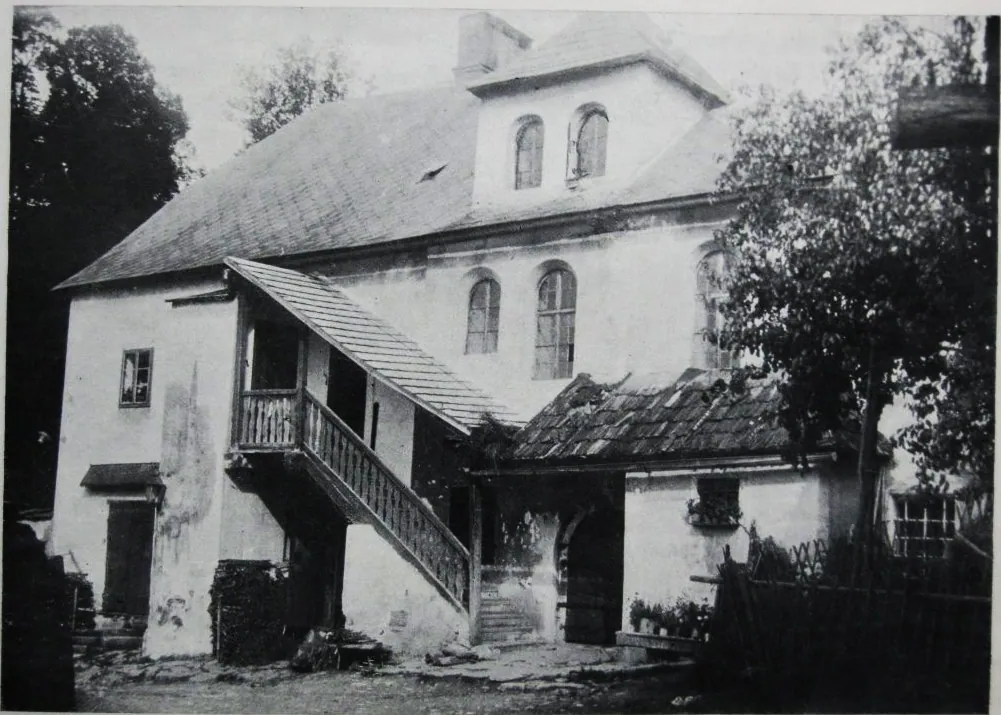
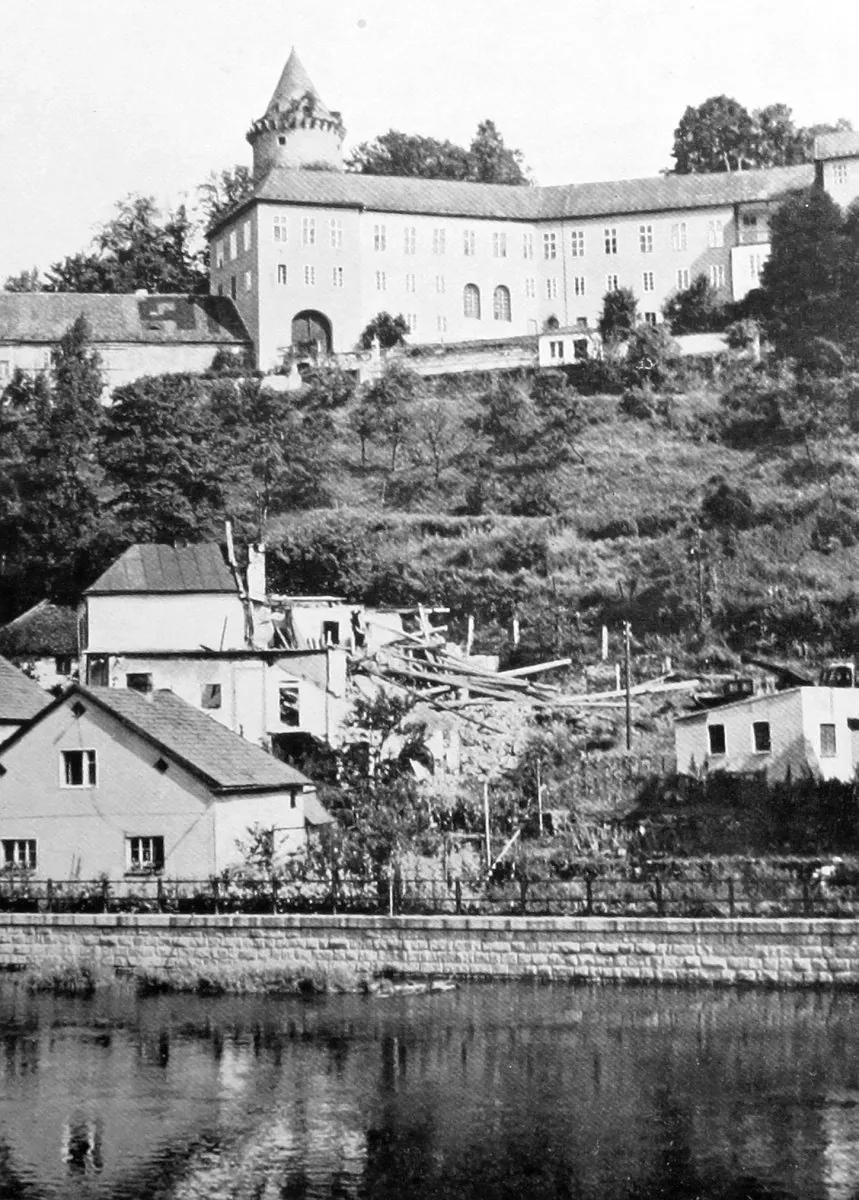
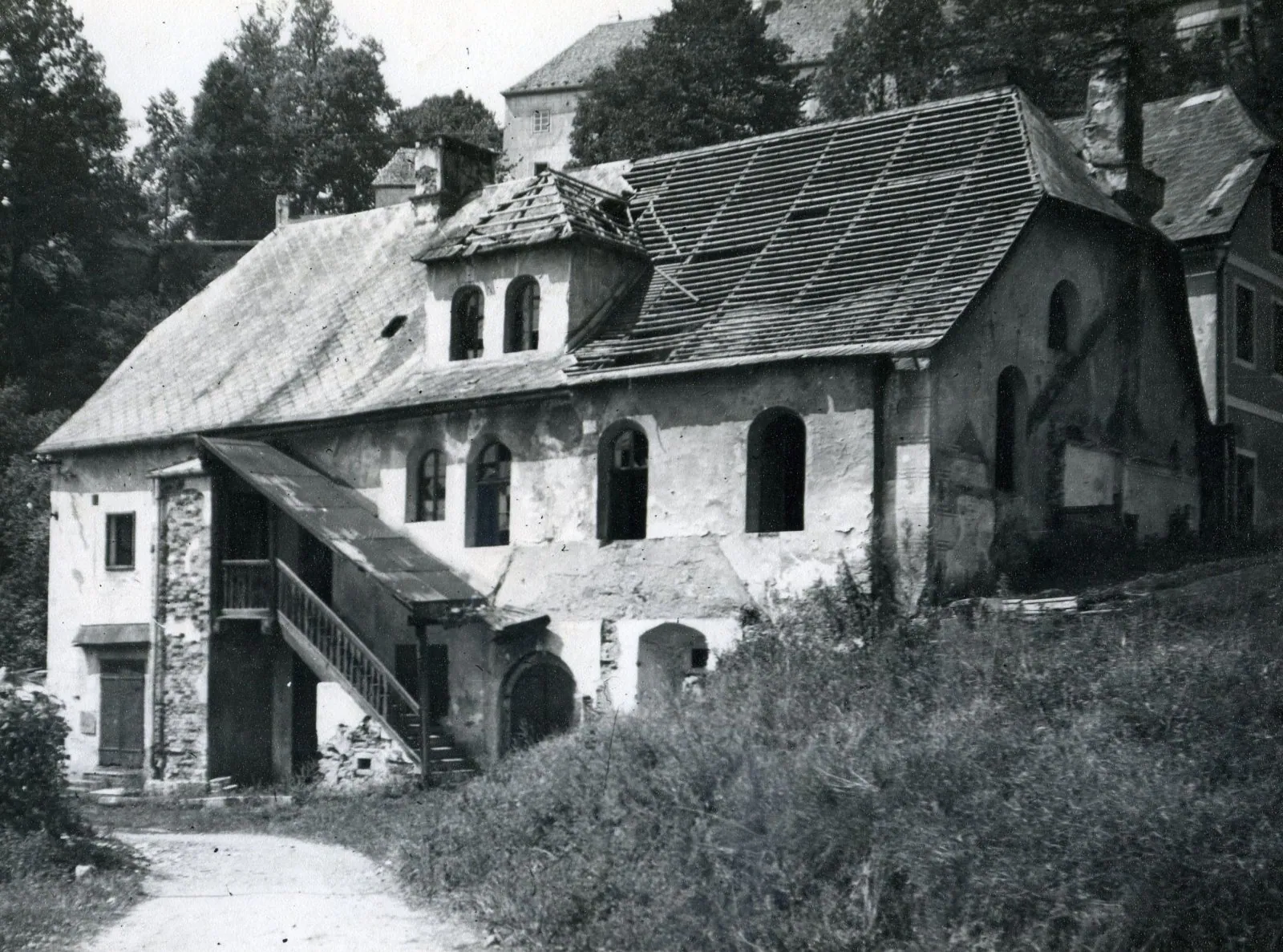
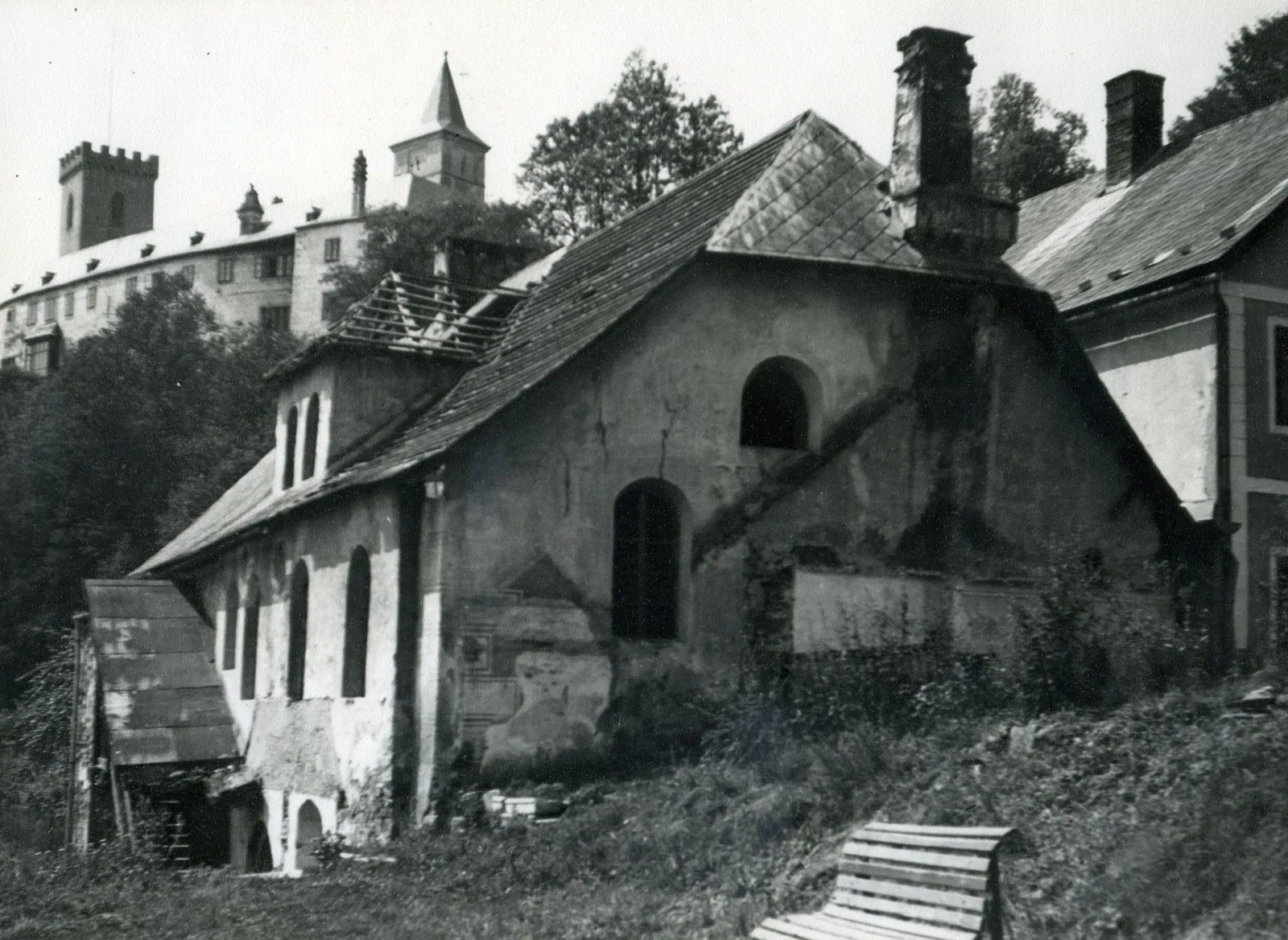
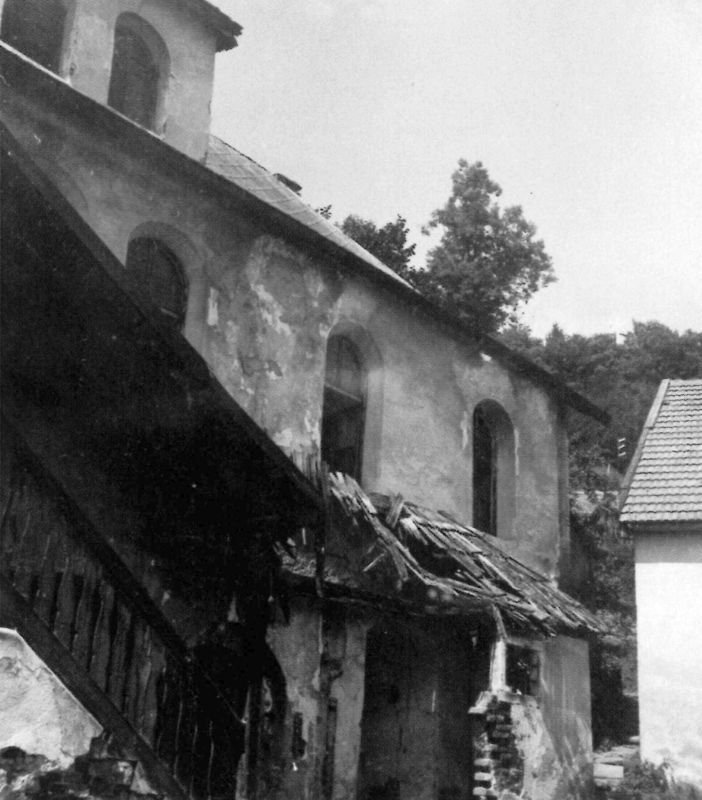
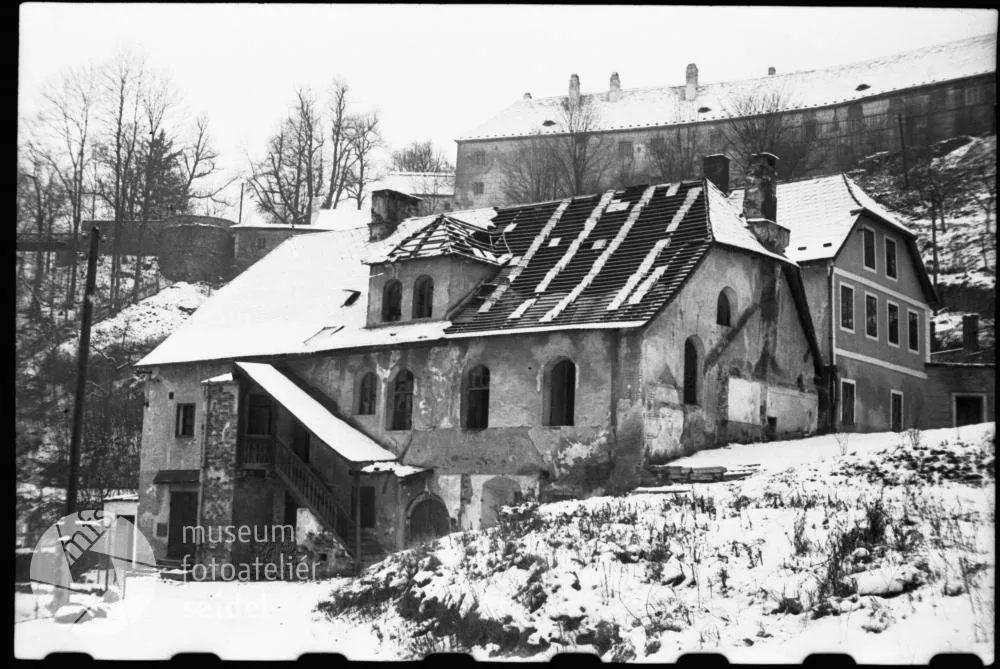
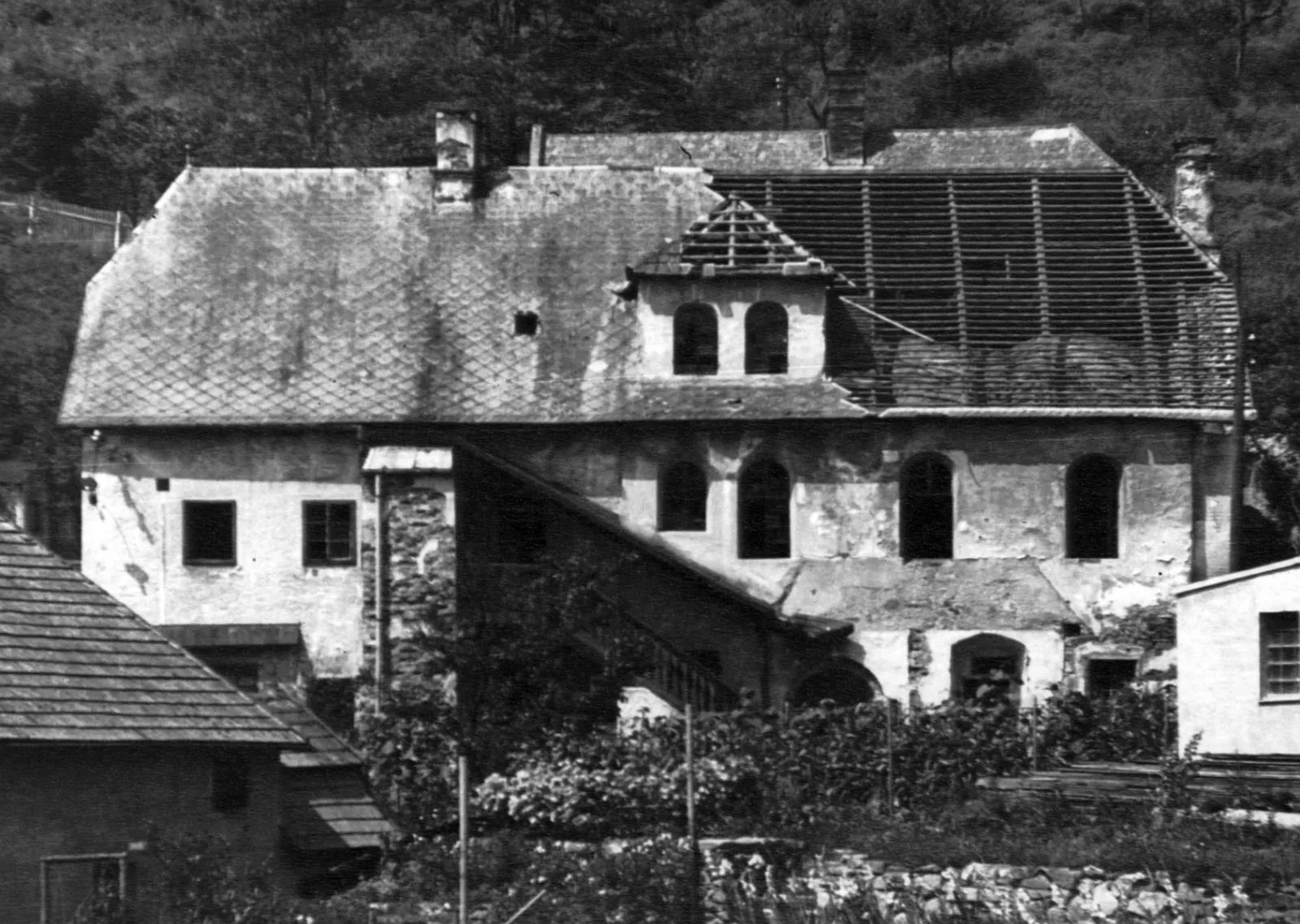
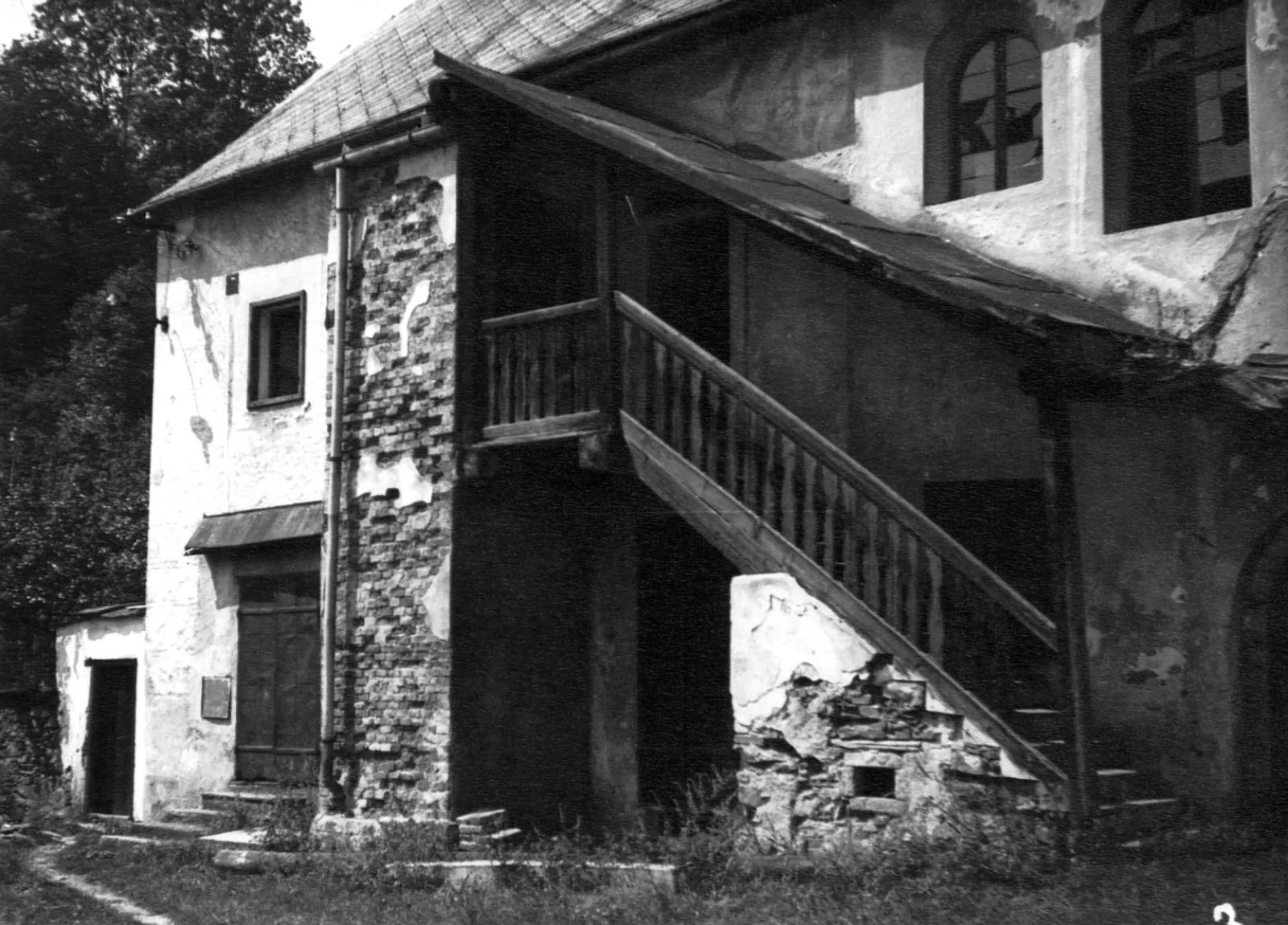
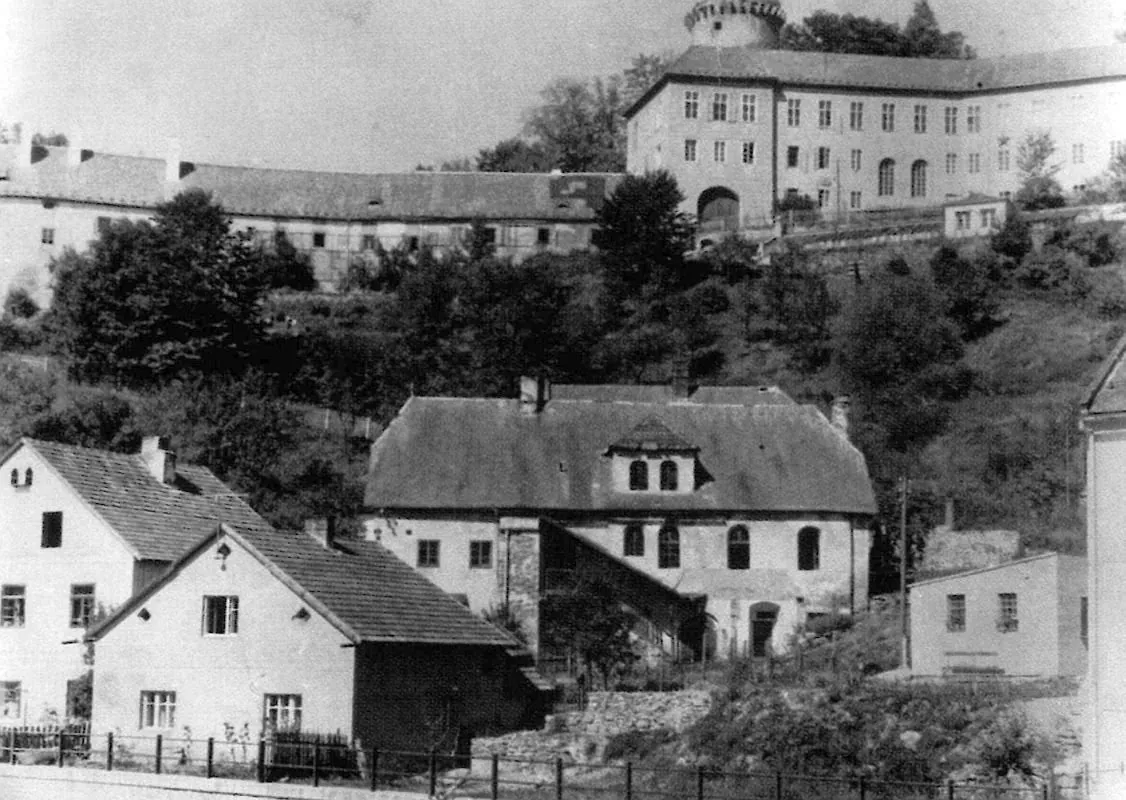
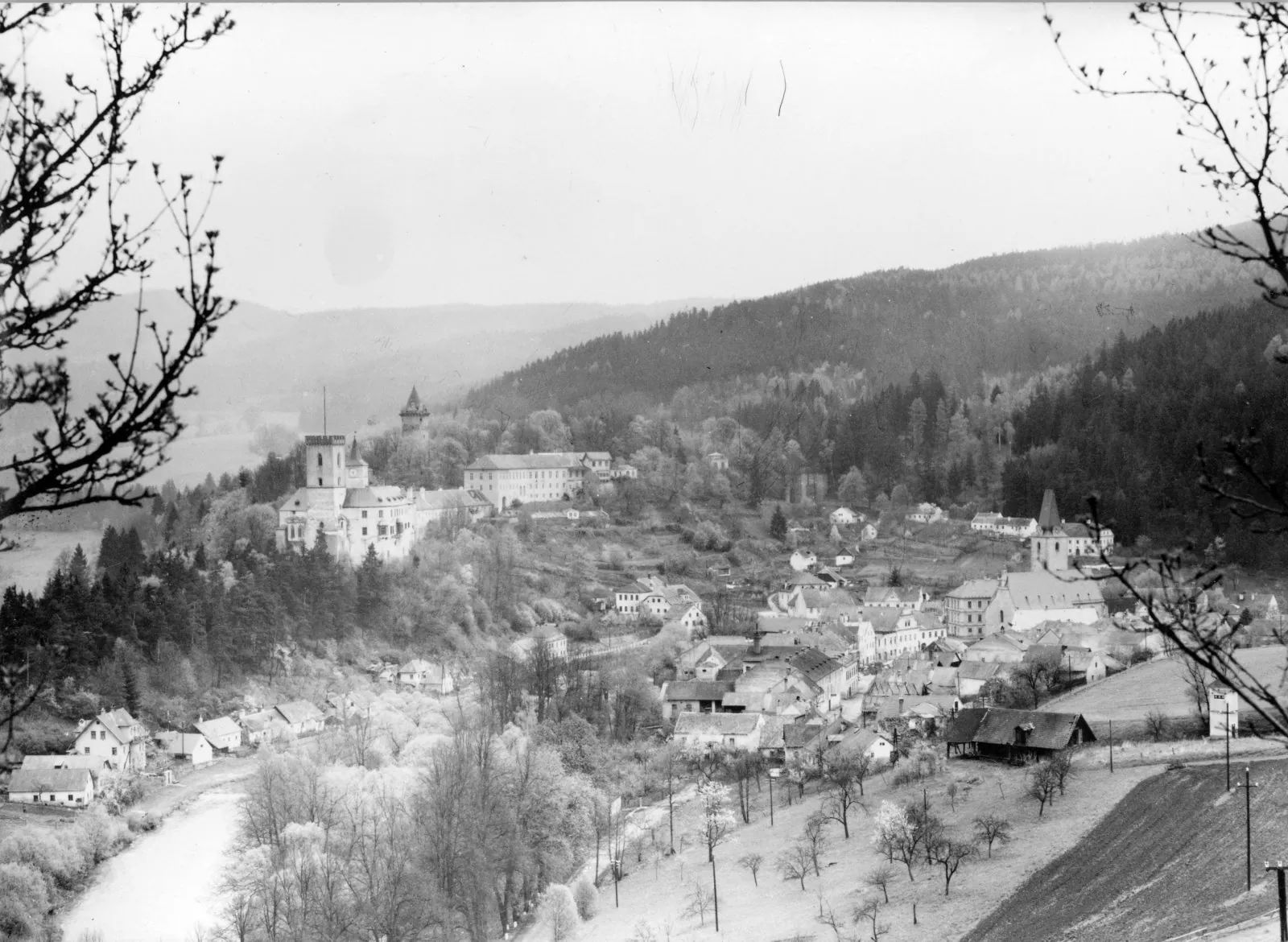
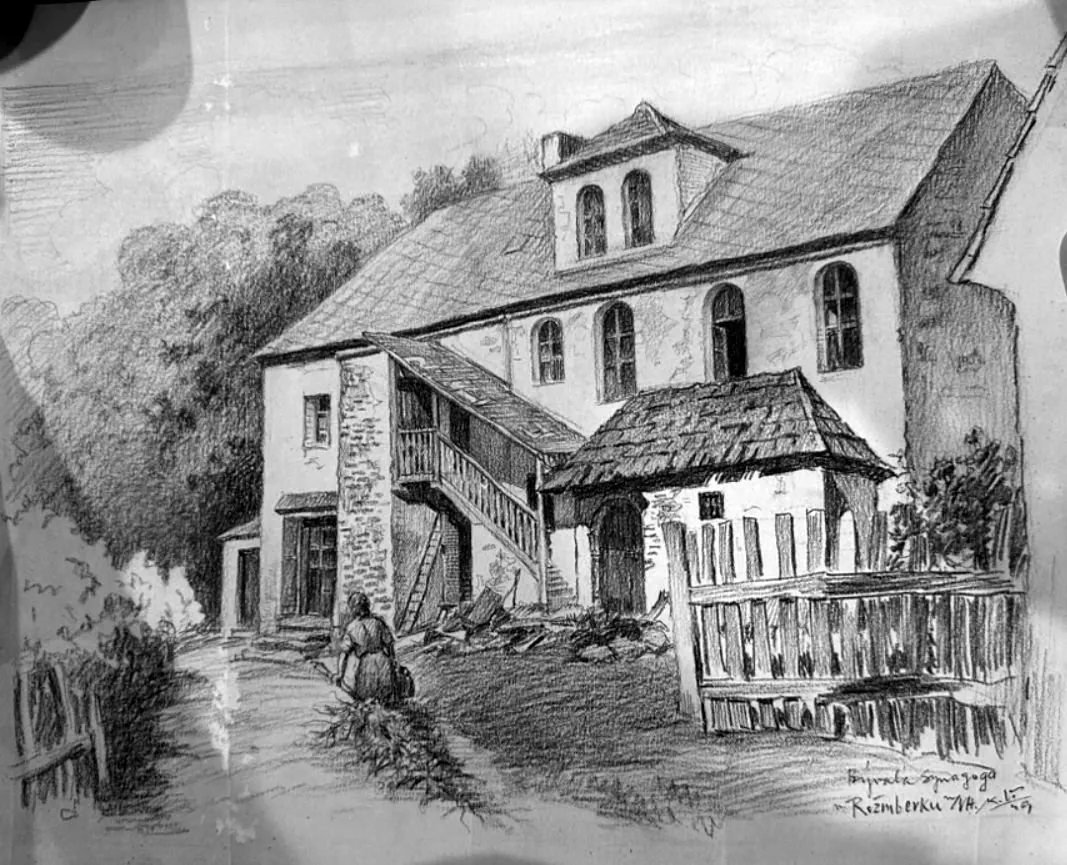
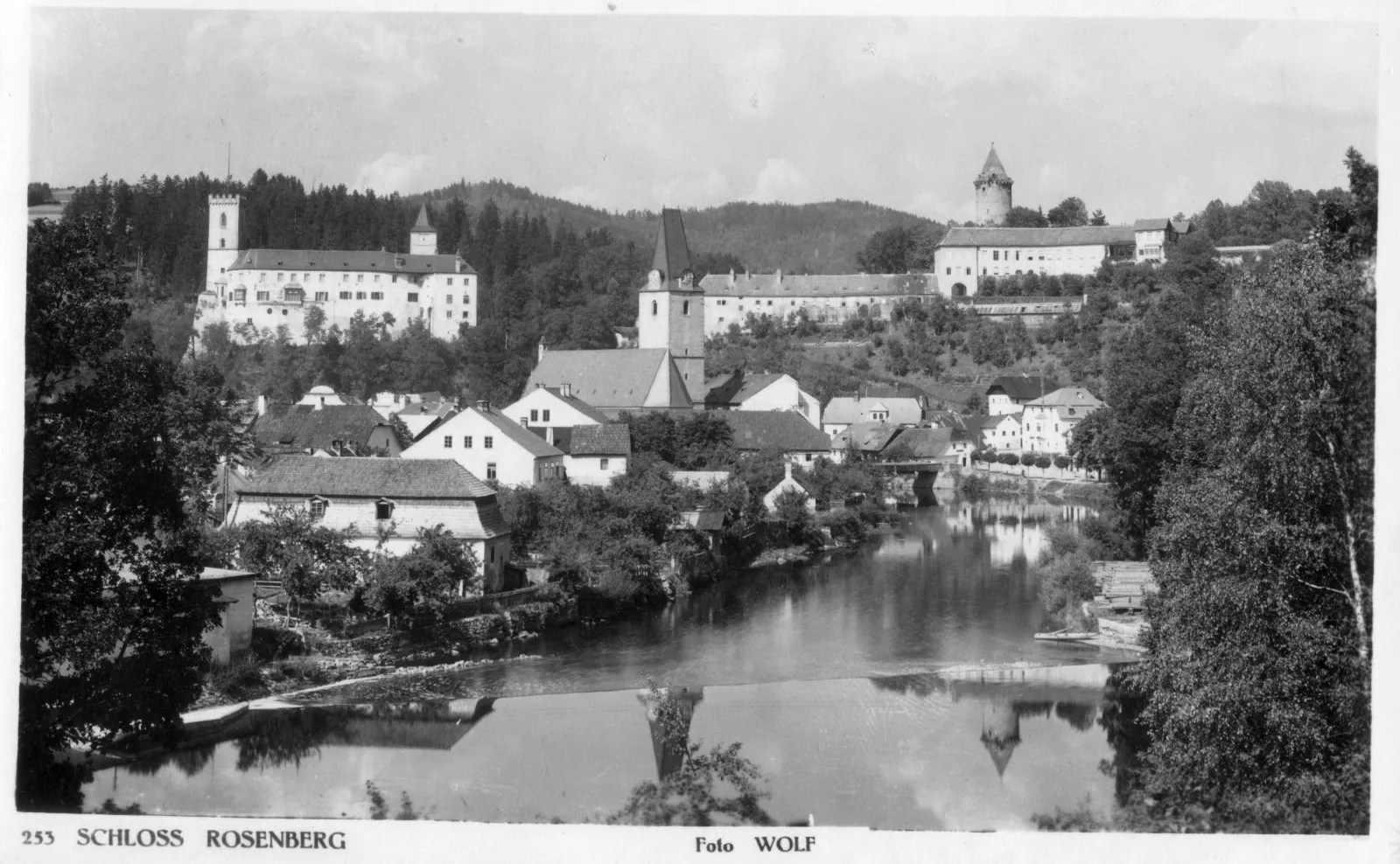
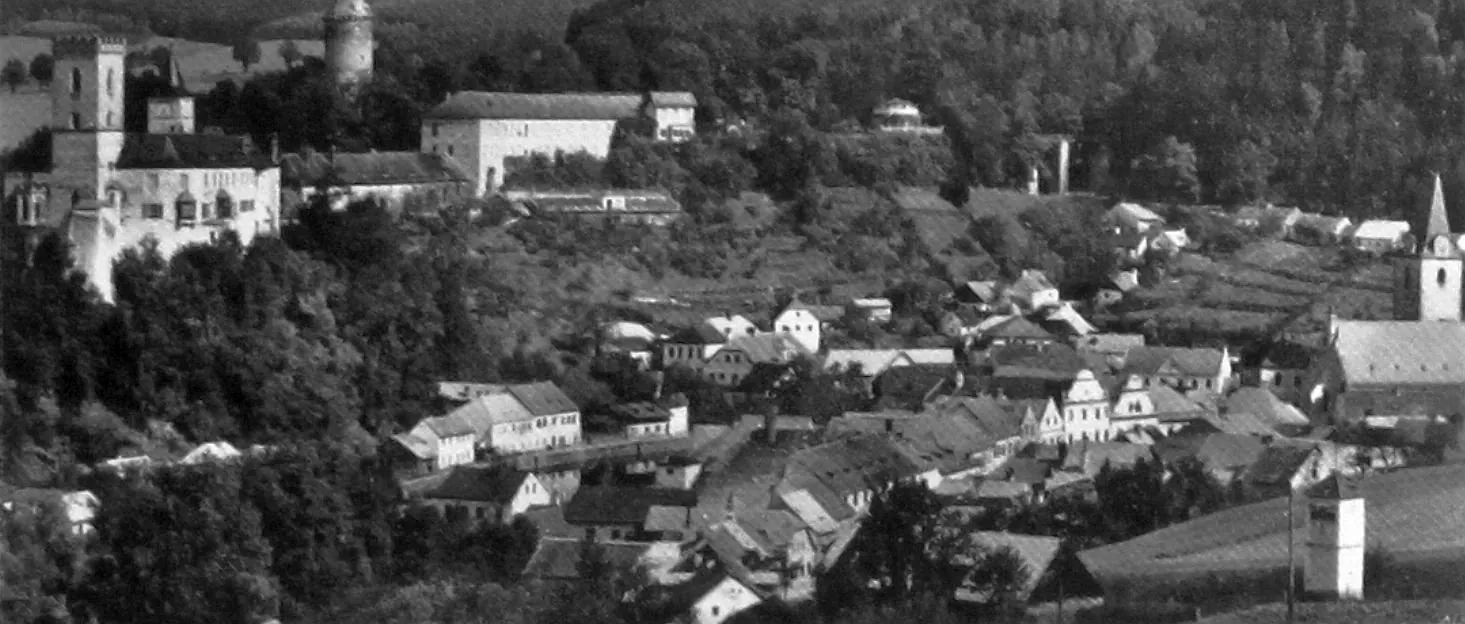
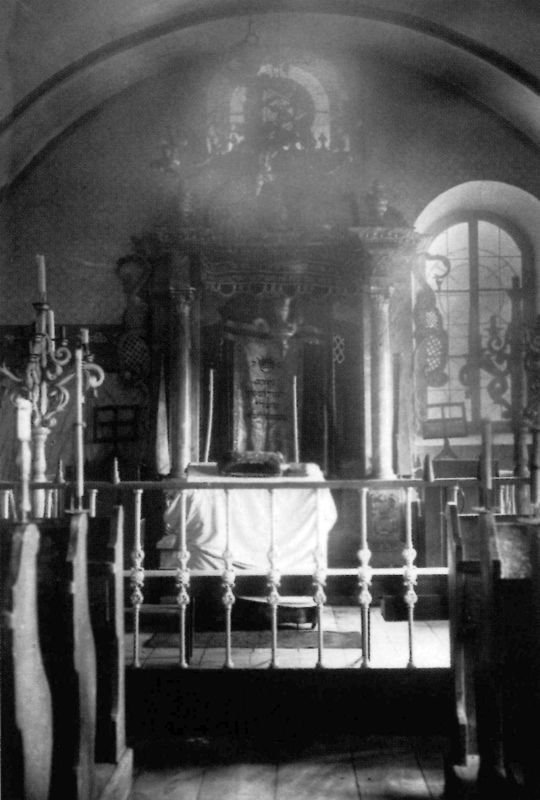
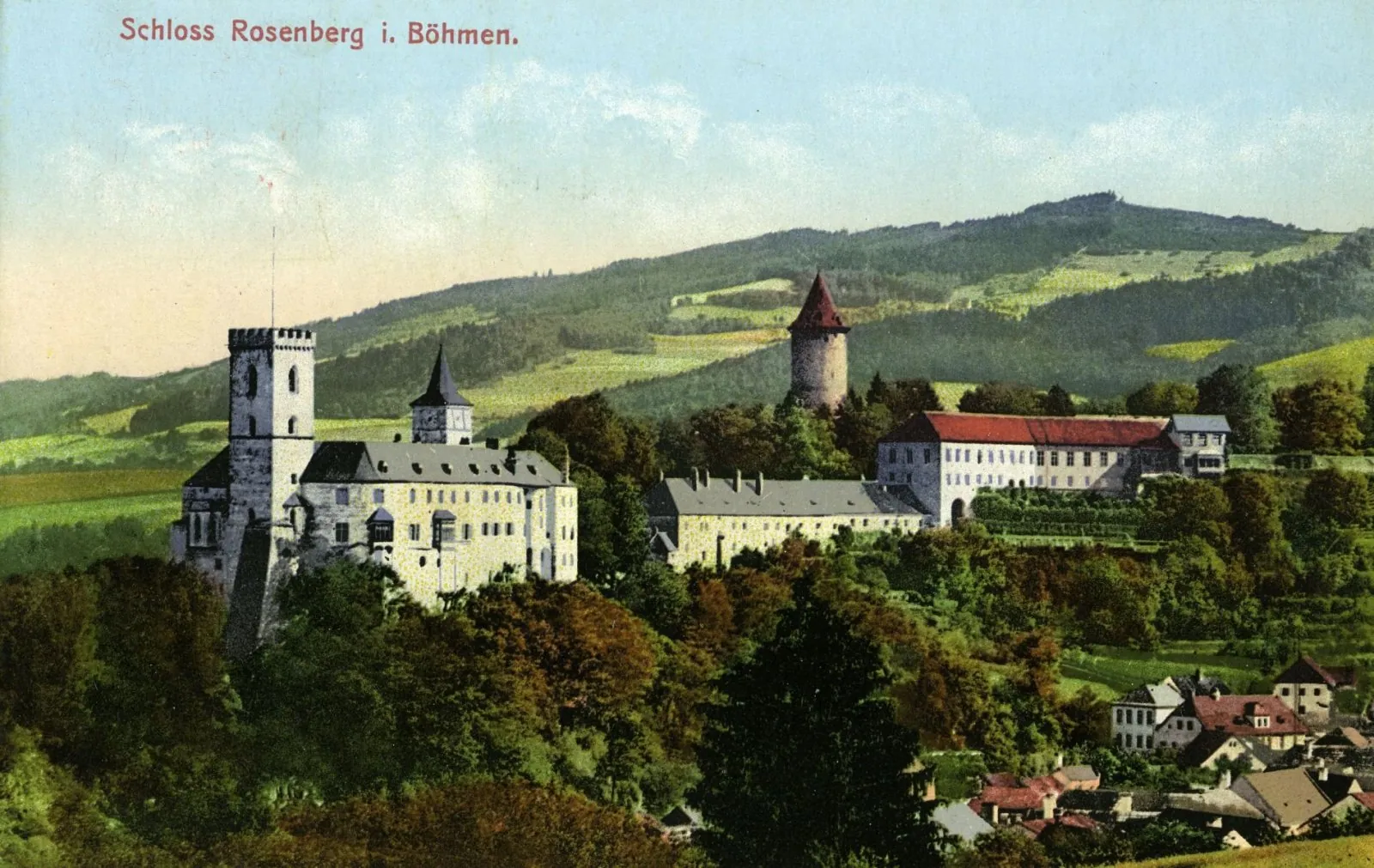
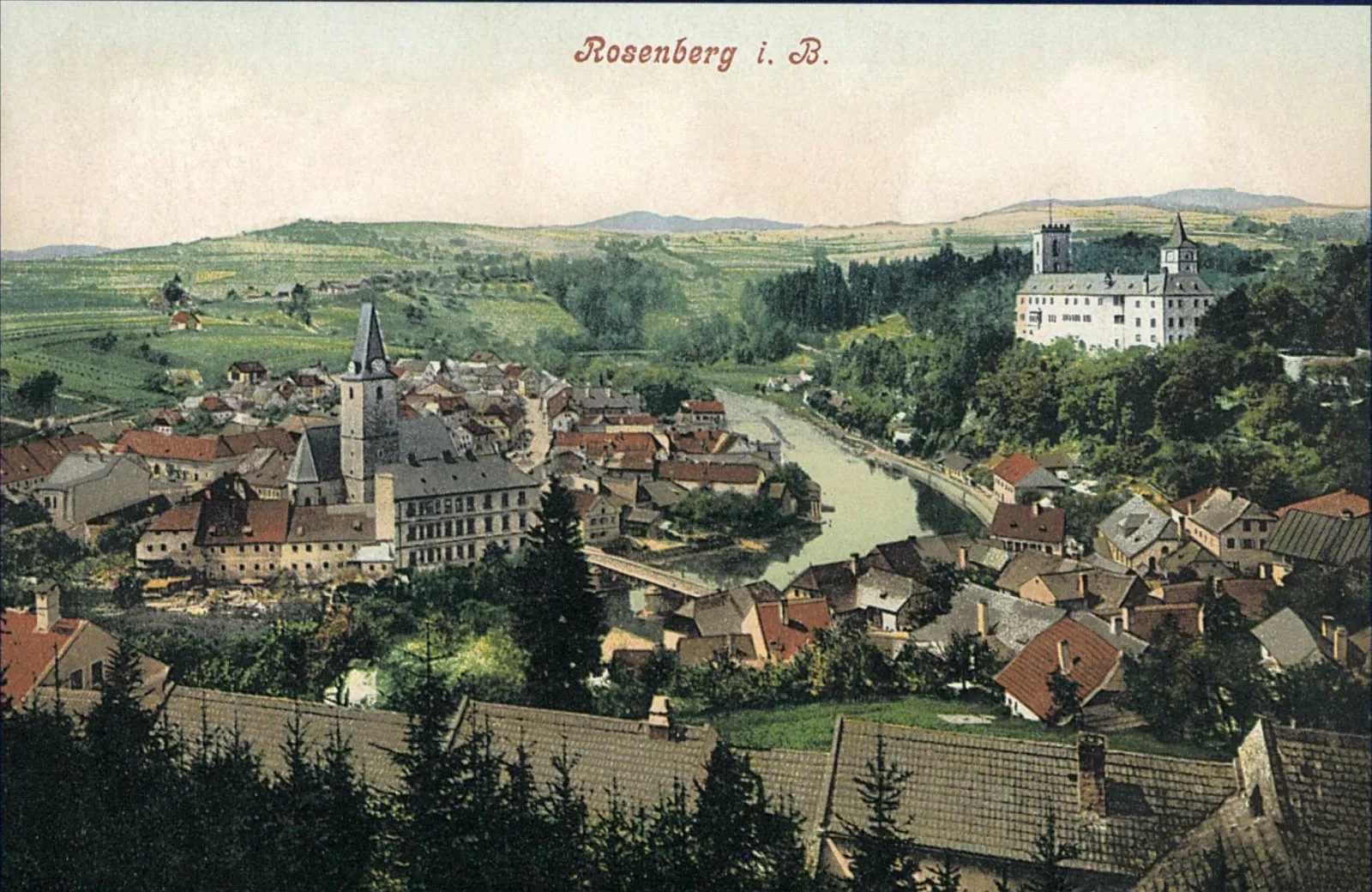
Rožmberk nad Vltavou, in German Rosenberg, is a small town on the Vltava in southern Bohemia near the Austrian border. Its Jewish community was one of the oldest in the region: a lawsuit of 1378 mentions 'Jewish meat' carried from Rožmberk to Linz, and the old Jewish cemetery is said to date from about 1480. The Jews lived in the Latrán suburb on the right bank, in an area known as the 'Jewish town'. Their synagogue, in house no. 80, probably dated from the late seventeenth century. It burned in the eighteenth century and again in 1842 and was rebuilt around 1846. It was a plain one-storey building with open outside stairs, a vaulted hall of 7 by 10 metres, a women's gallery, a rabbi's flat upstairs and deep cellars. Its Baroque ark, Renaissance-edged Torah curtain and three seventeenth-century brass chandeliers made it a treasure of Jewish folk art. After the Munich Agreement Rožmberk was annexed to Nazi Germany, and in September 1938 an SS unit from Linz completely destroyed the interior. The building was later used for flats, a coal store and a locksmith's workshop, and was demolished in 1966.
Where it stood
Historic: house no. 80, Jewish quarter, Latrán suburb, Rosenberg. Present day: Latrán, Rožmberk nad Vltavou, Czech Republic. Approximate.
Open larger map →The Jewish community
Jews are mentioned in Rožmberk from the fourteenth century: a court case of 1378 between Linz and Freistadt concerned the transport of 'Jewish meat' from Rožmberk to Linz. After Jews were expelled from Linz in 1670, Rožmberk became a refuge, and records of the Buquoy estate name Jewish residents such as Joachim Löbl and Alexander Korb in 1676 and members of the Marian family around 1706–1712. Until 1863 the Jews of Linz were buried in the Rožmberk cemetery. The community lived in the 'Jewish town' in Latrán, where the houses carried separate Roman numerals. It was always small: four Jewish families in 1841, and 72 Jews and a rabbi among 1,454 Christians in 1880. A new cemetery was opened in 1883 north of the town, where the last burial took place in 1950.
Architecture and design
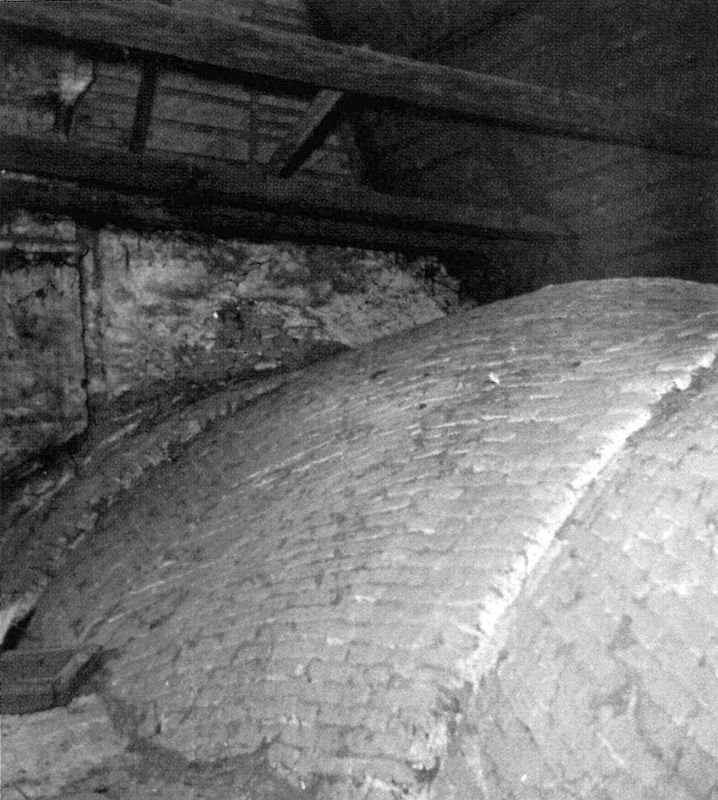
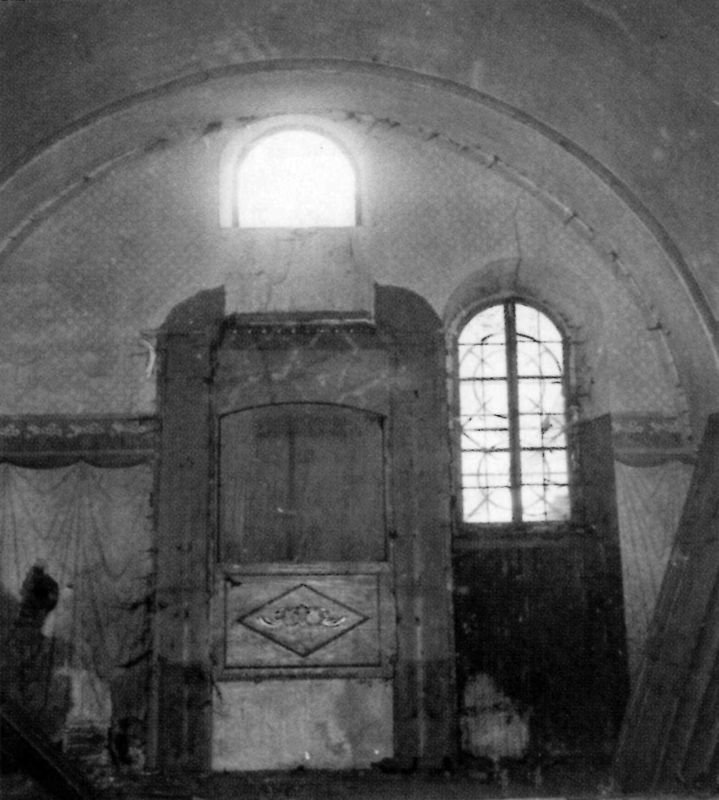
According to the historical encyclopedia of the Český Krumlov region, the synagogue in house no. 80 was 'outwardly plain, one storey, with three window bays and projecting open stairs'. Inside was a hall with three windows, 7 by 10 metres, covered by Bohemian vaults between ribs, with a women's gallery along the whole western side. The ark on columns with an entablature had an early Baroque character from the late seventeenth century, with side parts added in the late eighteenth. The Torah curtain, 120 by 180 cm, had a Renaissance border of yellow silk woven with gold and silver. All three brass chandeliers dated from the seventeenth century; one, hexagonal, was crowned by a rider with a sceptre seated on an eagle. The rabbi's flat was on the first floor, and there were deep cellars. A photograph of 1930–1934 shows the building with its wooden outside staircase.
Life inside the synagogue
The synagogue was the heart of a very small community. It housed the rabbi's flat on the upper floor and, according to local memory, a bakery for the Jews' bread. Until 1917 Rabbi Glanzberg served there, leading services and teaching Hebrew, scripture and religion to the Jewish children; there had once been a small school where children aged four to ten learned the Torah and the Talmud and the correct chanting of the prayers. After his death there was no resident rabbi, and the last families, among them Heinrich Sternschein and Sigmund Holzbauer, kept up Jewish life. Holzbauer supervised ritual slaughter. More than a thousand people, Christians and Jews, attended Heinrich Sternschein's funeral in July 1935.
Destruction
After the Munich Agreement, Rožmberk was annexed to Nazi Germany in October 1938. According to the Český Krumlov regional encyclopedia and the database of destroyed churches, the interior of the synagogue, with its Baroque ark, old curtain and seventeenth-century chandeliers, was completely destroyed in September 1938 by an SS unit from Linz. In 1939 a group of local youths also overturned and desecrated tombstones in the old Jewish cemetery. During the war the empty building was used as flats, and coal was stored in its cellars. After 1945 a locksmith's workshop occupied the upper floors until the early 1960s. The neglected building was then pulled down in 1966.
The community’s fate
The Jews of Rožmberk were few by 1938, and those who remained fled or were expelled after the annexation to Germany. Many were murdered in the Holocaust. The widow of Heinrich Sternschein, who had died in 1935, was killed in the gas chambers of Auschwitz, and her son, who emigrated and later became a university professor in Canada, recorded that 84 of his relatives were murdered by the Nazi regime. A cast-iron plaque in the new Jewish cemetery commemorates Arnošt, murdered in Auschwitz, and Robert and Bedřich, who died in Dachau. Dolfi Sternschein called himself 'the last Jew of Rožmberk'. The community was not re-established.
The site today
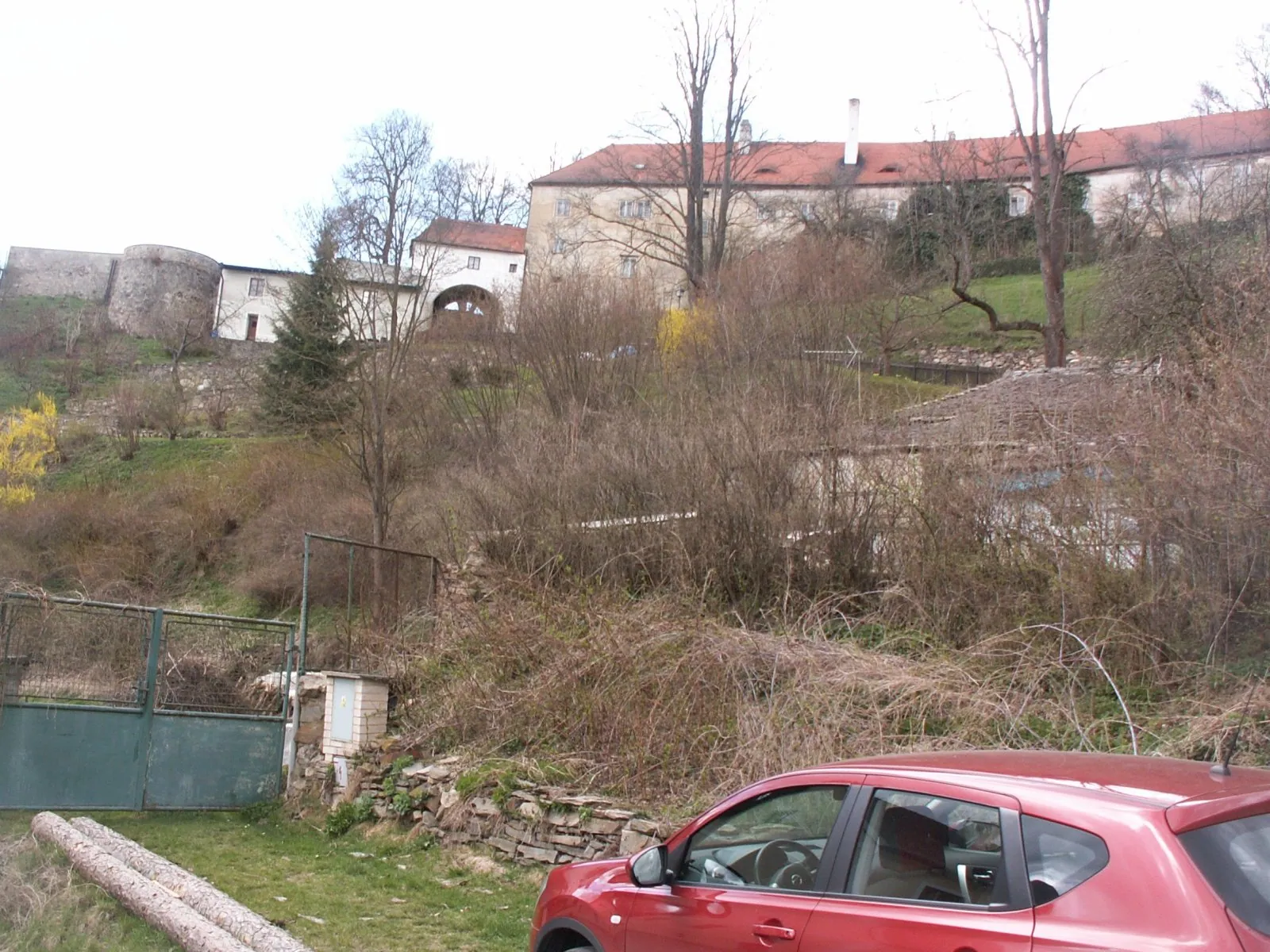
Nothing of the synagogue survives. It stood in the demolished house no. 80 in the former Jewish quarter of the Latrán suburb on the right bank of the Vltava; the plot (parcel 117/10) is now in mixed municipal and private ownership. Both Jewish cemeteries survive: the old cemetery south of the centre, with about thirty tombstones in a private garden, and the new cemetery of 1883 at Studenec north of the town, which is protected as a cultural monument.
Notable names
Glanzberg
died c. 1917Rabbi of RožmberkRabbi Glanzberg was the last resident rabbi of Rožmberk nad Vltavou, serving until his death around 1917. He led the services in the synagogue in house no. 80, where he also lived in the rabbi's flat on the upper floor, and taught the Jewish children of the town Hebrew, the scriptures and religion. After him the community had no rabbi of its own.
Biography or source →Heinrich Sternschein
died 1935Leading member of the communityHeinrich Sternschein was one of the last members of Rožmberk's Jewish community who kept up its religious life after the death of the rabbi. When he died in July 1935, more than a thousand Christians and Jews attended his funeral. His widow was murdered in Auschwitz, and his son, who became a professor in Canada, called himself the last Jew of Rožmberk.
Biography or source →Do you have something to contribute?
Photographs, documents, family stories or memories of this synagogue and its community help keep its history alive.
Share a memory or thought
No comments yet. Be the first to add one.