


Historia Salgótarján Synagogue
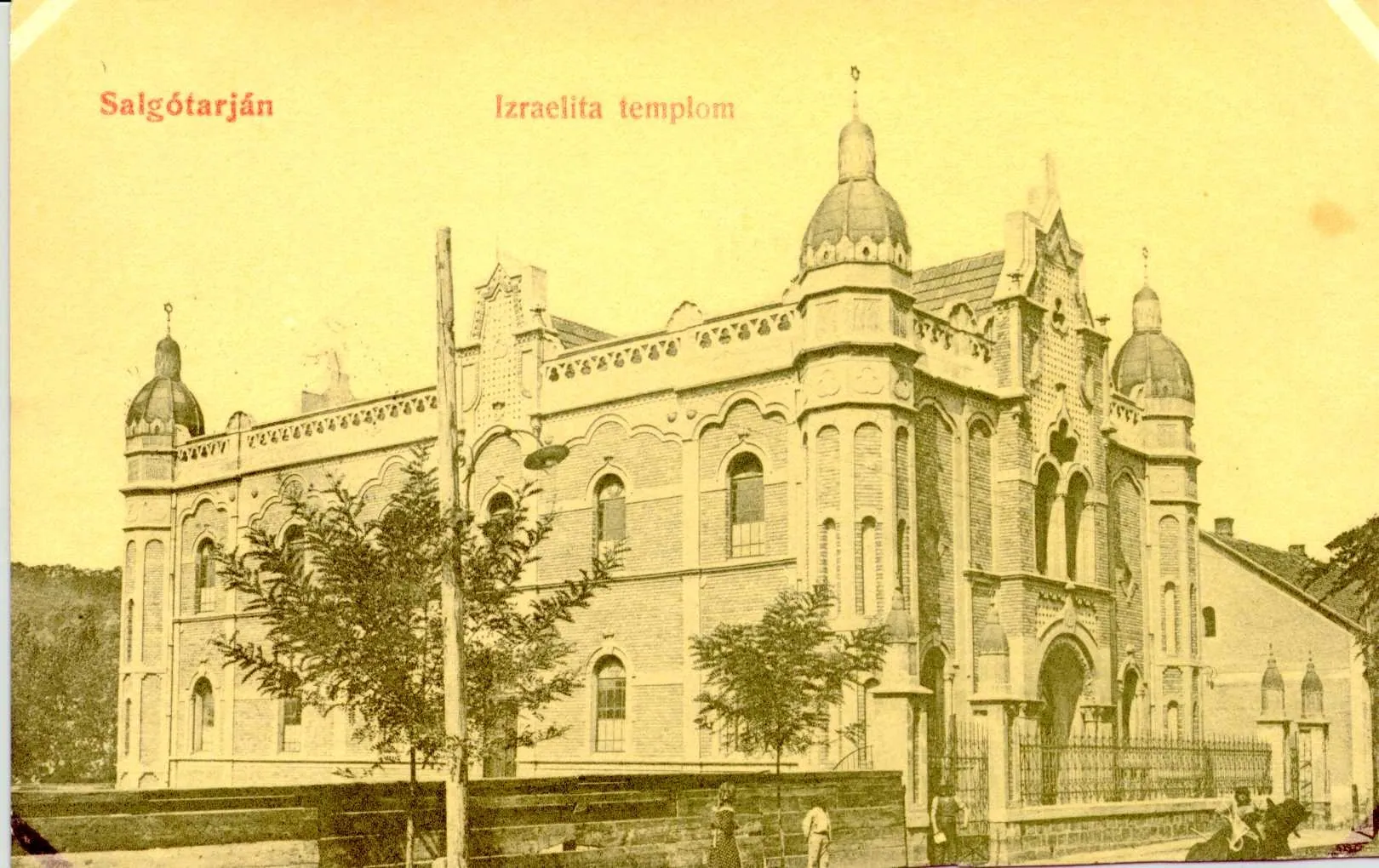
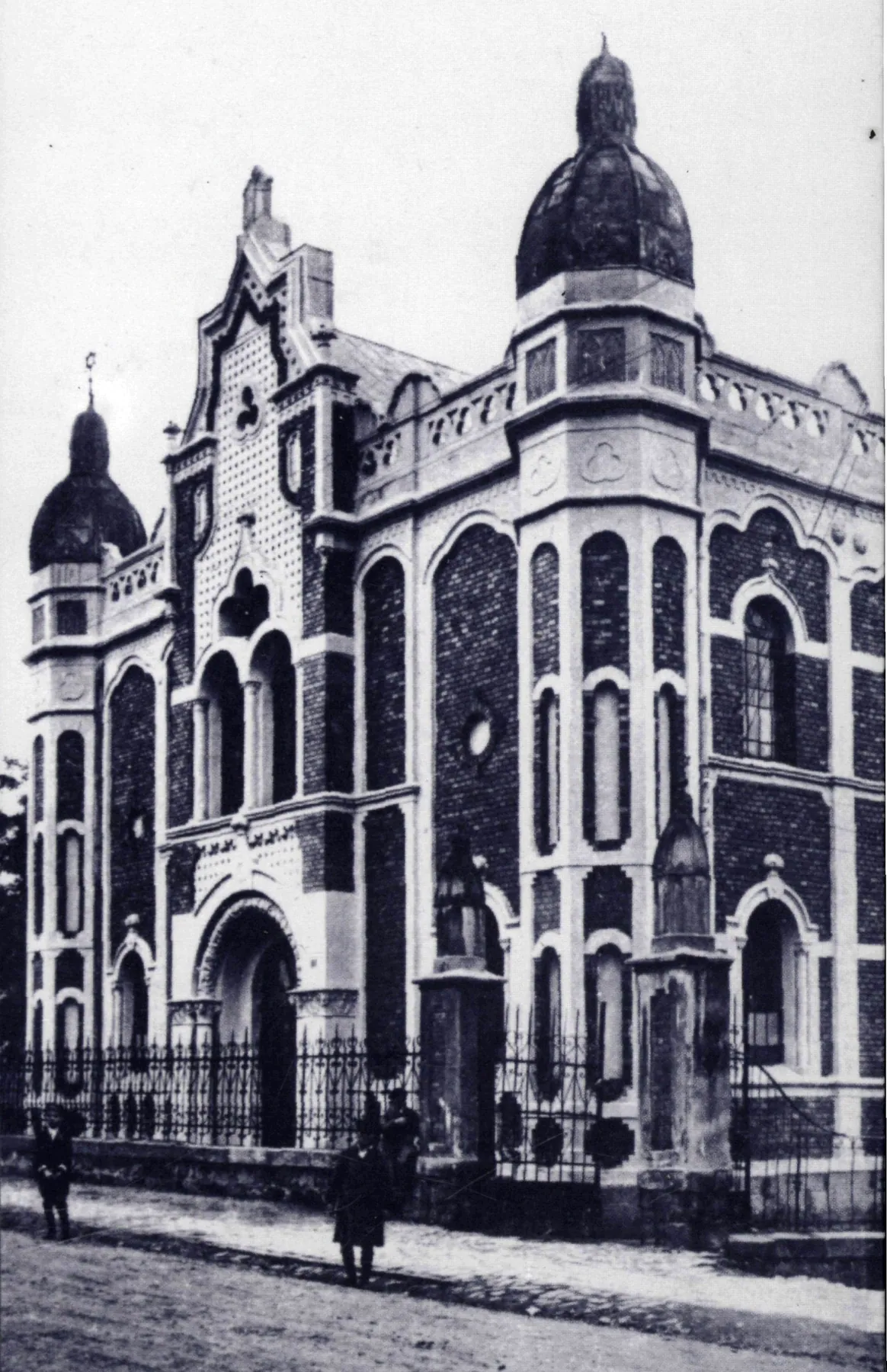
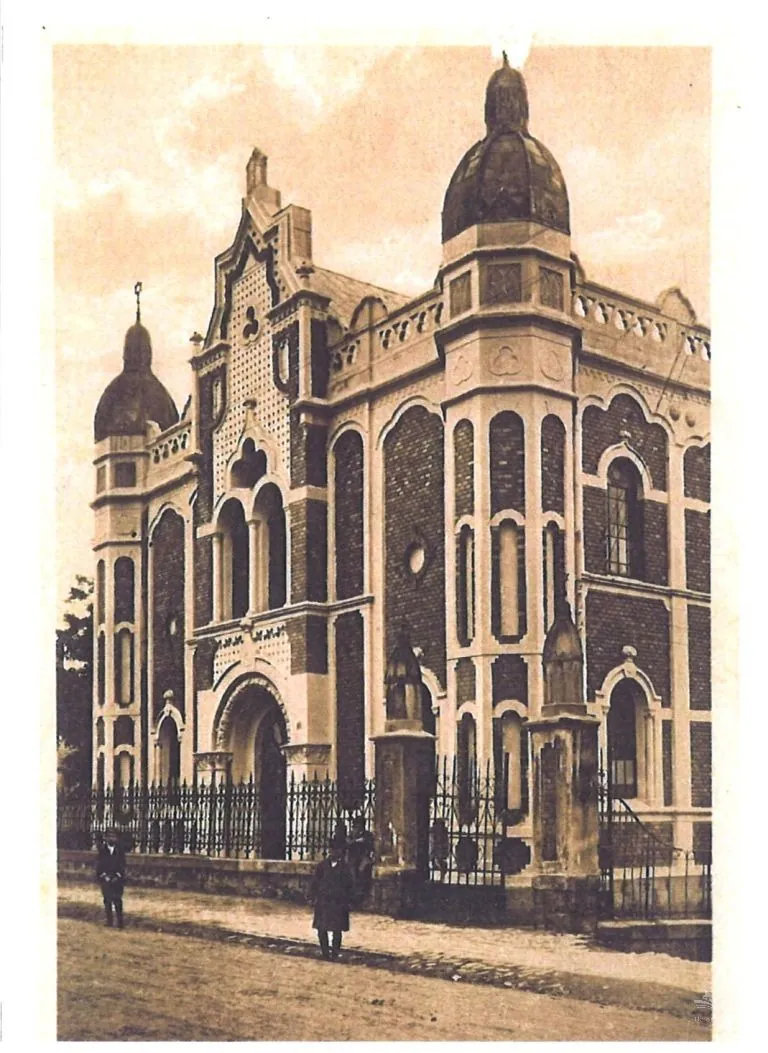
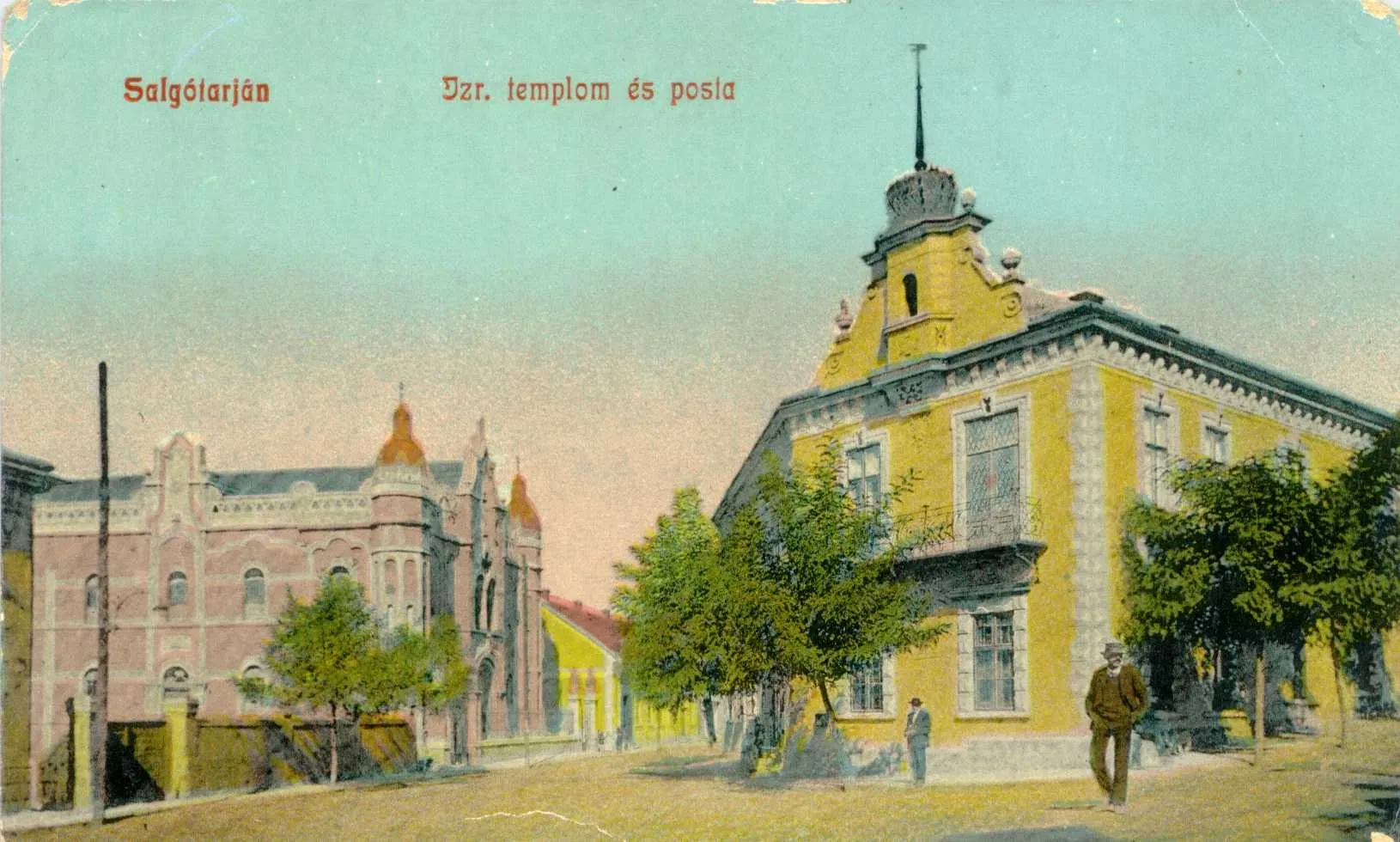
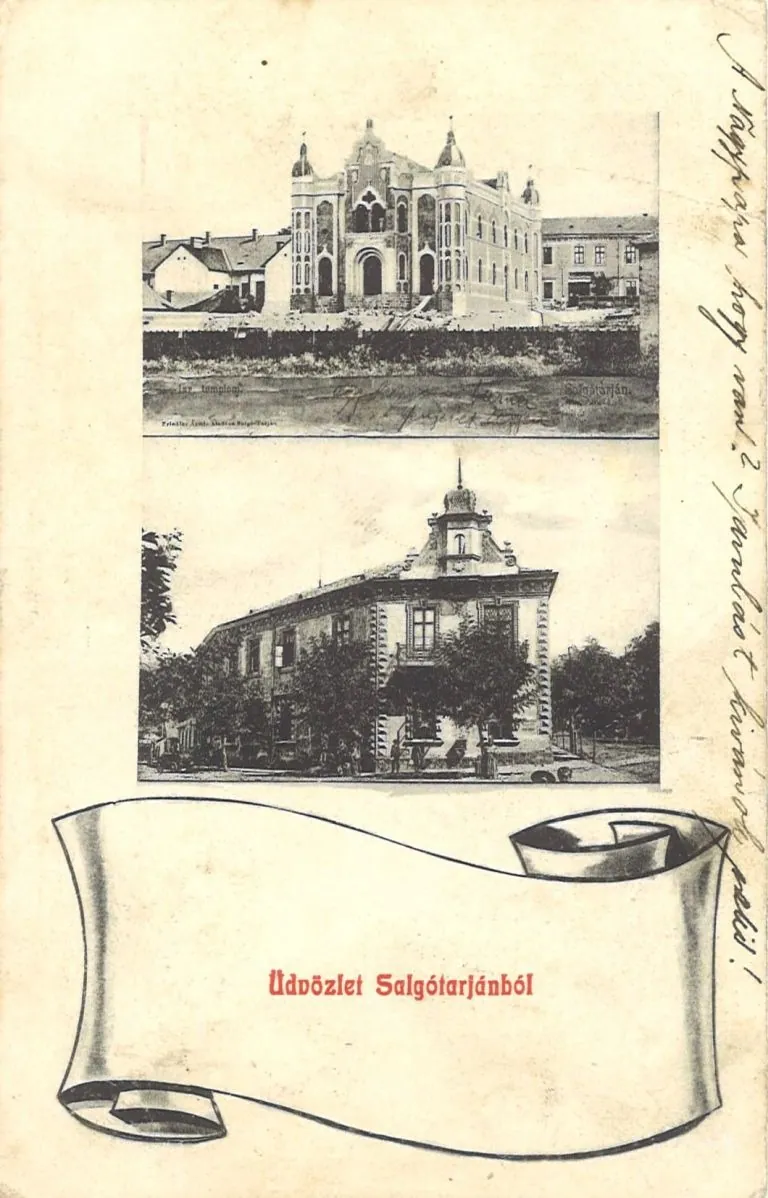
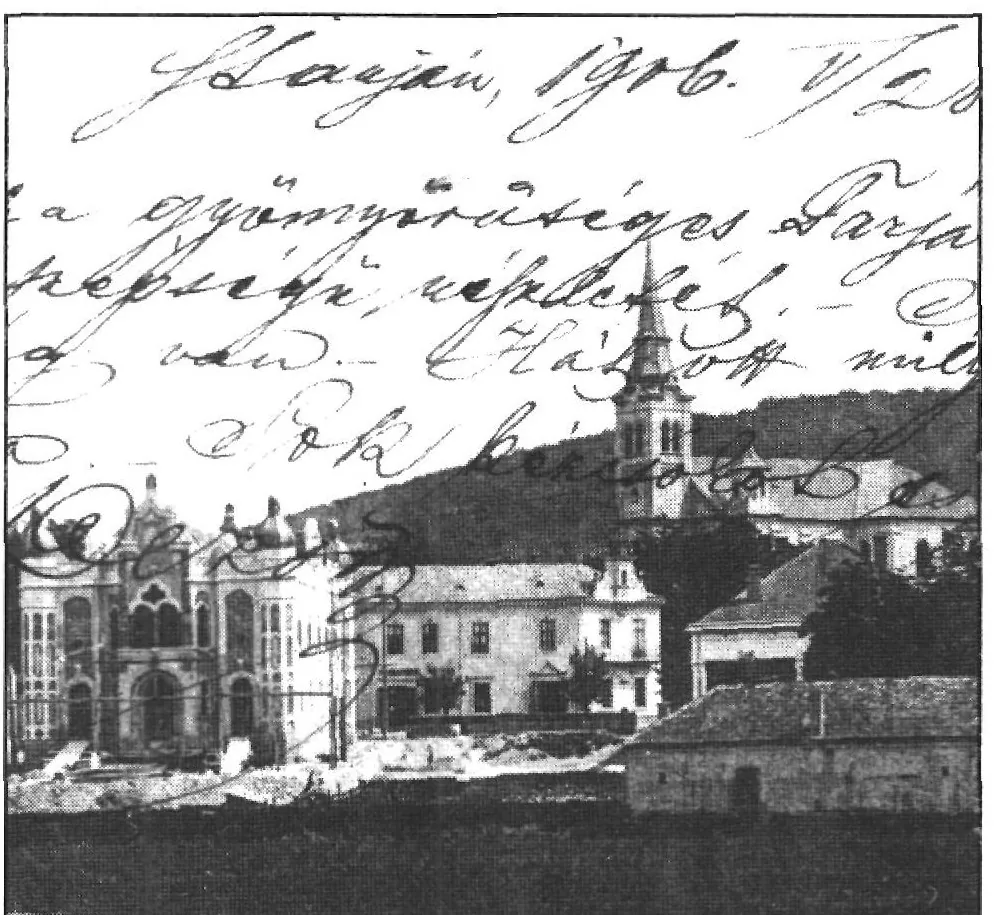
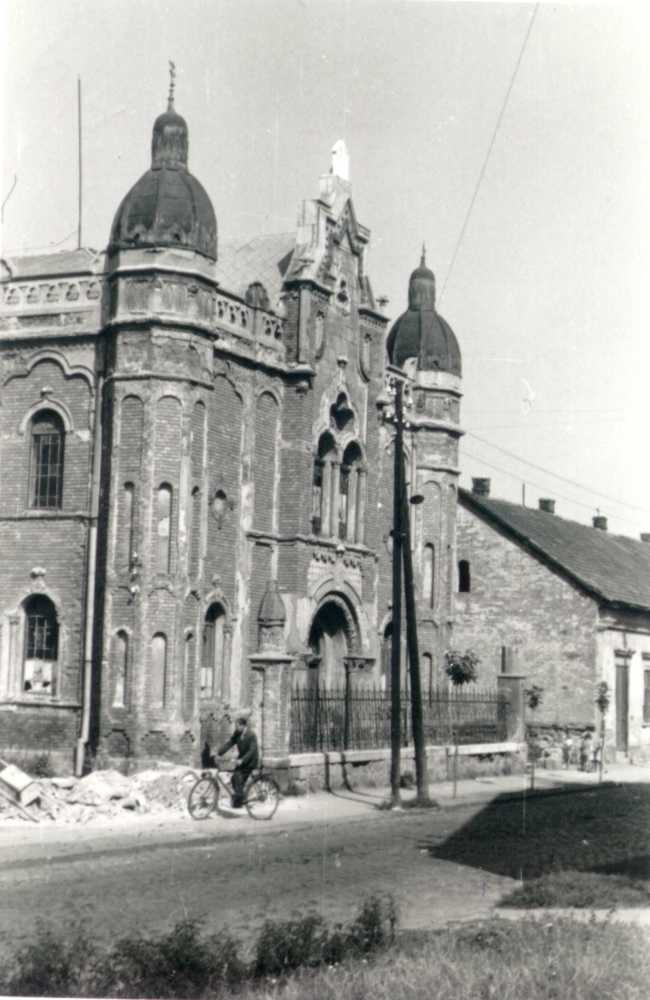
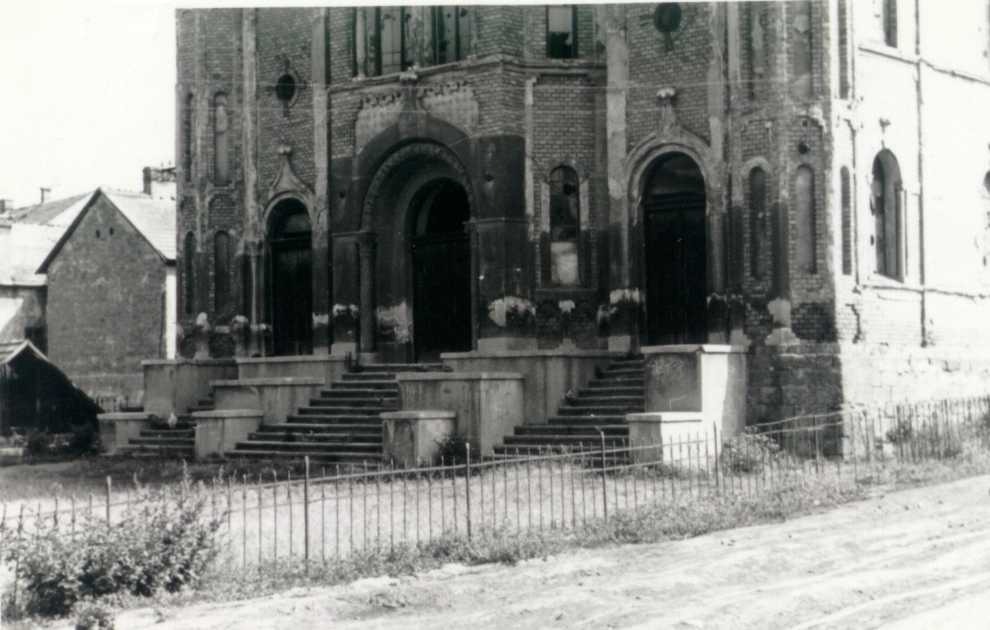
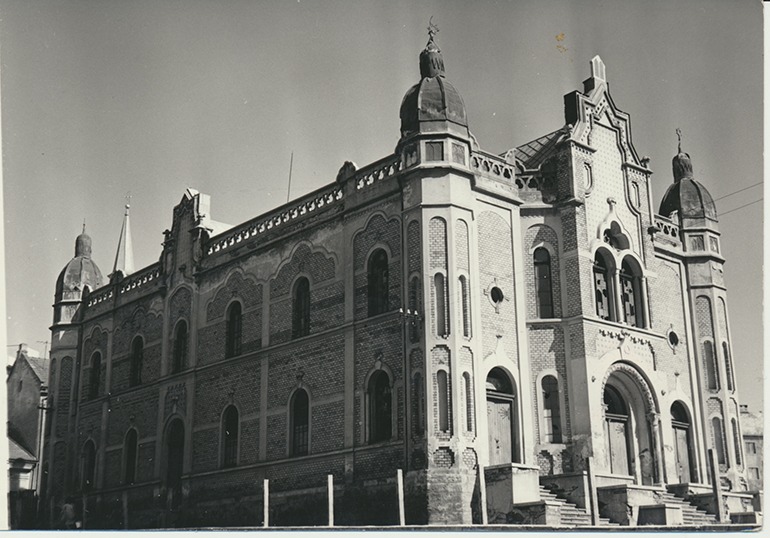
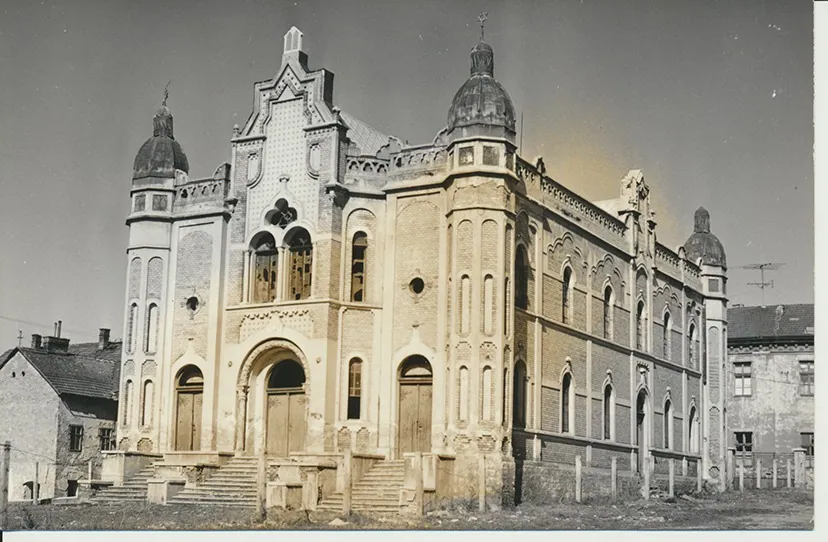
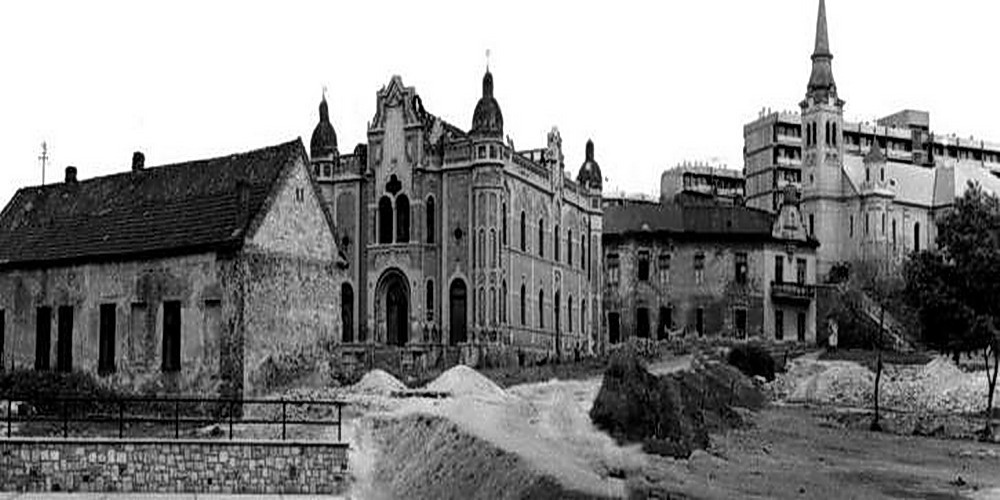
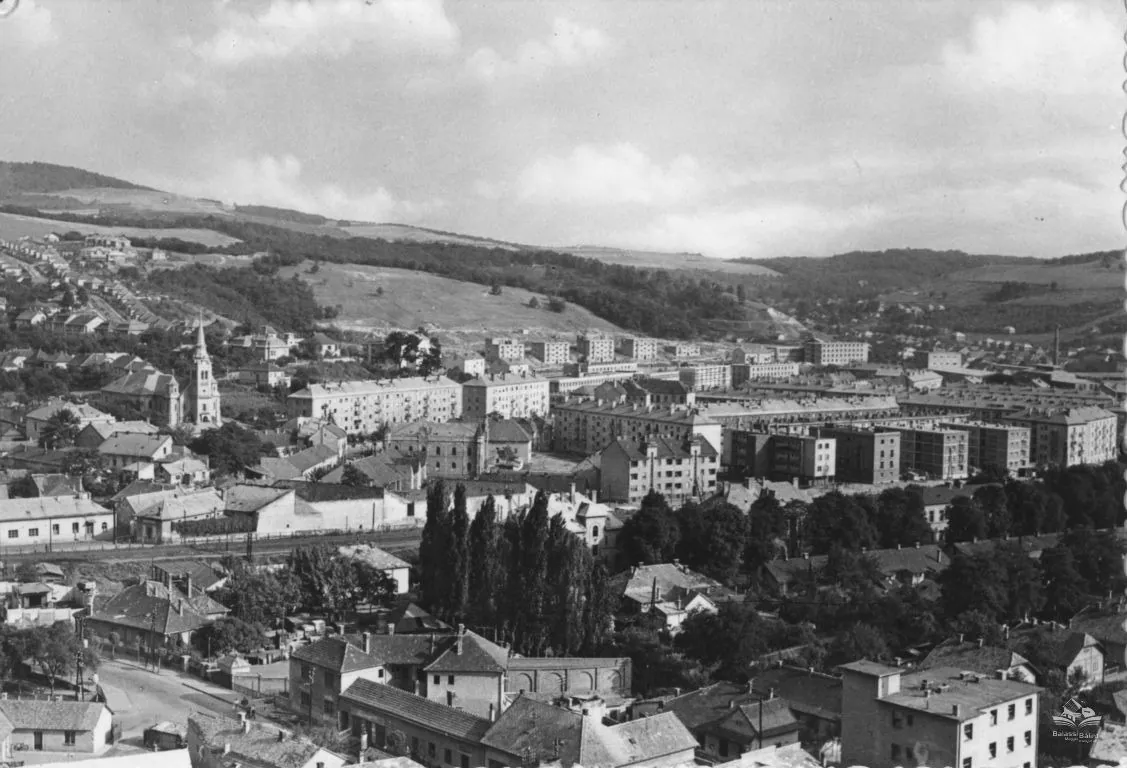
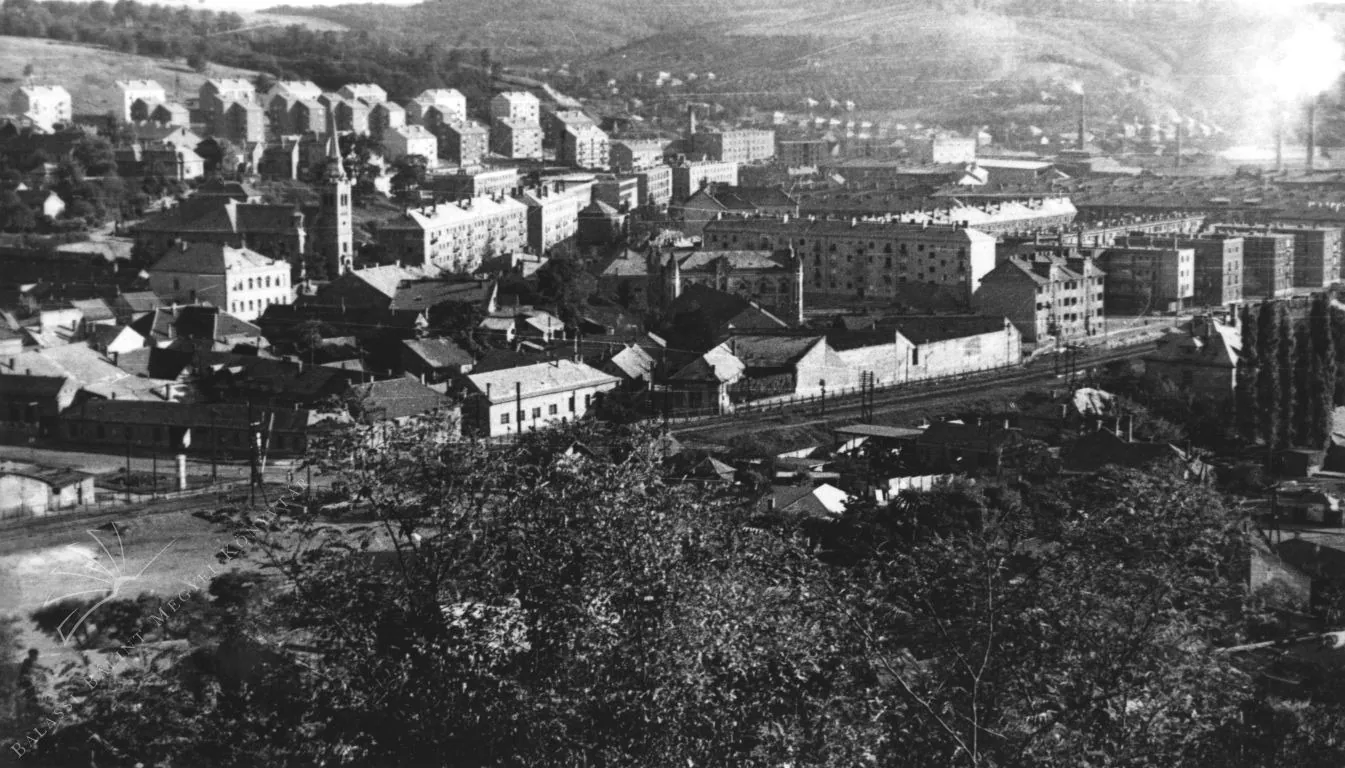
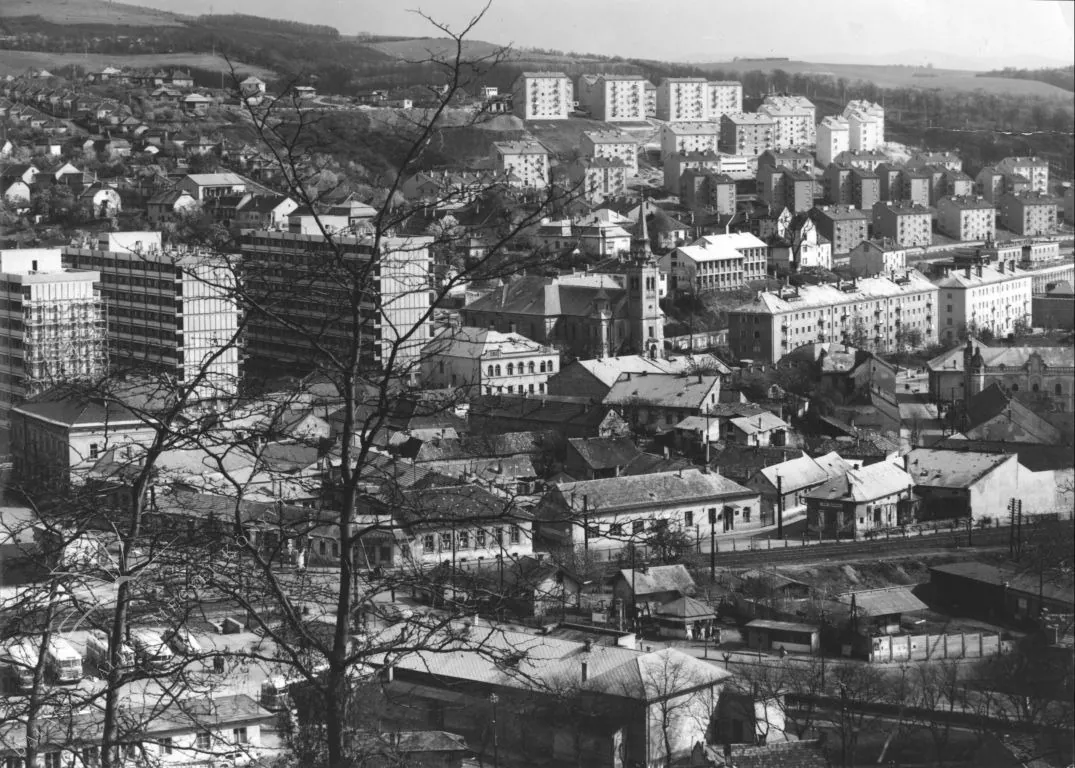
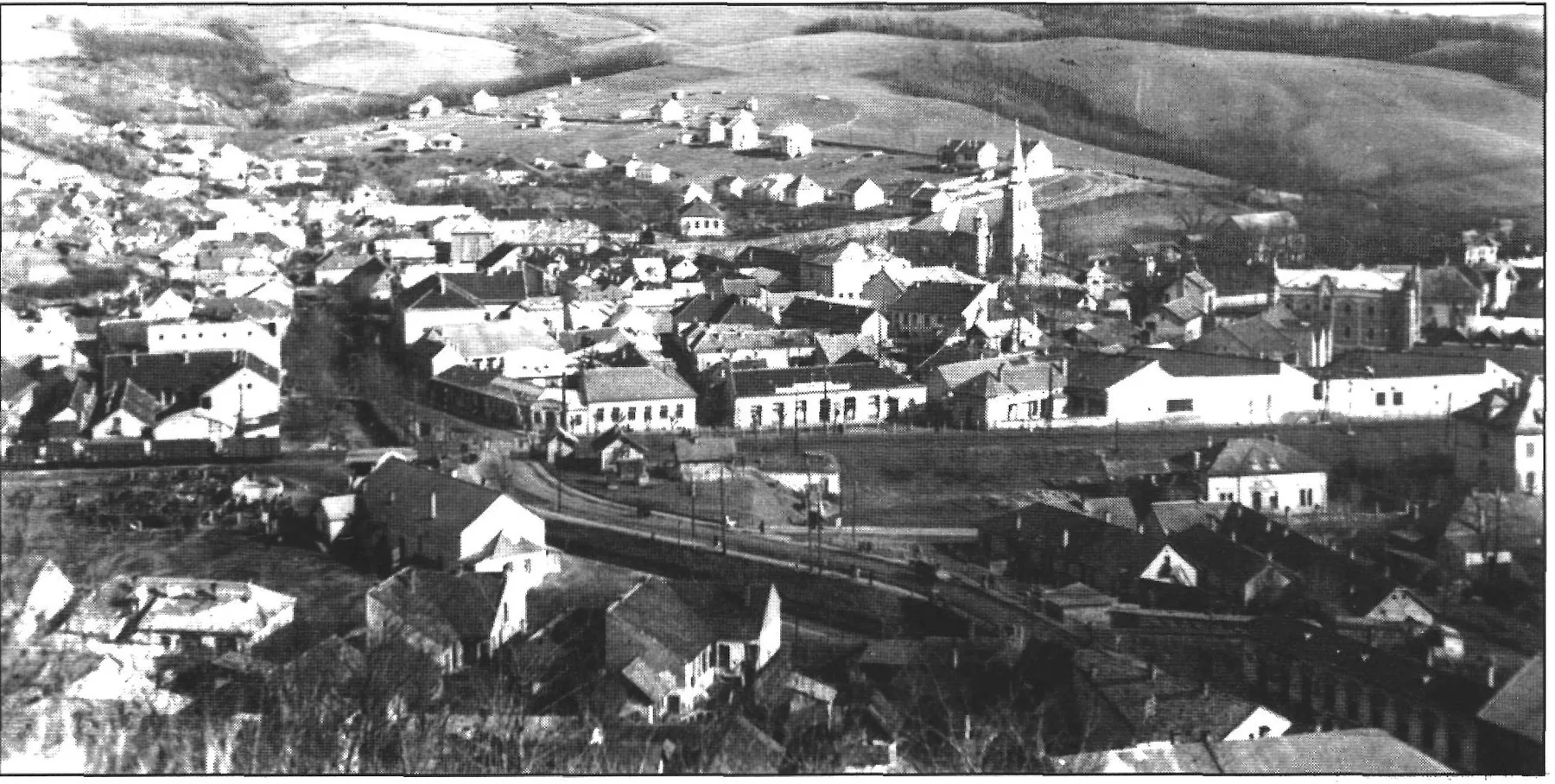
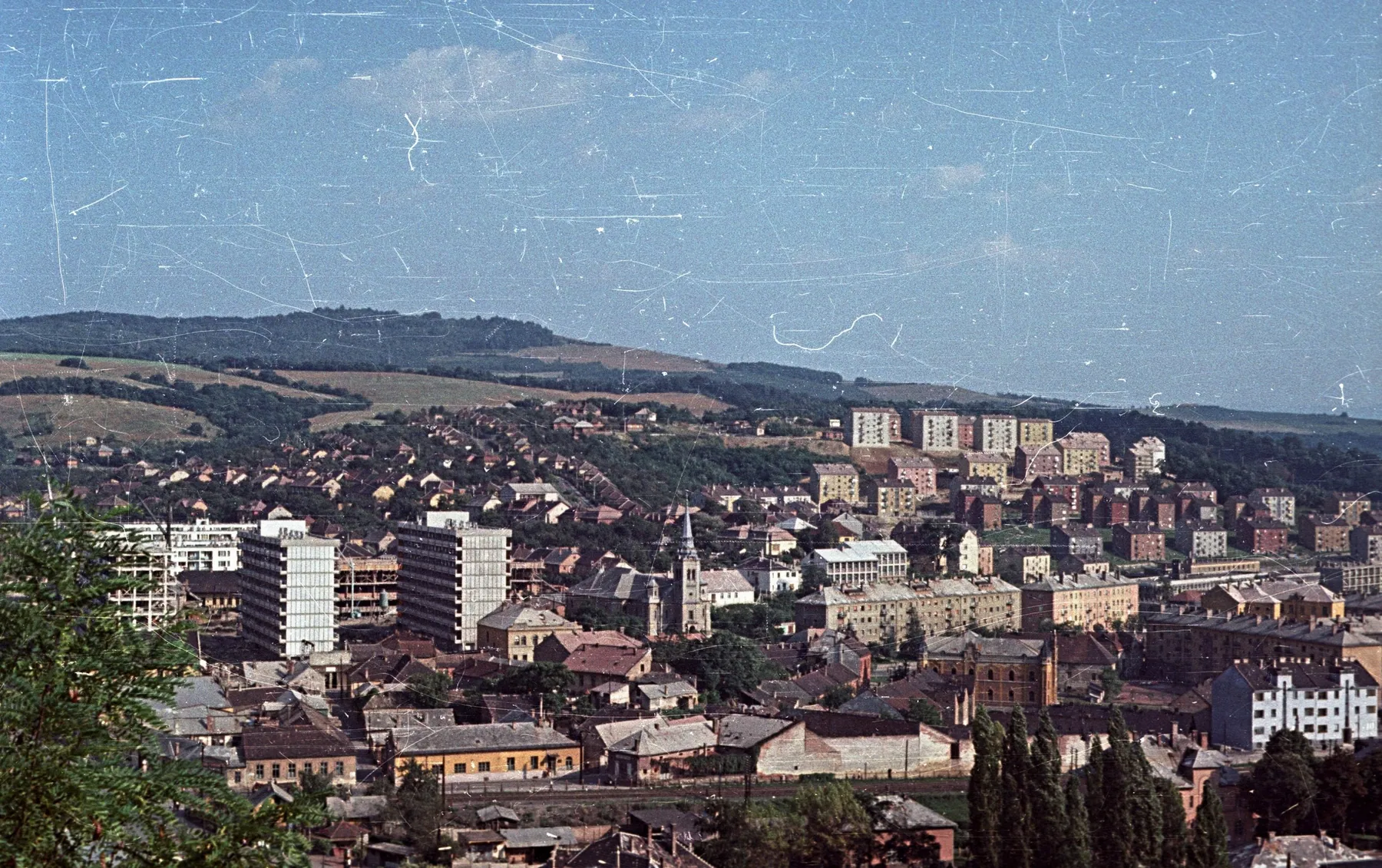
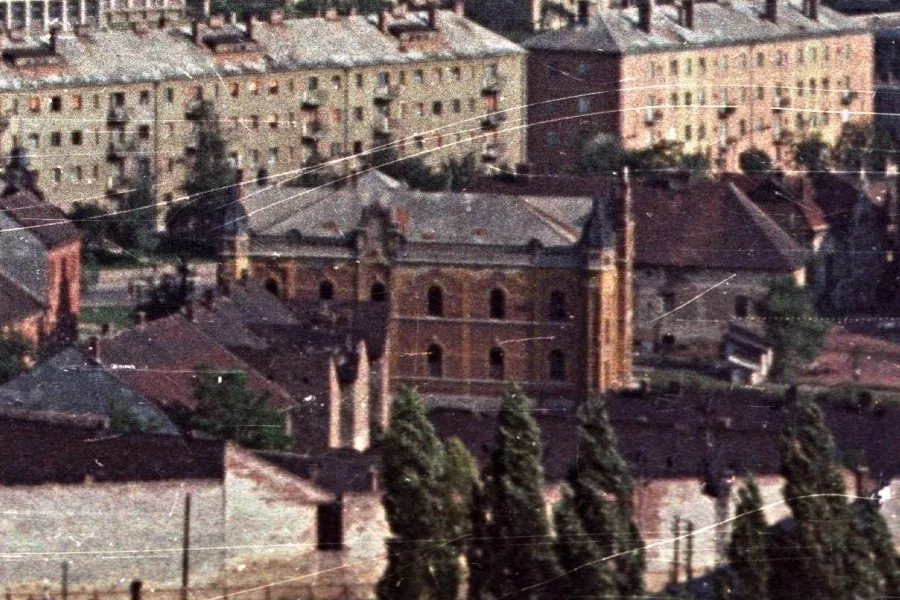
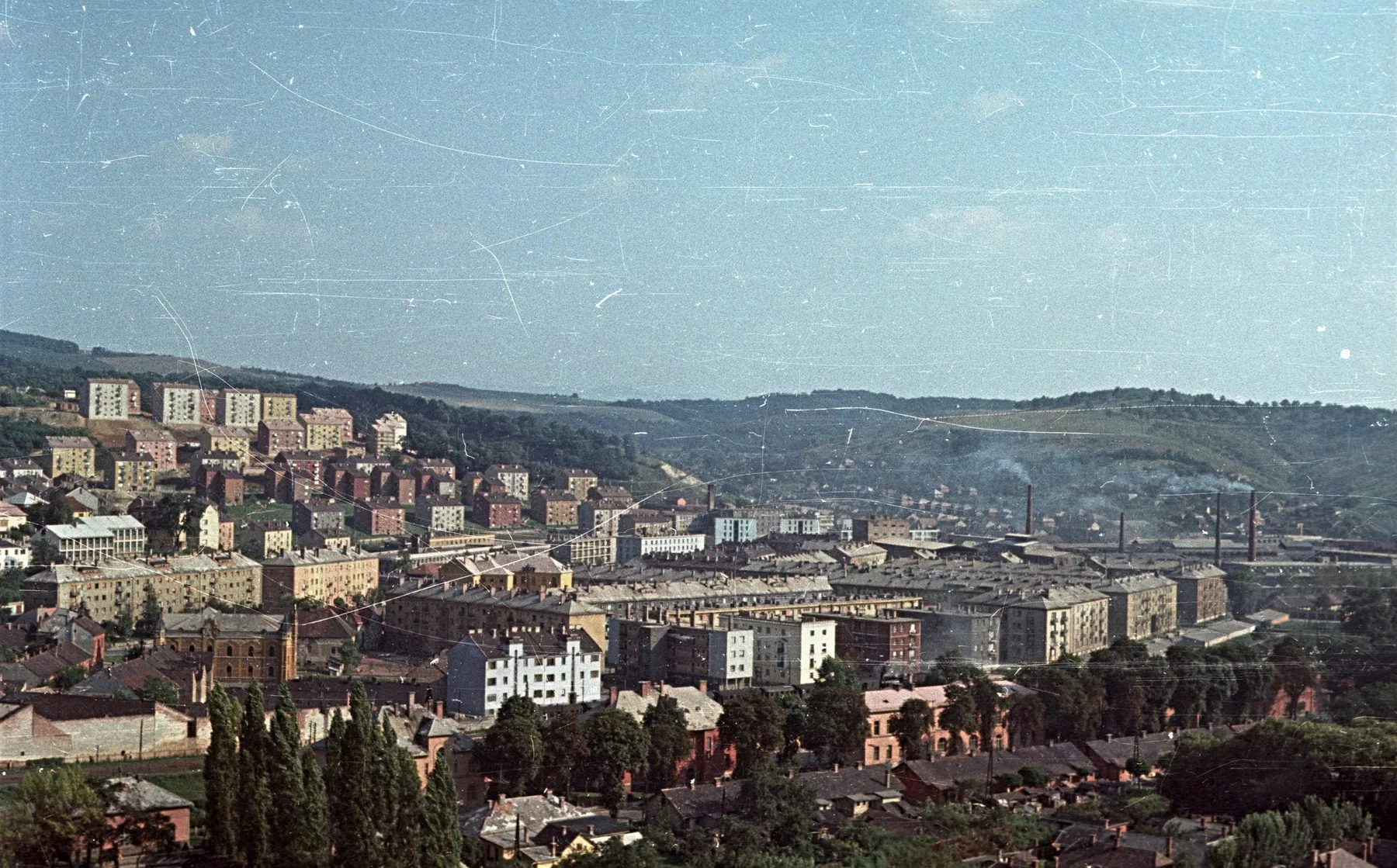
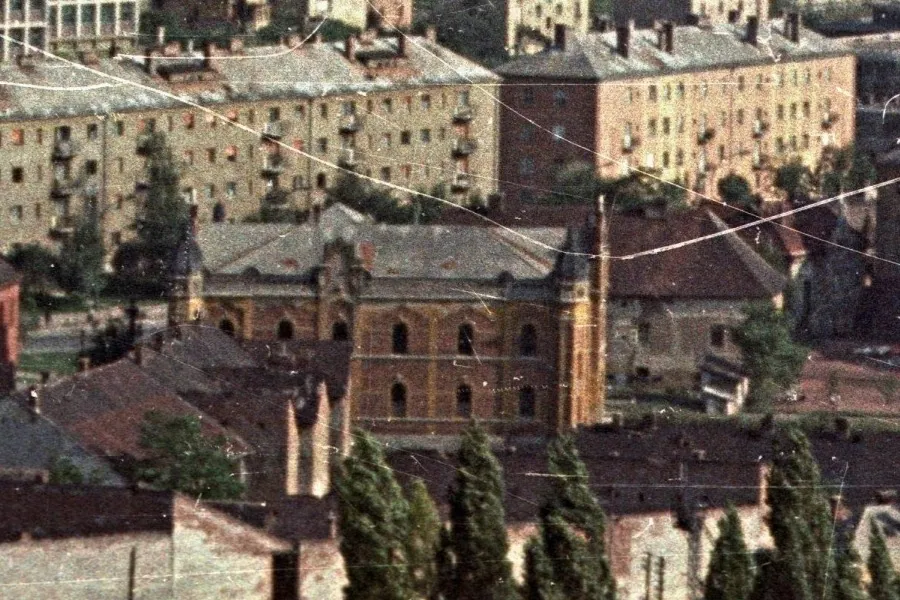
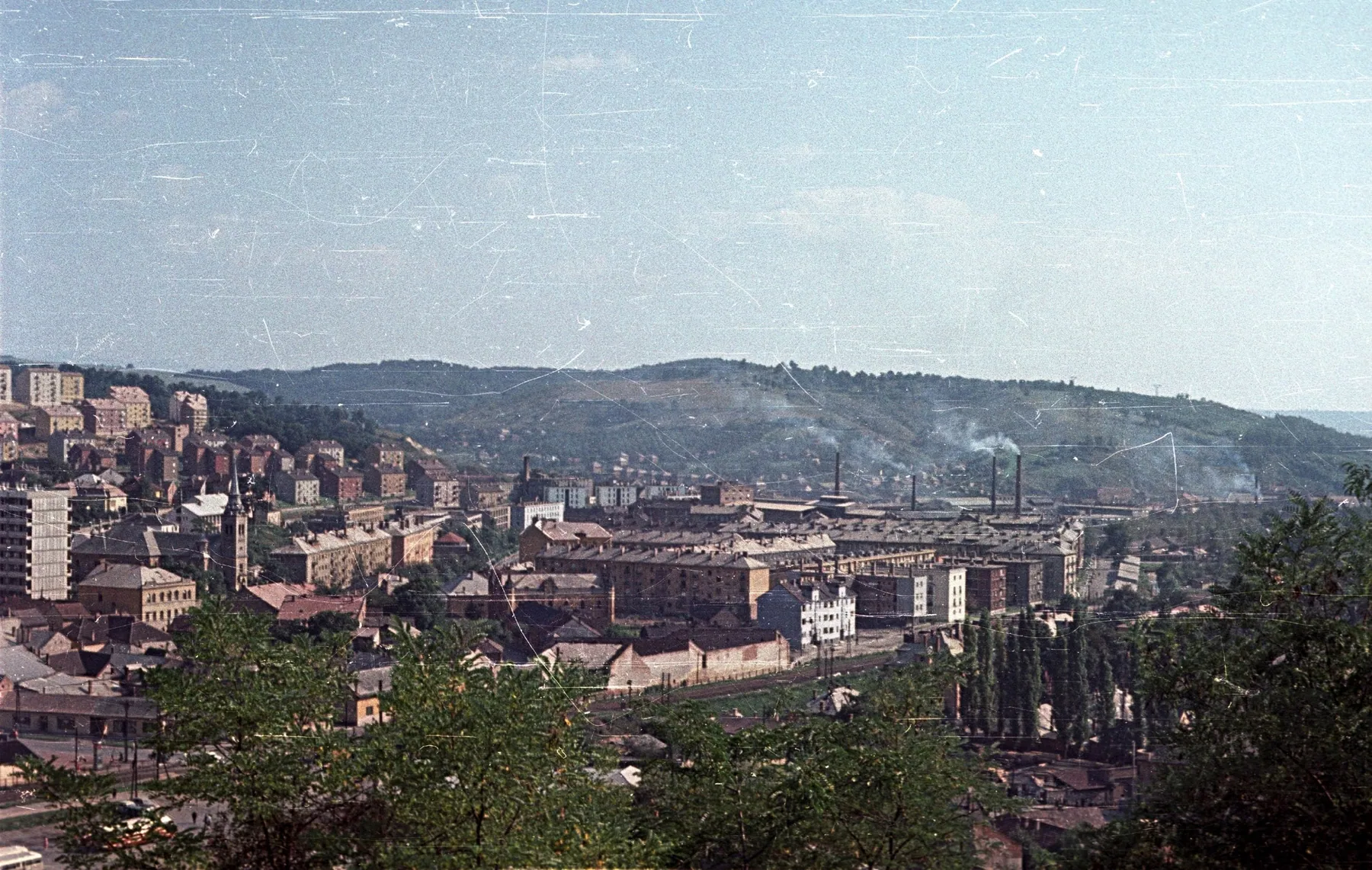
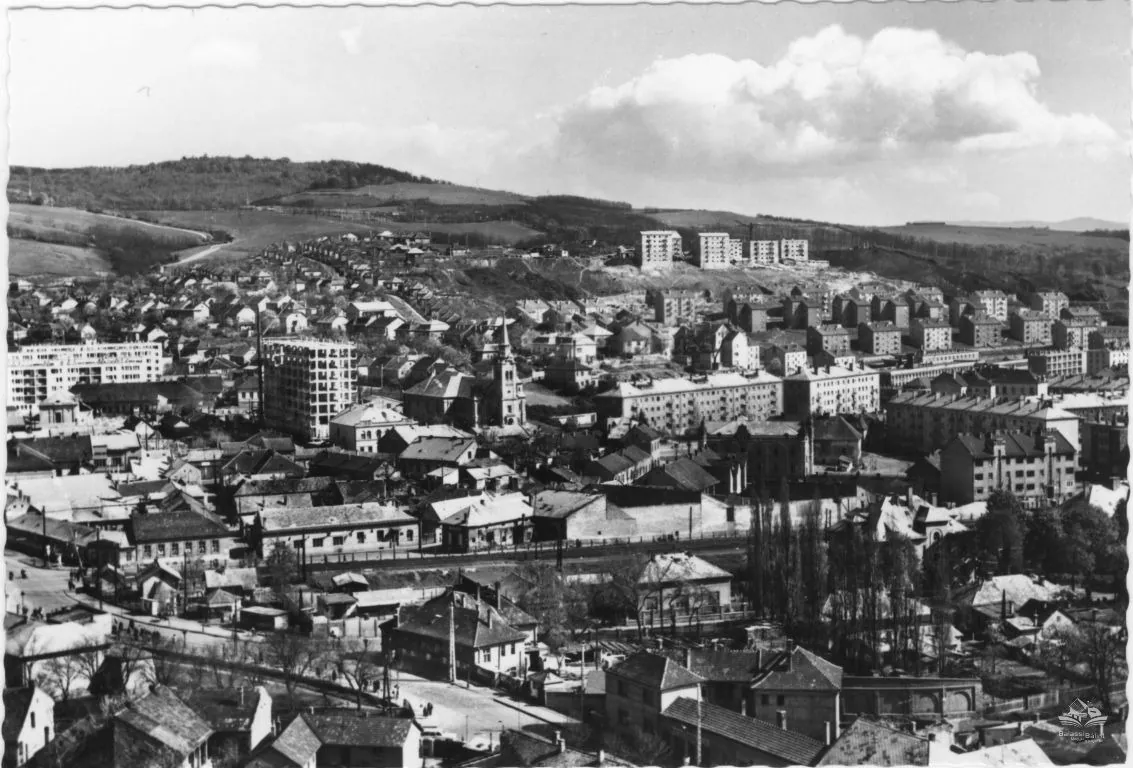
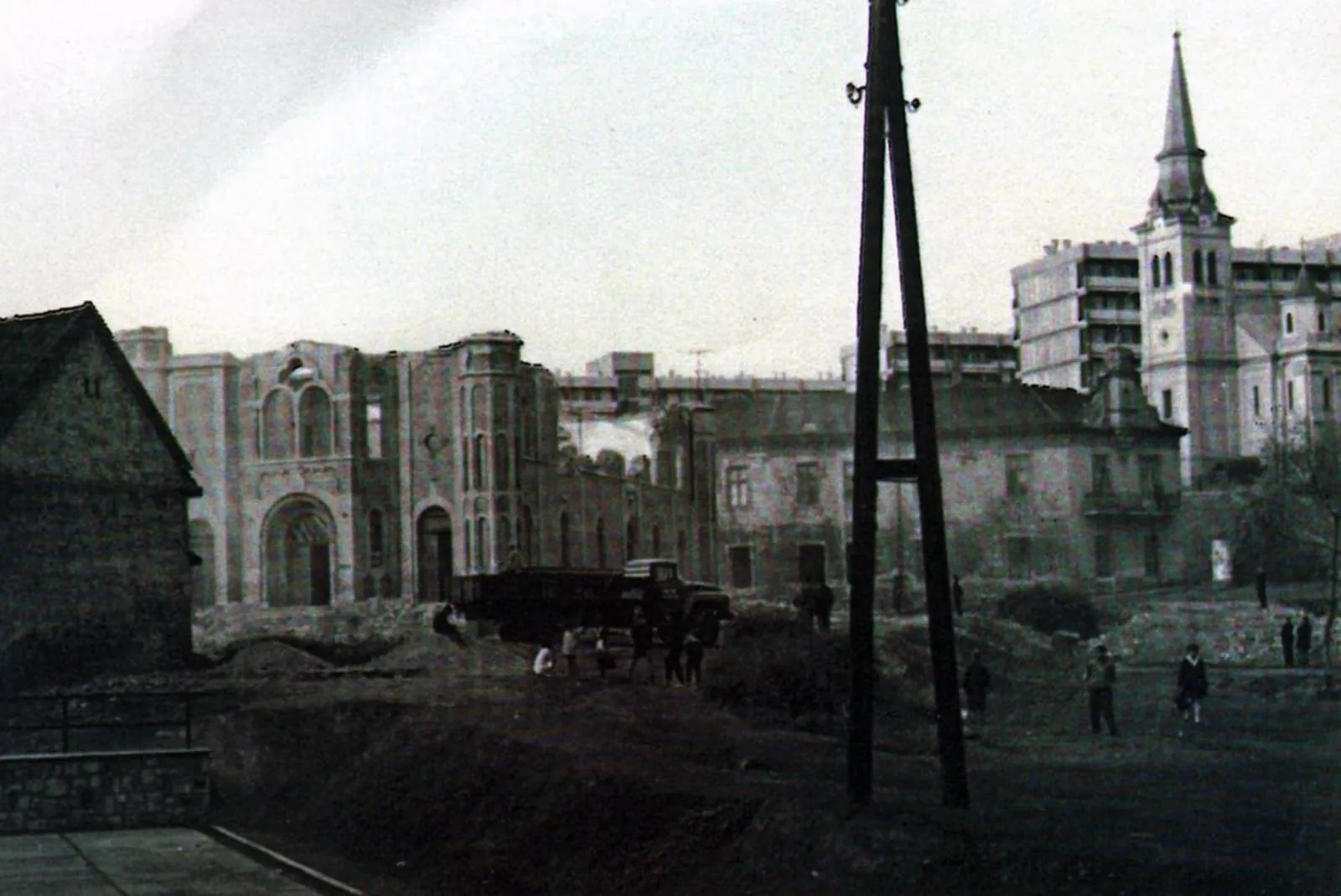
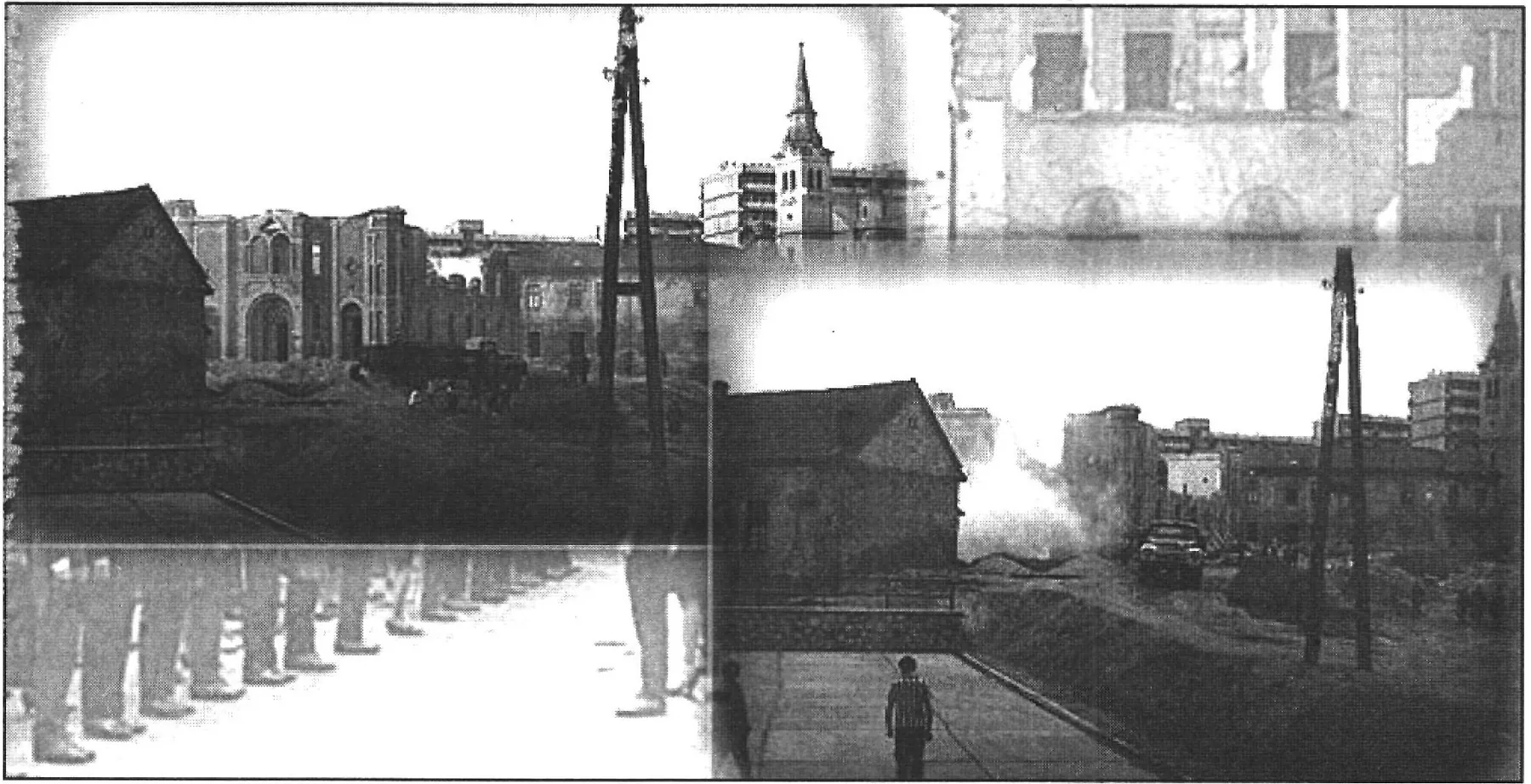
The synagogue stood on Régiposta utca in the old centre of Salgótarján, an industrial and coal-mining town in Nógrád County, northern Hungary, on ground that today lies between the Dornyay Béla Museum and the star-shaped apartment blocks known as the Csillagházak. Its construction was initiated by Mózes Deutsch, the town's Orthodox chief rabbi from 1874 to 1931. The foundation stone was laid in August 1901 on the site of a former casino, and the building, designed by the architect Gyula Szvoboda, was dedicated in September 1902. With its banded brick walls, onion-domed corner towers and tall ornamental gable it was remembered as the finest building in the town. During the German occupation of 1944 it was used as a stable and store while the congregation was confined to a ghetto and deported to Auschwitz. The few survivors repaired it and worshipped there for more than two decades. Although it had been declared a protected monument, the Communist leadership of the town had it expropriated during the rebuilding of Salgótarján as a 'socialist model town', and in 1969 the towers were taken down and the walls blown up.
Where it stood for 67 years
Historic: Régiposta utca (Régiposta út), Salgótarján. Today: between the Dornyay Béla Museum (Múzeum tér 2) and the Csillagházak apartment blocks; plaque at Bem József utca 8, 3100 Salgótarján.
Otwórz większą mapę →Społeczność żydowska
Jews settled in Salgótarján late, after the law of 1840 opened most of Hungary to Jewish residence; in the 1830s Jewish families lived only in neighbouring villages. The opening of the coal mines after 1855 and the arrival of the railway turned the village into an industrial town and drew Jewish merchants and tradesmen from many directions. Between 1867 and 1944 Jews made up roughly six to eight per cent of the inhabitants of the old town. After the schism of 1868–69 the community chose Orthodoxy; it already appears as a community in sources of the 1870s, though its formal foundation is dated to the 1890s. Mózes Deutsch was its rabbi from 1874. A community school opened in 1882, a burial society (Chevra Kadisha) was authorised in 1886 and a women's association followed in 1887; the community also kept a kosher slaughterhouse and a ritual bath. The writer Zoltán Szabó observed in 1938 that on Saturdays only one of thirty-two shops on a long stretch of the main street stayed open. In April 1944 the Salgótarján mother-community counted about 1,200 members.
Architektura i projekt
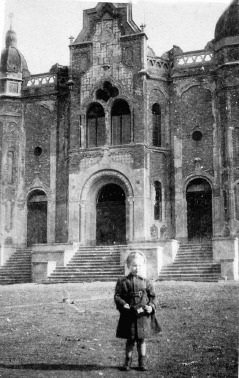
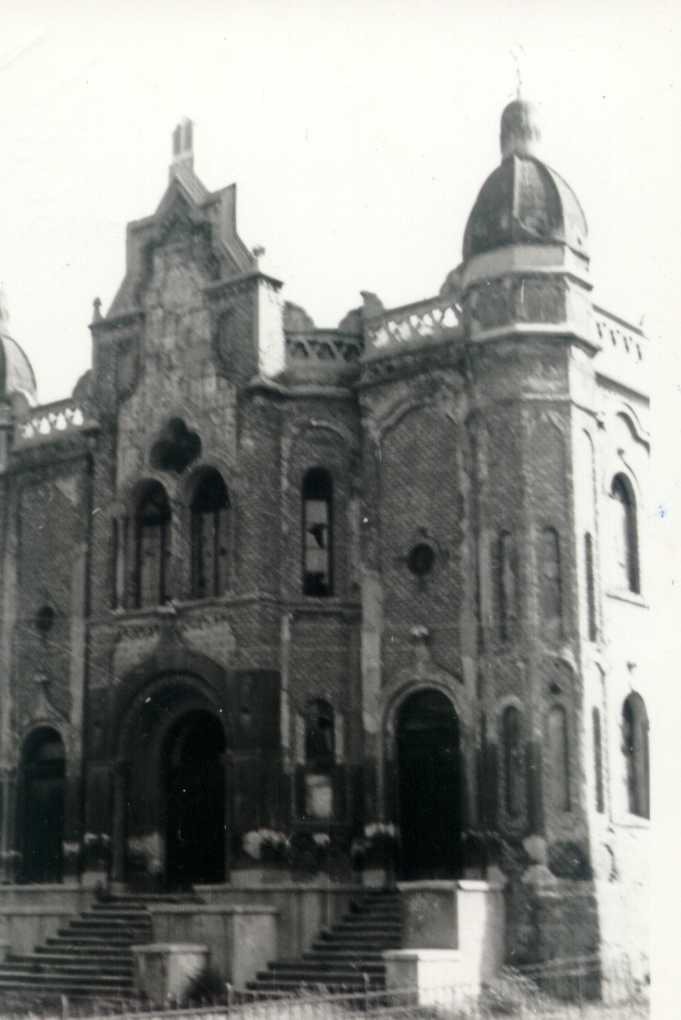
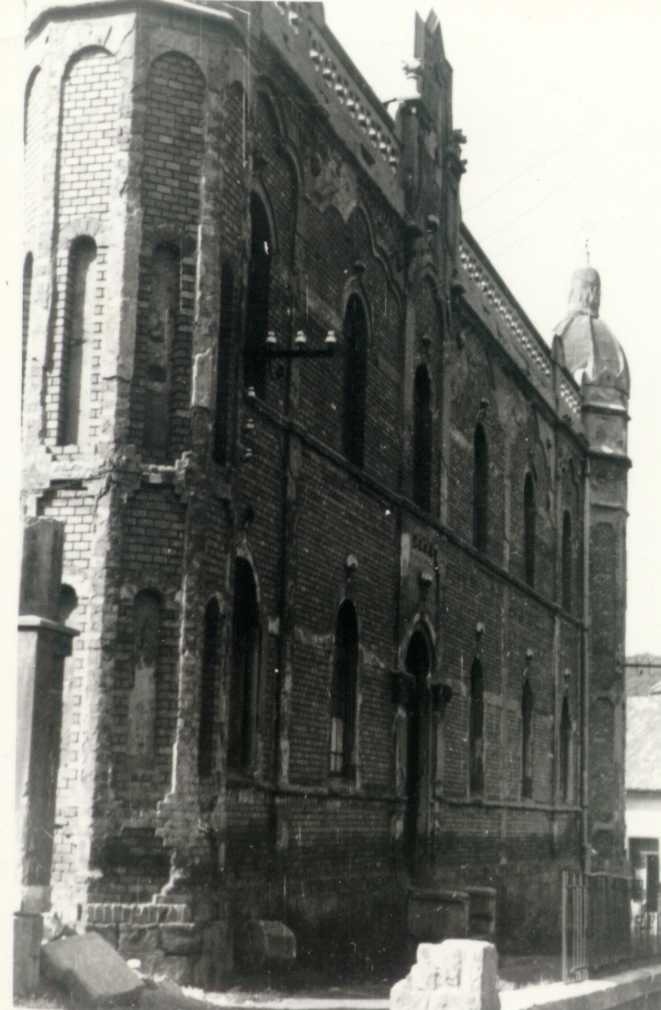
The building was designed by the architect Gyula Szvoboda in what contemporaries and later writers call the Moorish style; Hungarian Wikipedia also classes it as eclectic. Photographs show a tall rectangular brick hall with lighter banding and trim, its entrance front framed by two polygonal towers crowned with onion domes, with smaller domed turrets at the rear corners. Between the front towers rose a high curved and stepped gable over paired round-arched windows and a large arched portal flanked by two smaller doors, reached by flights of steps. The long sides had two tiers of arched windows beneath an ornamental parapet, and an iron railing with capped gate piers closed the plot from the street. The dedication programme mentions an almemor (bimah) around which the Torah scrolls were carried seven times. A newspaper report of the 1927 redecoration describes columns with lotus-like ornament, garlands of Greek, Egyptian and Hungarian motifs, a painted curtain above the ark, a deep-blue ceiling with the Tablets of the Law, the Ark of the Covenant and the parting sea, and twelve coloured rosettes for the twelve tribes around the nave. Its seating capacity is not recorded.
Życie w synagodze
The dedication was announced for 24 September 1902 (later accounts give 22 September). The congregation gathered in the school, took leave of the old prayer house with an address by Chief Rabbi Mózes Deutsch, and carried the Torah scrolls in procession to the new building, where the key was handed over, the scrolls were borne seven times around the bimah and placed in the ark, and Deutsch lit the eternal light. Leó Singer, chief rabbi of Rimaszombat, gave the dedicatory sermon, a prayer was said for the king, and the day ended with a banquet at the Vadász Hotel. Local newspapers recorded bar mitzvahs in the synagogue, such as that of the son of the mine director Nándor Gerő in 1905. When Deutsch died in April 1931 after fifty-seven years in office, the synagogue was packed for a funeral attended by the mayor, officials and many rabbis. The former Jewish school stood beside it. After 1945 the returning survivors repaired the building and prayed there until 1969.
Zniszczenie
The synagogue outlived both world wars. In 1969 the Communists demolished it. Salgótarján was being rebuilt as a 'socialist model town', and the old quarter around Régiposta utca was cleared for new housing and public buildings. In August 1967 József Berkes, a Communist official who served as secretary of the town's executive committee, wrote to the State Office for Church Affairs that the expropriation of the Israelite temple and its service flat had to be settled that year; he had received no answer from the national Jewish office, although the local congregation was willing to negotiate. After several years of preparation, and although the building had earlier been declared a protected monument, the Communist leadership of the town reached an agreement with the national Jewish representation and the demolition went ahead. A photograph dated June 1969 shows the work under way: the towers were dismantled first, and the walls were then brought down with explosives. The Jankovich manor house, another building of monument value in the quarter, was destroyed in the same clearance.
Los społeczności
After the German occupation of Hungary in March 1944 the Jews of Salgótarján were registered, made to wear the yellow star from 12 April, and from 3 May forced into a ghetto set up in three parts of the town; with Jews brought in from 23 localities of eastern Nógrád and nearby Heves it held 2,018 people. Nazi German forces used the synagogue as a stable and warehouse. On 5 June the inmates were driven into the stables of the coal mine, where Hungarian gendarmes tortured the wealthier for their valuables, and on 13 June they were loaded into wagons and deported to Auschwitz-Birkenau, where most were murdered by the Nazis. Of about 1,300 Jews deported from the Salgótarján ghetto and 150–200 men taken earlier for forced labour, only some 120 returned. The survivors re-formed the community in 1945 and built a domed memorial building in the cemetery in 1948–50. Most Orthodox families emigrated to Israel and the Americas after 1956 and in the 1960s; by 1980 about 35 Jewish families, some 100–110 people, lived in the town.
Miejsce dzisiaj
Nothing of the synagogue survives. Its plot was absorbed into the rebuilt town centre: the star-plan apartment blocks called Csillagházak, designed by József Finta and handed over in 1972, and the surroundings of the Dornyay Béla Museum now occupy the area. A dwelling house served the congregation as a prayer house until 1993, when it too was demolished. In 2014, for the seventieth anniversary of the Holocaust and the forty-fifth of the demolition, the municipality placed a black granite plaque on the wall of the Csillagház at Bem utca 8, recording that the synagogue stood there from 1902 to 1969. The Jewish cemetery, where Rabbi Mózes Deutsch is buried, remains.
Ważne postacie
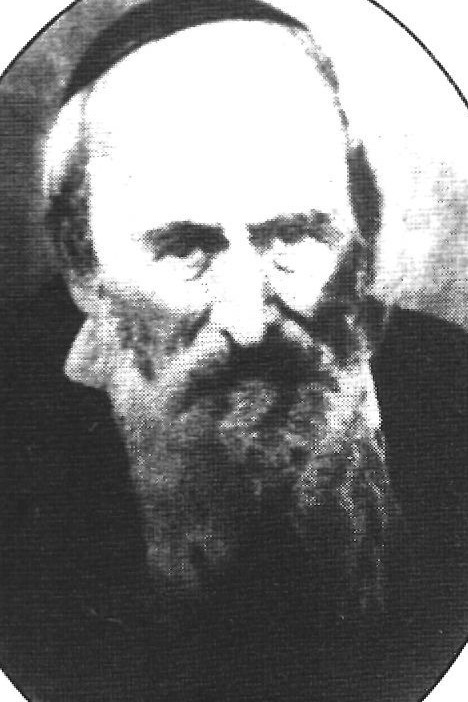
Mózes Deutsch
1844–1931Orthodox Chief Rabbi of Salgótarján, 1874–1931Born in Pozsony, the son of Rabbi Áron Dávid Deutsch of Balassagyarmat, Mózes Deutsch led Salgótarján's Jews for fifty-seven years. The synagogue was built on his initiative; at its dedication in September 1902 he gave the farewell address in the old prayer house and lit the eternal light in the new one. His funeral in April 1931 filled the synagogue and was attended by the mayor and many rabbis.
Biografia lub źródło →Gyula Szvoboda
UnknownArchitectGyula Szvoboda is named as the architect of the synagogue in the 2014 municipal submission, on the plaque marking its site and in Hungarian Wikipedia's survey of Moorish Revival architecture. His plans were carried out between August 1901 and September 1902. He also designed the Lutheran church (1902) and the Reformed church (1905) in nearby Ózd. A 2024 local postcard gives his first name as György.
Biografia lub źródło →Leó S. Singer
1856–1912Orthodox Chief Rabbi of Rimaszombat; preacher at the dedicationLeó Singer, chief rabbi of Rimaszombat (today Rimavská Sobota, Slovakia) from 1882, was the guest preacher at the dedication of the Salgótarján synagogue in September 1902. According to the printed programme he spoke at the laying of the closing stone and delivered the dedicatory sermon and prayer after the Torah scrolls had been placed in the ark.
Biografia lub źródło →Jenő Deutsch
UnknownDeputy rabbi of Salgótarján, 1930s–1944After Mózes Deutsch died in 1931 the community elected only a deputy rabbi, Jenő Deutsch of Verpelét, who after years of litigation could officially take up his duties in 1936. He is recorded as the rabbi (alrabbi) of the Salgótarján mother-community in the Jewish Council's register of April 1944, weeks before the congregation was forced into the ghetto and deported.
Biografia lub źródło →Samu Friedler
UnknownPresident of the community, 1944The merchant Samu Friedler is named as president of the Orthodox mother-community of Salgótarján in the register compiled for the Jewish Council in April 1944, when it counted about 1,200 members, 163 taxpayers and seven employees. He headed the congregation that worshipped in the synagogue in its last weeks before ghettoisation in May and deportation in June 1944.
Biografia lub źródło →Oszkár Paszternák
UnknownPresident of the re-formed community, 1945Oszkár Paszternák was among the leaders of the Jewish association formed by survivors in spring 1945 and signed, as community president, the letter of 24 July 1945 asking the mayor to have the synagogue roof repaired from the municipal loan for abandoned properties, at a cost of about 20,000 pengő, to save the building from further damage.
Biografia lub źródło →Czy masz coś do przekazania?
Zdjęcia, dokumenty, historie rodzinne lub wspomnienia o tej synagodze i jej społeczności pomagają zachować jej historię.
- Salgótarjáni zsidótörténet általános és középiskolások számára (2nd ed., Salgótarján 2004; Adatok, források és tanulmányok a Nógrád Megyei Levéltárból 42)
- Javaslat az egykori salgótarjáni zsinagóga helyét jelölő emléktábla felállításához szükséges hozzájárulás megadására (17288/2014)
- Salgótarjáni zsinagóga
- Salgótarjáni zsinagóga képeslapon (F01.373) and related items 26654, 26656–26659, 36994–36995
- Emléktábla (plaque marking the site of the Salgótarján synagogue)
- Salgótarján az 1960-as évek második felében (postcard, photo Lajos Tóth)
- Zsinagóga (Salgótarján)
- A városközpont déli részének átépítése
- Fortepan photographs 33480, 33481 and 33483 (Salgótarján, 1966)
- Deutsch Mózes
- Singer S. Leó
- Ózd (Nevezetességei: churches designed by Gyula Szvoboda)
- Neomór építészet Magyarországon
- Salgótarjáni zsinagóga
- OpenStreetMap way 546101032 (Bem József utca 8, Salgótarján), geocoded with Nominatim
Share a memory or thought
No comments yet. Be the first to add one.