

Die Geschichte von Status Quo Ante Synagogue of Satu Mare
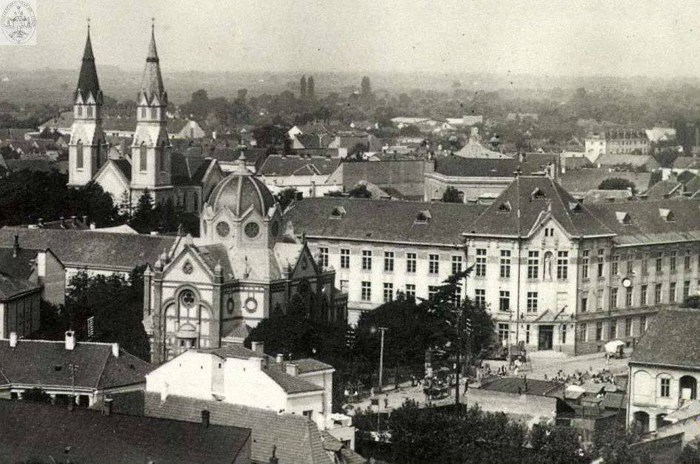
Satu Mare, in north-western Romania, was one of the great Jewish centres of Transylvania: in 1941 its 12,960 Jews made up nearly a quarter of the population, and the city gave its name to the Satmar Hasidic dynasty. In 1895–1896 about 120 members led by Károly Mayer Csengery broke away from the Orthodox community to form a Status Quo Ante congregation, the middle way between Orthodoxy and Neolog reform. Their rabbi from 1903 to 1932, Dr Sándor Jordán, also founded the city's Zionist Organisation in 1905. In May 1904 the congregation chose the Szuhányi plot on the corner of today's Strada Cuza Vodă, Mircea cel Bătrân and Mihai Eminescu, and in 1904–1906 built a synagogue and community house there in the Moorish style. With a great ribbed dome over the prayer hall, patterned brickwork and rose windows, it was counted among the most beautiful buildings of the city. The synagogue survived the Holocaust but lost almost all its members, and after the war most survivors emigrated. In 1965 the Communists demolished it; the Satu Mare County Police Inspectorate (IPJ) now stands on the site. Of the city's three large synagogues and some 25 prayer houses, only the Great Synagogue on Strada Decebal remains.
Where it stood for 59 years
Historic: Szuhányi plot, corner of today's Cuza Vodă, Mircea cel Bătrân and Mihai Eminescu streets, Szatmárnémeti. Present day: Satu Mare County Police Inspectorate, Strada Mihai Eminescu, Satu Mare, Romania.
Größere Karte öffnen →Die jüdische Gemeinde
Jews are first recorded in Satu Mare in 1712, arriving from Galicia and Moravia. The community grew from 128 in 1850 to 2,396 in 1880, 7,194 in 1910 and 12,960 in 1941, out of 52,048 inhabitants (24.9 percent), the fourth-largest Jewish population in Transylvania. Most were Orthodox, and from 1928 the city was the seat of Rabbi Joel Teitelbaum, founder of the Satmar Hasidic movement. In 1895–1896 a group of nearly 120 people led by Károly Mayer Csengery left the Orthodox community and formed the Status Quo Ante congregation. Its first rabbi, ad interim, was Ignác Klein; Dr Sándor Jordán was chief rabbi from 1903 to 1932, followed by Josef Friedmann (1935–1944) and Ernő Klein (1946–1948). Zionist groups including Barissia, Mizrachi, Betar and Hashomer Hatzair grew up around the congregation.
Architektur und Gestaltung
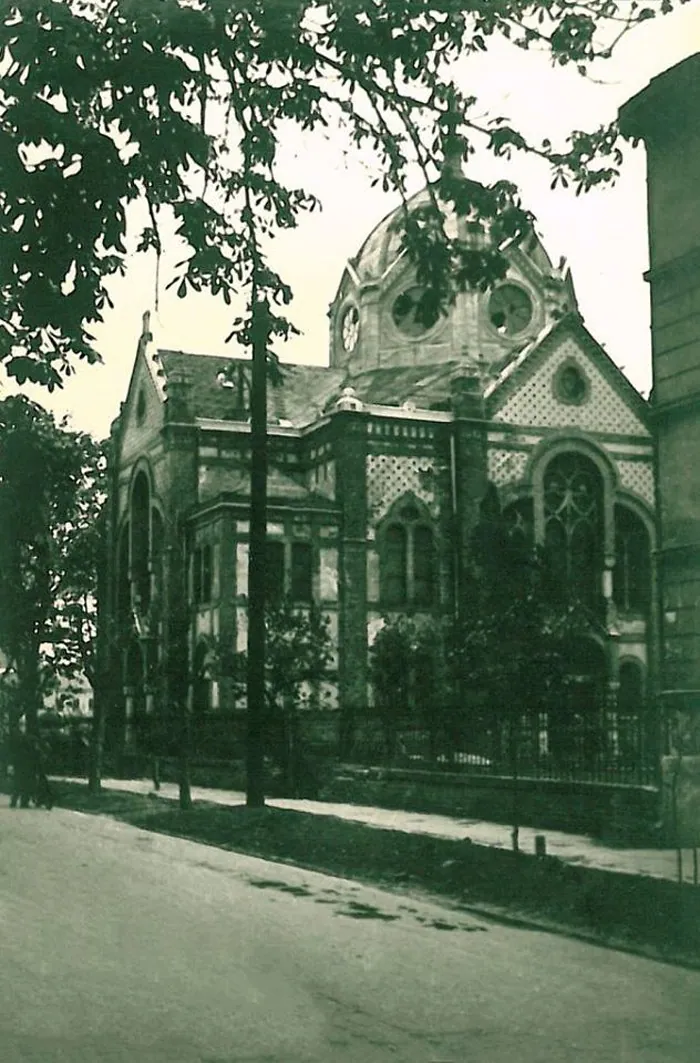
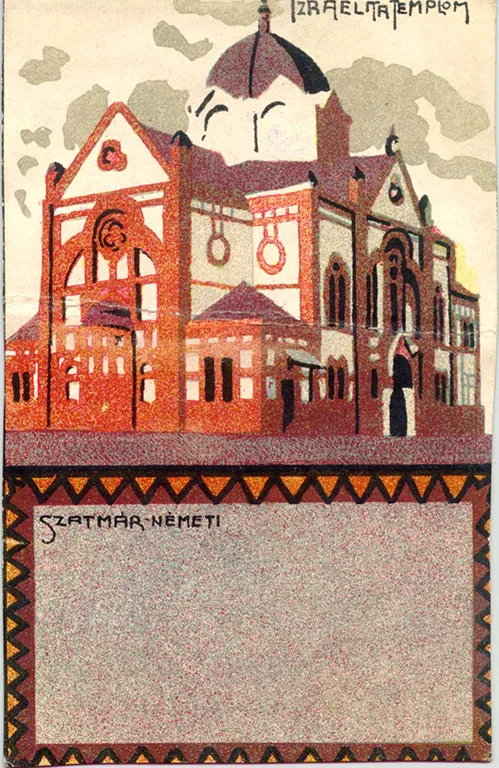
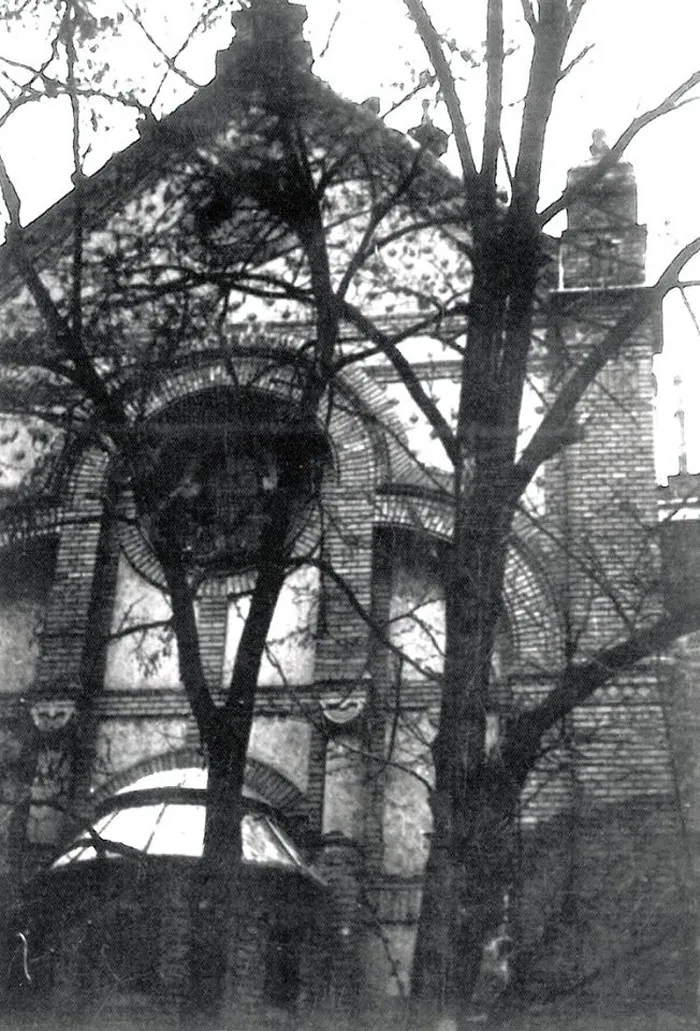
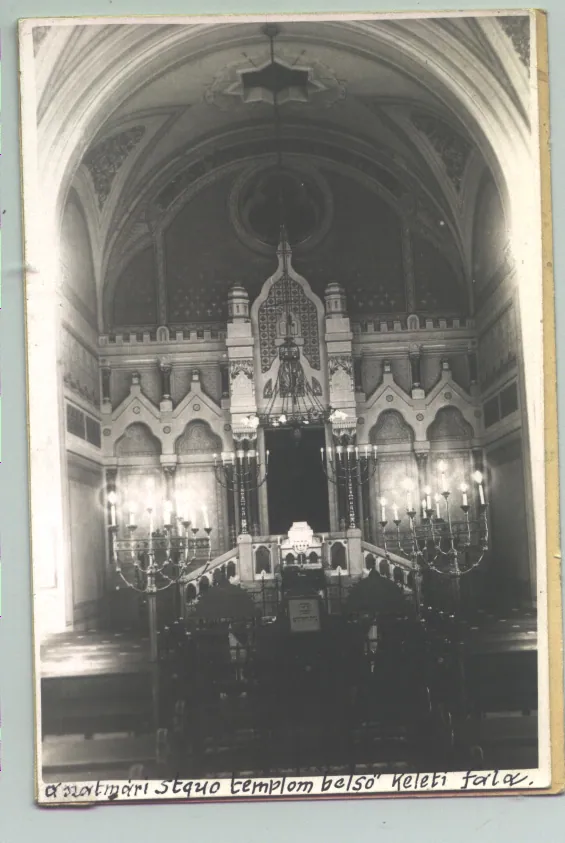
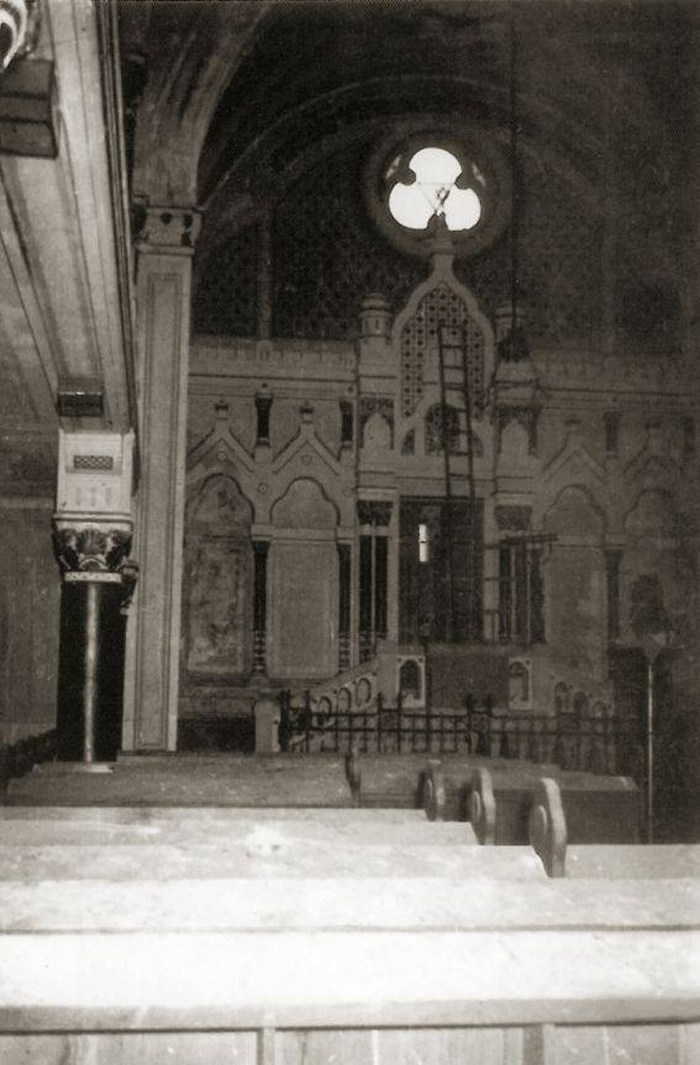
The synagogue and the community residence were built between 1904 and 1906 on the Szuhányi plot at the junction of today's Strada Cuza Vodă, Mircea cel Bătrân and Mihai Eminescu, so that the building had facades to three streets; its west facade faced Cuza Vodă. Photographs show a large Moorish Revival building of patterned brick with a cross-shaped plan, gabled wings with large rose windows and horseshoe arches, pinnacles at the corners, and a high octagonal drum carrying a ribbed dome with a lantern that dominated the surrounding streets. Inside, a coloured decorative scheme framed the Torah ark on the east wall, set in a richly carved niche beneath a rose window, with brass candelabra on either side of the bimah steps.
Leben in der Synagoge
The synagogue was the home of the city's Status Quo Ante congregation, a traditional but moderate community that sat between the large Orthodox and Hasidic majority and the Neolog minority. Under Rabbi Sándor Jordán it became a centre of Zionist activity: the Zionist Organisation of Satu Mare was founded under his care in 1905, followed by youth and political groups such as Mizrachi, Betar and Hashomer Hatzair. After the war Rabbi Ernő Klein led the surviving congregation from 1946 to 1948.
Zerstörung
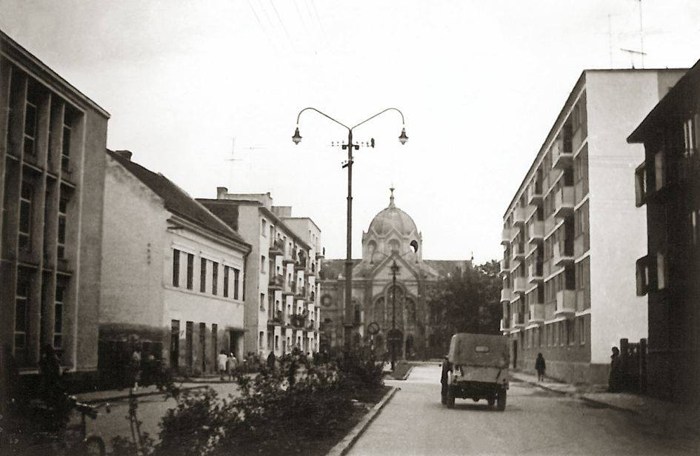
The synagogue survived the Second World War, but its congregation was almost wiped out in 1944 and most survivors left in the following years. In 1965 the Communists demolished the synagogue, and the headquarters of the Satu Mare County Police Inspectorate was built on its site. According to Gazeta Nord-Vest, the local Jewish community keeps what it considers the only photograph of the building from before its demolition.
Das Schicksal der Gemeinde
Northern Transylvania was annexed by Hungary in 1940. In May 1944 the Jews of Satu Mare, about 13,000 people, and thousands from the surrounding villages were confined in a ghetto in the city and deported to Auschwitz in May and June 1944, where most were murdered. After the war survivors and returnees briefly revived Jewish life, but most emigrated to Israel and elsewhere. Today only a little over 100 Jews live in Satu Mare, and the Great Synagogue on Strada Decebal is the only large synagogue still standing.
Der Ort heute
The Satu Mare County Police Inspectorate (IPJ Satu Mare) occupies the site at the corner of Strada Mihai Eminescu, Cuza Vodă and Mircea cel Bătrân. Nothing of the synagogue survives there.
Bedeutende Namen
Sándor Jordán
Chief rabbi 1903–1932Chief rabbi of the Status Quo Ante congregation of Satu MareLed the congregation when the synagogue was built and founded the Zionist Organisation of Satu Mare in 1905.
Biografie oder Quelle →Károly Mayer Csengery
UnknownFounder and leader of the Status Quo Ante congregationLed the group of about 120 members who left the Orthodox community in 1895–1896 and formed the congregation that built the synagogue.
Biografie oder Quelle →Haben Sie etwas beizutragen?
Fotos, Dokumente, Familiengeschichten oder Erinnerungen an diese Synagoge und ihre Gemeinde halten ihre Geschichte lebendig.
Share a memory or thought
No comments yet. Be the first to add one.