
The story of Seňa Synagogue
Seňa lies in the Košice-okolie district of eastern Slovakia, close to the Hungarian border, in the historic Abaúj region. Jews lived there from the middle of the eighteenth century, and the village became the seat of a rabbinate that also served Jews in thirteen neighbouring settlements. According to Pinkas Hakehillot Slovakia, a synagogue with a women's section and a study hall at its entrance was established in the 1880s; a Slovak heritage gazetteer, citing a local history of the Abov area, says the first mention of a synagogue in Seňa dates from 1828, so an earlier house of prayer probably preceded it. The community was Orthodox. Its most celebrated rabbi was Shimon Ehrenfeld, a grandson of the Chatam Sofer, who led it from 1885 to 1894, when it reached its largest size of almost 300 people. In 1929 the old synagogue was refurbished and enlarged, and a community centre and a rabbi's apartment were built beside it. The building stood on the north side of the crossroads on the main road leading to the railway station. Seňa was annexed to Hungary in November 1938. In April 1944 the Jews were assembled beside the synagogue before deportation. Pinkas Hakehillot says the synagogue was destroyed during the war; the heritage gazetteer says it fell into disrepair after the war and was eventually demolished.
Where it stood
Historic: Seňa (Szina), Abaúj-Torna county; north side of the crossroads on the main road to the railway station. Today: Seňa, okres Košice-okolie; gazetteer coordinates fall on house no. 154 (approximate).
Open larger map →The Jewish community
Tombstones dated 1749 to 1764 in the local cemetery, which seems to have served the Jews of the whole district, suggest that the first Jews settled in Seňa around the middle of the eighteenth century. A tax list of 1768 names three Jewish heads of household living on noblemen's property. The Jews lived mostly from peddling at the markets of the Abaúj region. A ritual bath and a burial society existed by the mid-eighteenth century, and a kehila serving nearby villages was formed in its second half. The population rose from 154 Jews in 1828 to 252 in 1880, then declined as young people left for the cities: 136 in 1919, 93 in 1930 and 85 in 1941. After the First World War the kehila, with its neighbouring villages, still had 230 members, led by David Rónai; in 1922 it had a budget of 6,000 crowns and 50 taxpaying households. Jews kept four grocery shops, a tavern, a butcher's shop, a timber and building-materials yard, a leather shop, a distillery and a flour mill; three owned large farms, and Dr Samuel Jonap was district doctor. The otologist Leopold Réthy was born here in 1852.
Architecture and design
The only description found comes from a local history of the Abov area quoted by the heritage gazetteer pamiatkynaslovensku.sk. The synagogue was built of unfired mud bricks and had a shingle roof, with its entrance on the south side. The building measured about 10 by 15 metres. Five steps led up to the Torah ark; the Ten Commandments were carved on the top of the ark, and the tablets were supported by lions. Above the vestibule was a balcony where the women sat, reached by wooden stairs on the outside of the building. Beside the entrance stood a copper kiyor, a basin for ritual hand-washing. Some accounts mention a smaller, separate part called the kis templom ('small temple') where services were held in winter; in summer it served as the Jewish school, where a melamed taught the children. Pinkas Hakehillot adds that the study hall stood at the entrance and that the old building was refurbished and enlarged in 1929. The architect, the builder, the seating capacity and the style are unknown, and no photograph or drawing was found.
Life inside the synagogue
The synagogue was the centre of an Orthodox kehila that joined the Orthodox organisation after the split of Hungarian Jewry in 1869. In the middle of the nineteenth century the community acquired a rabbi, whose authority extended to Jews in thirteen nearby settlements, and it maintained a Talmud Torah and an elementary school attended by dozens of children from the area. The communal slaughterer also acted as teacher and prayer leader. From 1885 to 1894 the rabbi was Shimon Ehrenfeld, known as a fine preacher, who then moved to the rabbinate of Michalovce. In the 1920s the rabbi was Tuvia Yisrael Schweiger. The community renewed its statutes in 1923 and ran a burial society and charitable societies alongside the synagogue, the ritual bath with the slaughterer's apartment, a classroom for religious teaching and the cemetery. A branch of the Jewish National Party was founded in the 1920s and won 40 votes in the local elections of 1928. The last communal act recorded at the synagogue was a forced one: in April 1944 the gendarmes assembled the remaining Jews beside it.
Destruction
The two sources found disagree. Pinkas Hakehillot Slovakia, published by Yad Vashem in 2003, says only that the synagogue was destroyed during the war, without naming a cause or an actor. The building stood empty after the deportation of 18 April 1944. Seňa was on the front line in the winter of 1944-45: according to the village's own history, Romanian troops entered on 19 December 1944 and were relieved the same day by Soviet forces, but Nazi German units held positions in the neighbouring villages, the front stopped at Seňa for a month and the village was under frequent artillery and mortar fire until the Nazi German units withdrew on 19 January 1945. Pinkas also notes that much destruction had taken place in Seňa by its liberation. The heritage gazetteer pamiatkynaslovensku.sk, citing a 2002 local history, says instead that after the Second World War the synagogue fell into disrepair and was finally demolished. Neither source gives a date for the demolition, and who demolished it is not recorded. Whether the building was damaged in the fighting before being cleared away is unknown.
The community’s fate
After Seňa was annexed to Hungary in November 1938, the Hungarian authorities gradually withdrew Jews' trading and work permits, and many families came to depend on welfare institutions in Košice. In 1941 many men were drafted into forced labour service. After the Nazi German occupation of Hungary on 19 March 1944 only 80 Jews remained in the village. On 18 April 1944 the Hungarian gendarmerie rounded them up next to the synagogue and took them to the Košice ghetto. They were deported with the transport that left Košice for Auschwitz on 16 May 1944. Rabbi Tuvia Yisrael Schweiger and his family were among the deportees. After the war a few survivors of the camps returned to Seňa, but they soon moved to Košice, and no community was re-established. The Jewish cemetery was neglected and some of its tombstones were destroyed.
The site today
The heritage gazetteer places the synagogue on the north side of the crossroads on the main road leading to Seňa's railway station and gives coordinates that fall on a present-day house plot (house number 154 on OpenStreetMap). No source consulted describes what now stands on the exact site, and no surviving fragment of the building is recorded. No marker on the site was found in the sources read. The Jewish cemetery, with tombstones going back to the mid-eighteenth century, is described by Pinkas Hakehillot as neglected and partly destroyed.
Notable names
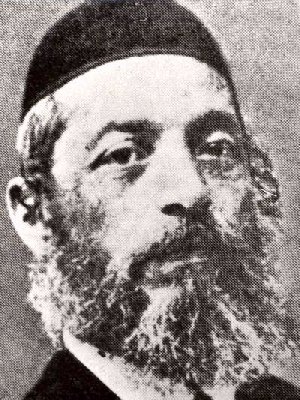
Shimon Ehrenfeld
died 1931Rabbi of Seňa, 1885-1894Ehrenfeld, a grandson of the Chatam Sofer (Moshe Sofer), headed the Seňa rabbinate from 1885 to 1894. Pinkas Hakehillot calls him a superb orator and says the community reached its peak of almost 300 people during his tenure. In 1894 he moved to the rabbinate of Michalovce, where he served until his death on 9 July 1931 and was regarded as one of the leading rabbis of the country.
Biography or source →Tuvia Yisrael Schweiger
died 1944Rabbi of Seňa from the 1920s until 1944Schweiger headed the Seňa rabbinate from the 1920s, the period in which the old synagogue was refurbished and enlarged in 1929 and a rabbi's apartment was built beside it. He was still the community's rabbi in 1944, when the Hungarian gendarmerie assembled the Jews next to the synagogue, and he and his family were deported via the Košice ghetto to Auschwitz in May 1944.
Biography or source →David Rónai
UnknownLeader (president) of the Seňa kehila after the First World WarPinkas Hakehillot names David Rónai as the leader of the Seňa kehila after the First World War, when it still counted 230 members including the neighbouring villages, had 50 taxpaying households and a budget of 6,000 crowns in 1922, and renewed its statutes in 1923. Nothing else about his life or fate was found.
Biography or source →Do you have something to contribute?
Photographs, documents, family stories or memories of this synagogue and its community help keep its history alive.
Share a memory or thought
No comments yet. Be the first to add one.