
La historia de Shalom al Yisrael Synagogue, Jericho
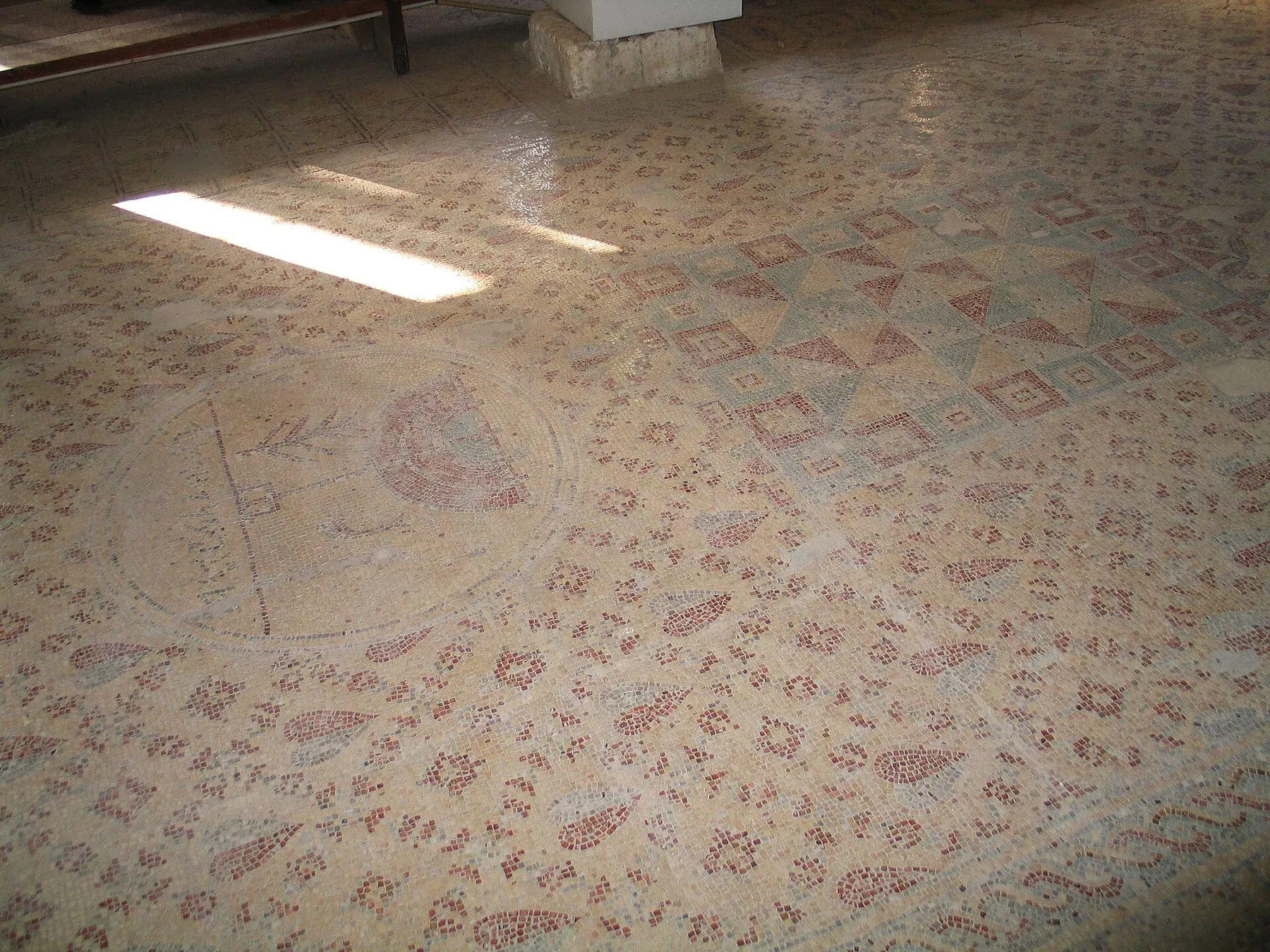
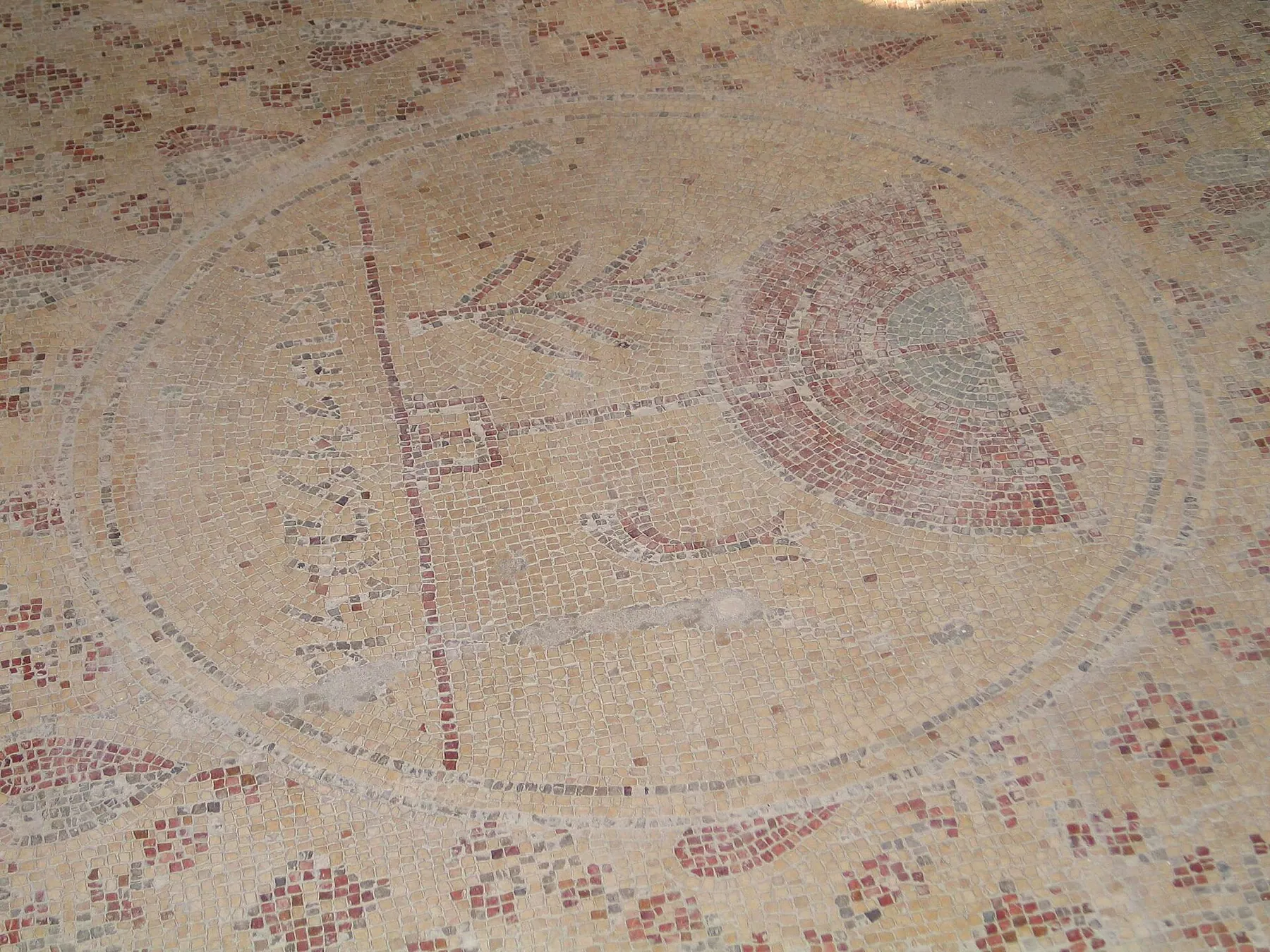
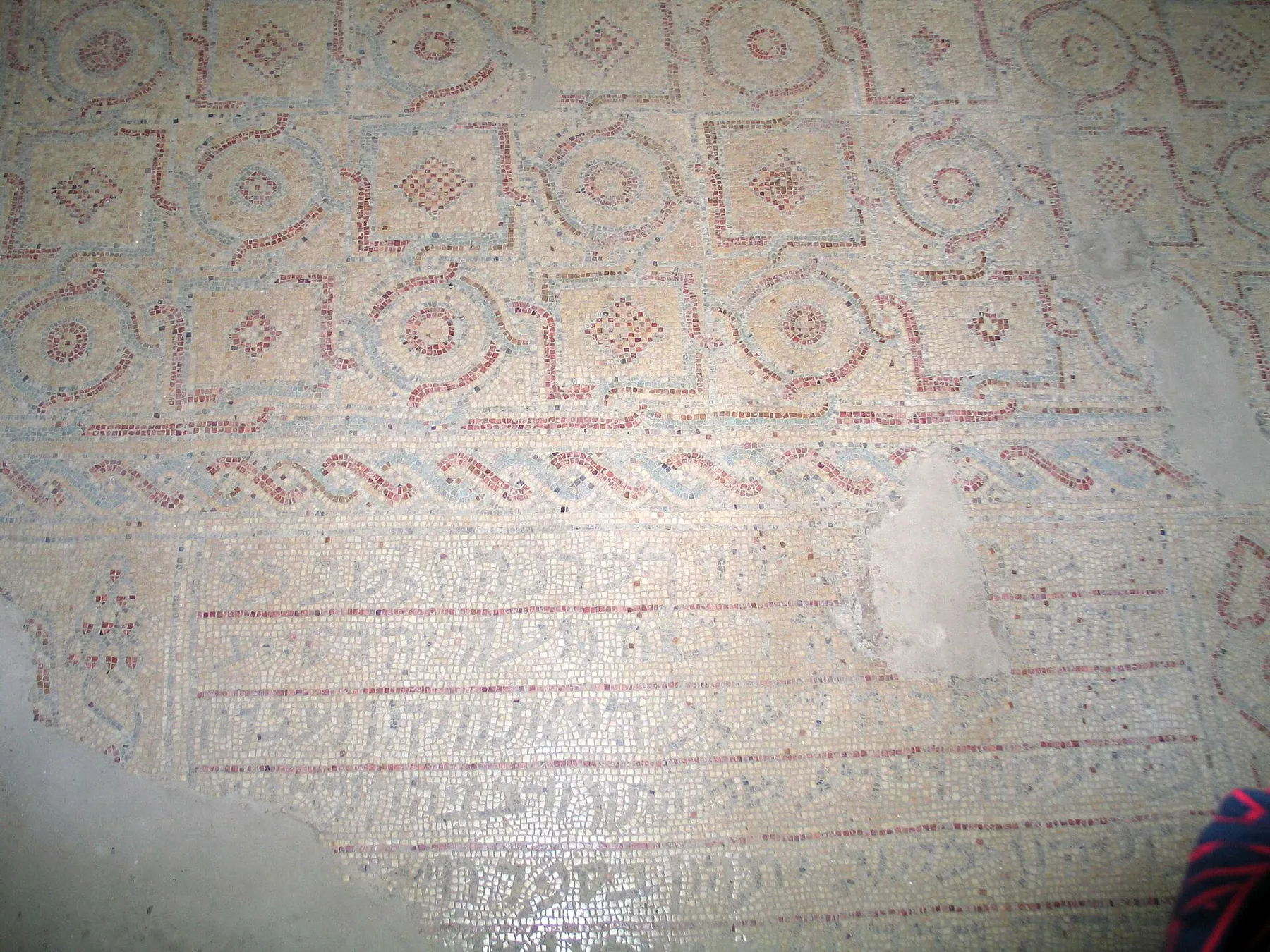
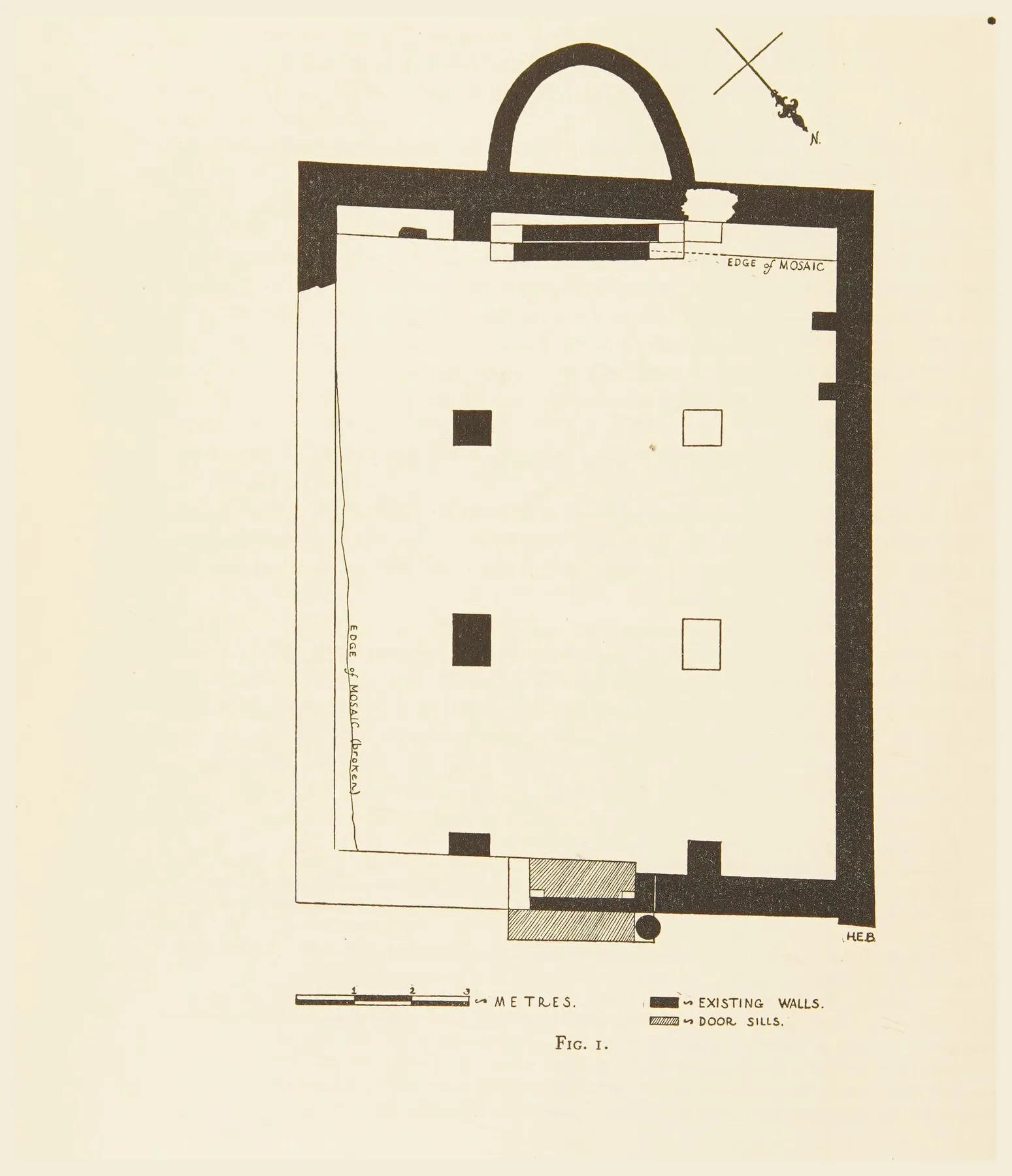
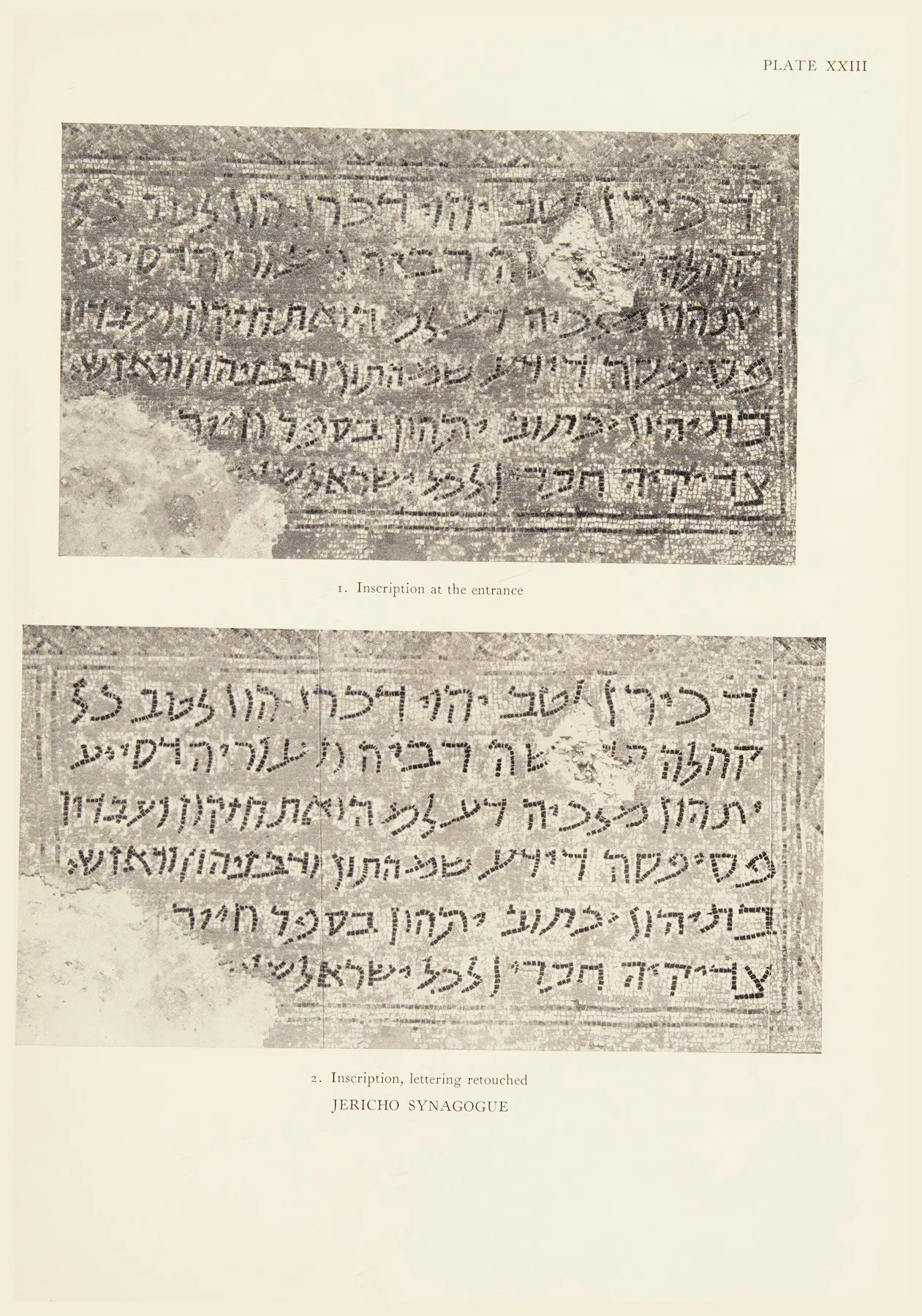
The synagogue lies north of Tell es-Sultan, the mound of ancient Jericho, in the Jordan Valley. It came to light when trenches were being dug for banana trees: the landowner reported a mosaic to the Department of Antiquities of the British Mandate government, which had the area cleared, and D. C. Baramki published the building in 1936 with notes on its inscriptions by Michael Avi-Yonah. Baramki found the foundations and floor of a small basilica: a nave and two aisles divided by two rows of piers, a single door on the north-east and a semi-oval apse on the south-west, the side facing Jerusalem. The whole hall was paved in mosaic. In the nave a carpet of geometric patterns carries a picture of the Ark of the Law and, below it, a medallion with a seven-branched menorah, a lulav and a shofar over the Hebrew words 'Peace upon Israel', from which the building takes its modern name, Shalom al Yisrael. A six-line Aramaic inscription near the door blesses the whole congregation without naming anyone.
Baramki dated the building tentatively to the beginning of the eighth century CE, partly from coins found on the floor; later accounts generally place it in the sixth or seventh century. No source read says when or how it went out of use. Of the ancient structure only the floor and foundations remain, and the mosaic is kept today inside a modern building.
Where it stood
Historic: farmland north of Tell es-Sultan (ancient Jericho); no street address recorded. Today: inside the modern building over the mosaic, Ain Al-Soltan Street, northern Jericho, Judea and Samaria (exact).
Abrir mapa ampliado →La comunidad judía
Almost nothing is recorded about the people who built the synagogue. The Aramaic inscription on its floor speaks for them collectively: it asks that the whole holy congregation, its elders and its young, who made the mosaic be remembered for good, and says that the One who knows their names, and those of their children and households, will write them in the Book of Life with the righteous. Avi-Yonah, commenting on the text in 1936, pointed out that this anonymity contrasts with the lists of named donors usual in synagogue inscriptions. The Jewish Agency's account of Jericho says that a Jewish group expelled from Arabia settled in the town after the Arab conquest of 638 and that the synagogue is thought to date from that time; an essay by Ari and Yosef Zivotofsky makes a similar suggestion. Neither cites an ancient text for it. A second ancient synagogue, at Na'aran not far away, shows that Jews worshipped in more than one place around Jericho. One summary of the site notes that it is uncertain whether the settlement this synagogue served was the Byzantine town of Jericho itself. The size of the congregation is unknown.
Arquitectura y diseño
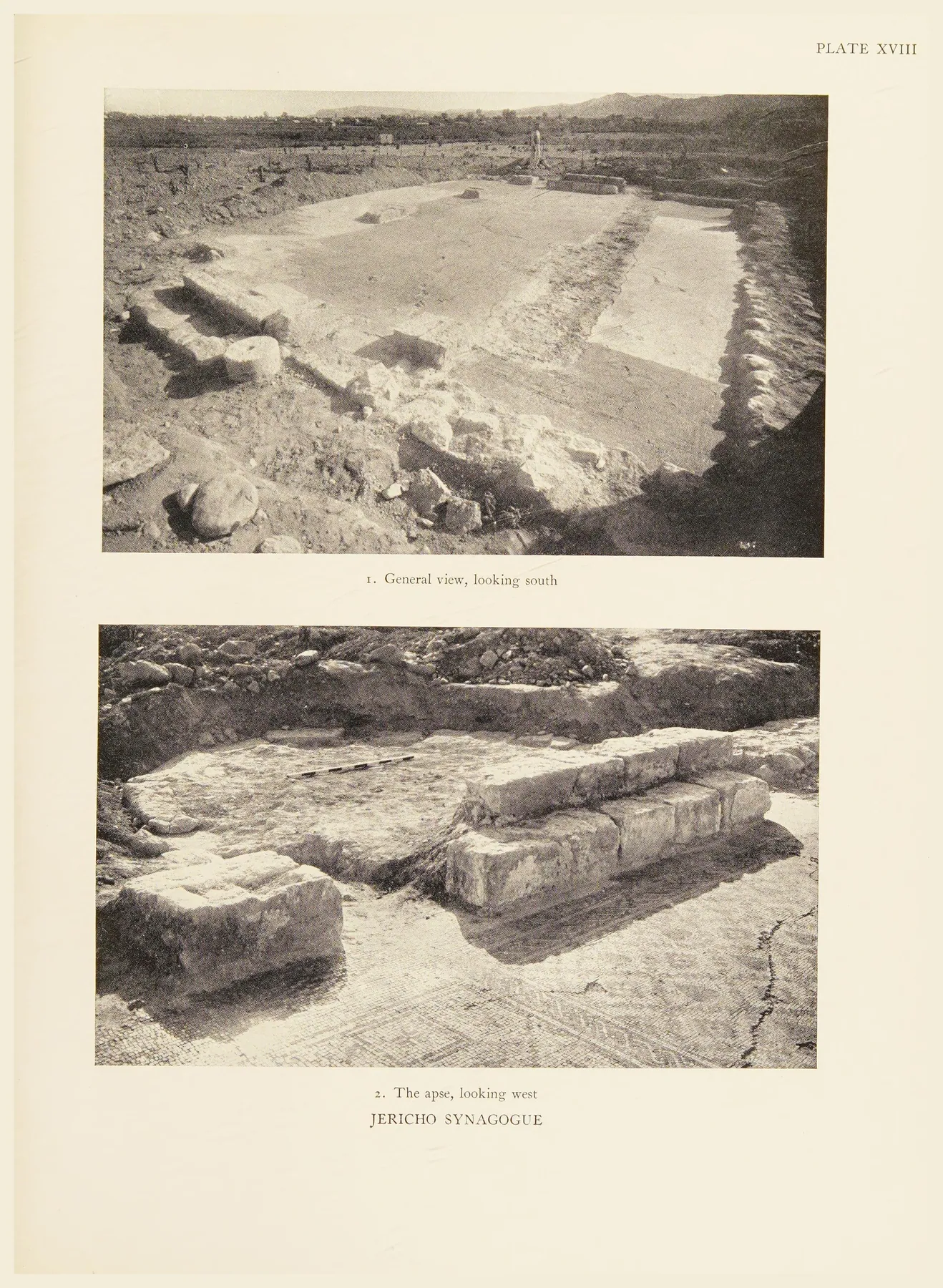
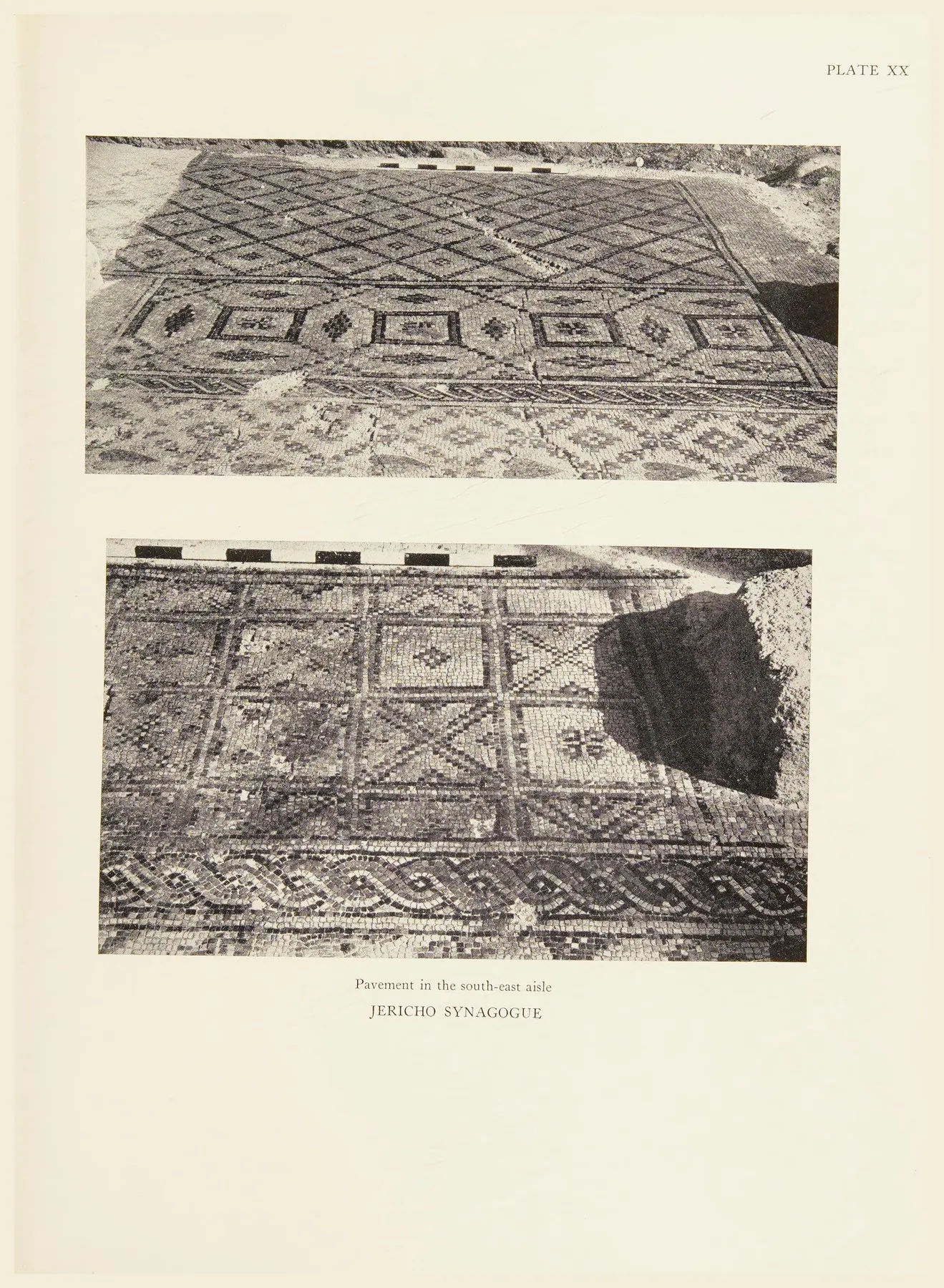
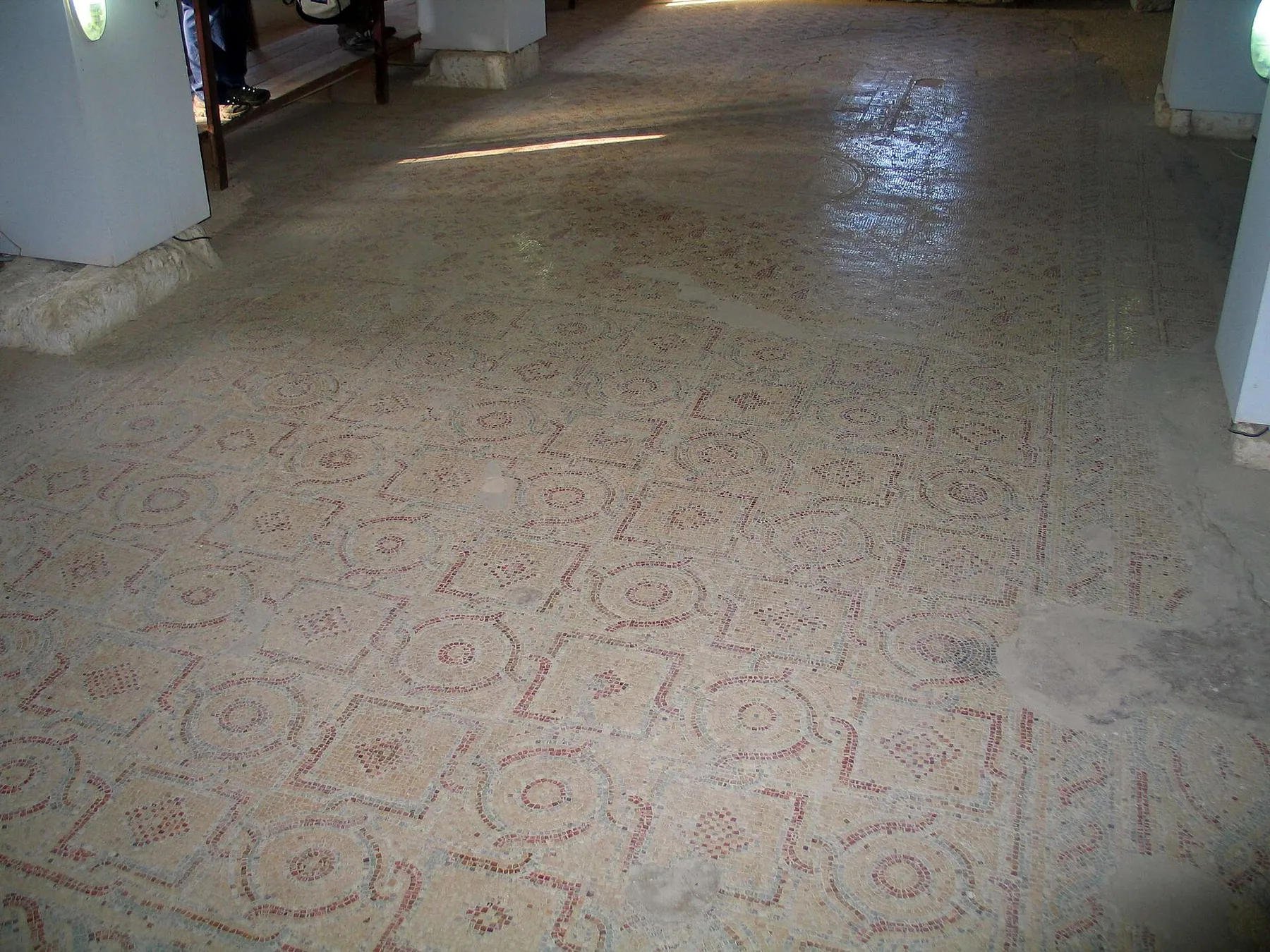
Baramki's plan shows a rectangular hall aligned north-east to south-west, which he described as orientated approximately towards Jerusalem. Two parallel rows of piers, with responds against the end walls, divided it into a nave and two aisles; they stood without a stylobate and probably carried arches. The only entrance was on the north-east, reached by a step, with a column base to its right and a threshold cut with two rectangular sockets for the doors. At the opposite end two steps led up to a semi-oval apse whose walls were not bonded into those of the hall; it had been destroyed to below floor level, so its paving is unknown. Two stones built against the wall of the north-west aisle probably supported a shelf. Later accounts give the mosaic floor as about 10 by 13 metres. The nave has a white surround, a guilloche border in white, red, black, brown and light blue, and a field of geometric designs; the aisle pavements, also geometric, use red, black and white. In each aisle a gap 65 cm wide separates the south-west wall from the mosaic. The height of the walls and the form of the roof are unknown.
La vida dentro de la sinagoga
The floor is the only evidence for how the hall was used. Worshippers coming in from the north-east first met the Aramaic inscription, set in a black-bordered panel flanked by pomegranates and vines. Further on, in front of the apse, is a picture of the Ark of the Law: a rectangular chest on four supports under a shell-patterned niche. Baramki noted that the four feet are rare and the shell niche unusual among such mosaics. Below the ark a round medallion holds the seven-branched menorah with a lulav on its left and a shofar on its right, and under them the Hebrew blessing 'Peace upon Israel'. Unlike the synagogue at Na'aran nearby, the floor has no human or animal figures. In the gap between the wall and the mosaic in the north-west aisle the excavators found three whole glass bottles and fragments of others, the bronze hanger of a glass lamp and a bronze filler, together with nine Kufic coins of the early eighth century and one worn late Roman coin. Nothing is known of the congregation's leaders, readers or customs.
Destrucción
No source read says when the synagogue ceased to be used or what brought it down, and none names anyone responsible. Baramki reported nine Kufic coins of the early eighth century from the floor, which show that the hall was in use under early Islamic rule, and he remarked that the mosaic was in a fairly good state of preservation and could not have been used over a long period. His report describes no burnt layer, collapse or deliberate damage. When the site was cleared the building was already reduced to its foundations and floor, and the apse had been destroyed to below floor level. The Jewish Virtual Library's account of Jericho says that an earthquake destroyed virtually the whole city four years after the Umayyad palace was built in 743, but it does not connect that earthquake with the synagogue, and neither does any other source read. Some further damage was done at the time of discovery: before the nature of the find was recognised, the landowner destroyed the spaces between the piers. The end of the building is therefore given here as later than the early eighth century, with date and cause unknown.
El destino de la comunidad
What became of the congregation is unknown. The coins show that people were still using the hall in the early eighth century, and the Zivotofskys' essay says only that the community later disappeared and that its synagogue was forgotten until the 1930s. No text names its members, and no later Jewish community in Jericho is traced back to it in the sources read. Jewish prayer returned to the floor in modern times. After the Six-Day War of 1967 Israelis began to visit the mosaic; a regular prayer quorum was founded there in 1986, the year the National Parks Authority acquired the building standing over it, and a small yeshiva developed in the early 1990s. When Jericho passed to the Palestinian Authority in 1994 the site was given a special status under which Jewish access and prayer continued. That arrangement broke down in October 2000, and escorted visits by Jewish groups resumed some years later.
El lugar hoy
The mosaic lies in place inside a modern building north of Tell es-Sultan, in the part of Jericho administered by the Palestinian Authority. A house was built over the floor in the twentieth century; sources disagree on whether the Shahwan family, who owned the land, built it before or after 1967. On the night of 12 October 2000 Palestinian rioters broke into the building, damaged prayer books and furniture and burned the upper storey; one account says the mosaic was damaged too. The Palestinian Authority later repaired part of the damage. Photographs taken in 2018 show the floor inside a roofed hall. Jewish groups visit under military escort by arrangement. Copies of the mosaic are shown at the Good Samaritan Museum and in synagogues at Kokhav HaShahar and Mevo'ot Yericho.
¿Tiene algo que aportar?
Fotografías, documentos, historias familiares o recuerdos de esta sinagoga y su comunidad ayudan a mantener viva su historia.
- An Early Byzantine Synagogue near Tell es-Sultan, Jericho (Quarterly of the Department of Antiquities in Palestine 6, 1936, pp. 73-77, plates XVIII-XXIII)
- Jericho synagogue
- בית הכנסת שלום על ישראל
- Visiting the City of Jericho
- Jericho B
- Jericho
- Jericho
- Jericho - Synagogue North of Tell es-Sultan
- Category:Mosaic of Shalom al Israel synagogue, Jericho
- Shalom Al Yisrael synagogue (OpenStreetMap way 1457011733)
Share a memory or thought
No comments yet. Be the first to add one.