

La storia di Old Synagogue of Siófok
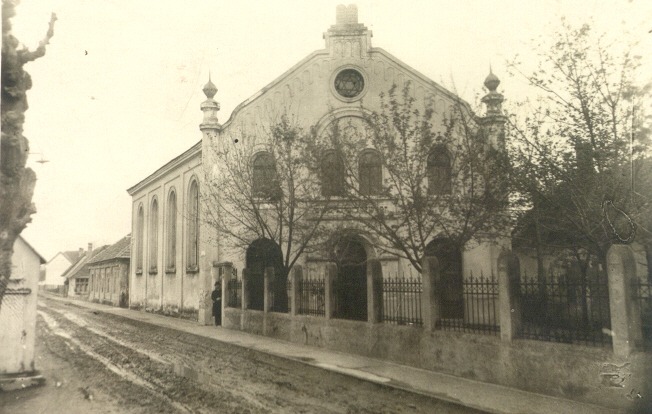
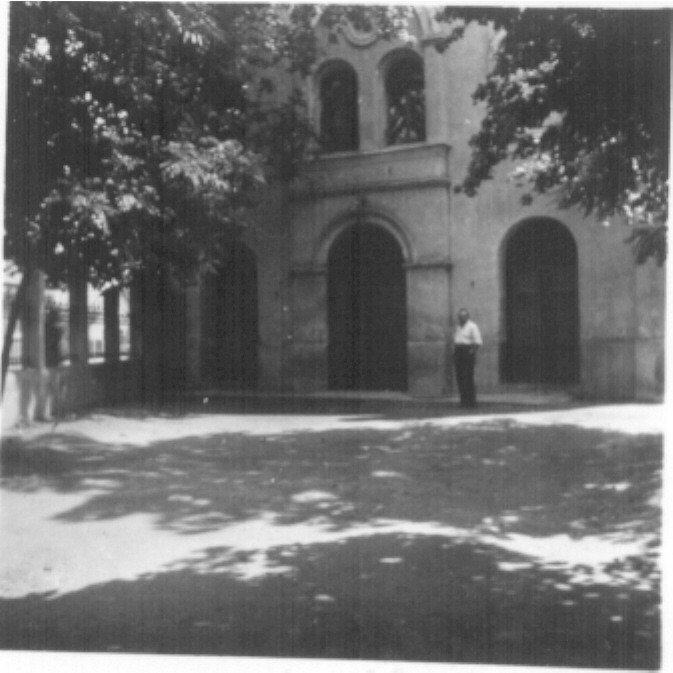
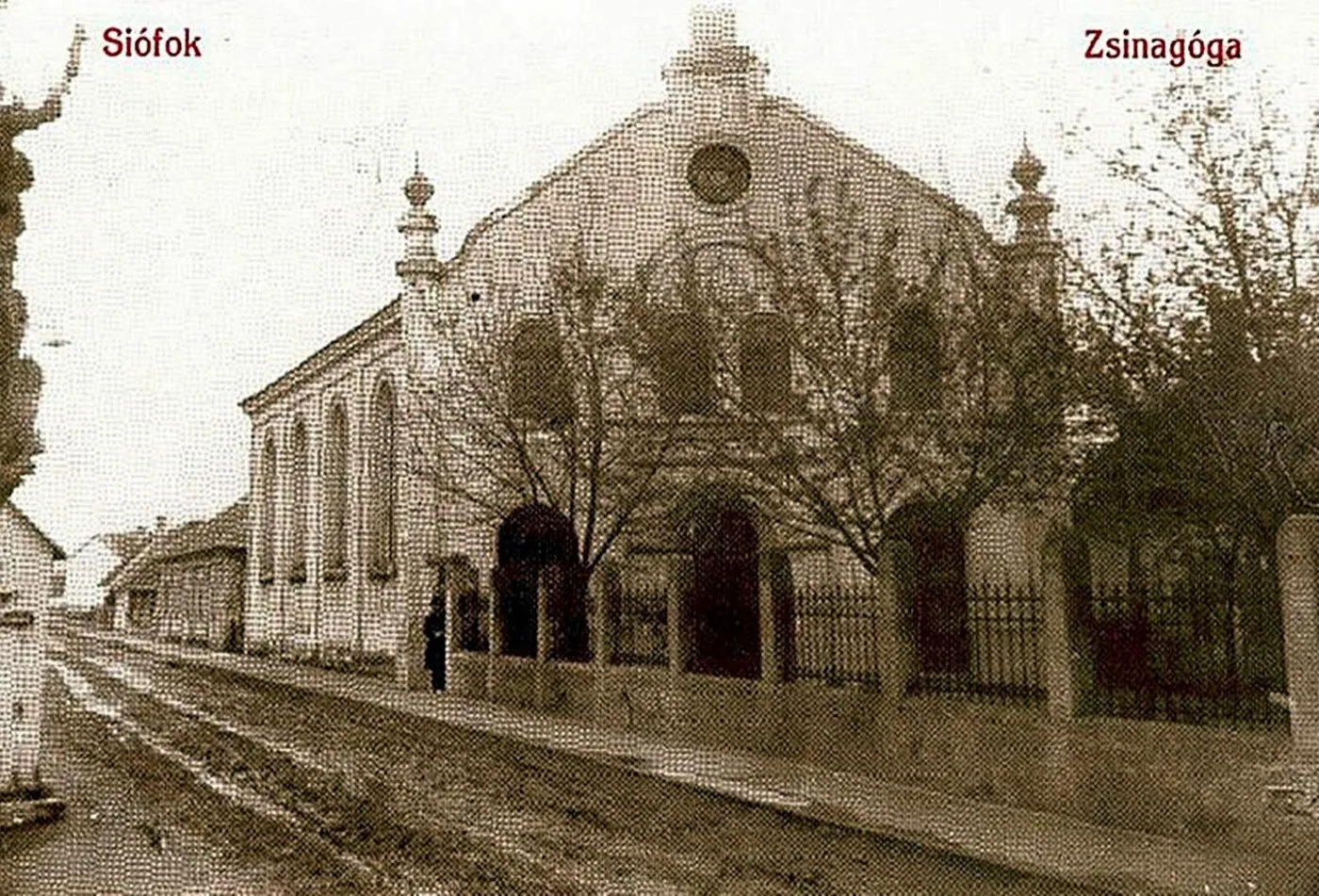
The synagogue stood in the centre of Siófok, on the southern shore of Lake Balaton, at the corner of Fő utca, the main street, and Széchenyi utca, close to the railway station and the Catholic parish church. According to the Magyar Zsidó Lexikon of 1929 the young congregation built it from its own resources in 1869, seven years after the community was organised; the local historian József Sebestyén Matyikó instead dates the community to 1875 and the building to 1878. It was a modest late-Romantic hall, about 10.8 by 18.7 metres, with a gabled three-bay façade framed by turret-like corner pillars, a round window in the gable and galleries on three sides inside. An ornate iron fence separated it from the street, and the Jewish elementary school, where the operetta composer Imre Kálmán was a pupil, stood beside it. For seven decades it served a resort town whose hotels and summer trade were largely built up by Jewish families. In 1944 Nazi German forces used the building as a warehouse and the congregation was deported. The survivors restored it at their own expense and prayed there again from 1946, but the community shrank, the last wedding was held in 1976, and by 1983 the building stood empty with broken windows. It was demolished around 1985, and a small new synagogue was inaugurated nearby on 12 June 1986.
Where it stood for nearly 120 years
Historic: corner of Fő utca and Széchenyi utca, Siófok. Today: Magyar Posta (Siófok 1 post office), Fő utca 186–188, 8600 Siófok; the new synagogue of 1986 is next door at Széchenyi utca 4.
Apri la mappa grande →La comunità ebraica
Jews appear in Siófok from the 1820s: in 1825 the Veszprém Chapter leased the village shop to a Jew named Schrenk, and in 1828 the leaseholder Mátyás Muth settled there; his five sons formed the core of the later congregation. After the Southern Railway reached the town in the early 1860s Siófok became the trading centre of the district and Jewish families arrived quickly, about thirty by 1868. The Magyar Zsidó Lexikon records an independent community from 1862, within the rabbinical district of Balatonfőkajár, with a burial society from 1863 and a Hungarian-language school; Matyikó's research puts the formal founding in 1875. The congregation was Neolog (Congress). Pinkas Hakehillot counts 578 Jews in 1886 and 287 in 1930, and the Lexikon 360 members in 109 families in the late 1920s: merchants, artisans, doctors and hoteliers who helped turn Siófok into a fashionable resort. Márk Handler, later rabbi of Tata, served here before 1866. In August 1919 Siófok was the headquarters of Horthy's National Army, and Pinkas Hakehillot records the murder of Jews brought there during the White Terror.
Architettura e design
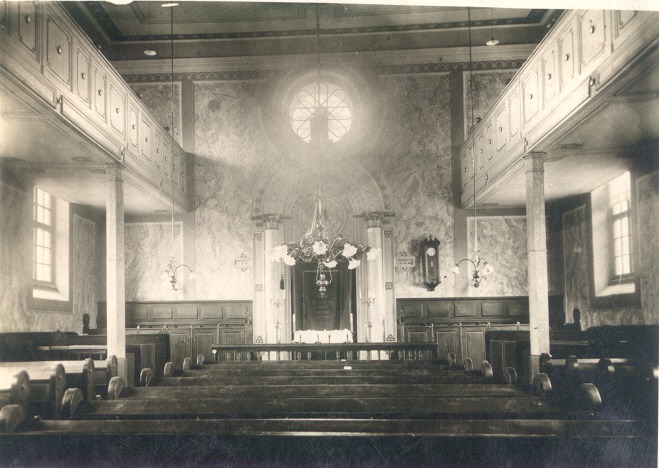
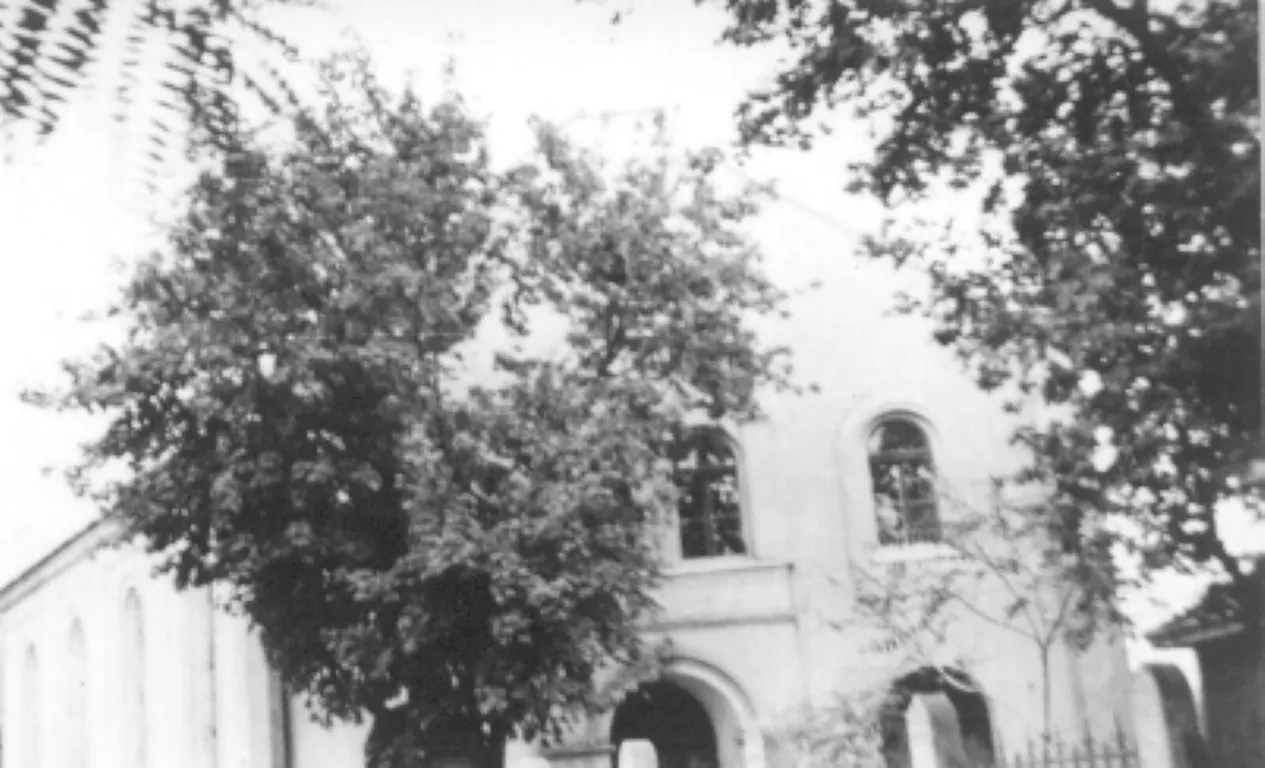
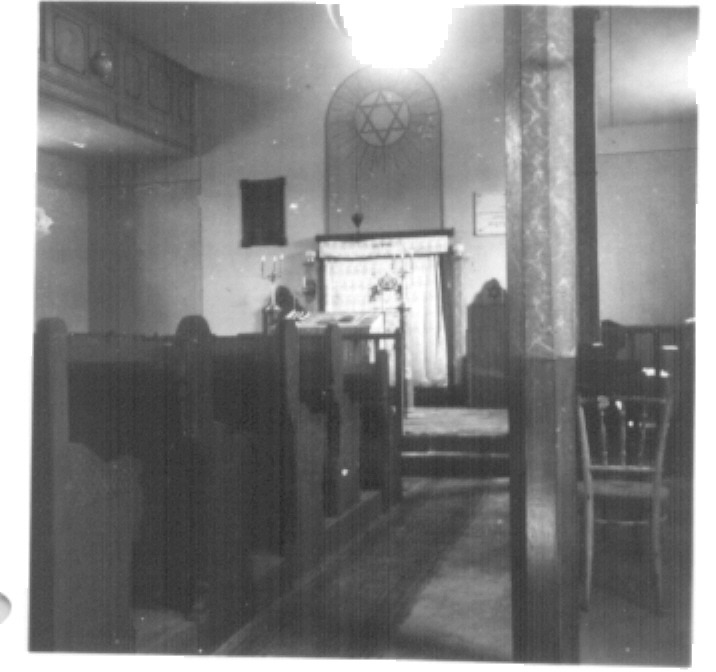
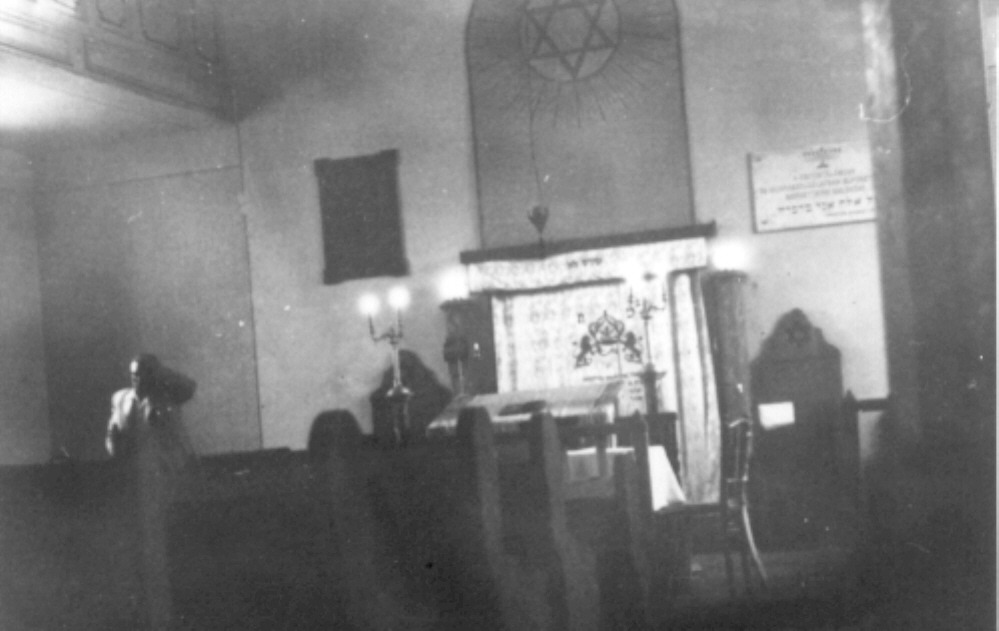
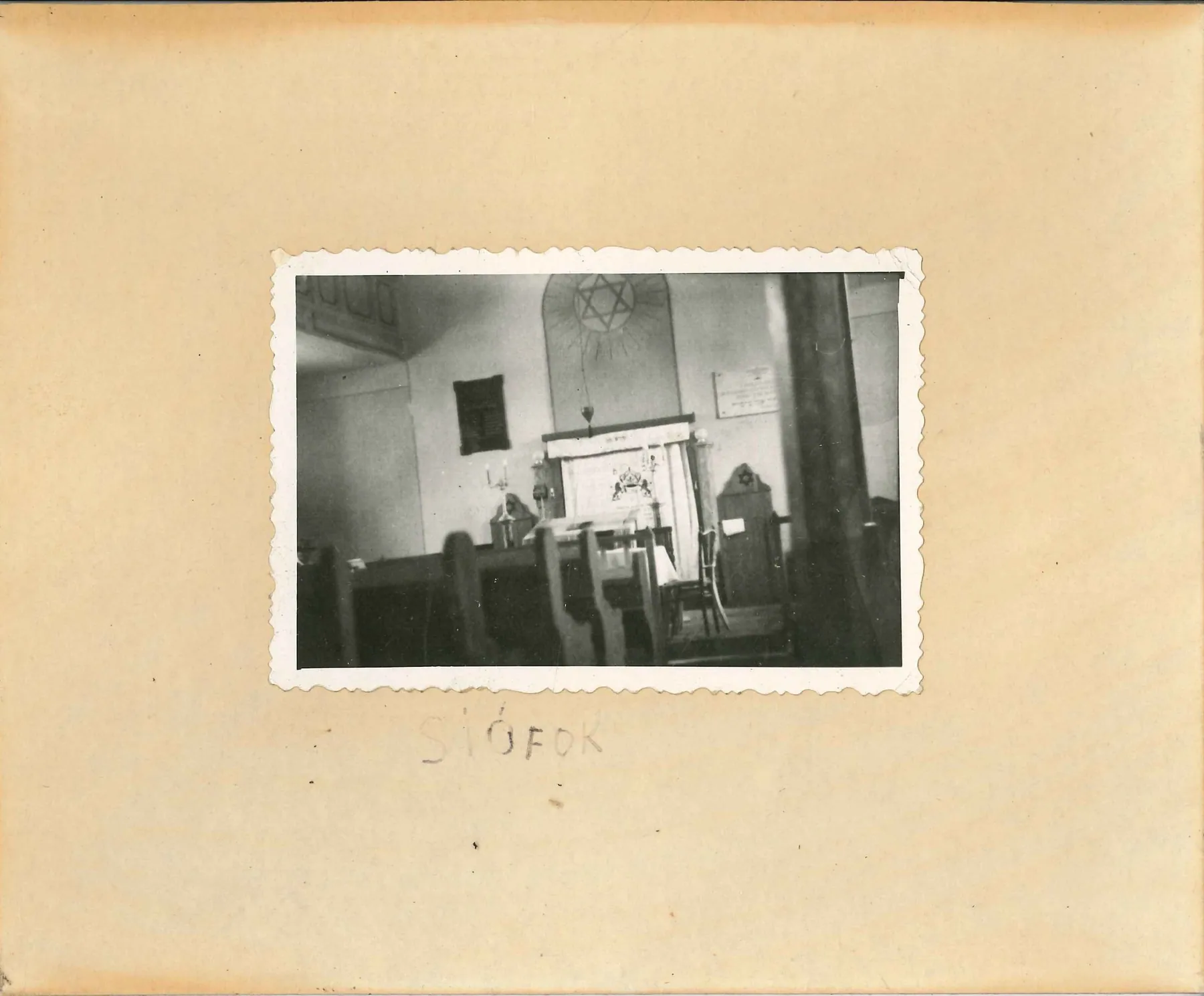
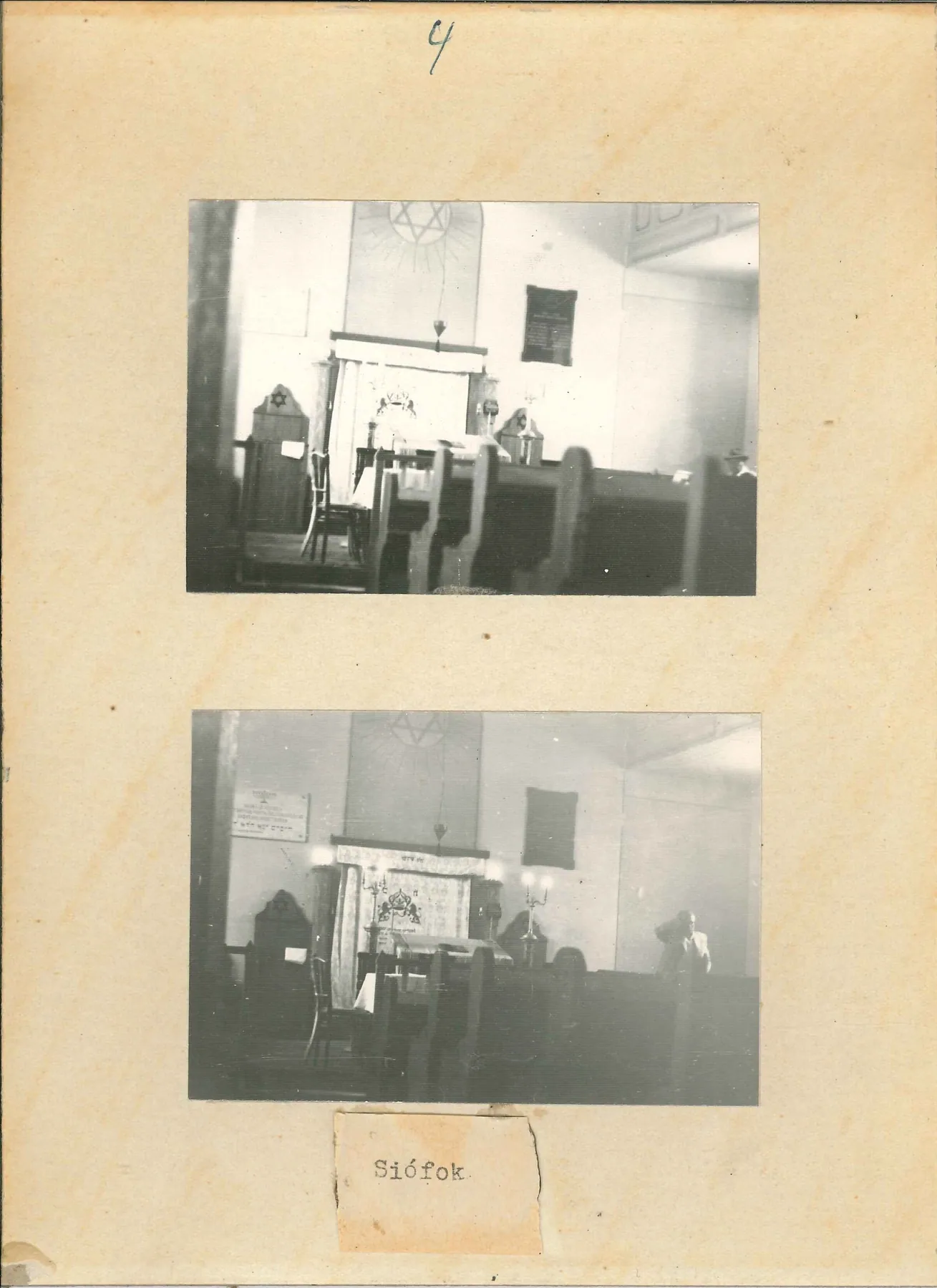
The architect is not known. Anikó Gazda's survey of Hungarian synagogues (1989) gives the external dimensions as 10.80 by 18.70 metres, the interior as 9.48 by 13.37 metres and the height of the cornice as 8.60 metres. The main façade was in a late-Romantic idiom: three bays wide, framed by hexagonal corner pillars rising to pointed finials, with round-arched openings on two levels and a circular window in the gable, over which stood the twin Tablets of the Law. The side elevations were articulated by pilasters with capitals, with four tall round-arched windows between them. The building was not ostentatiously large, though it rose above the neighbouring single-storey houses, and an ornate iron fence on a masonry base closed its forecourt from the street. Inside, a gallery carried on slender columns ran round three sides of the hall; a pre-war postcard shows panelled gallery fronts, painted walls, rows of pews and the ark set against the end wall beneath a round window. After 1945 the ark wall was repainted with a large Star of David.
La vita nella sinagoga
The congregation followed the Neolog rite. The Lexikon and Matyikó name Mór Dessauer as its first rabbi and the merchant Ignác Fleischmann as its first president; Farkas Grosz was rabbi in the inter-war years, and Dr Tibor Fábián followed him until the deportations. Former residents told Matyikó that roughly a third of the members kept kosher, and that on the Day of Atonement even the Christian shops in Siófok closed. The parish priest Imre Wohlmuth was remembered walking arm in arm with Rabbi Grosz, conversing in Hebrew. From about 1910 sermons were arranged for the many Jewish summer visitors, and the pupils of the adjoining school were photographed in the synagogue yard in 1939. After the war the surviving teacher Ferenc Dorogi led the services, and scholars holidaying at Balatonfüred, among them Sándor Scheiber, came over for the festivals. A martyrs' memorial service was held from 1955, the last of them on 30 July 1978, and the last wedding, of Flóra Rothschild and Stefan Tree, took place on 7 September 1976.
Distruzione
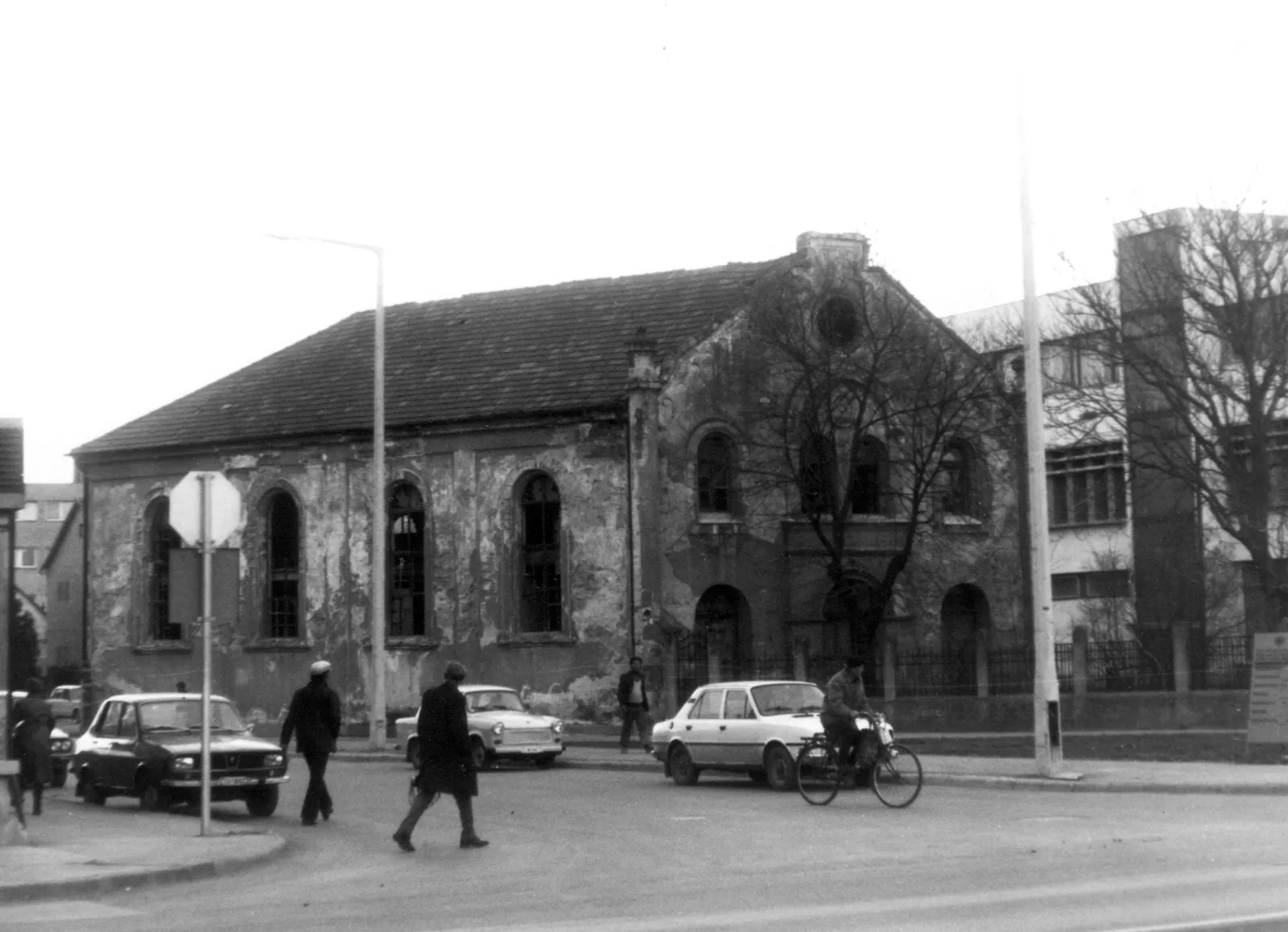
The synagogue outlived the Holocaust. Stripped and used as a warehouse in 1944, it was repaired by the survivors and used again, but emigration reduced the congregation to a handful, and after the 1970s the building was left empty. A photograph taken by Anikó Gazda in 1983 shows it still standing beside the modern post office, its plaster peeling and its windows broken. Around 1985 the Communists demolished it. Siófok's redevelopment plan called for the side street to be realigned and the post office on the corner to be enlarged; the town's Communist leadership and the state postal service, Magyar Posta, reached an agreement with the leadership of the Jewish community in 1985–86, bought part of the plot and cleared the old building for a new central post office. In return the postal service paid for a small new prayer house on the remaining land, designed in 1985 by Sándor Kovács of the Postal Design Institute. The exact date of the demolition is not given in the sources consulted; the town's own website says only that it happened in the 1980s.
Il destino della comunità
About 500 to 550 Jews lived in Siófok and its district on the eve of the war. Men were called up for forced labour from 1940. After the German occupation of March 1944 Nazi German forces closed the school, knocked down the Tablets of the Law and turned the synagogue into a store. On 29 April, 78 people were taken away 'for political reasons', most of them to Mauthausen. The rest were made to wear the yellow star, moved in May to the Komakút barracks ghetto in Veszprém, and at the end of June loaded onto trains by the Hungarian gendarmerie and deported by way of Sárvár to Auschwitz-Birkenau. Veszprém county records list 197 deportees from Siófok and about 80 from neighbouring Balatonújhely and Balatonkiliti; the retired rabbi Farkas Grosz and his wife were among those murdered. Matyikó counts some 490 persecuted, of whom 72 came back. Pinkas Hakehillot gives 97 Jews in 1946 and 36 in 1959; many emigrated, some after 1956.
Il luogo oggi
The enlarged main post office of Siófok (Fő utca 186–188) now covers the corner of Fő utca and Széchenyi utca where the old synagogue stood. One plot further along, at Széchenyi utca 4, on the site of the former Jewish school, stands the small synagogue designed by Sándor Kovács and inaugurated on 12 June 1986, the first synagogue built in Hungary after 1945. It is used in summer for Friday-evening services and has a Holocaust memorial in its yard. Nothing of the old building remains in place; two small objects from it, mounted in 1986 as a keepsake, are in the Hungarian Jewish Museum and Archives in Budapest, which also holds photographs of the building.
Nomi importanti
Mór Dessauer
UnknownFirst rabbi of the Siófok congregationThe Magyar Zsidó Lexikon and the local historian József Sebestyén Matyikó both name Mór Dessauer as the first rabbi of the Siófok congregation, serving alongside its first president when the synagogue was built. Matyikó credits him with organising the burial society, the Chevra Kadisha, and with tireless care for mourners and the poor. The community's website describes him as a Breslau-trained district rabbi.
Biografia o fonte →Ignác Fleischmann
UnknownFirst president of the communityA Siófok merchant, Ignác Fleischmann was the first president of the Jewish community. The Magyar Zsidó Lexikon credits his energetic leadership, together with Rabbi Dessauer's, for the congregation's rapid growth in the years when it opened its Hungarian-language school and built the synagogue, staff housing and a ritual bath from its own resources.
Biografia o fonte →Farkas Grosz
1875–1944Rabbi of SiófokBorn in Miskolc on 7 March 1875, Farkas (Sámuel Farkas) Grosz was the rabbi of the Siófok synagogue in the inter-war years; the Magyar Zsidó Lexikon lists him as rabbi in 1929. He was remembered for his friendship with the Catholic parish priest Imre Wohlmuth, with whom he conversed in Hebrew. Retired by 1944, he was deported with his wife Etel Littmann and murdered at Auschwitz.
Biografia o fonte →Tibor Fábián
UnknownLast rabbi of SiófokDr Tibor Fábián was the last rabbi to serve the old synagogue, taking office in 1937 according to the community's website or in 1940 according to Matyikó. He was deported in 1944, survived, and returned to Siófok in the summer of 1945; he later served in Nyíregyháza and emigrated to the United States, where he became a rabbi in Chicago.
Biografia o fonte →Ferenc Dorogi
born 1924Teacher; led services after 1945Born in Siófok in 1924, Ferenc Dorogi was the last teacher of the Jewish school, which gendarmes closed in April 1944. After the war he led the religious functions in the restored synagogue and taught the remaining children until 1955. His recollections, recorded between 1986 and 1991, are a principal source for Matyikó's history of the community.
Biografia o fonte →Hai qualcosa da condividere?
Fotografie, documenti, storie di famiglia o ricordi di questa sinagoga e della sua comunità aiutano a mantenerne viva la storia.
- A siófoki zsidóság története (Somogyi Múzeumok Közleményei 9, 1992, pp. 185–203)
- Siófok (Magyar Zsidó Lexikon, 1929, p. 792)
- Siofok (Pinkas Hakehillot Hungary, 1975, p. 532)
- A siófoki zsinagóga
- Fortepan photo 141191: Siófok, Fő utca, the old synagogue (1983)
- Negyvenéves a siófoki zsinagóga
- Rendszerváltás és egyházak – alulnézetben (Egyháztörténeti Szemle XXII/3, 2021, pp. 55–66)
- Siófoki zsinagóga
- A háború után csak Siófokon épült zsinagóga
- Siófoki Zsinagóga (community website)
- Zsinagóga (Templomok)
- Siófoki zsinagóga (photographs and postcards, inv. F78.200, F71.96, F70.380–382, F02.140–141, F16.084–085; relic picture 2025.37)
- Handler Márk; Dessauer Gabriel; Dessauer Moritz (Magyar Zsidó Lexikon, 1929)
- New Synagogue Inaugurated in Hungary
- „Zsidófok”: A Balaton egyik legkedveltebb üdülőhelye Siófok
- OpenStreetMap: Magyar Posta, Siófok 1 (Fő utca 186–188), node 350232692
Share a memory or thought
No comments yet. Be the first to add one.