
История Beth Yaakov Synagogue, Skopje
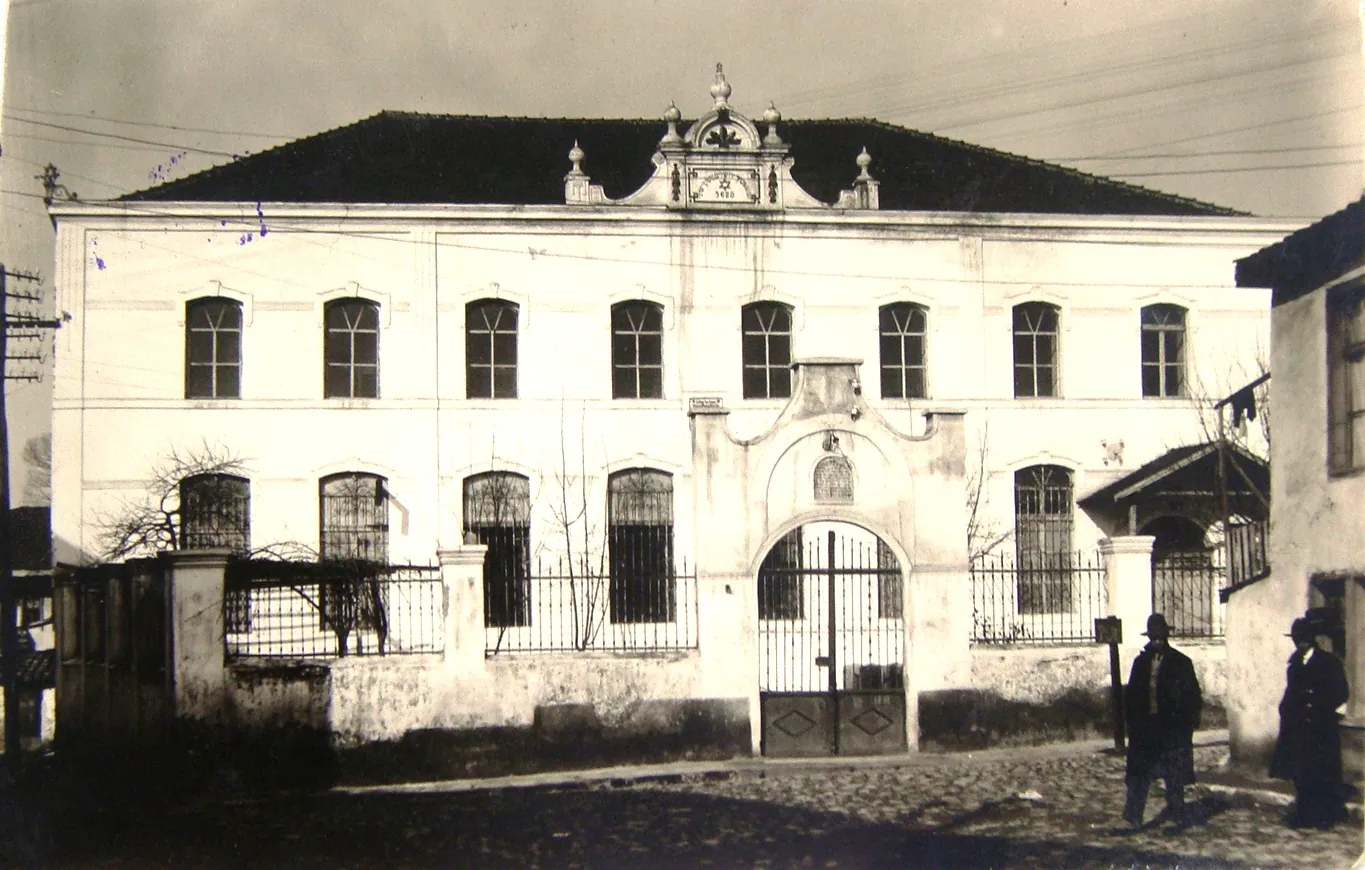
Beth Yaakov stood in Evrejsko Maalo, the Jewish quarter of Skopje on the bank of the Vardar below the fortress, between the Stone Bridge and the Kale. Skopje's Jewish community was one of the oldest in the Balkans: the Romaniote Beth Aharon synagogue was dated by an inscription to 1366, and in the seventeenth century the city's roughly 3,000 Jews had two synagogues, Beth Aharon and Beth Yaakov. Beth Yaakov's pinkas, the register of the congregation, covers the years 1749 to 1913 and is preserved in the Jewish Historical Museum in Belgrade. The synagogue served the Sephardic community through Ottoman rule, the Balkan Wars and the Yugoslav period. In April 1941 Skopje was annexed by Bulgaria, and on 11 March 1943 the Bulgarian police and army rounded up the city's Jews and held them in the Monopol tobacco warehouse before deporting them to Treblinka. Beth Yaakov is reported to have been the only Jewish house of worship in Skopje to survive the war, but with almost no Jews left it stood largely unused. The great earthquake of 26 July 1963, which destroyed most of the city, brought it down, and the quarter was afterwards cleared. A new Beth Yaakov synagogue was consecrated in 2000 in the Jewish community building, reusing a parochet of 1937.
Where it stood for 214 years
Historic: Evrejsko Maalo (Jewish quarter), Vardar bank below the Kale fortress, Skopje. Today: area of the Holocaust Memorial Center for the Jews of Macedonia, Iljo Vojvoda 2, Skopje. Approximate.
Открыть большую карту →Еврейская община
Jews lived in Skopje from Roman and Byzantine times; the Greek-speaking Romaniote community built the Beth Aharon synagogue, dated by a Hebrew inscription to 1366, and was joined after 1492 by Sephardic exiles from Spain, whose Ladino-speaking descendants came to dominate the community. In the seventeenth century about 3,000 Jews lived in the city, with two synagogues, Beth Aharon and Beth Yaakov. In 1689 the Austrian general Piccolomini burned Skopje, including the Jewish quarter, and the community recovered slowly. The messianic prophet Nathan of Gaza was buried in Skopje in 1680. Beth Yaakov's register from 1749 to 1913 documents the congregation's life. Before the Second World War about 3,000 Jews again lived in the city, many of them poor artisans and traders in Evrejsko Maalo.
Архитектура и дизайн
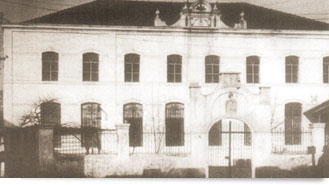
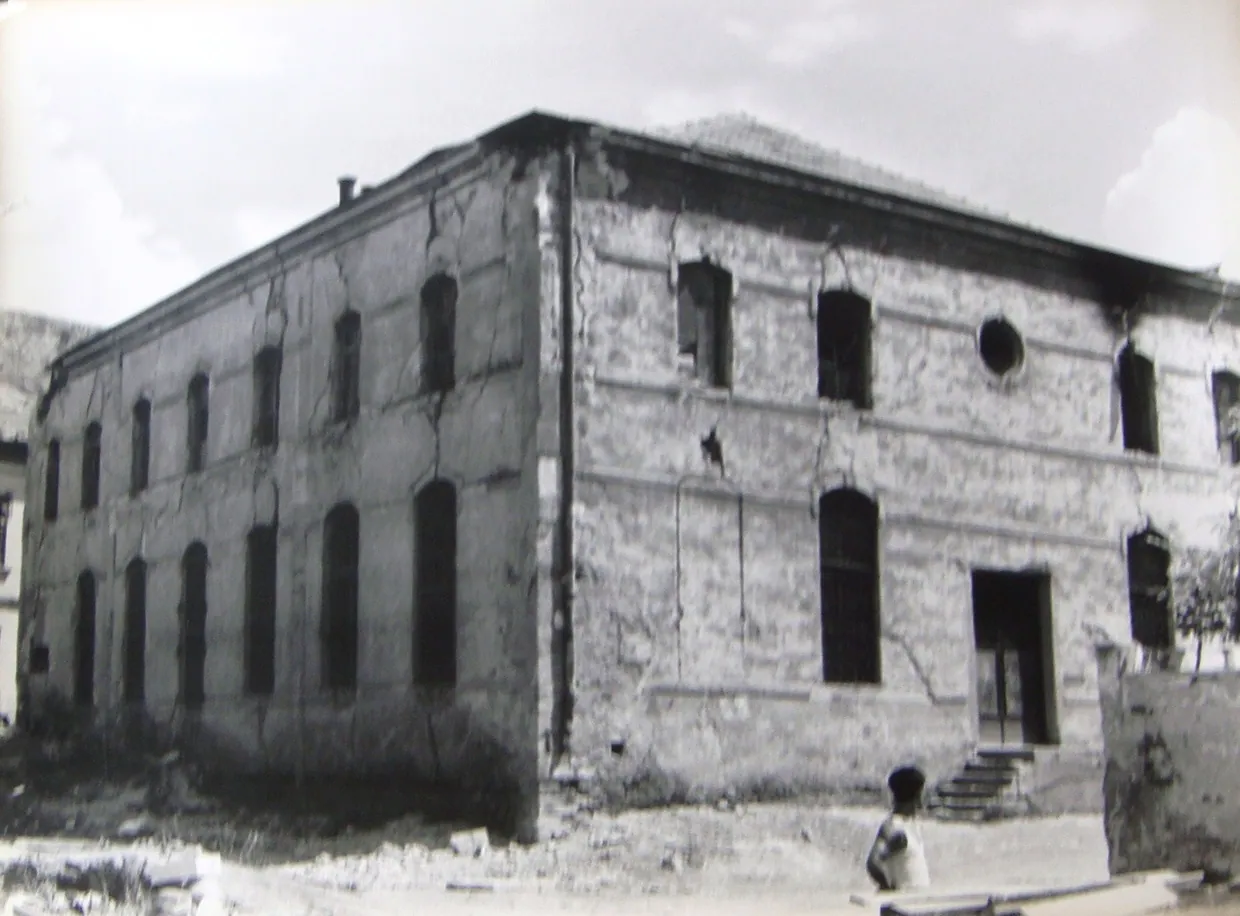
Little is recorded about the building. Photographs from before 1920 and from the twentieth century, filed on Wikimedia Commons as Beth Yaakov, show a long two-storey rendered building with a row of tall windows and a decorated central entrance bay crowned by a small pediment, set back behind a yard on a street of the Jewish quarter. Its architect and date of construction are unknown; the congregation's records go back to 1749, and the building may have been rebuilt after the fires that repeatedly struck the quarter. Its 1937 parochet, the curtain of the Torah ark, survived and now hangs in the new Beth Yaakov synagogue consecrated in 2000.
Жизнь в синагоге
Beth Yaakov was the main synagogue of the Sephardic community of Skopje, which prayed according to the Sephardic rite and spoke Ladino. Its pinkas, covering 1749 to 1913, records the congregation's members, donations and decisions and is now in the Jewish Historical Museum in Belgrade. The older Beth Aharon synagogue nearby, founded by the Romaniote community and rebuilt after fires in 1628 and 1637, also served the quarter; its inscription was published by Rabbi David Ginsburg in the journal Omanut in 1941. The parochet dated 5698 (1937), the last made for Beth Yaakov before the war, survived the Holocaust and the earthquake.
Разрушение
Skopje was annexed by Bulgaria in April 1941. After the deportation of the city's Jews in March 1943, the synagogue stood without a congregation, but it is reported to have been the only Jewish house of worship in Skopje to survive the war. The few survivors and returnees, most of whom emigrated to Israel, could not maintain it. On 26 July 1963 a powerful earthquake destroyed much of Skopje, killing more than a thousand people, and the old synagogue collapsed in the earthquake; according to the Holocaust survivor Avram Sadikario it was never rebuilt. Afterwards the remains of Evrejsko Maalo were cleared for new streets and the intercity bus station.
Судьба общины
On 11 March 1943, under the agreement between the SS officer Theodor Dannecker and the Bulgarian commissar Aleksandar Belev, the Bulgarian police and army rounded up the Jews of Skopje, Bitola and Štip and held them for eleven days in the Monopol tobacco warehouse in Skopje, 7,215 people in all. They were deported in three transports on 22, 25 and 29 March 1943 to Treblinka and murdered; the first train carried about 2,300 Jews, mostly from Skopje. Of the roughly 7,000 Jews of Vardar Macedonia, about 98 per cent were killed. A few hundred survived as partisans, in hiding or with foreign papers, and most later emigrated to Israel.
Место сегодня
Nothing of the synagogue survives. After the 1963 earthquake Evrejsko Maalo was cleared and its site divided by new streets and the bus station. Since March 2011 the Holocaust Memorial Center for the Jews of Macedonia has stood on the former Jewish quarter near the Stone Bridge. The exact location of Beth Yaakov within the quarter has not been determined. The Jewish community's present synagogue, also called Beth Yaakov, opened in 2000 in the community building elsewhere in the city.
Вам есть чем поделиться?
Фотографии, документы, семейные истории и воспоминания об этой синагоге и её общине помогают сохранить её историю.
- Синагога „Бет Јаков" (Скопје)
- Еврејско Маало (Скопје)
- Jewish community of Skopje (Beth Yaakov)
- Interview with Avram Sadikario
- Beth Aharon and Jewish heritage of Skopje
- History of the Jews in North Macedonia
- The Holocaust in Macedonia: Deportation of Monastir Jewry
- Holocaust Memorial Center for the Jews of Macedonia (OpenStreetMap)
Share a memory or thought
No comments yet. Be the first to add one.