

The story of Slavonski Brod Synagogue
Jews began settling in Brod na Savi, the Sava river town on the old Military Frontier, in the mid-nineteenth century: only two were recorded in 1857. The community received its statute in 1873, when it had sixteen resident families, and it grew quickly once the railway reached the town and crossed into Bosnia in 1879. At first services were held in the house of Jakob Kohn on the corner of Široka ulica and Ulica sv. Ivana. In 1880 Kohn gave the house and its land to the congregation on condition that a synagogue be built there.
Building began in 1895 or 1896 under a committee chaired by Kohn and was finished about 1899; the exact year of completion is not recorded. The Zagreb firm of Leo Hönigsberg and Julius Deutsch built it for about 30,000 forints. With two domed towers and a great rose window it dominated Široka ulica, and one survey calls it one of the most beautiful synagogues in the Habsburg lands. By 1910 the town had 558 Jews.
The building served the community for about four decades. On 14 April 1941, days after Nazi German forces entered the town, it was devastated, looted and burned. The burnt shell was hit again in the Allied air raids of 1944 and 1945, and the site was sold in 1947. A financial-services office now stands on its foundations.
Where it stood for nearly 45 years
Historic: corner of Široka ulica (later Ulica Franje Josipa I) and Ulica sv. Ivana, Brod na Savi. Today: Ulica Petra Krešimira IV, Slavonski Brod, at the FINA building (given as no. 8 by Wikipedia and no. 20 in OpenStreetMap). Approximate.
Open larger map →The Jewish community
According to Ljiljana Dobrovšak, the first Jews came to Brod from Hungary and Slovakia; two were counted in 1857 and 99 in 1869. On 28 September 1873 the authorities confirmed the statute of the Jewish community, which then had sixteen resident families and Jakob Bauer as its first president. The census counted 263 Jews in the town in 1880, 287 in 1890, 373 in 1900 and 515 in 1910, while the nationality census of 1910 gave 558 out of 11,740 inhabitants, about five per cent; the wider municipality had 720. Sources of the period disagree, and Dobrovšak notes that the figures vary. Jews worked in trade, crafts and the professions, and the ESJF survey describes their relations with their neighbours as amicable. The town's Jewish cemetery was laid out in 1880, the same year Jakob Kohn gave his house for the synagogue. Brod became a regional centre of Zionism: in 1909 it hosted the first conference of the Zionist union of the South Slav lands of the monarchy. JewishGen lists Kohn, Weiss, Steiner and Selinger among the best-known families.
Architecture and design
The synagogue stood free on a large plot on Široka ulica, set back behind a garden and an ornamental fence. Zlatko Karač classes it as a twin-towered Westwerk synagogue, built in exposed, pointed brick with neo-Romanesque elements, and counts it among the few Croatian synagogues with no Moorish or oriental detail; older local accounts nevertheless call it Moorish. The postcards show two square towers flanking a tall gabled centre with a large rose window over a round-arched portal; each tower ends in an octagonal drum under a ribbed dome and lantern. Karač stresses its assimilationist design, close to church architecture: it had an inscribed transept and a polygonal apse, and the women reached their galleries through doors in the side aisles rather than at the foot of the towers. A six-pointed star sat at the centre of the rose window and the Tablets of the Law crowned the gable. Dobrovšak attributes the design to a technician named Müller and the construction to Hönigsberg & Deutsch, at a cost of 30,000 forints. Seating capacity is unknown.
Life inside the synagogue
Little is recorded about worship in the building. A Rabbi Mogan served Brod by 1879, before the synagogue was built, and opened a private trade school that ran until 1892. In 1907 the general assembly elected Saul Stern rabbi for three years, overriding the objections of the board, a dispute Dobrovšak follows in the local press. Under Cantor M. Hendel the synagogue had a choir. Josip Kohn was president of the community in 1907 and 1909, the years in which Brod became a meeting place of the South Slav Zionist movement. The last rabbi was Leib Weissberg, born in Galicia in 1893 and trained at the Israelitisch-Theologische Lehranstalt in Vienna. He arrived knowing no Croatian, learned it quickly, and served until the Second World War; his wife Adela often took his place teaching religion classes. Their sons Samuel and Saadia were born in the town in 1933 and 1936. English Wikipedia gives the congregation's rite as Ashkenazi.
Destruction
Nazi German forces entered Brod in mid-April 1941, and the town became part of the Ustaše-ruled Independent State of Croatia. Citing the local historian Stribor Uzelac Schwendemann, Dobrovšak writes that the synagogue was devastated, looted and burned on 14 April 1941. The Croatian Wikipedia article attributes the burning to the Nazi troops occupying the town. A local news feature instead says the building was badly damaged in the bombing of the town in 1941 and that the Nazi troops added to the devastation, while the JewishGen town history says German bombing in 1941 did little damage to Brod. No source read names the Ustaše as perpetrators. The plaque on the site says only that the synagogue was set on fire and demolished during the war.
The burnt ruin was then hit by the Allied air raids aimed at Brod's Sava bridge, railway and wagon works, which struck the town 27 times between April 1944 and April 1945. Sources differ on the date: 1944 according to Croatian Wikipedia, early 1945 according to Karač. The US Commission report concludes that the building appears to have been fully demolished in this bombing. Who cleared the remains after 1945 is not recorded.
The community’s fate
After the Independent State of Croatia was proclaimed in April 1941, the Ustaše regime applied its racial laws to the Jews of Brod. According to JewishGen, the 750 Jews of Brod and its district were destroyed between May 1941 and February 1942, and the ESJF survey says that only ten survived; others died in the Ustaše concentration camps. Rabbi Leib Weissberg, his wife Adela and their two small sons were deported to Jasenovac, where they were killed in 1942. The community still functioned for a time: on 3 December 1941 its leaders met a train carrying some 1,400 to 1,500 Jewish women and children deported from Sarajevo and helped transfer them to the camp at Đakovo. According to Dobrovšak, a Rabbi Stern and Cantor Mano Mendel survived by hiding in the house of the goldsmith D. Schwendemann. A few Brod Jews joined Tito's partisans. The ESJF survey states that local Croats were very active in antisemitic actions during the war. In 1961 only 16 Jews lived in the town. A small Jewish community has been re-established.
The site today
The site lies on today's Ulica Petra Krešimira IV, the former Široka ulica, in the centre of Slavonski Brod. According to a local news report, the plot was sold in 1947 to the National Bank of the Federal People's Republic of Yugoslavia, and the building of the Social Accounting Service (SDK) was raised on the synagogue's foundations. That building is now used by FINA, the Croatian financial agency. No visible part of the synagogue survives. A memorial plaque was unveiled on the site on 3 November 1994. The town's Jewish cemetery of 1880, with its ceremonial hall, still exists.
Notable names
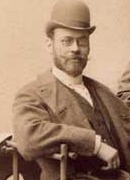
Leo Hönigsberg
1861-1911Architect and builder (Hönigsberg & Deutsch)Born in Zagreb and trained at the Vienna Technische Hochschule under Heinrich von Ferstel, Hönigsberg founded the Zagreb firm Hönigsberg & Deutsch with Julius Deutsch in 1889. It became one of the largest building companies in Zagreb and northern Croatia. The firm built the Brod synagogue between 1895 and about 1899 for about 30,000 forints, in the same years as its synagogue at Križevci. He died in Zagreb in 1911.
Biography or source →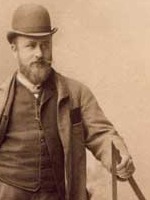
Julius (Julije) Deutsch
1859-1922Architect and builder (Hönigsberg & Deutsch)Born at Geppersdorf in Silesia, Deutsch graduated from the Vienna Technische Hochschule in 1882, worked in Paris, and joined Leo Hönigsberg in Zagreb in 1888; the following year they founded Hönigsberg & Deutsch. The firm designed and built the twin-towered synagogue of Brod na Savi in the late 1890s. After Hönigsberg's death in 1911 Deutsch ran the studio until he died in 1922.
Biography or source →Jakob Kohn
UnknownPresident of the Brod Jewish community; donor of the synagogue site and chairman of the building committeeKohn was president of the Jewish community of Brod na Savi, and before the synagogue existed the congregation met in his house on the corner of Široka ulica and Ulica sv. Ivana. An assembly record of 4 August 1880 says he had bought the property for 5,000 forints; that year he gave house and land to the community on condition that a synagogue be built there. He then chaired the building committee, with Marko Grosmann as vice-president and Max Kohn as treasurer.
Biography or source →Saul Stern
UnknownRabbi of Brod, elected 1907In 1907 the general assembly of the Brod Jewish community elected Saul Stern its rabbi for three years, overruling the objections of the community board, according to Ljiljana Dobrovšak's study of Brod Jewry. Dobrovšak also records that a Rabbi Samuel Stern survived the Second World War by hiding, with Cantor Mano Mendel, in the house of the goldsmith D. Schwendemann; whether these are the same man is not clear from the source.
Biography or source →Josip Kohn
UnknownPresident of the Brod Jewish community, in office 1907 and 1909Dobrovšak names Josip Kohn as president of the Jewish community of Brod na Savi in 1907, the year of the disputed election of Rabbi Saul Stern, and again in 1909, when the town hosted the first conference of the Zionist union of the South Slav lands of the Habsburg monarchy. As lay head of the congregation he was responsible for the synagogue in its first decade.
Biography or source →Leib Weissberg
1893-1942Rabbi of Brod until 1941, the last rabbi of the townArjeh Leib Weissberg was born at Probużna in Galicia and trained at the Israelitisch-Theologische Lehranstalt in Vienna. He came to Brod with his wife Adela knowing no Croatian, learned it quickly, and served as rabbi of the congregation until the Second World War; Adela often taught the religion classes in his place. Their sons Samuel and Saadia were born in Brod in 1933 and 1936. The whole family was deported to Jasenovac and killed in 1942.
Biography or source →Do you have something to contribute?
Photographs, documents, family stories or memories of this synagogue and its community help keep its history alive.
- Slavonskobrodska sinagoga
- Slavonski Brod Synagogue
- Prva konferencija Zemaljskog udruženja cionista južnoslavenskih krajeva Austrougarske monarhije u Brodu na Savi 1909. godine
- Sinagoge u Hrvatskoj
- Jewish Heritage Sites in Croatia: Preliminary Report (2005)
- Slavonski Brod (Cemetery Discovery Project)
- Slavonski Brod Jewish Cemetery
- Od sinagoge do zgrade Fine
- Letter from the Jewish Community of Brod na Savi to the Jewish Communities of Zagreb and Sarajevo (4 December 1941)
- Leib Weissberg
- Leib Weissberg
- Hönigsberg & Deutsch
- File:Hönigsberg and Deutsch.jpg
- File:Slavonski-brod-synagogue-46720f.jpg
- File:Синагога (некадашња) у Славонском Броду.JPG
- FINA, Ulica Petra Krešimira IV 20 (OpenStreetMap way 85428896)
Share a memory or thought
No comments yet. Be the first to add one.