
La storia di Synagogue of Spišská Nová Ves
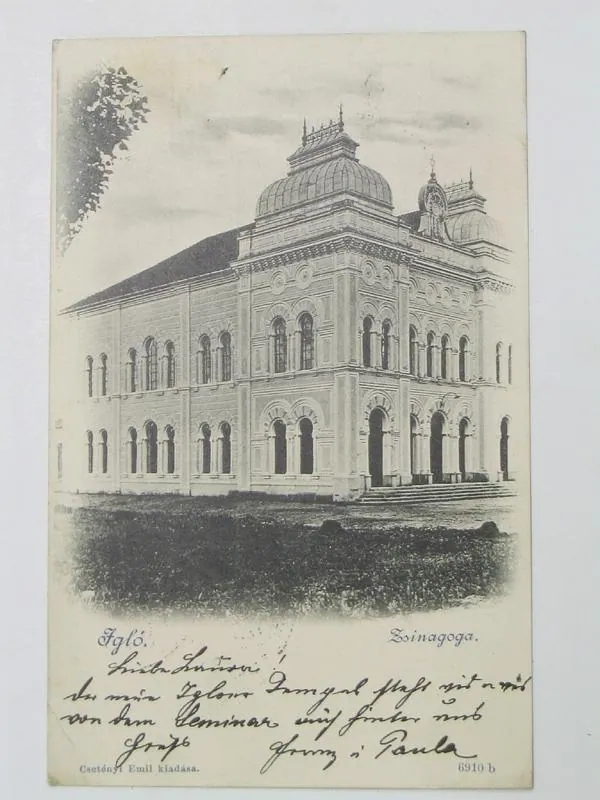
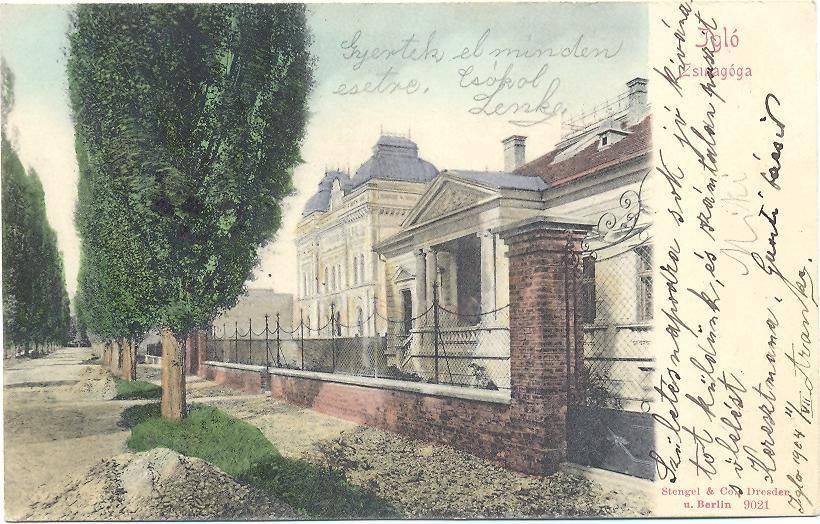
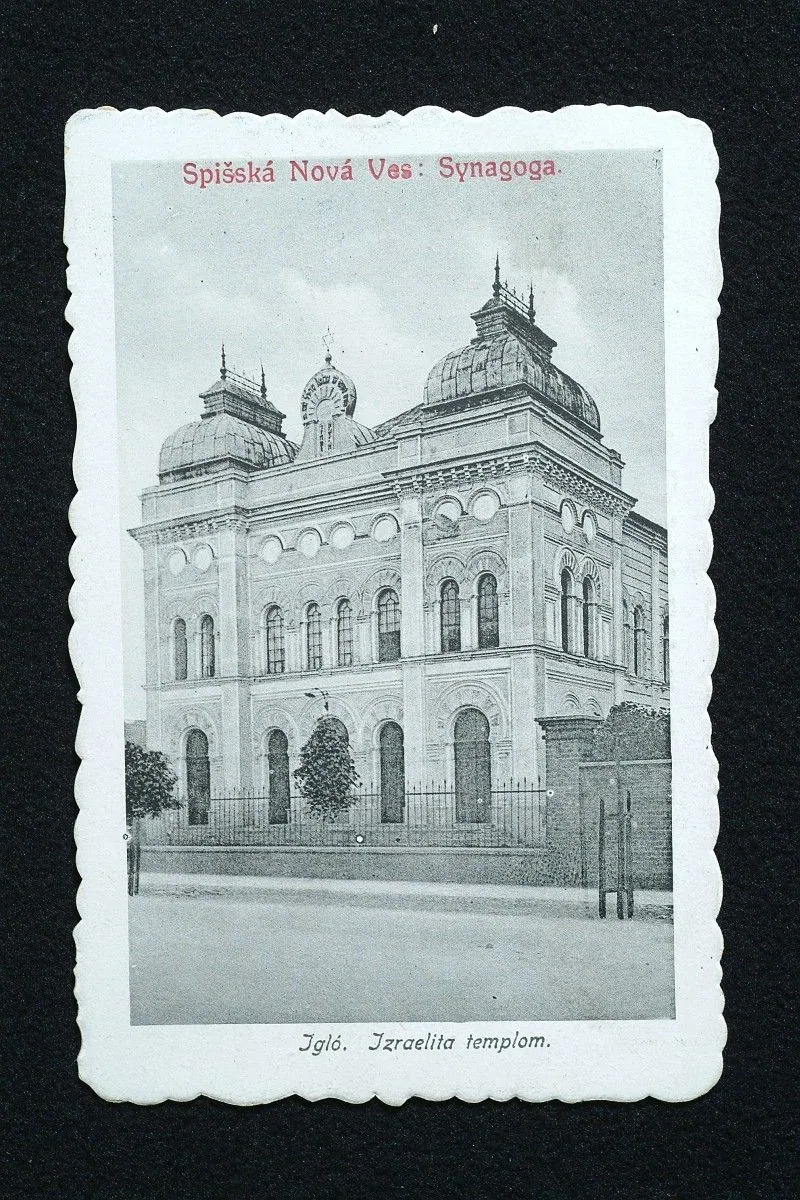
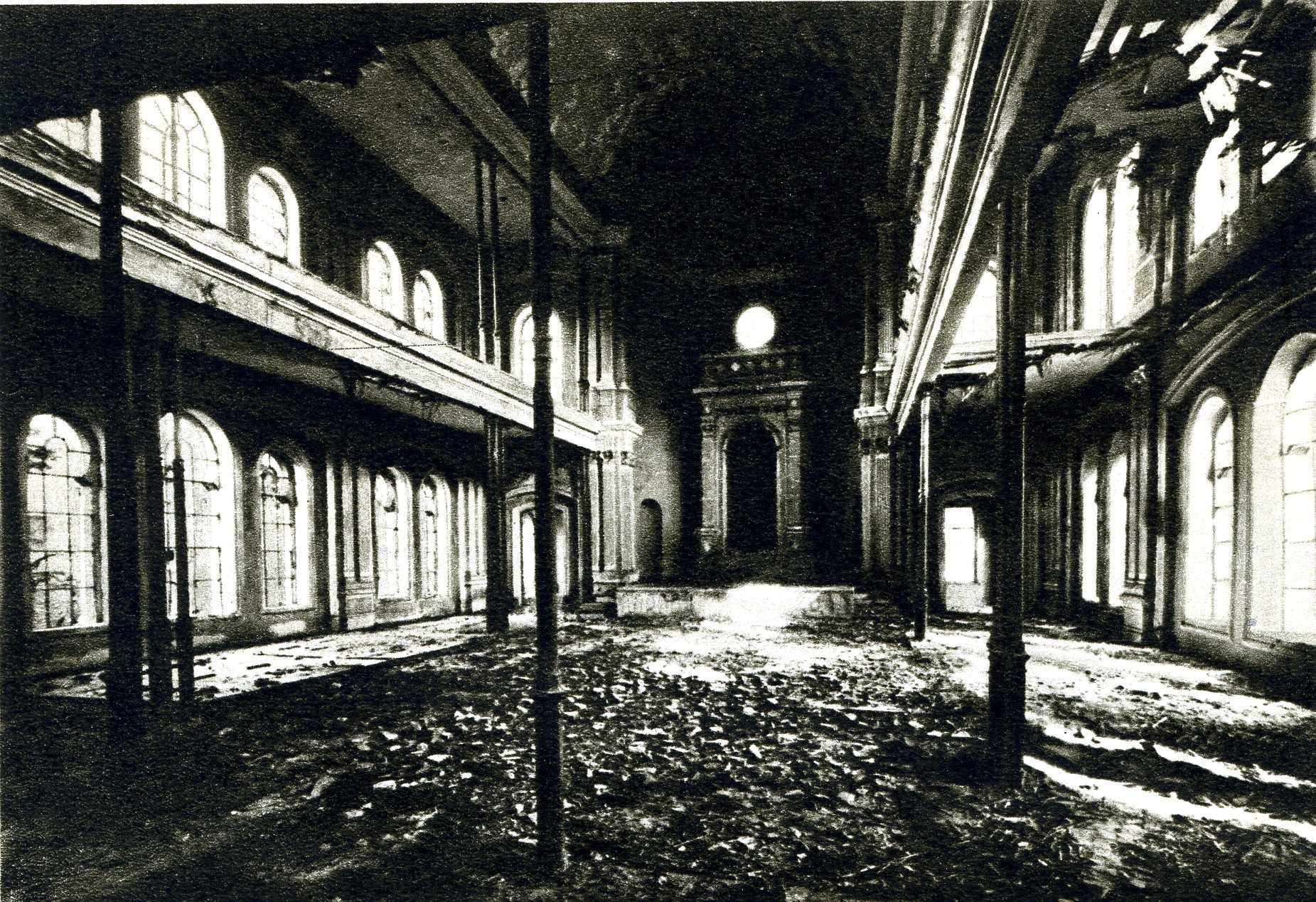
Jews were barred from the mining towns of Upper Hungary until 1849, so the first two Jewish families only settled in Spišská Nová Ves (Hungarian Igló) in 1852. The community grew fast after the Košice–Bohumín railway arrived in 1872, reaching 620 people in 1900, and adopted the Status Quo Ante rite after the 1869 split in Hungarian Jewry. After decades of praying in rented houses, it bought a plot opposite the teachers' college in 1893 and formed a 45-member building society. The foundation stone was laid on 2 May 1898 and the synagogue, designed by the community leader Jozef Feigenbaum and built by Michal Krucsko, was consecrated in August 1899 and finished in November 1900. At 18 by 30 metres it was the largest synagogue in Spiš. After the Slovak State was proclaimed, local Nazi sympathisers twice tried to burn it in June 1939. On 1 May 1941 the local German Nazi Eugen Kežmarský led a group of Hitler Youth who tore down its Star of David and Tablets of the Law, smashed the interior and set it on fire. The burned-out shell stood until 1957–1958, when it was taken apart for building material.
Where it stood for 42 years
Historic: Trangousova ulica (later Hitlerova ulica), opposite the teachers' college, Spišská Nová Ves (Igló). Present day: vacant plot on Školská ulica opposite the grammar school, Spišská Nová Ves, Slovakia. Approximate.
Apri la mappa grande →La comunità ebraica
The first Jewish families, those of Baruch Tyrnauer and Emanuel Klein, arrived in 1852; five years later the town had 38 Jews, who belonged to the community of Markušovce until they formed their own congregation in the 1860s. After the Hungarian Jewish Congress of 1868–1869 about 120 local Jews chose the Status Quo Ante path. The railway made the town the largest in Spiš and drew Jewish traders, industrialists and families seeking good schools: 429 Jews lived there in 1890 (5.5 per cent) and 620 in 1900 (6.6 per cent). From the 1870s services were held in a rented house on Zimná ulica and later in several private houses, while a small Orthodox group prayed in the house of Ladislav Szella. In 1893 the community bought land opposite the teachers' college, and in 1895 a 45-member Synagogue Building Society was founded with capital of 11,400 florins.
Architettura e design
The synagogue was described at its consecration as 'entirely in the Moorish style, with skilfully used modern and classical forms and motifs'. Its front had two towers with a pediment between them carrying a gilded Star of David, symmetrical Moorish windows, and walls articulated by paired pilasters. Three large doors, each 1.8 by 3 metres, led into a 7.5 by 5 metre vestibule, with the side doors opening onto spiral stone staircases of about thirty steps to the upper floor. The main hall had a Venetian chequered floor in yellow and brick red. Over the centre ran a false barrel vault on paired cast-iron columns 13 cm thick, set 13 metres apart; part of the ceiling was blue with gilded stars. Women's galleries on iron beams and wooden balconies ran along both sides and over the entrance. In an apse on the east wall stood a tall wooden Torah ark beneath a round window and a brick half-dome. The roof was covered with sheet metal and shingles.
La vita nella sinagoga
The synagogue became the meeting place and centre of religious life for the Jews of Spišská Nová Ves. Its first rabbi was Áron Krausz (1872–1929), a graduate of the Bratislava rabbinical school, known for preaching in Hungarian and said to have lent dignity to the Hungarian language. After his death he was succeeded by Dr Bartolomej Rosenstein (1880–1942), a doctor of philosophy, philology and theology. Books were kept on the upper floor. A new Jewish elementary school was built nearby, and the area around the synagogue became one of the town's most prestigious streets, home to the mayor Kornel Folgens and the Hajts family, founders of the oldest private observatory in eastern Slovakia. After the synagogue was burned, the community set up a temporary prayer room in the house of the merchant Jakub Pollák at Letná ulica 51.
Distruzione
After the proclamation of the Slovak State, local Nazi sympathisers tried to set the synagogue on fire twice, on 23 and 24 June 1939, but it survived. On 1 May 1941 Eugen Kežmarský, a prominent local German Nazi, brought a group of Hitler Youth members visiting Spiš from Germany to the town in two lorries borrowed from the 'aryaniser' of the Pollák firm. After a speech in the courtyard of the German school next door, they climbed the fence, tore the gilded Star of David and the two Tablets of the Law from the front, broke down the doors with axes, smashed the interior, doused the building with petrol and set it on fire. The fire left it a gutted shell; a few days later the same group desecrated the Jewish cemetery. The historian Eugen Bárkány described the burned-out ruin in the 1950s; according to local memory it was taken apart for bricks in 1957–1958.
Il destino della comunità
Most of the Jews of Spišská Nová Ves were deported to Nazi concentration and extermination camps in 1942 and 1944; only about ten per cent survived the Holocaust. Rabbi Bartolomej Rosenstein died in 1942. After the war the ruined synagogue was owned by the Union of Jewish Religious Communities in Slovakia and offered for sale in 1949. One Torah scroll from the town survived and is now at the Northwood and Pinner Liberal Synagogue in London. The Jewish cemetery, now on the Slovak Jewish Heritage Route, is the main surviving trace of the community.
Il luogo oggi
Nothing of the synagogue survives. After it was dismantled in 1957–1958, a municipal summer cinema was built on the site at the end of the 1960s. After the cinema closed, the plot on Školská ulica, opposite the grammar school (the former teachers' college), fell into neglect and is now closed off from the street by an old metal fence.
Nomi importanti
Áron Krausz
1872–1929RabbiÁron Krausz, a graduate of the Bratislava rabbinical school who had served in Zalalövő, was the first rabbi of the Spišská Nová Ves synagogue. He was known for preaching in Hungarian and was said to have lent dignity to the Hungarian language. He served until his death in 1929.
Biografia o fonte →Bartolomej Rosenstein
1880–1942Rabbi, from 1929Dr Bartolomej Rosenstein, a doctor of philosophy, philology and theology, succeeded Áron Krausz as rabbi of Spišská Nová Ves after 1929 and led the community through the burning of the synagogue in 1941. He died in 1942, the year of the first mass deportations.
Biografia o fonte →Jozef Feigenbaum
Dates unknownDesignerJozef Feigenbaum, a leading member of the Jewish community of Spišská Nová Ves, drew up the plans for the synagogue built in 1898–1899, although the historian Eugen Bárkány thought the designs probably came from Budapest.
Biografia o fonte →Hai qualcosa da condividere?
Fotografie, documenti, storie di famiglia o ricordi di questa sinagoga e della sua comunità aiutano a mantenerne viva la storia.
Share a memory or thought
No comments yet. Be the first to add one.