
La storia di Consistorial Synagogue, Quai Kléber, Strasbourg
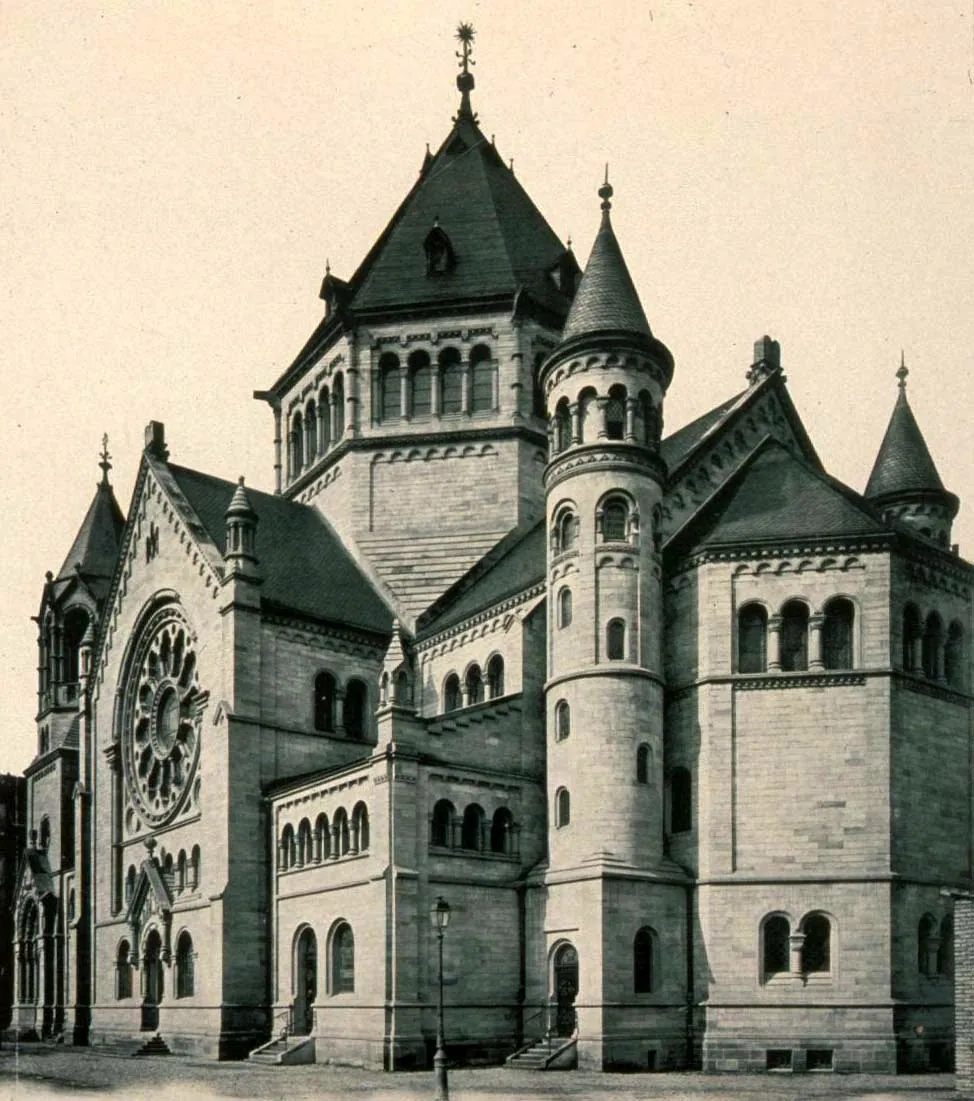
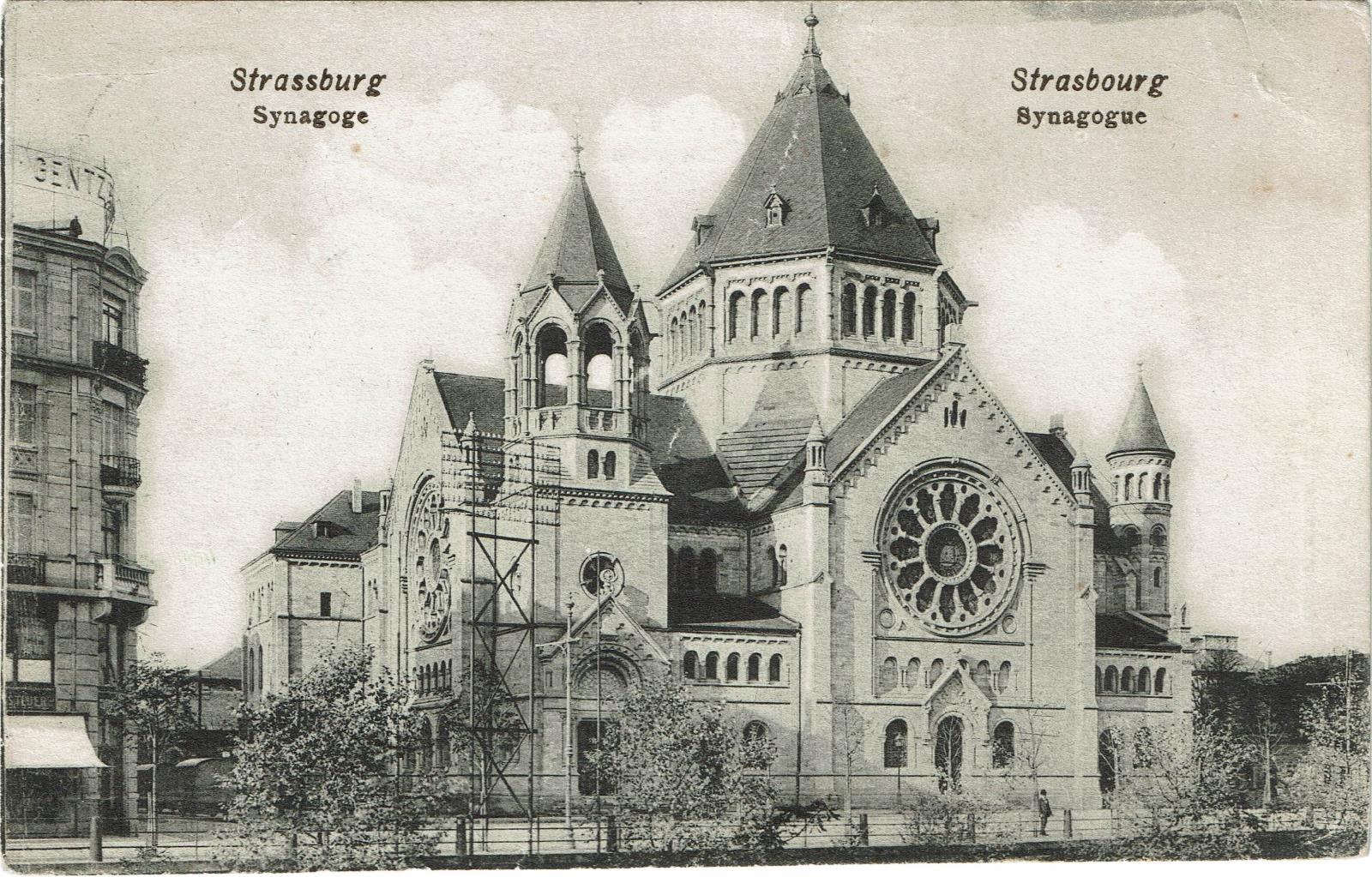
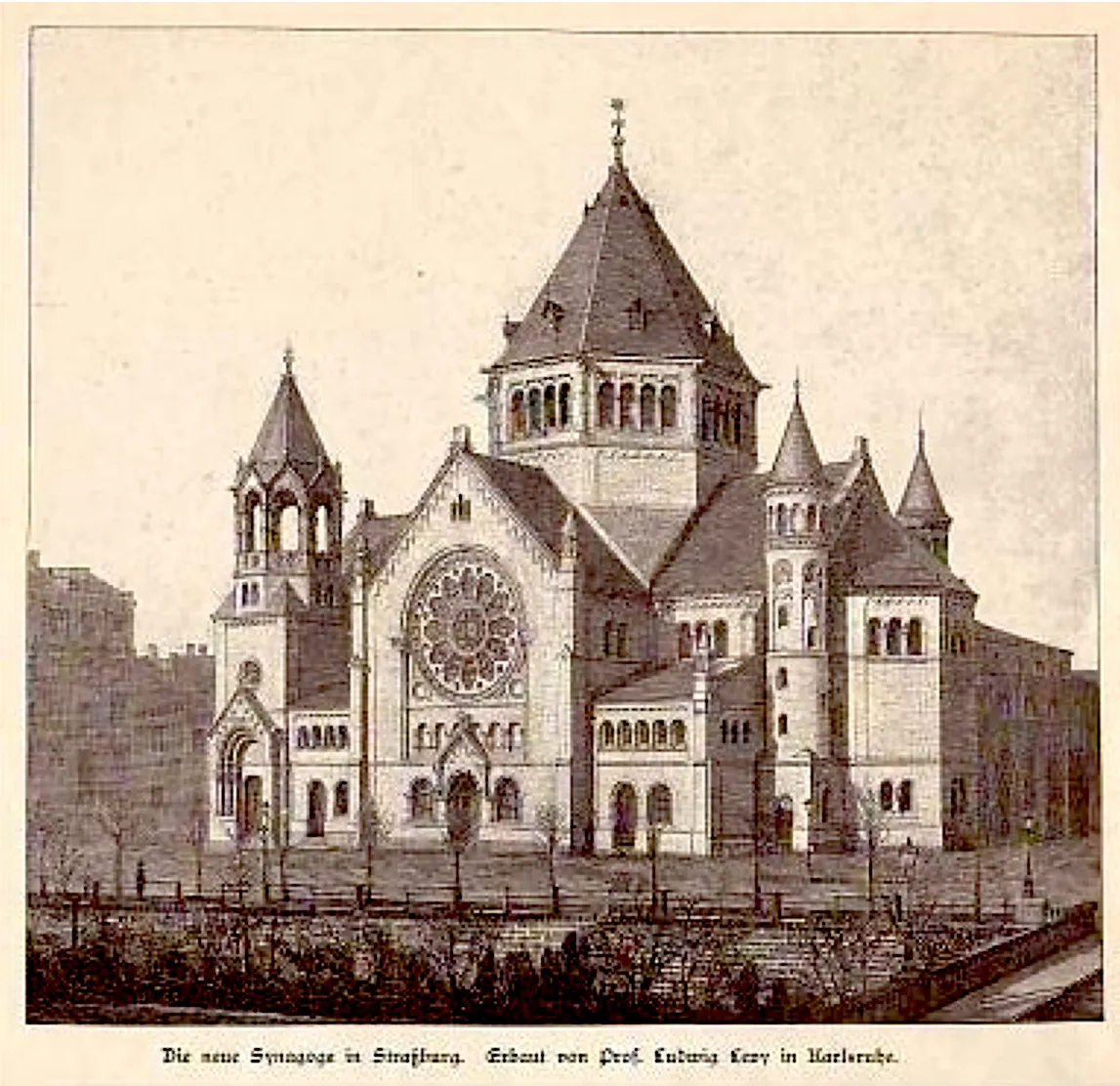
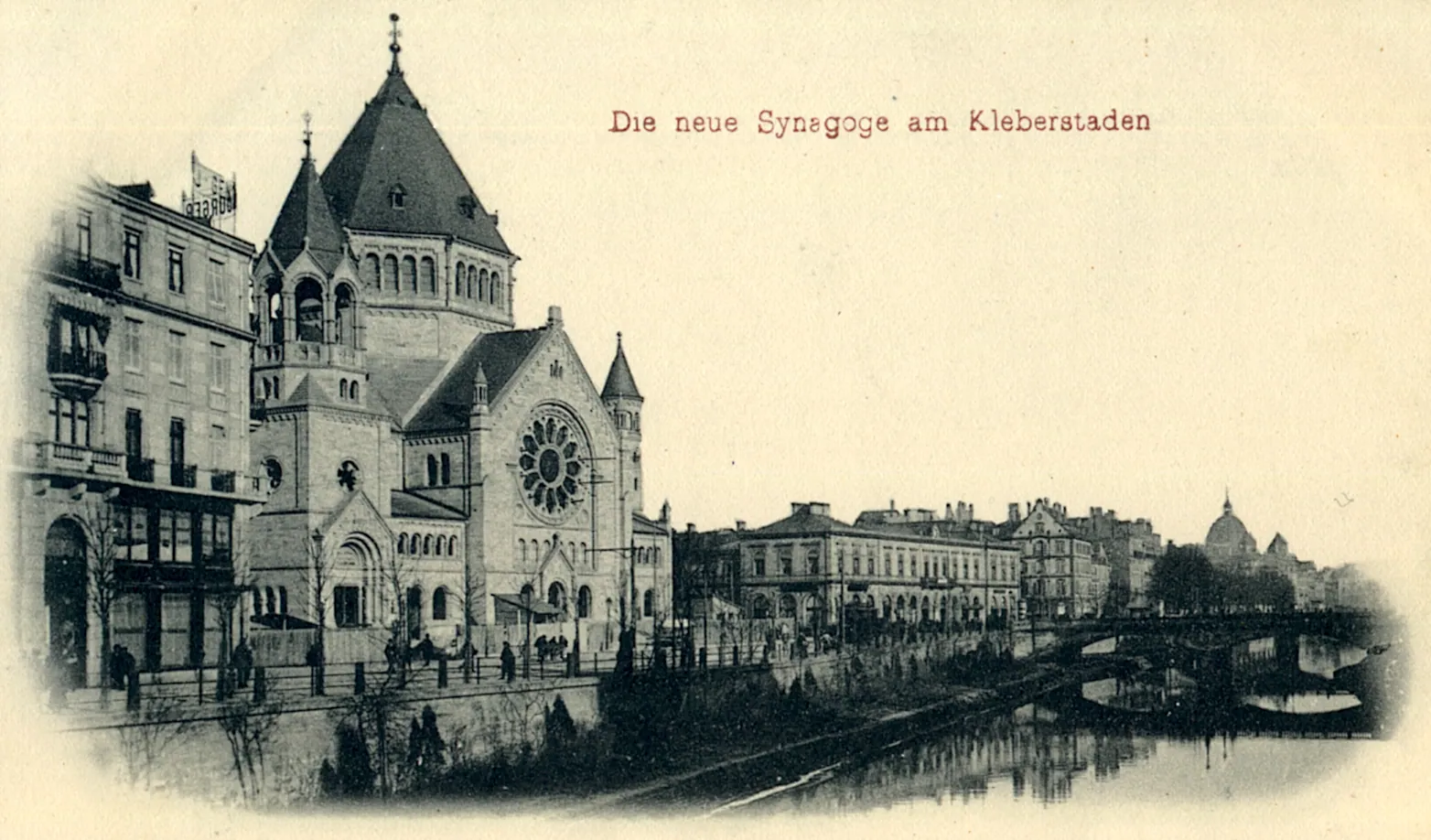
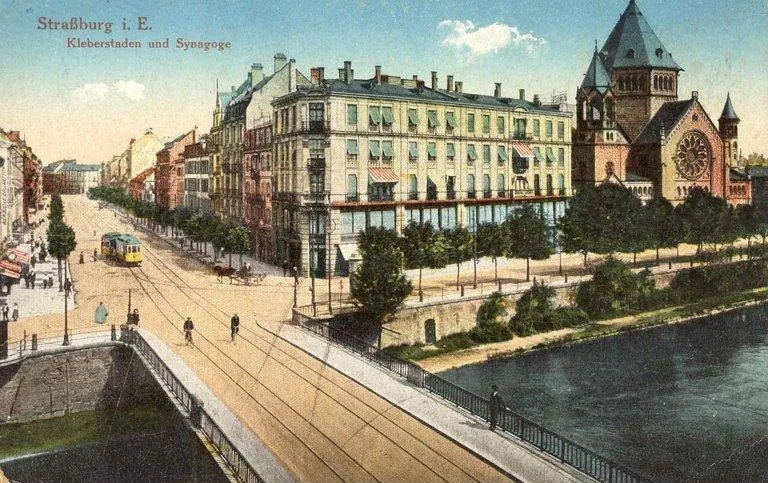
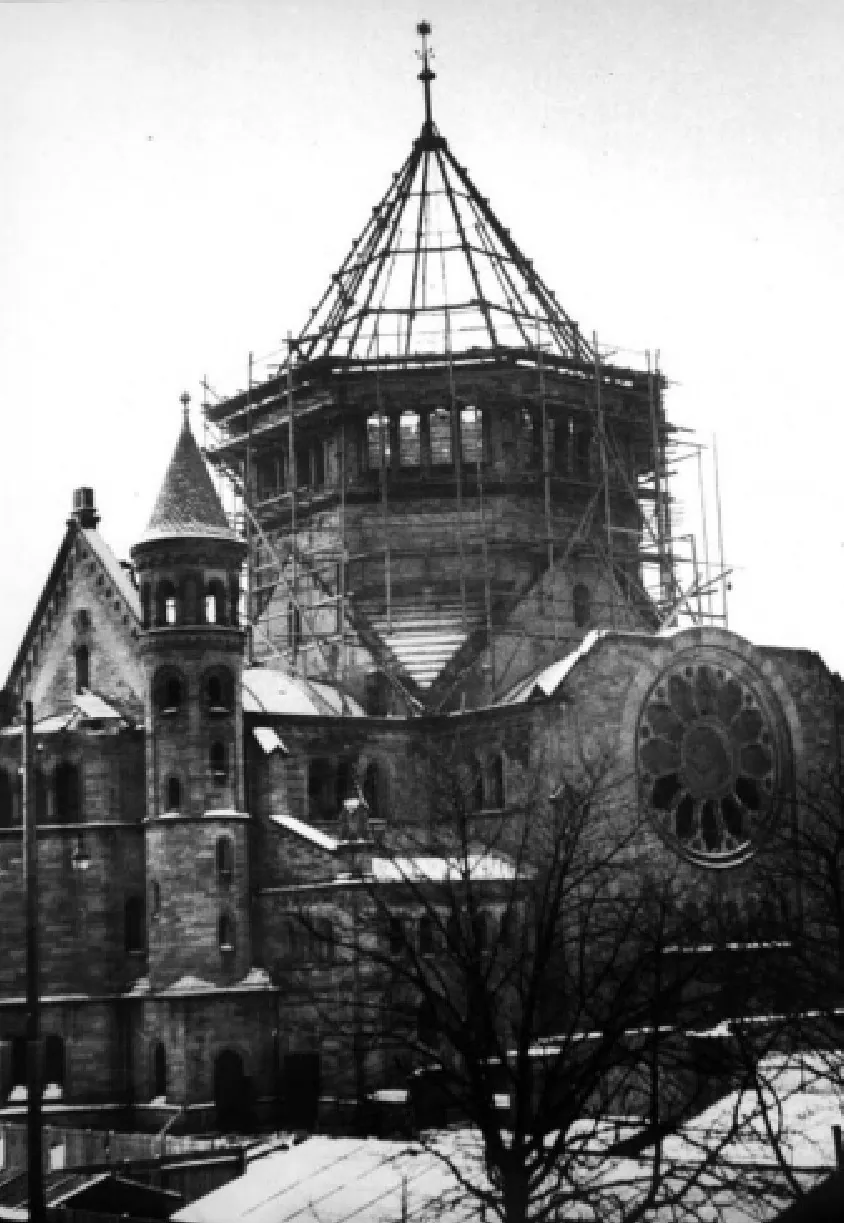
The synagogue stood on the Quai Kléber at the corner of the rue du Marais-Vert, beside the old railway station, on the Fossé du Faux-Rempart canal that rings the centre of Strasbourg. Built while Alsace belonged to the German Empire, it replaced the rue Sainte-Hélène synagogue of 1834, which had become too small. Plans began in 1889, the Karlsruhe architect Ludwig Levy was commissioned, the first stone was laid on 9 April 1896, and the synagogue was inaugurated on 8 September 1898. Inspired by the Romanesque cathedrals of Speyer, Mainz and Worms, it was built of pink and grey Vosges sandstone and crowned by an octagonal tower and dome 54 metres high. The nave measured 46 by 19 metres, and the synagogue held 1,639 places. An organ accompanied the services. For four decades it was the seat of the Grand Rabbi of Strasbourg and the symbol of Alsatian Judaism, through the return of Alsace to France in 1918. In September 1939 the city's Jews were evacuated to the south-west of France. After the German invasion of 1940, Nazi Germany annexed Alsace de facto, the synagogue's furnishings and organ were looted and sold, and in September 1940 a Hitler Youth commando set the building on fire; firemen were ordered to stop fighting the blaze after about an hour. The ruin was dynamited and razed in November 1941. After the war the city gave the community a new site, and the Synagogue de la Paix opened in 1958.
Where it stood for 43 years
Historic: Quai Kléber at the corner of rue du Marais-Vert, Strasbourg. Today: Square de l'Ancienne-Synagogue and Allée des Justes-parmi-les-Nations, in front of Place des Halles, Strasbourg.
Apri la mappa grande →La comunità ebraica
Jews were barred from living in Strasbourg from the fourteenth century until the French Revolution, and settled in Alsatian villages instead. After emancipation in 1791 they moved into the city, and by the nineteenth century Strasbourg had become the centre of Alsatian Judaism and the seat of a Consistory. The rue Sainte-Hélène synagogue of 1834 soon proved too small for the growing community. Under German rule after 1871, the community commissioned a much larger synagogue, completed in 1898. After 1918 Alsace returned to France, and Isaïe Schwartz, Grand Rabbi of the Bas-Rhin from 1919, led the community until he became Grand Rabbi of France in 1939.
Architettura e design
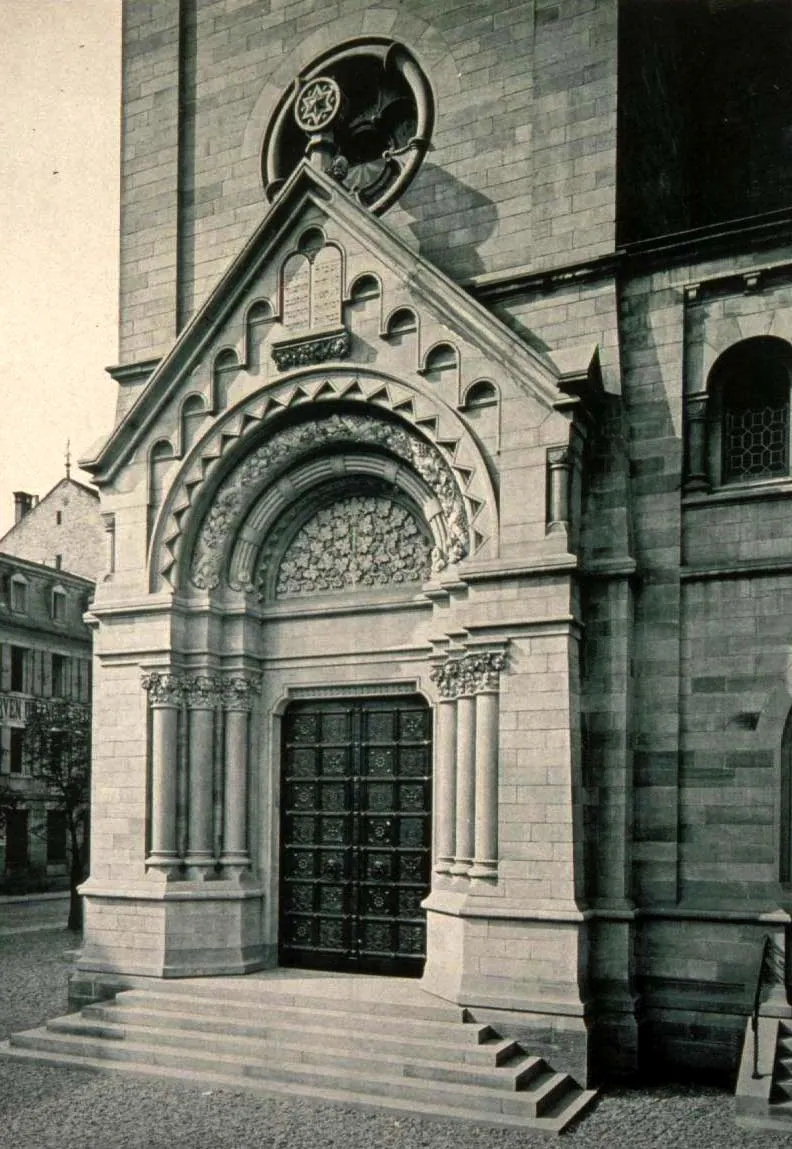
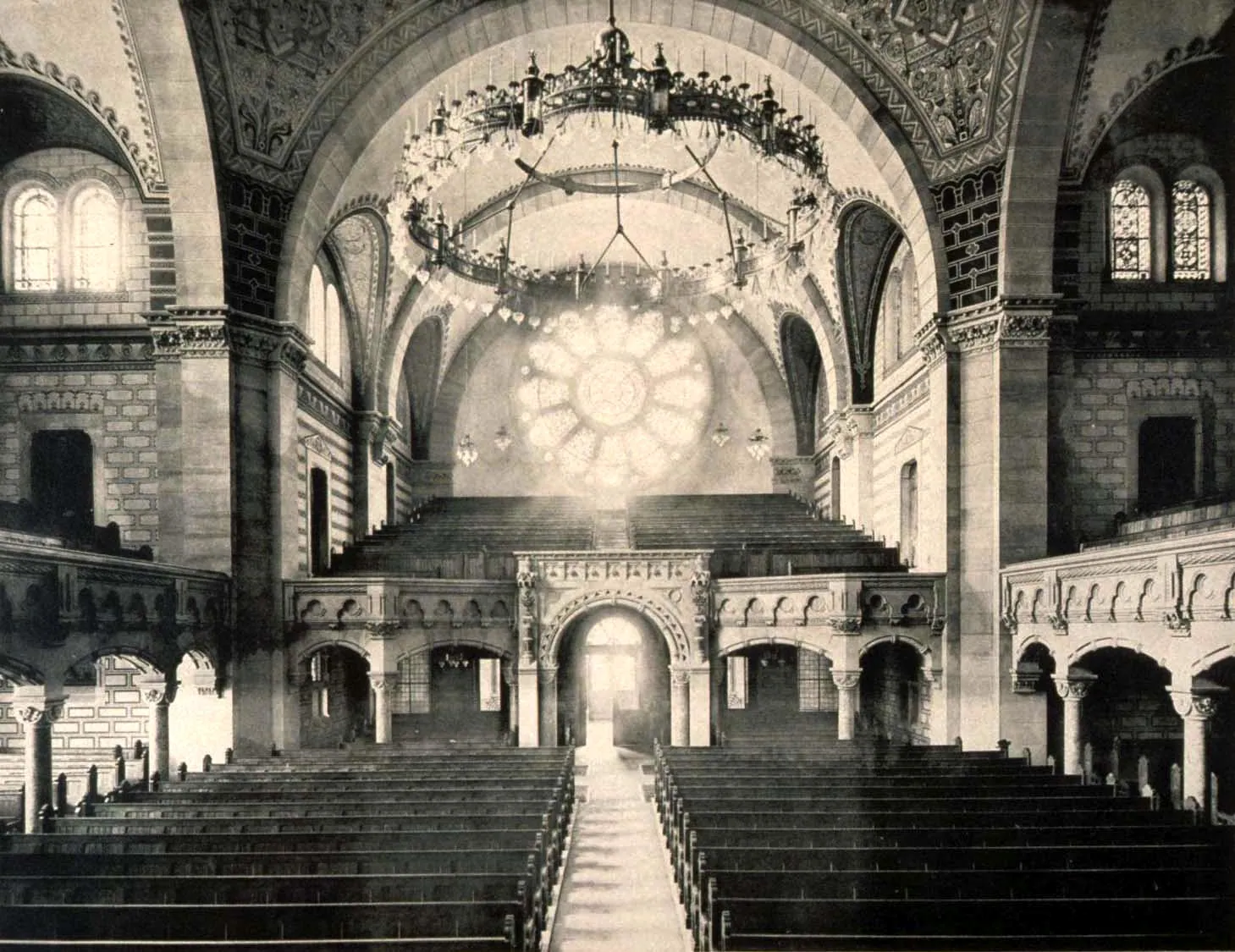
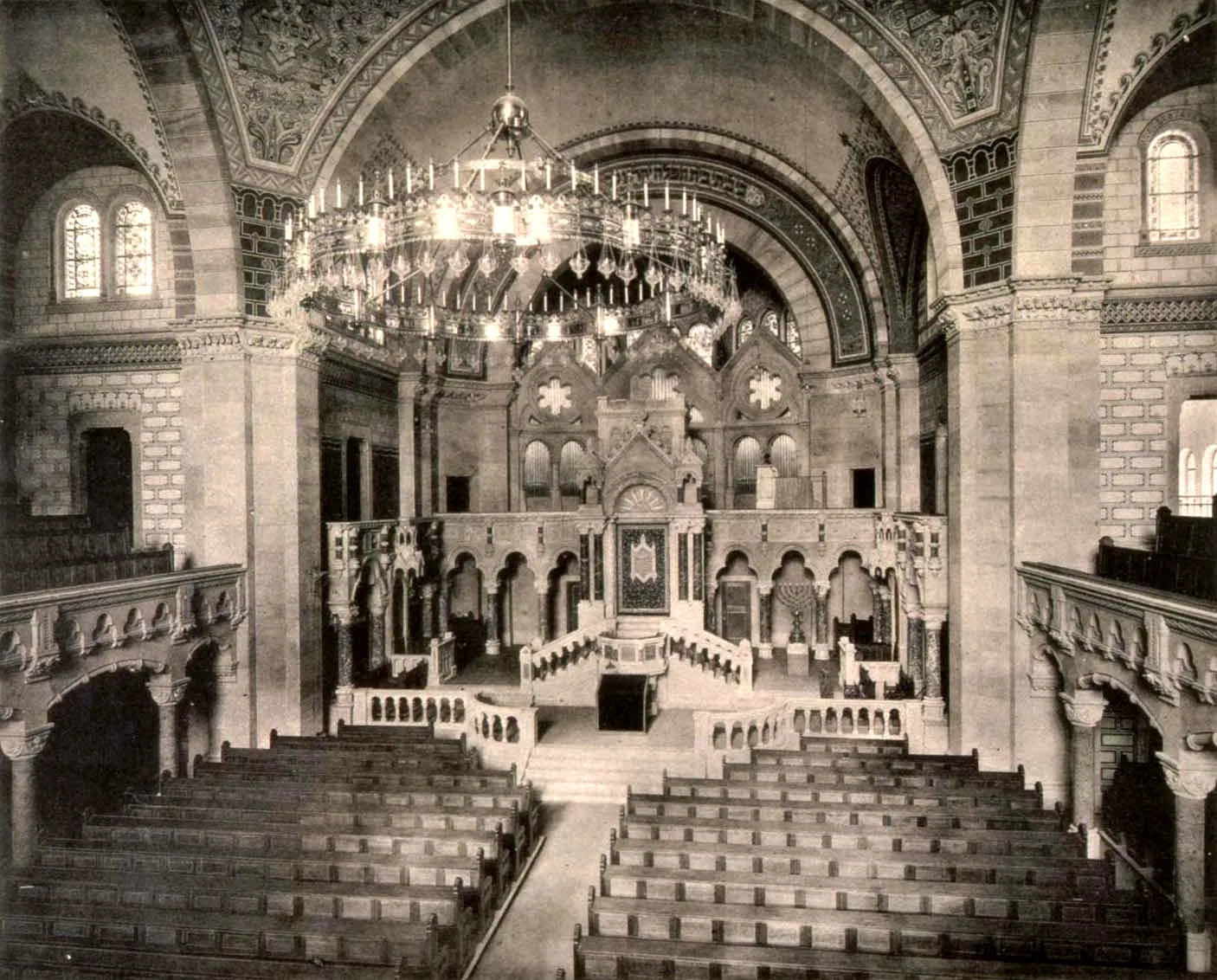
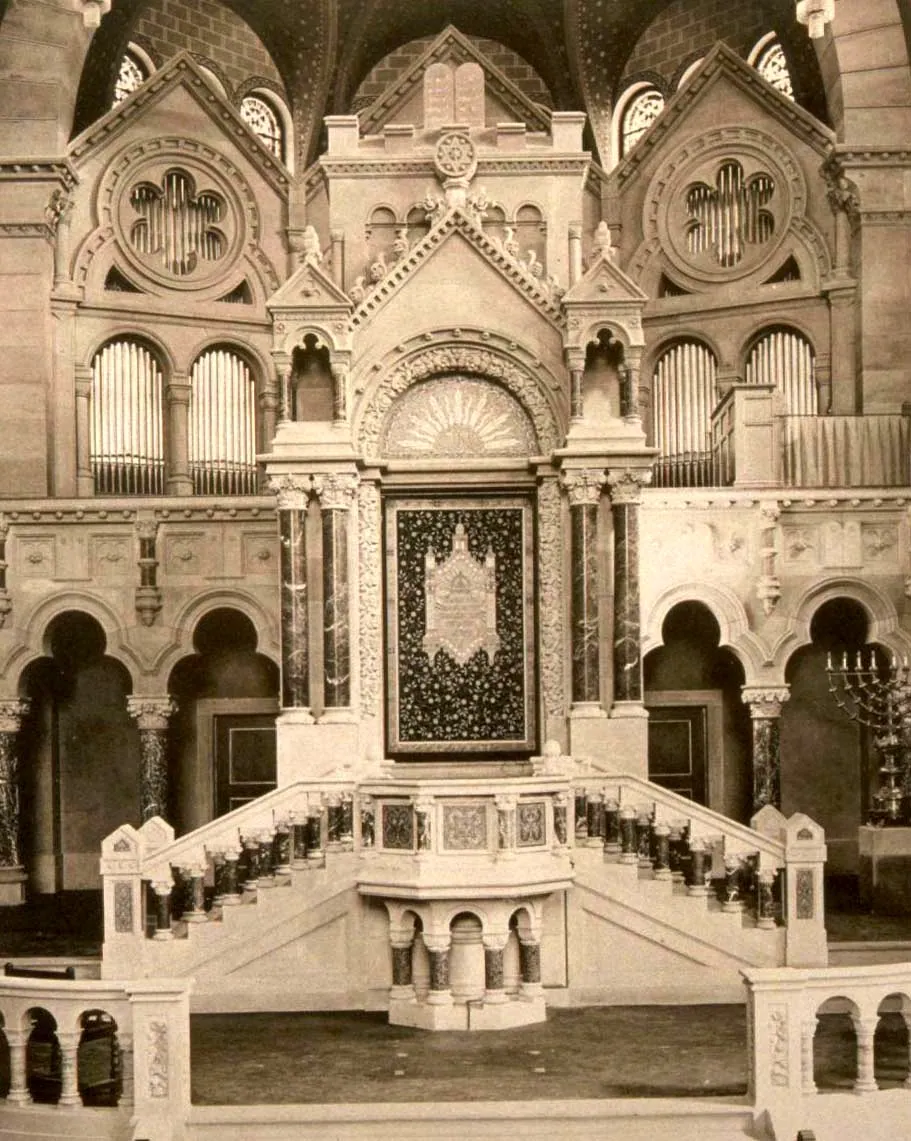
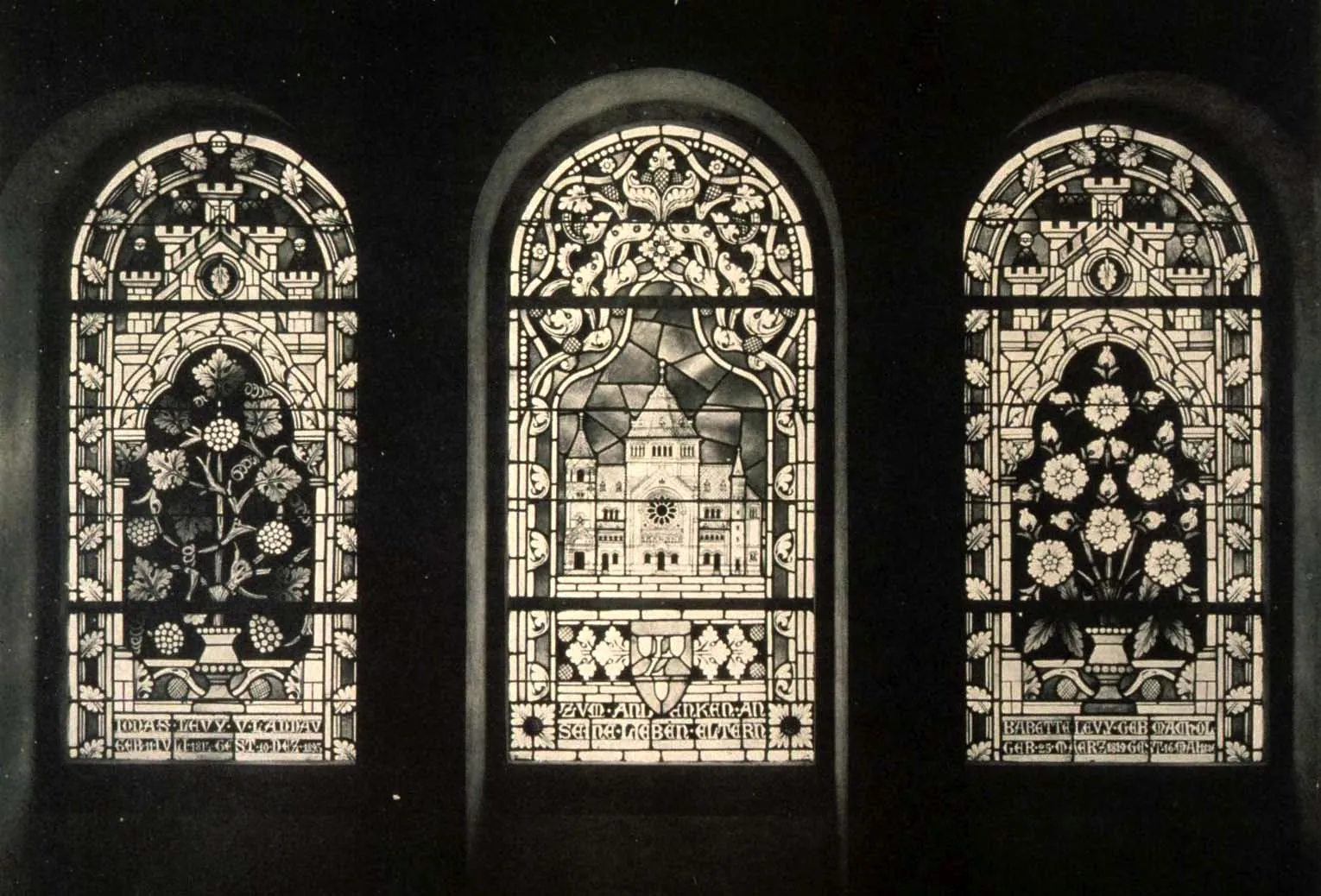
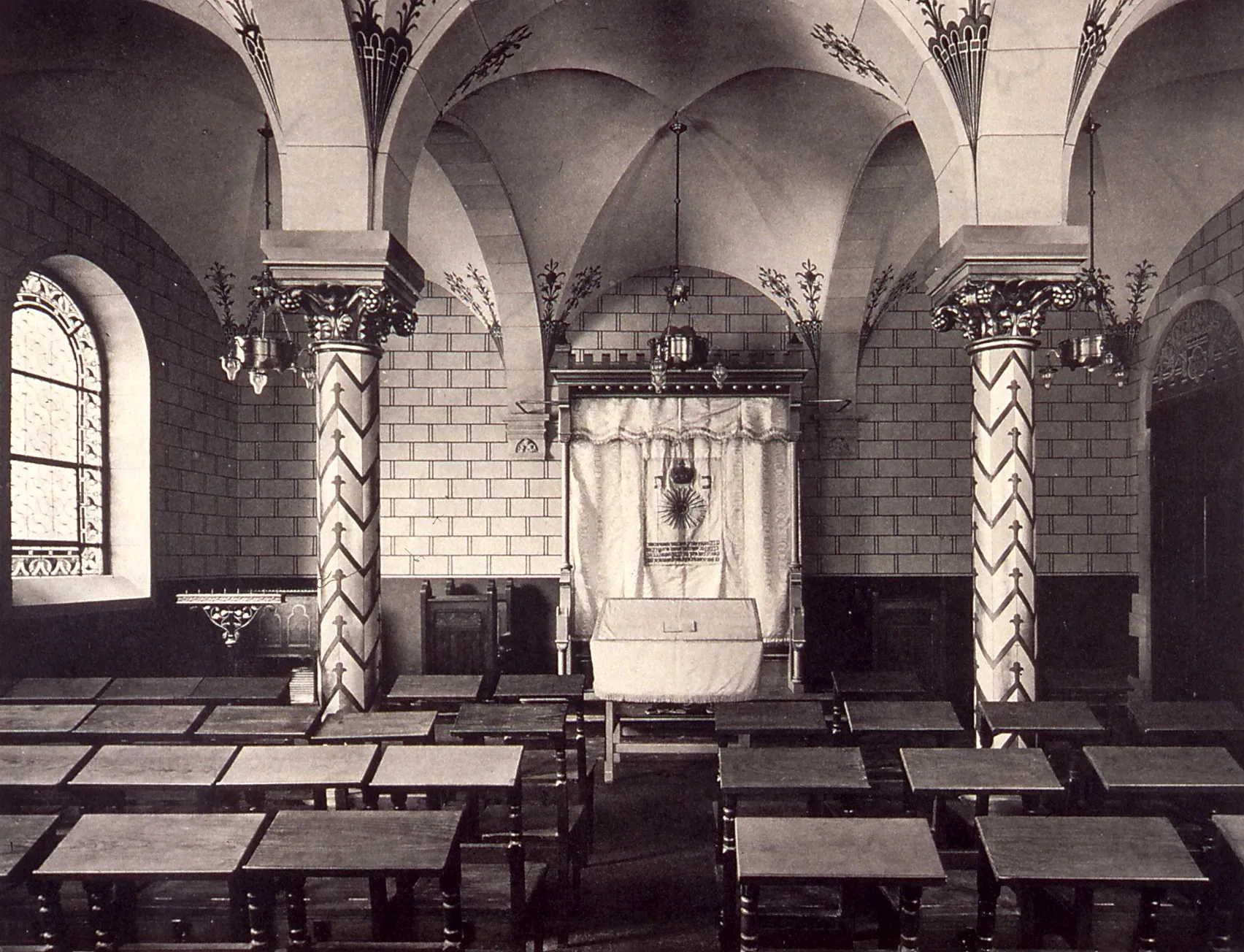
Ludwig Levy designed a neo-Romanesque building modelled on the imperial cathedrals of Speyer, Mainz and Worms. Built of pink and grey Vosges sandstone from Phalsbourg, it had a great rose window in its west front, a richly carved main portal, corner turrets and an octagonal tower over the crossing, crowned by a dome 54 metres high. The nave measured 46 by 19 metres. Inside, round arches carried galleries, a large chandelier hung beneath a rose window, and the ark stood in an elaborate apse with a raised platform; stained-glass windows lit the hall. There were 1,639 places: 825 for men, 654 for women, 40 for the choir and 100 in the weekday oratory. A Walcker organ was replaced in 1925 by an instrument by E. A. Roethinger with 62 stops. The building cost 775,000 marks.
La vita nella sinagoga
The synagogue was the seat of the Grand Rabbi of Strasbourg. Grand Rabbi Isaac Weil officiated at its inauguration in 1898. Isaïe Schwartz, Grand Rabbi of the Bas-Rhin from 1919, led the community in the inter-war years before becoming Grand Rabbi of France in 1939, and René Hirschler was installed as Grand Rabbi of Strasbourg in June 1939. The services featured a choir, the tenor cantor Borin and the organist Rupp. Before May 1940 the chaplain Justin Schuhl rescued the Torah scrolls.
Distruzione
After the defeat of France in June 1940, Nazi Germany annexed Alsace de facto, and the synagogue's furnishings and organ were looted and sold. In September 1940 the building was set on fire by a Hitler Youth commando of men from Baden and Alsatians, with some participation of SA men according to the Alsatian Jewish history society. The date is disputed: a police report cited by the historian Jean Daltroff gives the night of 30 September to 1 October 1940, while a former fire officer and the national heritage record give 12 September 1940; English Wikipedia reconciles the accounts as a first fire on 12 September and the main fire on 30 September to 1 October. Firemen were ordered to stop after about an hour because the dome threatened to collapse, and petrol cans were found inside. The ruin was dynamited and razed in November 1941. After the war the driver of the commando, a Strasbourg mechanic, was sentenced to ten months in prison and ten years of national indignity.
Il destino della comunità
Strasbourg's Jews had been evacuated with the rest of the city's population in September 1939, mainly to the Dordogne and the Limousin, so most were absent when the Nazis annexed Alsace and declared it 'free of Jews'. In unoccupied and later occupied France they were exposed to the Vichy regime's anti-Jewish laws and to deportation. Many Alsatian Jews were deported from France to Auschwitz and other camps. Grand Rabbi René Hirschler, who organised clandestine Jewish chaplaincy in the camps of southern France, was arrested and died in the Ebensee camp on 3 April 1945. After the liberation the community returned and worshipped in temporary premises until a new synagogue opened in 1958.
Il luogo oggi
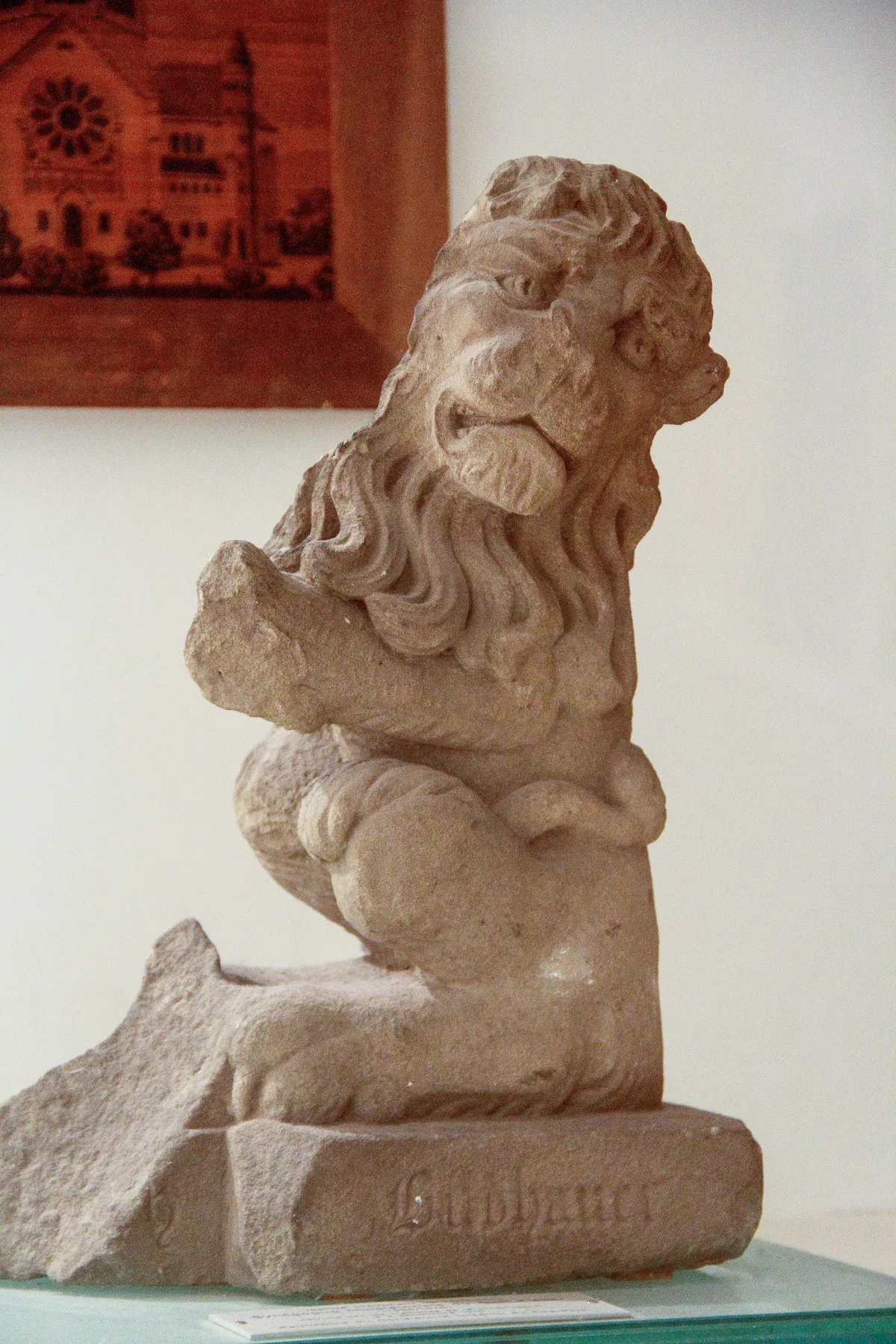
Nothing was rebuilt on the site. It is now the Square de l'Ancienne-Synagogue, with the Allée des Justes-parmi-les-Nations, in front of the Place des Halles shopping centre, and a tram stop is named 'Ancienne Synagogue – Les Halles'. A memorial stele was unveiled on 3 October 1976, moved when the shopping centre was built and enlarged in 1994. Fragments of the building survive, including a carved lion and column pieces. The city exchanged the site for a plot in the Parc des Contades, where the Synagogue de la Paix was consecrated on 23 March 1958.
Nomi importanti
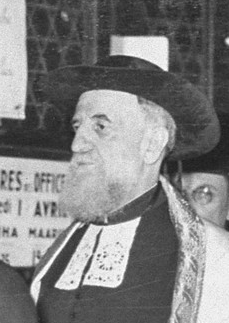
Isaïe Schwartz
1876–1952Grand Rabbi of the Bas-Rhin from 1919; Grand Rabbi of France 1939–1952Isaïe Schwartz led Strasbourg's Jewish community from the Quai Kléber synagogue after Alsace returned to France, until he became Grand Rabbi of France in 1939.
Biografia o fonte →Ludwig Levy
1854–1907ArchitectThe Karlsruhe architect Ludwig Levy designed the Quai Kléber synagogue, built in 1896–98 in a neo-Romanesque style inspired by the cathedrals of Speyer, Mainz and Worms. He was one of the leading synagogue architects of Imperial Germany.
Biografia o fonte →René Hirschler
1905–1945Grand Rabbi of Strasbourg from 1939René Hirschler was installed as Grand Rabbi of Strasbourg in June 1939, the last before the synagogue's destruction. He died in deportation at Ebensee on 3 April 1945.
Biografia o fonte →Isaac Weil
UnknownGrand Rabbi at the inaugurationGrand Rabbi Isaac Weil officiated at the inauguration of the synagogue on 8 September 1898.
Biografia o fonte →Hai qualcosa da condividere?
Fotografie, documenti, storie di famiglia o ricordi di questa sinagoga e della sua comunità aiutano a mantenerne viva la storia.
Share a memory or thought
No comments yet. Be the first to add one.