
История Szabadszállás Synagogue
Szabadszállás is a town of the Kiskunság in Bács-Kiskun county, formerly in Pest-Pilis-Solt-Kiskun county. According to the Magyar Zsidó Lexikon of 1929, Jews were not allowed to settle there before the 1848-49 War of Independence, or even to stay overnight: traders who came from neighbouring villages for the fairs had to leave before nightfall. When the ban lapsed, a few families moved in, and in 1858 Dávid Stern, Márton Scheibel and Márton Löwinger founded an Orthodox congregation. It built a synagogue and then elected Mayer Kalisch as rabbi; he served until his death in 1924. Anikó Gazda's gazetteer dates the building to about 1858.
The community was never large. Gazda records 232 Jews in 1910 and 101 in 1941, and the lexicon counted only 79 people in 38 families in 1929, after many had left in the wake of the revolutions of 1918-19. The town's own website says the congregation ceased to exist in the Second World War, when the Jews were deported.
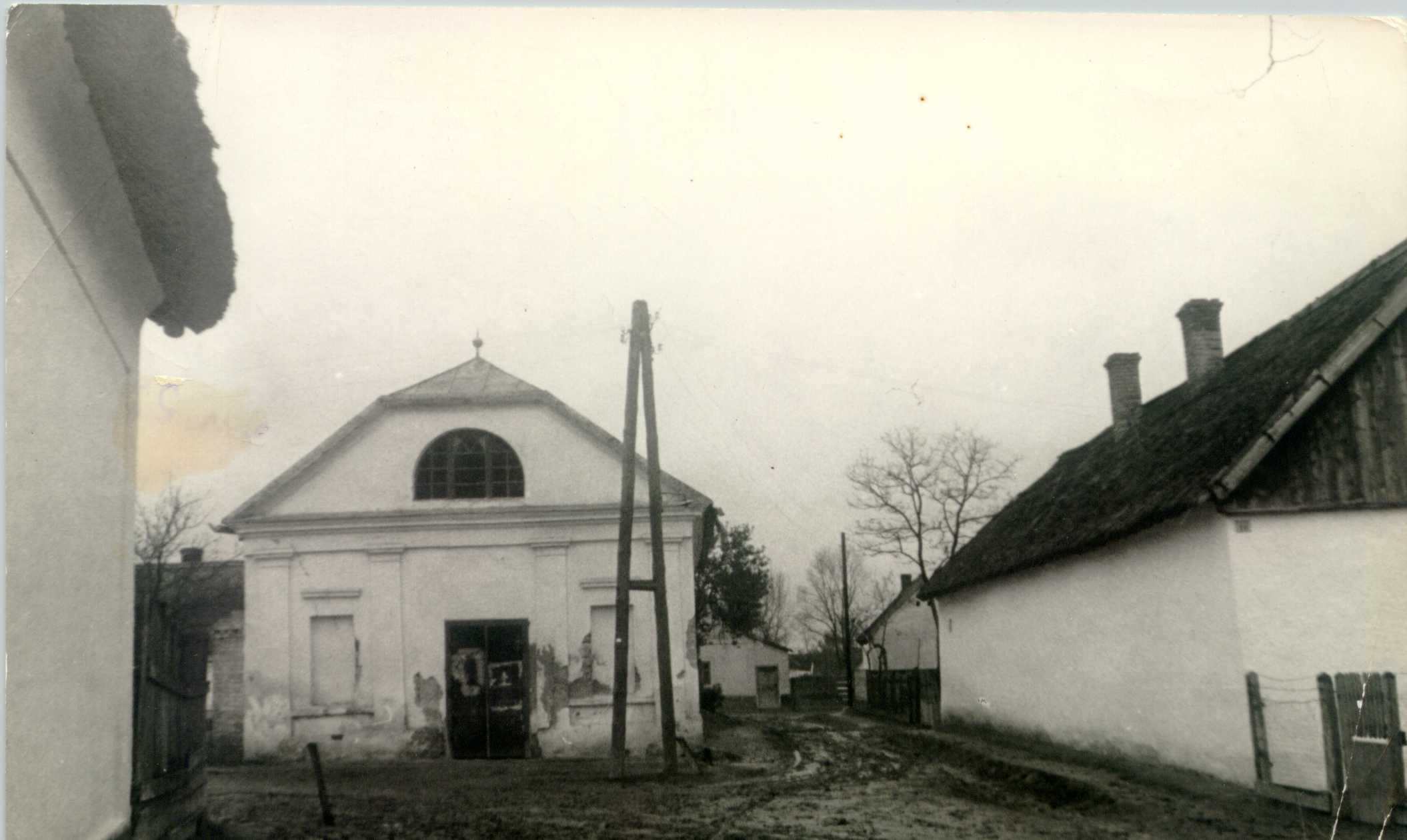
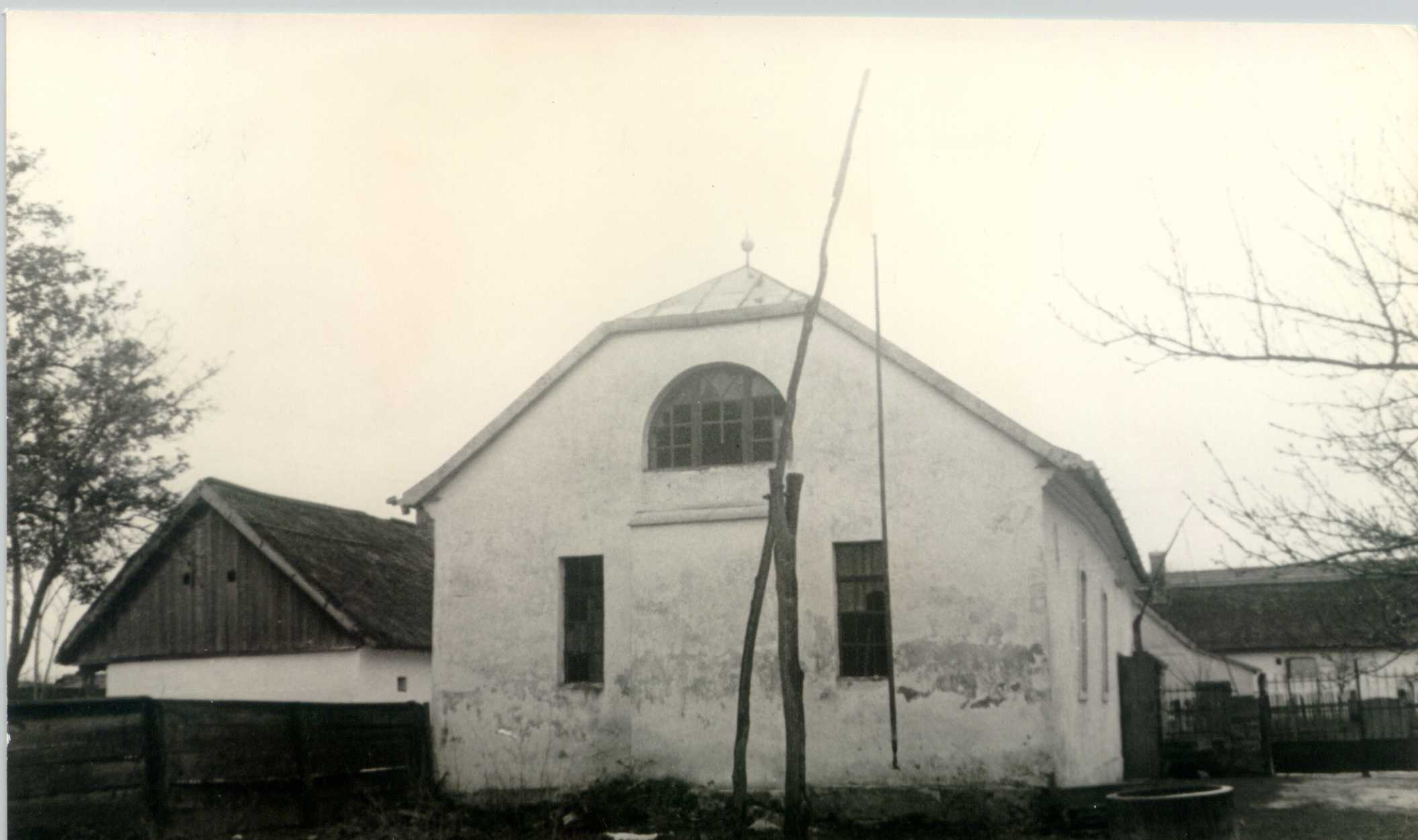
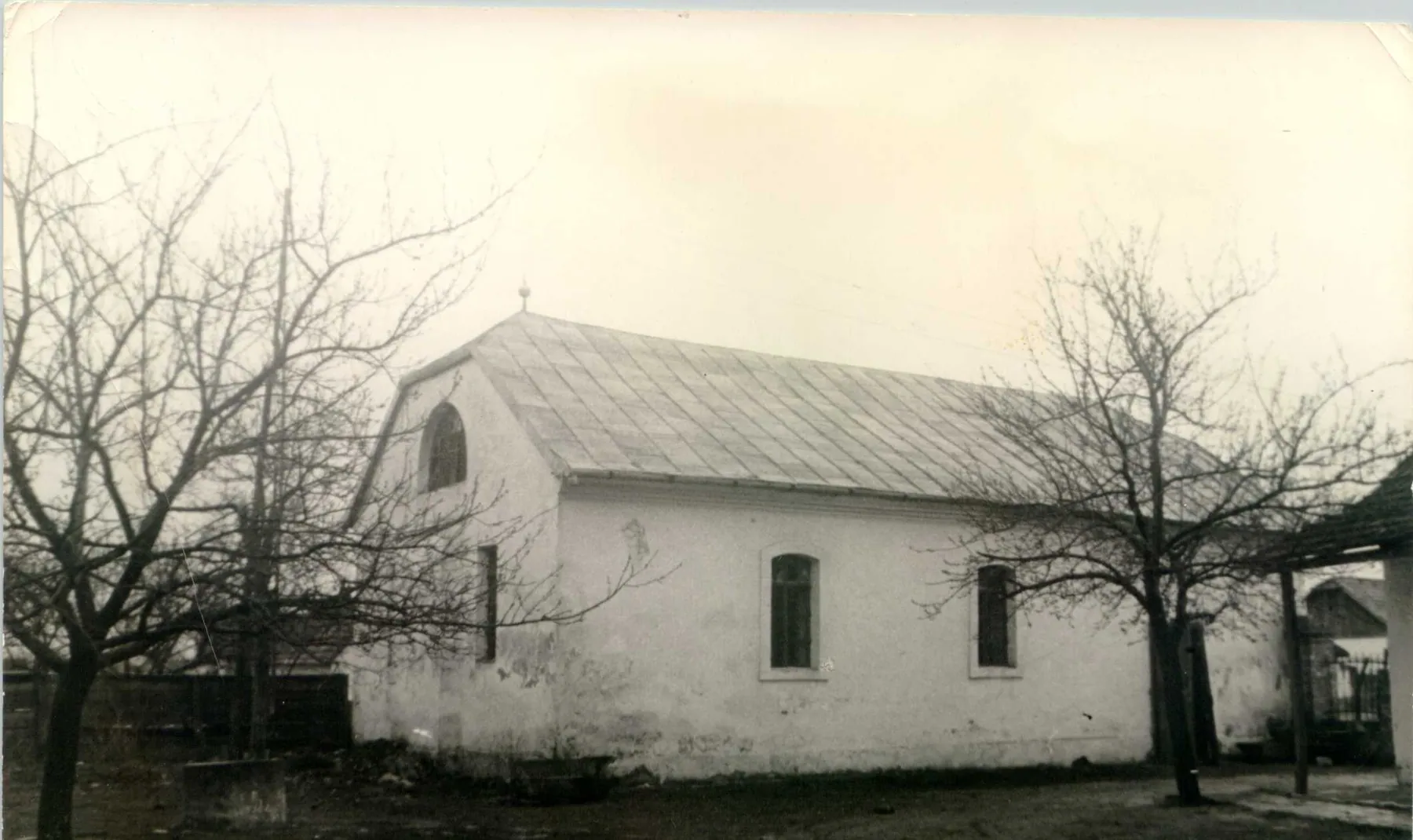
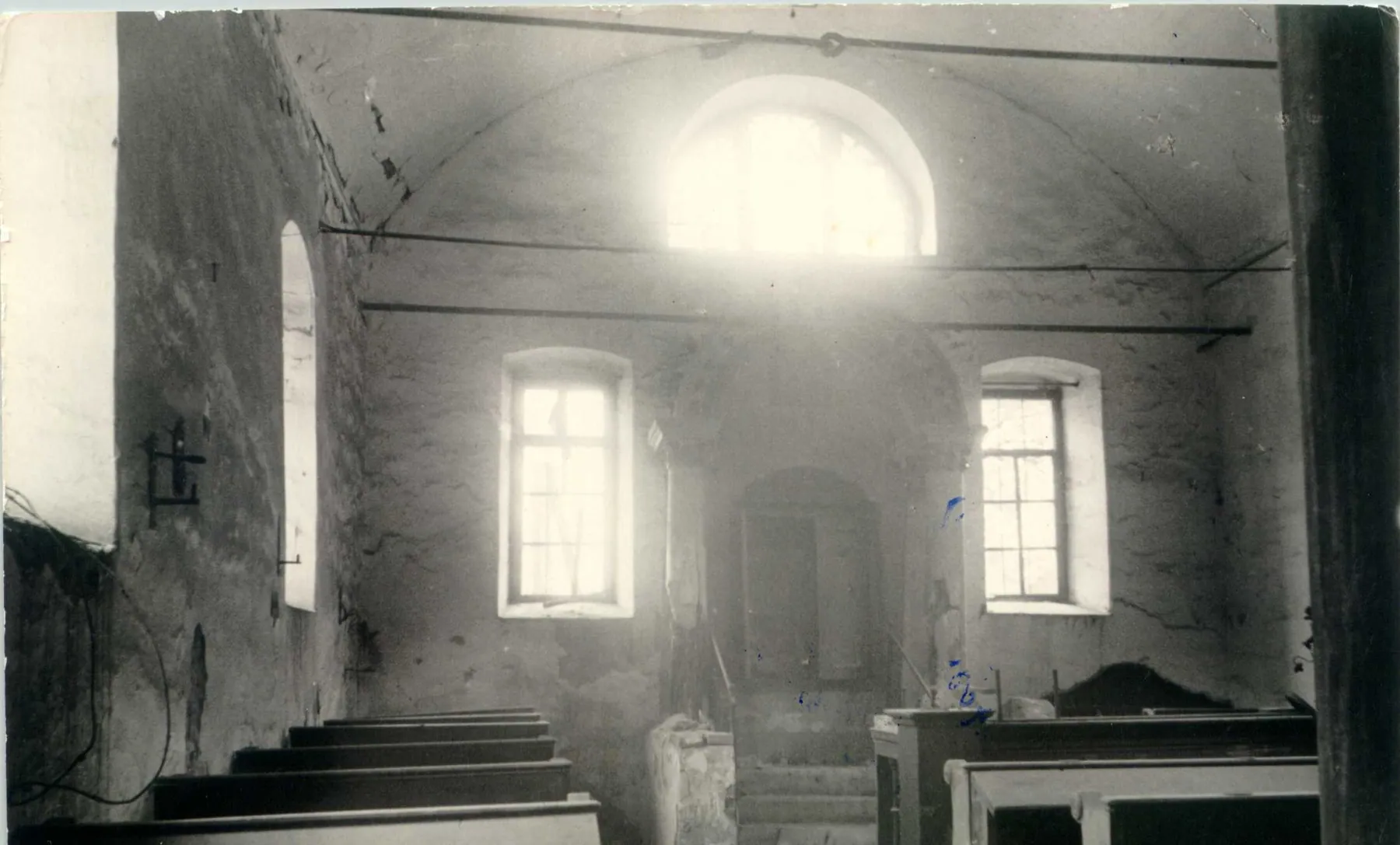
Five photographs in the Hungarian Jewish Museum and Archives, one of them dated 1952, show the building after it had lost its congregation: a small rendered hall with a pilastered front, standing among thatched farmhouses, its plaster peeling and its pews still in place. When Gazda surveyed the site between 1980 and 1987 it had been demolished. The date and the people responsible are not recorded in the sources found.
Where it stood for nearly 120 years
Historic: Szabadszállás, Pest-Pilis-Solt-Kiskun county; street and house number unknown. Today: Unknown; placeholder pin at the centre of 6080 Szabadszállás, Bács-Kiskun county (approximate).
Открыть большую карту →Еврейская община
The Magyar Zsidó Lexikon gives the founding of the Szabadszállás congregation as 1858 and names three of the first settlers, Dávid Stern, Márton Scheibel and Márton Löwinger. The town's website gives 1850 instead. The congregation was Orthodox. Its burial society, the Chevra Kadisha, was formed in 1862. The lexicon says the community developed well until the revolutions of 1918-19, after which many members fled or moved away and numbers fell sharply; one member was killed in the counter-revolution that followed. Gazda's figures show the same curve: 232 Jews in 1910 and 101 in 1941. In 1929 the lexicon counted 79 people in 38 families, with 38 taxpayers, in a town of 8,014 inhabitants. By occupation there were fourteen merchants, eight craftsmen, three farmers, nine people of private means, a lawyer, a doctor, one in a free profession and one other. The annual budget was 4,800 pengő, part of it spent on welfare and charity. The neighbouring village of Fülöpszállás belonged to its registry district. The officers in 1929 were Ödön Stern, president; Fülöp Löwensohn, vice-president; and Izidor Faragó, treasurer, with Miksa Fürst, József Engel, József Böhm and Dávid Stern on the board.
Архитектура и дизайн
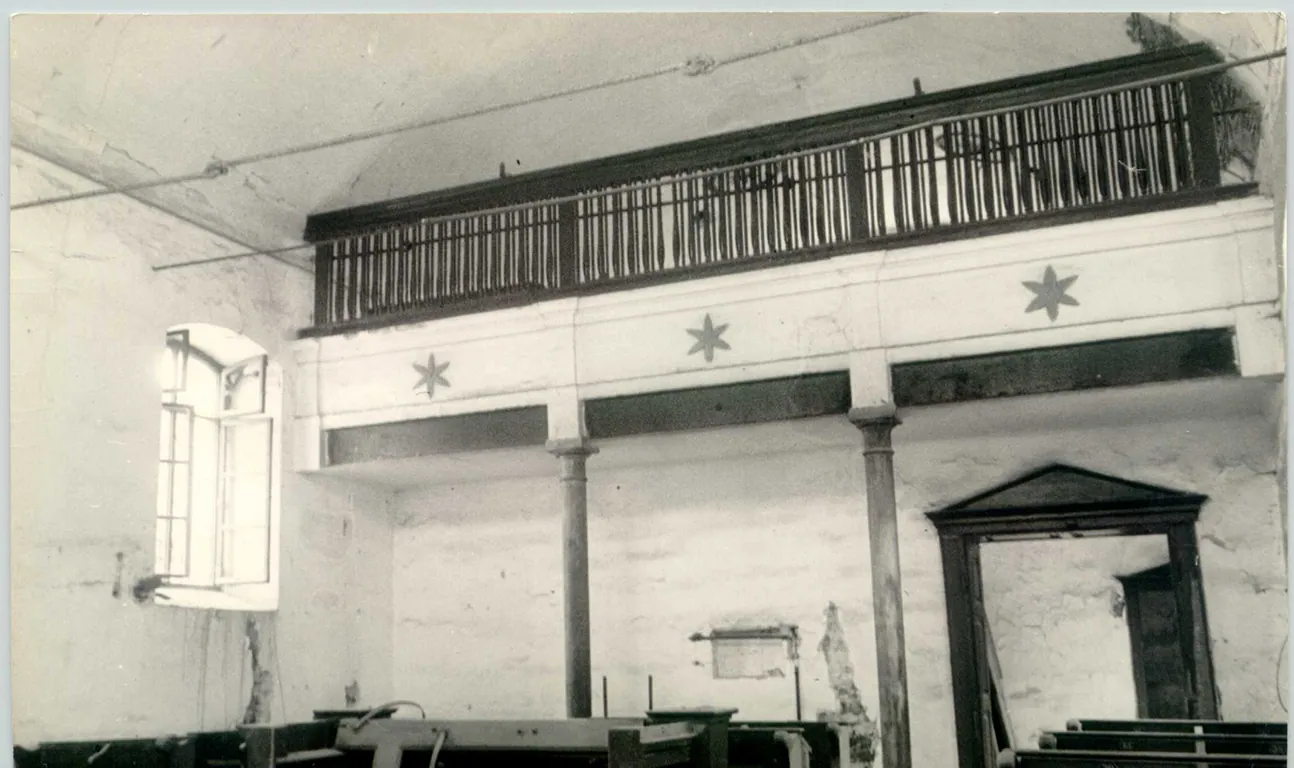
No plan, written description or architect's name was found, so what follows is read from the five archive photographs. The synagogue was a small, single-storey, rendered rectangular hall under a half-hipped roof covered in sheet metal, with a ball finial at each end of the ridge. The entrance front faced a lane between farmhouses. It was divided by four flat pilasters carrying a moulded cornice, above which a low pediment-like gable held a large semicircular window. A double door stood in the centre, with a blind, corniced window panel on either side. The east end was plainer: a shallow central projection marked the position of the Torah ark, with a barred rectangular window on each side and another semicircular window in the gable. The long walls had windows with shallow arched heads in plain render frames. Inside, the hall was a single room under a shallow plastered vault held by iron tie rods. The ark stood in an arched recess at the top of a few steps. At the west end a women's gallery rested on two slender columns; its parapet was painted with six-pointed stars and carried a tall lattice screen.
Жизнь в синагоге
The congregation followed the Orthodox rite. The lexicon says that after building the synagogue the members elected Mayer Kalisch as their rabbi, and that he remained in office until he died in 1924; no successor is named in its 1929 entry. The Chevra Kadisha, founded in 1862, was led in 1929 by Sámuel Stern. Jews from Fülöpszállás were registered here, although Gazda records a separate synagogue of about 1880 in that village. Nine members served in the First World War and one was killed. Two objects in the Hungarian Jewish Museum hint at communal life: an enamelled brass badge of the Szabadszállás Israelite Girls' Association, dated 1912, and a painted tin Torah crown from Szabadszállás, its hoop set with imitation stones. The photographs show how the room was arranged: rows of plain wooden pews facing east on either side of a central aisle, iron lamp brackets on the walls, and the women seated apart in the west gallery behind a lattice screen. A doorway with a triangular pediment opened beneath the gallery.
Разрушение
No source found describes damage to the synagogue during the Second World War. It lost its congregation in 1944, when the Jews of the town were deported. The building was still standing eight years later: the Hungarian Jewish Museum and Archives dates its photograph of the east front to 1952, and four more photographs in the same inventory series show the same derelict state. Render had fallen from the lower walls, window panes were broken, the side panels of the entrance front were closed up, and the interior walls were stained with damp, although the pews, the gallery and its screen were still in place. When Anikó Gazda surveyed Hungarian synagogue sites between 1980 and 1987, she recorded the Szabadszállás synagogue as demolished. It was therefore pulled down at some point between 1952 and the 1980s, under Communist rule. None of the sources read says in which year, who ordered or carried out the demolition, or whether the building had first been sold, so the actor cannot be named.
Судьба общины
Gazda gives 101 Jews in Szabadszállás in 1941. The town's website states only that the Israelite congregation ceased to exist in the Second World War and that the Jews were deported. The sources read for this entry do not say where they were confined, from which station they were deported, on what date, how many were killed or how many came back. Randolph Braham's account of the nearest large entrainment centre, Kecskemét, where 5,413 Jews were held and deported in two transports that crossed the border at Kassa on 27 and 29 June 1944, lists the ghettos emptied into it and does not name Szabadszállás, so the route taken by its Jews remains unknown here. No congregation is recorded in the town after the war in any source found. The Jewish cemetery survived: a 2009 report on the JewishGen cemetery project describes it as fenced and well kept, beside the Catholic and Reformed cemeteries. The Pinkas Hakehillot volume for Hungary has an entry for the town that could not be read for this research.
Место сегодня
The plot on which the synagogue stood has not been identified in any source consulted, so it is not possible to say what occupies it today. The 1952 photographs show the building at the end of an unpaved lane, between low thatched and whitewashed farmhouses, with a sweep well in the yard on its east side, but none of the records names the street. No surviving fragment and no marker on the site is recorded in the sources found. The map pin for this entry is a placeholder at the centre of Szabadszállás and should not be read as the synagogue's location. Fixing the address will need cadastral maps or the town's local-history collection. The Jewish cemetery, next to the Catholic and Reformed cemeteries, still exists.
Значимые имена
Mayer Kalisch
died 1924Rabbi of Szabadszállás until 1924Kalisch is the only rabbi of Szabadszállás named in the Magyar Zsidó Lexikon. It says that the Orthodox congregation, founded in 1858, first built its synagogue and then elected him as rabbi, and that he served until his death in 1924. He was therefore the synagogue's rabbi for most, perhaps nearly all, of its working life. The year he took office and his birth date were not found, and the lexicon names no successor.
Биография или источник →Dávid Stern
UnknownFounder of the congregation, 1858Stern is named first among the Jews who moved into Szabadszállás once the ban on Jewish settlement lapsed after the 1848-49 War of Independence. With Márton Scheibel and Márton Löwinger he founded the Orthodox congregation in 1858, and the synagogue was built soon afterwards. A Dávid Stern, possibly a descendant of the same name, sat on the community board in 1929. Nothing more about his life was found.
Биография или источник →Ödön Stern
UnknownPresident of the Szabadszállás congregation, in office in 1929Stern is named in the Magyar Zsidó Lexikon as president of the Szabadszállás Jewish community in 1929, with Fülöp Löwensohn as vice-president and Izidor Faragó as treasurer. He led a congregation that had shrunk to 79 people in 38 families after the upheavals of 1918-19, and was responsible for the synagogue and an annual budget of 4,800 pengő. His dates and his fate in 1944 were not found.
Биография или источник →Sámuel Stern
UnknownPresident of the Chevra Kadisha, in office in 1929Stern headed the Szabadszállás Chevra Kadisha, the burial and charitable society founded in 1862, four years after the congregation itself. The Magyar Zsidó Lexikon names him as its president in 1929. He was one of several members of the Stern family among the community's officers that year, alongside the president Ödön Stern and the board member Dávid Stern; how they were related is not stated. His dates and later fate were not found.
Биография или источник →Вам есть чем поделиться?
Фотографии, документы, семейные истории и воспоминания об этой синагоге и её общине помогают сохранить её историю.
- Szabadszállás (entry in Magyar Zsidó Lexikon, 1929)
- Zsinagógák és zsidó községek Magyarországon (Bács-Kiskun county table, PDF p. 20)
- Szabadszállási zsinagóga épülete, környező házak között (inv. 73.169.1)
- Szabadszállási zsinagóga keleti homlokzata (inv. F73.169.3), dated 1952
- Szabadszállási zsinagóga épülete oldalról (inv. 73.169.2)
- Szabadszállási zsinagóga belső: a tóraszekrény (inv. F73.169.4)
- Szabadszállási zsinagóga belső: karzat (inv. 73.169.5)
- A 'Szabadszállási Izraelita Leányegylet' jelvénye (badge of the Szabadszállás Israelite Girls' Association, 1912)
- Tórakorona / Torah crown (inv. 64.1165), Szabadszállás
- Szabadszallas.jpg (photograph of the Szabadszállás synagogue)
- Városunkról (history of Szabadszállás)
- Szabadszállás (BKK), JewishGen Cemetery Project (formerly International Jewish Cemetery Project)
- A népirtás politikája: a Holocaust Magyarországon, vol. 2 (Zone IV: Kecskemét)
- Pinkas Hakehillot Hungary: table of contents (Szabadszállás, p. 392)
- List of synagogues in Hungary
- Szabadszállás (OpenStreetMap relation 1130361)
Share a memory or thought
No comments yet. Be the first to add one.