
Historia Szarvas Synagogue
Szarvas is a market town on the Körös river in Békés county, on the Great Hungarian Plain. Jews began to settle there in significant numbers in the 1830s and 1840s. According to Luca Geiger's account of the community's surviving pinkas, now in the library of the Budapest Rabbinical Seminary, their first institution was the Chevra Kadisha burial society, founded in 1839, and in 1856 the Jews of Szarvas built their own synagogue. Anikó Gazda's survey of Hungarian synagogue sites, carried out between 1980 and 1987, places the synagogue on Rákóczi utca and records it as no longer standing.
The community grew until the 1920s, when it was at its largest, and by then it had split into separate Neolog and Orthodox congregations. Its best-known rabbi was the Neolog preacher Hillél Friedmann, whose writing appeared in the Budapest weekly Egyenlőség. In 1944 the synagogue was burned to the ground. Geiger's account does not say who set the fire or on what date. No photograph, plan or description of the building has been found, so its appearance, size and architect remain unknown. Whether the Orthodox congregation had its own prayer house, and where, is also not recorded in the sources read.
Where it stood for 88 years
Historic: Rákóczi utca, Szarvas, Békés county (house number unknown). Today: Rákóczi utca, 5540 Szarvas; pin at the midpoint of the central Rákóczi utca (approximate).
Otwórz większą mapę →Społeczność żydowska
Jewish settlement in Szarvas began in earnest in the 1830s and 1840s, later than in many older communities of northern and western Hungary, as Jews moved onto the Great Plain to trade in its market towns. Geiger writes that the first communal institution was the Chevra Kadisha, founded in 1839, which visited the sick and buried the dead; it existed before a formal congregation was organised. Its record book, the pinkas, contains death entries from 1865 to 1925 and survives in the library of the National Rabbinical Seminary in Budapest. Geiger notes that the Jews of Szarvas spoke Hungarian, or perhaps Yiddish, in daily life. The community reached its greatest size in the 1920s, when a Neolog and an Orthodox congregation both functioned in the town. Population figures for the Jews of Szarvas could not be read in this research. Three chief rabbis of Szarvas are represented by portraits in the collection of the Hungarian Jewish Museum and Archives: Miksa Dreschler, Ármin Spiegel and Hillél Friedmann.
Architektura i projekt
Nothing is known of the building's appearance. No photograph, postcard, drawing or plan of the Szarvas synagogue was found: the Hungarian Jewish Museum and Archives holds portraits of the town's rabbis but, as far as its online catalogue shows, no view of the synagogue and none of the items catalogued there under Szarvas shows the building. Searches of the photograph collections used for other Hungarian synagogues found nothing for Szarvas. The construction year of 1856 is given by Geiger. Nothing in the sources read says what style the building followed, whether it stood free or behind a street front, or whether it was ever enlarged or rebuilt before 1944. The architect, builder, seating capacity, materials and interior arrangement are unknown. Gazda's survey locates the building on Rákóczi utca but its house number has not been read.
Życie w synagodze
Little is recorded of worship in the building. The Chevra Kadisha, founded in 1839, predates it and kept a pinkas whose death entries run from 1865 to 1925; the book shows a society that organised care for the sick and burials alongside the life of the synagogue. By the 1920s the community had divided into Neolog and Orthodox congregations; which of them used the 1856 synagogue after the split is not stated in the sources read. The MILEV collection describes Miksa Dreschler, born 1883, as chief rabbi of Szarvas and later of Temesvár, and Ármin Spiegel, also born 1883, as chief rabbi of Szarvas and later of Esztergom. The Neolog rabbi Hillél Friedmann, born 1892, was known as an outstanding preacher, and his literary and public writing appeared in Egyenlőség; in 1926 he published 'A numerus clausus árnyékában' with the Müller press in Szarvas.
Zniszczenie
The only account of the synagogue's end found in this research is Luca Geiger's short history of the community, which states that in 1944 the synagogue was burned to the ground ('porig égették') and the Jewish population was deported. The wording implies a deliberate burning in the year of the deportations, but it does not say who set the fire, whether it happened before or after the Jews were taken away or whether it was the work of the authorities, of local people or of the war itself. Who burned the synagogue is therefore not recorded in the sources read. What was left of the ruin after 1945 is unknown. Gazda's 1980-87 survey found the building gone from its site on Rákóczi utca.
Los społeczności
In 1944, after the Nazi German occupation of Hungary in March, the Jews of Szarvas were deported. The route of the deportation, the ghetto or entrainment centre through which they passed and the number of victims could not be established in this research: Randolph Braham's account of the Hungarian deportations, the usual source for the ghettos of Békés county, was unavailable on the day. Geiger records that after the war most of the Jews who returned to Szarvas emigrated, and Jewish life in the town effectively came to an end. How many returned, and when the last members left, is unknown. The surviving pinkas of the burial society, which had recorded the community's deaths since 1865, ended up in the library of the National Rabbinical Seminary in Budapest, one of the few records of the congregation to survive. From 1990 the town gave its name to the international Jewish youth camp run nearby by the Joint Distribution Committee and the Lauder Foundation, which made Szarvas a centre of Jewish revival in Hungary.
Miejsce dzisiaj
The exact plot of the synagogue on Rákóczi utca has not been identified, so it is not known what stands there now. No surviving fragment of the building is recorded. A martyrs' memorial of the Neolog community was photographed in 1956 at the request of the national Jewish office (MIOK); where it stands was not established. The map pin marks the midpoint of the central stretch of Rákóczi utca and is approximate; Szarvas has a second, outlying street of the same name, and which of the two Gazda meant has not been confirmed. The town's archives, cadastral maps of the nineteenth century or the local-history collection of the Tessedik Sámuel Museum in Szarvas would be the places to locate the plot.
Ważne postacie
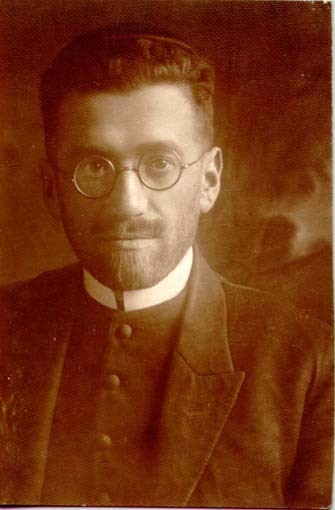
Hillél Friedmann
born 1892Neolog rabbi of SzarvasFriedmann was rabbi of the Neolog congregation of Szarvas, one of the two congregations into which the community that built the 1856 synagogue had divided by the 1920s. Geiger singles him out as an outstanding preacher. As chief rabbi he published literary and public essays in the Budapest weekly Egyenlőség, and in 1926 the Müller press in Szarvas printed his 'A numerus clausus árnyékában', a response to the 1920 law restricting Jewish university entry. His dates of office and his fate are unknown.
Biografia lub źródło →
Miksa Dreschler
born 1883Chief rabbi of Szarvas, later of TemesvárThe Hungarian Jewish Museum and Archives catalogues a 1917 photograph of Miksa Dreschler, born in 1883, as chief rabbi of Szarvas and of Temesvár (Timișoara). He therefore led the Szarvas community, whose synagogue had stood since 1856, before moving to the larger city. The years of his rabbinate in Szarvas and his later life could not be established in this research.
Biografia lub źródło →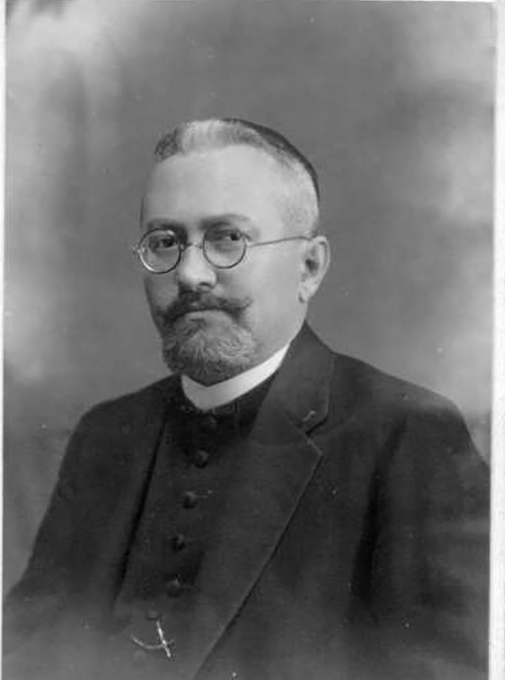
Ármin Spiegel
born 1883Chief rabbi of Szarvas, later of EsztergomDr. Ármin Spiegel, born in 1883, is described by the Hungarian Jewish Museum and Archives as chief rabbi of Szarvas and of Esztergom; his portrait was taken by the Esztergom photographer Ferenc Albrecht. The years of his rabbinate in Szarvas, and whether he served there before or after the community divided into Neolog and Orthodox congregations, are unknown.
Biografia lub źródło →Czy masz coś do przekazania?
Zdjęcia, dokumenty, historie rodzinne lub wspomnienia o tej synagodze i jej społeczności pomagają zachować jej historię.
- Zsinagógák és zsidó községek Magyarországon (Békés county table)
- A szarvasi zsidó hitközség; A szarvasi pinkász: betekintés egy valaha volt vidéki zsidó hitközség jegyzőkönyvébe (Kincsestár, pp. 42-43)
- Friedmann Hillél fényképe (F66.560)
- Dreschler Miksa fényképe (F66.507)
- Dr. Spiegel Ármin fényképe (F66.445)
- A szarvasi neológ mártíremlék (F66.875)
- Szarvas (település)
- Rákóczi utca, Szarvas (OpenStreetMap way 230812688)
Share a memory or thought
No comments yet. Be the first to add one.