



Historia Tállya Synagogue
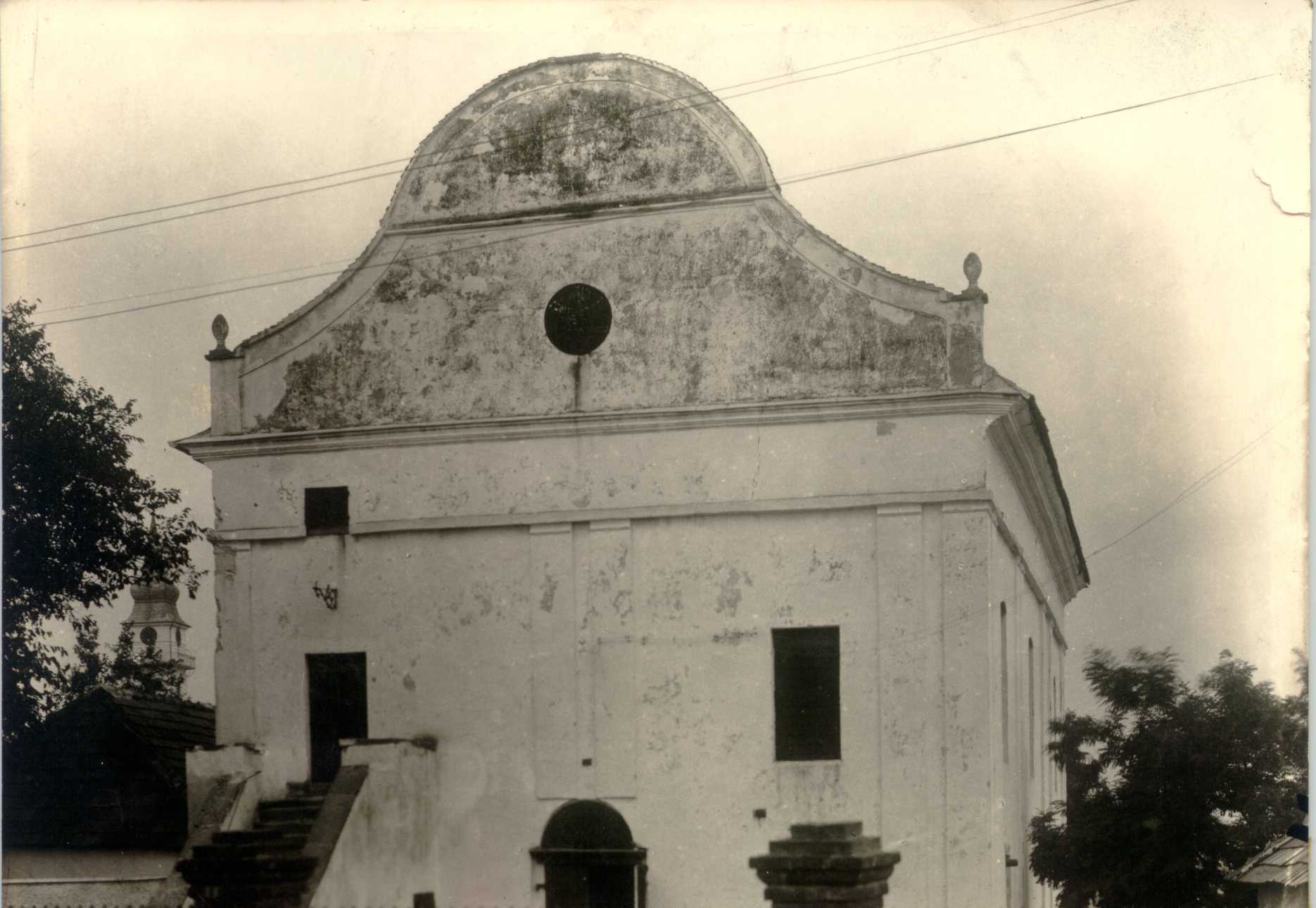
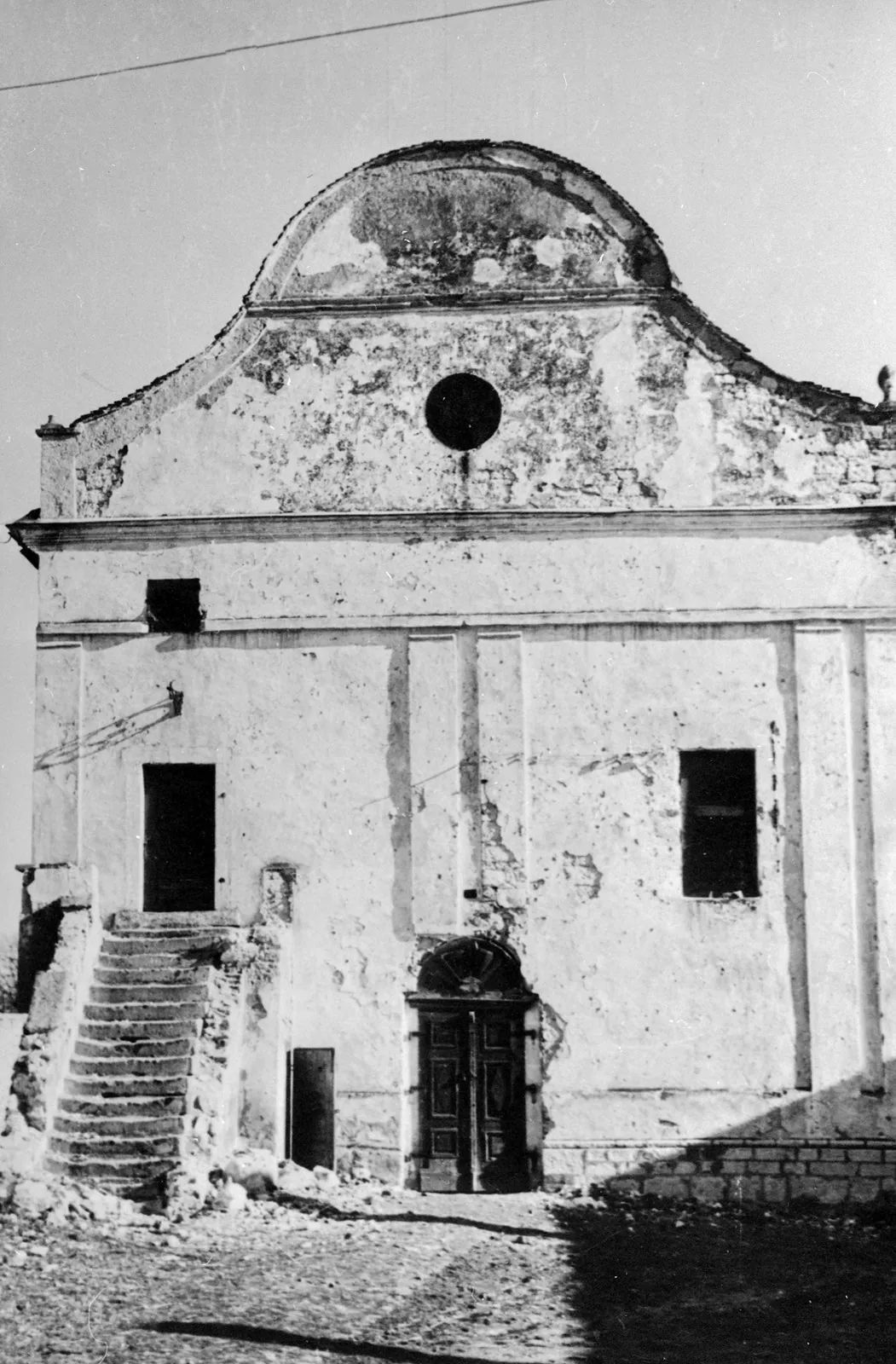
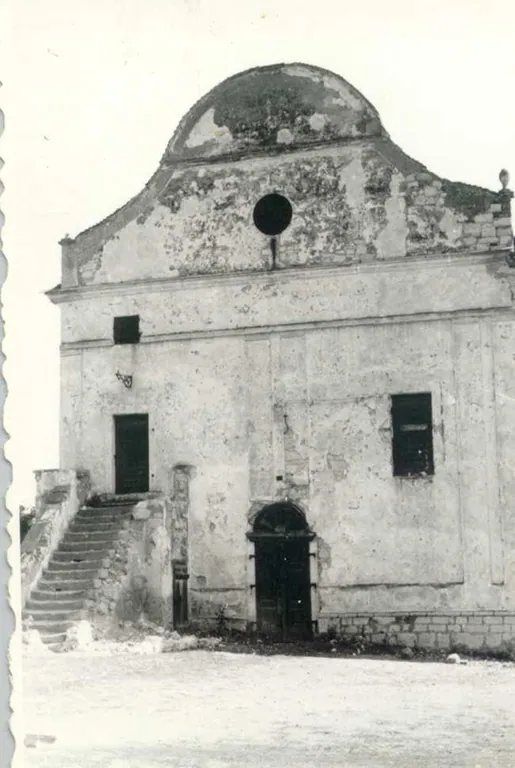
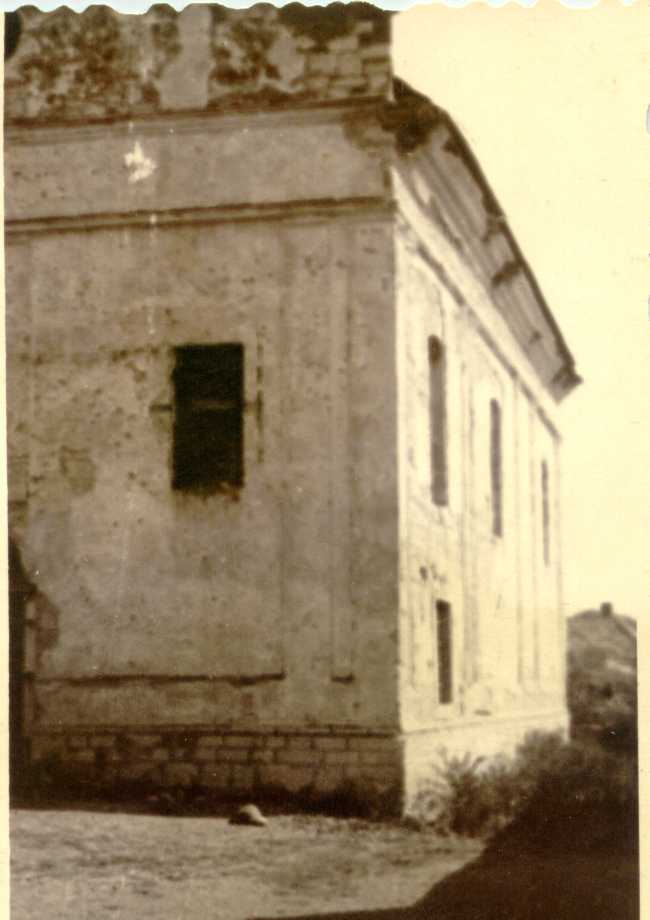
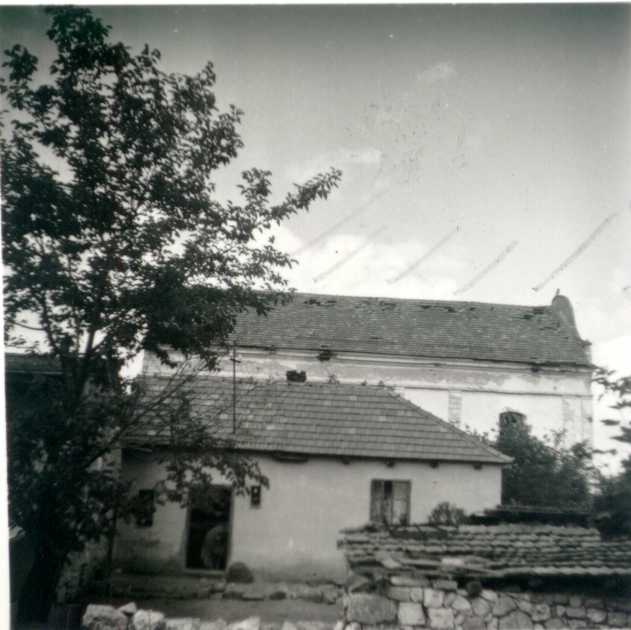
Tállya was one of the leading market towns of the Tokaj-Hegyalja wine region, and Jews who came from Poland, Galicia and Moravia as vineyard tenants, innkeepers and wine traders formed a congregation there by the early nineteenth century. Their third place of worship, a plain stone hall with curved late Baroque gables, stood behind a front yard off today's Kazinczy utca. Its date is not documented: the Pinkas Hakehillot gives 1840, and the art historian Júlia Csejdy, who reconstructed its history in 2020, places it in the 1840s or 1850s. A fire damaged it in 1861, an inscription on the gable recorded rebuilding in 1871, and a new roof followed in 1890.
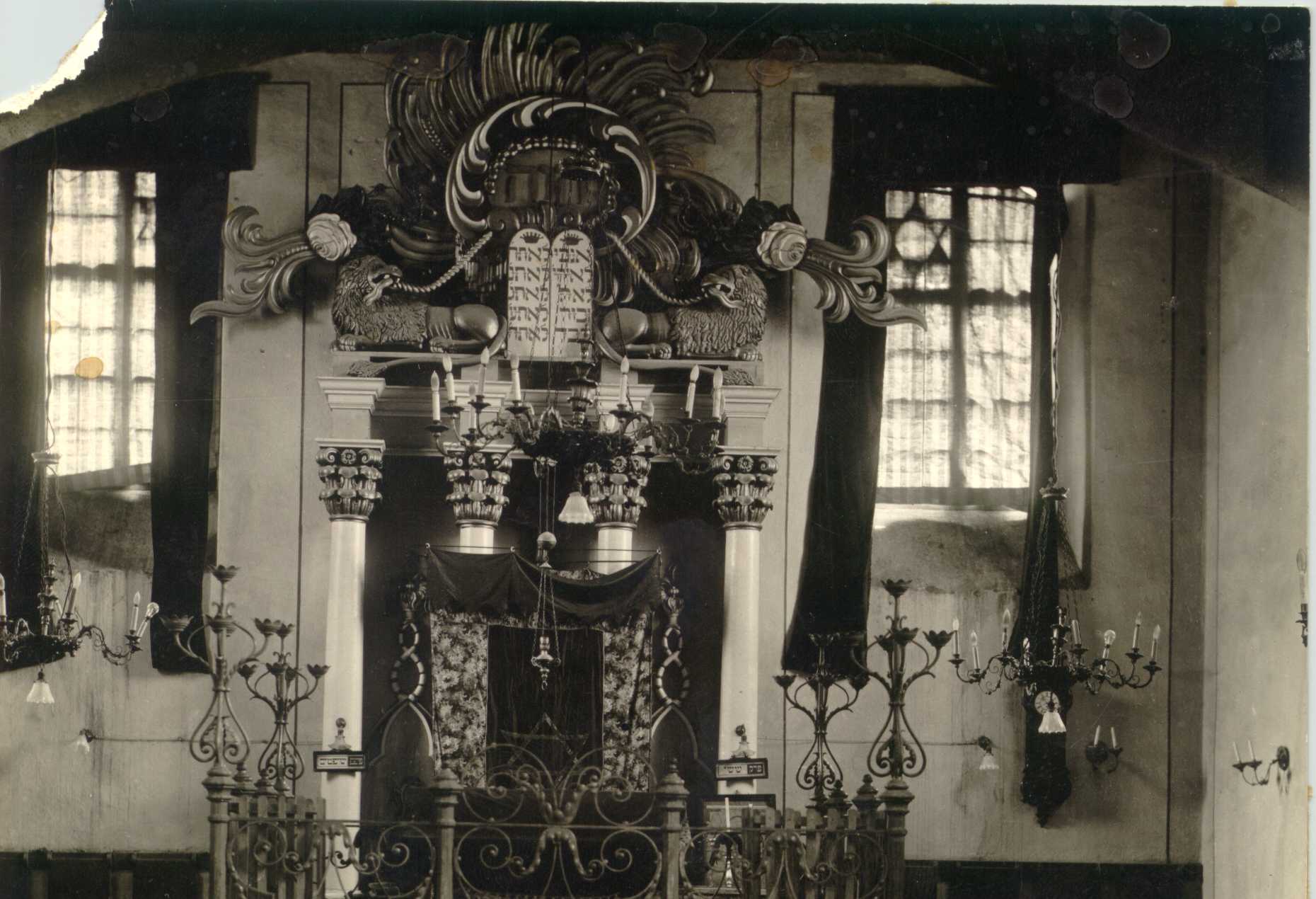
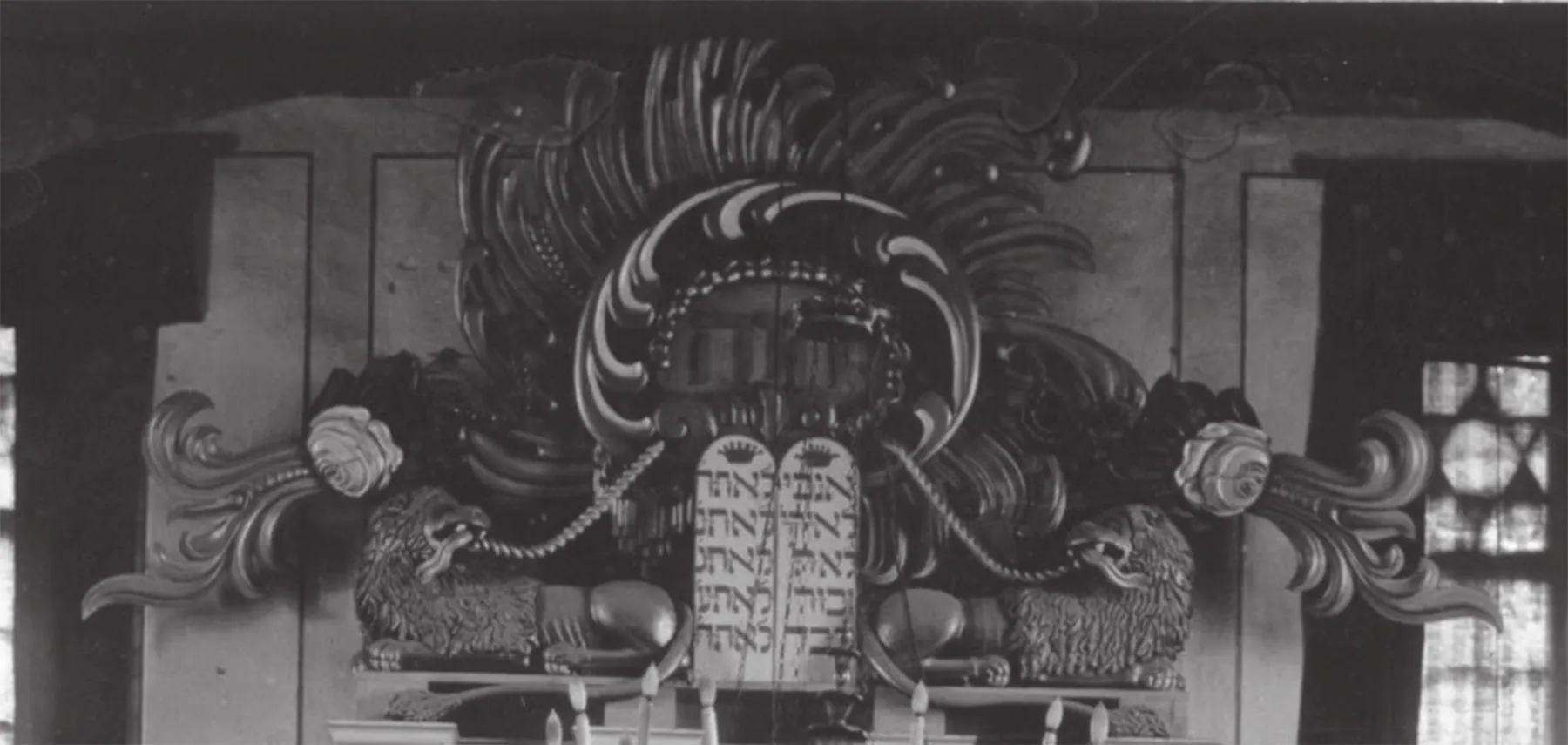
The congregation was Orthodox and was led by a line of respected rabbis, among them Jakob Tannenbaum and three generations of the Rosenbaum family. Inside, a seven-metre carved and painted Torah ark, with two reclining lions holding ropes in their mouths, filled the south-eastern wall.
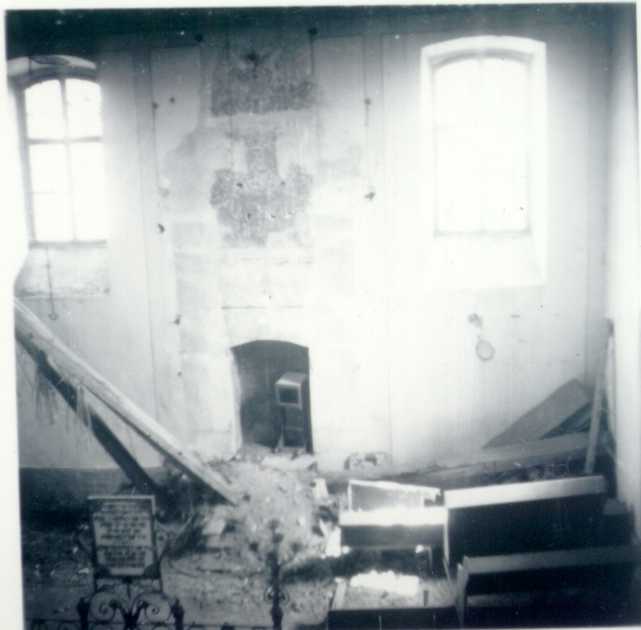
In April 1944 Hungarian gendarmes rounded up the Jews of Tállya and they were deported to Auschwitz. About thirty survivors returned, repaired the building and prayed in its vestibule, but by the 1950s all had left. The synagogue was listed as a monument in 1958, used by the local council as a grain store, and demolished in 1964 after the national Jewish office, unable to repair it, requested demolition and the state monuments inspectorate consented.
Where it stood for nearly 130 years
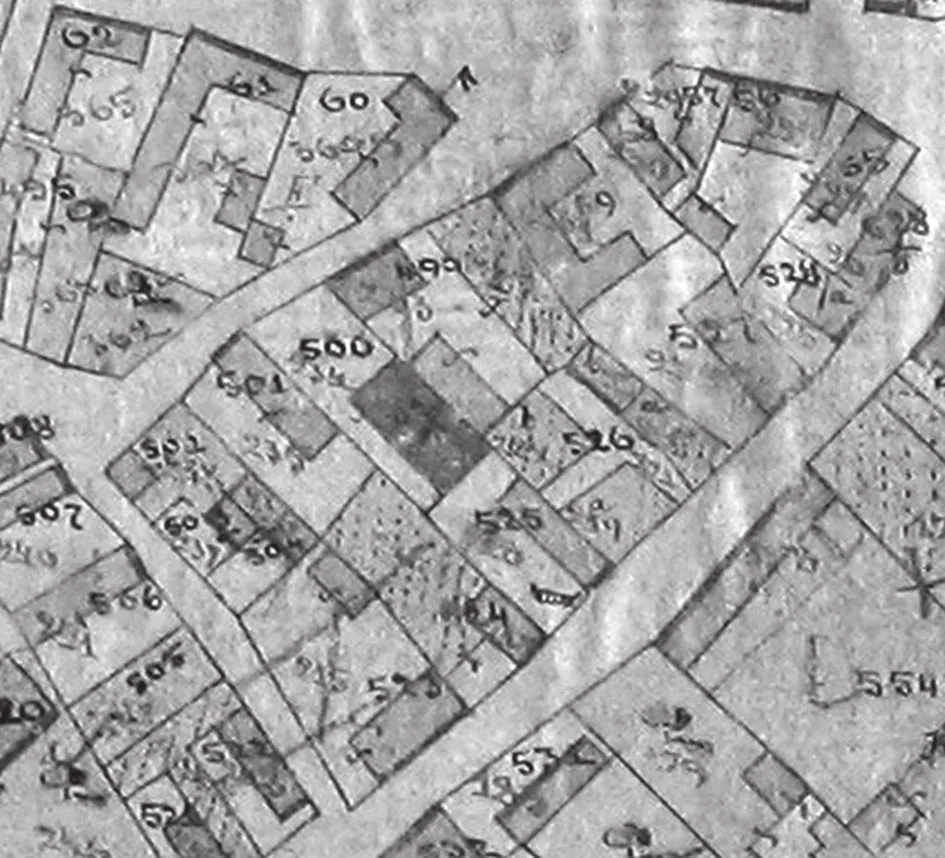
Historic: plot no. 500 on the 1867 cadastral map, Posta utca, Tállya, Zemplén county (later cadastral no. 981). Today: rear of a plot on the south-east side of Kazinczy utca, between Kossuth Lajos utca and Rákóczi út, 3907 Tállya; house number Unknown. Approximate position.
Otwórz większą mapę →Społeczność żydowska
A single Jewish family lived in Tállya in 1770. The census of 1786 counted 49 Jews in nine households, and a county register of 1812 listed 39 heads of families, including a rabbi, David Löbl, and a teacher, Aron Klein. The landowner, Prince Bretzenheim, gave the community a taxable plot, and by 1813 it was registered as the owner. Numbers rose to 257 in 1821, 404 in 1869 and a peak of 420 in 1880, 11.5 per cent of the town. Members leased the manorial inns, shops and mills and dealt in wine; of thirteen innkeepers recalled by the survivor Simon Paszternák only one was not Jewish, and his own family bought the town mill in 1909. In January 1861 the town's voters agreed to enfranchise seventeen propertied Jews, among them the rabbi. Numbers then fell: 282 Jews in 1910, 299 in 1920, 196 in 1930 and 173 in 1941. The Jews of Monok, Golop and Rátka also belonged to the Tállya congregation.
Architektura i projekt
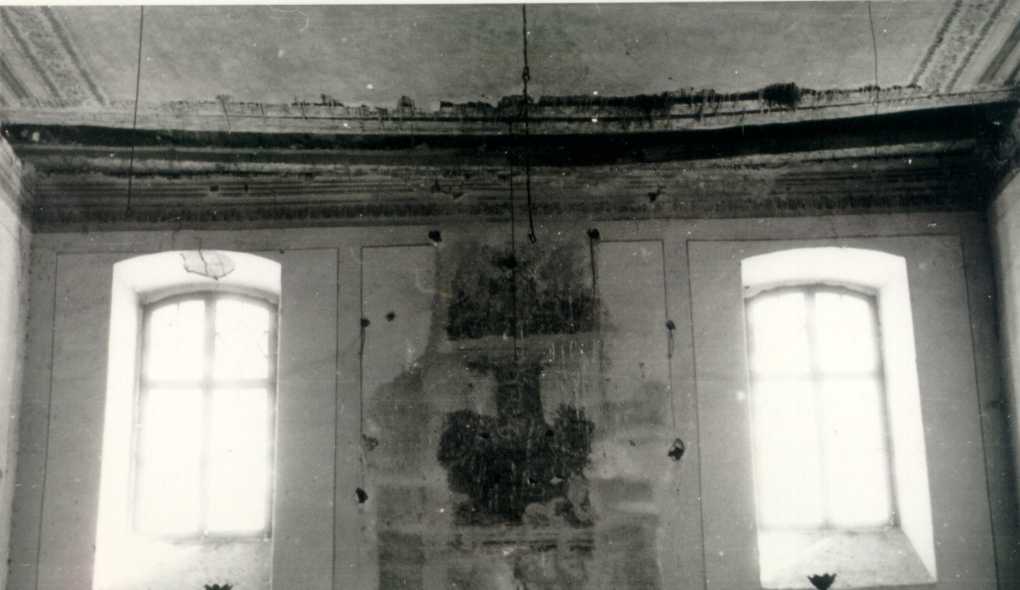
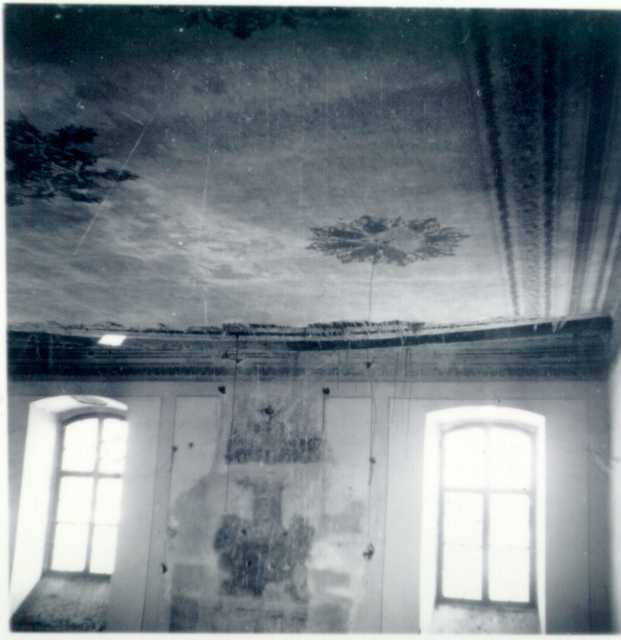
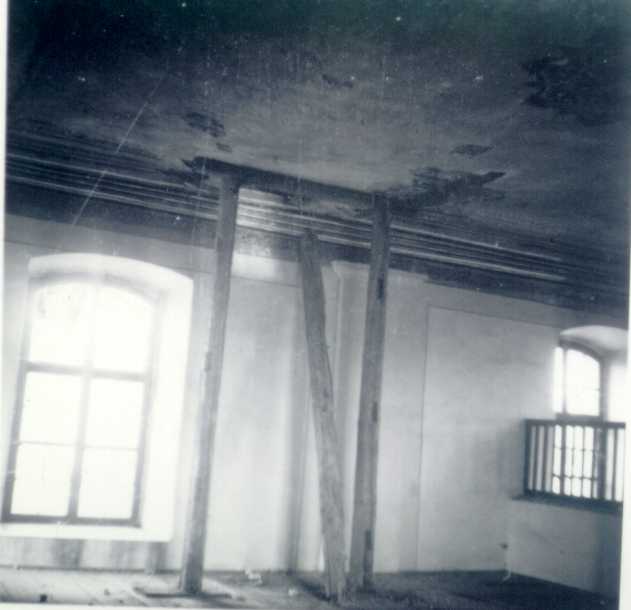
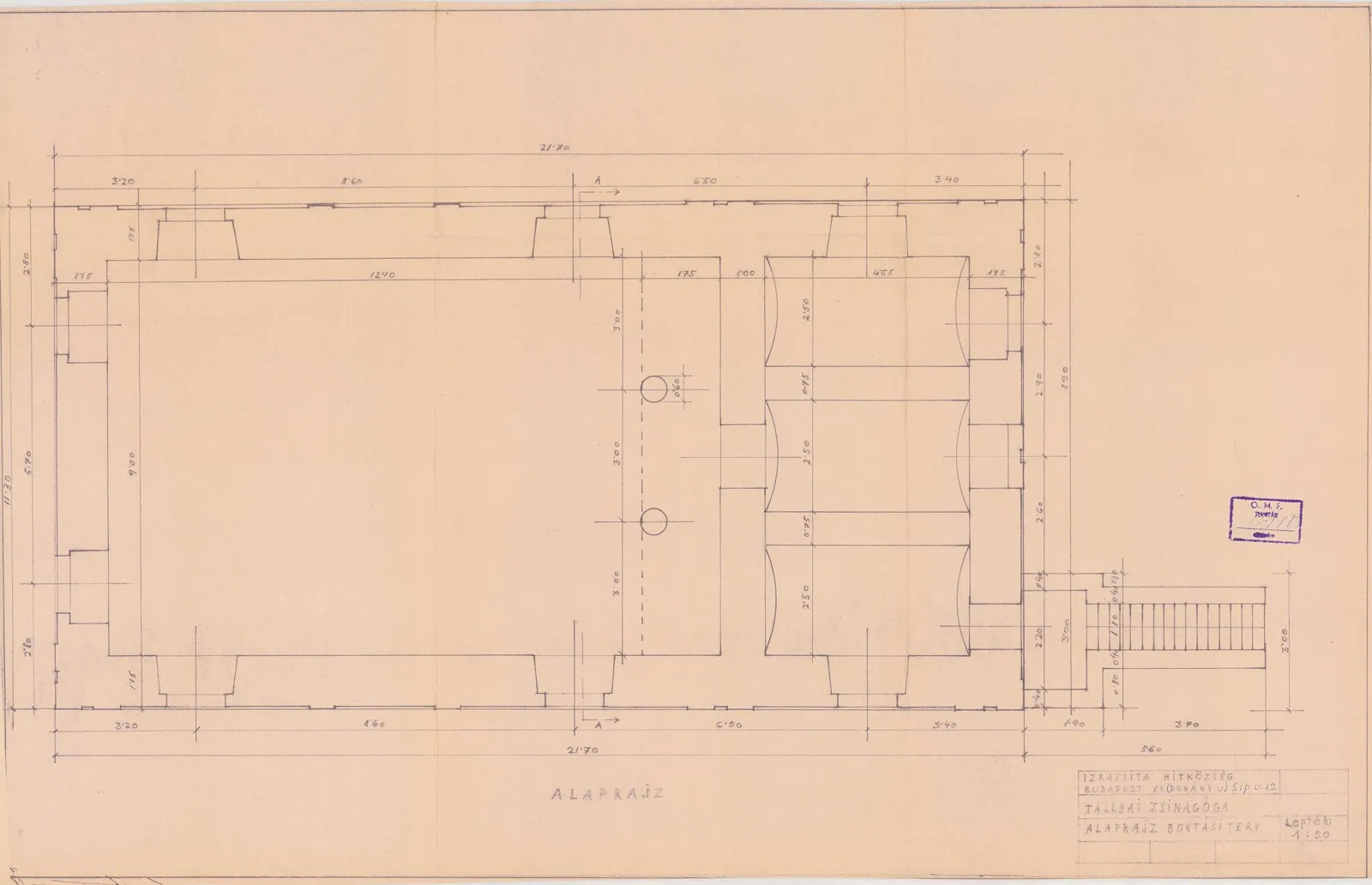
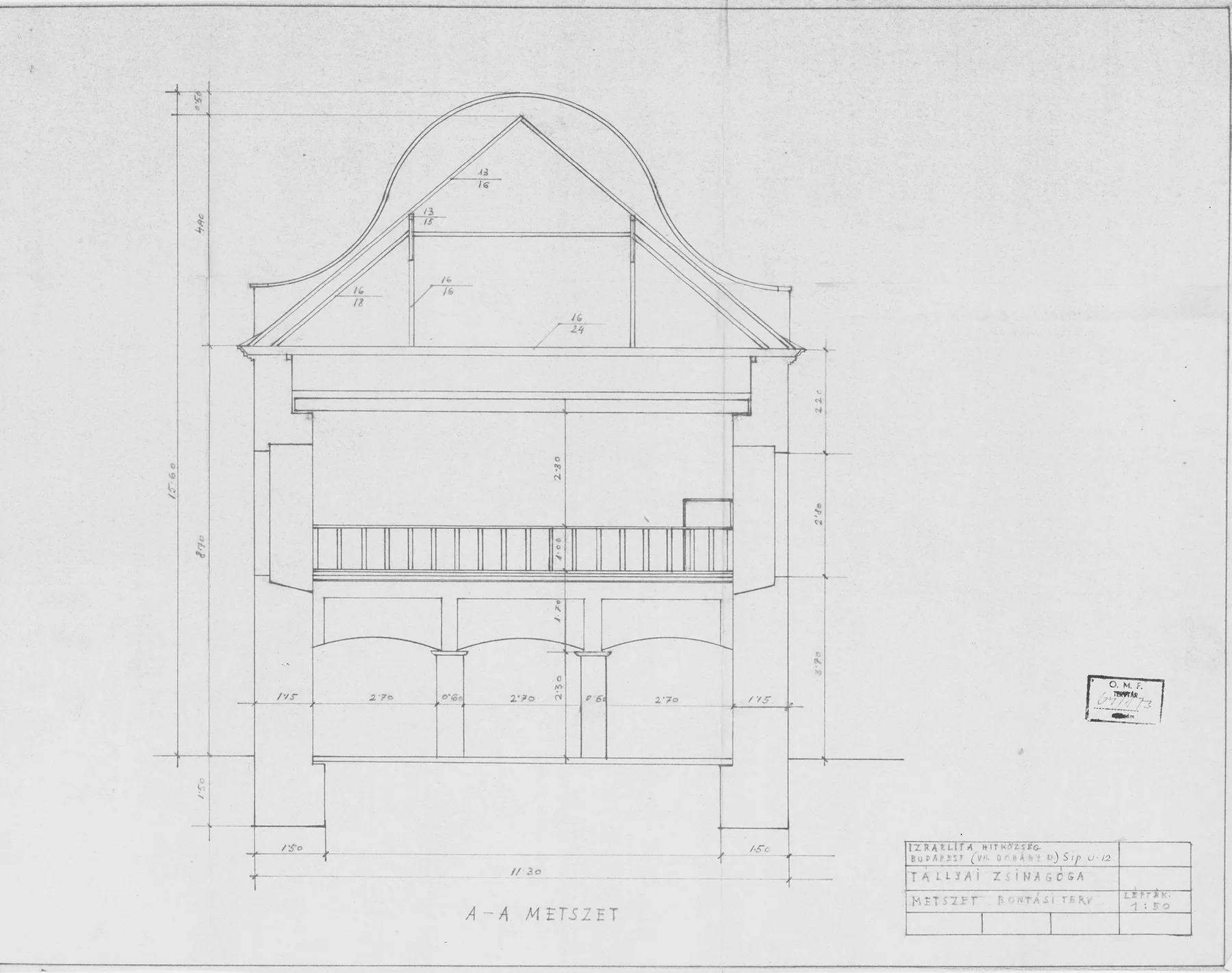
The synagogue was a single rectangular hall of stone, oriented north-west to south-east and set at the back of its plot. A survey drawn for the demolition in 1964 gives an overall size of 21.7 by 11.3 metres, walls 1.15 metres thick, a prayer hall of about 9 by 13.7 metres and an interior height of 7.3 metres. The tiled pitched roof ran between two curved gables with stone vases at the corners; the walls had lesenes, plaster panels and a triple cornice. The street front held a stone-framed door under a wooden semicircular lunette. Beside it a steep open stair, probably added when the building was repaired after the 1861 fire, climbed to the women's gallery, which rested on two columns above a barrel-vaulted vestibule and carried a wooden screen. The flat beamed ceiling was painted with borders and medallions, probably around 1900. The Torah ark, some seven metres high, had four white Corinthian columns, the Tablets of the Law between two reclining lions and the divine name in a wreath of carved leaves and roses. No architect or builder is recorded; Paszternák attributed the ark to a cabinet-maker named Pálffy from Erdőbénye.
Życie w synagodze
The congregation followed the Orthodox rite and remained Orthodox after the Hungarian Jewish schism of 1868-69. Jakob Tannenbaum, rabbi from 1858 to 1869, also headed a yeshiva; he objected to the lions on the new ark, but the community's leaders had them carved anyway. Tensions with Hasidic members led to a brief secession, dated to 1867 in one account and 1876 in another, after which the groups reunited. Most families kept to traditional schooling: when a common municipal school opened in 1874 only 27 of about 250 Jewish children enrolled, the rest attending heder or private tutors. The Chevra Kadisha, founded in 1832, turned a gold-embroidered silk tablecloth given by the Counts Andrássy into an ark curtain. In winter the vaulted vestibule served as a smaller prayer room. Paszternák recalled that on the eve of Yom Kippur Christian neighbours filled the antechamber and the rear pews to hear Kol Nidre and to see the rabbi dressed in white. In the 1930s the grocer and teacher Márton Stern was among those who led the prayers.
Zniszczenie
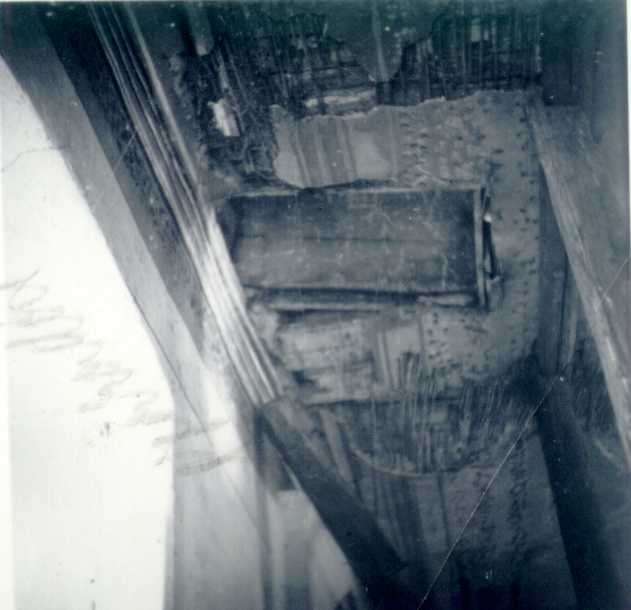
The synagogue was in use until the deportation of April 1944 and was not pulled down under the interior ministry's order of June 1944. Military units stationed in Tállya then used it as a stable. The pews were burnt in the field kitchen, fourteen Torah scrolls were shredded as litter, nine embroidered ark curtains were looted and the silver was handed to the gendarmes. In 1945 the survivors cleaned the building, repainted the ark, buried the remains of the scrolls inside and prayed in the vestibule. Once they had left, it decayed. In 1957 a monuments official warned that the Jewish community meant to sell it for demolition; it was listed in 1958, and in 1959 the local council was renting it as a grain store. In 1962 the national Jewish office (MIOK), which was under pressure from the Communist state's Office for Church Affairs to dispose of synagogues, asked for demolition, saying it could not afford repairs. The state monuments inspectorate proposed that the state buy it; nothing was done, and in 1964 it consented and struck the building from the list. It was demolished that year. Who carried out the work is not named.
Los społeczności
In April 1944 the Orthodox congregation registered 143 members under its president, Ármin Nagy, and its rabbi, Miklós Rosenbaum. On 15 and 16 April, at Passover, Hungarian gendarmes rounded up the Jews of Zemplén county. According to Csejdy and to Randolph Braham the Jews of Tállya were taken to the ghetto of Sátoraljaújhely, where about 15,000 people were held; they were deported to Auschwitz in four transports on 16, 22 and 25 May and 3 June 1944, in the operation directed by Adolf Eichmann's Nazi SS commando and carried out by the Hungarian gendarmerie. Braham elsewhere lists Tállya among the communities concentrated in Miskolc, and notes that it is unclear whether all went to one ghetto. Rabbi Rosenbaum, his wife Franciska, his mother and his four small children were killed. Barely thirty people returned in 1945, not all of them former residents, and 23 residents declared themselves Jewish in 1949. Without a rabbi or ritual slaughterer communal life could not continue, and the survivors left for Israel, America and Budapest. No member of the former congregation lives in Tállya today.
Miejsce dzisiaj
The synagogue stood in the block bounded by today's Kazinczy utca, Kossuth Lajos utca, Bercsényi utca and Rákóczi út, on a plot entered from Kazinczy utca, west of the town centre. Nothing of the building remains in place, and the sources consulted do not say what occupies the plot today. A carved stone column base, described as the last surviving piece of the synagogue, had been kept in the workshop of the stonemason István Kolyanovszky and in April 2025 was set into a memorial to the town's Jewish victims unveiled in Tállya. The ark and the martyrs' tablet were said to have gone to the Jewish Museum in Budapest, but neither is in its collection now. The Jewish cemetery outside the village survives, with the tomb of rabbis Gerson and Lipót Rosenbaum.
Ważne postacie
Jakob (Jakov) Tannenbaum
1832-1896Rabbi of Tállya and head of its yeshiva, 1858-1869Born in Szendrő, the son of Wolf Tannenbaum, rabbi of Verpelét, he studied at the Pozsony yeshiva and led the Tállya congregation from 1858 to 1869 before moving to Mezőcsát and Putnok. The repair of the synagogue after the 1861 fire and the making of its carved Torah ark probably fall in his years; his son recalled that he disapproved of the ark's lions, which the community installed regardless. He was among the Jews given the vote in Tállya in 1861.
Biografia lub źródło →Gerson Lits Rosenbaum
1837-1901Rabbi of Tállya, 1870-1901Son of Léb Lits Rosenbaum, a rabbinical judge in Pozsony, and a disciple of the Ketav Sofer, he became rabbi of Tállya in 1870 and served the synagogue for more than thirty years, founding a dynasty of Tállya rabbis. He wrote the work Meshiv Devarim, and his son Moses became rabbi of Kisvárda. His tombstone stands in the ohel of the Tállya Jewish cemetery.
Biografia lub źródło →Lipót (Arje Leib) Rosenbaum
died 1935Chief rabbi of Tállya, 1901-1935Son and successor of Gerson Lits Rosenbaum, he led the congregation and preached in the synagogue for thirty-four years. He was a respected public figure: the press reported his election to the Tállya council in 1925, and in 1929 voters of Mád, Rátka, Tállya and Ond sent the 'eloquent and highly erudite chief rabbi of Tállya' to the Zemplén county assembly. He is buried beside his father in the cemetery's ohel.
Biografia lub źródło →Miklós Rosenbaum
1910-c. 1944Last rabbi of Tállya, 1935-1944The third rabbi of the Rosenbaum dynasty, he succeeded his father Lipót in 1935 and was keeper of the congregation's registers when its 143 members were listed in April 1944. He was deported with his community. He, his wife Franciska Katz, his mother Margit Amália and his four small children were killed in the camps; no rabbi served the synagogue after him.
Biografia lub źródło →David Jehuda Rottenberg
1783-1857Rabbi of Tállya in the first half of the nineteenth centuryCsejdy calls him the first renowned rabbi of the Tállya community. The title page of his Torah commentary Tehila leDavid, published by his son in Munkács in 1871, says he was rabbi in Tállya and then in Sajószentpéter for fifty years in all. The years of his service in Tállya are not known; the synagogue may have been built under his supervision or under his successor Tannenbaum.
Biografia lub źródło →Simon Paszternák
UnknownMill owner; president of the congregation after 1945; memoiristSon of Benjámin Paszternák, who bought the Tállya town mill in 1909, he ran the mill until it was nationalised in 1949. A Holocaust survivor, he was president of the re-formed congregation and reported to the Jewish Museum in 1946 on the wrecking of the synagogue. His memoir, printed in the Miskolc memorial book of 1970, is the fullest description of the interior, the ark and the congregation's life, and records the sale and dismantling of the building.
Biografia lub źródło →Pálffy (given name Unknown)
UnknownCabinet-maker of Erdőbénye, named as maker of the Torah arkSimon Paszternák's memoir says the great carved and painted Torah ark was built by a cabinet-maker of Erdőbénye called Pálffy. No other source confirms the name, and Csejdy points out that a furniture maker named János Gálffy lived in Tállya at the time, so the recollection may be inexact. The ark was probably made in the 1860s, after the fire of 1861.
Biografia lub źródło →Márton Stern
born 1880Grocer, heder teacher and prayer leaderBorn in Huszt, Stern kept a grocery on Rákóczi utca, worked as an undertaker and taught as melamed in the Tállya heder. Although his shop was burgled in 1919 and he never recovered financially, he was among the leaders of prayer in the synagogue, a role usually held by wealthier members. His grandson's memoir is one of Csejdy's sources for everyday Orthodox life in Tállya in the 1930s.
Biografia lub źródło →Ármin Nagy
UnknownPresident of the congregation in April 1944An official by profession, Nagy is recorded as president of the Tállya Orthodox parent congregation in the data that Jewish communities had to submit in April 1944, shortly after the Nazi German occupation of Hungary, when the congregation had 143 members and its only separate institution was the Chevra Kadisha. He was the last lay head of the community before the deportation.
Biografia lub źródło →Czy masz coś do przekazania?
Zdjęcia, dokumenty, historie rodzinne lub wspomnienia o tej synagodze i jej społeczności pomagają zachować jej historię.
- A History of the Jewish Community of Tállya and of Their Synagogue, Acta Historiae Artium 61 (2020), pp. 149-180, DOI 10.1556/170.2020.00006
- A tállyai zsidó közösség és zsinagógájuk története
- Zsinagógák és zsidó községek Magyarországon (1991), Borsod-Abaúj-Zemplén table, p. 21
- Tállyai zsinagóga homlokzata (F01.380) and twelve further photographs of the Tállya synagogue, items 26842-26854
- Tállya (A zempléni zsidóság honlapja)
- Egy emlékműben él tovább az egykori zsinagóga utolsó darabja Tállyán
- A népirtás politikája: a Holocaust Magyarországon, p. 569 (Sátoraljaújhely ghetto)
- A népirtás politikája: a Holocaust Magyarországon, pp. 590-591, note 78
- A népirtás politikája: a Holocaust Magyarországon, p. 663 (Miskolc ghetto)
- Sátoraljaújhely (Encyclopaedia Judaica)
- Letter and homily by Rabbi Gershon Litsch Rosenbaum, Pressburg 1864 (auction catalogue biography)
- Rabbinical ordination from Rabbi Yaakov Tannenbaum (auction catalogue biography)
- Zsidó emlékhelyek: Tokaj-Hegyalja, Taktaköz, Hernád-völgye
- Pinkas Hakehillot Hungary: table of contents (Tállya, p. 299, untranslated)
- Kazinczy utca, Tállya (OpenStreetMap way 318528622)
Share a memory or thought
No comments yet. Be the first to add one.