
The story of Tápiószele Synagogue
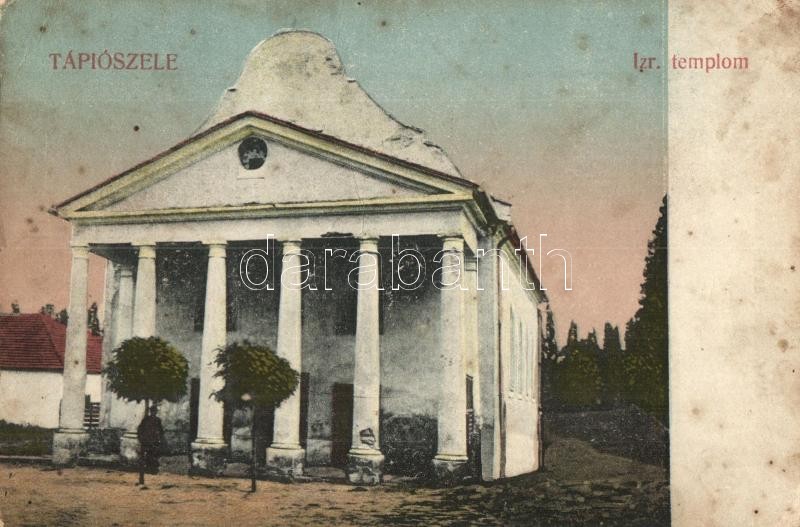
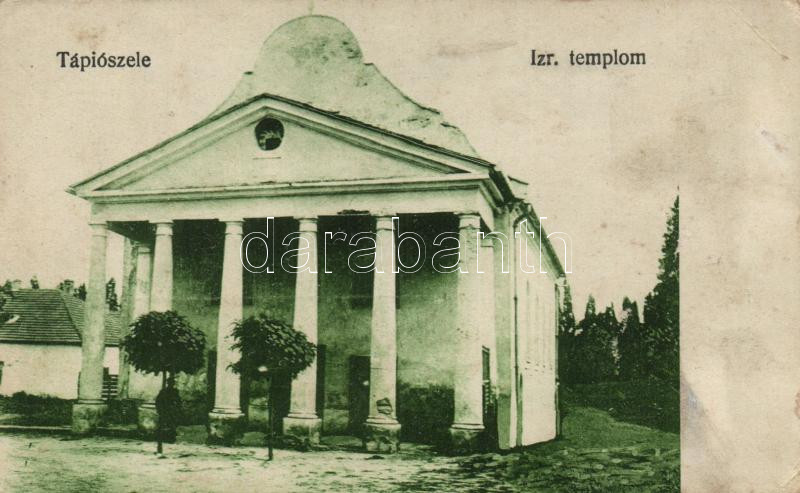
Tápiószele lies in the Tápió region of Pest county, in the Nagykáta district east of Budapest. Its Jewish community was among the older ones of the area: the Magyar Zsidó Lexikon of 1929 dated its formation to about 1770 on the evidence of old gravestones, and Anikó Gazda's gazetteer records 392 Jews there in 1828, more than at any later count. The synagogue was the community's one monumental building. The lexicon says it was built 120 years before 1929, together with the burial society, which points to about 1809 or 1810; the town's own website gives 1846 and calls it classicist. Two postcards captioned 'Izr. templom' show what it looked like: a rendered hall fronted by a full-width columned portico and pediment.
The congregation became known across Hungary in the 1880s and 1890s because of its rabbi, Ignác (Izsák) Lichtenstein, who preached in this synagogue that Jesus was the Messiah and was removed in 1892. No rabbi was appointed after him, and in 1923 the shrinking community joined the rabbinate of Nagykáta. By 1941 only 69 Jews remained. In 1944 they were taken to the Nagykáta ghetto and deported. The synagogue stood until about 1950 according to the town website; Gazda found it demolished when she surveyed the site in the 1980s. Who pulled it down is not recorded in the sources found.
Where it stood for nearly 140 years
Historic: Tápiószele, Pest-Pilis-Solt-Kiskun county; street and house number Unknown. Today: Unknown; placeholder pin at the centre of 2766 Tápiószele, Pest county (approximate).
Open larger map →The Jewish community
The Magyar Zsidó Lexikon states that the community formed around 1770, a date inferred mainly from old gravestones, and that nothing was known of its founders or first decades. Gazda's gazetteer gives 392 Jews in 1828, 164 in 1851, 182 in 1910 and 69 in 1941, so the community was at its largest in the early nineteenth century, when the synagogue was built, and declined afterwards. In 1929 it numbered 116 people in 32 families with 42 taxpayers: twelve merchants, six farmers, six craftsmen, four private clerks, four market traders, a doctor, a lawyer, a labourer, a communal employee and several pensioners. Its annual budget was 3,974 pengő. The Jews of Tápiógyörgye, Újszász and Zagyvarékas belonged to its registry district. Fourteen members served in the First World War and seven were killed. The officers in 1929 were Sándor Lichtig, president; Károly Weisz, vice-president; Marcell Kossály, treasurer; Hugó Lőwi, controller; Mór Klein and Hermán Jakubovits, wardens; Imre Nagy and Samu Lichter, board members; and Bernát Marosi, secretary.
Architecture and design
The only views found are two printings of one photograph on postcards captioned 'Tápiószele, Izr. templom'. They show a rendered, free-standing hall seen from the front corner. Across the whole entrance front runs an open portico of tall, plain, unfluted columns on high plinths, apparently six in a row, carrying a simple entablature and a broad triangular pediment with a round opening at its centre. Behind and above the pediment rises the end wall of the hall itself, finished with a tall curved gable. Doors open at ground level under the portico, and the long side wall has tall windows. Two clipped trees stand in front and a low tiled house adjoins on the left. This agrees with the town website, which calls the synagogue classicist. The combination of a curved gable with a classical portico may mean that a hall of about 1810 was given its portico in 1846, which would reconcile the two dates in the sources, but that is an inference from the photograph, not a documented fact. The architect, the builder, the seating capacity and the interior arrangement are Unknown.
Life inside the synagogue
The congregation worked on a Congress (Neolog) basis and belonged to the sixth communal district. The Chevra Kadisha burial society was founded at the same time as the synagogue was built, and the community kept an elementary school that was teaching in Hungarian by 1867 and closed in 1924 when pupil numbers fell and the state subsidy was withdrawn. A tablet inside the synagogue bore the names of the seven members killed in the First World War. The building is remembered above all for Rabbi Ignác (Izsák) Lichtenstein. From 1886 he proclaimed in the synagogue and in printed pamphlets that Jesus was the promised Messiah of Israel. He offered his resignation in December 1886 after being summoned by the chief rabbi of Pest, Sámuel Kohn, but the congregation would not accept it and he continued to officiate; the weekly Egyenlőség reported in 1891 that he went to the synagogue morning and evening and carried out the rabbinical functions. In August 1892 the members voted 45 to 10 for his removal. The rabbi's seat then stayed empty, and from 1923 the community came under the rabbi of Nagykáta.
Destruction
No source found records damage to the synagogue during the Second World War. It lost its congregation in the spring of 1944, when the Hungarian authorities moved the Jews of Tápiószele to the ghetto at Nagykáta. What happened to the empty building in the following years is not documented in the sources consulted. The town's website says the community had its classicist synagogue between 1850 and 1950, which places the demolition around 1950, in the first years of Communist rule in Hungary; the round figures suggest the date is approximate. Anikó Gazda, who surveyed Hungarian synagogue sites between 1980 and 1987, recorded the Tápiószele synagogue as demolished, and a 2018 study of Nagykáta's Jewish heritage lists it with those of Tápiógyörgye, Tápióbicske, Szentmártonkáta, Kóka and Tápióság as synagogues of the Tápió region that were all pulled down. None of these sources says who ordered or carried out the demolition, or whether the building had first been sold.
The community’s fate
The 1941 census counted 69 Jews in Tápiószele among 10,165 inhabitants. After the Nazi German occupation of Hungary in March 1944, the Hungarian authorities set up a ghetto in Nagykáta in May for the Jews of the surrounding villages, Tápiószele among them. According to Randolph Braham it lay in and around Gróf Tisza István and Damjanich streets and held 628 Jews, about 200 of them from Nagykáta itself; its Jewish Council was headed by Rabbi Soma Breuer. Braham writes that at the beginning of June the inmates were taken to Kecskemét for entrainment, where 5,413 Jews were concentrated and deported in two transports that crossed the border at Kassa on 27 and 29 June 1944. A 2018 study of Nagykáta instead says the ghetto operated until June and its people were moved in early July to the entrainment centre at Monor and from there to Auschwitz. Rabbi Breuer and his wife were among those killed. How many Tápiószele Jews survived or returned is Unknown, and no organised community is recorded after the war. The town website notes that the Jewish cemetery is closed.
The site today
The plot on which the synagogue stood has not been identified in any source consulted, so it is not possible to say what occupies it today. The postcards show it beside a low tiled house on an unpaved street, but they do not name the street. No surviving fragment and no marker on the site is recorded. The map pin for this entry is a placeholder at the centre of Tápiószele and should not be read as the synagogue's location. The town's Jewish cemetery still exists but is closed; Emanuel Lichtenstein, the rabbi's son, who died in 1887, is buried there. Fixing the address will need cadastral maps or the local-history collection of the Blaskovich Museum in Tápiószele.
Notable names
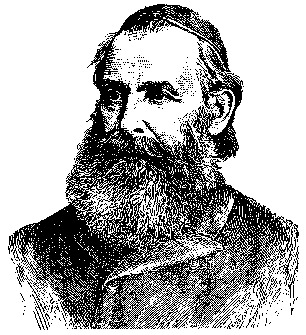
Ignác (Izsák) Lichtenstein
1825-1908Rabbi of Tápiószele, from the 1850s until 1892Lichtenstein was district rabbi at Tápiószele for decades; he married there in 1854 and for some years also served Szarvas. From 1886 he declared in the synagogue and in pamphlets that Jesus was the Messiah of Israel. His resignation that December was refused by the congregation and he went on leading services until the members voted 45 to 10 for his removal in August 1892. He moved to Budapest and died there on 16 October 1908. The case made the village congregation known throughout Hungary.
Biography or source →Soma Breuer
died 1944Rabbi of Nagykáta from 1904; rabbi responsible for Tápiószele from 1923Breuer became rabbi of Nagykáta in 1904 and served there for some forty years. Tápiószele, which had had no rabbi since 1892, joined the Nagykáta rabbinate in 1923, so he was the congregation's rabbi during the synagogue's last two decades of use. In 1944 he headed the Jewish Council of the Nagykáta ghetto, where the Jews of Tápiószele were held, and he and his wife were killed after deportation.
Biography or source →Sándor Lichtig
UnknownPresident of the Tápiószele congregation, in office in 1929Lichtig is named in the Magyar Zsidó Lexikon as president of the Tápiószele Jewish community in 1929, with Károly Weisz as vice-president, Marcell Kossály as treasurer and Bernát Marosi as secretary. As lay head of a rabbi-less congregation of 32 families he was responsible for the synagogue and a budget of 3,974 pengő. Nothing more about his life or fate was found.
Biography or source →Do you have something to contribute?
Photographs, documents, family stories or memories of this synagogue and its community help keep its history alive.
- Tápiószele (entry in Magyar Zsidó Lexikon, 1929)
- Zsinagógák és zsidó községek Magyarországon (Pest county table, book p. 31 / PDF p. 34)
- Településünk (history of Tápiószele)
- Egyházak (churches of Tápiószele)
- Tápiószele, Izraelita templom, Zsinagóga, Dobozy Sándor kereskedő kiadása (auction 290, lot 20605)
- Tápiószele Zsinagóga (auction 176, lot 20878)
- EmlékTér: Nagykáta zsidó közösségének hagyatéka
- A népirtás politikája: a Holocaust Magyarországon, vol. 2 (Zone IV: Nagykáta and Kecskemét)
- Lichtenstein Izsák
- Ignatz Lichtenstein
- File:Ignatz Lichtenstein (transparent).png
- Tápiószele (OpenStreetMap relation 1323436)
Share a memory or thought
No comments yet. Be the first to add one.