
Die Geschichte von Great Synagogue of Teplice
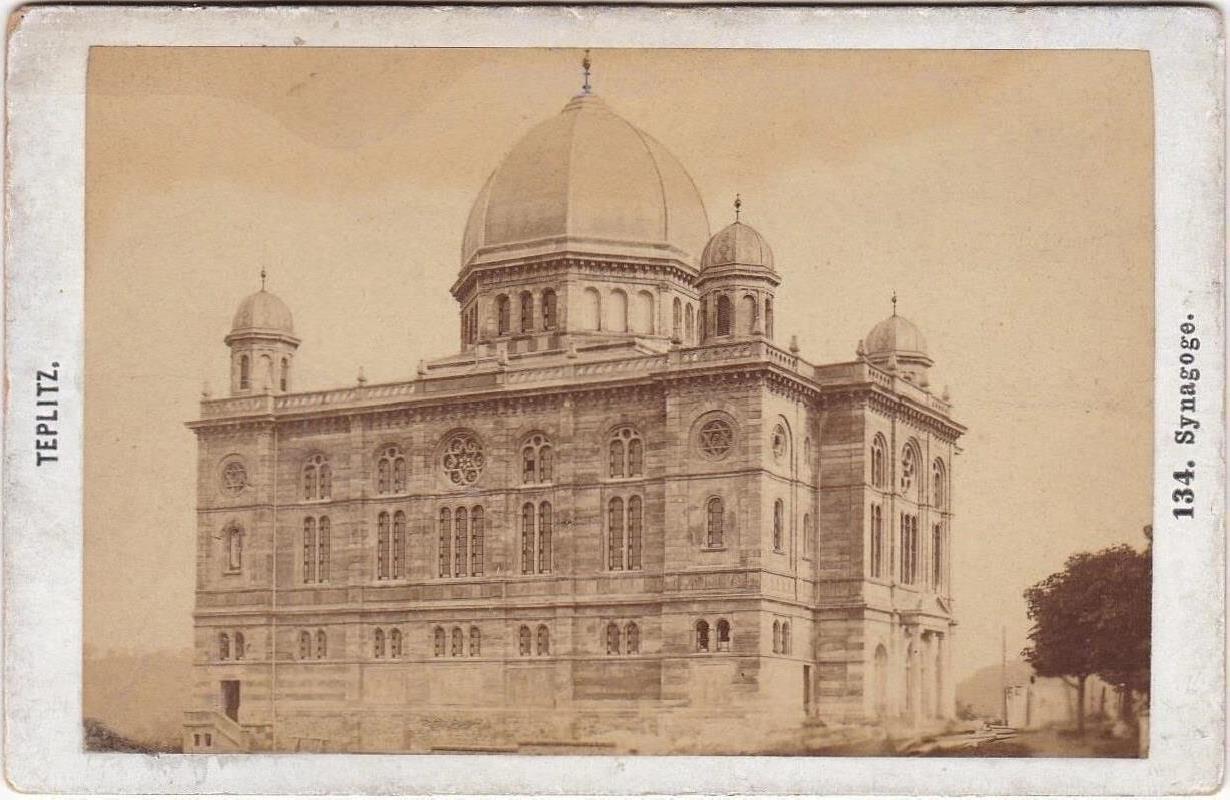
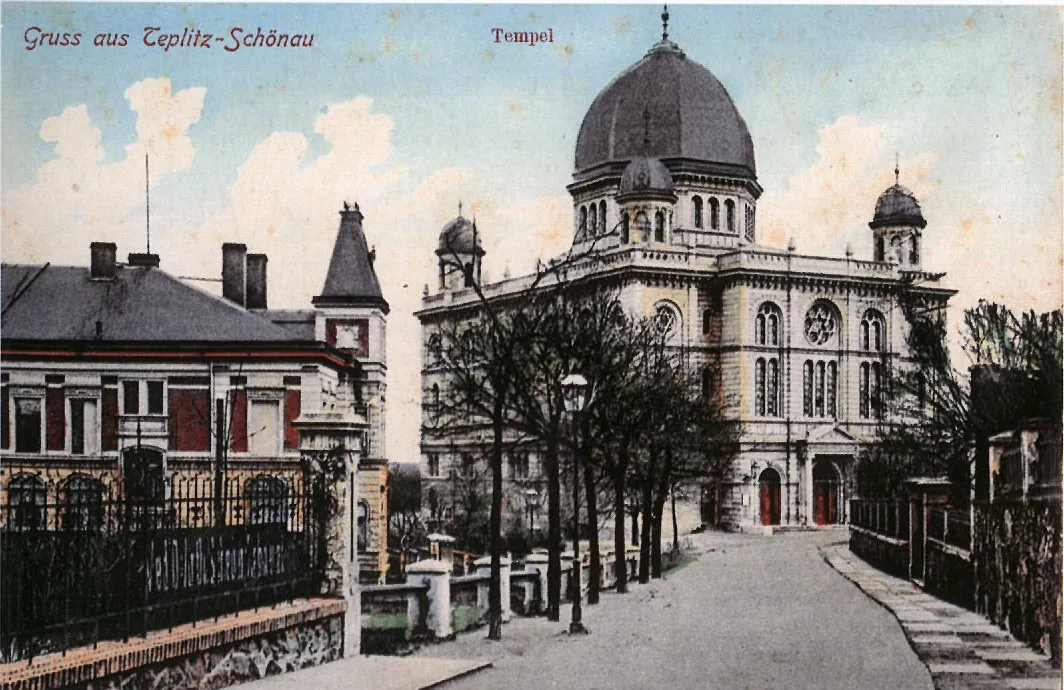
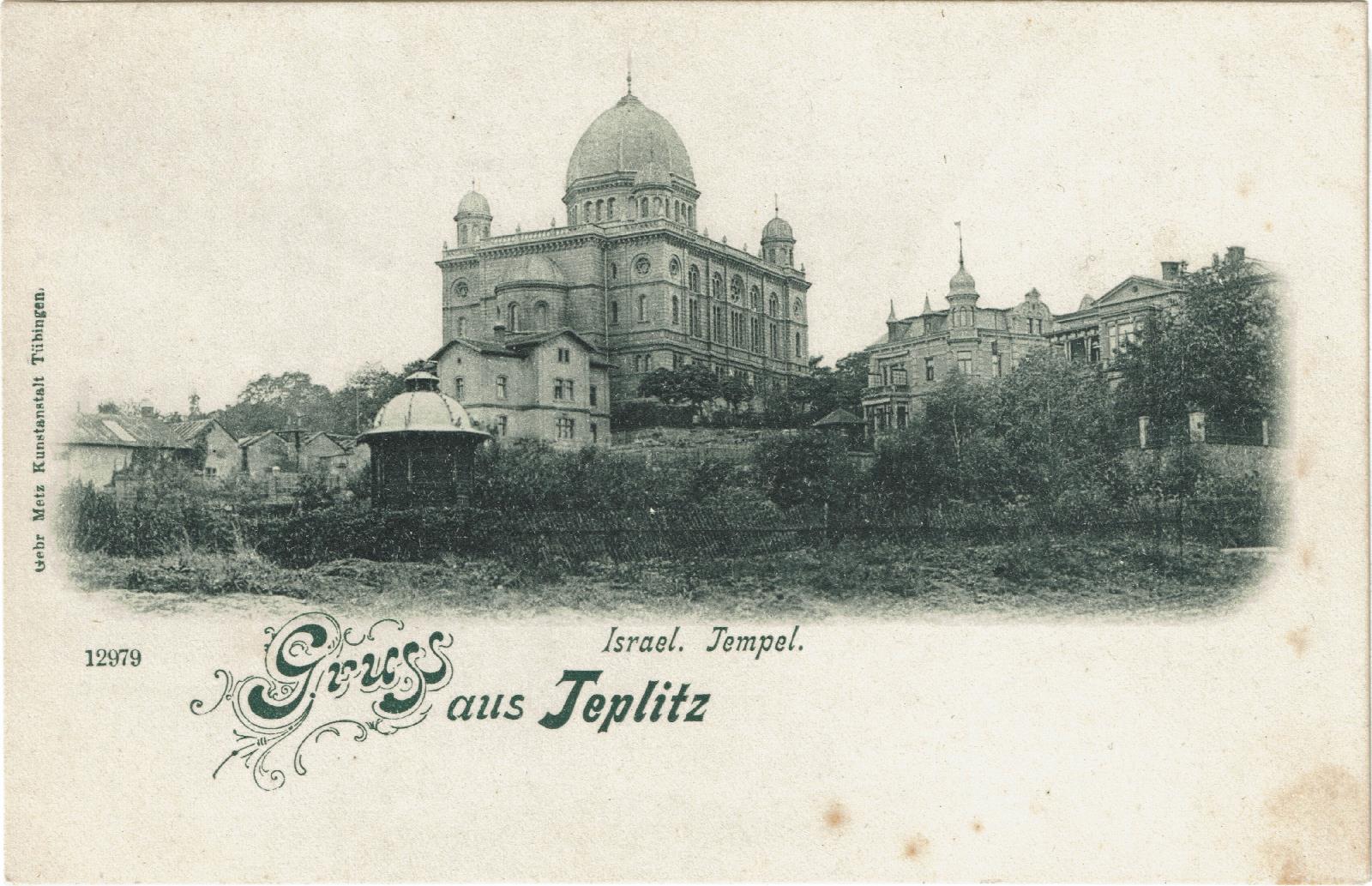
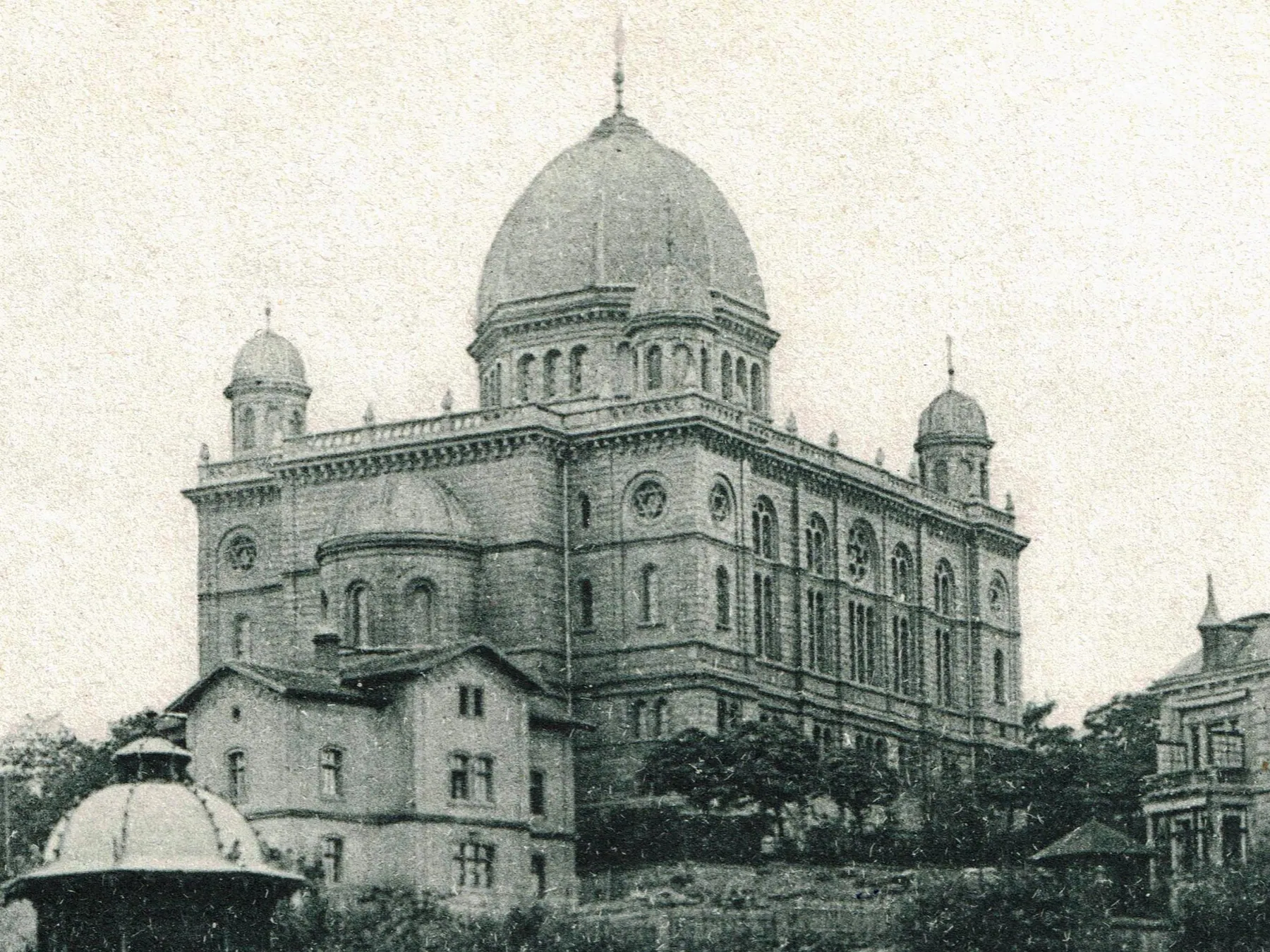
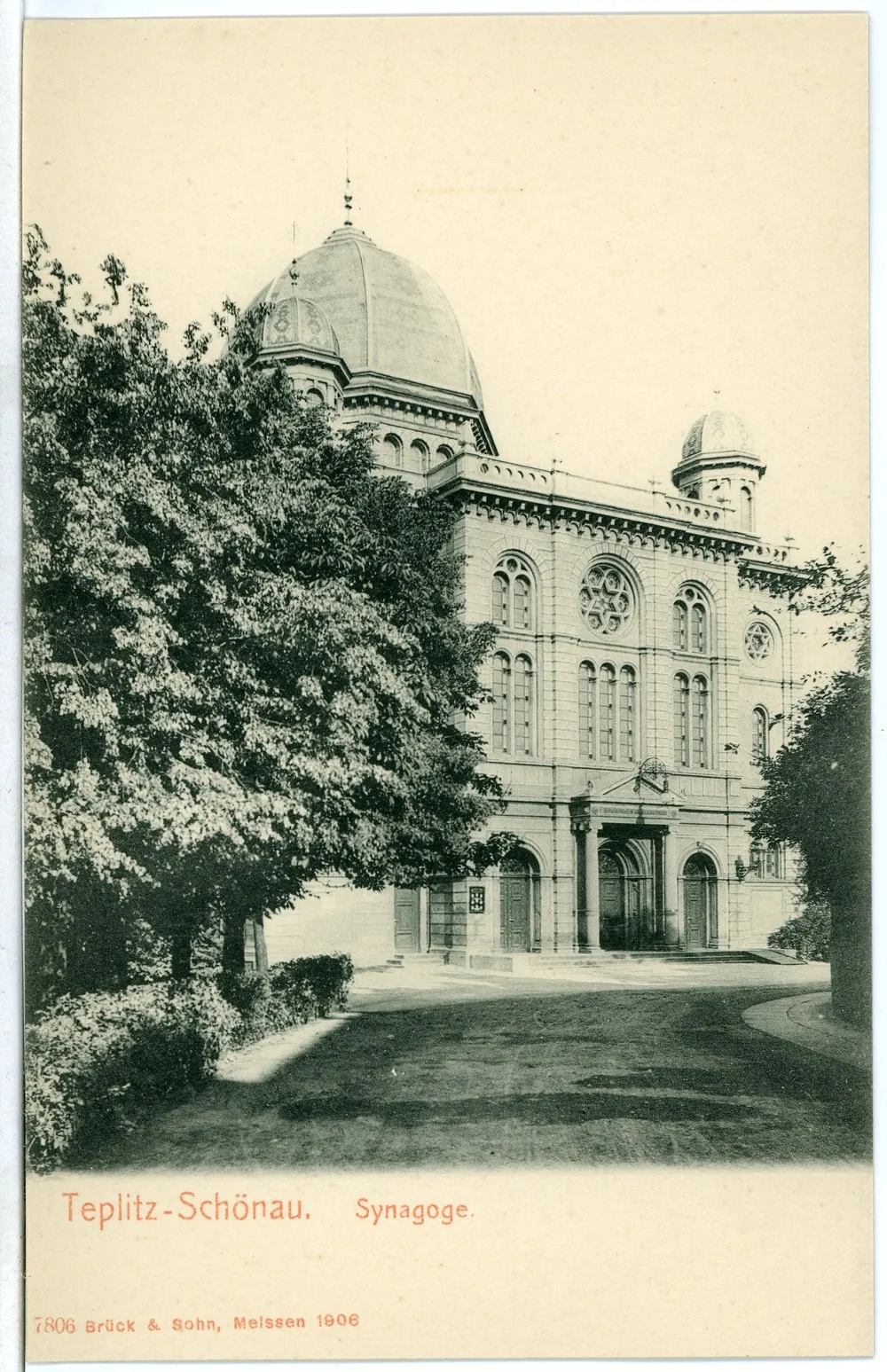
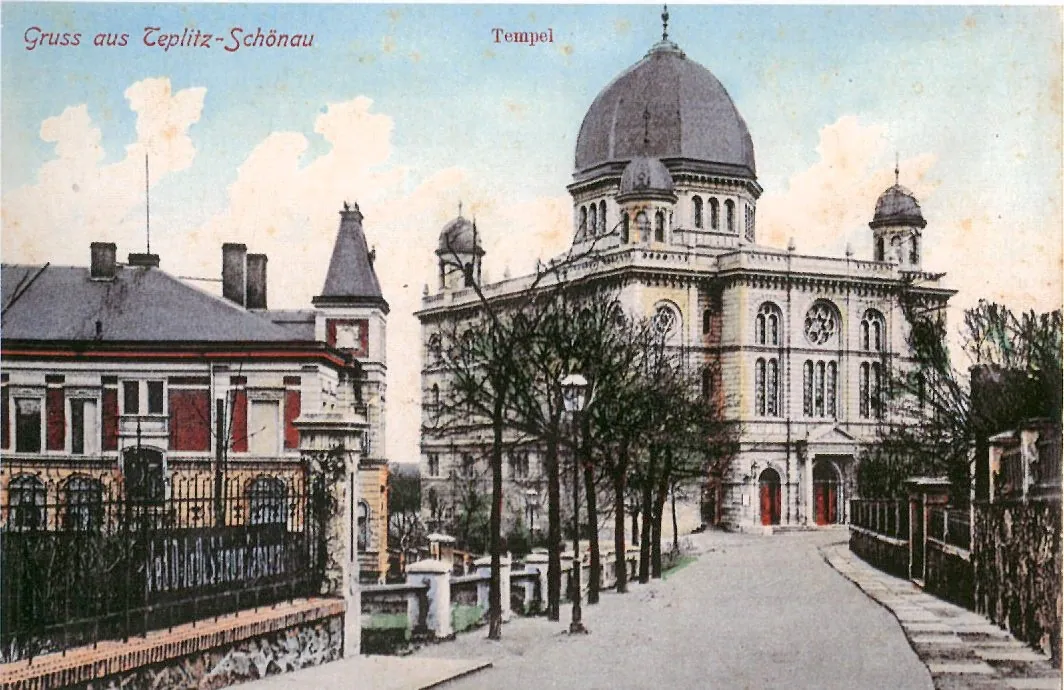
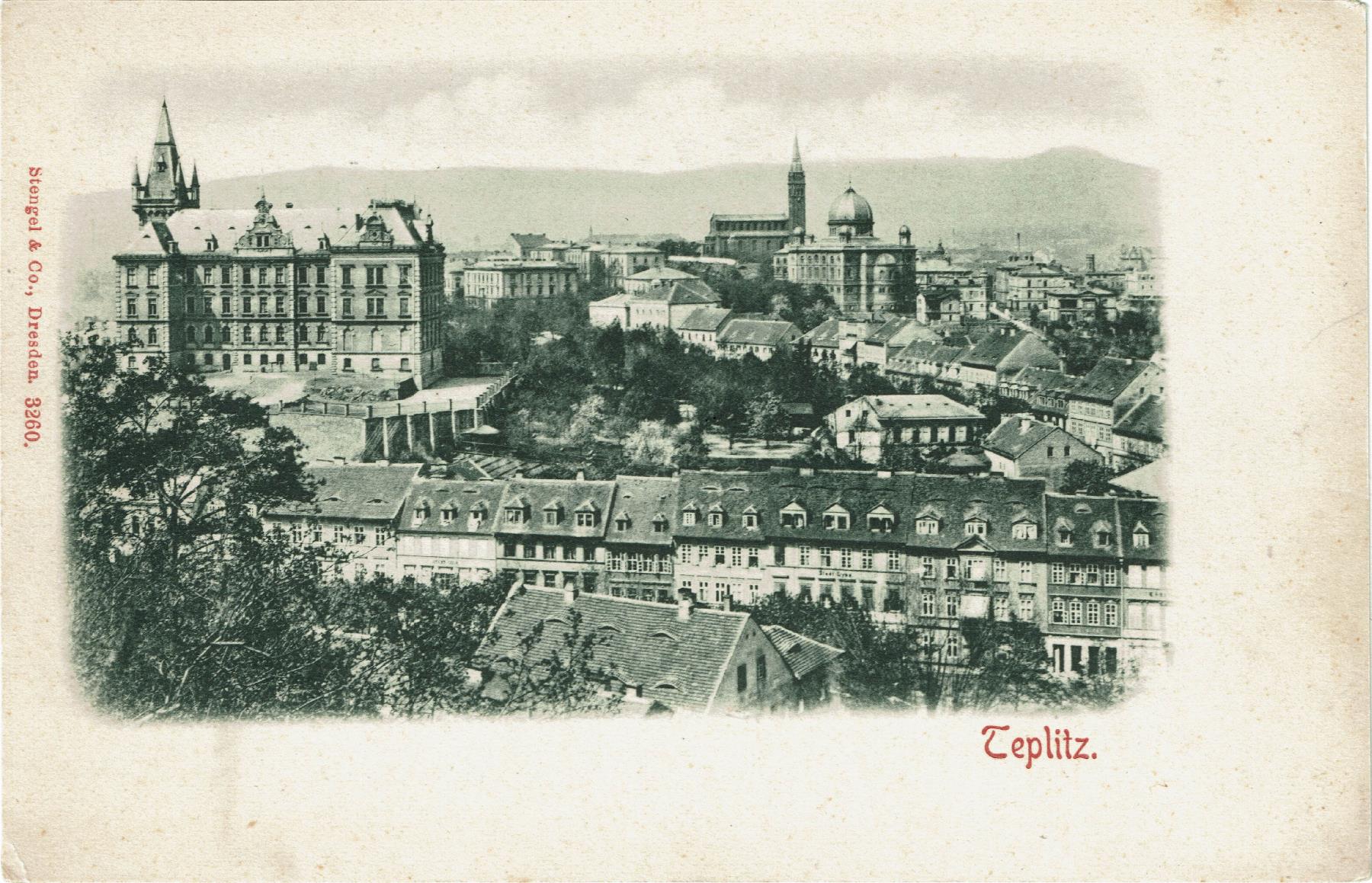
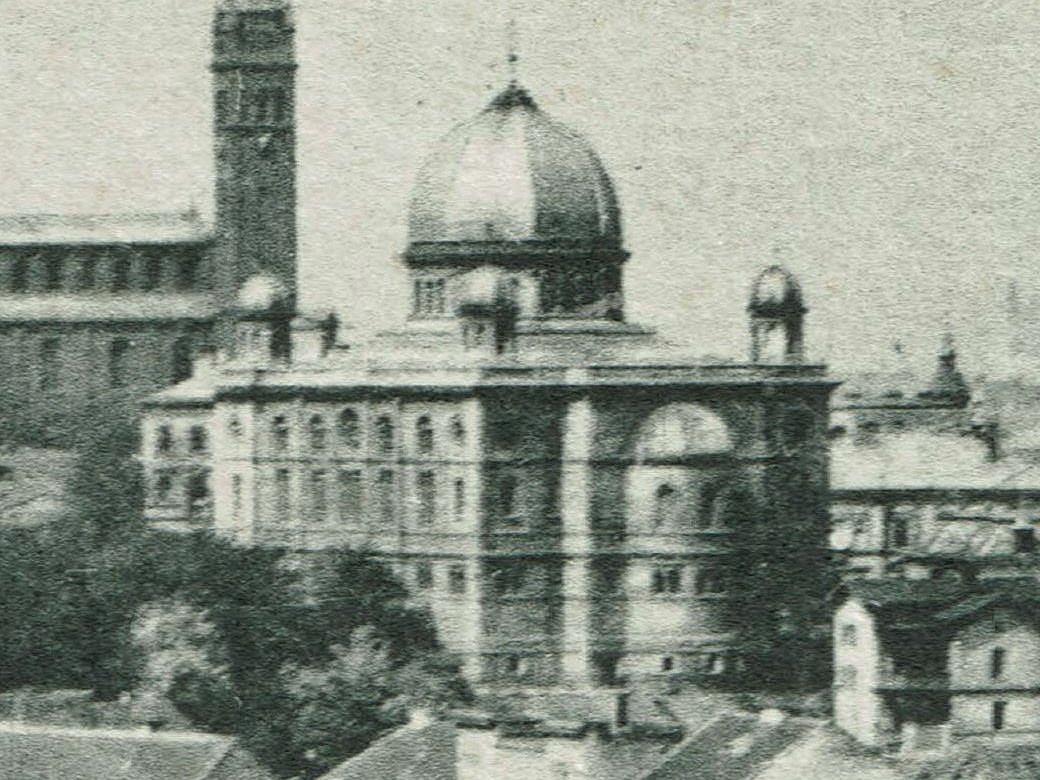
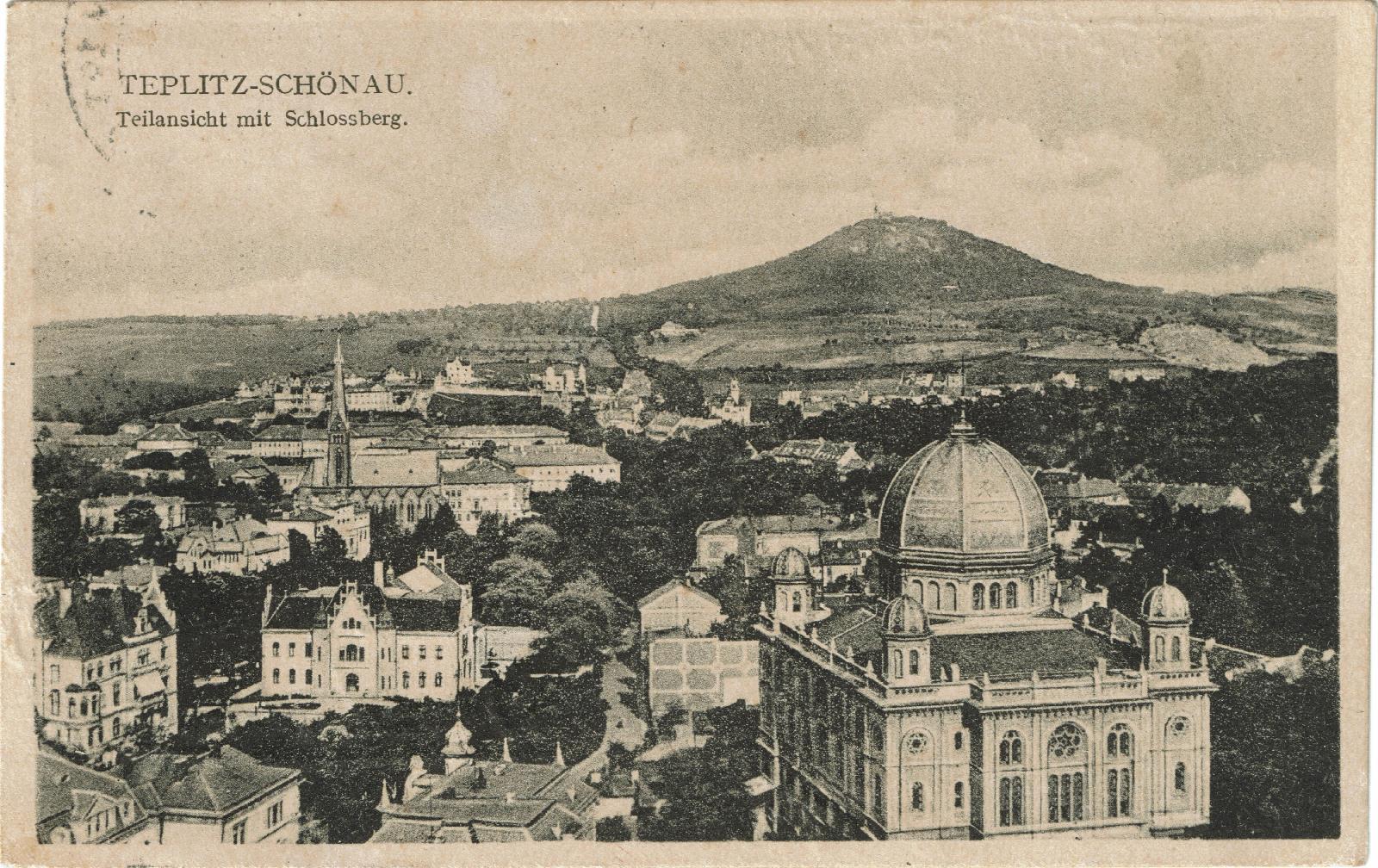
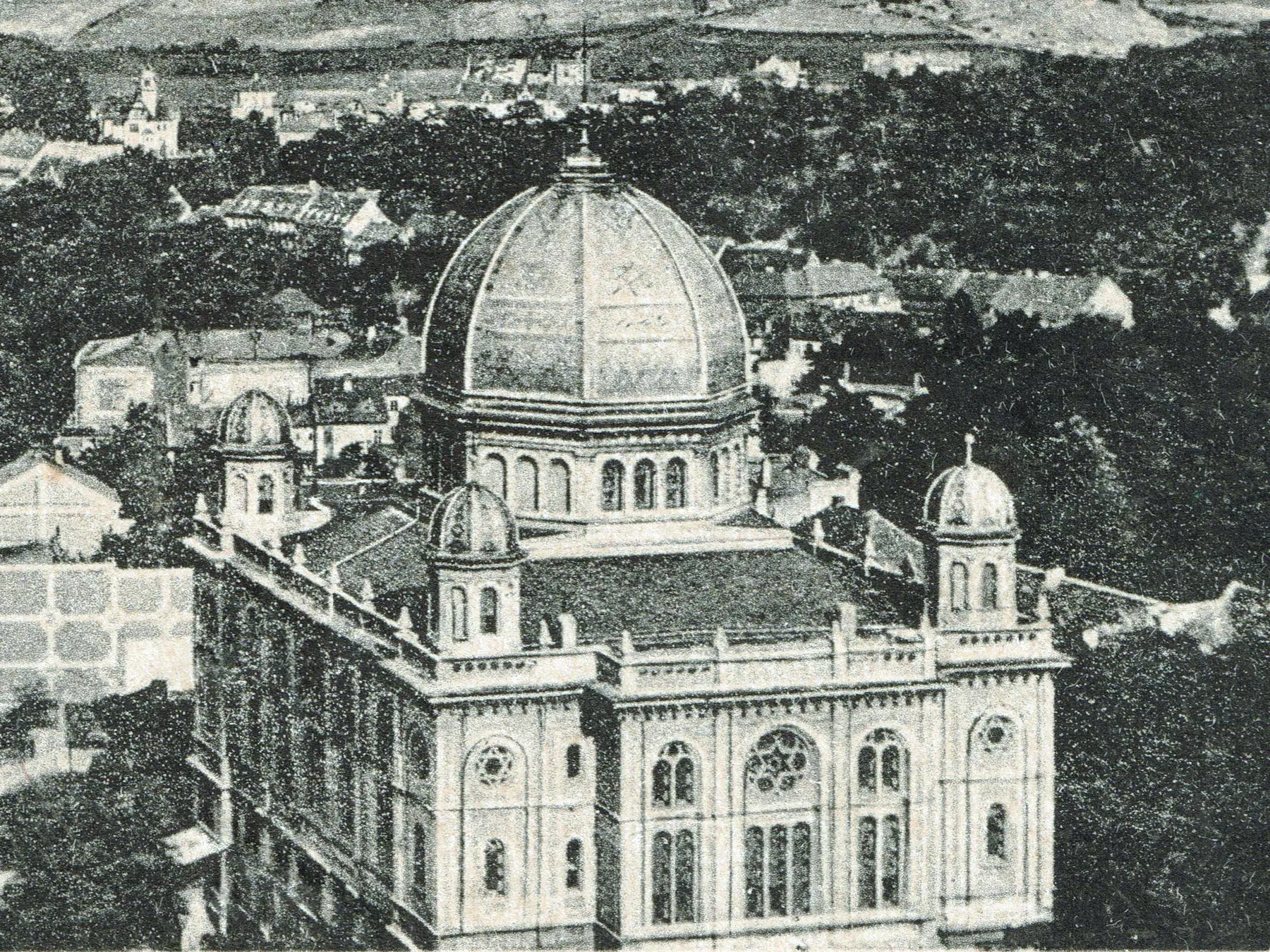
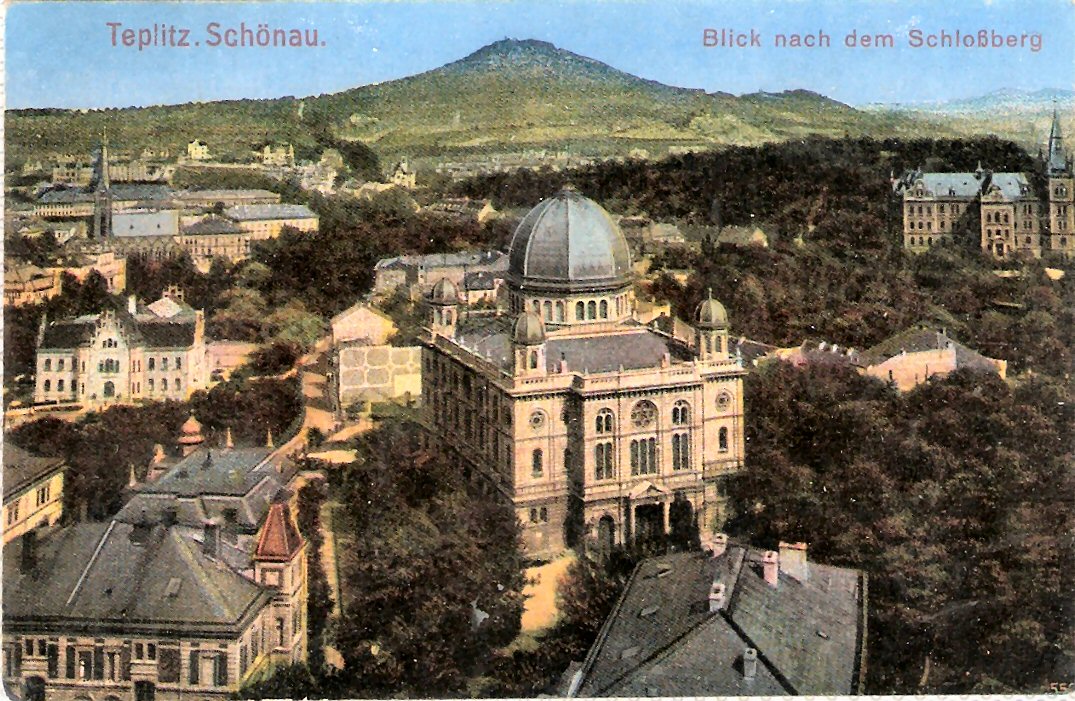
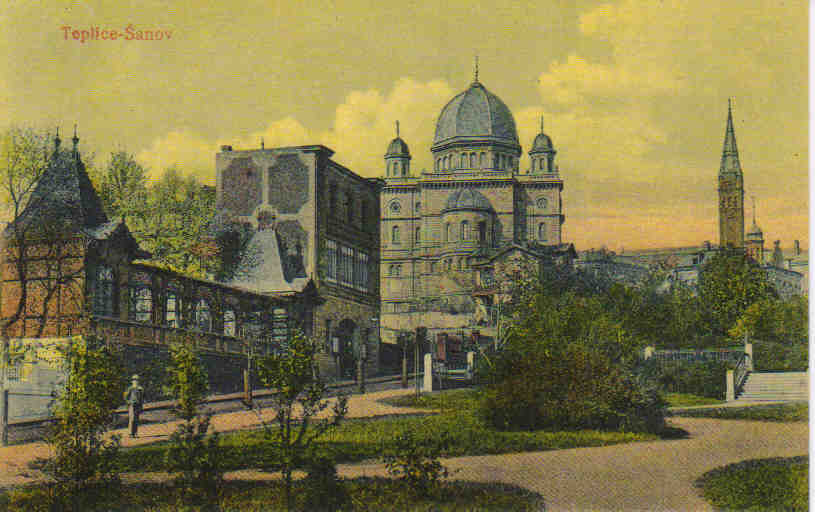
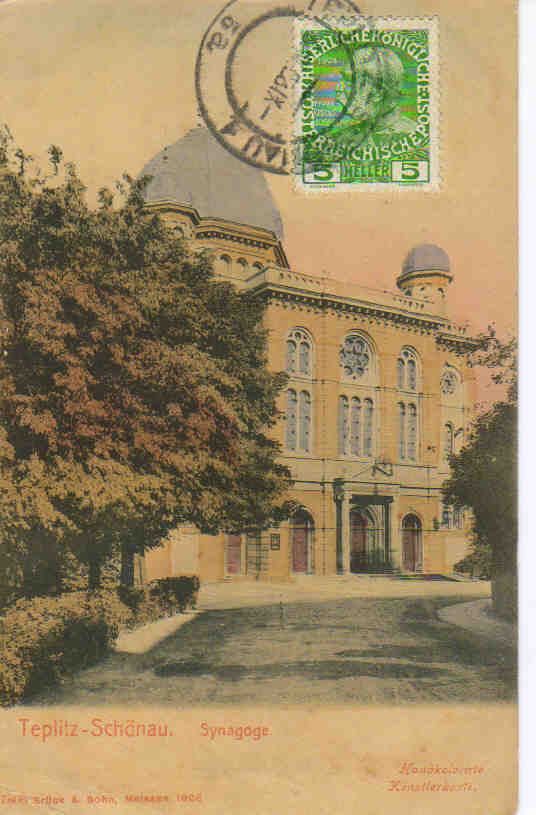
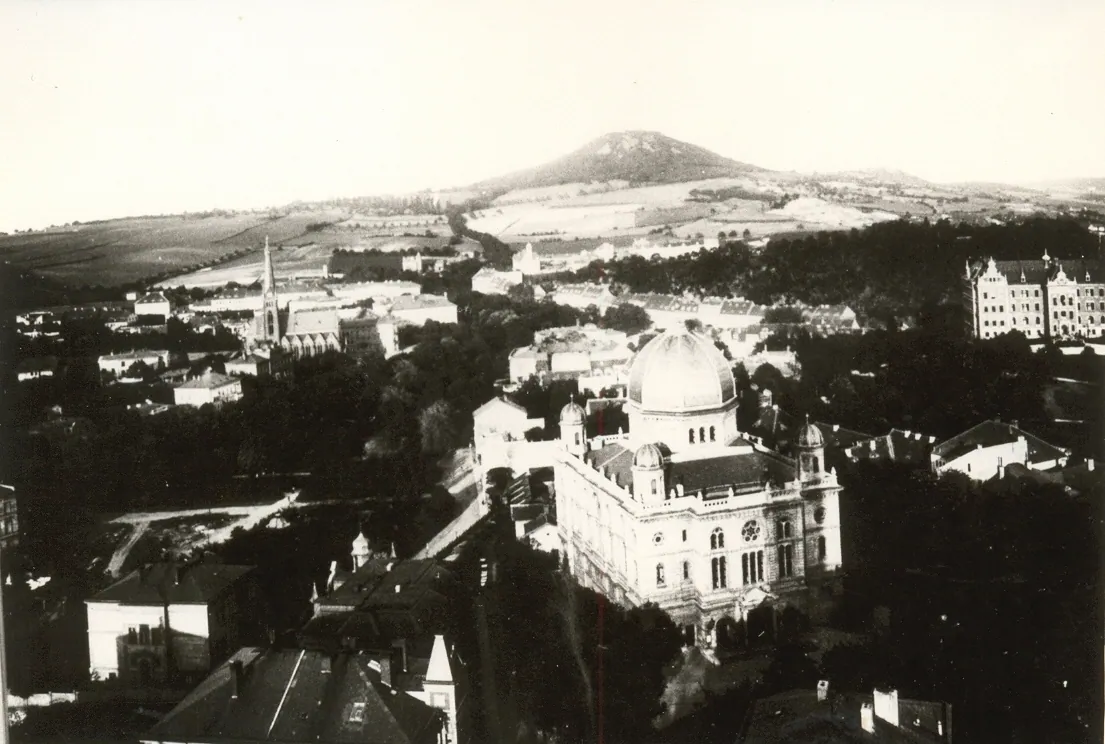
Teplice, in northern Bohemia, was one of the oldest and most important Jewish communities in the Czech lands, recorded from 1414. By 1890 it was the second-largest community in Bohemia after Prague, and the old synagogue in the former ghetto could no longer hold its members. In 1872 the community bought a plot on the Judenberg, the hill of the old Jewish cemetery, and commissioned plans from the Viennese architect Wilhelm Stiassny. The detailed design and construction were carried out by the Dresden architect Hermann Rudolph with the local architect David Ferber. The foundation stone was laid on 28 December 1881, the dome was set in June 1882, and the synagogue was consecrated on 10 September 1882 after a procession from the old synagogue watched by around 2,000 people. The building was a monumental cube, 41 by 25 metres, with a central dome crowned by a Star of David and four corner cupolas, visible for kilometres around. After the Munich Agreement Teplice was annexed to Germany in October 1938, and the synagogue was abandoned. It survived Kristallnacht, but on the night of 14–15 March 1939 Nazis set it on fire. By morning it was gutted, and the town soon ordered the ruins levelled.
Where it stood for 57 years
Historic: Judenberg (Breite Stein), Teplitz-Schönau. Present day: park near Chelčického street, Teplice, Czech Republic. Approximate.
Größere Karte öffnen →Die jüdische Gemeinde
Jews are first recorded in Teplice in 1414, when the town belonged to a Benedictine abbey and gave them unusually favourable status. A synagogue existed by 1550, and the first known rabbi, Löbl Baum, is recorded in 1654. In 1668 the Jews were confined to a walled ghetto, and under the Familiants Law of 1726 only 55 families were allowed to live in the town. After emancipation in the nineteenth century the community grew quickly: 500 Jews in 1853, 1,718 in 1879 and 1,865 in 1890. Jews were merchants, doctors, lawyers and manufacturers, sat on the town council and ran many charitable, cultural and sporting societies. Refugees from Galicia settled after the First World War and founded an Orthodox congregation. In 1930 the town had 3,213 Jews, about 10 per cent of its population.
Architektur und Gestaltung
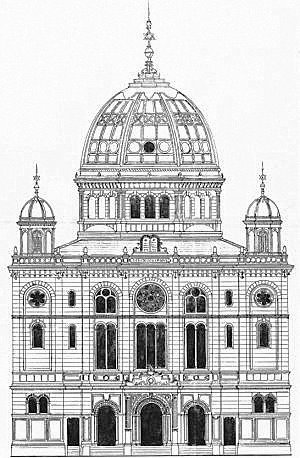
The synagogue was a two-storey cubic building with a semicircular apse on the east side, in the Neo-Renaissance style with Moorish decorative details. Its four facades were symmetrically divided by tall windows and ornamented with Renaissance-style details. Above a gently sloping roof rose a large central dome crowned by the Star of David, with small domes at the four corners. It measured 41 metres long and 25 metres wide, and the dome reached 42 metres. During construction the dome piers sank and had to be rebuilt on deeper foundations, reinforced with steel beams on the advice of the architect Josef Mocker. Inside, a spacious entrance hall with staircases led into a three-aisled hall facing the raised platform and Torah ark in the east. The ground floor held 734 men's seats, the two galleries 638 women's seats, and an upstairs weekday prayer room 190 more.
Leben in der Synagoge
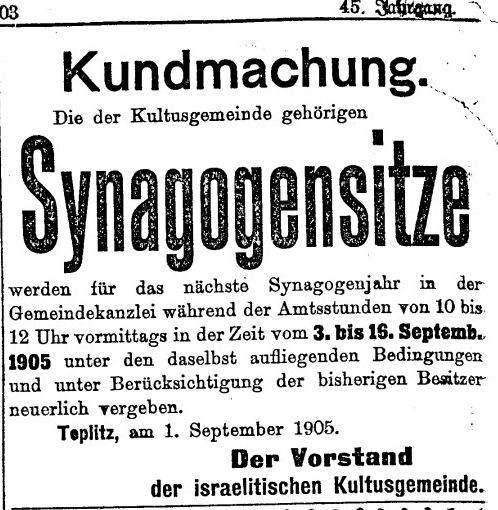
The consecration on 10 September 1882 was a civic event: the congregation walked in procession from the old synagogue, the ceremony drew around 2,000 people, and a banquet followed in the ballroom of the Clary princes' castle. Much of the furnishing and the sacred objects were given by members of the community. Gas lighting was installed in 1883; in 1905 the interior was painted, the walls faced with red marble and steam heating added; electric light followed in 1927. Seats were allocated each year by the community office, which advertised them in the local press. The building was also the seat of the Teplitz Temple Association, which cared for the synagogue, helped Jews in need and clothed poor Jewish schoolchildren. Rabbi Friedrich Weihs described it as a fortress of faith that could be seen for miles around.
Zerstörung
After the Munich Agreement, Teplice was annexed to Nazi Germany on 21 October 1938, and the synagogue was abandoned from 9 October. Unlike the synagogues of Karlsbad and Marienbad, it was not burned on Kristallnacht in November 1938. In December the mayor, with the agreement of the Reich administration, planned to turn it into a municipal museum, archive and concert hall. But on the night of 14–15 March 1939, as Germany prepared to occupy the rest of Czechoslovakia, Nazis set the synagogue on fire. By the next morning it had burned out completely. Because of the damage, the town authorities ordered the ruins levelled almost immediately, and they were demolished within weeks.
Das Schicksal der Gemeinde
Most of the Jews of Teplice fled after the annexation of Austria and the Munich Agreement: about 7,000 Jews left the district in 1938, abandoning much of their property. Jewish-owned houses, flats and businesses were confiscated and 'aryanised', and Jews who remained were forced to march through the town while being mocked and beaten. By October 1940 only about 200 Jews were left in Teplitz, and most of them were deported. Of the roughly 6,000 Jews who had lived in the town before the war, only a few dozen survived. From autumn 1944 a subcamp of Flossenbürg at nearby Hertine held Hungarian Jewish women. A small Jewish community re-formed after the war.
Der Ort heute
Nothing of the synagogue survives. Its site on the hill formerly called the Judenberg, near the Evangelical church in the centre of Teplice, is now a small park. A modest memorial stands there, with inscriptions in Czech and Hebrew; sources date it to 1955 or to 1994–1995, and it was damaged by vandals in 2008. Stumbling stones elsewhere in the town commemorate individual victims. The old Jewish cemetery on the same hill was closed in 1862.
Bedeutende Namen
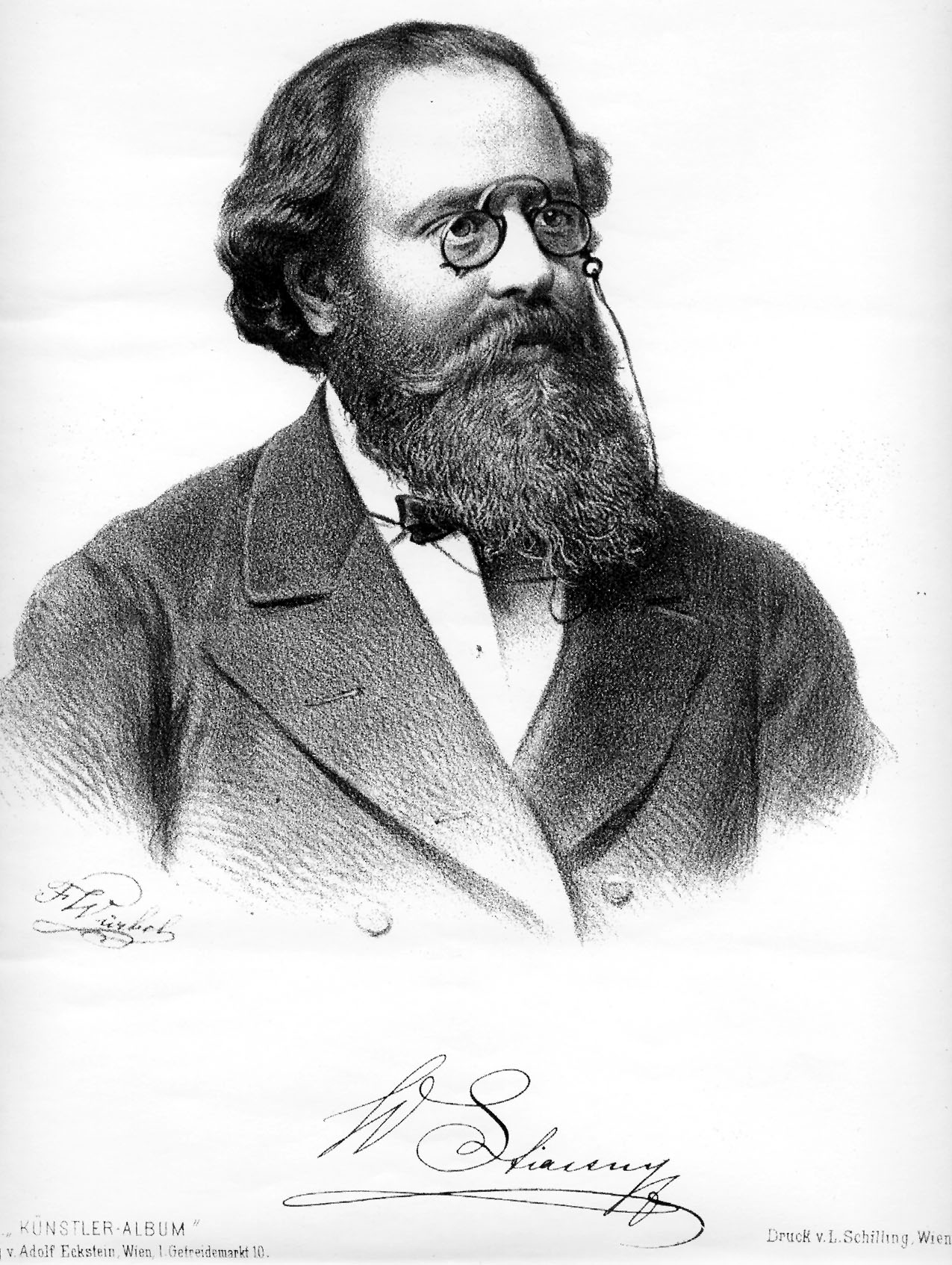
Wilhelm Stiassny
1842–1910Architect (preliminary design)The Viennese architect Wilhelm Stiassny, one of the leading synagogue architects of the Habsburg empire, was commissioned by the wealthy Teplice community to design its new synagogue. According to French Wikipedia he produced a preliminary design, which Hermann Rudolph developed into the final plans. Several sources credit the building to Stiassny alone.
Biografie oder Quelle →Hermann Rudolph
1846–1924ArchitectHermann Rudolph was a Dresden architect who settled in Teplice. He drew up the detailed plans for the Great Synagogue, which the town approved in August 1880, and supervised its construction with the local architect David Ferber from 1881 to 1882. He is buried in the old cemetery in Teplice, where his grave names him as the synagogue's builder.
Biografie oder Quelle →Friedrich Weihs
20th centuryRabbi and historian of the communityRabbi Dr Friedrich Weihs wrote the history of the Teplice Jewish community published in 1932 for its 150th anniversary. In it he described the Great Synagogue as one of the finest buildings in the town, crowned by its dome and Star of David, a secure fortress of faith that could be seen for miles around.
Biografie oder Quelle →Haben Sie etwas beizutragen?
Fotos, Dokumente, Familiengeschichten oder Erinnerungen an diese Synagoge und ihre Gemeinde halten ihre Geschichte lebendig.
Share a memory or thought
No comments yet. Be the first to add one.