

La historia de Beth Saul Synagogue, Thessaloniki
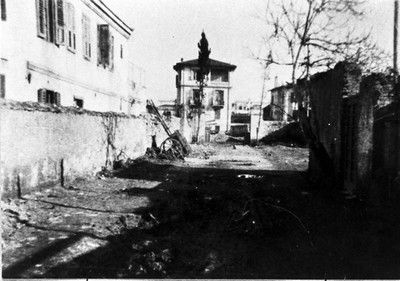
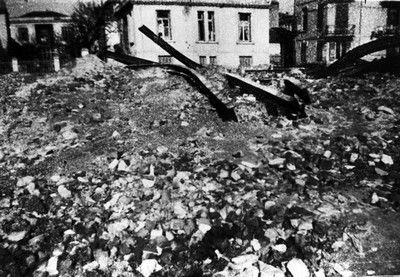
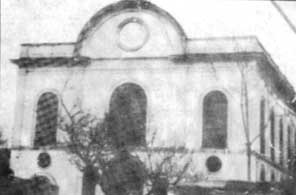
Beth Saul stood on the Avenue des Campagnes, today's Vasilissis Olgas Avenue, in the eastern suburb the Jews of Salonica called Las Campañas. The Jewish Community of Thessaloniki places it where Kalidopoulou Street meets Vasilissis Olgas, towards Delfon Street. The plot was part of the Modiano family estate, beside their mansion, Villa Ida. An imperial firman permitted the building in 1895, and it was completed in 1898. Fakima Modiano paid the whole cost, 1,200 liras, and dedicated the synagogue to her late husband Saul Modiano (died 1883), a banker and merchant and one of the wealthiest men in Macedonia. People called it the synagogue of Tía Fakima. The design is attributed to the Italian architect Vitaliano Poselli, who also designed Villa Ida and many of Salonica's public buildings. Unlike the older synagogues hidden in the alleys of the lower town, Beth Saul was a free-standing, Western-style building set in a garden. A marble Tablets of the Law crowned its curved gable. After the great fire of August 1917 destroyed most of the old synagogues, Beth Saul became the main and official synagogue of the community. In 1943, during the German occupation, the Nazis deported almost all of the city's Jews to Auschwitz-Birkenau and blew up the synagogue. Only a field of rubble remained.
Where it stood for 45 years
Historic: Avenue des Campagnes (Hamidiye / Las Campañas suburb), Salonica. Today: corner of Vasilissis Olgas Avenue and Kalidopoulou Street, towards Delfon Street, Faliro, Analipsi, 546 41 Thessaloniki
Abrir mapa ampliado →La comunidad judía
Salonica had one of the largest Jewish communities in Europe. Most of its Jews were descended from Sephardic exiles from Spain and Portugal, and for centuries they formed the city's largest group. The Modianos belonged to the Francos, Jews whose families had moved from Livorno to Salonica in the seventeenth century. As Italian protégés they enjoyed the trade privileges of the capitulations. Saul Modiano (1816/17–1883) rose from orphan to banker and international merchant and gave to schools, orphans and widows. The Saul Modiano home for the elderly carries his name to this day. In the late nineteenth century wealthy Jewish, Levantine and Greek families built villas along the Avenue des Campagnes in the new Hamidiye district, east of the old walls. Beth Saul was the only synagogue in this district. Survivors remembered Las Campañas as a smart quarter, and the synagogue as a very luxurious one.
Arquitectura y diseño
Researchers Cristina Pallini and Annunziata Scaccabarozzi, working from photographs published by Elias Messinas, describe Beth Saul as a Western-inspired building that broke clearly with the earlier synagogues of Salonica. It stood alone in a garden, its main façade facing the Avenue des Campagnes. The façade had two side bays and a taller central section. This ended in a curved gable topped by the Ten Commandments carved in marble. Round-headed and circular windows alternated with strips of Tuscan pilasters, mixing Romanesque and Neoclassical forms. A recessed entrance loggia, common in nineteenth-century European synagogues, led into a three-aisled prayer hall. A women's gallery ran above the entrance and the side aisles. At the east end a deep platform stood before the heikhal (Torah ark), beside a richly decorated tevah (reading desk). The design is usually credited to Vitaliano Poselli, although the community calls this attribution 'said to be'.
La vida dentro de la sinagoga
The synagogue was built as a private foundation inside the Modiano estate. Its Italian-Sephardic donors made it a showcase of the community's move towards European ways. In his account of Salonica in Jews in Many Lands (1905), the British scholar Elkan Nathan Adler noted that at Fakima Modiano's the Yom Kippur lights had been 'Europeanized': donors' visiting cards were tied to them with silk ribbons. After the fire of 1917 destroyed the Talmud Torah and some thirty other synagogues, Beth Saul became the official community synagogue. Maurice Leon, interviewed by Centropa, prayed there as a boy and had his bar mitzvah there, prepared by a Rabbi Stroumsa. Hebrew Wikipedia links it with the Italia Yashan congregation. Roza Benveniste, another Centropa interviewee, remembered it as a very luxurious synagogue in the smart quarter of Las Campañas.
Destrucción
Nazi German forces occupied Salonica in April 1941. In February 1943 they forced the Jews into ghettos, and from March to August 1943 they deported more than 45,000 of them to Auschwitz-Birkenau. In 1943 the Nazis blew up the Beth Saul synagogue with explosives. The Jewish Community of Thessaloniki records that it was destroyed after the last convoy of deportees had left. A Jewish Museum of Greece photograph dated June 1943 shows the site as a field of rubble and broken stone, with twisted iron beams sticking out of the debris. Beth Saul and the Beth Israel synagogue were the two synagogues of Salonica that the Nazis blew up. Most of the remaining synagogues were wrecked during the occupation or demolished after the war.
El destino de la comunidad
On the eve of the occupation about 50,000 Jews lived in Salonica. In July 1942 the Nazis forced 9,000 Jewish men to assemble at Liberty Square and sent about 2,000 to forced labour. The ancient Jewish cemetery was then destroyed. In February 1943 the Jews were forced into ghettos, one in the east of the city and one in the western Baron Hirsch quarter. Between March and August 1943 more than 45,000 were deported to Auschwitz-Birkenau, where most were gassed on arrival. Fewer than 2,000 Jews lived in Salonica after the war. The community never recovered its old size. The Monastirioton synagogue, which survived because the Red Cross used it as a store, took Beth Saul's place as the main synagogue.
El lugar hoy
Nothing of the synagogue survives. The site lies in today's Faliro area of the Analipsi district, where Kalidopoulou Street meets Vasilissis Olgas Avenue, towards Delfon Street. Villa Ida, the Modiano mansion next door, later became the property of the Italian state and an Italian school. It was demolished in 1958. Its plot at Vasilissis Olgas and Fleming streets was later used as a tobacco warehouse and as the Italian Institute, and has since been sold to Lidl Hellas. No marker for the synagogue on the site was found during this research.
Nombres destacados
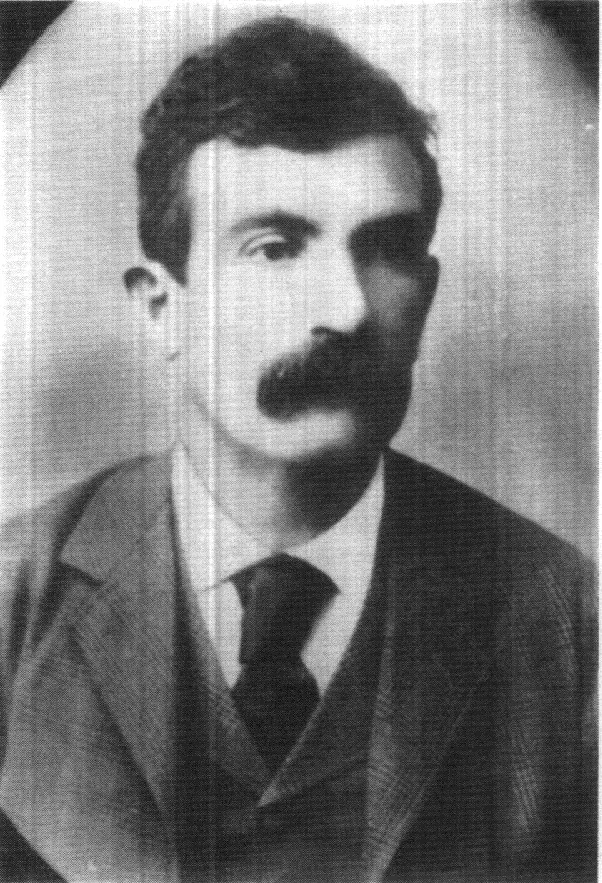
Vitaliano Poselli
1838–1918Architect (attributed)The Sicilian-born architect Vitaliano Poselli worked for the Ottoman government and private patrons in Salonica from the 1880s. He designed the Modianos' Villa Ida (1886–90), next to which Beth Saul was built in 1898. Colonas and Pallini & Scaccabarozzi list the synagogue among his works, while the Jewish Community says it is 'said to be' his.
Biografía o fuente →Fakima Modiano
UnknownFounder and donorFakima Modiano (née Kazes), widow of the banker Saul Modiano, paid the whole cost of the synagogue, 1,200 liras. She dedicated it to her husband's memory when it was completed in 1898. Out of affection, the community called it the synagogue of Tía Fakima. E. N. Adler, in Jews in Many Lands, noted the European-style Yom Kippur lights at 'Fakima Modianos'.
Biografía o fuente →¿Tiene algo que aportar?
Fotografías, documentos, historias familiares o recuerdos de esta sinagoga y su comunidad ayudan a mantener viva su historia.
- In Search of Salonika's Lost Synagogues. An Open Question Concerning Intangible Heritage (Quest. Issues in Contemporary Jewish History, n. 7, 2014)
- Community of Thessaloniki (Atlas of Jewish Communities of Greece: Jewish Synagogues of Thessaloniki, 'Synagogue Beth Saul')
- Vitaliano Poselli: An Italian Architect in Thessaloniki (Environmental Design 1990, pp. 162–171)
- Photograph: The rubble of the Beth Saul Synagogue in Thessaloniki that had been blown up by the Germans
- Photograph: Synagogue Ruins (Bet Shaul Synagogue), Thessaloniki, June 1943
- Photograph of where Bet Shaul synagogue stood, Thessaloniki
- Photograph (Beth Saul rubble), Jewish Museum of Greece record on Europeana
- Roza Benveniste interview, selected text
- Maurice Leon interview, selected text
- Salonika
- יהדות סלוניקי (Jews of Salonica)
- שאול מודיאנו (Saul Modiano)
- Vitaliano Poselli
- Lidl Hellas acquires Italian Institute building in Thessaloniki
- Καλιδοπούλου (Kalidopoulou Street), way 37043360
- Jewish Community of Thessaloniki (Synagogues: "The 'Beth Saul' Synagogue" photograph)
- Συναγωγές (Synagogues): list of Salonica synagogues from the Sonderkommando Rosenberg final report
- Jews in Many Lands (1905), chapter "Salonica"
- Βιταλιάνο Ποζέλι (Vitaliano Poselli)
Share a memory or thought
No comments yet. Be the first to add one.