
История Sephardic Synagogue of Timișoara (Cetate)
Timișoara (German Temeswar, Hungarian Temesvár) had Sephardic Jews from the period of Ottoman rule, and after the Habsburg conquest of 1716 they remained a distinct congregation beside the growing Ashkenazi majority. In the 1760s a block of the fortified inner town designated for the city's Jews, the Judencarré, was bounded by today's Mărășești, Gheorghe Lazăr, Ungureanu and Eugeniu de Savoya streets. In one corner of it the community had a building ensemble called the Judenhof erected by the builder Christian Attinger. It contained two small synagogues, one Ashkenazi and one Sephardic, inaugurated in 1762, together with rabbis' residences, a ritual slaughterhouse, a bath and a school.
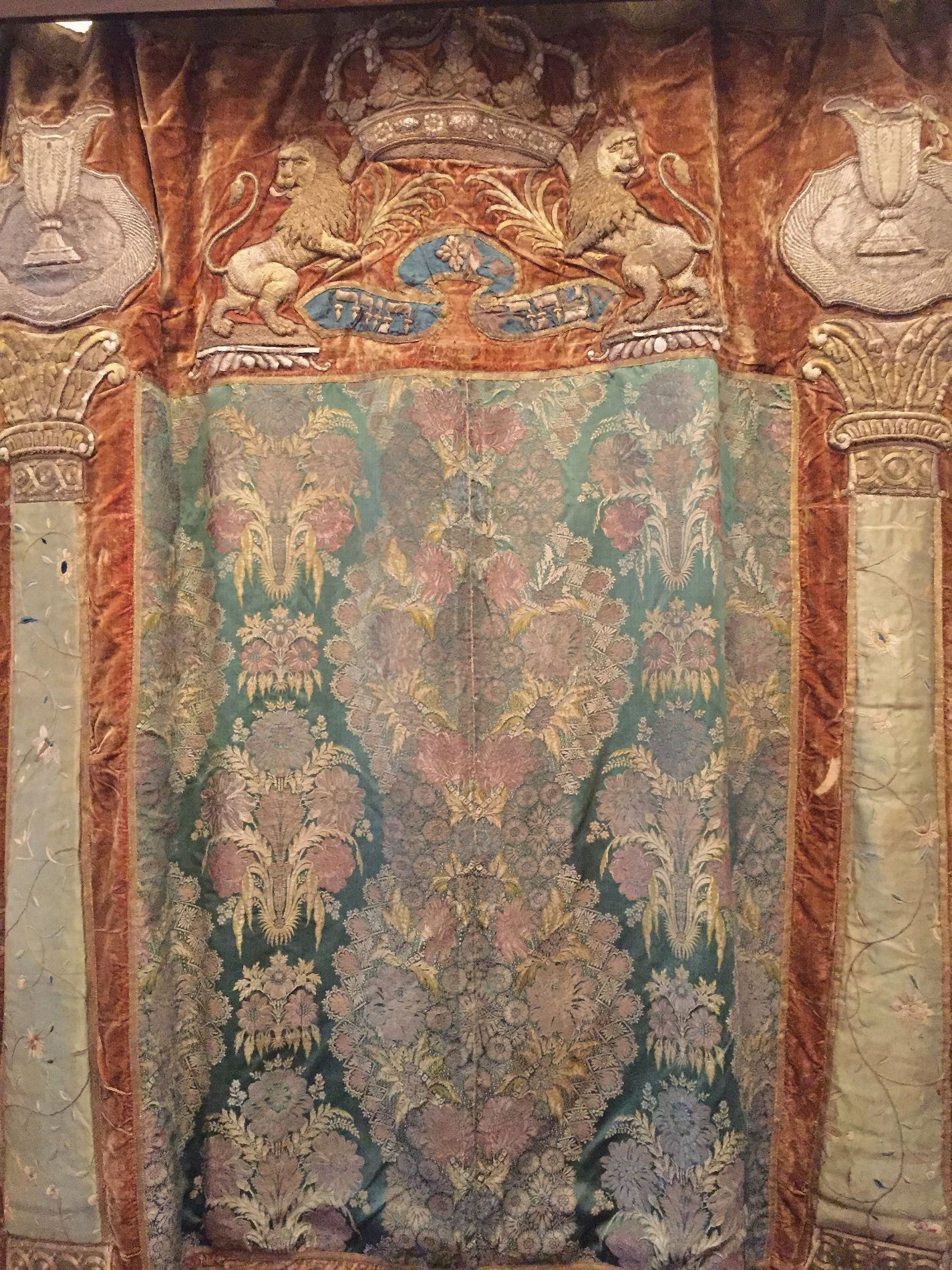
When the Ashkenazim outgrew their prayer room they built the large Cetate Synagogue nearby, consecrated in 1865, and new congregations formed in the Fabric and Iosefin districts. The Sephardim stayed in the Judenhof. In 1905 the Sephardic synagogue in Cetate was demolished to make room for the headquarters of the Jewish community, and the Sephardic synagogue in Fabric became the only place in the city where Jews prayed by the Spanish rite. No picture of the Cetate building has been found. An embroidered Torah ark curtain dated 1729, which was used in the Judenhof, survives and now hangs in the small Or Hadaș prayer hall in the courtyard of the community headquarters.
Where it stood for 143 years
Historic: Judenhof, corner of the Judencarré block (Mărășești, Gheorghe Lazăr, Ungureanu and Eugeniu de Savoya streets), Cetate, Timișoara. Today: Jewish Community headquarters, Strada Mărășești 10, 300080 Timișoara (approximate).
Открыть большую карту →Еврейская община
Jews are recorded in Timișoara from the seventeenth century, when the city was under Ottoman rule. The Jewish Encyclopedia states that numerous Spanish Jews settled there between 1552 and 1716 and were well received by the Turkish authorities, and it names Moses Lopez Pereira, known as Diego d'Aguilar, as the founder of the Sephardic community; Maria Theresa later allowed five more Spanish Jewish families to settle. Ashkenazi Jews began arriving in the 1720s. A census of 1739 counted 46 Jewish families: 31 Ashkenazi families with 139 people and 15 Sephardic families with 81 people. The same encyclopaedia names Jacob Moses of Belgrade as Sephardic rabbi in 1739. Over the following century and a half the Ashkenazim grew far faster: the Jewish population reached about 1,200 in 1840, 2,202 in 1858, 4,870 in 1890 and 5,788 in 1901, while the Sephardim became a small minority. By the beginning of the twentieth century the Jewish Encyclopedia described the Spanish Jews of Temesvár as few in number.
Архитектура и дизайн
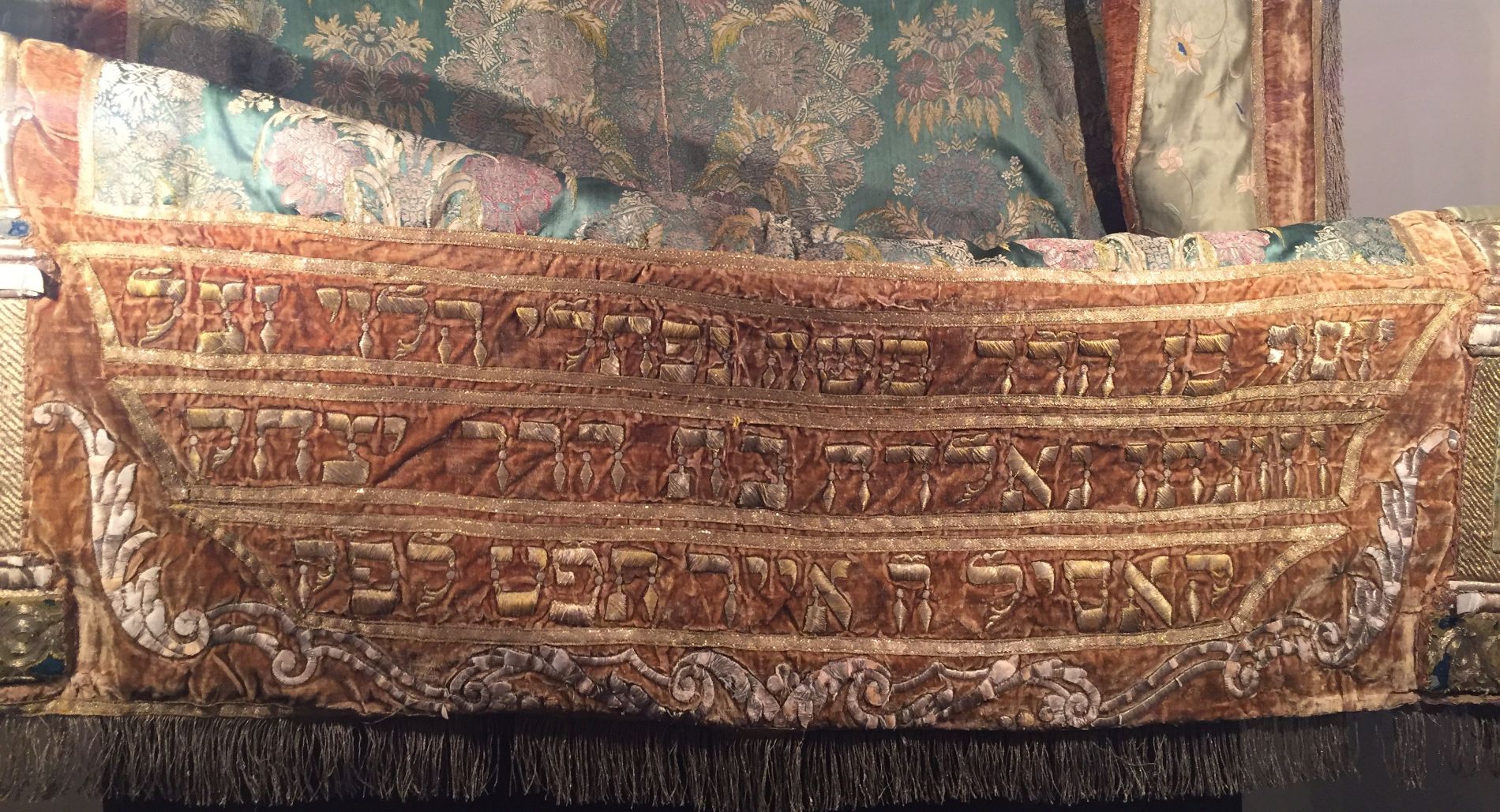
Very little is known about the building itself. According to a study of the Cetate Synagogue by Zsuzsanna Eke, citing the architectural historian Kiss, the Jewish community chose the builder Christian Attinger to erect the Judenhof in about 1760 to 1762. The ensemble occupied part of the block bounded by Mărășești, Gheorghe Lazăr and Ungureanu streets and contained two synagogues, two rabbis' residences, a kosher slaughterhouse, a bath and a school. The local synagogue history site describes the two prayer houses, one Ashkenazi and one Sephardic, as small. No plan, photograph or drawing of the Sephardic synagogue was found, so its size, style, roof, windows and seating are unknown. Its interior furnishings are known only through one object: a richly embroidered velvet and silk curtain for the Torah ark, with a crown held by two lions at the top, columns at the sides and a Hebrew dedicatory inscription naming the donors Iosef, son of Rabbi Naftali Halevi, and his wife Golda, dated 5 Iyar 1729, which is older than the building.
Жизнь в синагоге
The synagogue was the prayer house of the Spanish-rite congregation, which kept its own rabbis and customs beside the Ashkenazi majority. Both congregations lived and worshipped in the same courtyard complex, with the rabbis' residences, the slaughterhouse, the ritual bath and the school all within the Judenhof, so that much of the community's religious life before the mid-nineteenth century was concentrated in this one corner of the inner town. The Ashkenazi prayer room became too small for its congregation, which moved in 1865 to the new Cetate Synagogue; the Torah scrolls were carried there in procession from the old temple in the Judenhof. The Sephardim remained in the Judenhof. Within it they used the embroidered ark curtain of 1729, which the Timișoara Jewish museum describes as having passed through several Sephardic prayer places, including the Judenhof, before it was moved to Fabric. Rabbi Jakab Singer mentioned this curtain in his study of the city's synagogues. The names of the Sephardic congregation's rabbis and officers in the decades before 1905 were not found.
Разрушение
The synagogue was not destroyed by war or persecution. According to the Timișoara Jewish community's virtual museum, which is followed by the English Wikipedia article on the Fabric Sephardic Synagogue, the Sephardic synagogue in Cetate was demolished in 1905 to make room for the construction of the community headquarters. The demolition was therefore carried out by or for the Jewish community itself, which needed offices next to the great Cetate Synagogue, and the small congregation of Spanish-rite worshippers moved to the Sephardic synagogue in the Fabric district. The furniture and some ritual objects, among them the 1729 ark curtain, were saved and kept first in a prayer house in Fabric. No document of the demolition itself, the name of the contractor or the exact month was found. One source complicates the picture: the Jewish Encyclopedia, published in 1906, says that the Judenhof was demolished to make room for a new Reform synagogue and that a small Sephardic synagogue still stood in the citadel, which probably reflects information gathered before 1905.
Судьба общины
After 1905 the Sephardic rite in Timișoara survived in the Fabric Sephardic synagogue, which functioned until the 1950s and was later transformed into an Adventist church. The fate of the city's Jews during the Second World War is not covered by the sources read for this entry. The European Jewish Heritage Guide attributes the community's decline to anti-Semitism, the Holocaust and mass emigration, which reduced it from about 13,000 people in 1947 to a few dozen today; a US government report gives 725 Jews in Timișoara in 2002. Rabbi Ernő Neumann maintained religious life in the city after the war until his death in 2004. Of the six synagogues built in the city after 1867, three survive. The community's headquarters still stand at Mărășești Street 10, beside the restored Cetate Synagogue.
Место сегодня
The site of the Sephardic synagogue is occupied by the headquarters of the Jewish Community of Timișoara at Mărășești Street 10, in the Cetate district, next to the Cetate Synagogue at number 6. In the courtyard of the headquarters is a small prayer hall called Or Hadaș (New Light), whose ark is now covered by the restored 1729 curtain that once hung in the Judenhof. A US government survey of 2010 listed a 'Spanish Temple' at Mărășești Street 10, dated to the late eighteenth century and described as ruined; no other source found describes a surviving eighteenth-century structure there, and it is unclear whether the entry refers to remains of the old building or to the later courtyard hall.
Значимые имена
Christian Attinger
UnknownBuilder of the Judenhof, c. 1760-1762According to Zsuzsanna Eke's 2017 study of the Cetate Synagogue, which cites the architectural historian Kiss, the Jewish community of Timișoara chose Christian Attinger to build the Judenhof, the courtyard ensemble that contained the Ashkenazi and Sephardic synagogues inaugurated in 1762, as well as rabbis' residences, a slaughterhouse, a bath and a school. Nothing else about him was found in this research.
Биография или источник →Вам есть чем поделиться?
Фотографии, документы, семейные истории и воспоминания об этой синагоге и её общине помогают сохранить её историю.
- Cetate Synagogue
- Fabric Sephardic Synagogue
- Sinagoga sefardă din Fabric
- Sinagoga din Cetate
- Sinagoga din cartierul Cetate, Timișoara, și stilul maur
- Temesvar
- Historic Jewish Sites in Romania (Table I)
- Timisoara (Jewish heritage guide)
- Timisoara, Cetate Synagogue: history
- Sinagoga din Cetate (OpenStreetMap way 193602657) and Strada Mărășești (way 1533322940)
Share a memory or thought
No comments yet. Be the first to add one.