
La historia de Törökszentmiklós Synagogue
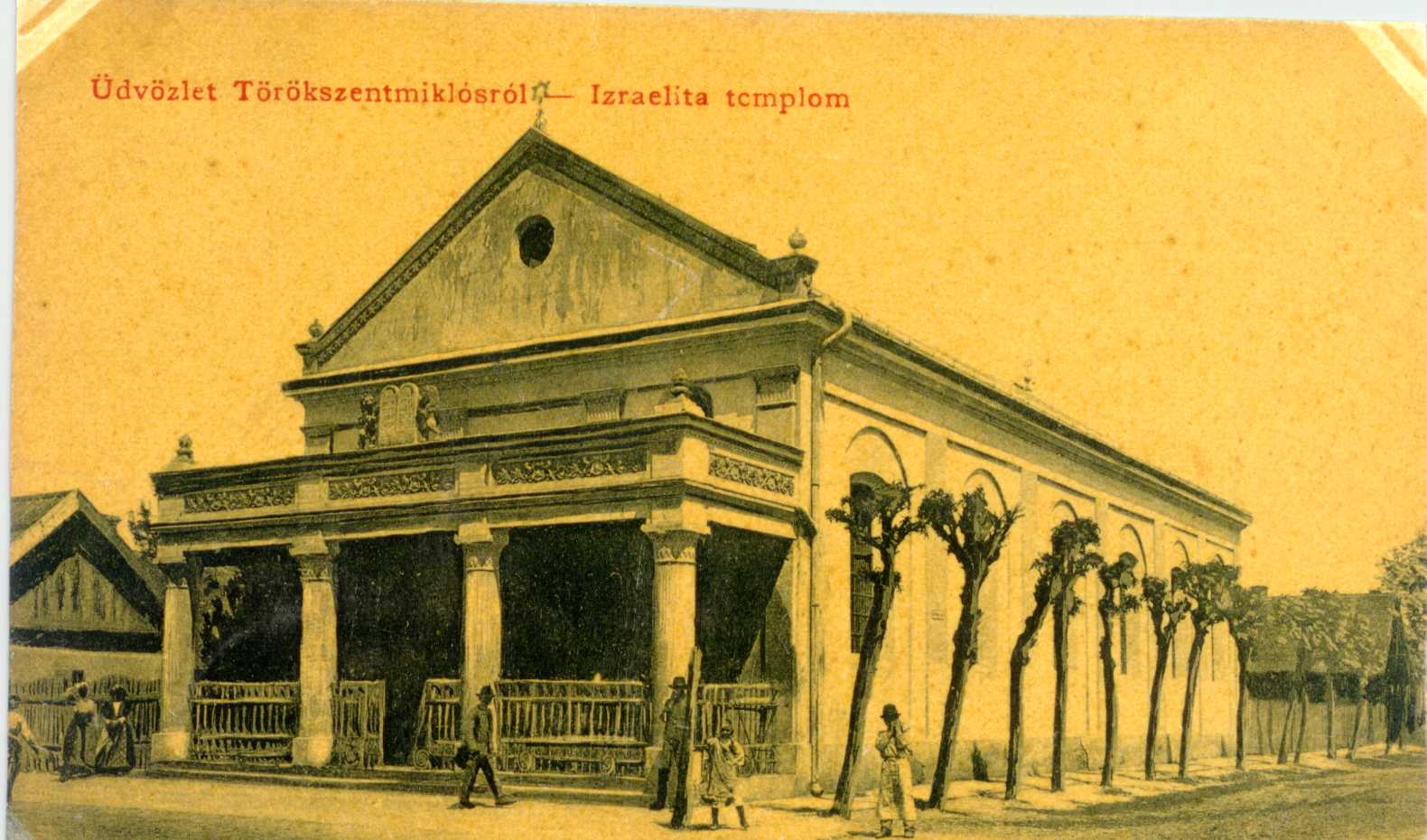
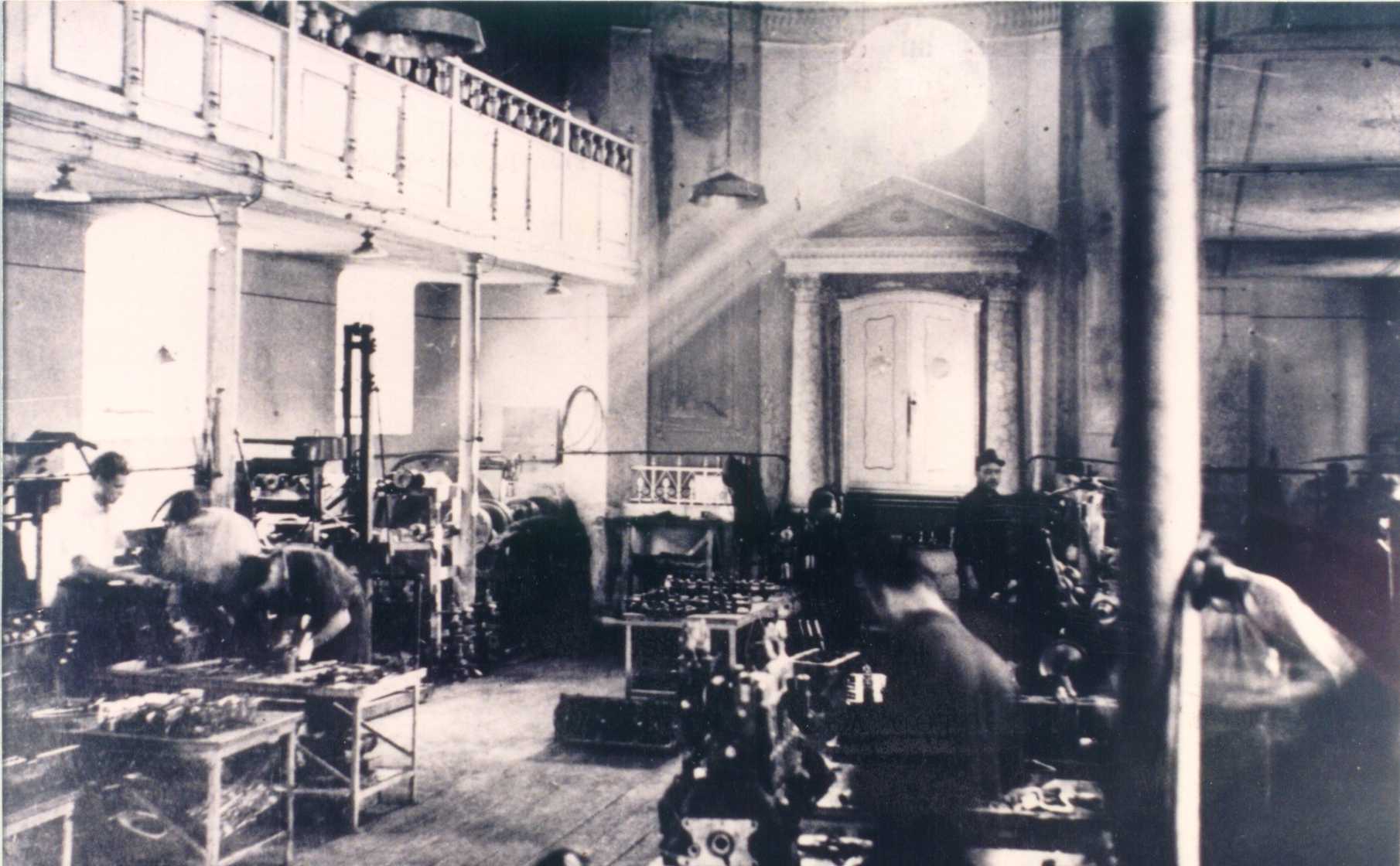
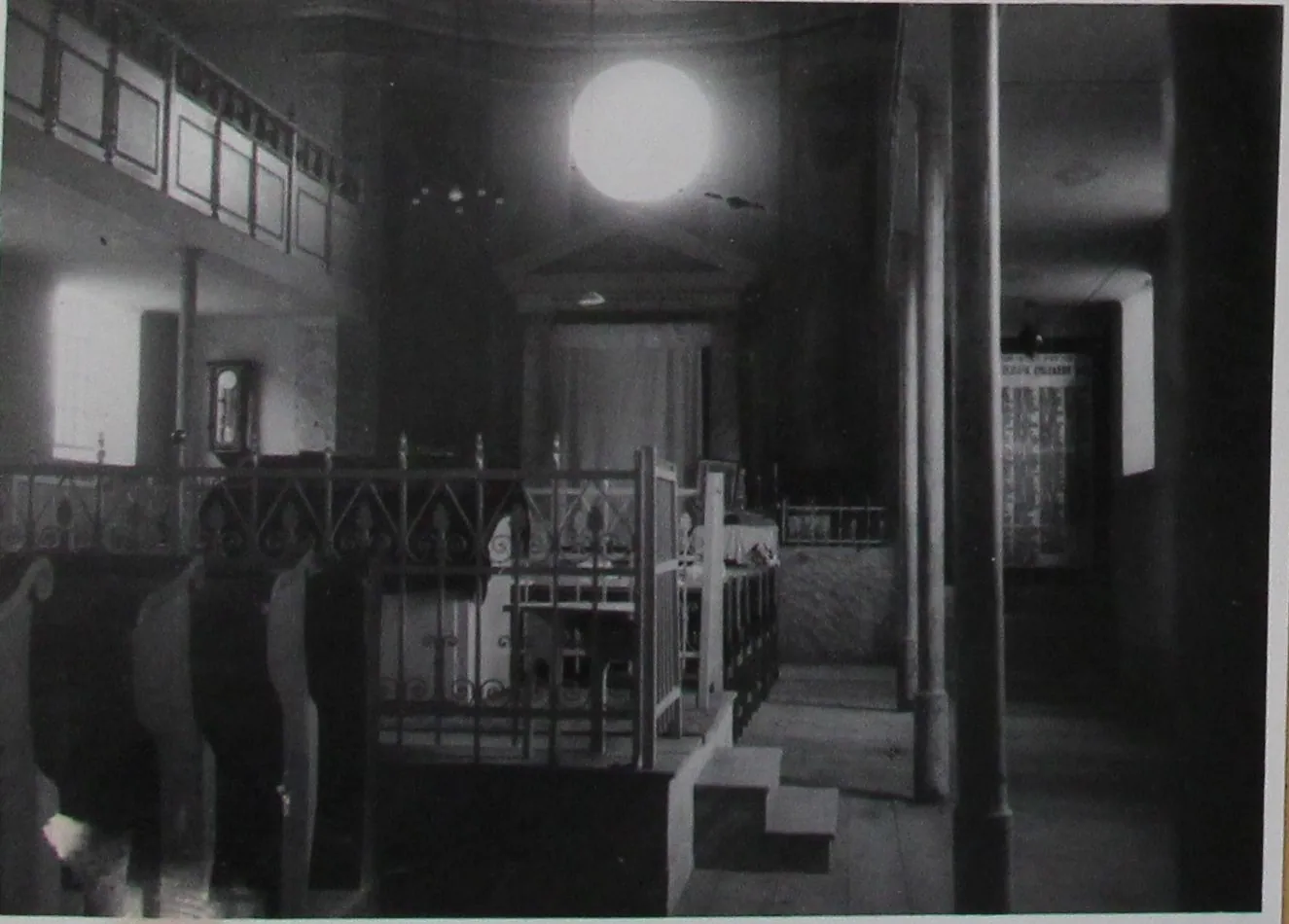
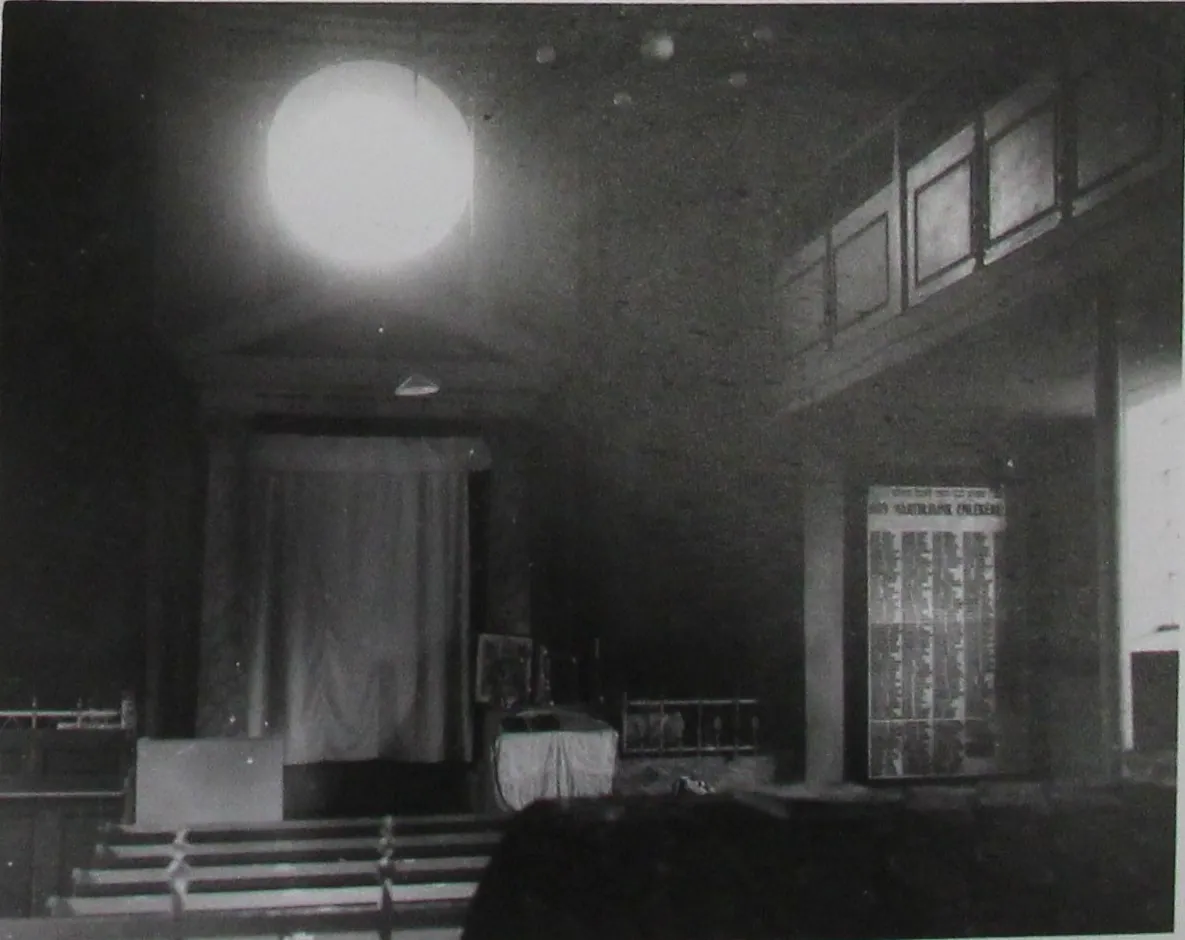
For well over a century the synagogue on the corner of today's Bocskai út and Batthyány út was the centre of Jewish life in Törökszentmiklós, a market town on the Great Hungarian Plain east of Szolnok. The Magyar Zsidó Lexikon records that the community built its temple and school in 1857 with the 6,000-forint legacy of Nathan Austerlitz, a physician who had come from Nikolsburg in Moravia. It was the only synagogue the town is known to have had, and it stood through the tenures of five rabbis, beginning with Pinkász Stein, who shaped the conservative character of the congregation. Photographs in the Hungarian Jewish Museum and Archives show the building at three moments: on an early postcard captioned Izraelita templom, in the summer of 1944 with machinery filling the prayer hall, and in 1950 and 1960, when the returned survivors had put it back into use and placed a marble tablet with the names of their dead inside. The building outlasted the deportation of 1944 but not the decline of the community that followed. A plaque set up on the site in 2014 by the town and the Szolnok Jewish community states that the synagogue stood there from 1857 to 1980; a Hungarian Jewish newspaper report says it was bulldozed under the atheist regime of the time.
Where it stood for 123 years
Historic: synagogue at the corner of the streets now called Bocskai út and Batthyány út, Törökszentmiklós (historic street names Unknown). Today: memorial plaque beside the residential building at Bocskai út 7, corner of Batthyány út, 5200 Törökszentmiklós, Hungary.
Abrir mapa ampliado →La comunidad judía
Jews settled in Törökszentmiklós in the first half of the nineteenth century. The 1840 census counted 45, and the Magyar Zsidó Lexikon notes ten families in 1842 who prayed in a room in the house of Farkas Stern and employed a functionary remembered as Reb Jechezkél. The first elders were Farkas Stern, József Weisz, József Moskovits and Sándor Schwartz. A burial society (Chevra Kadisa) was founded in 1854, and in 1855, when the community had grown to about fifty families, it elected its first rabbi, Pinkász Stein, and opened an elementary school that taught in Hungarian from the start. Two years later the bequest of the physician Nathan Austerlitz paid for a synagogue and school building. A women's association followed in 1870 and a society for clothing the poor in 1897. Numbers reached 663 in 1880 and a peak of 755 in 1910, falling to about 670 in the late 1920s, when the lexicon listed 200 families, most of them traders, craftsmen and clerks, with Szajol and Tiszapüspöki attached to the registry district.
Arquitectura y diseño
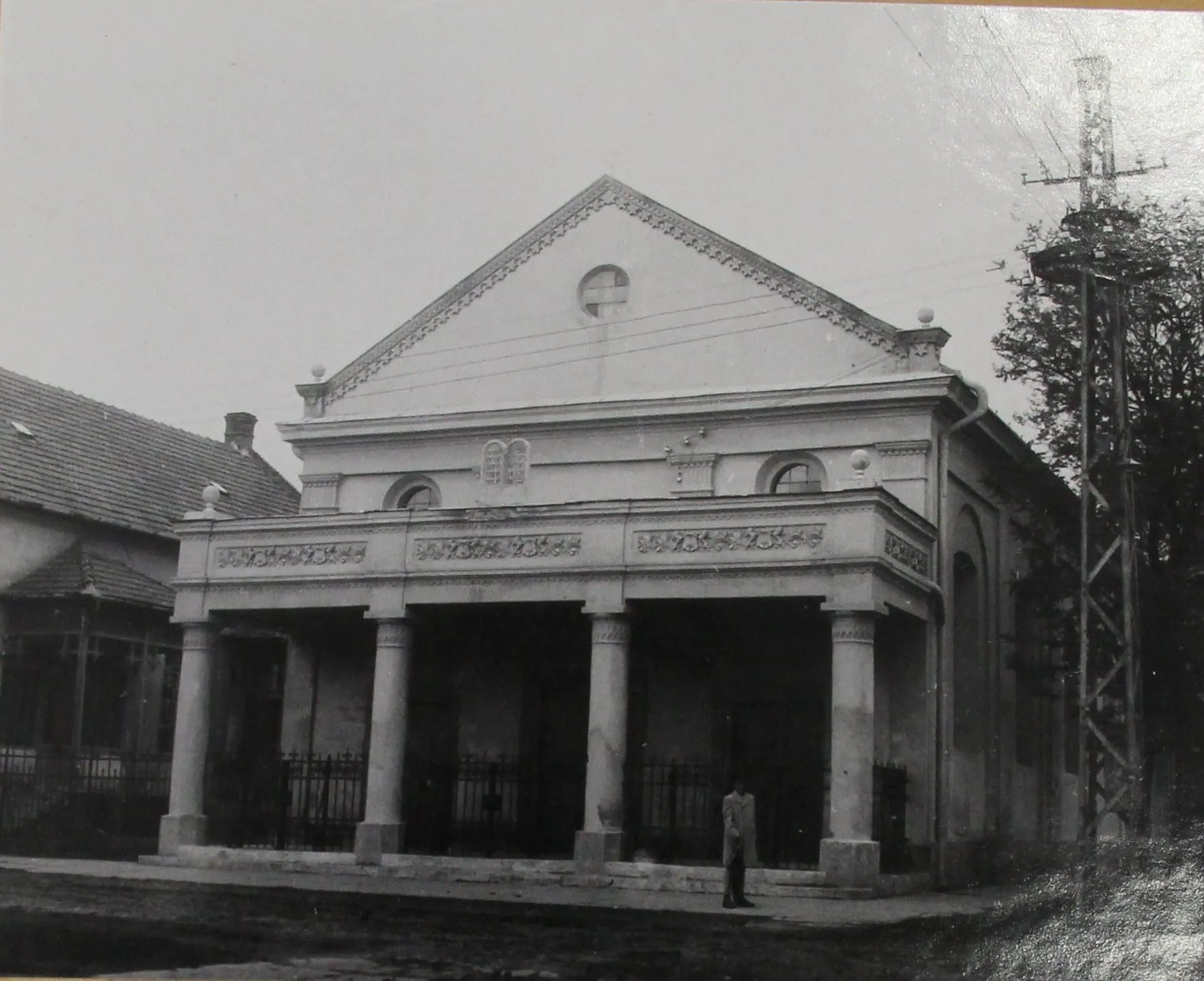
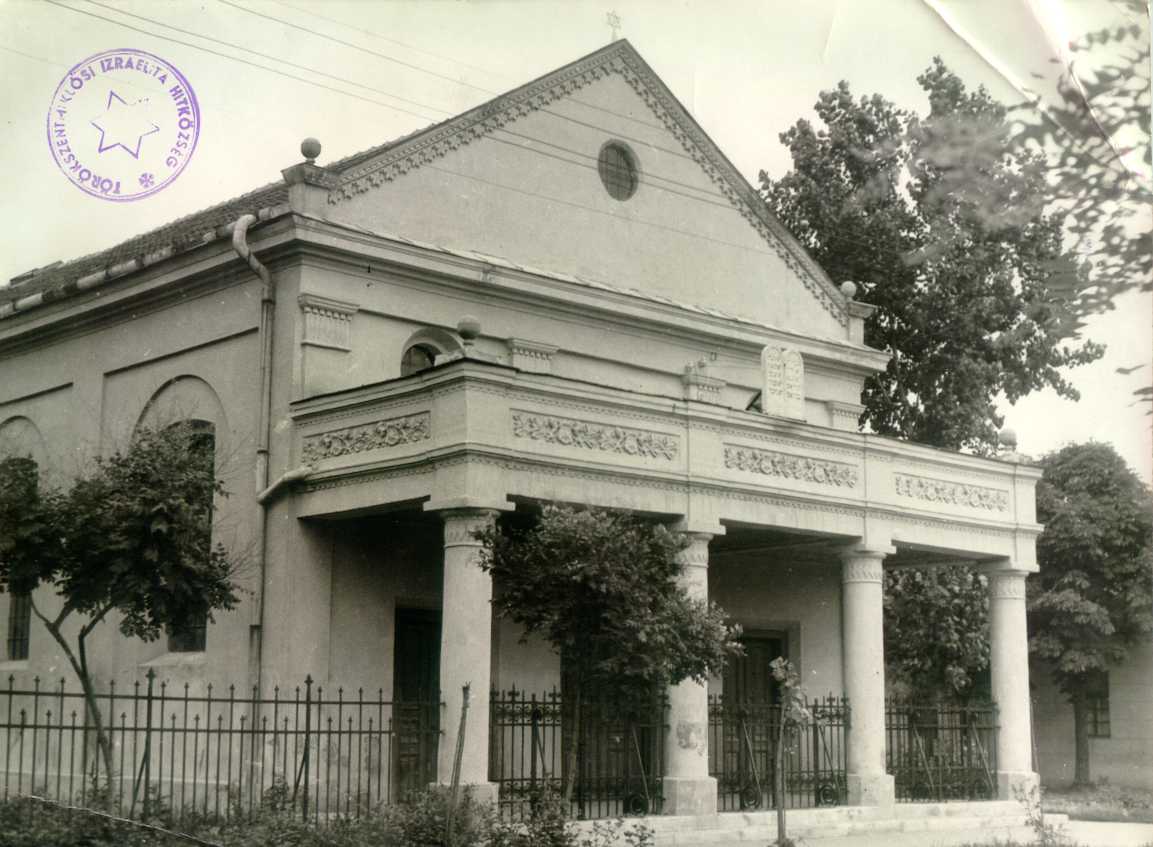
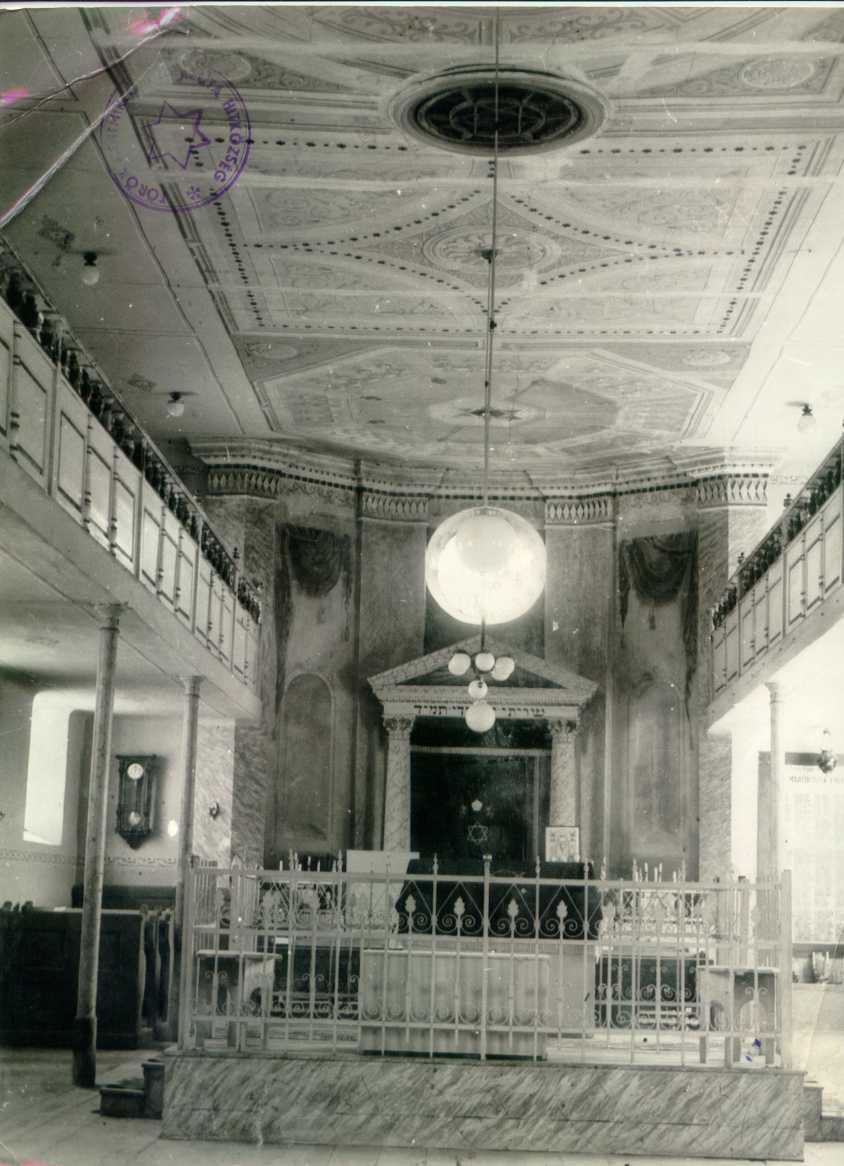
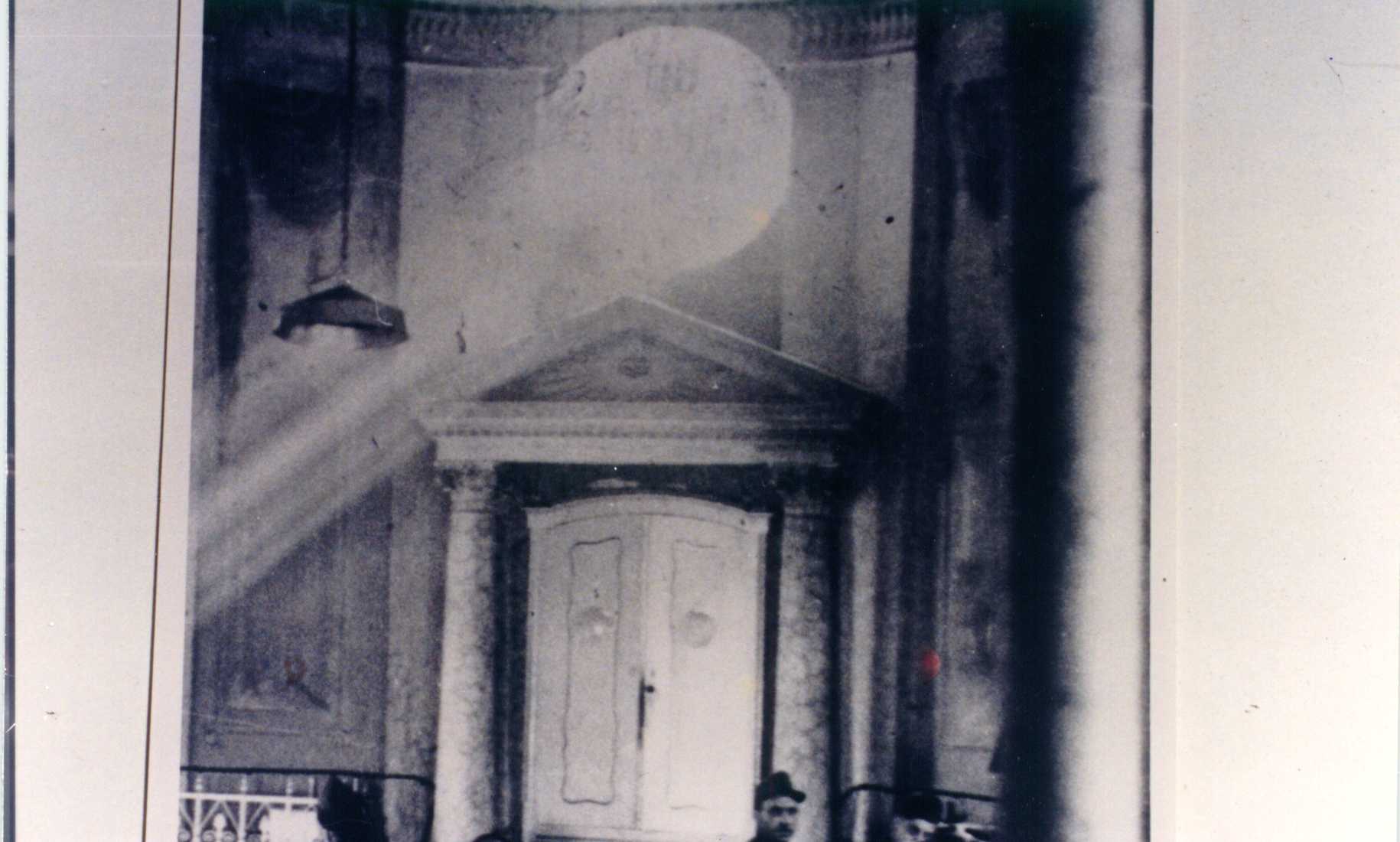
Historic photographs show a rectangular, plastered hall under a pitched roof, its gable end facing the street. The front carried a low triangular pediment edged with a decorative frieze and pierced by a round window; ball finials stood at the corners and, on the early postcard, a Star of David at the apex. Below, a portico of four stout columns with ornamented capitals supported a flat terrace whose parapet was set with panels of foliage relief. Above the terrace sat the Tablets of the Law, flanked on the postcard by two lions that had gone by 1950, and two small round-headed windows. The long side walls were divided by pilasters into bays with tall round-arched windows. Inside, women's galleries with panelled and balustraded fronts ran along the sides on slender columns. The flat ceiling was painted with geometric panels and rosettes. The east end closed in a shallow polygonal niche painted with draperies, holding an Ark framed by two columns and a pediment, with a large round window above. A raised bimah enclosed by a wrought-iron railing stood before the Ark. The designer is not recorded in the sources consulted.
La vida dentro de la sinagoga
Under Pinkász Stein, rabbi from 1855 to 1886, the congregation was organised on conservative lines; his regulations were still in force in 1929. At the schism of Hungarian Jewry it refused both camps and remained Status Quo, later registered as a Congress (Neolog) community on condition that this would not alter its inner life, and in 1924 formally returned to Status Quo. Stein's son Mayer Miksa Stein succeeded him and, though equally conservative, preached in Hungarian in the temple. Dr Mór Weisz, rabbi from 1896 to 1915, was a noted preacher and scholar who wrote the history of the local burial society; his funeral service was held in the synagogue. Hermann Strausz served briefly from 1919, and József Herskovits was elected in 1925. Around the synagogue stood the community school with a Talmud Torah course, and the burial society, women's association and a branch of the cultural association OMIKE worked alongside it. During the First World War the community maintained a hospital; 75 members served and 14 fell.
Destrucción
In the spring of 1944, under Nazi German occupation, the Hungarian authorities forced the Jews of the town into ghettos and in June removed them to Szolnok. A photograph in the Hungarian Jewish Museum and Archives shows the emptied synagogue in June and July 1944 in use as an assembly workshop, with machines and workbenches standing in front of the Ark; an account derived from Pinkas Hakehillot attributes the conversion to the Nazis and calls it a garage. Survivors repaired the building after the war and prayed in it again, and it was still intact and in the hands of the Jewish community when it was photographed in 1950 and 1960. As the congregation dwindled the building lost its users, and in 1980 it was demolished by the Communists: the Jewish weekly Új Élet records that those in power under the atheist regime had the house of prayer bulldozed. The sources consulted do not say which body ordered the work or the exact date, and the martyrs' tablet was moved to the Jewish cemetery.
El destino de la comunidad
The 1941 census counted 520 Jews in Törökszentmiklós. Men were called up for forced labour service, and more than twenty are reported to have died on the eastern front. After the Nazi German occupation of March 1944 the Hungarian authorities set up ghettos in the town for local Jews and those of six nearby villages, 683 people according to one account. In June they were taken to the collection camp at the Szolnok sugar factory, where 4,666 Jews from the region were held, and deported by Hungarian gendarmerie in two transports at the end of the month, one to Strasshof in Austria and one to Auschwitz. Rabbi József Herskovits and his family were taken from Szolnok to Budapest before the Auschwitz train left and are reported to have survived. Most of those sent to Austria returned; few came back from Auschwitz. The survivors recorded 319 murdered members of the community on a marble tablet. Many younger people left for Israel after 1948, about 90 Jews remained in 1962, and the community later ceased to exist.
El lugar hoy
The synagogue plot at the corner of Bocskai út and Batthyány út is now occupied by a multi-storey residential building. In front of it, on the Bocskai út side, a small memorial with a plaque placed in 2014 by the town council and the Szolnok Jewish community states that the synagogue stood here from 1857 to 1980. Nothing of the synagogue itself is known to survive above ground. The marble tablet with the names of the 319 victims, once inside the synagogue, was moved to the Jewish cemetery on Tenyői út, where the municipality built a new setting for the names in 2026.
Nombres destacados
Pinkász Stein
Unknown–1886First rabbi of Törökszentmiklós (1855–1886)Elected in 1855, when the community numbered about fifty families, Stein was rabbi when the synagogue and school were built in 1857 and led the congregation for 31 years. He organised its institutions on conservative lines and drew up regulations still in force in 1929. Under him the community rejected the reform movement, attended the Orthodox conference but declined the Orthodox statutes, and remained Status Quo.
Biografía o fuente →Mayer Miksa Stein
1865–1933Rabbi of Törökszentmiklós (1886–1896), later chief rabbi of Nagyszombat (Trnava)Born in Törökszentmiklós, the son of Rabbi Pinkász Stein, he succeeded his father in 1886 and served the synagogue for ten years. Conservative like his father, he nevertheless preached there in Hungarian. In 1896 he moved to Nagyszombat, where he founded a yeshiva and edited the journal Magyar Rabbik. A sentence of his is quoted on the 2014 memorial plaque at the synagogue site.
Biografía o fuente →Mór Weisz
1867–1915Chief rabbi of Törökszentmiklós (1896–1915)Born in Sátoraljaújhely, the son of a rabbi, Dr Weisz followed Mayer Miksa Stein in 1896 and served for almost twenty years. He was known as a fine preacher and scholar, sat on the town's representative body, and wrote a history of the local Chevra Kadisa for its fiftieth anniversary in 1904. When he died in 1915 his coffin was brought into the synagogue for the farewell service.
Biografía o fuente →József Herskovits
UnknownChief rabbi of Törökszentmiklós from 1925Elected in 1925 after the rabbinate had stood vacant for several years, Herskovits led the congregation through the anti-Jewish laws and was its rabbi when the community was ghettoised in 1944. He was taken with his congregants to the Szolnok sugar-factory camp, from which he and his family were removed to Budapest before the Auschwitz transport left; accounts differ on how this came about. He is reported to have survived the war in Budapest.
Biografía o fuente →Nathan Austerlitz
UnknownPhysician and benefactor whose bequest paid for the synagogueA physician who had come to the town from Nikolsburg (Mikulov) in Moravia, Austerlitz left the Jewish community a legacy of 6,000 forints. According to the Magyar Zsidó Lexikon this bequest financed the building of the temple and the community school in 1857, making him in effect the founder of the synagogue. Nothing further about his life was found in the sources consulted.
Biografía o fuente →¿Tiene algo que aportar?
Fotografías, documentos, historias familiares o recuerdos de esta sinagoga y su comunidad ayudan a mantener viva su historia.
- Törökszentmiklós (entry in Magyar Zsidó Lexikon, 1929, p. 908)
- Bocskaistrasse, Holocaustdenkmal, Tafel, 2023 Törökszentmiklós (photograph of the 2014 memorial plaque)
- Bocskaistrasse, Holocaustdenkmal, 2023 Törökszentmiklós (photograph of the memorial and the building behind it, with geotag)
- Reverse geocoding of the memorial coordinates (Bocskai út 7, Törökszentmiklós)
- Megemlékezések Szentendrén és Törökszentmiklóson a holokauszt magyarországi áldozatainak emléknapján
- Emlékművet avattak Törökszentmiklóson, Új Élet, vol. 81 no. 12, 1 July 2026, p. 4
- Törökszentmiklósi zsinagóga (postcard, F96.404)
- Törökszentmiklósi zsinagóga belső képe (F88.21.1), June 1944
- Törökszentmiklósi zsinagóga (88.4.1), 1960
- Törökszentmiklósi zsinagóga belső képe (F88.4.2), 1960
- Törökszentmiklós, zsinagóga és emlékmű (F16.103), 1950
- Randolph L. Braham, A népirtás politikája: a holocaust Magyarországon, vol. 2, pp. 697 and 717 (note 119)
- טרקסנטמיקלוש (Törökszentmiklós), Hebrew Wikipedia, section on the Jewish community (summarising Pinkas Hakehillot Hungary and the ANU Museum database)
- Stein Mayer Miksa
- Stein Mayer Miksa (entry in Magyar Zsidó Lexikon, 1929, p. 805)
- Weisz Mór (törökszentmiklósi rabbi)
- Szolnok egykori főrabbijáról nevezett el sétányt a város
- Ó ha megnyílna az ajka e templomfalaknak
- Törökszentmiklós Jewish cemetery
Share a memory or thought
No comments yet. Be the first to add one.