
Historia Synagogue of Trutnov
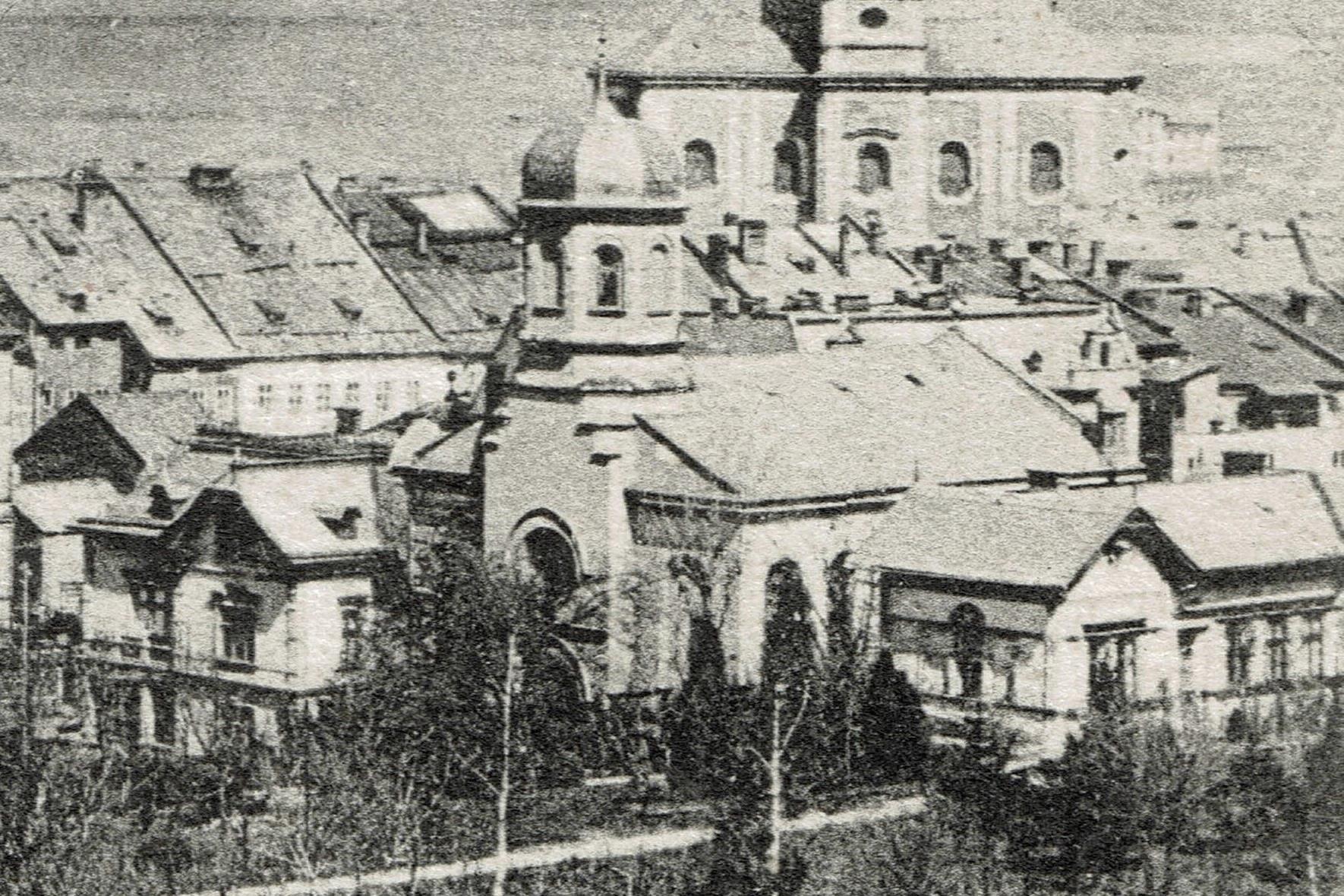
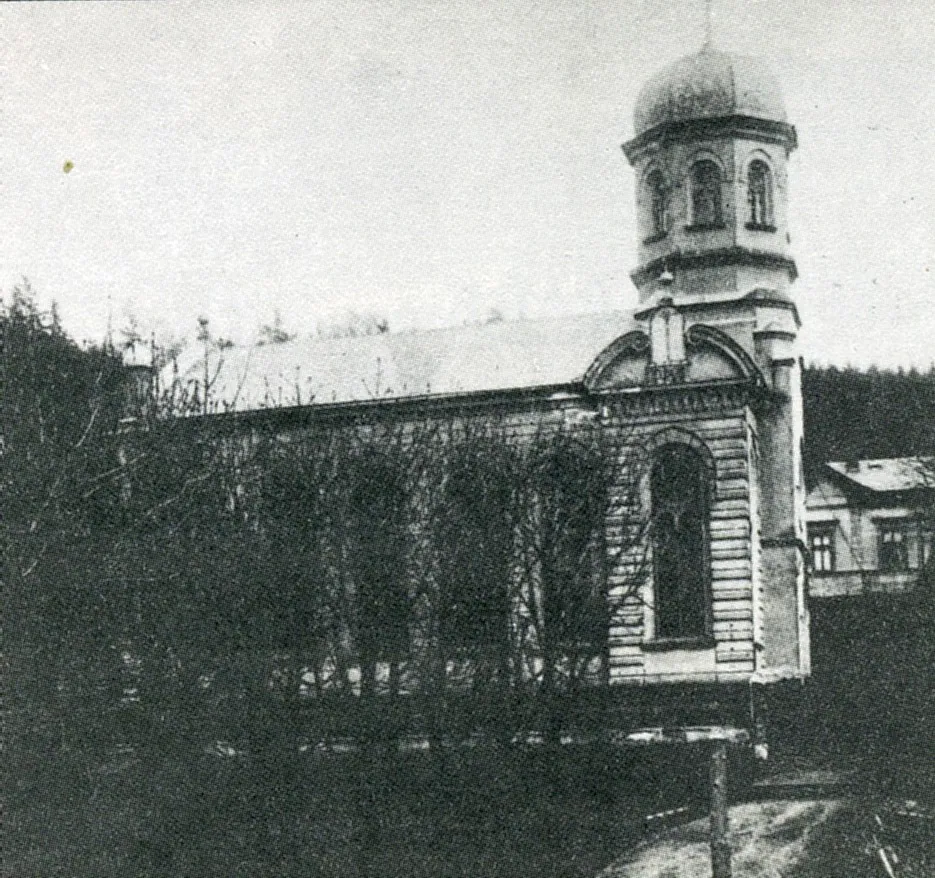
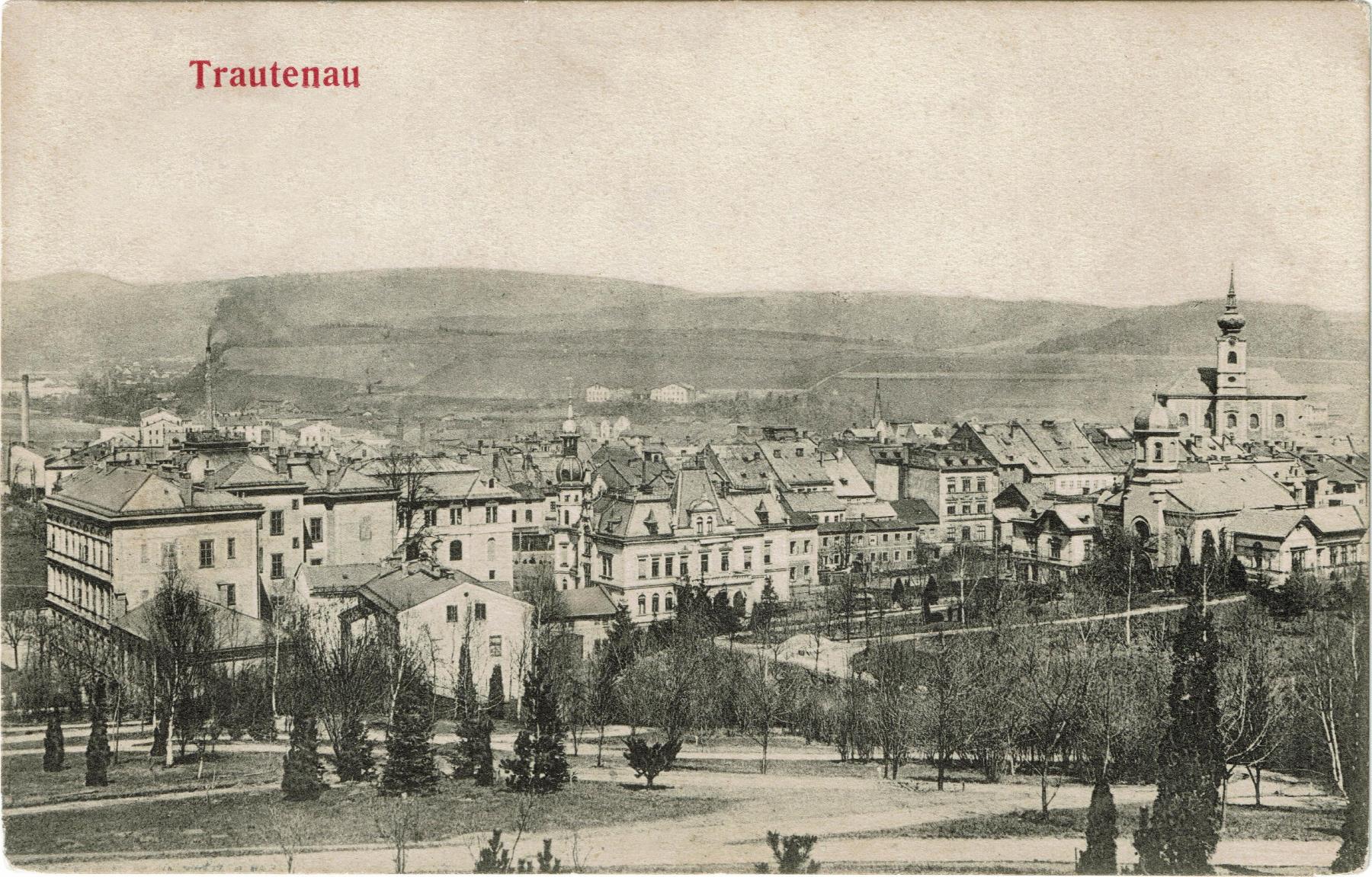
Trutnov, known in German as Trautenau, is a textile town in north-eastern Bohemia at the foot of the Giant Mountains. Its modern Jewish community was small but influential: in the 1880s about 300 people, 3 per cent of the population, declared the Jewish faith, and in 1930 about 369. Its members included doctors, lawyers, bankers and industrialists, and almost all spoke German. Until 1885 the congregation worshipped in rented rooms in the German secondary school and in a house on the main square. The synagogue was built in 1882–1885 on Na Struze street, at the foot of Janský vrch hill south of the main square, to designs by the town builder Konrad Kühn. It was a single-nave building, 21 by 14 metres, in the Moorish and Neo-Renaissance styles, with a domed tower over the west front that could be seen from all over the town. It opened on 3 September 1885 in the presence of distinguished guests and townspeople. After the Munich Agreement the Wehrmacht occupied Trutnov on 8 October 1938. During the Kristallnacht pogrom in November 1938 the synagogue was looted, set on fire and burned to the ground.
Where it stood for 53 years
Historic: Rinnelgasse (Na Struze), Trautenau. Present day: memorial area, Na Struze / town park, Trutnov, Czech Republic. Approximate.
Otwórz większą mapę →Społeczność żydowska
The first documented Jewish residents of modern Trutnov appear in the 1880s, when about 300 people declared the Jewish faith, around 3 per cent of the town. The community never became large – in the 1930 census about 369 people, some 2 per cent, gave their religion as Jewish – but it was influential in the town's life. Its members were doctors, lawyers, bankers, financiers and entrepreneurs in the textile industry, among them Arnošt Porák, and almost all used German as their first language. At the opening of the synagogue in 1885 the community head, Isidor Mautner, thanked Emperor Franz Joseph for the civil rights granted to Jews and stressed the Jews' wish to help preserve the German character of the town. The community's last rabbis were Jakob Bader (until 1930), Dr Peter Freund (1930–1937) and Dr Leiser Engelstein (1937–1938).
Architektura i projekt
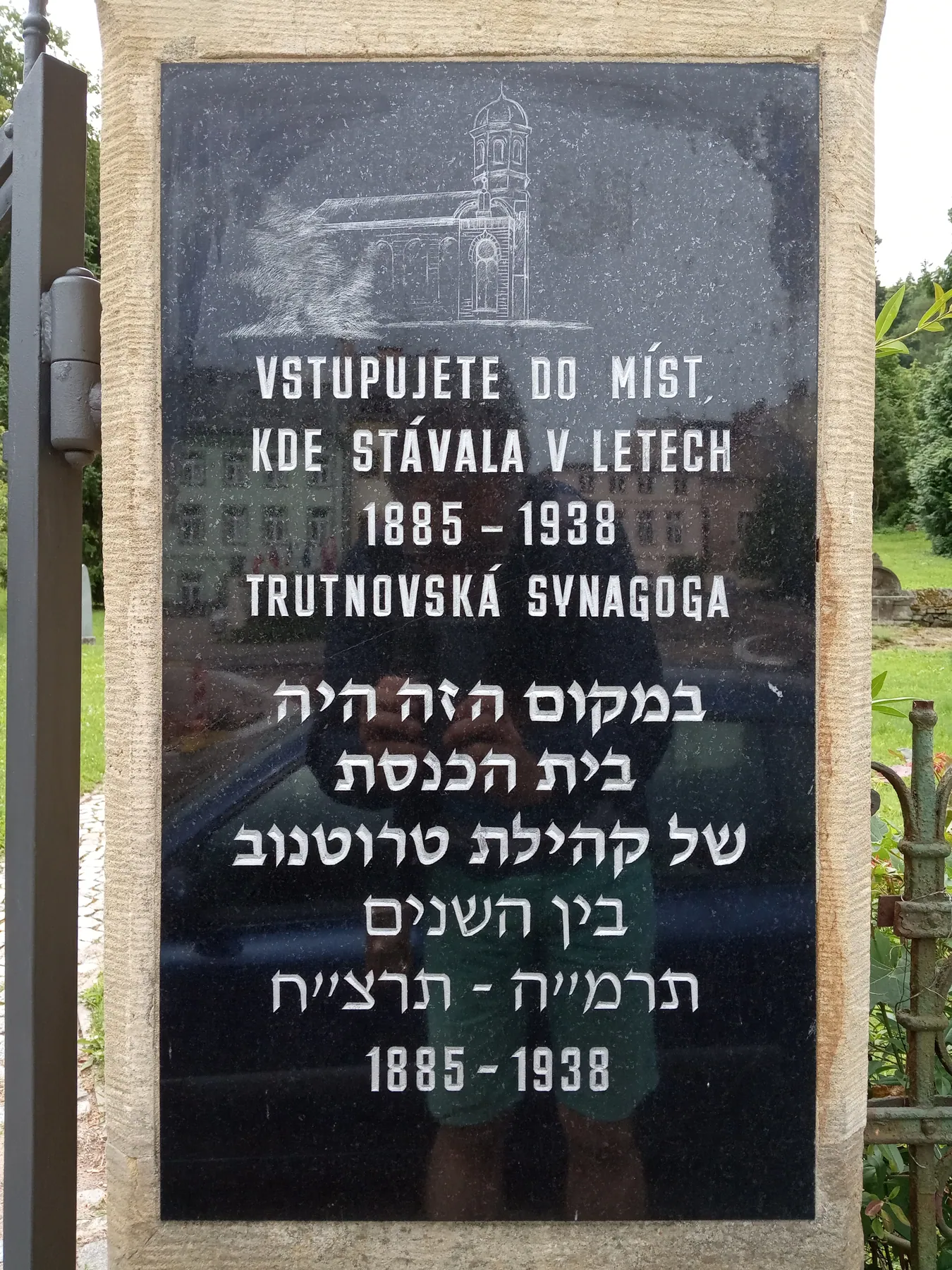
The synagogue was designed by the Trutnov town builder Konrad Kühn as a free-standing, single-nave building in the then fashionable Moorish and Neo-Renaissance styles; German Wikipedia describes it as Neo-Renaissance with Neo-Romanesque elements. It had a rectangular plan measuring 21 by 14 metres. Its most striking feature was a tower with a dome placed above the west front, which made the synagogue one of the town's landmarks, visible from everywhere and unmistakable. The main hall held 176 seats for men, 16 of them for guests. The women's gallery, reached by a separate entrance up a few steps to the right of the main door, held 120 seats, so the building could hold the whole community when needed.
Życie w synagodze
The opening on 3 September 1885 was a civic occasion attended by many guests and townspeople. In his speech the community head Isidor Mautner thanked the emperor, whose tolerant rule guaranteed Jews their civil rights, and emphasised the Jews' efforts to preserve the town's German character – a loyalty that, Czech Wikipedia notes, did not save them fifty years later. For fifty-three years the synagogue served a congregation of a few hundred people, most of them German-speaking professionals and business families. It was led in its final years by Rabbi Jakob Bader, who served until 1930, Dr Peter Freund from 1930 to 1937, and Dr Leiser Engelstein, rabbi from 1937 until the destruction of 1938.
Zniszczenie
In September 1938 the Munich Agreement handed the Sudetenland to Nazi Germany, and the Wehrmacht entered Trutnov on 8 October 1938. During the Kristallnacht pogrom in November 1938 the synagogue was looted, set on fire and burned down to its foundations. German Wikipedia states that Sudeten German members of the Nazi SA burned it on 9 November 1938; Czech Wikipedia gives the date as 10 November. The earlier catalogue listing said it burned in October 1938, a month before Kristallnacht, but the sources consulted for this entry place its destruction in the November pogrom. Only remains of the foundations were left, and the synagogue was never rebuilt.
Los społeczności
Most of the Jews of Trutnov fled into the Czech interior after the Munich Agreement and the German occupation of October 1938. There they were caught by the German occupation of Bohemia and Moravia in March 1939 and, like the other Jews of the Protectorate, were deported from 1941 onwards through Terezín to the ghettos and death camps in the east. According to Czech Wikipedia, almost all the Jews of Trutnov were murdered in the Shoah. The handful who returned after the war soon moved away, mostly to Israel, and no one in the town today declares the Jewish faith.
Miejsce dzisiaj
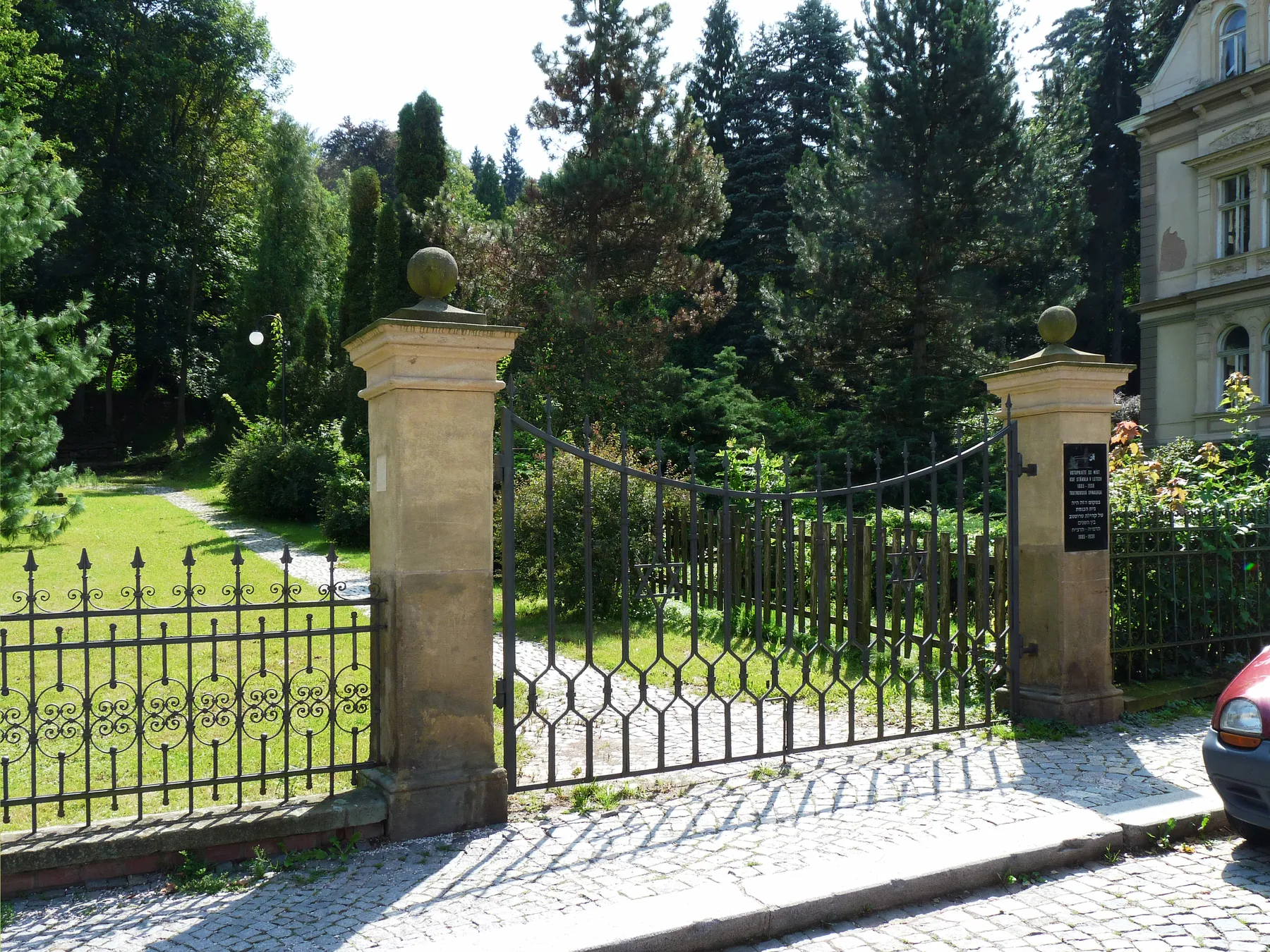
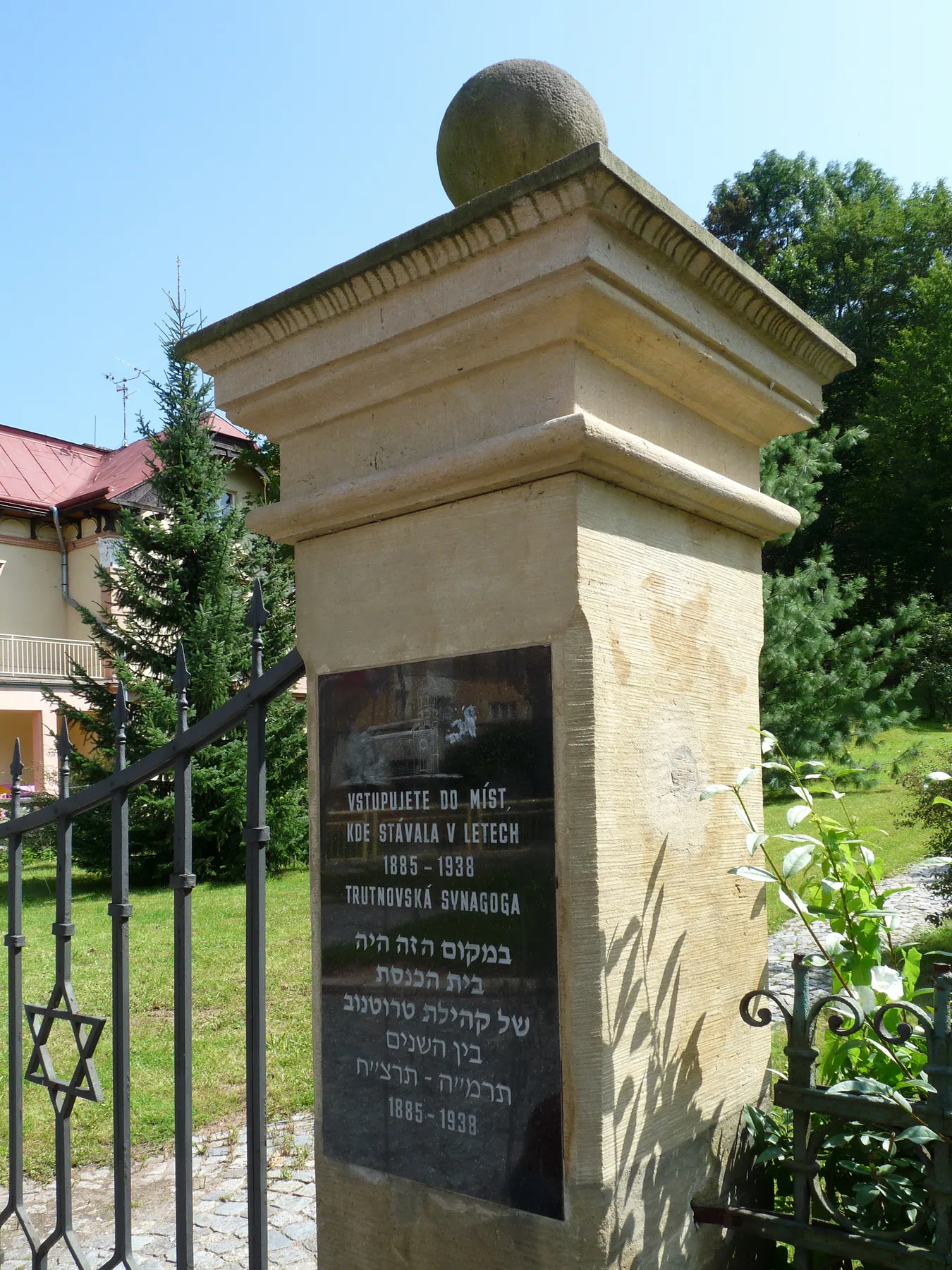
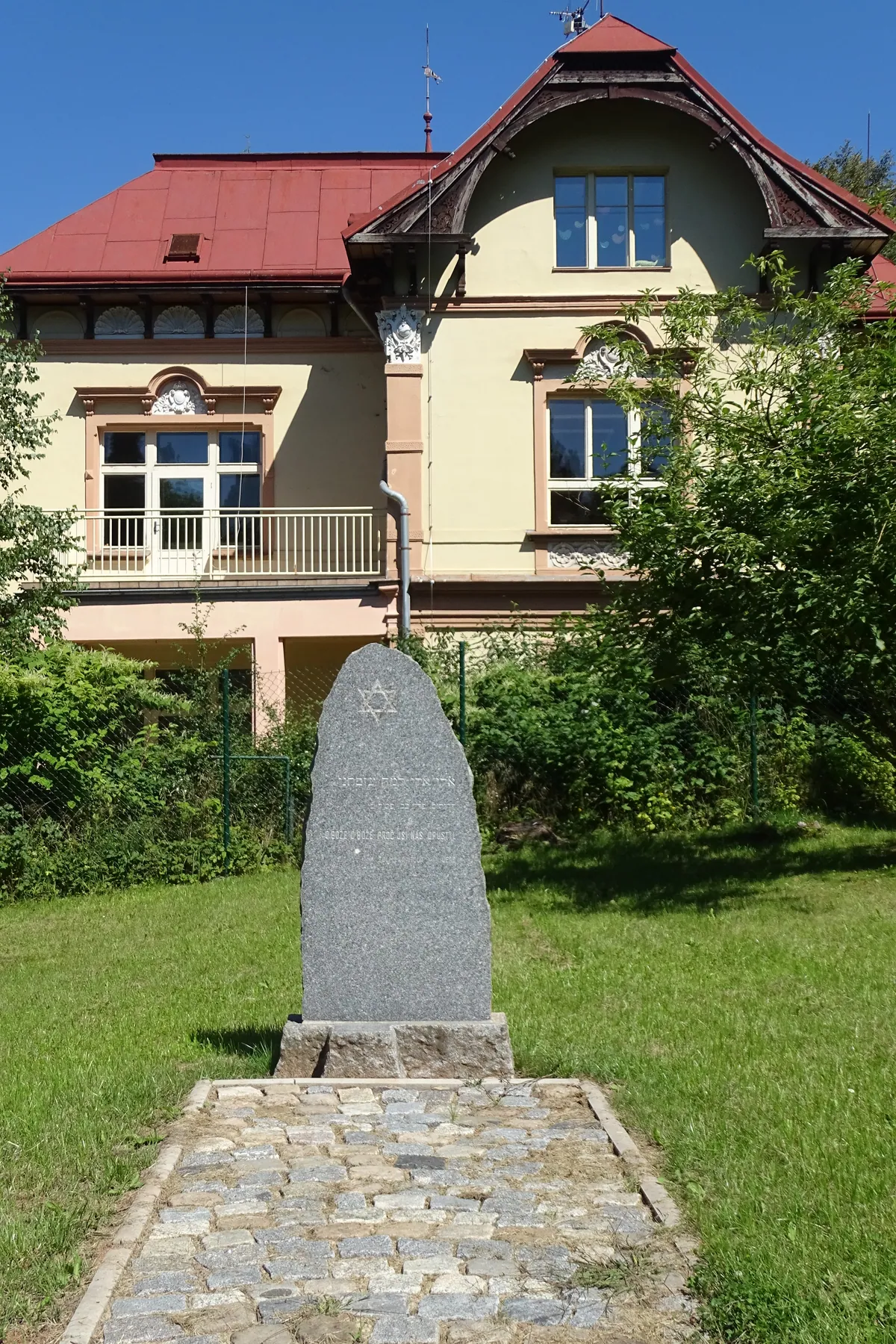
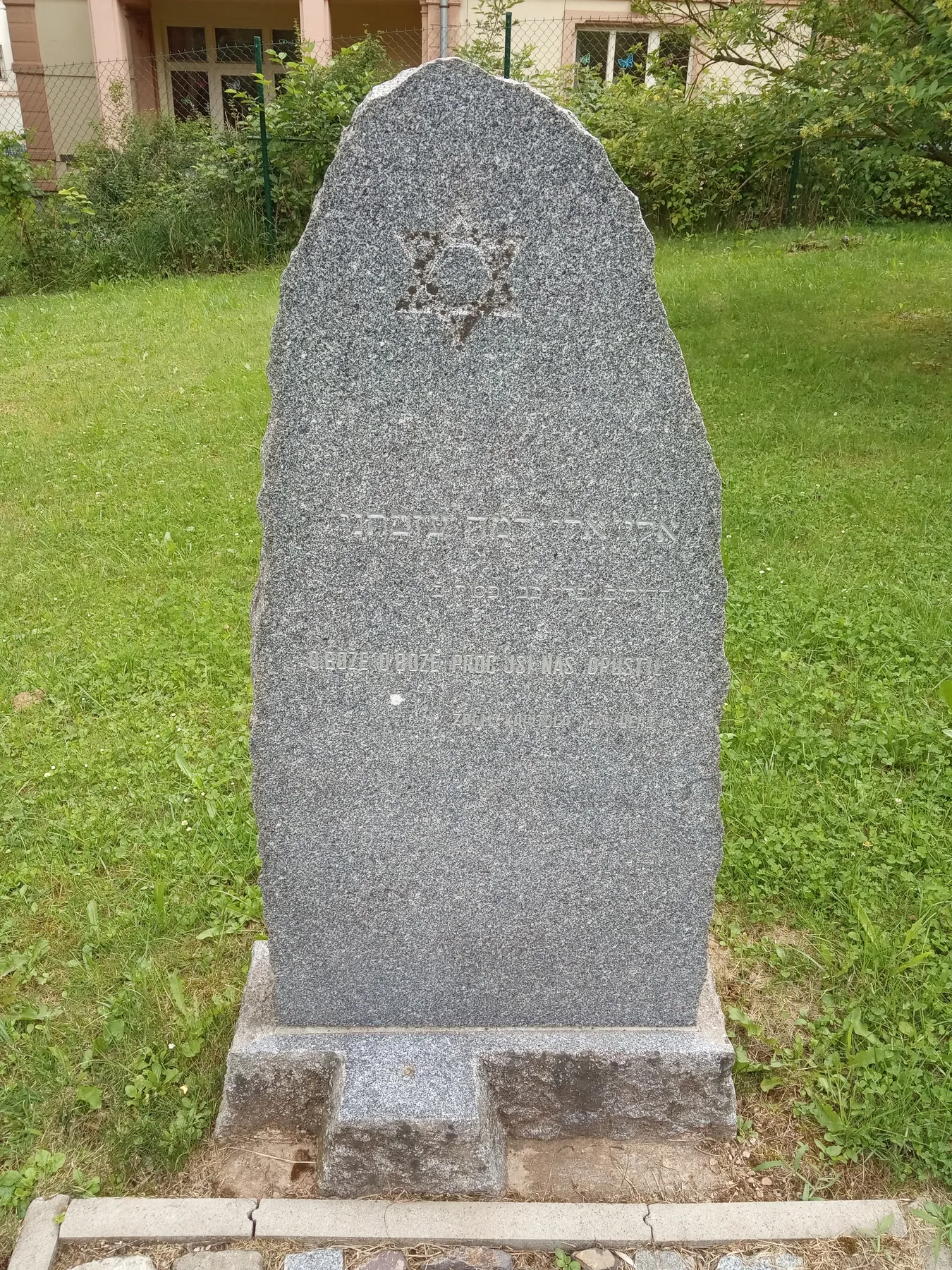
Nothing of the synagogue survives except remains of its foundations. The site on Na Struze street, at the foot of Janský vrch hill below the main square, is now a modest memorial area in the town park. A memorial was unveiled there on 11 November 1998; it was damaged by an unknown vandal in 2003, on the 65th anniversary of the synagogue's destruction. A memorial plaque in the town park also commemorates the synagogue. Its appearance is known from postcards and photographs taken before the First World War.
Ważne postacie
Konrad Kühn
19th centuryTown builder and architectKonrad Kühn was the town builder of Trutnov. He designed the synagogue as a free-standing, single-nave building in the Moorish and Neo-Renaissance styles, with a domed tower over its west front that became one of the landmarks of the town. It was built between 1882 and 1885 and opened on 3 September 1885.
Biografia lub źródło →Isidor Mautner
19th centuryHead of the Jewish community in 1885Isidor Mautner headed the Trutnov Jewish community when the synagogue opened on 3 September 1885. In his opening speech he thanked Emperor Franz Joseph, whose tolerant rule guaranteed Jews their civil rights, and stressed that the town's Jews wished to help preserve its German character, a loyalty that did not protect them in 1938.
Biografia lub źródło →Leiser Engelstein
20th centuryLast rabbi of Trutnov (1937–1938)Dr Leiser Engelstein was the last rabbi of the Trutnov synagogue. He succeeded Dr Peter Freund in 1937 and served the community for little more than a year before the Munich Agreement, the German occupation of the town in October 1938 and the burning of the synagogue in the November pogrom brought Jewish life in Trutnov to an end.
Biografia lub źródło →Czy masz coś do przekazania?
Zdjęcia, dokumenty, historie rodzinne lub wspomnienia o tej synagodze i jej społeczności pomagają zachować jej historię.
Share a memory or thought
No comments yet. Be the first to add one.