

Die Geschichte von Floridsdorf Synagogue, Vienna
Floridsdorf, on the left bank of the Danube, was an independent town north of Vienna when its Jews built their synagogue in 1875-77. The congregation, organised as the Israelitische Cultusgemeinde Floridsdorf, put up a plain brick hall with women's galleries on a plot between Schindlergasse, now Freytaggasse 25, and Holzmeistergasse 12, where an administration building followed in 1898-1900 and a heated winter prayer hall in 1905. The design is credited by the last rabbi, Moses Rosenmann, to the government architect Andreas Streit; the surviving plans are signed by the builder Johann Schäffer.
Its first rabbi, Josef Samuel Bloch, appointed in 1877, became one of the best-known Jewish public figures in Austria, fighting the ritual-murder libels of August Rohling and sitting in the Reichsrat. Around 1910 the Floridsdorf community came under the Vienna Israelitische Kultusgemeinde, and from 1923 to 1938 Moses Rosenmann was its rabbi.
Because the local Nazi party had already taken over the building in spring 1938, it was not burned in the November Pogrom. It was sold under Nazi rule in 1941, returned to the Vienna community in 1948-49 and sold again in 1970. When the building itself was pulled down is not recorded in the sources read. A staff residence of the Floridsdorf hospital now stands on the site.
Where it stood for nearly 85 years
Historic: Wien XXI (Floridsdorf), Schindlergasse (later Heinrich-Schindler-Gasse 5) with entrance from Holzmeistergasse 12. Today: Freytaggasse 25 / Holzmeistergasse 12, 1210 Vienna (approximate pin on the plot).
Größere Karte öffnen →Die jüdische Gemeinde
Jews settled in Floridsdorf as the town grew into an industrial suburb in the later nineteenth century. When the synagogue was built in 1875-77 they formed an autonomous Israelitische Cultusgemeinde Floridsdorf; Bob Martens records that management of the temple passed from a Minjan association to this community in 1880. Around 1910 Floridsdorf was brought under the jurisdiction of the Israelitische Kultusgemeinde Wien. The congregation sustained a network of associations. A Chewra Kadischa burial society was founded in 1877, with Rudolf Fischer as cashier and Emil Fanto as its last chairman. Laura Bloch founded a women's charitable society in 1880; Henriette Grünwald presided over it when its statutes were revised in 1898, and Babette Rosenmann was its last chairwoman. A Talmud Thora society for religious teaching followed in 1886, with Simon Czuczka as cashier, and in 1907 Ferdinand Brüll and Rabbi Rosenmann helped found Chonen Dalim, which helped the poor and job seekers; Max Ticho was the last chairman of both. The size of the Jewish population of Floridsdorf has not been found in the sources read.
Architektur und Gestaltung
The synagogue was a modest three-aisled hall with galleries for women, lit mainly by its windows and without towers or other prominent features. A survey of 1939 called it a solid brick building with a gabled roof and judged its execution primitive; the Wien Geschichte Wiki suggests money was short, so ornament and costly materials were left out. The style is described as historicising classicism, with an east front in Renaissance manner and round-arched windows of Byzantine character. Martens describes Corinthian capitals on the ground-floor columns and round arches with ball ornaments on the gallery level, and decorated capitals at the tall street windows. The building was unheated, which is why a heated winter prayer hall was added in 1905; the extension also improved access to the women's gallery. The hall seated 234 men and 156 women. The surviving replacement plan in the Jewish Museum Vienna shows a facade with three tall round-headed windows, two floor plans and sections through the galleries and roof truss. Attribution is uncertain: Rosenmann named Andreas Streit, Streit's own work lists omit it, and one source names an M. Scheffner.
Leben in der Synagoge
The synagogue's first rabbi, Josef Samuel Bloch, arrived in 1877 and used his position to fight antisemitism. He accused the theology professor August Rohling of perjury over his ritual-murder claims, forcing Rohling to withdraw his lawsuit, and he sat in the Austrian Reichsrat from 1883 to 1895 while editing his Österreichische Wochenschrift, founded in 1884. Under him Floridsdorf, a small suburban congregation, had a rabbi of national standing. From 1923 to 1938 the pulpit was held by Moritz (Moses) Rosenmann, a scholar who wrote biographies of the Viennese preachers Isak Noa Mannheimer and Adolf Jellinek and who helped found the community's poor-relief society. Religious instruction was given through the Talmud Thora society, whose books were still in use in 1938. Before 1905 the hall had no heating, so in winter services moved to the new heated prayer room built beside it. Records of cantors, the liturgical rite of the congregation and its daily use have not been found in the sources read.
Zerstörung
The synagogue was not burned in the November Pogrom of 1938, because it had already been taken over. In spring 1938 the Nazi party local group Donaufeld occupied it. From 23 November 1938 the German Red Cross used it as a store, paying no rent. In 1940 Nazi party organisations including the Bund Deutscher Mädel used it, and the Nazi local group leader Johann Pressl leased it to a wholesale firm, Conrad Sild. The Vienna Kultusgemeinde regained its administration on 1 September 1940, and in December 1939 the building had been reported in good condition. On 30 April 1941 the community was made to sell the property to Alois and Marie Zacharias, the money going to the Nazi Central Office for Jewish Emigration. Heavy air raids devastated the area in spring 1945, and a TU Wien study states that after bomb hits the site fell into disrepair; an application to rebuild in 1949 was refused under a building freeze. When the remains were demolished, and by whom, is not recorded in the sources read. A TU Wien thesis abstract says instead that the Nazis destroyed it in the November Pogrom, which the other sources contradict.
Das Schicksal der Gemeinde
Nazi rule fell on the congregation's institutions at once. In March 1938 the books and savings book of the Talmud Thora society were seized and handed to the Gestapo, and on 14 March 1938 men of SA Brigade II took the cash of the poor-relief society Chonen Dalim from the flat of its cashier Rudolf Fischer. During 1938 and 1939 the Nazi Stillhaltekommissar dissolved the community's associations. Rabbi Moses Rosenmann fled to Palestine in 1938. The proceeds of the forced sale of the synagogue in 1941 went to the Nazi Central Office for Jewish Emigration, the agency that organised the expulsion and later the deportation of Vienna's Jews. How many Floridsdorf Jews emigrated, how many were deported and murdered, and how many survived has not been established in the sources read. After the war the Vienna Kultusgemeinde recovered the property through restitution rulings of 8 May 1948 and 16 September 1949, which rejected the buyers' claim for the purchase price, but no congregation was re-established in Floridsdorf, and the community sold the plot in 1970.
Der Ort heute
The plot runs between Freytaggasse 25 and Holzmeistergasse 12 in Floridsdorf. According to the Wien Geschichte Wiki a staff residence built for the Floridsdorf hospital now stands on the site, and Martens records a new building at Holzmeistergasse 12 erected in 1982-84. OpenStreetMap currently lists the building at Freytaggasse 25-27 as a hotel, which suggests the former staff residence has changed use; this has not been confirmed. In 1970 the Vienna community sold the property to Helwig Kritsch, and in 1995 it passed to the Helwig-Kritsch-Privatstiftung. Nothing of the synagogue survives above ground. A memorial plaque placed in 1988 and renewed in 2012 marks the site.
Bedeutende Namen
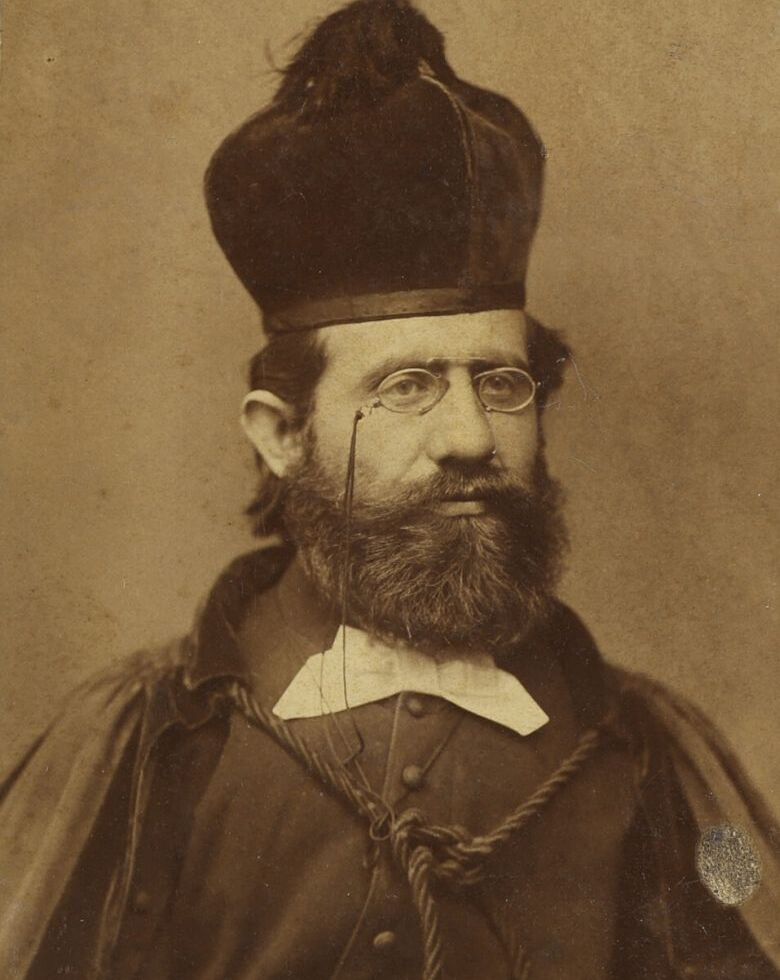
Josef Samuel Bloch
1850-1923Rabbi of Floridsdorf from 1877Born in Dukla, Galicia, Bloch became rabbi of the new Floridsdorf synagogue in 1877, the year it was completed. From there he gained national fame by accusing the theology professor August Rohling of perjury over ritual-murder libels, forcing Rohling to drop his suit. He founded the Österreichische Wochenschrift in 1884 and sat in the Reichsrat from 1883 to 1895. He died in Vienna on 1 October 1923.
Biografie oder Quelle →Moritz (Moses) Rosenmann
UnknownRabbi of Floridsdorf, 1923-1938Rosenmann was the last rabbi of the Floridsdorf synagogue, serving from 1923 to 1938. A scholar, he wrote biographies of the Viennese preachers Isak Noa Mannheimer and Adolf Jellinek, and in 1907 he helped found the congregation's poor-relief society Chonen Dalim. His account is the source for attributing the synagogue's design to Andreas Streit. He fled to Palestine in 1938.
Biografie oder Quelle →Andreas Streit
UnknownArchitect (attributed)The government architect (Baurat, later Oberbaurat) Andreas Streit is named by Rabbi Moses Rosenmann as the designer of the Floridsdorf synagogue of 1875-77, and the Wien Geschichte Wiki lists him with Johann Schäffer as its architect. Bob Martens notes that Streit's own biographies do not list the building, so the attribution remains uncertain.
Biografie oder Quelle →Johann Schäffer
UnknownMaster builderThe master builder Johann Schäffer signed the surviving plans for the Floridsdorf synagogue, and the Wien Geschichte Wiki names him with Andreas Streit as its architect. Bob Martens considers him most likely the executing builder of the hall completed in 1877.
Biografie oder Quelle →Haben Sie etwas beizutragen?
Fotos, Dokumente, Familiengeschichten oder Erinnerungen an diese Synagoge und ihre Gemeinde halten ihre Geschichte lebendig.
- Floridsdorfer Tempel
- Virtuelle Rekonstruktion der Synagoge in der Holzmeistergasse 12 im 21. Wiener Gemeindebezirk (diploma thesis, abstract)
- Rekonstruktion der Synagoge in Floridsdorf
- Pläne zur Synagoge in der Holzmeistergasse 12, Wien XXI. (Floridsdorf), Inv. Nr. 12405
- Josef Samuel Bloch
- Joseph Samuel Bloch
- Freytaggasse 25-27 and Holzmeistergasse 12, Floridsdorf (OpenStreetMap ways 152245271, 152245280)
Share a memory or thought
No comments yet. Be the first to add one.