
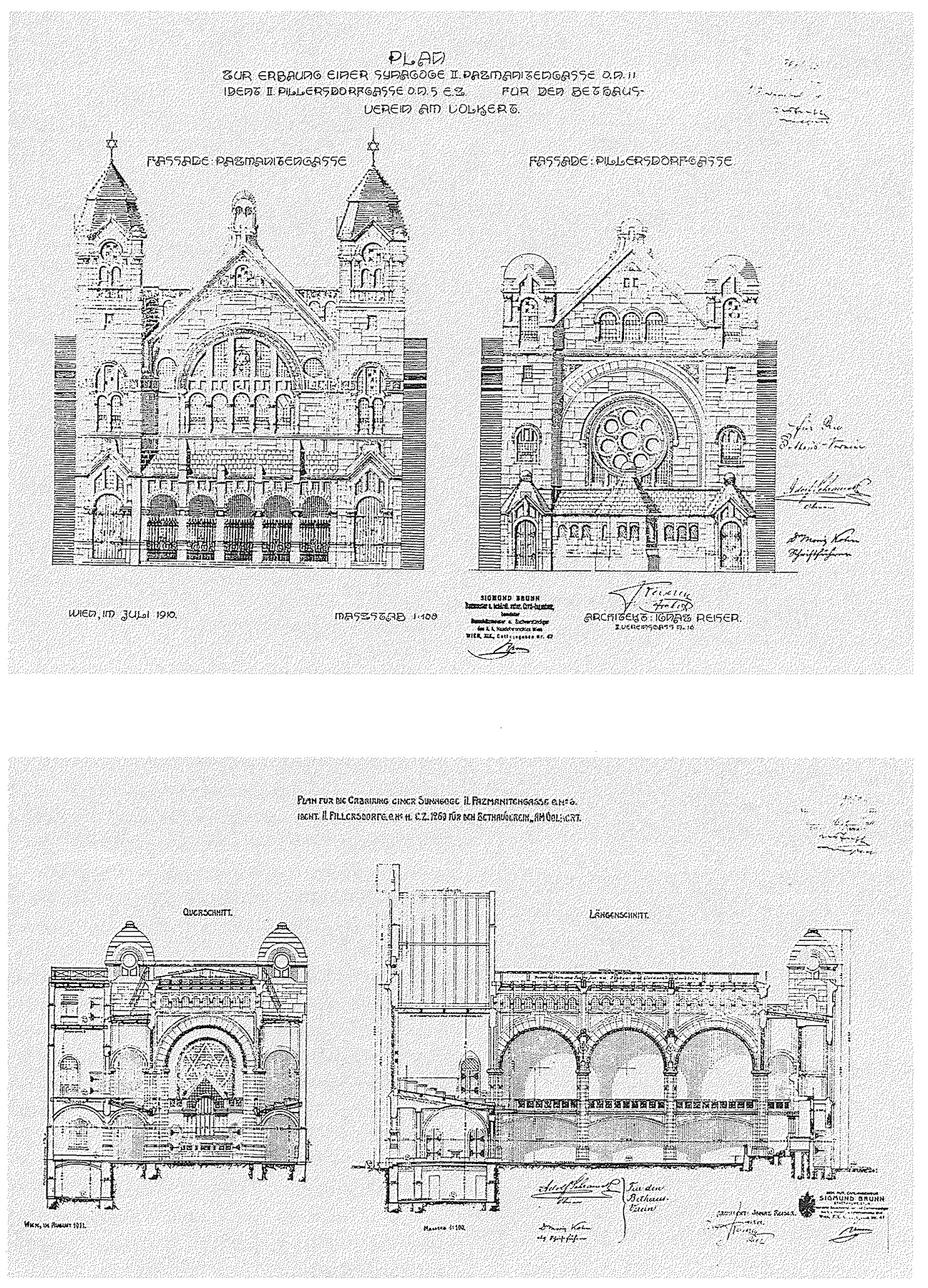
Historia Pazmanitentempel (Kaiser Franz Joseph Jubilee Synagogue), Vienna
The prayer-house association Am Volkert was founded in 1875 for the Jews living around the Volkert market in the Leopoldstadt. In February 1911 it bought a rectangular plot running through from the Pazmanitengasse to the Pillersdorfgasse, and commissioned the architect Ignaz Reiser. After a first revision, his plans were approved by the city building office in August 1911. The synagogue, heated by warm air and holding about 900 people, was built in 1911–1913 and consecrated on 28 September 1913. It was named the Kaiser-Franz-Joseph-Huldigungstempel in honour of Emperor Franz Joseph I, whose 80th birthday the project had marked.
The association was renamed the Leopoldstädter Tempelverein Aeschel Awrohom in 1936, and a yeshiva, Beth Jehuda, was attached to it from 1933. As late as August and September 1938, rooms in the building were used for Hebrew and language courses for young Jews preparing to emigrate.
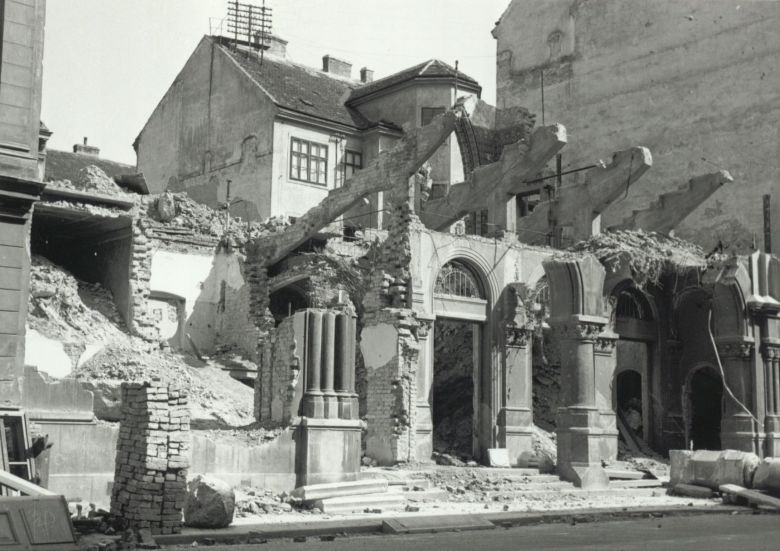
During the November pogrom of 1938 the Nazis set the synagogue on fire, and because it was built of concrete they then blew it up. Norbert Brainin, later first violinist of the Amadeus Quartet, and his brother Hugo were inside saying Kaddish for their mother when the mob broke in, and escaped through a back door. The small prayer room survived long enough for the association's chairman to ask in January 1939 whether it could still be used. The city approved demolition of the ruins on 30 June 1939, but clearing the concrete took until well into 1940. A block of flats has stood on the site since 1958–1959.
Where it stood for 25 years
Historic: Pazmanitengasse 6 / Pillersdorfgasse 11, 1020 Vienna (Leopoldstadt). Present day: residential building, Pazmanitengasse 6, Vienna, Austria.
Otwórz większą mapę →Społeczność żydowska
The synagogue belonged to the prayer-house association Am Volkert, founded in 1875 for the Jewish families living around today's Volkert market in the Leopoldstadt, Vienna's most Jewish district. Before 1913 the association met at Fugbachgasse 7. In 1936 it was renamed the Leopoldstädter Tempelverein Aeschel Awrohom. Its last chairman was Oskar Schramek, who also founded the Jeschiwa Beth Jehuda attached to it in 1933. The synagogue's rabbis were Salomon (Schlomo) Funk, from 1915 to 1928, who also sat on the rabbinical court of the Vienna Jewish community, and Löbl Taubes, from 1928 to 1938. Its chief cantor was Leopold Müller, with cantor Armin Stift.
Architektura i projekt
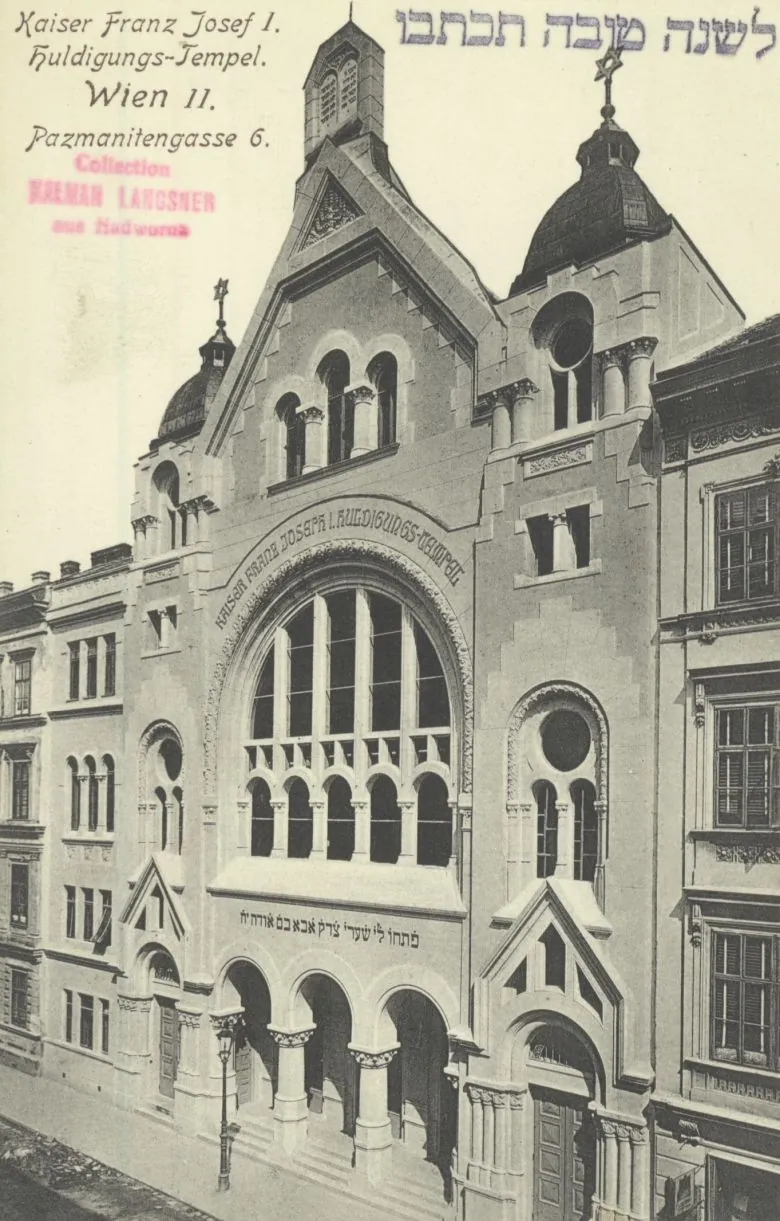
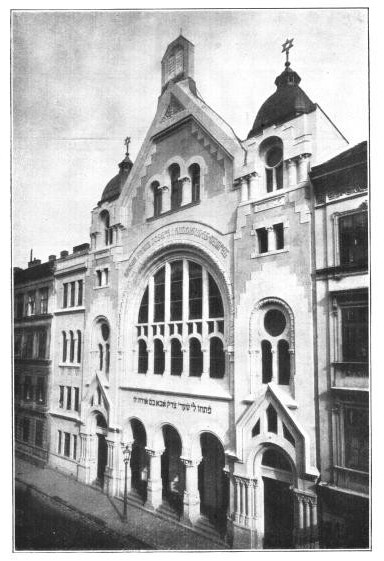
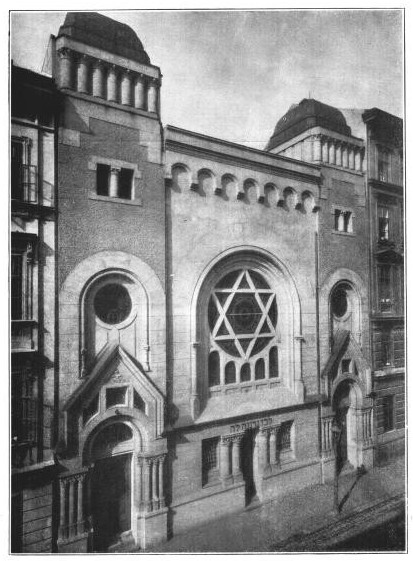
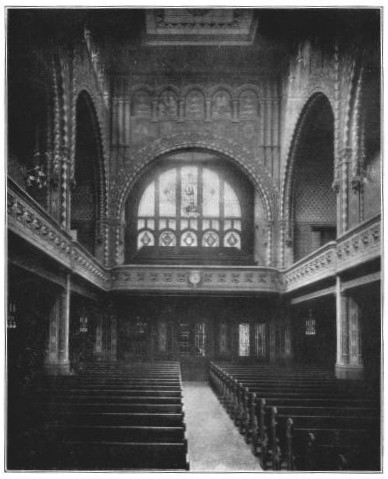
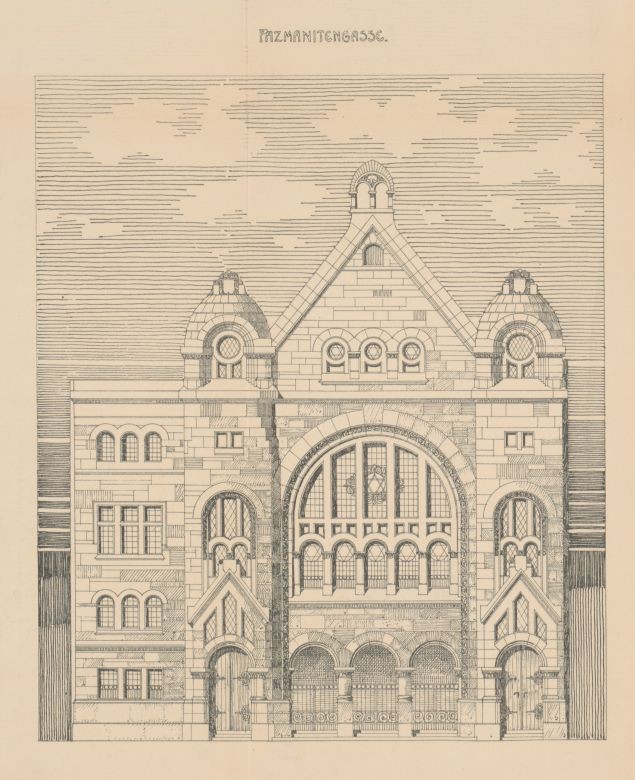
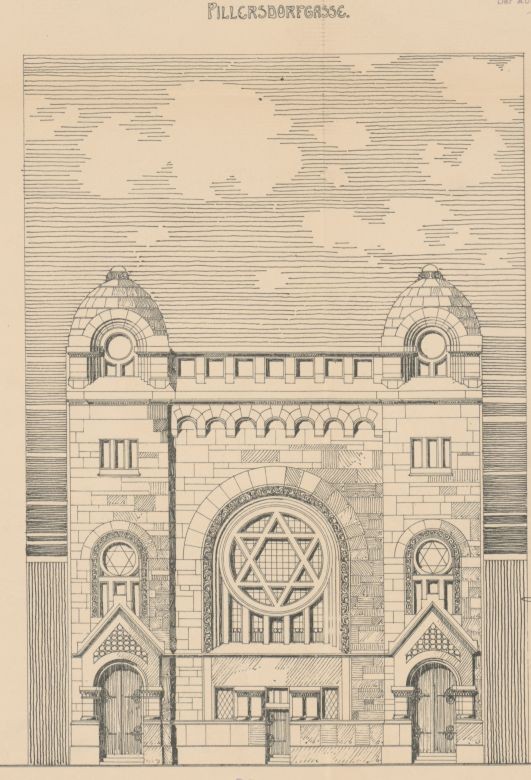
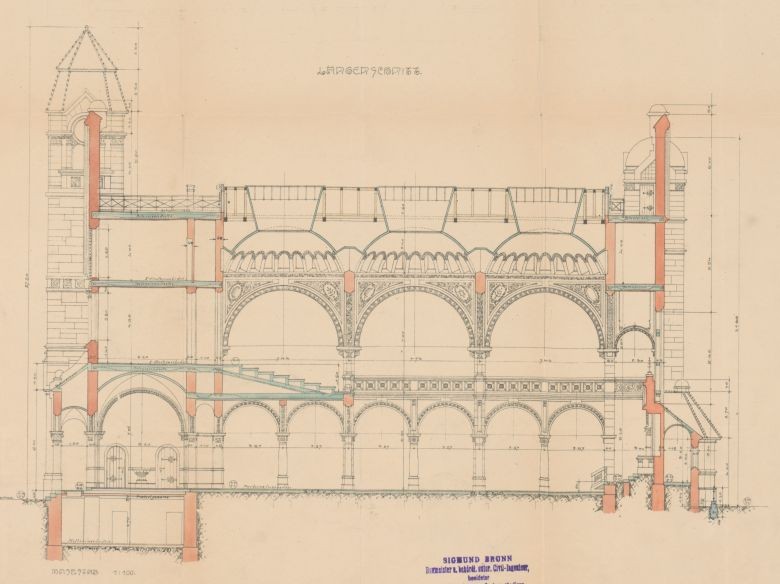
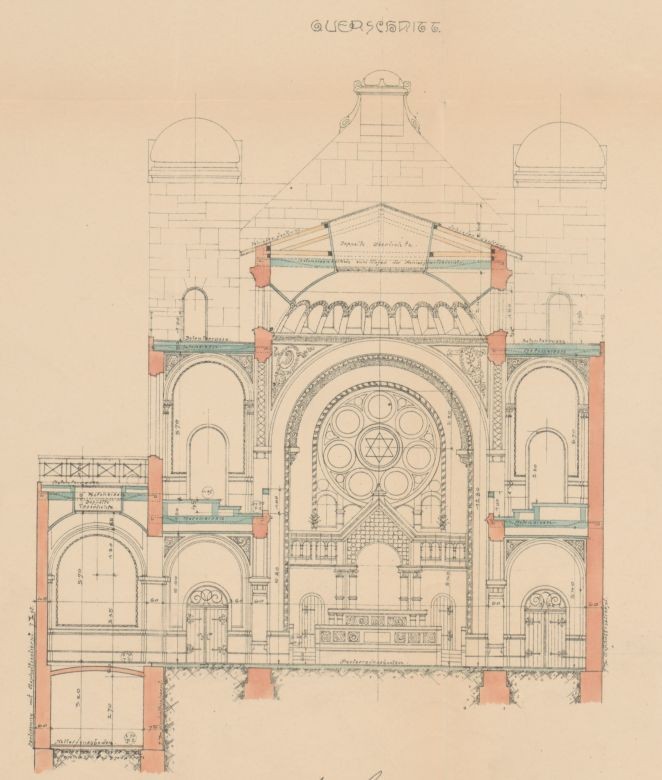
Ignaz Reiser designed a three-aisled hall on a long plot between neighbouring houses, with a front on each street. Pierre Genée described the building as a turn away from late historicism that belongs to no particular style. The west front on the Pazmanitengasse, of brick and concrete, had a pointed gable with a large arched window, two short towers and the Tablets of the Law at the top. The narrower east front on the Pillersdorfgasse had a large round window with a Star of David between two rounded tower stumps. The building was 35 metres high.
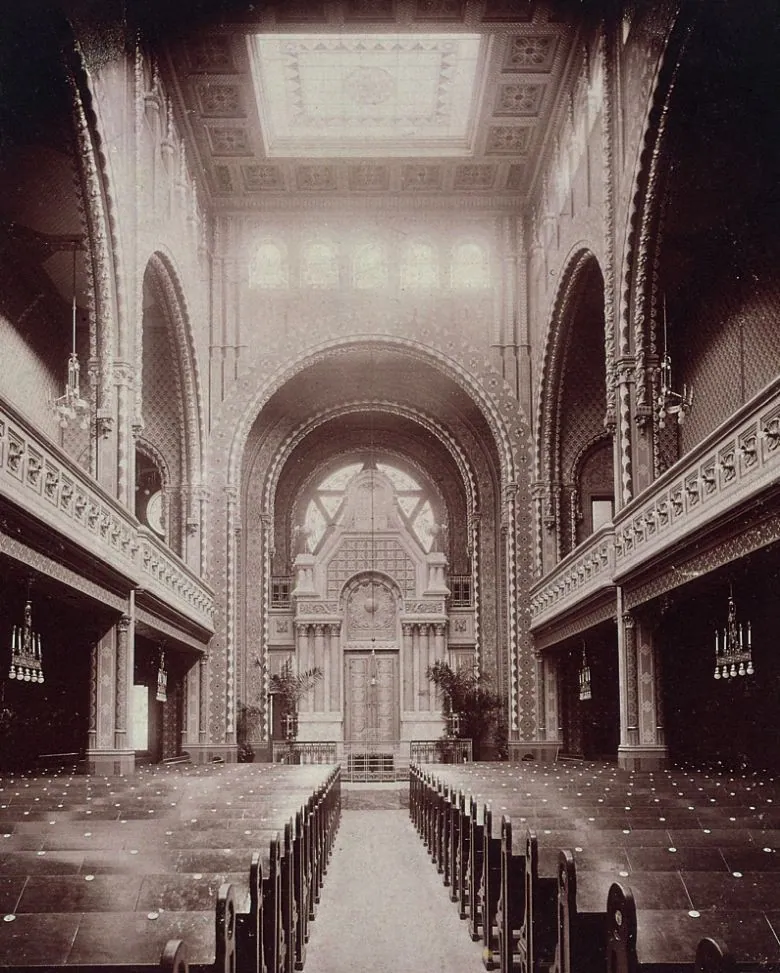
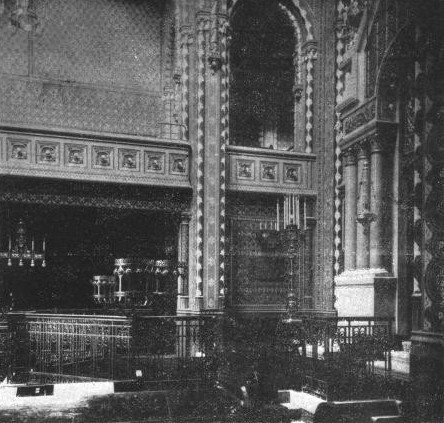
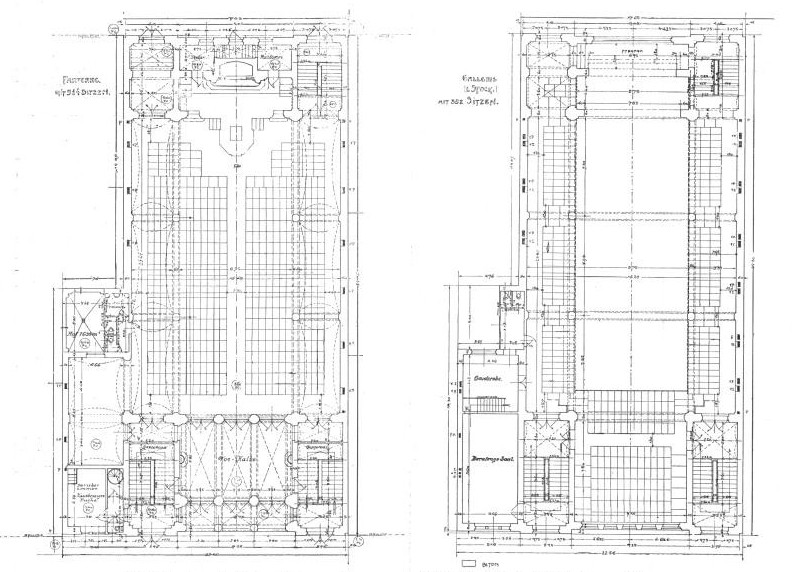
The interior was dominated by a massive Torah ark filling the whole east wall, with the bimah directly in front of it. Four entrances on the Pazmanitengasse and two on the Pillersdorfgasse led in. The main hall seated 514 men, with a small prayer room to the left of the west front. Stairs led to the women's galleries on both sides with 352 seats, and to a meeting room on the first floor. The roof storey held a library and a rehearsal room for the choir.
Życie w synagodze
The synagogue was a community centre for the Jews of the Volkert quarter. It had a choir with its own rehearsal room, a library and, from 1933, a yeshiva. Salomon Funk, rabbi from 1915 to 1928, also served on the rabbinical court of the Vienna Jewish community. After the Anschluss, the young people's association Zeire w'Hechaluz Hamisrachi was allowed in August 1938 to hold Hebrew courses in its classrooms for young people hoping to emigrate, and language courses to help Jews retrain and emigrate were still held there in September 1938.
Zniszczenie
During the November pogrom the Nazis set the synagogue on fire and, since the building was made of concrete, destroyed it with explosives. Hugo Brainin later recalled that a mob of thugs came in at the front and set the building on fire while he and his brother Norbert, there to say Kaddish for their mother, ran out the back. Wien Geschichte Wiki dates the attack to 10 November 1938; Brainin remembered it as 9 November. In 1938 the Hitler Youth of the Augarten confiscated marriage records and cash. The city approved demolition of the ruins on 30 June 1939. The demolition firm Walter Gauf, which specialised in pulling down synagogues, found concrete instead of brick in every wall and had to break it up. It complained that the blasting had turned bricks to rubble, bent the iron girders and torn the timber. In December 1939 the building police reported the synagogue 'removed', but the work went on well into 1940.
Los społeczności
The Stillhaltekommissar dissolved the Leopoldstädter Tempelverein Aeschel Awrohom in 1938–1939. The plot was first assigned to the Nazi Aufbaufonds and then, as 'unsaleable', passed to the City of Vienna on 5 June 1941. The Jews of the Leopoldstadt were forced to emigrate or were deported and murdered. A restitution commission ordered the plot returned to the Kultusgemeinde in December 1948, but in a 1955 settlement the Kultusgemeinde gave up its claim in return for compensation from the city.
Miejsce dzisiaj
Nothing of the synagogue survives. The plot was leased as a storage yard from 1947, and in 1958 the housing association GESIBA was given building rights and put up the residential building that stands at Pazmanitengasse 6 today.
Ważne postacie
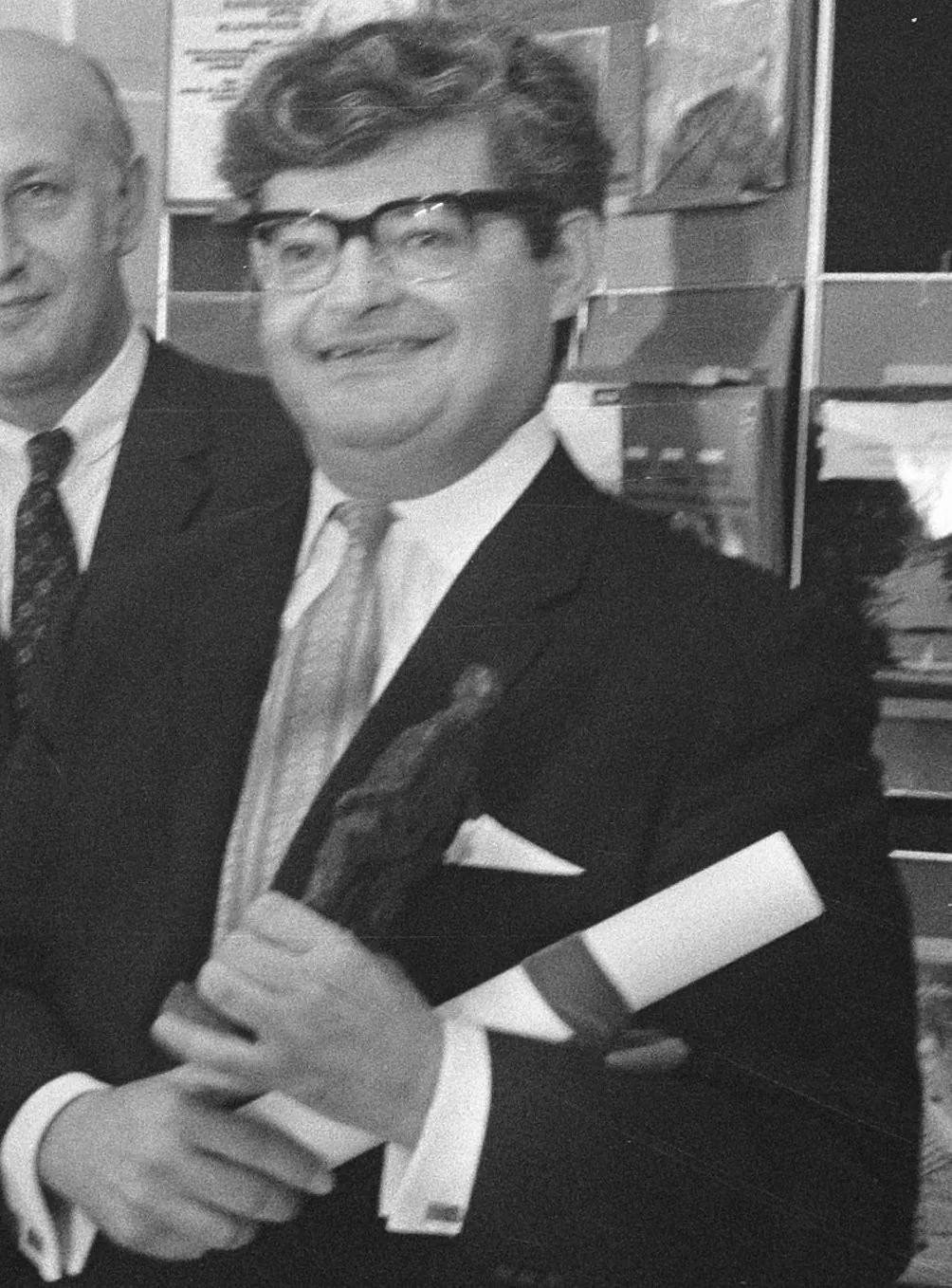
Norbert Brainin
1923–2005Witness of the pogromThe later first violinist of the Amadeus Quartet was in the synagogue with his brother Hugo, saying Kaddish for their mother, when the mob set it on fire; both escaped and reached England in December 1938.
Biografia lub źródło →Ignaz Reiser
1863–1940ArchitectDesigned the Pazmanitentempel (plans approved 1911). He also built other Viennese synagogues and the ceremonial hall at the Jewish section of the Central Cemetery.
Biografia lub źródło →Salomon (Schlomo) Funk
1866–1928Rabbi, 1915–1928Rabbi of the synagogue from 1915 to 1928 and a member of the rabbinical court of the Vienna Jewish community.
Biografia lub źródło →Löbl Taubes
Dates unknownRabbi, 1928–1938Rabbi of the synagogue from 1928 until its destruction in 1938.
Biografia lub źródło →Leopold Müller
Dates unknownChief cantorChief cantor of the synagogue.
Biografia lub źródło →Oskar Schramek
Dates unknownLast chairmanLast chairman of the synagogue association and founder of the Jeschiwa Beth Jehuda (1933). In January 1939 he asked to keep using the surviving small prayer room.
Biografia lub źródło →Hugo Brainin
1924–2026Witness of the pogromNorbert Brainin's younger brother. Decades later, as a Holocaust witness, he described the mob breaking in and setting the synagogue on fire while the brothers fled out the back.
Biografia lub źródło →Czy masz coś do przekazania?
Zdjęcia, dokumenty, historie rodzinne lub wspomnienia o tej synagodze i jej społeczności pomagają zachować jej historię.
Share a memory or thought
No comments yet. Be the first to add one.