

Die Geschichte von Schmalzhoftempel (Schmalzhofgasse Synagogue), Vienna
The Schmalzhoftempel was built for the 'Israelitischer Tempelverein für die beiden Gemeindebezirke Mariahilf und Neubau', founded in 1879 to serve the growing Jewish population of Vienna's 6th and 7th districts. Within four years the association had secured the funds for a large synagogue and hired Max Fleischer, a pupil of Friedrich von Schmidt and a member of both the Kultusgemeinde board and the association. On a courtyard plot in the former Schmalzhof, once owned by a lard merchant, he built in 1883–1884 a three-aisled basilica in neo-Gothic brick with two towers on its west front, modelled on the brick Gothic churches of his teacher Schmidt. It was consecrated on 9 September 1884. An inscription dedicated it to the marriage of Crown Prince Rudolf and Princess Stephanie in 1881. The synagogue was a liberal house with an organ and a pulpit for sermons. During the November pogrom on 10 November 1938 it was looted and set on fire by the Nazis, and the burned ruin was pulled down in 1939. A retirement home now stands on the site at the Loquaiplatz.
Where it stood for 54 years
Historic: Schmalzhofgasse 3, 1060 Vienna (Mariahilf), backing onto the Loquaiplatz. Present day: retirement home on the Loquaiplatz, Vienna, Austria. Approximate.
Größere Karte öffnen →Die jüdische Gemeinde
The Jewish community of Mariahilf and Neubau grew rapidly after 1867, when Jews in Austria-Hungary received full civil rights and many moved from the Leopoldstadt and from the provinces into the busy commercial districts along the Mariahilfer Straße. On 2 June 1879 the Lower Austrian governor's office approved the founding of a temple association for the two districts. Four years later it had raised enough money to buy an 830-square-metre courtyard plot with old trees in the former Schmalzhof, of which 468 square metres were used for the synagogue. The association later also bought a house at Hirschengasse 22, which in 1939 held four flats, a shop and a Jewish soup kitchen. A women's charity for the two districts, founded in 1880 and based at Schmalzhofgasse 3, supported poor women and new mothers, clothed schoolgirls each winter and gave trousseaus to needy brides.
Architektur und Gestaltung
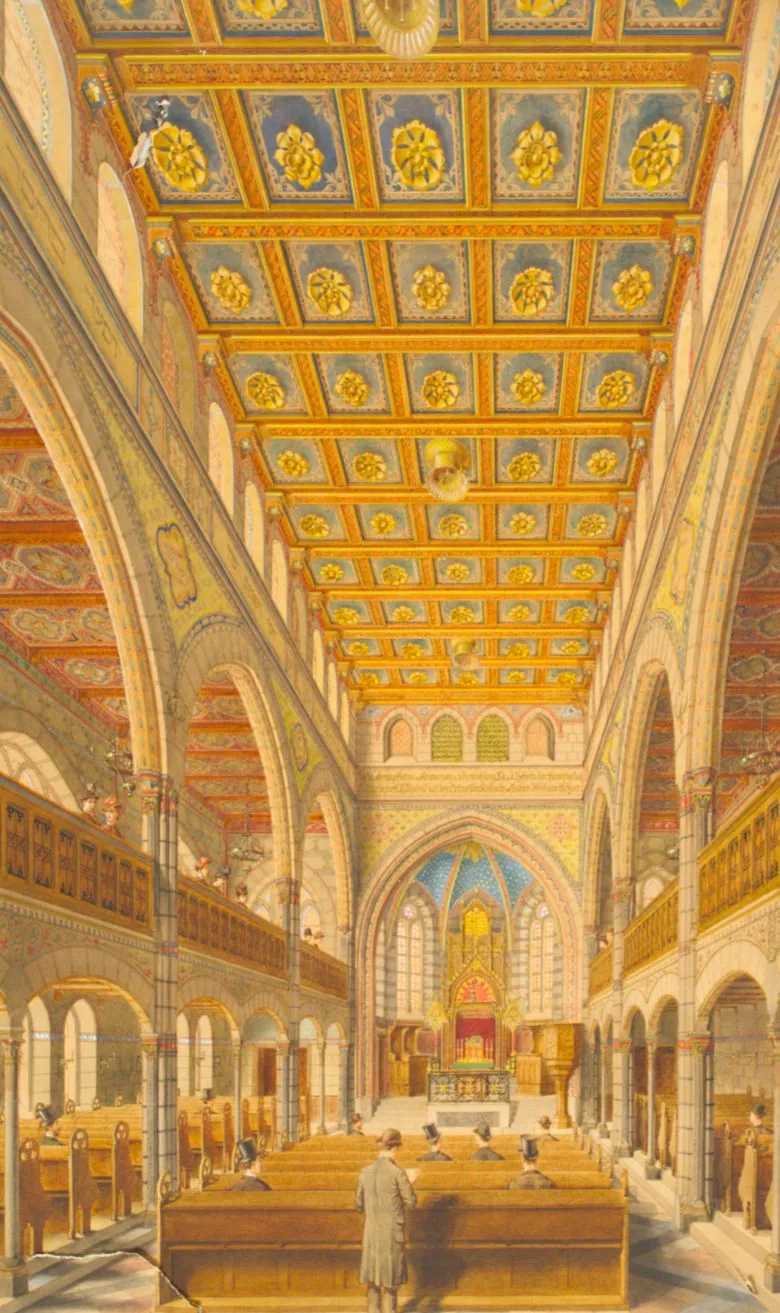
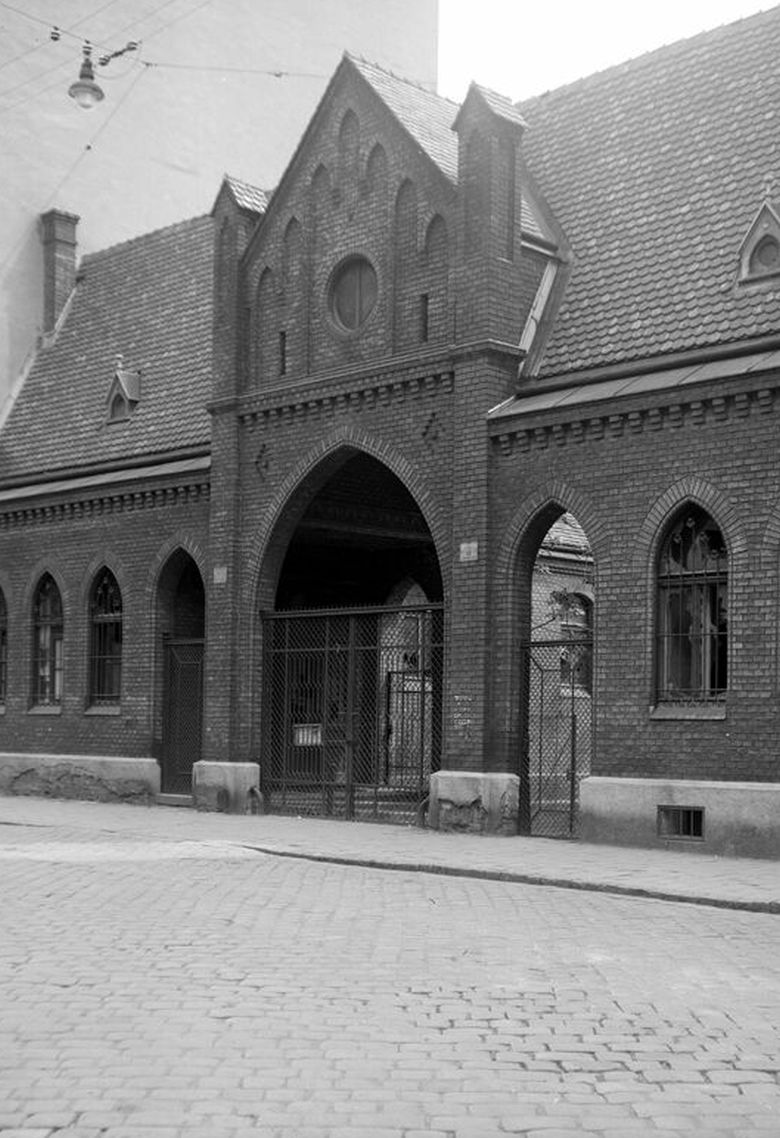
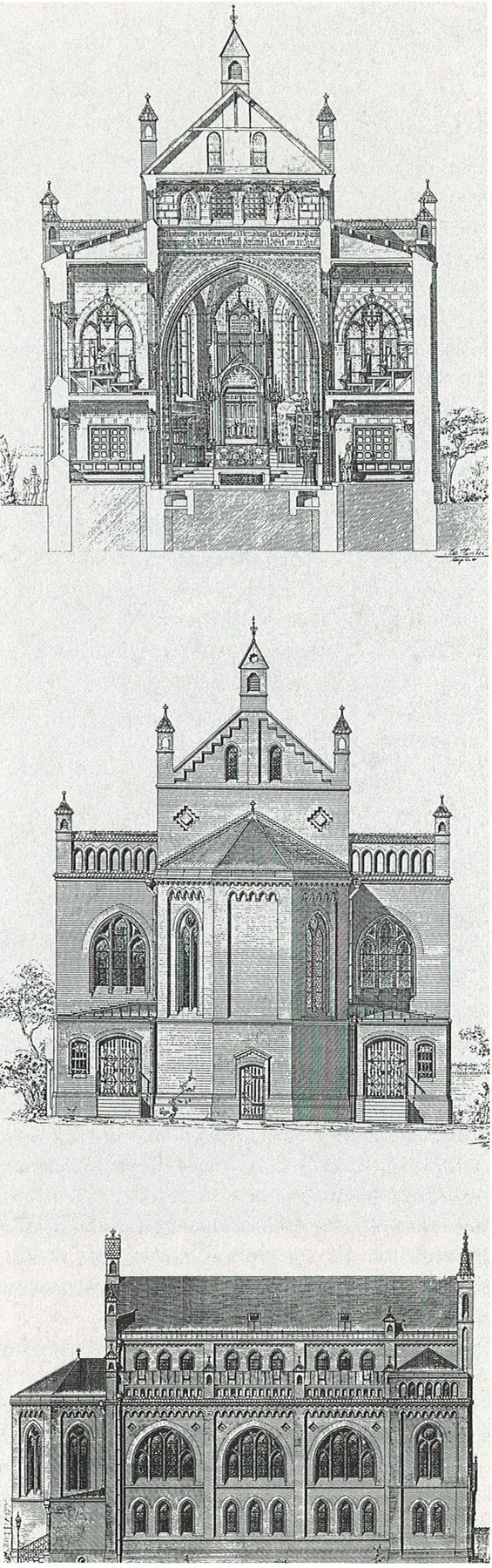
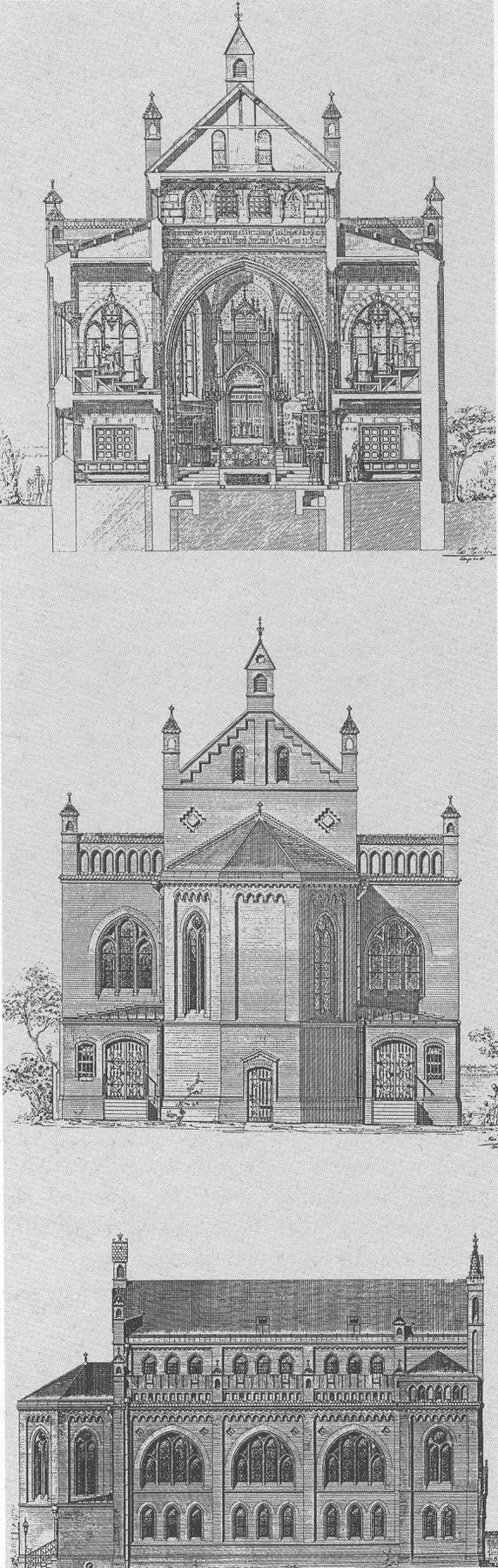
Fleischer designed the synagogue as a monumental three-aisled basilica in neo-Gothic brick, echoing the church architecture of his teacher Friedrich von Schmidt. Two towers rose on the west front; the partly windowless south facade and part of the east side could be seen only from the Loquaiplatz behind. Visitors entered through a vestibule with staircases on either side to the women's galleries. The interior was dominated by a tall arcade, with three pointed arches opening to each side aisle. On the east wall stood the Torah ark of oak with rich gilding and ornamental fittings, and to its right a pulpit reached by eight steps; rooms for cantors, singers and rabbis flanked the ark. A 'triumphal arch' separated the nave from the ark area and carried the dedication to Crown Prince Rudolf and Princess Stephanie. A wrought-iron screen with supports for the wedding canopy surrounded the reading desk. Following Jewish law there were no figurative images, and men and women sat separately.
Leben in der Synagoge
The Schmalzhoftempel followed the moderate Reform rite of the Viennese association synagogues, with organ music and German sermons from the pulpit. Its first rabbi was Michael Papo, who also served the Sephardic Türkischer Tempel in the Zirkusgasse; after his death in 1917 he was succeeded by Jakob Drobinsky. Israel Taglicht, later chief rabbi of Vienna, also served as rabbi here, and Artur Lewin was cantor. The association ran a welfare network around the synagogue: the women's charity at Schmalzhofgasse 3 supported poor women, children and brides, and by 1939 a Jewish soup kitchen operated in the association's house at Hirschengasse 22. The last chairman of the association was N. Defris, with Hans Bondy as secretary until its liquidation.
Zerstörung
During the November pogrom on 10 November 1938 the synagogue was looted and then set on fire. According to a 1958 report by Tuviah Friedman cited in the Synagogue Memorial's Gedenkbuch, the crime was carried out by the 89th SS Standarte, with about 300 men. On 19 January 1939 the association's officials reported to the Nazi Stillhaltekommissar that a 'destroyed temple building' stood on the plot and was already being demolished, and in December 1939 the building police reported to the Nazi ministry that the synagogue was 'being removed'. The association's assets of 34,561 Reichsmarks were almost entirely confiscated as a so-called reconstruction levy, which amounted to complete expropriation.
Das Schicksal der Gemeinde
The temple association was dissolved by the Nazi Stillhaltekommissar in 1939 and absorbed into the Kultusgemeinde; its women's charity had already been struck off in 1938 and its assets handed to the community's welfare office. Rabbi Jakob Drobinsky attempted suicide during the pogrom and died on 2 August 1939 in the Purkersdorf sanatorium. The Jews of Mariahilf and Neubau were forced out of their businesses and homes; those who could not emigrate were deported from 1941 and most were murdered. The plot passed in 1939–1940 to the Nazi Aufbaufonds and was sold to the baker Franz Lang and his wife Selma. In 1952 a restitution commission returned it to the Israelitische Kultusgemeinde, which sold it in 1971; the City of Vienna acquired it in 1976.
Der Ort heute
Nothing of the synagogue survives. After the war the empty plot was covered with rubble during landscaping of the Loquaiplatz park. The site was sold in 1971 and bought by the City of Vienna in 1976; a retirement home run by the Kuratorium Wiener Pensionistenvereine now stands there on the Loquaiplatz. Memorial plaques and a light stele at Schmalzhofgasse 3 and Loquaiplatz 5 recall the synagogue.
Bedeutende Namen
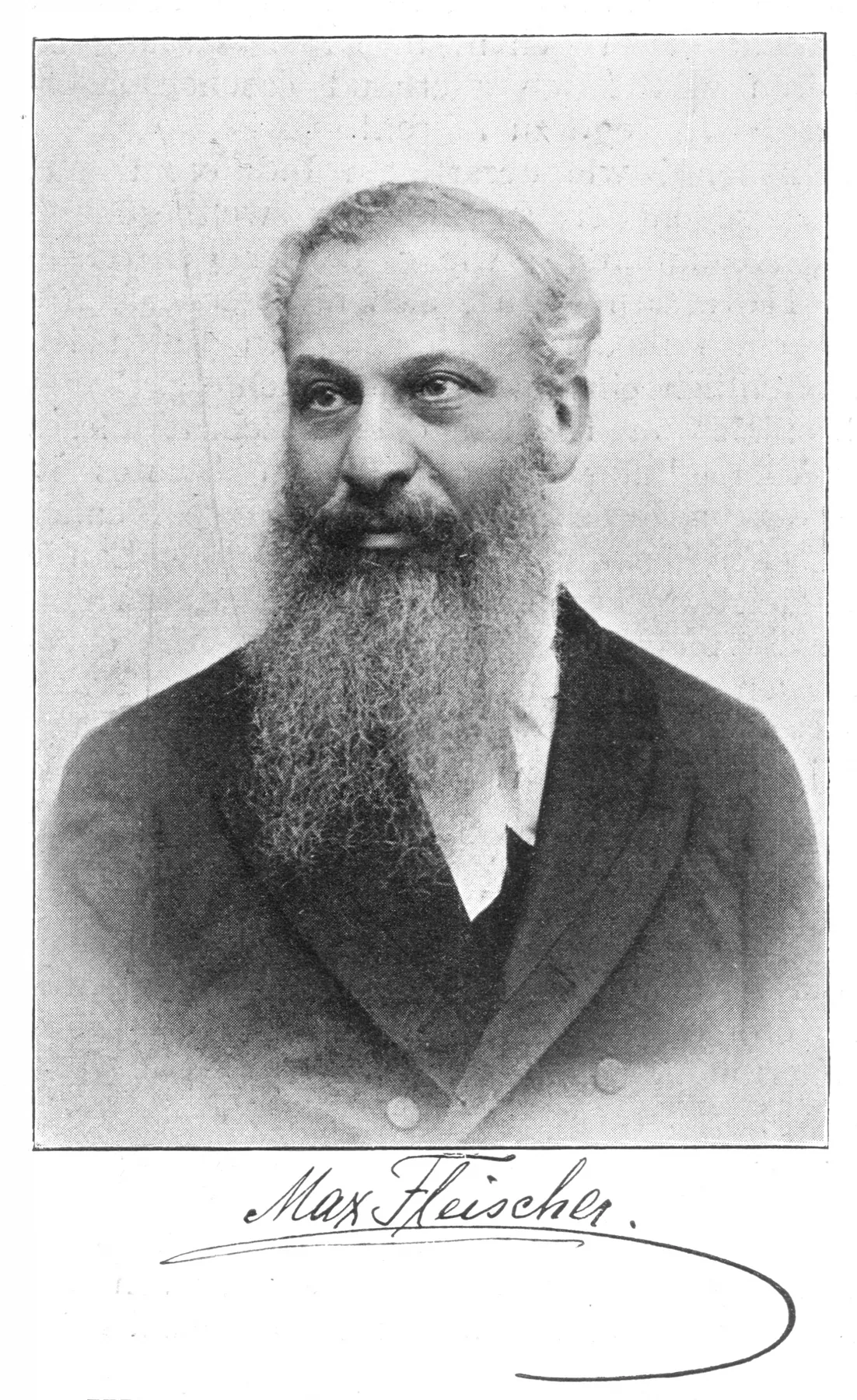
Max Fleischer
1841–1905ArchitectMax Fleischer, a pupil of Friedrich von Schmidt and Eduard van der Nüll, designed the synagogue in 1883–1884. As a member of both the Kultusgemeinde board and the Mariahilf-Neubau temple association, and a liberal Jew, he chose a church-like neo-Gothic brick basilica with organ and pulpit while keeping separate seating and avoiding figurative images.
Biografie oder Quelle →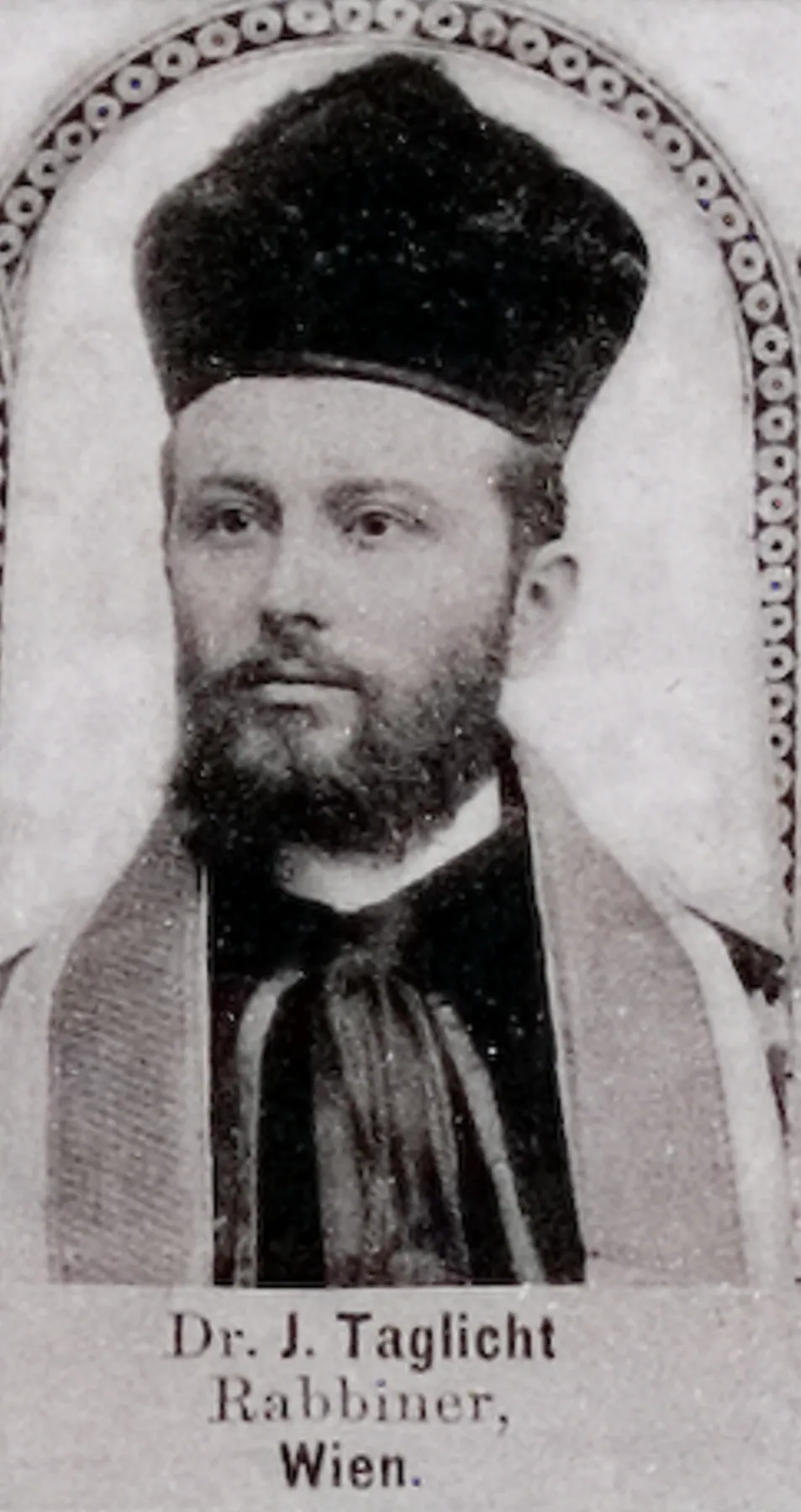
Israel Taglicht
1862–1943RabbiIsrael Taglicht served as a rabbi of the Schmalzhoftempel, according to the Gedenkbuch as cited by Wien Geschichte Wiki. He later became rabbi at the Leopoldstädter Tempel and chief rabbi of Vienna from 1936 to 1938, and died in exile in 1943.
Biografie oder Quelle →Michael Papo
Died 1917First rabbiMichael Papo was the first rabbi of the Schmalzhofgasse synagogue and at the same time rabbi of the Sephardic Türkischer Tempel in the Zirkusgasse. He served until his death in 1917, when Jakob Drobinsky took over his post.
Biografie oder Quelle →Jakob Drobinsky
Died 1939Rabbi, from 1917Jakob Drobinsky succeeded Michael Papo as rabbi of the Schmalzhoftempel in 1917 and served until its destruction. During the November pogrom of 1938 he attempted suicide, and he died on 2 August 1939 in the Purkersdorf sanatorium.
Biografie oder Quelle →Artur Lewin
Dates not confirmedCantorArtur Lewin was cantor of the synagogue at Schmalzhofgasse 3, according to the Synagogue Memorial's Gedenkbuch and Martens and Peter, as cited by Wien Geschichte Wiki.
Biografie oder Quelle →Haben Sie etwas beizutragen?
Fotos, Dokumente, Familiengeschichten oder Erinnerungen an diese Synagoge und ihre Gemeinde halten ihre Geschichte lebendig.
Share a memory or thought
No comments yet. Be the first to add one.