

История Jubiläumstempel (Siebenbrunnengasse Synagogue), Vienna
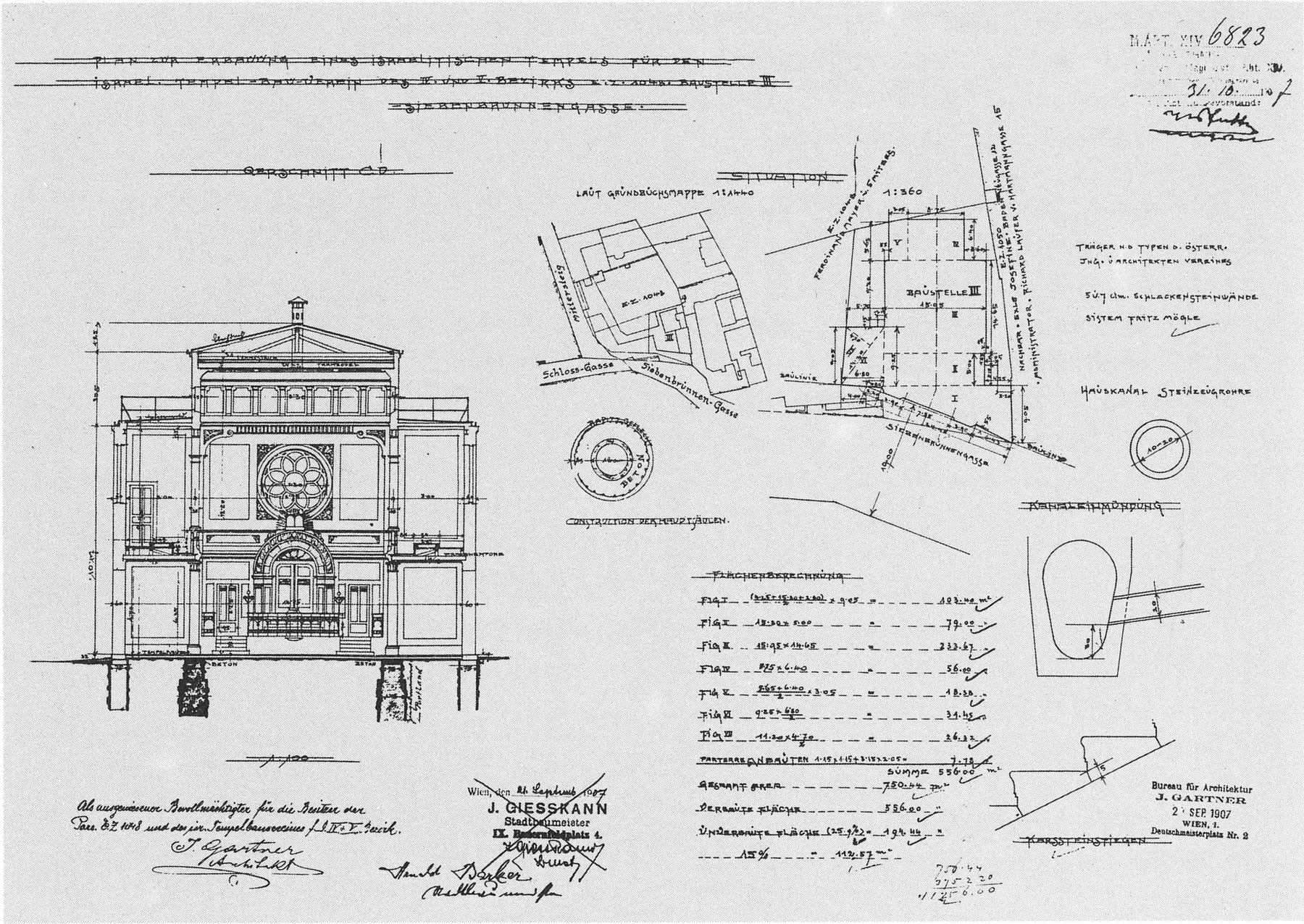
The Israelite temple association for the Wieden and Margareten districts was founded in 1876 to maintain a prayer house at Margaretenstraße 73. When that became too small, it commissioned Jakob Gartner to build a synagogue, and in December 1907, under its chairman Adolf Hofmann, it bought an irregular plot of 750 square metres at Siebenbrunnengasse 1a, where a kink in the street line gave the site an unusual angled front. The synagogue was meant to open for the 60th anniversary of Emperor Franz Joseph's reign in 1908, and was named the Kaiser-Franz-Joseph-Regierungsjubiläums-Tempel. Because of the association's money problems the foundation stone was laid only in April 1909, and the synagogue was consecrated on 21 May 1910 in the presence of many figures from political and religious life, with the Governor of Lower Austria, Count Erich Kielmansegg, representing the emperor.
It was the last of the many synagogues Gartner built. Wealthy families of the Wieden, among them Baron Alphonse de Rothschild and David von Gutmann, supported it, and the association ran a Bible school and a Jewish lending library. From 1930 it was called Beth Aharon (House of Aaron).
During the November pogrom, on 10 November 1938, the Nazis set the synagogue on fire and blew it up. A defendant tried after the war boasted, 'Today we blew temples into the air', meaning this synagogue and the one on the Storchengasse. The ruins were cleared in 1939, and the plot was sold to a Nazi party member who wanted to build a garage. A residential building stands on the site today.
Where it stood for 28 years
Historic: Siebenbrunnengasse 1a, 1050 Vienna (Margareten). Present day: residential building, Siebenbrunnengasse 1a, Vienna, Austria.
Открыть большую карту →Еврейская община
The synagogue served the Jews of Vienna's 4th and 5th districts, Wieden and Margareten, organised as the Israelitischer Tempelverein für die Bezirke Wieden und Margareten, founded in 1876 and renamed Beth Aharon in 1930. Its income came from a subsidy from the Israelitische Kultusgemeinde, members' fees, the sale of seats, wedding fees and memorial donations. Some of Vienna's most distinguished Jewish families, with town palaces in the Wieden, belonged to it. A women's charity association of 1882 supported poor mothers and schoolchildren. Its rabbis were Heinrich Leopold Reich, until 1923, and Meier Gabriel Mehrer, formerly rabbi in Krems and Waidhofen an der Thaya, from 1922/23 until November 1938; its cantors were Israel Katz and Philipp Bassel. The last chairman was Desider Wollner.
Архитектура и дизайн
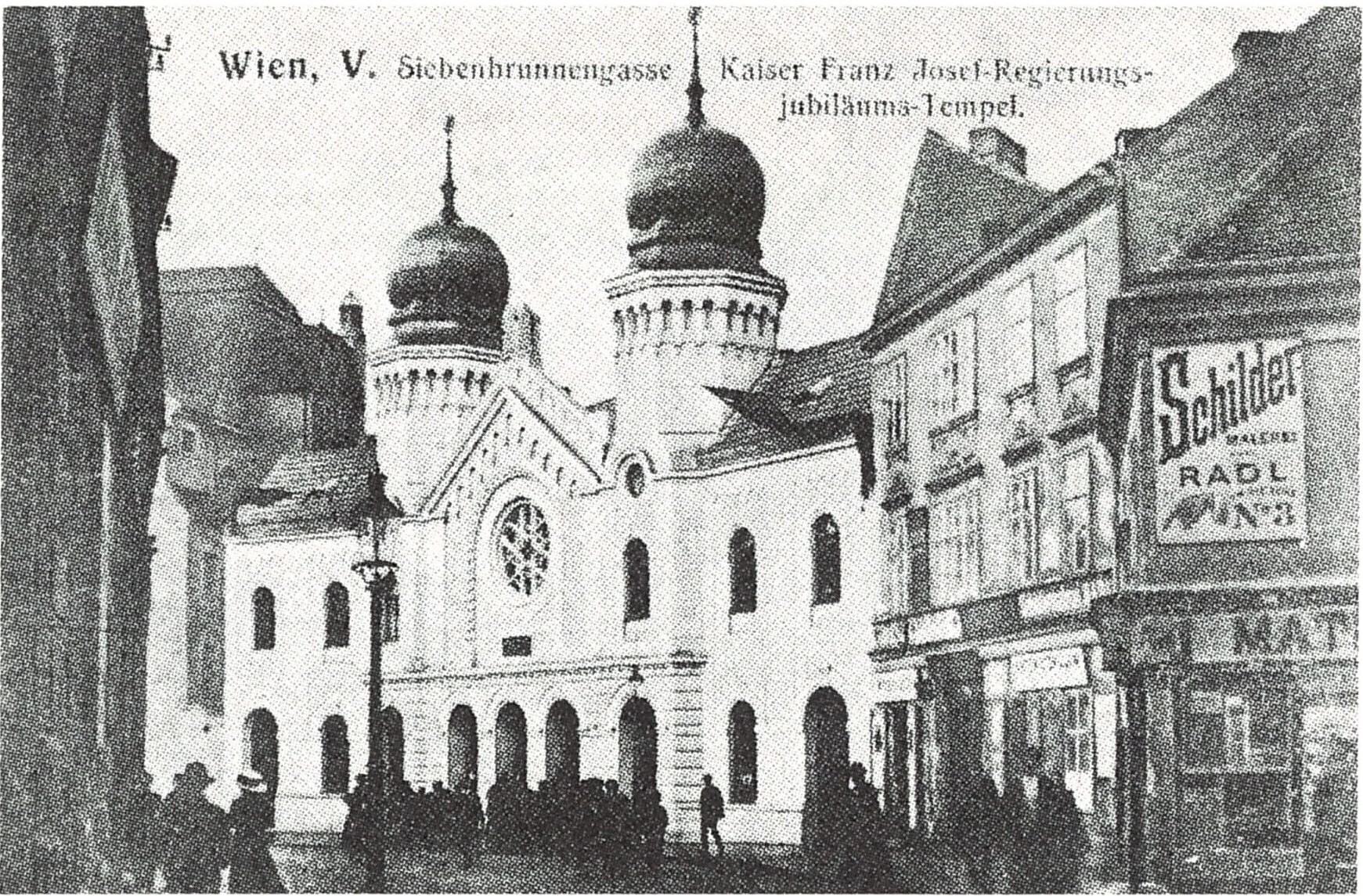
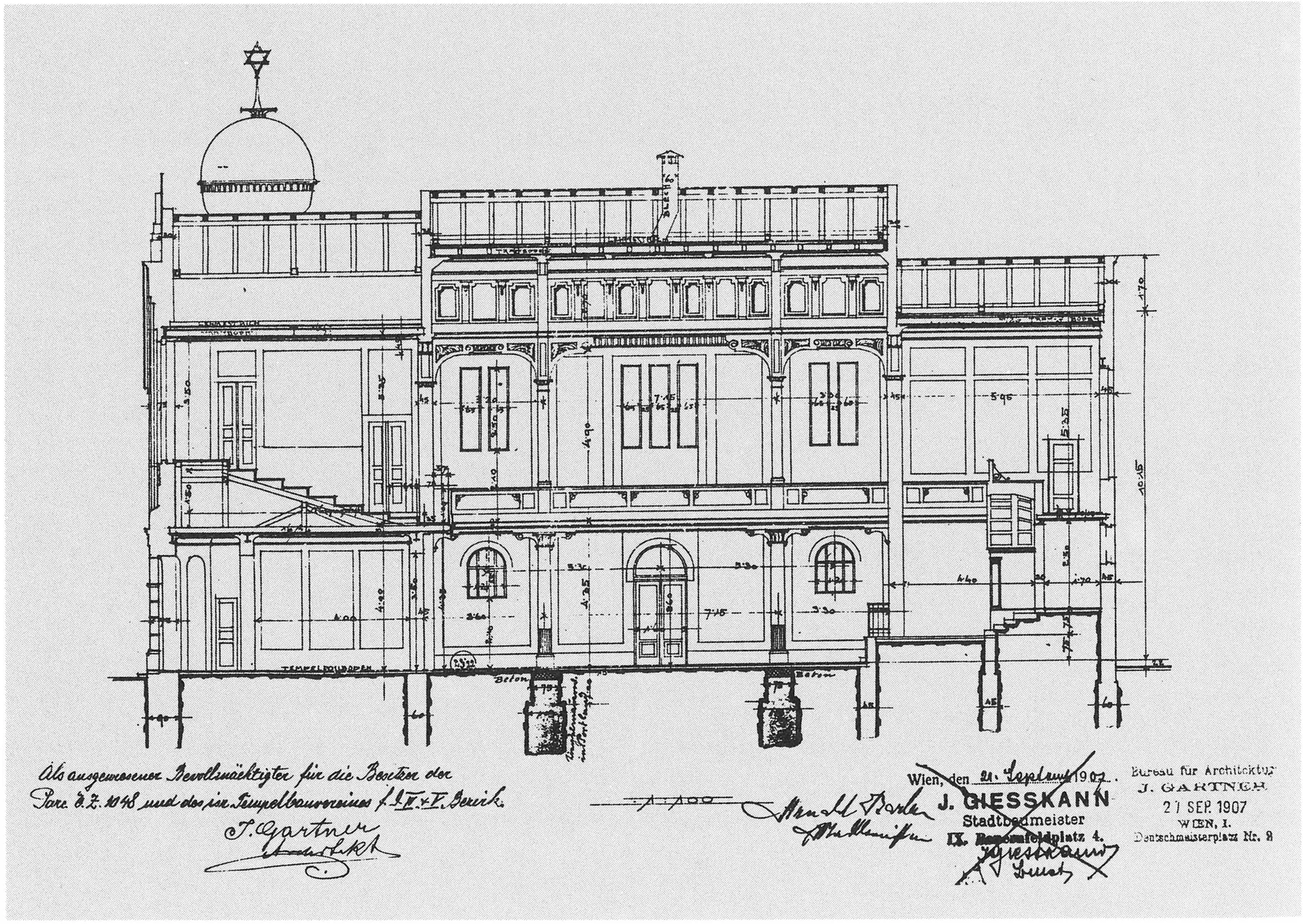
Jakob Gartner designed a street front of two massive, fairly short Romanesque towers crowned by onion domes, flanking a gabled central bay with a rose window, above a row of round-arched entrances. The plot was enclosed by neighbouring houses on three sides, so only the street front was visible. A roughly triangular entrance hall, shaped by the angled street line, led through a vestibule into a square prayer hall with 273 seats for men. The Torah ark stood at the east end between rooms for the rabbi and the cantor. To the right of the entrance was a small weekday prayer room with a meeting room above it, and two staircases led to the women's galleries with 173 seats. According to Wien Geschichte Wiki, the facade in the approved plans differed from how the building appears in the few surviving photographs.
Жизнь в синагоге
Besides services, the association ran a Bible school and, from 1919, a Jewish lending library, and a Talmud Torah school was housed in the building. Memorial prayers (Yizkor) and memorial foundations were an important part of its life and income. The small weekday prayer room was used for daily prayers.
Разрушение
During the November pogrom, on 10 November 1938, the Nazis set the synagogue on fire and blew it up. In a post-war trial the defendant Franz Ibaschitz boasted, 'Today we blew temples into the air', referring to the synagogues at Siebenbrunnengasse 1a and Storchengasse 21. On 15 December 1938 the demolition firm Walter Gauf offered to clear the ruins for the salvage, noting that 'this building was blown up, so little usable material can be expected'; the work was finally done by the builder Brandstetter. The city set conditions for the demolition on 28 April 1939, and in December 1939 the building police reported the synagogue 'removed'.
Судьба общины
On 29 March 1939 the Stillhaltekommissar assigned the property to the Nazi Aufbaufonds and confiscated the association's funds, including 20,000 Reichsmarks as a 'one-off reconstruction levy for Austria'. On 29 September 1939 the plot was sold to Friedrich Skwara, a transport contractor and Nazi party member who asked for it 'as an old fighter' to build a garage. The Jews of Wieden and Margareten were forced to emigrate or were deported and murdered. In 1951 a restitution settlement returned the plot to the Israelitische Kultusgemeinde, which sold it in 1968/69.
Место сегодня
Nothing of the synagogue survives. A residential building stands on the plot at Siebenbrunnengasse 1a.
Значимые имена
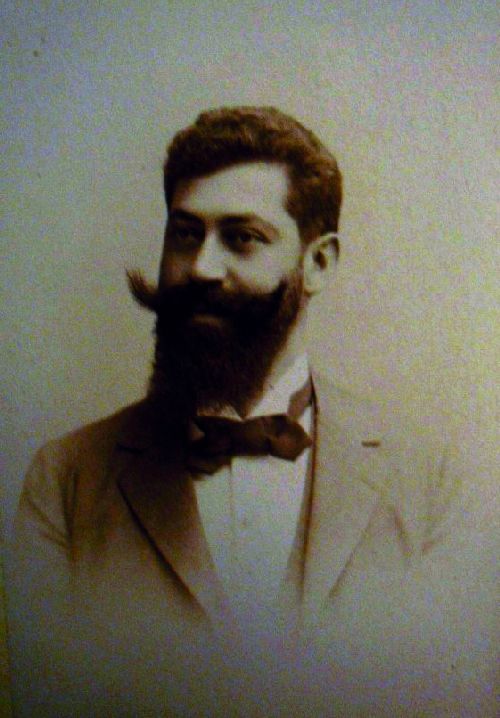
Jakob Gartner
1861–1921ArchitectDesigned the Jubiläumstempel, the last in his long series of synagogues.
Биография или источник →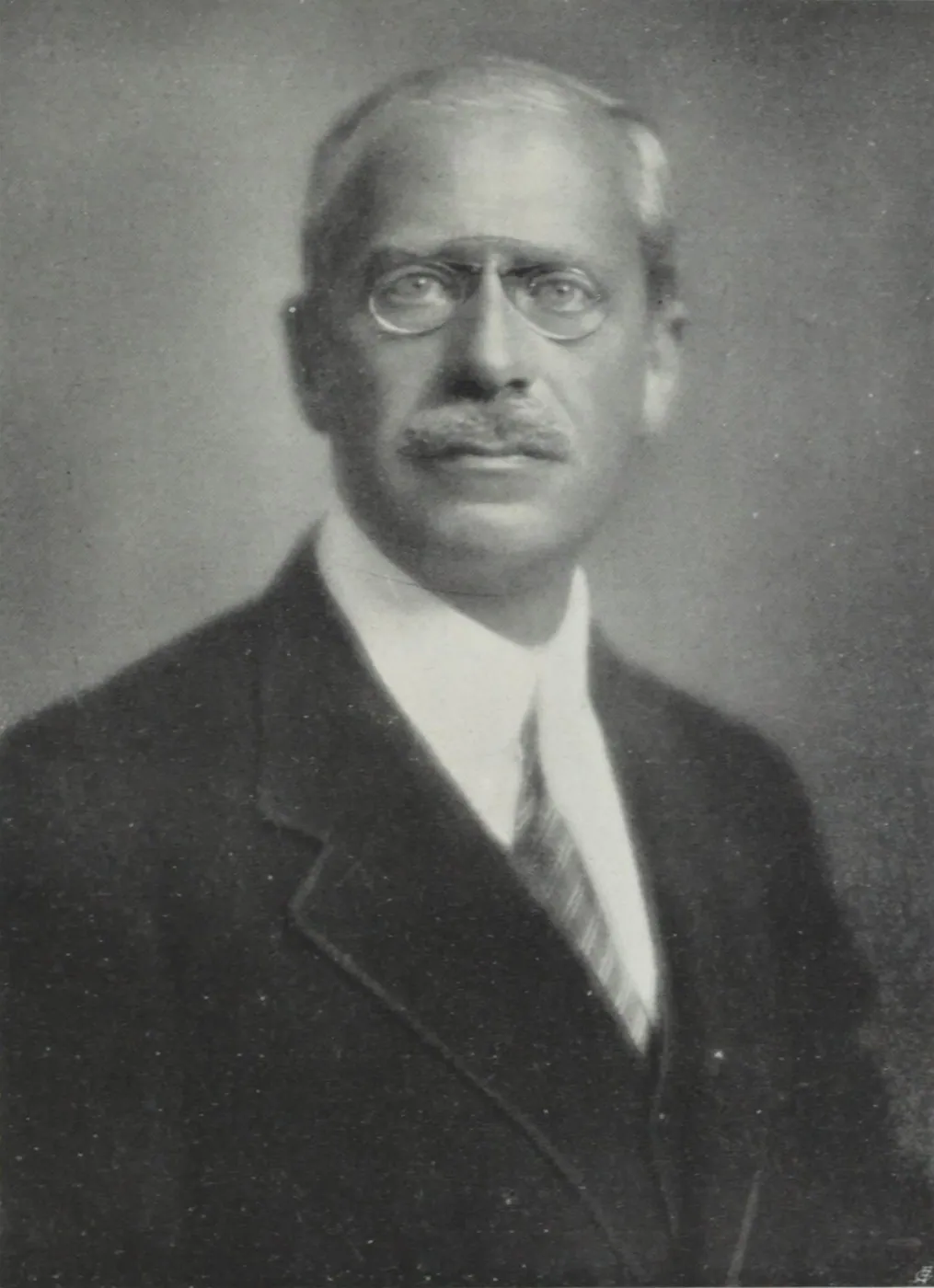
Alphonse de Rothschild
1878–1942Member and benefactorOne of the prominent members of the temple association whose donations supported the building and upkeep of the synagogue.
Биография или источник →Heinrich Leopold Reich
Dates unknownRabbi, until 1923Rabbi of the synagogue until 1923.
Биография или источник →Meier Gabriel Mehrer
Dates unknownRabbi, 1922/23–1938Rabbi of the synagogue until November 1938; before 1922 rabbi and religion teacher in Krems and Waidhofen an der Thaya.
Биография или источник →Adolf Hofmann
Dates unknownChairmanChairman of the temple association when it bought the plot in December 1907.
Биография или источник →Вам есть чем поделиться?
Фотографии, документы, семейные истории и воспоминания об этой синагоге и её общине помогают сохранить её историю.
Share a memory or thought
No comments yet. Be the first to add one.